Bookshelf Speakers
Arendal Sound 1610 Bookshelf 8 Review: Stand-Mount Speakers With Genuine Low-End Reach
A three-way stand-mount speaker rated 47 Hz to 20 kHz within a 2.5 dB window, with 85 dB sensitivity, a 4-ohm load, and port tuning near 30 Hz. Here is what to know before buying.
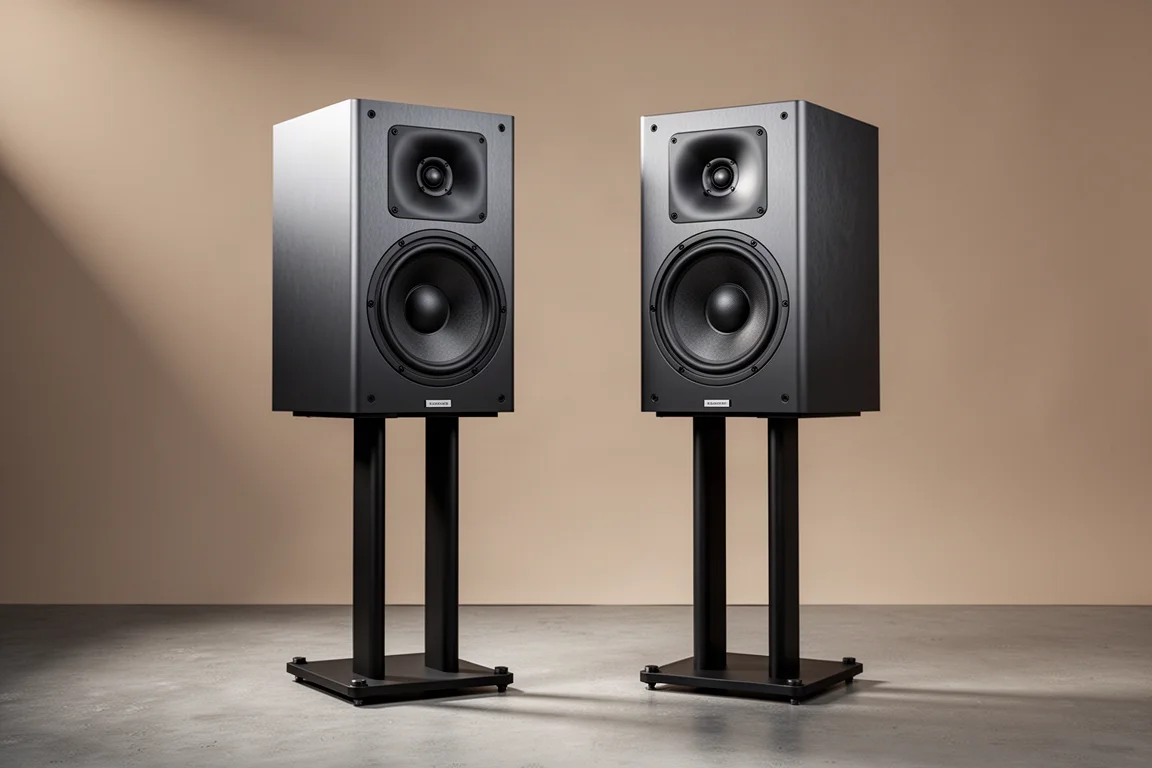
Introduction
The Arendal Sound 1610 Bookshelf 8 is a three-way stand-mount loudspeaker built around a simple idea: a compact cabinet does not have to mean a compact sound. Instead of chasing a slim profile, it uses an 8-inch aluminium woofer, a 5-inch carbon midrange and a 1.1-inch aluminium-magnesium tweeter, and it is tuned to reach far lower than most speakers in its size class.
That ambition comes at a price. The 1610 Bookshelf 8 sells for $3,600 per pair, which places it in serious territory, though it lands roughly 30 percent below Arendal’s larger 1528 series. The question worth answering is whether the extra low-frequency reach and the three-way driver array justify the outlay, and what you need to pair with it to get the most out of it.
Who the Arendal Sound 1610 Bookshelf 8 Is For
This speaker suits listeners who want the weight and body of a floorstander without giving up floor space. With a port tuned near 30 Hz, it delivers bass that reaches close to subwoofer territory for a stand-mount design, which means a two-channel system built around it can play a wide range of music and film material without an added subwoofer.
It also fits listeners who expect to grow their system later. A matching centre channel is available in the same line, so a pair of these can anchor a surround setup rather than being locked into two-channel duty. That is a meaningful distinction, because many stand-mount speakers at this level are designed for stereo listening only.
It is not, however, a speaker for someone who wants something discreet. Each cabinet weighs roughly 35 lb, and the driver array and cabinet depth make their presence known in a room.
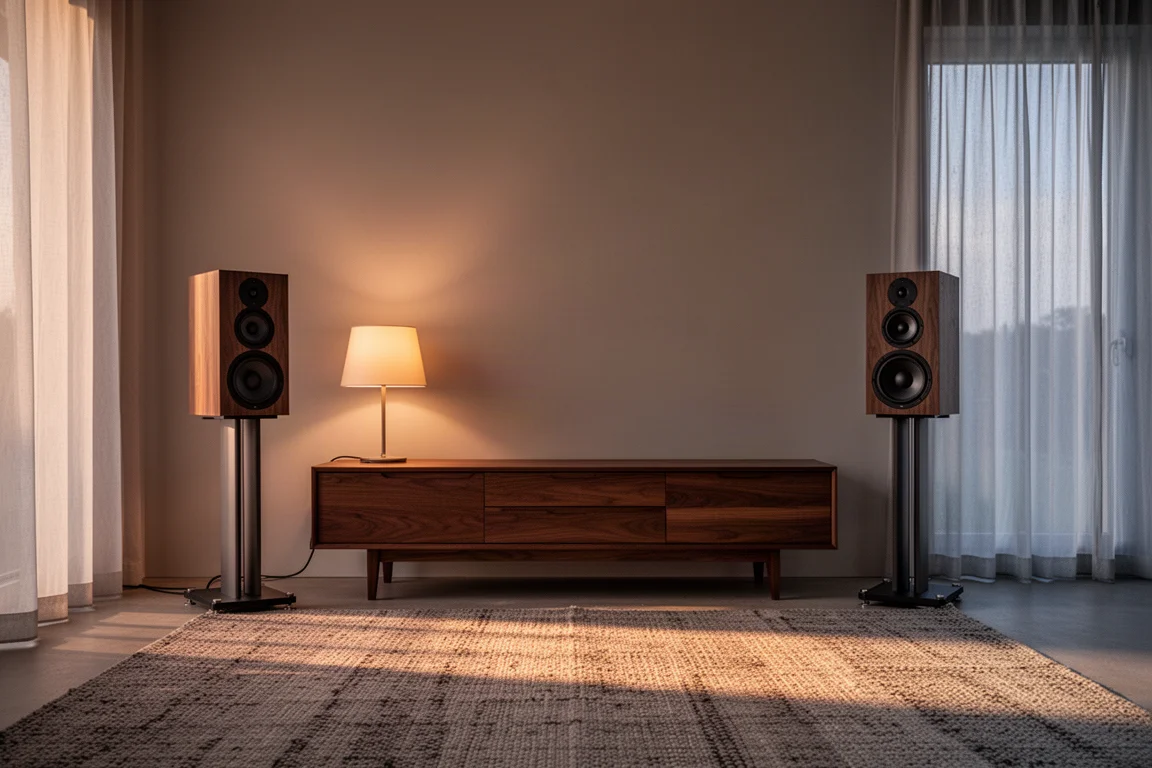
Main Strengths
Accurate, Neutral Tonality
The most important result is the listening window response, which stays notably flat and consistent. Arendal rates the speaker at 47 Hz to 20 kHz within a 2.5 dB window, and the measured behaviour backs up that claim. What this means in practice is a speaker that does not impose its own character on the material. It reproduces the signal rather than colouring it.
Horizontal dispersion is wide as well. Tonality holds up well out to roughly 60 degrees off axis, so there is no narrow sweet spot that forces one listener into a single seat. Off-axis curves track the on-axis response closely, with only minor wrinkles and a small notch around 2.7 kHz that sits well below the threshold of audibility.
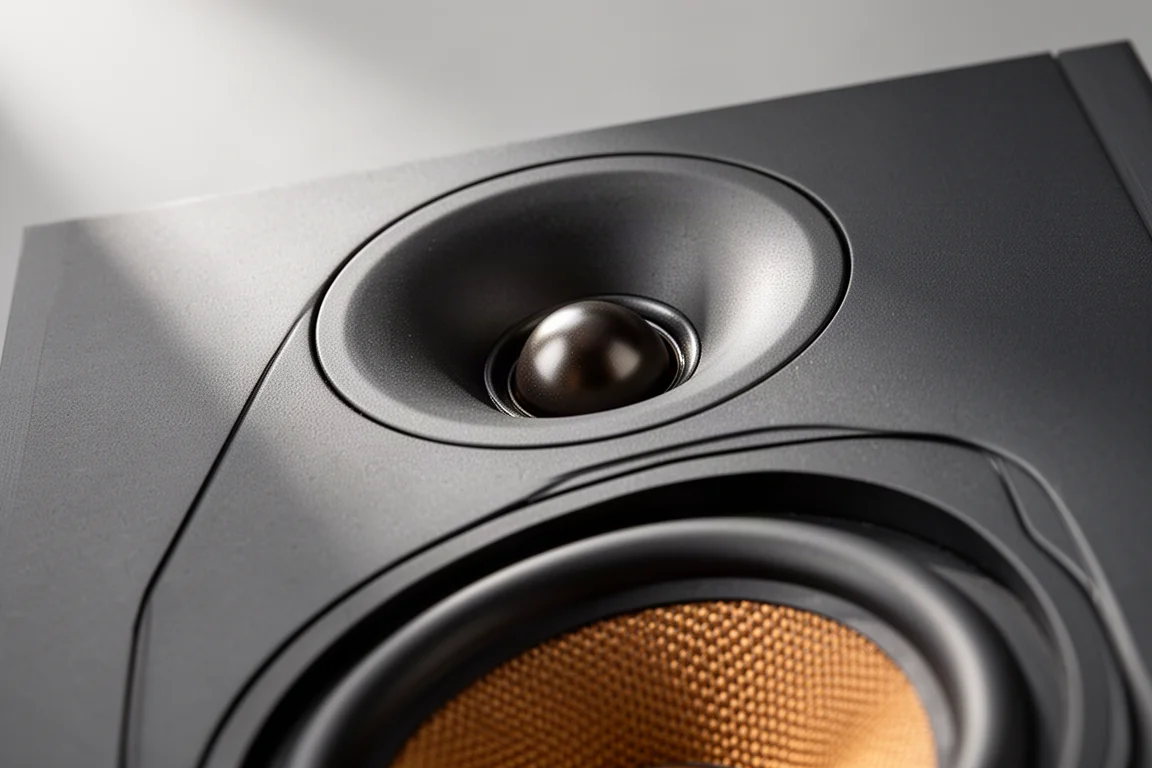
Deep Bass Extension From a Stand-Mount Cabinet
The port is the headline engineering story here. It is a large port that turns at a right angle inside the cabinet and is tuned low, near 30 Hz, which is unusual for a speaker of this size. The result is legitimate in-room bass extension that approaches subwoofer levels, and it is the main reason a two-channel setup with these speakers does not feel like it is missing a foundation.
For anyone who values a full-range stand-mount design, this is the core appeal: the range of a larger system in a cabinet that a single person can move and position without a second pair of hands.
Build Quality and the Redesigned Port
Arendal builds its cabinets from HDF with extensive internal bracing and generous damping, and the 1610 Bookshelf 8 follows that approach. The drivers are large and the crossover uses quality components, so the physical execution matches the price point.
The port design deserves specific credit. The mouth of the port is fitted with small venting holes intended to suppress the secondary resonances that normally appear above the fundamental port tuning. Measured near-field, those resonances sit far lower than the strong spikes typical of conventional ported cabinets, roughly 20 dB below the main port resonance rather than the much higher levels usually seen. This is a claim that often disappoints in practice, and here it holds up.
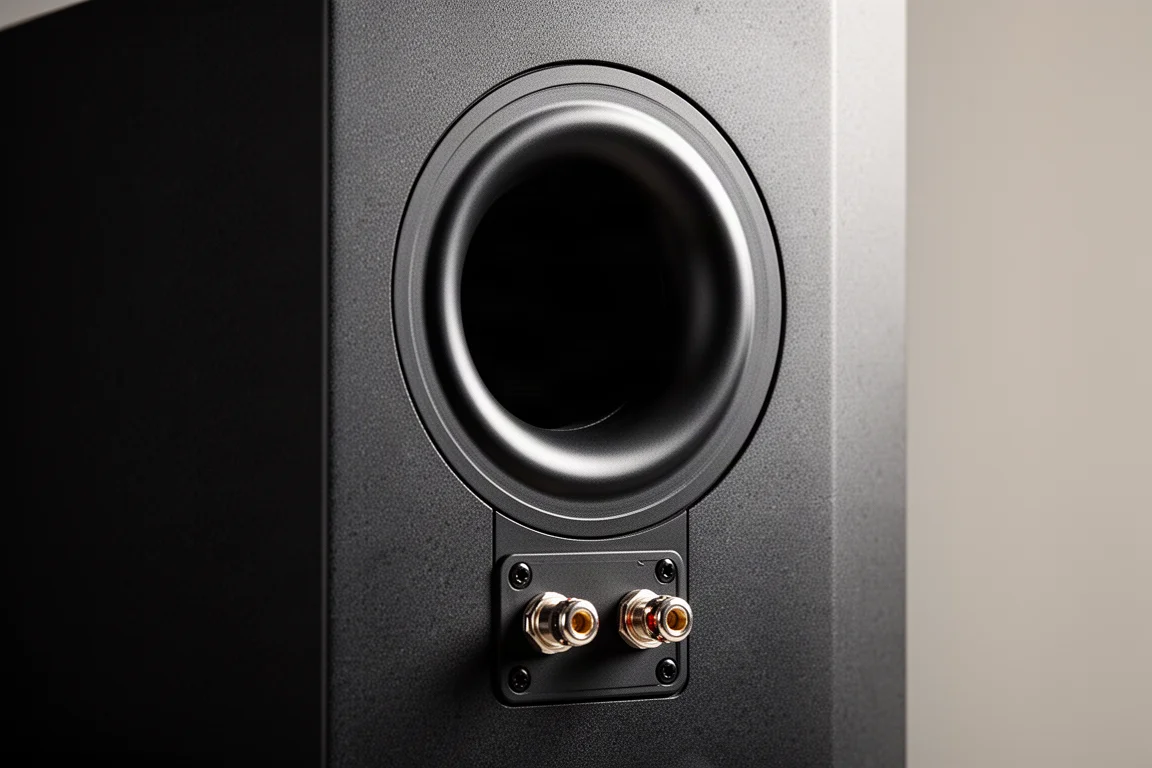
The binding posts are rhodium plated and there is a single set of them, so bi-wiring and bi-amping are not options. Given the driver complement, that is a sensible choice rather than a limitation. The supplied grille covers only the woofer and attaches magnetically, so it can be removed in seconds if you prefer to see the drivers.
Things to Consider Before Buying
The 1610 Bookshelf 8 asks more of an amplifier than its size suggests. Sensitivity is rated at 85 dB, which is low, and that is the direct trade-off for the deep bass tuning. Nominal impedance is 4 ohms and dips to about 3 ohms near 100 Hz, so a budget amplifier is likely to struggle. Plan on at least 100 W, and 150 W to 200 W if you want to exploit the speaker’s dynamic range on loud peaks. A solid amplifier rated for 4-ohm loads will drive it without drama.
Placement in the vertical plane matters. A notch appears around 2.7 kHz when you listen from well below the tweeter axis, so aim to sit level with the tweeter or slightly below it. Above the tweeter axis the response stays consistent across a wide angle, so there is plenty of tolerance in the other direction.
The cabinet is large and heavy for a stand-mount, at roughly 35 lb each, so stands and room layout deserve thought before purchase rather than after.
One measurement caveat is worth stating plainly: the low-frequency data was captured indoors with a short time window, which limits resolution below roughly 600 Hz and smooths the response below about 300 Hz. The midrange and treble results are unaffected and remain the strongest part of the dataset.
Finally, the driver materials are a step below the 1528 series, which uses a lithium-magnesium tweeter and a carbon-graphene midrange. The 1528 also tunes lower, into the 20s, and costs more. If maximum low-end extension is the priority and budget allows, that is the step up. For most listeners the 1610 gets close enough that the difference will not be the deciding factor.
Buying Advice
Buy these speakers if you want a stand-mount pair that plays like a full-range system and you are prepared to feed it properly. Budget for an amplifier that is genuinely comfortable with a 4-ohm load before you budget for anything else, because that single decision will shape how the system performs.
The ownership terms are unusually generous: a 10-year warranty and a 60-day trial period with free shipping in both directions. That combination lowers the risk of buying a speaker you have not heard in your own room, which matters more with a design this size and this specific in its power requirements.
There are several well-known stand-mount speakers in a similar price bracket, including the Wharfedale Super Linton, the MoFi SourcePoint 10, the JBL L82 Classic, the Perlisten A3M, the RBH 661-SFR and the PSB Synchrony B600. Most are built around two-channel listening. The 1610 line stands apart by supporting a matching centre channel, which makes it a more natural foundation for a system that may expand into surround sound later.
Conclusion
The Arendal Sound 1610 Bookshelf 8 makes a clear, specific case for itself. It delivers neutral, accurate tonality, wide dispersion that does not punish off-centre listening, and bass extension that genuinely belongs in a larger speaker class, all in a cabinet you can lift and reposition yourself. The trade-offs are equally clear: low sensitivity, a demanding 4-ohm load and a pair price of $3,600. Bring a capable amplifier and a realistic sense of the space it needs, and this is a stand-mount speaker that behaves like far more than its size suggests.
Product link
View more details for Arendal Sound 1610 Bookshelf 8
This product is mentioned in the review. Check the specifications, options, and compatibility before buying.
View more details for Arendal Sound 1610 Bookshelf 8Further reading
Related Reviews
Bookshelf Speakers
Acoustic Energy A100 Mark II Review: A Compact Standmount With an Expansive Soundstage
The Acoustic Energy A100 Mark II brings clarity, natural tonality and a wide soundstage to an entry-level standmount, with a few setup details worth knowing first.
Bookshelf Speakers
Acoustic Energy AE-100 Mark II Review: Compact Bookshelf Speakers With Standout Imaging
A compact British two-way bookshelf speaker with deep, layered imaging, fast bass, and a slight treble lift to weigh against a crowded $500 field.
Bookshelf Speakers
Acoustic Energy AE100 MK2 Review: Measured Performance and Four Alternatives
A close look at the Acoustic Energy AE100 MK2 bookshelf speaker, what its measured performance reveals, and four alternatives with different trade-offs.