Bookshelf Speakers
Arendal 1723 S THX Bookshelf Review: A Focused, Subwoofer-Ready Speaker
A THX-oriented bookshelf speaker with a large waveguide, a smooth driver handoff, and a low-frequency roll-off that makes a subwoofer part of the plan.
Introduction
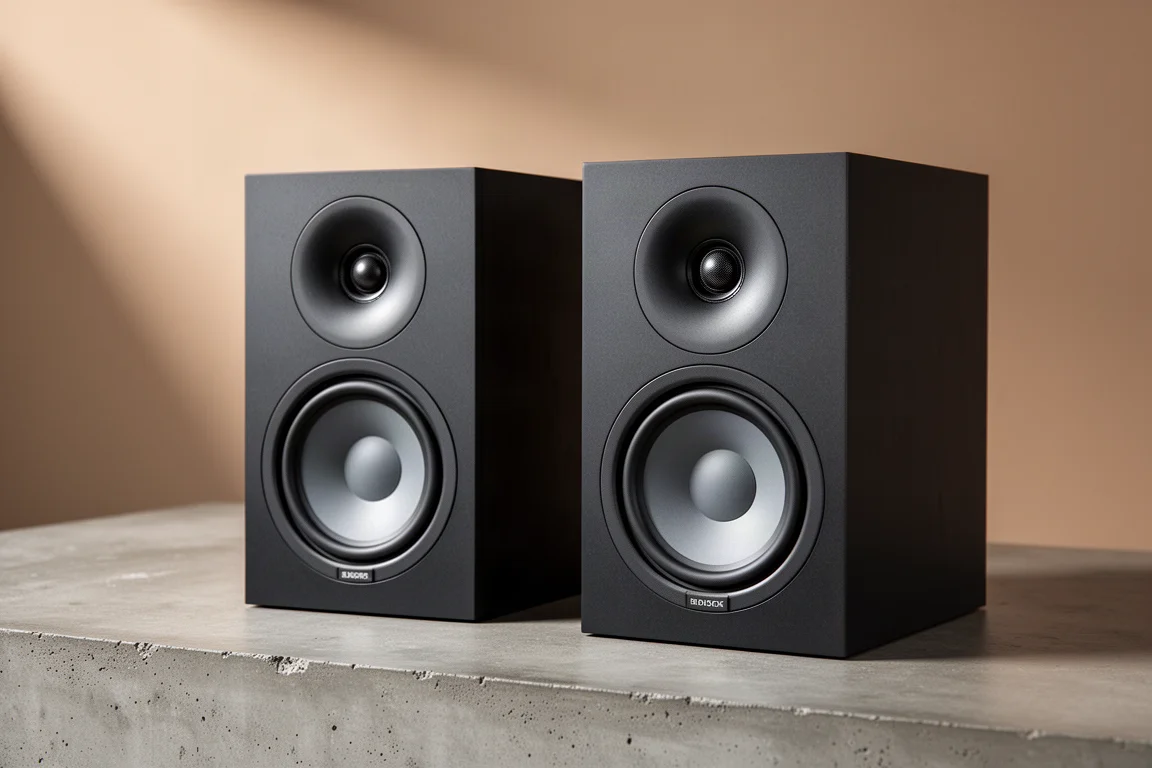
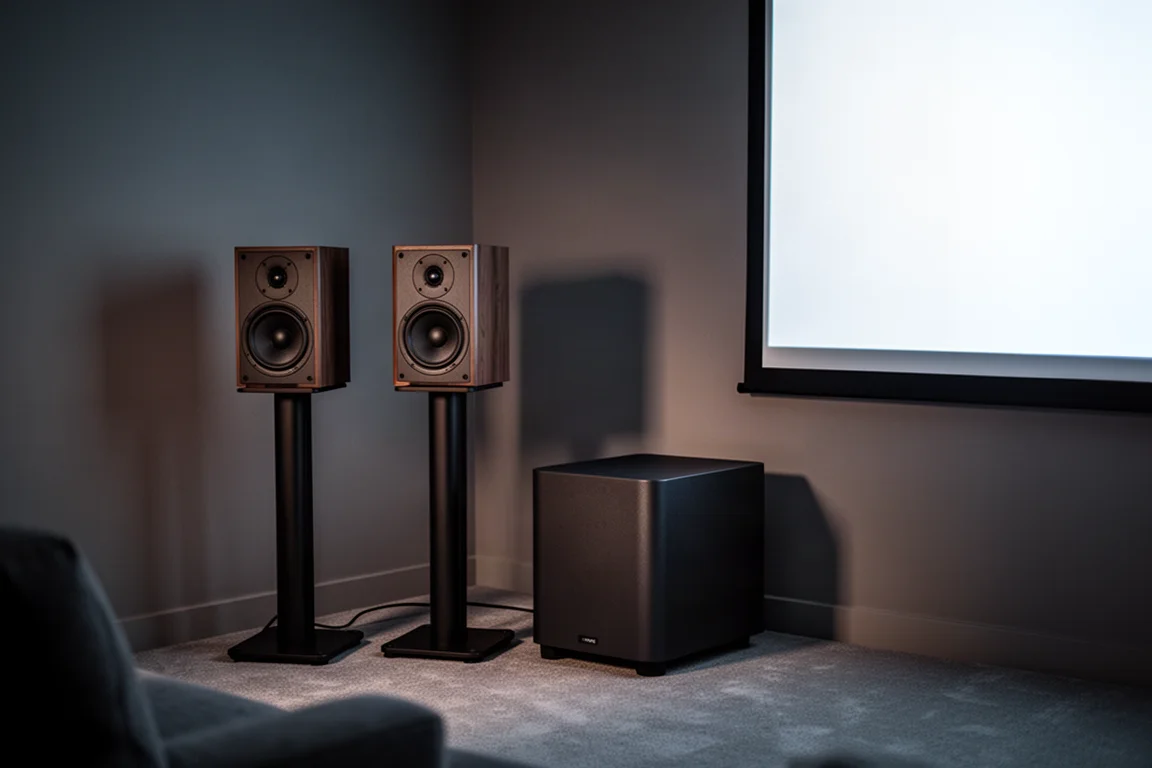
Bookshelf speakers built around a THX-style brief tend to make a specific promise: controlled directivity, high output, and a clean handoff to a subwoofer rather than deep bass from a small cabinet. The Arendal 1723 S THX Bookshelf follows that formula closely, pairing an unusually large waveguide with a six to six and a half inch midwoofer in a compact cabinet that retails for around $1,500 per pair.
Two design details define how this speaker behaves. The first is the waveguide, which is large relative to the cabinet and shapes both the horizontal and vertical radiation. The second is the low-frequency roll-off, which begins at roughly 80 Hz. That is typical of a THX-oriented design and it means a subwoofer is effectively part of the package rather than an optional extra.
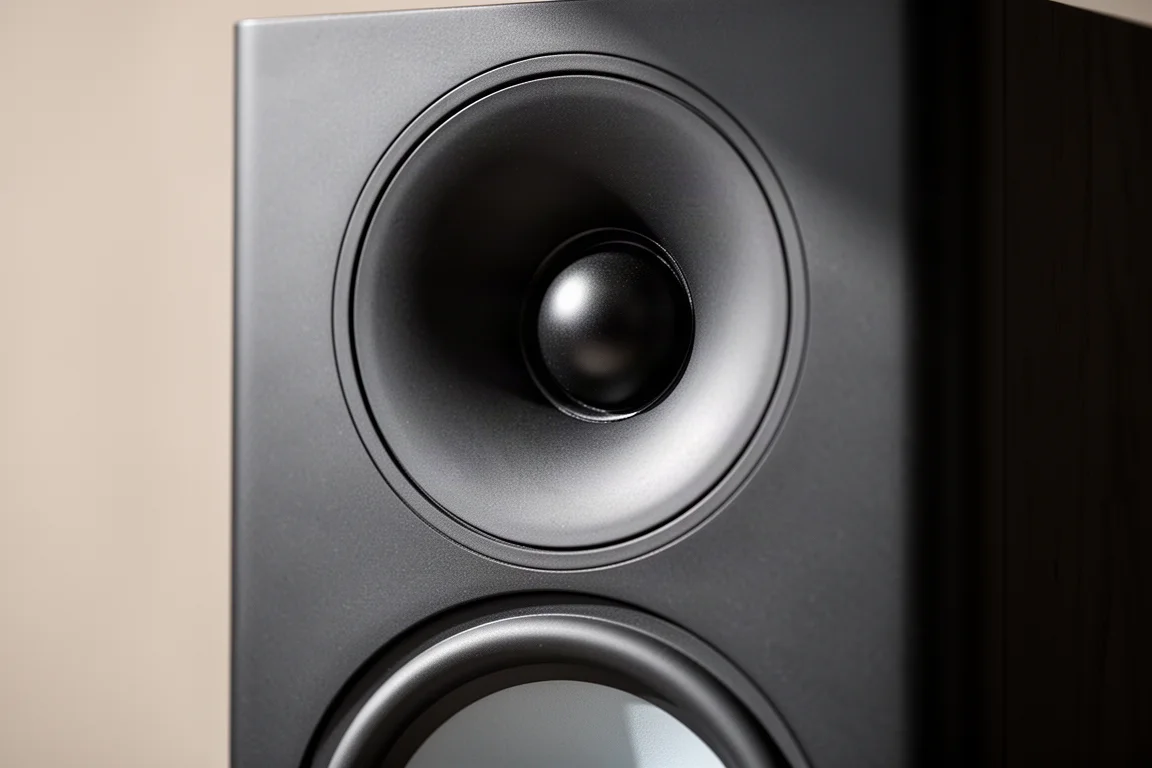
The most interesting part of this speaker is the crossover region. A big waveguide sitting above a midwoofer often produces a mismatch in polar response between the two drivers, which shows up as a dip through the crossover. Here the early reflections directivity error is minimal through that area, so the handoff from tweeter to midwoofer stays smooth and the transition between drivers is not something you hear as a separate event.
Who This Speaker Is For
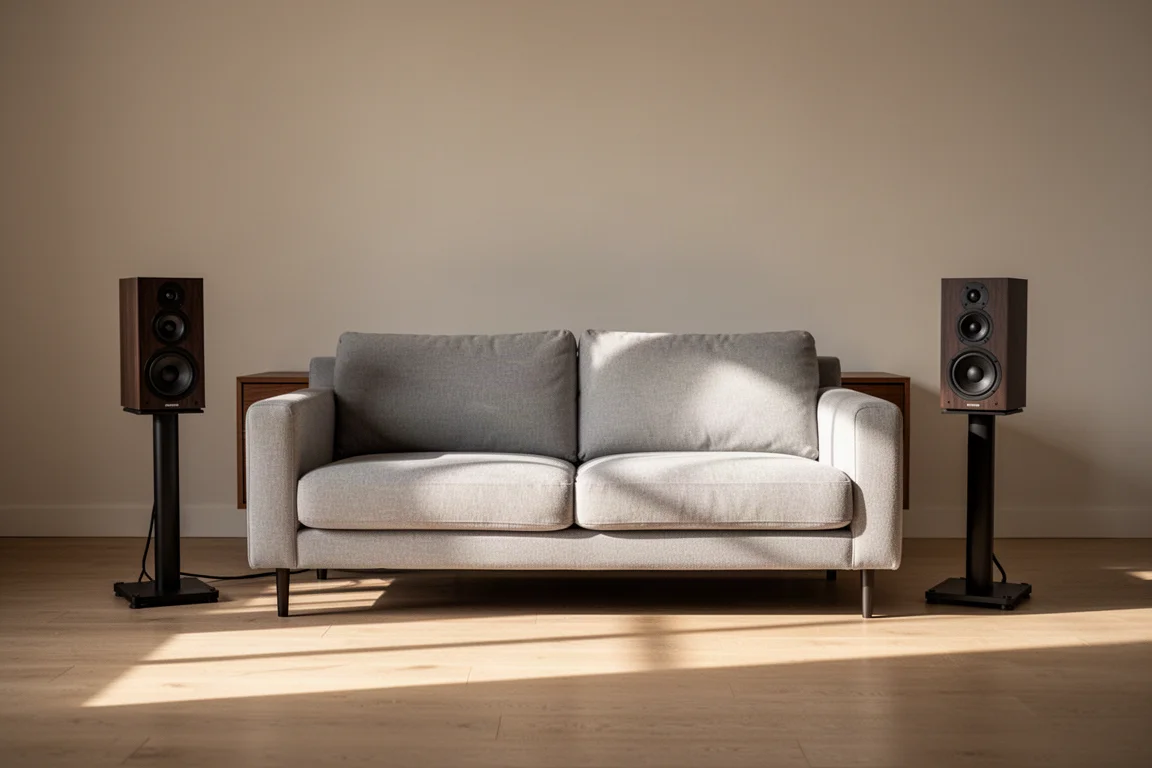
This is a speaker for listeners who already accept that a subwoofer belongs in the system. In a two-channel setup it works best with a proper crossover to a sub, and in a multi-channel setup it slots naturally into the role of a main or surround channel.
Its directivity is also a factor in matching. Radiation holds at roughly plus or minus 40 degrees across most of the response, which is on the narrower side. In a small room, or in a room that is already quite damped, that narrower window tends to work in your favour by keeping sidewall reflections under control. Listeners who prefer a wide, enveloping soundstage with heavy room involvement are likely to want something with a broader radiation pattern.
Main Strengths
The mid bass region between about 120 Hz and 160 Hz is a genuine strength. Even though the speaker rolls off around 80 Hz, that upper bass range carries the harmonics of kick drums and similar instruments, which gives percussion a sense of body and bite. It is a sensible way to make up for the lack of output down low, and it means the speaker does not sound thin in the region where a subwoofer is not yet doing the work.
Tonally the presentation is mostly neutral, and the sound power response is strong for a waveguided front-firing design. The early reflections directivity index is notably linear, which tells you the speaker tightens its directivity smoothly as frequency rises instead of changing character abruptly. Practically, that makes it a very equalisable speaker: adjust it to taste in your room and it responds predictably.
Dynamic behaviour is another bright spot. Comparing responses at 76 dB, 86 dB, 96 dB and 102 dB, the speaker stays within roughly 1 dB of its baseline, which is a strong result. Compression only starts to climb below about 50 Hz, well under the range where a subwoofer crossover would normally sit. The cabinet itself is well finished and the grille is magnetic, so it pops off cleanly for listening sessions.
Placement and Setup Notes
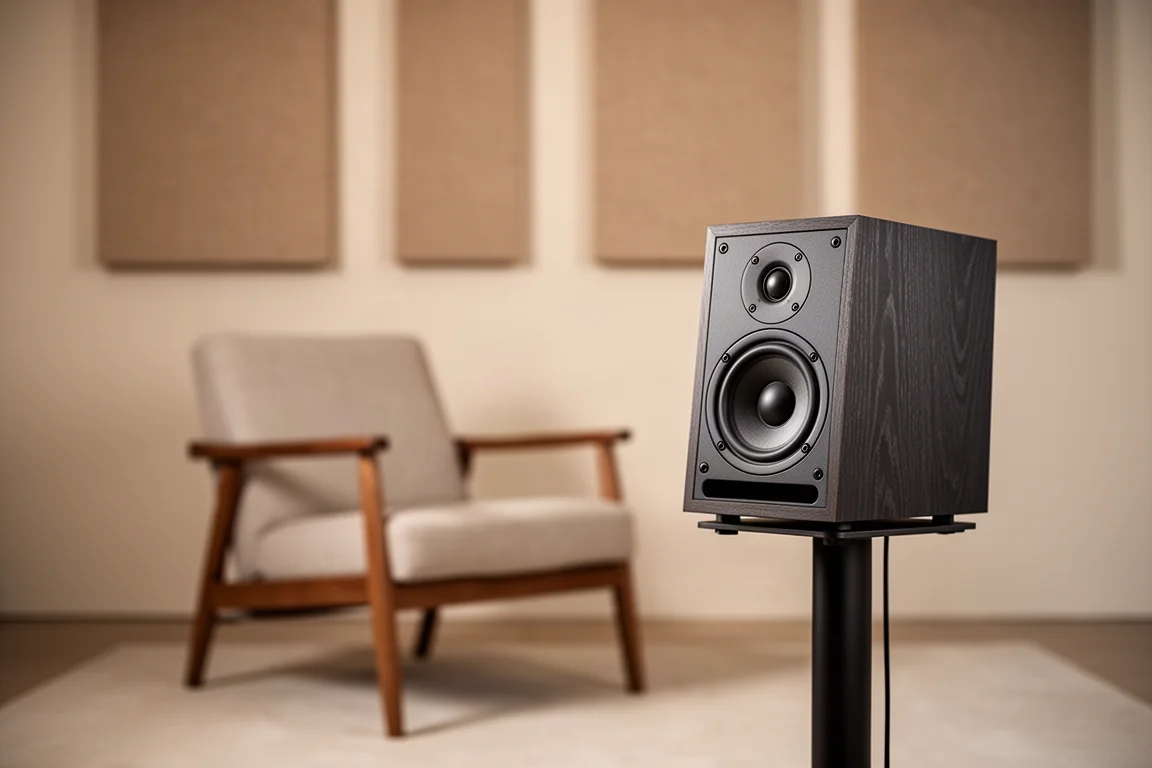
Aim matters a lot here. Because there is a slight plateau in the high-frequency portion of the estimated in-room response relative to the mid-range, the speaker can sound a little bright when it is pointed straight at the listening position. Toeing the speakers outward by around 20 degrees, so they face away from the listener and out toward the room, brings that top end down without dulling the rest of the presentation. Pushing much past that, closer to 30 degrees, tends to remove more of the high-frequency bite than most listeners will want.
If you prefer to keep the speakers on axis, equalisation is a clean alternative. A shelf filter centred around 6 kHz with roughly 2 dB of cut takes the edge off the top end and makes the on-axis presentation considerably more agreeable.
Vertically, the directivity is good, but do not sit above the tweeter line. Below it the response stays usable, so in a multi-row home theater it is worth raising the front row’s tweeters slightly above ear level. That keeps the front row inside the good vertical window while giving the back rows a better angle than they would otherwise get.
Things to Consider Before Buying
The 80 Hz roll-off is the headline limitation. Full-range use is not realistic without a subwoofer, and the distortion profile reflects that: at 96 dB the 1 percent threshold is crossed in the midrange between roughly 300 Hz and 500 Hz, while the 3 percent mark is crossed at about 80 Hz, where the single woofer is simply running out of excursion.
The soundstage is focused rather than wide. Imaging is precise, but the radiation window of about plus or minus 40 degrees means less energy reaches the sidewalls, so there is less width and envelopment than a wider-dispersion design would deliver. Whether that reads as a strength or a compromise depends entirely on your room and your taste.
Sensitivity measures about 81.6 dB at 2.83 volts at one metre, which is on the low side, so this is not a speaker to pair casually with a low-powered amplifier.
Amplification and Subwoofer Pairing
The compression data is reassuring in exactly the scenario this speaker is designed for. Once a proper crossover to a subwoofer is in place, the region where compression increases, below roughly 50 Hz, is no longer the speaker’s responsibility. Above that point it holds its composure even at high output levels.
Combined with the linear directivity index, that makes the Arendal 1723 S an unusually cooperative speaker to integrate. Room correction and manual EQ both behave predictably, and the crossover region between speaker and subwoofer is not complicated by driver mismatches higher up the band.
Buying Advice
At around $1,500 per pair, the Arendal 1723 S THX Bookshelf makes the most sense for listeners who are building a system rather than buying a single pair of speakers to do everything. Budget for a subwoofer and a crossover from the start, and the speaker’s strengths, its mid bass body, its linear directivity and its stable dynamics, are the parts you actually hear.
If you are setting it up in a small room, a damped room, or a dedicated multi-channel space, the narrower radiation pattern is likely to work in your favour, and toeing the speakers out about 20 degrees should get you close to the tonal balance most listeners will prefer. If you want a broad, room-filling soundstage and you plan to run the speakers without a subwoofer, this is probably not the right match.
Conclusion
The Arendal 1723 S THX Bookshelf is a focused, well-engineered speaker with a genuinely smooth driver handoff, strong mid bass, and dynamics that hold together at high volumes. Its limits are clearly defined rather than hidden: it needs a subwoofer, it needs a little attention to aiming, and it will not flatter a listener who wants a wide, enveloping stage. Meet those conditions and it is a confident, easy-to-live-with choice.
Product link
View more details for Arendal 1723 S THX Bookshelf
This product is mentioned in the review. Check the specifications, options, and compatibility before buying.
View more details for Arendal 1723 S THX BookshelfFurther reading
Related Reviews
Bookshelf Speakers
Acoustic Energy A100 Mark II Review: A Compact Standmount With an Expansive Soundstage
The Acoustic Energy A100 Mark II brings clarity, natural tonality and a wide soundstage to an entry-level standmount, with a few setup details worth knowing first.
Bookshelf Speakers
Acoustic Energy AE-100 Mark II Review: Compact Bookshelf Speakers With Standout Imaging
A compact British two-way bookshelf speaker with deep, layered imaging, fast bass, and a slight treble lift to weigh against a crowded $500 field.
Bookshelf Speakers
Acoustic Energy AE100 MK2 Review: Measured Performance and Four Alternatives
A close look at the Acoustic Energy AE100 MK2 bookshelf speaker, what its measured performance reveals, and four alternatives with different trade-offs.