Hi-Fi Amplifiers
Arcam SA45 and Class G Alternatives: Four Amplifier Options Worth Considering
A closer look at the Arcam SA45, the SA25 Plus, the A50 Signature and the Ever Solo T8, and how to decide which combination fits your system.
Introduction
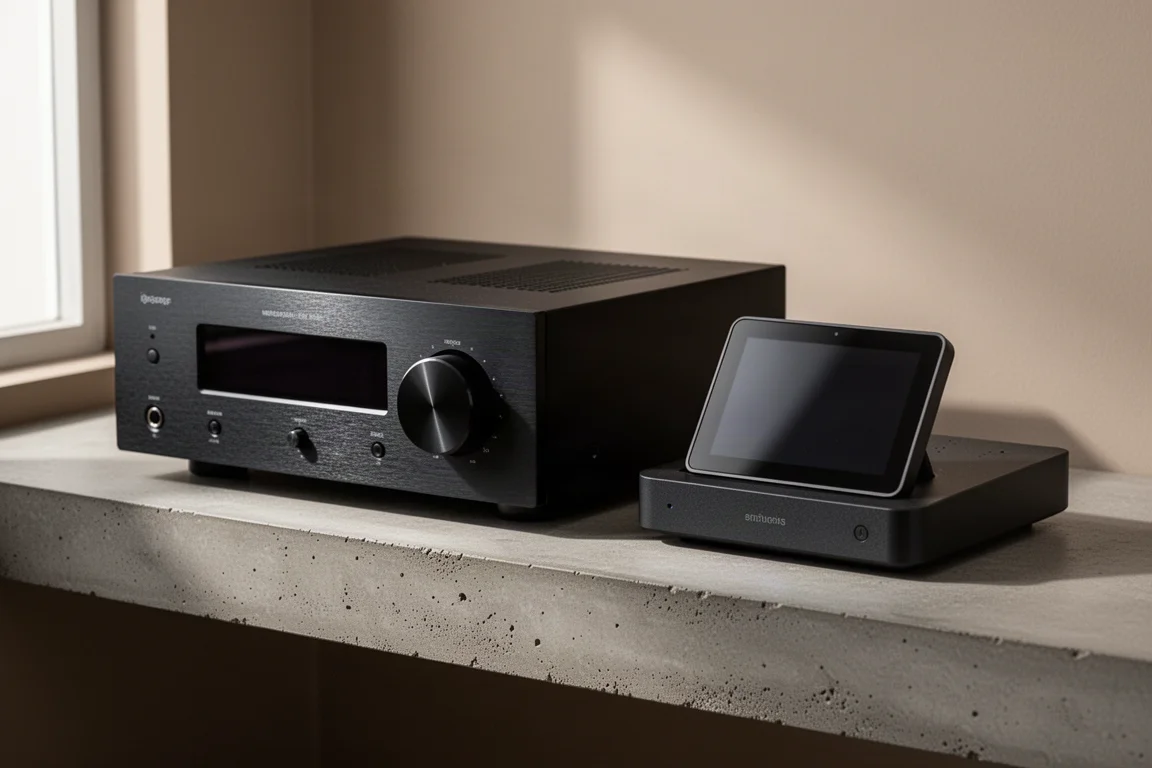
The Arcam SA45 is an integrated streaming amplifier that brings together Arcam’s class G output stage, Dirac Live room correction and network streaming in a single chassis. It is Roon Ready, it supports Google Cast, and it has a USB A socket on the back panel for playing files from a hard drive. For anyone who wants room correction and streaming handled by one component, it is a complete answer.
It is not the only sensible route. Arcam also offers the SA25 Plus at around 2,000 euros and the A50 Signature at 2,800 euros, and a separate streamer such as the Ever Solo T8 at close to 1,400 euros can be paired with either of them to change what the system does and what it costs. The sections below cover each option on its own terms, followed by buying advice for matching one to your room and your sources.
What to Look For in a Class G Streaming Amplifier
Class G amplification is the thread running through Arcam’s integrated range. The topology was introduced by Hitachi in its 1978 Dyna Harmony series, and it works by engaging multiple power supply rails progressively as output demand rises. Arcam has been the most persistent champion of the approach, refining its implementation across five generations of products since debuting it in the 2009 AVR 600.
Class G is not a route to cheap power. Like class AB, it requires a substantial power supply and toroidal transformers, which in most cases cost far more to implement than a switching power supply paired with a class D chip amplifier. That is why class G designs sit in the more expensive part of the market rather than at the entry level.
It is also worth discarding the assumption that class D amplification always runs cool. Class D designs can run warmer than class G ones, and heat output depends on the implementation rather than on the topology. Four practical questions matter more when you are choosing: how the amplifier handles room correction, whether the streaming platform you already use is supported natively, how easy the controls are to read and use from the listening position, and which physical inputs you need, from a phono stage to HDMI eARC.
Arcam SA45: Dirac Live and Roon Ready in One Chassis
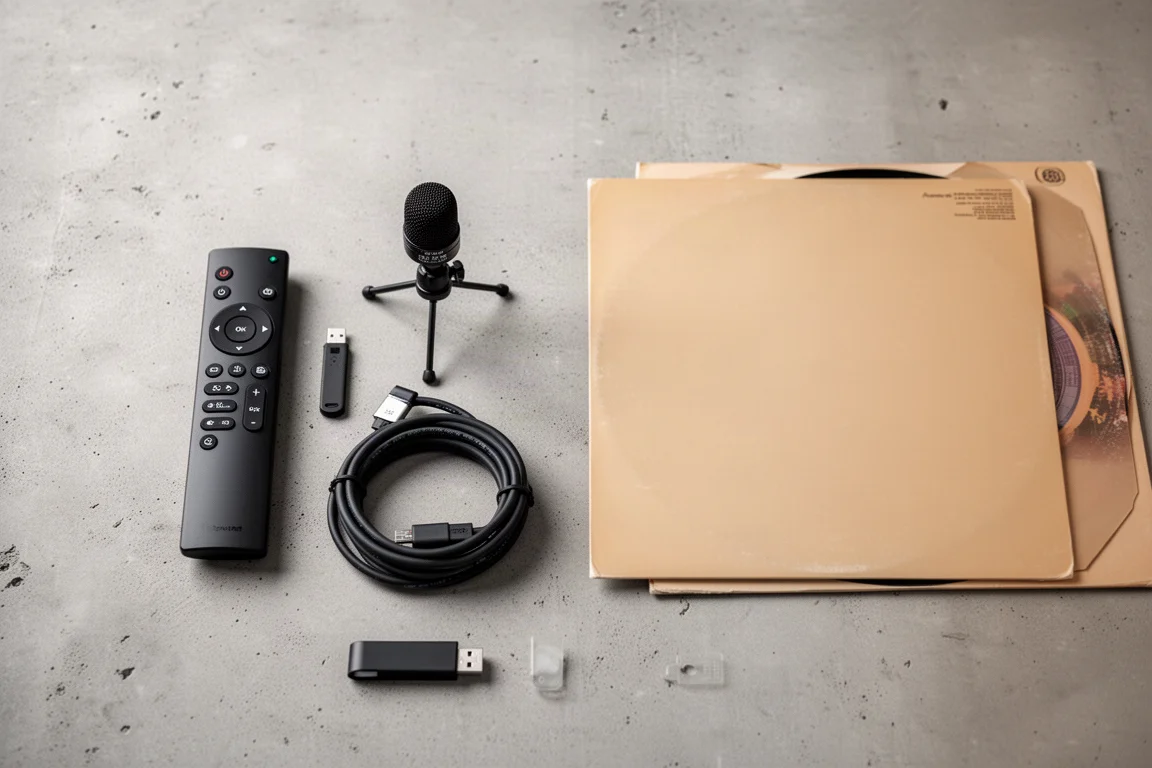
Dirac Live room correction is the SA45’s headline feature, and the amplifier ships with a puck microphone for taking measurements. If you already own a dedicated measurement microphone, using that instead is a reasonable choice, but the supplied puck means calibration is possible without buying anything extra.
On the streaming side, the SA45 is Roon Ready and supports Google Cast. Roon Ready status is more useful than it first appears: the amplifier reports what is happening to the digital signal at each stage, and the Roon signal path panel shows whether the signal is being resampled or whether a Dirac filter is being applied. For anyone who wants to know exactly what their system is doing, that visibility is valuable.
The Radia control app is basic, and the most important limitation is that it cannot switch inputs. Comparable apps from other manufacturers can, and the gap matters more here because the SA45’s on-screen text is difficult to read from the listening position. What the Radia app does cover is browsing and playing audio files from a USB drive connected to the amplifier’s USB A socket, including FLAC, WAV and MP3 files.
Two details are easy to miss. The SA45 has no USB B input, which is the connection needed to attach a computer directly to the amplifier’s DAC; the USB A socket on the back panel is for drives rather than computers. And if you want the analog inputs to bypass the internal ADC, you need to switch Dirac off and set the number of subwoofers to zero. Zero subwoofers means no channel summing, and no summing means no DSP.
On heat, the SA45 runs a little warm to the touch and nothing more. It is no warmer than the Hegel H190 or the Lyngdorf TDAI 3400, and the Marantz Model 10 runs hotter than all of them.
Arcam SA25 Plus: Class G With Room for Your Own Streamer
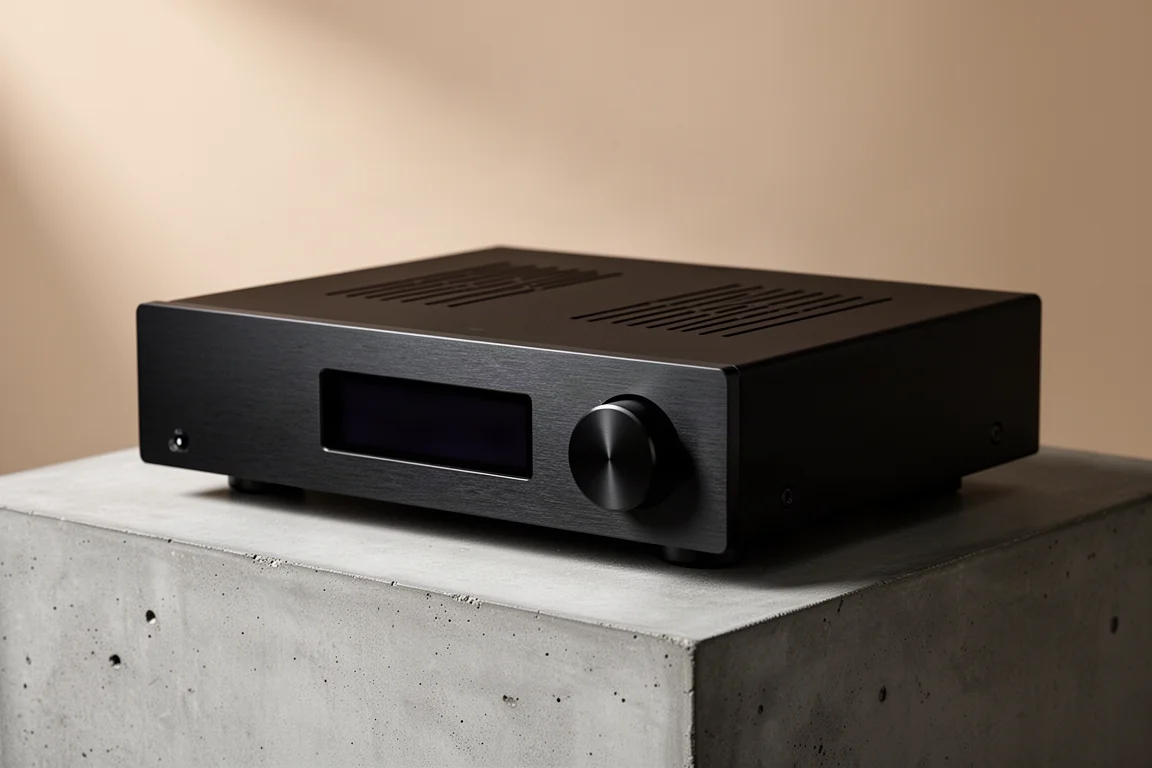
The SA25 Plus sits at around 2,000 euros and is the most affordable way into Arcam’s class G integrated amplifiers. It is aimed at listeners who like the idea of class G amplification but want to keep some budget in reserve, or who would rather add their own streaming DAC to the system.
That positioning makes it the natural partner for a streamer you already own and like. Instead of paying for a streaming front end a second time, the SA25 Plus supplies the amplification and leaves the digital side of the system to hardware of your choosing.
The trade-off is straightforward: you are buying the output stage and the build rather than a complete streaming package. For a listener who already has a streamer in place, that is often the more sensible allocation of budget.
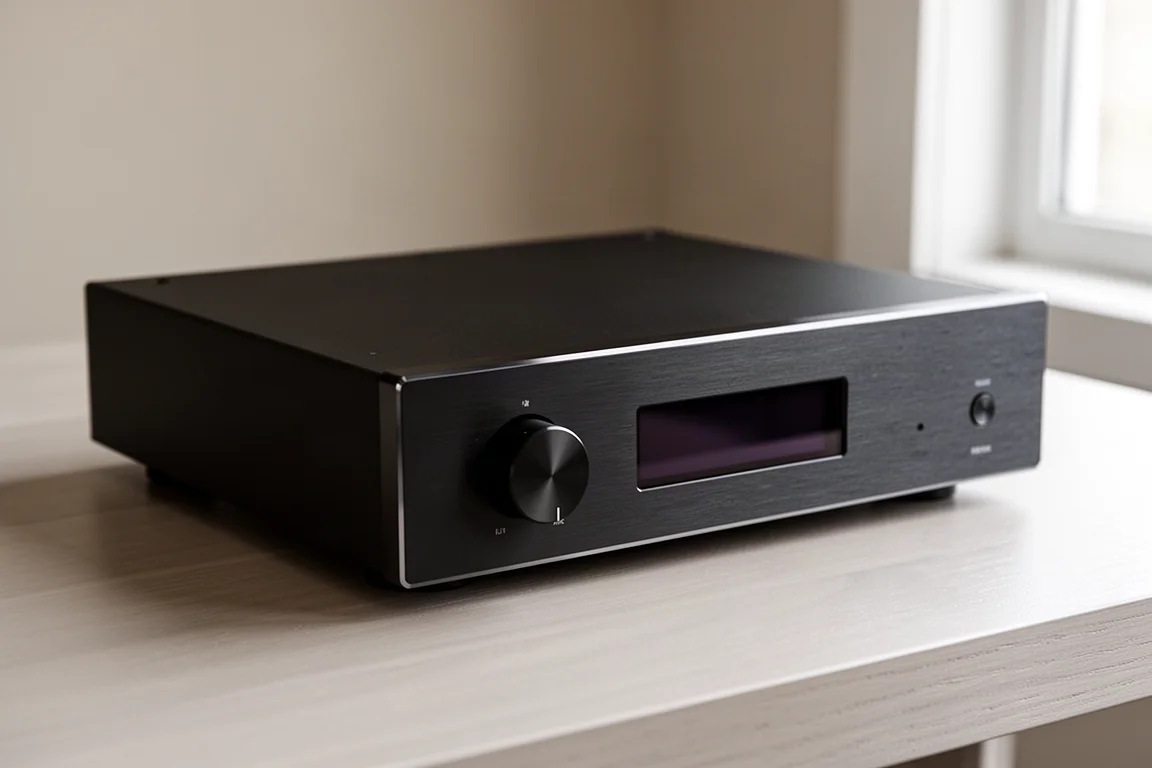
Arcam A50 Signature: Phono Stage, HDMI eARC and 300 Watts
The A50 Signature is the recently announced flagship of this group at 2,800 euros, and it is the more interesting of the two non-streaming Arcam amplifiers. It includes a phono stage, a DAC and HDMI eARC, and it is rated at 300 watts per channel into 8 ohms from a dual mono class G design.
The input set is what turns it into a system hub. A turntable connects directly, a television connects over HDMI eARC for sources such as Apple Music played from a TV, and the onboard DAC gives a separate streamer something to talk to. The compromise, on paper, is conversion quality: the A50 Signature’s DAC is a step below the converter used in the SA45.
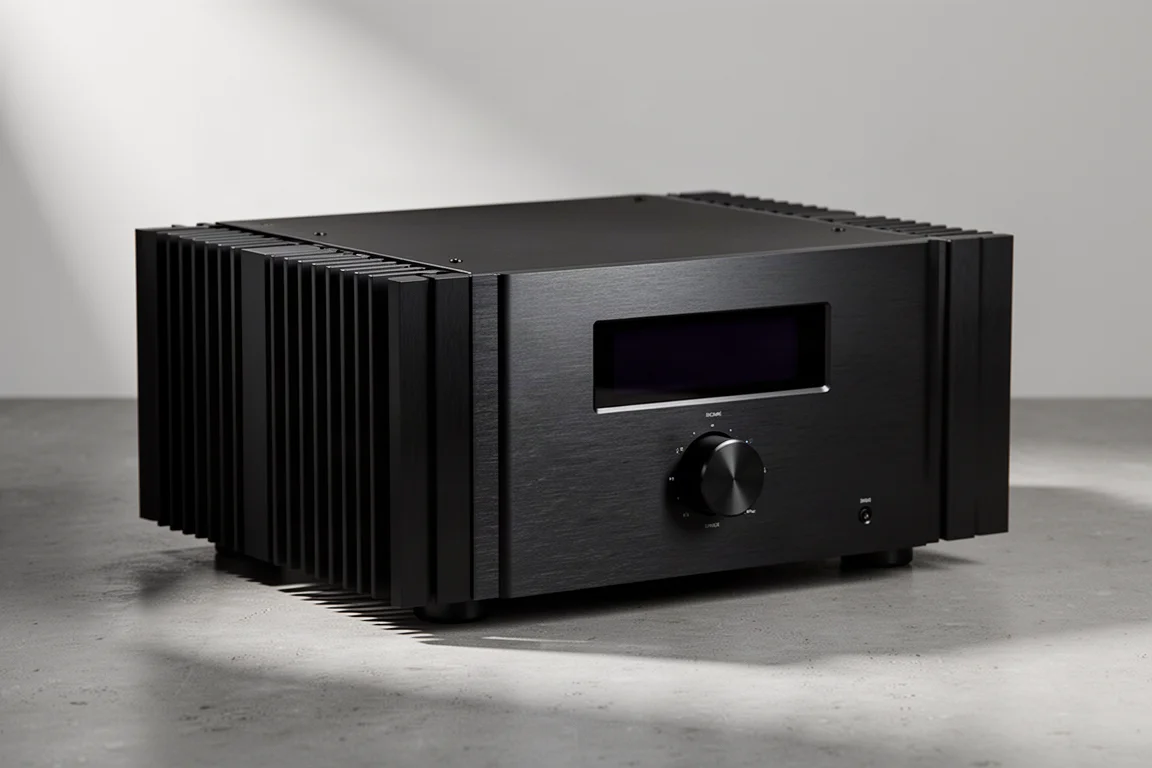
Ever Solo T8: Touchscreen Streaming That Talks to Your TV
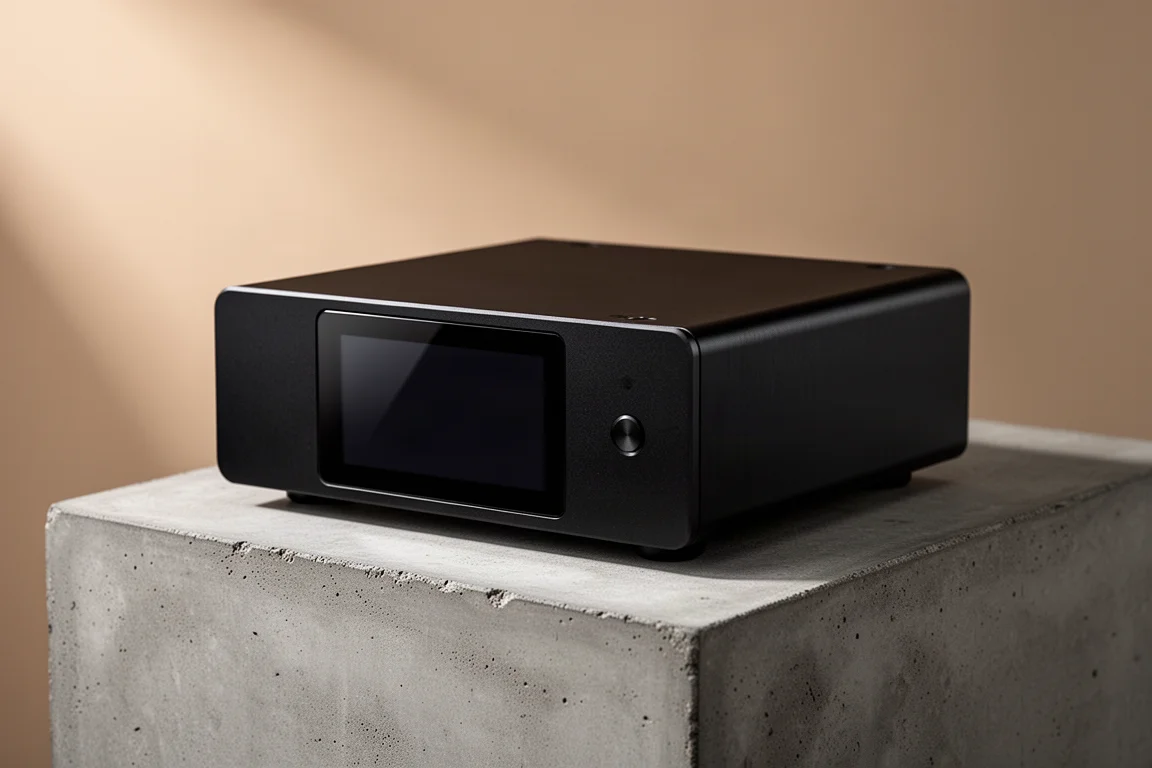
The Ever Solo T8 costs close to 1,400 euros and takes a different approach to streaming. It has a touch-enabled screen, and its control app is available for Android TV and tvOS, so a now playing screen can be pushed to a television over Wi-Fi. That solves the readability problem from the listening position by using a screen most households already own rather than enlarging the amplifier’s own display.
Paired with an amplifier that has its own DAC, such as the A50 Signature, the T8 becomes the streaming half of a two-box system with a touchscreen interface, television output and 300 watts of class G power per channel. On the figures quoted here, that combination comes in close to 1,000 euros below the SA45 on its own.
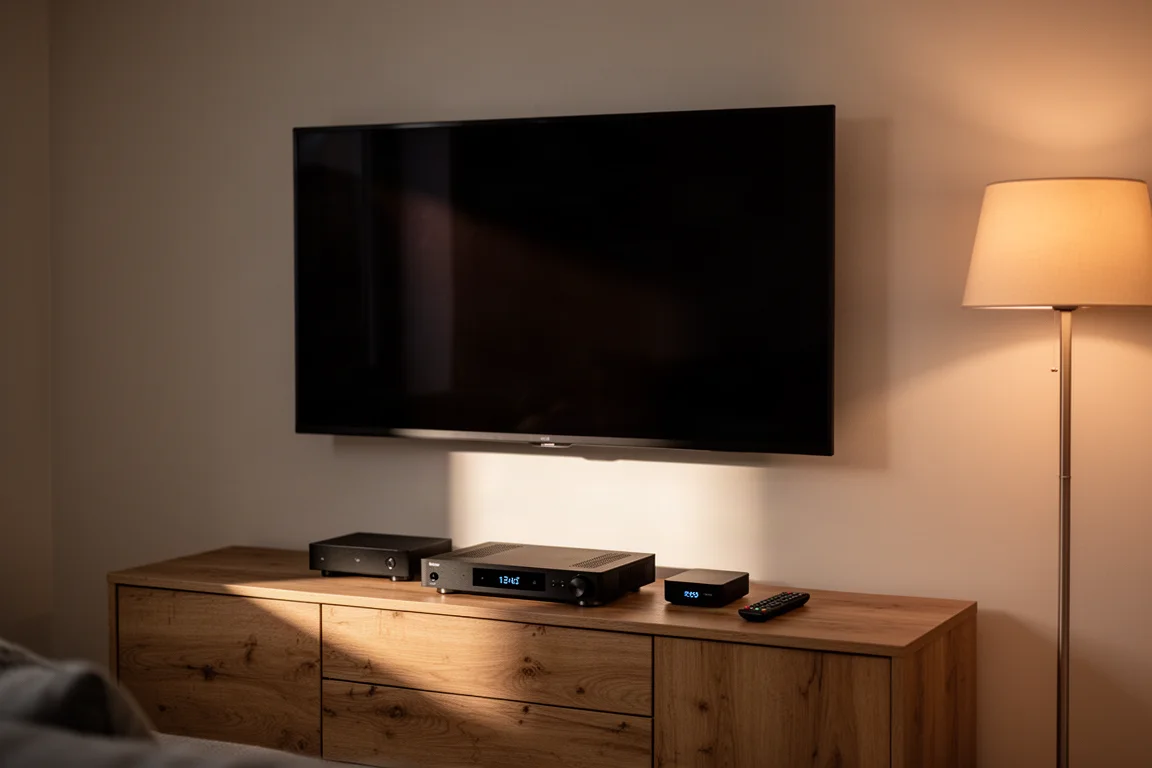
The compromise is room correction. Evo Tune, the T8’s room compensation system, is not as effective as Dirac Live, so if correction is the main reason you are looking at the SA45, that difference will matter more than the streaming interface does.
Two Boxes or One: What the Trade-Offs Look Like
The SA45 keeps everything in a single chassis: class G amplification, Dirac Live, Roon Ready streaming, Google Cast and USB file playback. The cost of that simplicity is the control experience. The Radia app cannot switch inputs, and the front panel text is hard to read from a distance, so day-to-day interaction is less polished than the feature list suggests.
A two-box system built from the Ever Solo T8 and the A50 Signature moves in the opposite direction. You gain a touchscreen, television-based now playing information, a phono stage, HDMI eARC and 300 watts per channel, while giving up the SA45’s Dirac Live correction and accepting that the A50 Signature’s DAC is a step behind on paper. The SA25 Plus takes the third path: pay for the class G amplification, then choose your own streaming hardware around it.
Buying Advice: Which Combination Makes Sense
If Dirac Live room correction is the priority and you want one component to handle amplification and streaming, the SA45 is the clearest fit. Its Roon Ready reporting and Google Cast support make it straightforward to slot into an existing setup, and the supplied puck microphone removes the cost of a measurement mic.
If you already own a streamer, the SA25 Plus at around 2,000 euros puts the budget into amplification instead. If you want a phono stage, HDMI eARC and high power, and you are happy to add a streamer separately, the A50 Signature at 2,800 euros covers more inputs. And if control and readability matter most, the Ever Solo T8 at close to 1,400 euros pairs well with an amplifier that has its own DAC, with the caveat that Evo Tune is not a substitute for Dirac Live.
Whichever route you take, check the details that are easy to overlook: whether the amplifier has the input types you actually need, how you will switch between sources day to day, and how the room correction system is configured. On the SA45, for example, analog inputs only bypass the internal ADC once Dirac is switched off and the subwoofer count is set to zero.
Conclusion
The SA45 is a genuinely complete one-box solution for listeners who want class G amplification, Dirac Live correction and streaming in the same chassis, and its main compromises sit in the control app and on-screen readability rather than in the sound. The SA25 Plus and the A50 Signature split that package apart at different price points, and the Ever Solo T8 adds a touchscreen and television-based controls that Arcam’s own streaming implementation does not match. Match the choice to the sources you own and the correction you need, and any of the four is a defensible purchase.
Further reading
Related Reviews
Hi-Fi Amplifiers
Accuphase E-280 Review: Entry-Level Accuphase With Flagship Attention to Detail
A close look at the Accuphase E-280 integrated amplifier, covering its champagne build, AAVA volume control, sound quality, and the speakers and sources that suit it best.
Hi-Fi Amplifiers
Advance Paris A10 Classic vs Yamaha A-S301: Two Integrated Amplifiers Compared
A practical comparison of a $350 integrated amplifier and a $2,500 reference model, covering the differences that matter and the ones that do not.
Hi-Fi Amplifiers
Affordable Chinese Amplifiers Worth Buying: Five Budget Hi-Fi Amps Compared
A practical look at five affordable amplifiers, what each one does well, and the trade-offs to weigh before you buy.