Hi-Fi Audio
Arcam Radia Series Review: A5, A15, A25, CD5 and ST5 Compared
A close look at the Arcam Radia series, covering the A5, A15 and A25 integrated amplifiers, the CD5 CD player and the ST5 high-resolution streamer.
Introduction
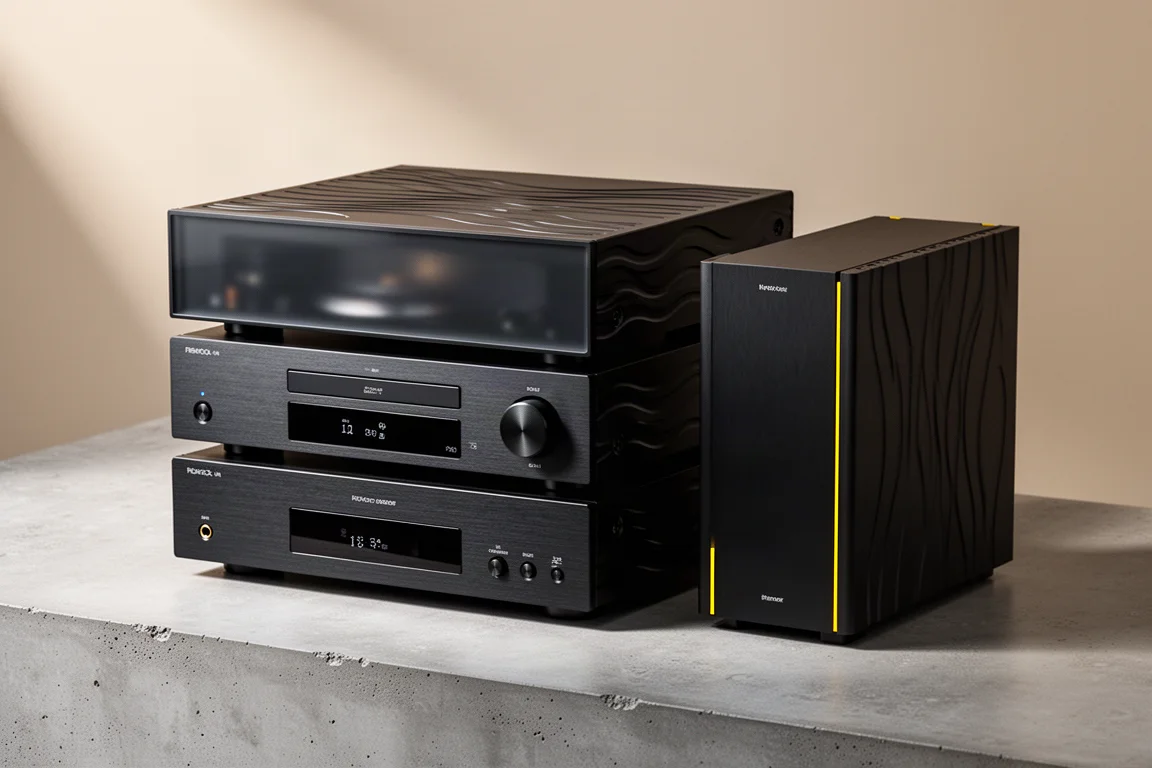
Arcam has introduced the Radia series, a new lineup that pays tribute to the original A60 amplifier while carrying a refreshed design language. The range covers three integrated amplifiers, the A5, the A15 and the A25, alongside the CD5 CD player and the ST5 high-resolution music streamer.
Each component shares the same visual identity and the same underlying philosophy: keep things simple. The goal is a system that is quick to set up, easy to live with and easy to understand at a glance. Here is how the five units differ, what they share, and how they behaved during extended listening.
Shared Design and Connectivity Across the Radia Series
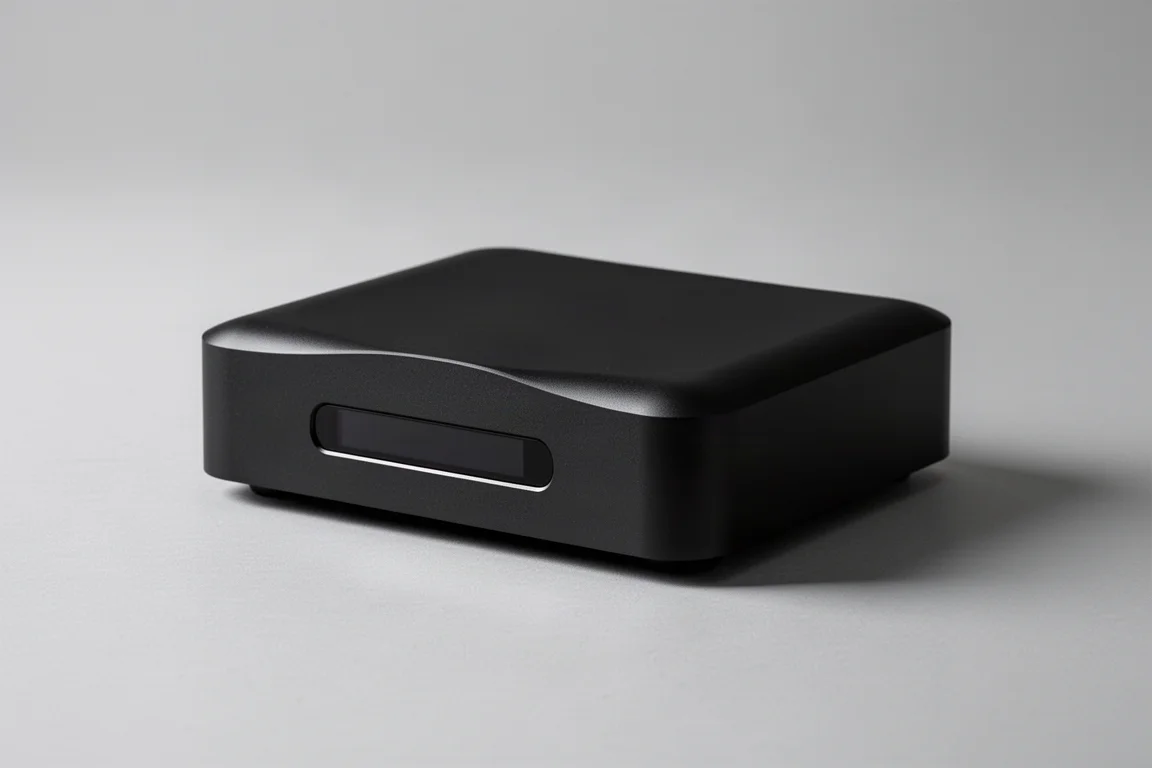
Every unit in the range uses a black frosted glass front panel with a hidden display that shows the selected input, volume level and other settings. When a unit is switched off, the display disappears completely behind the glass, so the front panel reads as one clean surface. The display can also be turned off while a unit is running, which gives a genuinely stealthy look.
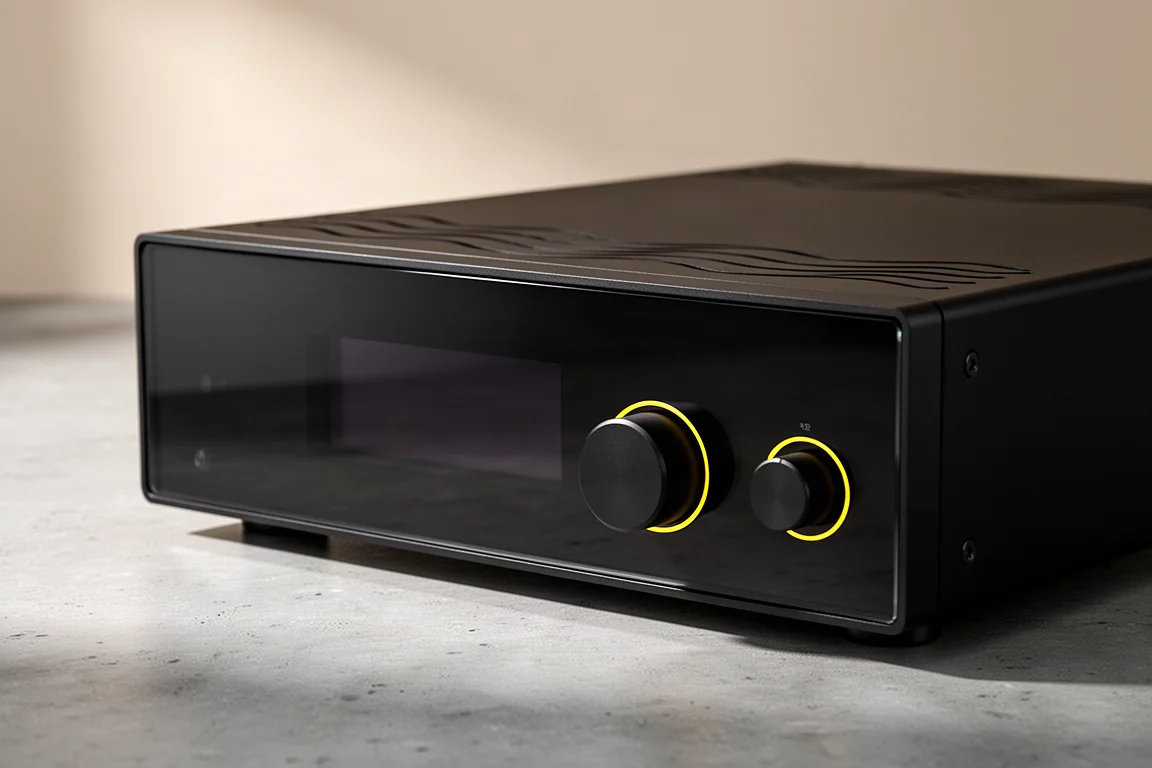
The signature accent is a thin yellow circle around the knobs on the A5 and A15, with a more restrained application of yellow on the A25 knobs. The CD5 uses a power button accented by a yellow circle and simple black buttons for the essentials, while the ST5 has no buttons and no knobs at all, so it blends into a rack without drawing attention.
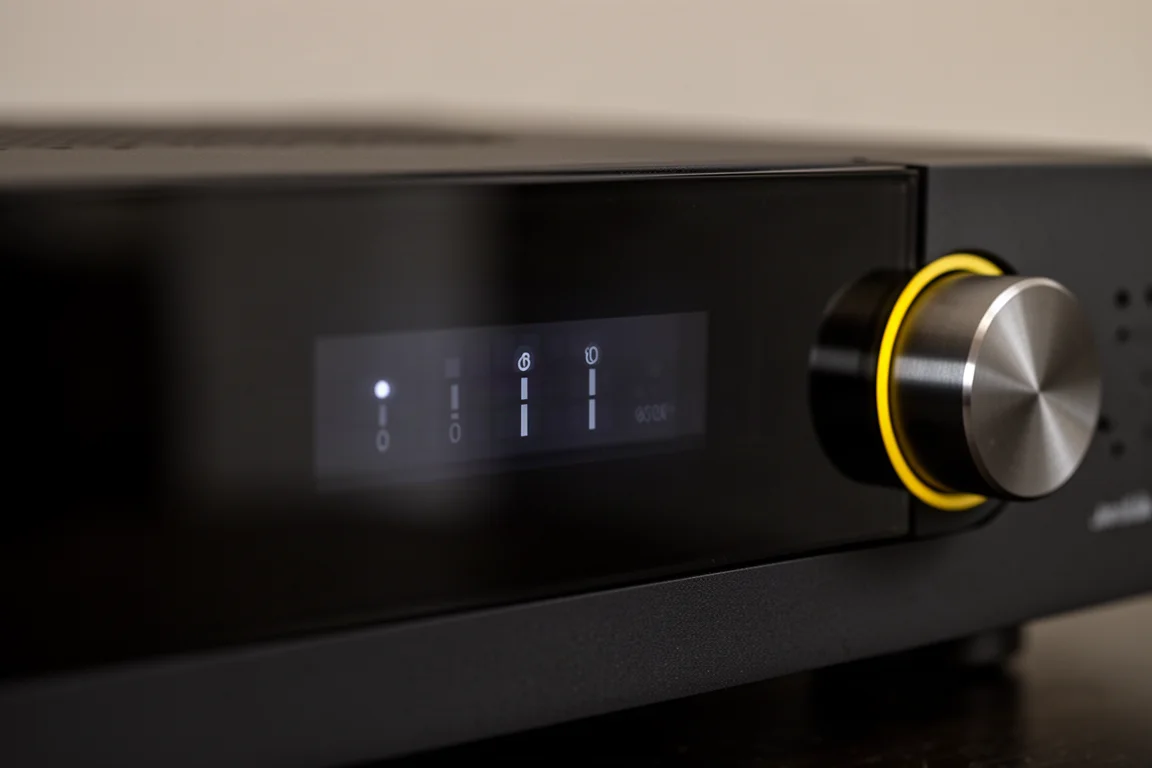
The aluminium chassis is a deep black with wavy line detailing and yellow accents along the top and sides. A cowl at the rear slightly overhangs the edges, which adds to the shape and also conceals cables. Antennas are housed in the same section, so nothing protrudes awkwardly from the back panel.
On the amplifier side, the range builds on more than 45 years of amplifier design and manufacturing. All three integrated amps include two-way Bluetooth 5.2 with adaptive Bluetooth technology, which delivers 24-bit HD audio without extra hardware and also lets a listener pair Bluetooth headphones for private or late-night sessions. Each amp also includes a built-in phono stage, a practical addition given the steady growth of turntable sales.
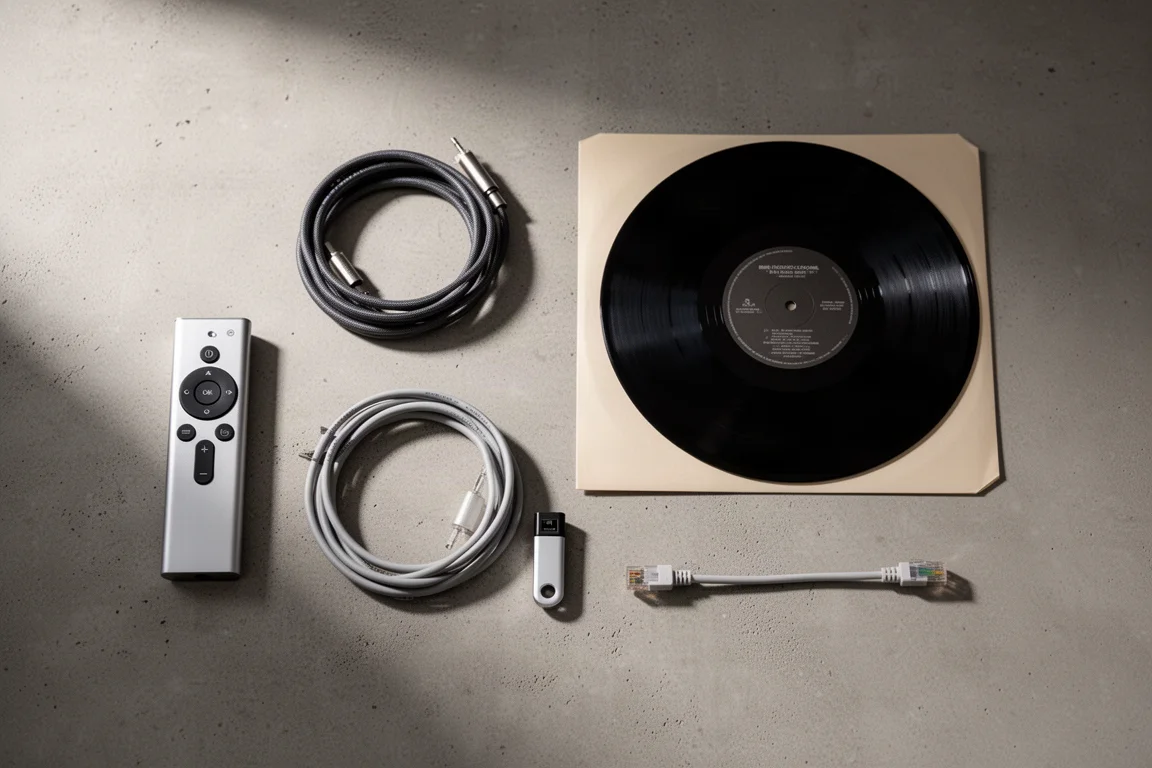
Rear connections on the integrated amps cover a power switch and inlet, a USB-A service port, ethernet, IR in, trigger in and out, an optical digital input, two RCA digital inputs, three RCA analogue inputs, a phono stage input, a preamp output and four speaker terminals. A compact remote with the most commonly used buttons is included with each amplifier.
Arcam A5: The Compact Entry Point
The A5 is the smallest amplifier in the range and is built around 50 watts per channel into 8 ohms with class AB amplification. Inside is a 24-bit/192 kHz ESS ES98 DAC. It is intended for intimate listening sessions with smaller bookshelf speakers, where its power output is comfortably matched to the job.
Its feature set is otherwise the same as the rest of the amplifier range, including the Bluetooth implementation, the phono stage and the full set of analogue and digital inputs. What it does not have is the USB-C input found on the A25, which means high-resolution playback from a laptop or a USB-C phone requires the ST5 streamer instead.
Arcam A15: More Power and Headroom
The A15 keeps the same core specification as the A5 but raises output to 80 watts per channel into 8 ohms using class AB discrete amplification. It uses a larger heat sink and a larger power supply, which makes the chassis slightly taller. The amplifier topology is also designed to drive lower impedance loads with ease.
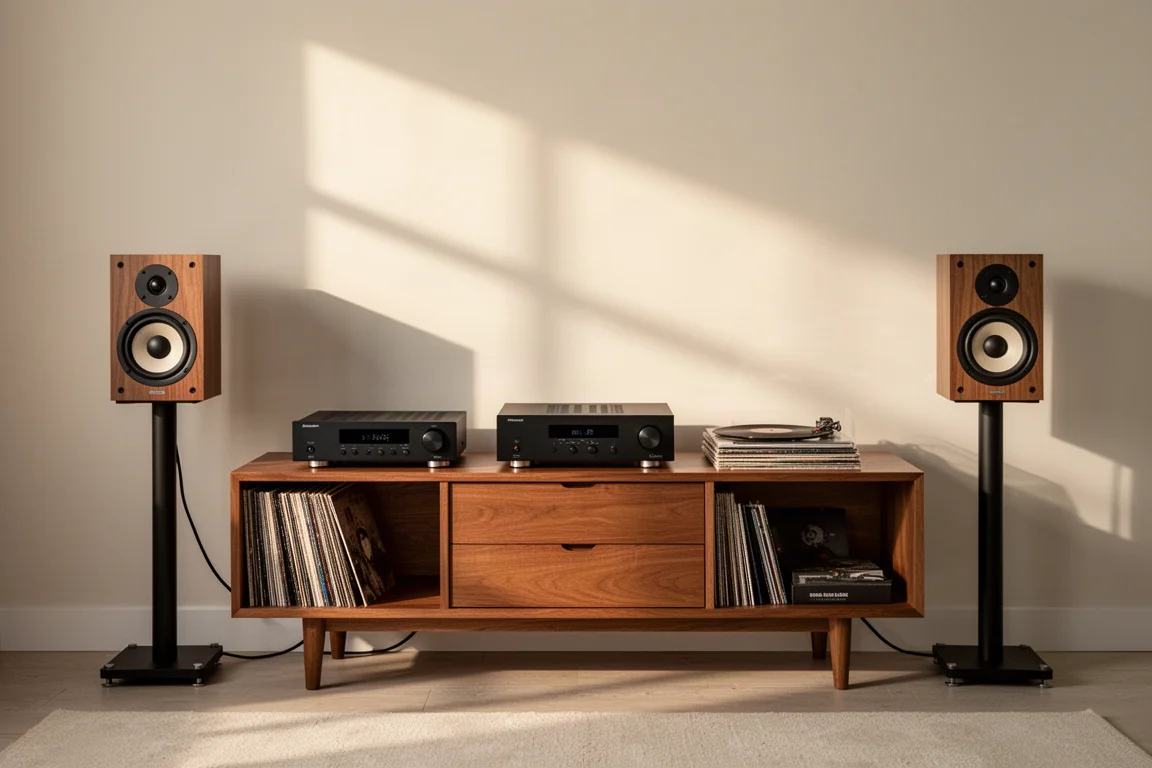
The practical difference is headroom. Both amplifiers share the same sound signature, but the A15 simply delivers more power, which makes it the better match for tower speakers and larger rooms where a more dynamic result is wanted. Like the A5, it does not include the USB-C input.
During listening sessions both amplifiers were used with a pair of JBL HDI 1600 bookshelf speakers, first over Bluetooth from a phone and then with the ST5 streamer added to the chain. Over Bluetooth the presentation was smooth and warm, with clear guitar work and drums that sounded dynamic and lifelike across a wide soundstage.
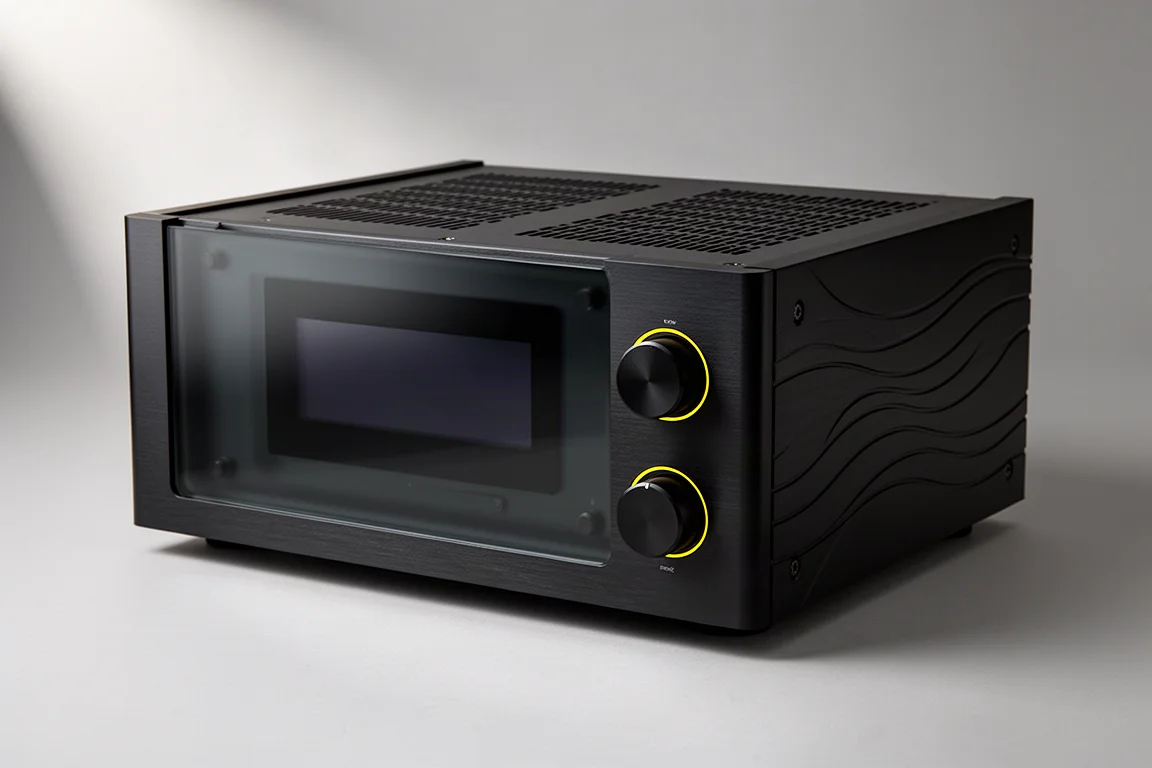
Arcam A25: Flagship Class G Amplification
The A25 is the flagship integrated amplifier in the range and the clearest step up in the lineup. It delivers 100 watts per channel into 8 ohms using class G amplification, a design that uses dual windings to run in pure class A up to 15 watts with zero crossover distortion before crossing over to class AB when more power is required. The result is an efficient design that only draws on the additional power stage when it is needed, and it switches with virtually no lag. The class G circuit here is the fifth and newest generation of a design Arcam has been refining for years.
Inside, the A25 also uses an ESS ES928A Pro DAC, a significant improvement over the converters in the A5 and A15, along with a larger power supply. The speaker terminals are beefier and higher quality, and the front panel uses a higher resolution OLED screen behind the frosted glass. Rather than a yellow ring, each knob illuminates yellow.
The A25 adds a USB-C input on the rear for high-resolution audio from a laptop or a USB-C phone, which is a useful option for listeners who would rather plug in directly than depend on a home network.
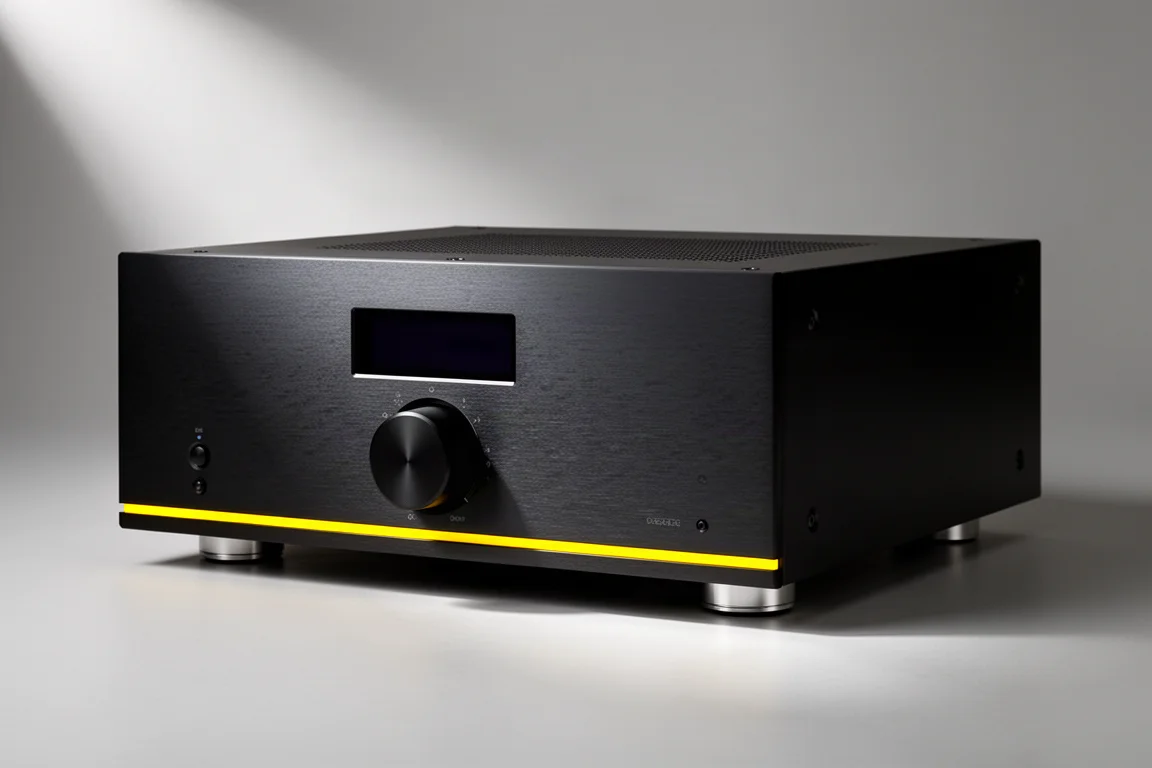
Arcam CD5: A Purpose-Built CD Player
The CD5 is designed to integrate with any of the integrated amplifiers in the range and carries the same 24-bit/192 kHz ESS ES98 DAC as the A5 and A15. It plays CD, CD-R and CD-RW discs, and it also handles high-resolution FLAC and WAV files encoded on CD as well as files stored on USB media. The rear panel offers RCA analogue outputs, a coaxial digital output, an optical output and a USB-A port for a hard drive.
The disc tray is made of plastic but feels well built, and the unit as a whole feels solid. It matches the rest of the range visually and makes an existing CD collection easy to enjoy. Adding the USB input means a hard drive or USB stick can be plugged in and played back with very little setup.
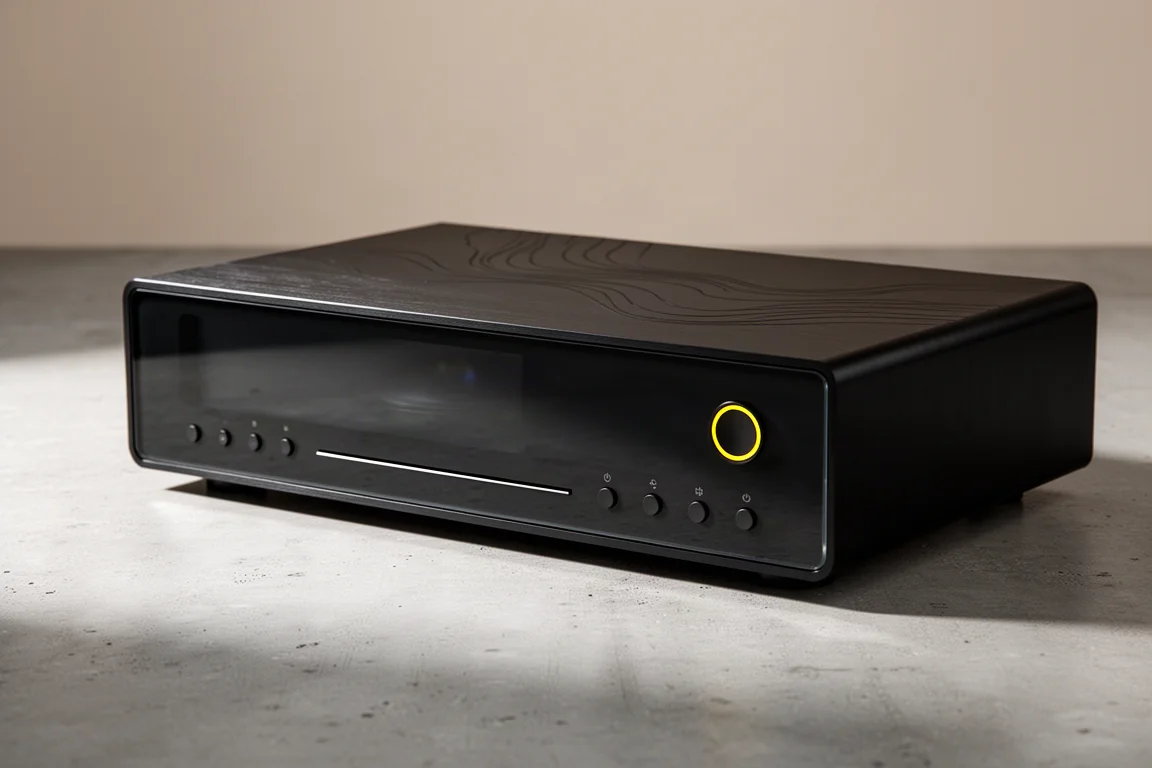
Arcam ST5: High-Resolution Streaming
The ST5 is a high-resolution music streamer intended as an upgrade for any Radia integrated amplifier. The setup is deliberately simple: connect it to the network, place it under the amplifier, connect the two and start streaming 24-bit/192 kHz audio. It uses the same DAC as the A5 and A15.
Supported services include AirPlay, Chromecast, Spotify Connect, Tidal Connect, Amazon Music and Qobuz, and the unit is Roon Ready. The most interesting feature is in-product communication. When the ST5 is paired with a Radia amplifier, the two behave as one product. Starting a stream wakes the amplifier automatically, switches it to the streamer input and begins playback. Volume changes made on a phone are sent to the amplifier, so volume control stays analogue, which is better for sound quality.
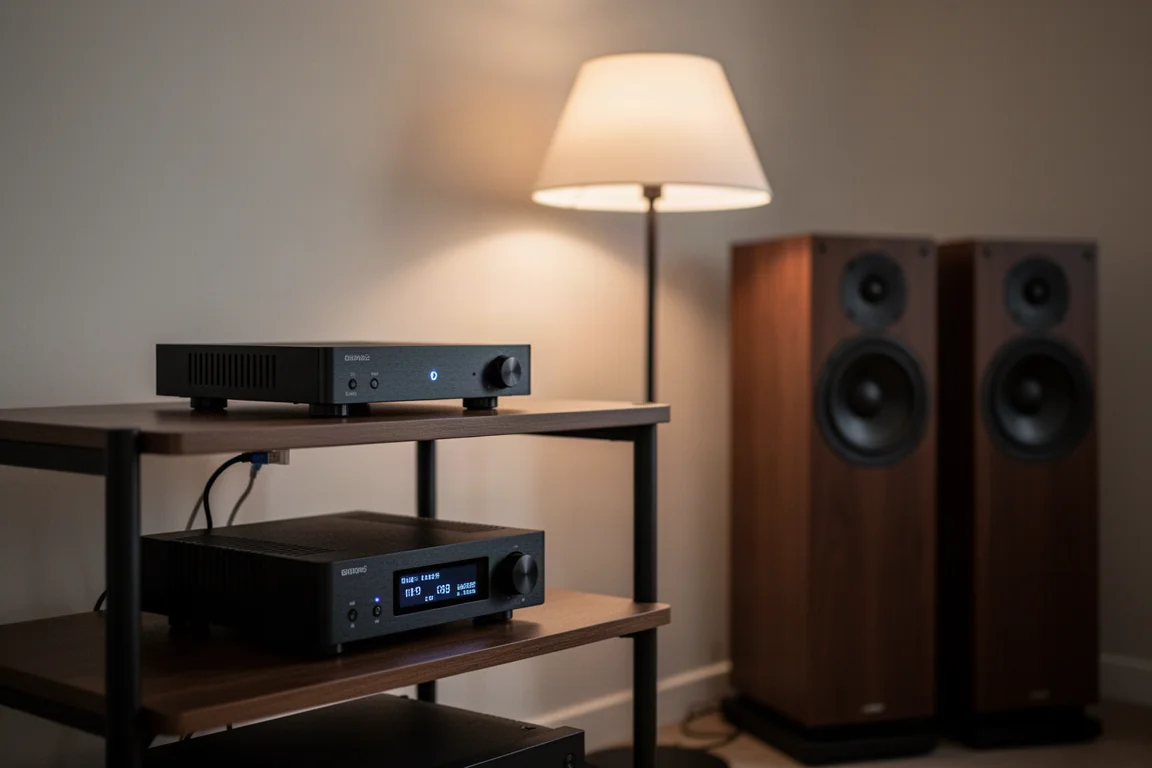
Arcam also developed a new control app alongside the streamer. It uses a low-level Bluetooth signal to detect the ST5 and guide the listener through network setup, and it includes Amazon Music and Qobuz so playback can be controlled from one place. Radio and podcast catalogues can be browsed in the app as well.
Listening Notes: How the Stack Performed
Comparing Bluetooth with network streaming on the A5 and A15 showed what the ST5 adds. The high-resolution versions of the same tracks had a greater sense of depth, a wider soundstage and more detail in each instrument. That said, Bluetooth on both amplifiers was genuinely impressive for casual listening, and a straightforward Bluetooth-only system leaves budget free for better speakers or basic room treatment.
The A25 was tested with a pair of JBL HDI 3600 floorstanding speakers and immediately stood apart from the smaller amplifiers. The larger power supply and the class G output stage brought out far more detail, even over Bluetooth, and vocals and instruments sounded noticeably more lifelike. Every nuance came through with precision, which is exceptional for an integrated amplifier at this level. Adding the ST5 made the pairing feel complete, and it is the combination that lets the A25 reach its full potential.
For listeners who prefer to avoid the extra cost of the streamer, the USB-C input on the A25 offers a direct high-resolution path from a computer or a USB-C phone. One point worth remembering: when the ST5 or CD5 is used with the A25, connect it to the A25 digital input section so the better internal components in the amplifier handle conversion.
Buying Advice: Matching the Right Components
Start with the speakers and the room. The A5 suits smaller bookshelf speakers and close listening. The A15 is the safer choice for tower speakers and larger rooms, since the extra power and headroom make a real difference. The A25 is the pick for anyone who wants the best sound in the range and is willing to invest accordingly.
The CD5 makes sense for listeners with a CD collection, and its USB input adds flexibility for digital files. The ST5 is the natural partner for the A25, and it is also a worthwhile upgrade for the A5 or A15 if high-resolution streaming matters more than pure convenience.
If Bluetooth is the plan, the A5 and A15 are both easy to recommend as they are, and the money saved can go toward speakers or acoustic treatment. Those who want USB-C high-resolution input without a separate streamer will need to step up to the A25, which was the one feature we would have liked to see across the whole amplifier range.
Conclusion
The Radia series is a cohesive range with a clear design language and a genuinely user-friendly approach. After extended time with each unit there was little to fault: the aesthetics hold up, the setup is straightforward and the sound quality is strong across the line. The A25 stands out as the best-sounding amplifier of the three, the A15 is the sensible middle ground for larger rooms, and the A5 covers smaller systems neatly. The CD5 and ST5 extend the same logic to disc playback and streaming.
Further reading
Related Reviews
Hi-Fi Audio
Accuphase C-57 vs Allnic H-7000V: Two High-End Phono Stages Compared
A fully balanced solid-state phono stage with a pitch-black noise floor meets a tube design built for well-loved records. Here is how to choose between them.
Hi-Fi Audio
Active vs Passive Hi-Fi: Five Components for a Modern System
Five components that define modern active and passive hi-fi systems, with the strengths, trade-offs and setup details worth weighing before you buy.
Hi-Fi Audio
Advance Paris A10 Apex Review: A Hybrid Integrated Amplifier That Covers a Lot of Ground
A French hybrid integrated amplifier with a class A tube preamp stage, analogue power meters, and an internal DAC and phono stage good enough to make extra boxes unnecessary.