Stereo Integrated Amplifiers
Arcam Radia A25 Review: A Slimline Class G Integrated Amplifier That Measures Clean
A compact Class G stereo integrated amplifier with a high-resolution DAC, measured power above its rating, and two clear compromises to weigh before buying.
Introduction
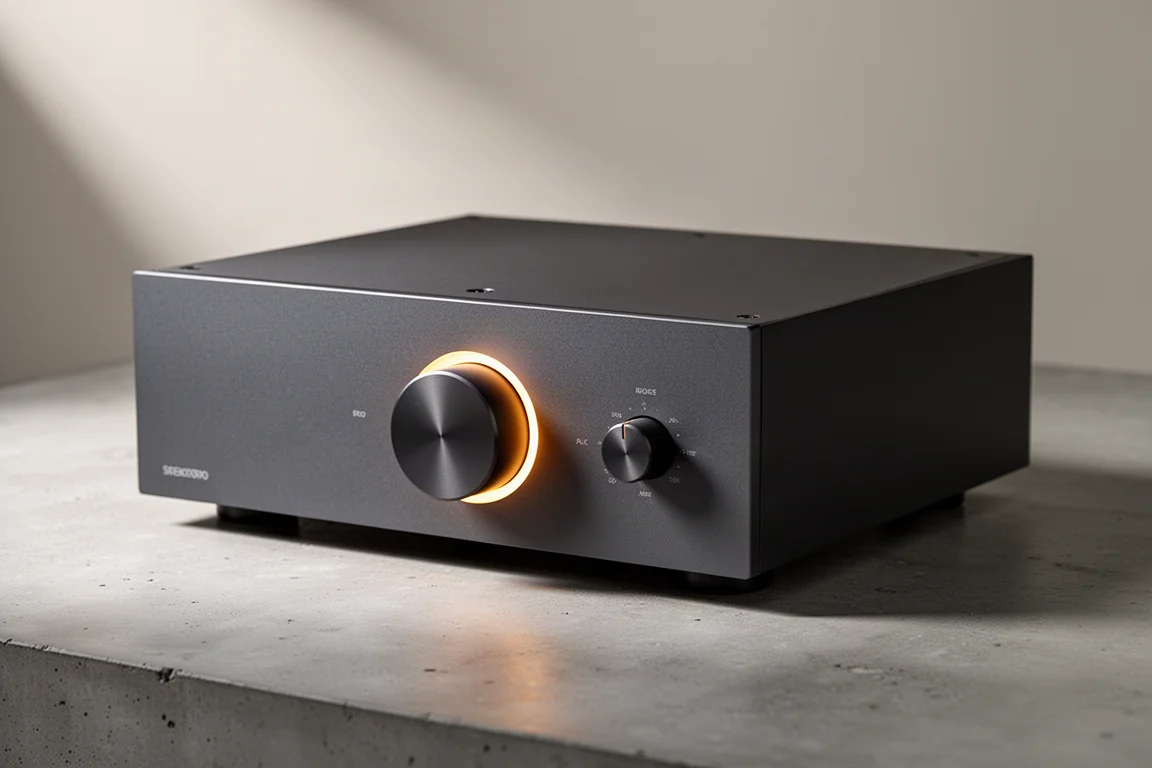
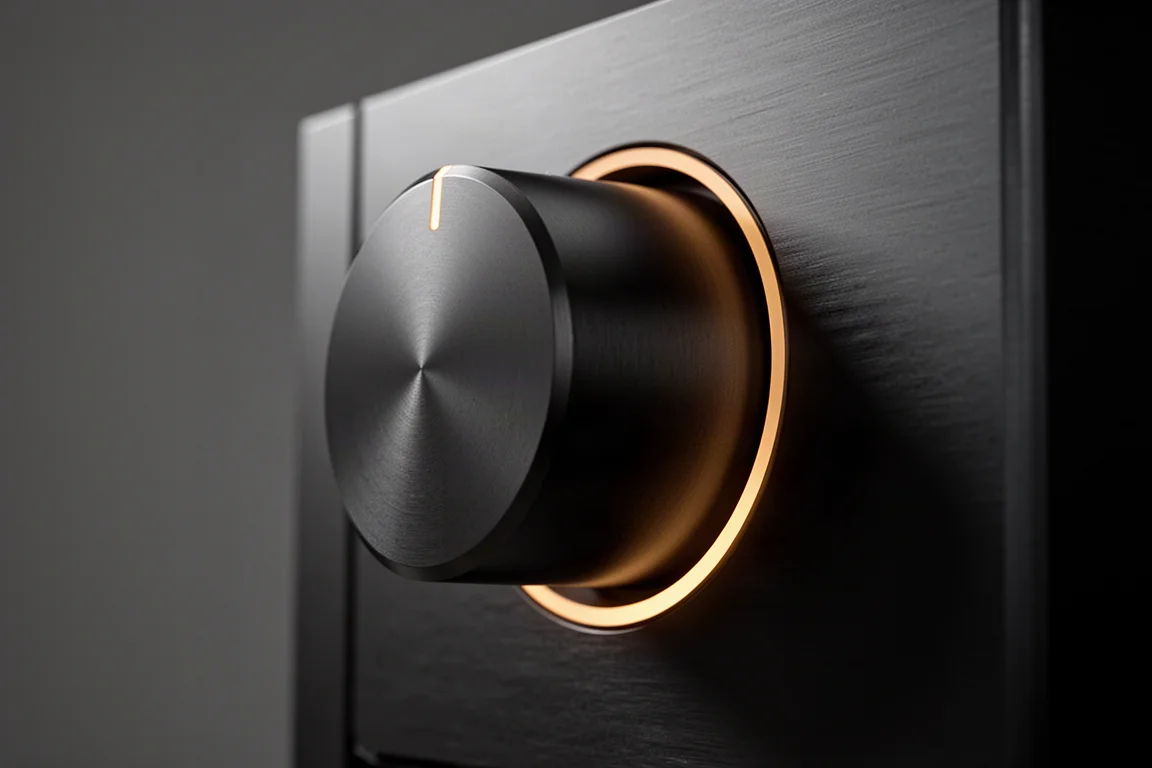
The Arcam Radia A25 is a slimline stereo integrated amplifier built around a Class G output stage, a high-resolution digital section, and a moving magnet phono input. It is sized to sit on a credenza or in a multi-purpose room, and the casework stands apart from the usual plain aluminium boxes: the volume control and input selector both carry amber-yellow halo accents, and that theme continues across the top plate and the supplied remote.
Class G operation means the amplifier idles on a low voltage rail and switches to a higher rail when large transients demand more output. That keeps dissipation low during quiet listening and helps the amplifier run cool, though the topology is more complex than a conventional linear Class AB design and requires careful engineering to keep the rail transition clean. Inside, the A25 pairs a toroidal power transformer with 6,800 microfarad and 10,000 microfarad capacitors, and the digital section is built around an ESS ES9280 Pro DAC.
The rear panel covers three analog inputs, a phono input, a pair of preamp outputs, one pair of speaker outputs, two coaxial and two optical digital inputs, and a USB-C input. The DAC accepts up to 384kHz at 32-bit over USB-C with DSD support, while the coaxial and optical inputs handle up to 192kHz at 24-bit.
Who This Product Is For
The A25 makes most sense for listeners assembling a compact two-channel system in a living room, family room, or shared space where a full-size amplifier would be awkward. Its mix of analog inputs, a phono stage, and a capable USB DAC means one box can handle a turntable, a disc player, a network streamer, and a computer without extra components.
It also suits buyers who care about measured performance. The amplifier exceeds its rated output into both 8 and 4 ohms, and it keeps noise and distortion unusually low for its class, which matters if you plan to use revealing speakers in a room where background hiss would be obvious.
It is a weaker fit for two specific buyers. Anyone who wants to use it as a standalone preamplifier should look elsewhere, because the preamp outputs run out of drive well below the level many power amplifiers need. And anyone building a serious vinyl-focused system should plan on an external phono stage rather than relying on the built-in one.
Main Strengths
Measured performance is where this amplifier earns its keep, and it holds up across the power stage, the digital section, and the noise floor.
Power Amplifier Performance
Rated at 100 watts per channel into 8 ohms and 150 watts into 4 ohms with both channels driven, the A25 met and exceeded both figures on the test bench. Full-bandwidth sweeps produced 113 watts at 0.1% THD and 119 watts at 1% into 8 ohms, then 157 watts at 0.1% and 167 watts at 1% into 4 ohms. Frequency response stays flat down to 10Hz, with the -3dB point up around 70kHz.
Noise, Distortion, and Dynamic Headroom
At one watt into 8 ohms the leading harmonic sits 10dB below the fundamental, and the largest residual supply component, at 120Hz, measures about -100dB. Signal-to-noise measured 95dB at one watt into 8 ohms, a figure that should keep hiss inaudible even with high-sensitivity speakers. At 50 watts the amplifier measured 108dB against a 110dB specification, and channel separation stayed above 85dB at 1kHz and 75dB at 20kHz.
Class G rail switching becomes visible in the 4 ohm sweeps just above 40 watts, and even there distortion measured around 0.002%, far below the rough numbers older Class G designs were known for. Burst testing that simulates music program material delivered 155 watts into 8 ohms and 260 watts into 4 ohms, roughly 2dB of dynamic headroom above continuous output. Efficiency at rated power lands somewhere around 60 to 70%, and the chassis stayed cool in normal use.
That headroom figure is one practical advantage of a linear supply paired with a linear output stage. Amplifiers that rely on a switch-mode supply often deliver the same figure for continuous, 1kHz, and dynamic power, so there is nothing extra in reserve for transients.
Digital Section and Connectivity
The ESS ES9280 Pro DAC handles up to 384kHz at 32-bit over USB-C and supports DSD, while the optical and coaxial inputs accept up to 192kHz at 24-bit. Filter behaviour at 44.1kHz sampling is clean: a gentle, gradual rolloff that begins around 20kHz, with no ringing in the reconstruction filter and no out-of-band noise artefacts. The digital implementation has clearly been kept tidy.
Connectivity is generous for the size, with three analog line inputs, a phono input, preamp outputs, one pair of speaker outputs, two coaxial and two optical inputs, and USB-C.
Things to Consider Before Buying
The preamp outputs are the main compromise. They begin clipping at roughly 1.04 volts at 0.1% distortion and 1.1 volts at 1%, and most power amplifiers need more than 2 volts RMS to reach full output given typical gain figures. Distortion at that output is exceptionally low, close to 100dB SINAD, but the available drive level is the limiting factor.
Arcam explains the design intent by noting that the left and right preamp outputs are meant primarily for connecting subwoofers rather than feeding a separate power amplifier. There is no bass management, delay, or level control on those outputs, which limits how thoroughly a pair of subwoofers can be integrated.
Arcam also notes that the internal gain structure runs the volume control at a higher voltage to keep noise and distortion low, then steps the signal back down at the preamp outputs to match the amplifier stage. That trade-off explains both the excellent noise performance through the combined preamp and power amp sections and the modest preamp output level.
Phono Stage Performance
The moving magnet phono stage measured very linear out to the limit of the test equipment, roughly 80kHz, with an intentional subsonic filter that is about 3dB down at 20Hz. Distortion stayed below 0.1% with a 1 millivolt drive signal. With a 5 millivolt drive signal, which falls within the normal output range of many moving magnet cartridges, distortion rose sharply below 300Hz, reaching around 5%.
Arcam states that this behaviour came from pre-production units and that a running change has been made to the phono section. Signal-to-noise on the phono input measured 75dB at 50 watts against an 80dB specification, so the phono stage is the least competitive part of the design. Buyers who take vinyl seriously are better served by an external phono preamp feeding one of the clean line inputs.
Buying Advice
Buy the A25 for its power amplifier and DAC sections, not for its preamp outputs or its phono stage. Used as an integrated amplifier with suitable speakers, it delivers measured performance that is difficult to find at this level.
Speaker matching matters. High-sensitivity floorstanders with strong bass extension let the amplifier play to its strengths without leaning on the preamp outputs, and models such as the JBL HDI 3600 or 3800, or the Polk Reserve line, are sensible pairings on paper. Feed it through the USB-C or coaxial input for high-resolution material and the digital section will not be the weak link.
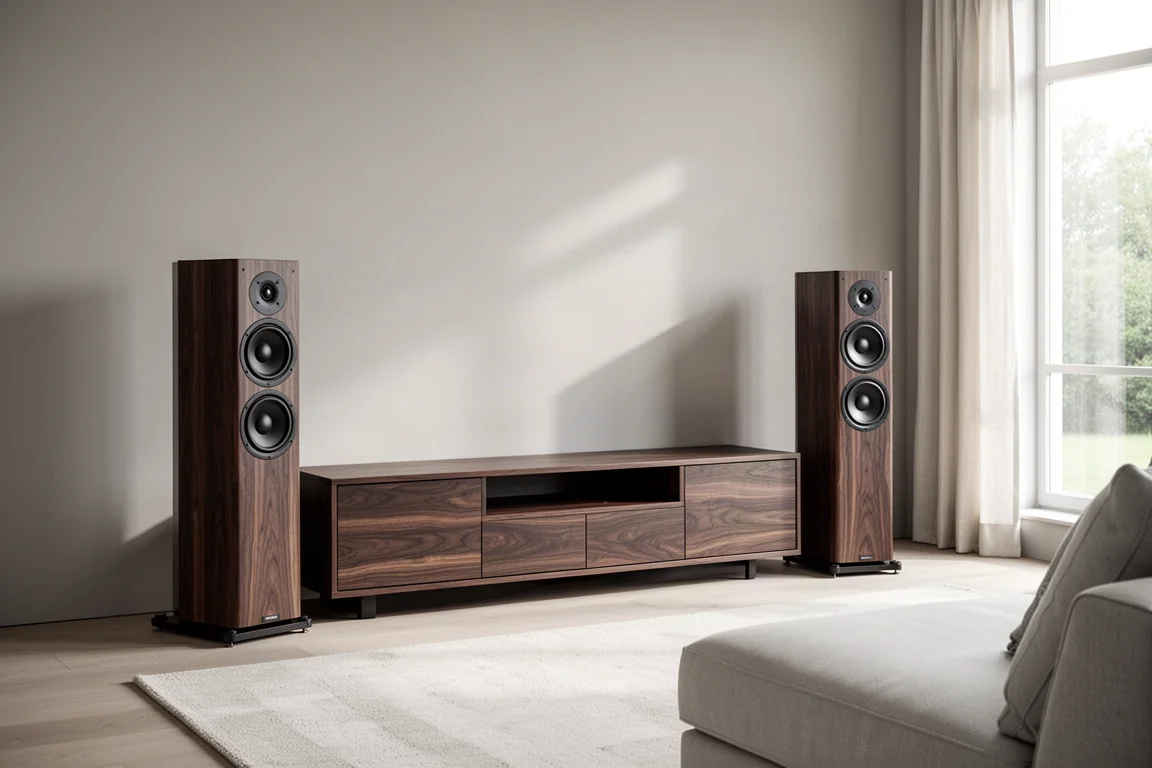
If a subwoofer is part of the plan, the preamp outputs will work, but expect to set levels and crossover points on the subwoofer itself rather than in the amplifier. If the A25 is destined for a second system, or a compact main system played at moderate levels, the limited preamp drive will rarely matter in practice.
Conclusion
The Arcam Radia A25 is a genuinely well-engineered slimline integrated amplifier. It beats its rated power into 8 and 4 ohms, keeps noise and distortion remarkably low through the preamp and power amp sections together, adds useful dynamic headroom from its linear supply, and runs cool thanks to Class G efficiency. The DAC section is clean and well implemented, and the chassis looks more considered than most at this level. The preamp outputs and the phono stage are the two areas to weigh carefully before buying, and for most listeners neither will be a deal breaker.
Product link
View more details for Arcam Radia A25
This product is mentioned in the review. Check the specifications, options, and compatibility before buying.
View more details for Arcam Radia A25Further reading
Related Reviews
Hi-Fi Audio
Accuphase C-57 vs Allnic H-7000V: Two High-End Phono Stages Compared
A fully balanced solid-state phono stage with a pitch-black noise floor meets a tube design built for well-loved records. Here is how to choose between them.
Hi-Fi Amplifiers
Accuphase E-280 Review: Entry-Level Accuphase With Flagship Attention to Detail
A close look at the Accuphase E-280 integrated amplifier, covering its champagne build, AAVA volume control, sound quality, and the speakers and sources that suit it best.
High-End Audio
Accuphase E-3000 Review: A Class AB Integrated Amplifier Built to Last
The Accuphase E-3000 is the entry point into a legendary Japanese high-end line. Here is how it sounds, how it is built, and who should consider it.