Hi-Fi Audio
Arcam A25 Review: A Class G Integrated Amplifier With Real Drive
A close look at the Arcam A25, a 100W Class G integrated amplifier with a Sabre DAC and a built-in phono stage, plus the trade-offs to weigh before buying.
Introduction
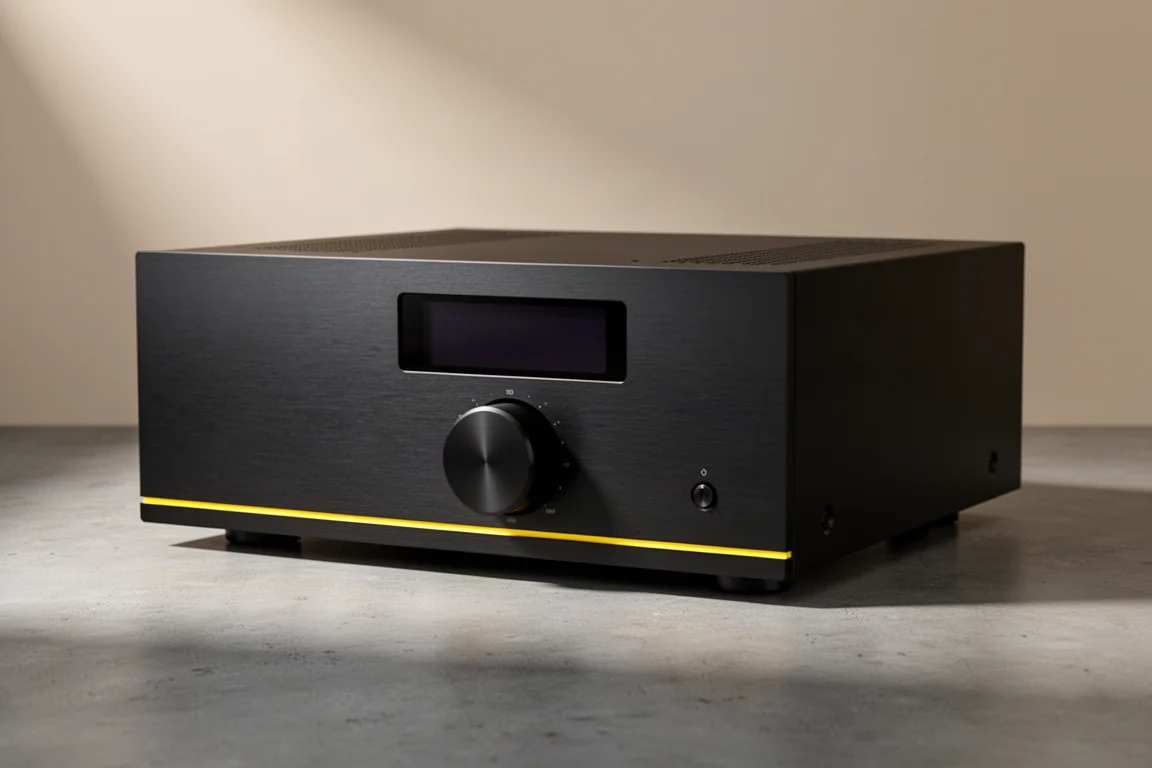
The Arcam A25 is the most powerful of the three integrated amplifiers in Arcam’s Radia series, with a rated output of 100 watts per channel into 8 ohms and 165 watts into 4 ohms. It also marks a clean break from the brand’s long-standing matte white and grey look, arriving in matte black with yellow accents.
The amplifier uses a Class G output stage rather than Class D. Class G behaves more like a Class A/B design in character, but it draws on multiple power supplies and engages them only as the music demands, which means it sips power at low volumes instead of running at full output the way a pure Class A amplifier does.
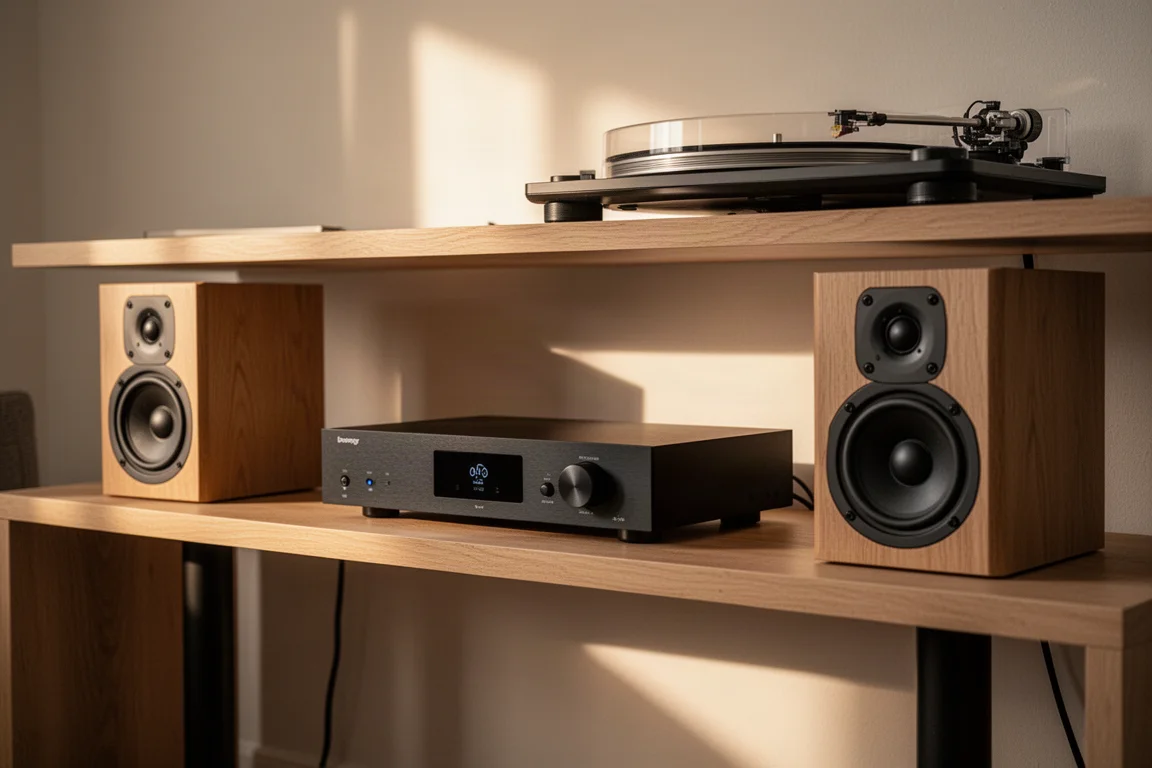
That combination of traditional amplification and modern digital inputs makes the A25 a slightly unusual proposition: a two-channel amplifier with a built-in ESS Sabre DAC, a dedicated moving magnet phono stage and Bluetooth, but no streaming platform, no control app and no HDMI. Setup is correspondingly simple, and the amplifier settles into a stereo system with very little fuss.
Who This Amplifier Is For
The A25 suits listeners who already have their sources sorted and want the amplifier itself to be the strongest link in the chain. Vinyl listeners get a genuinely useful built-in moving magnet phono preamp, which paired well with a reference turntable and cartridge during listening.
It also makes sense for anyone running demanding loudspeakers. The A25 drove a pair of large Bowers and Wilkins 801 Signatures and a pair of SVS Titans without tripping up, and it handled Wharfedale Super Denton and KEF R3 Meta speakers with no complaints at all.
It is not the right choice for listeners who want an all-in-one smart integrated amplifier. There is no built-in streaming, no additional wireless control, no smartphone app and no smart home support, so anyone expecting to run the amplifier from a phone will need to look elsewhere.
Main Strengths
The A25 earns its place on sound quality first, with enough power and control to handle a wide range of speakers.
Sound Character and Tonal Balance
Tonally the A25 is mostly neutral, with a hint of low mid-range and mid-bass weight and a very subtle roll-off at the top. It sits between the more affordable Class D designs and costlier high-end amplifiers, offering more resolution and detail than the former without quite matching the effortlessness of the latter.
The mid-range is neutral in tone, but compared with the more expensive Yamaha A-S2000 the Arcam carries a little more weight and presence, which gives singer-songwriters more physical dimension. For vocals, particularly female vocalists, the Arcam was the preferred of the two.
At the top end the A25 is not the most extended amplifier available, but it is never bright, etched or fatiguing. There is enough detail, air and decay that metallic instruments still sound metallic and true to life, without the over-the-top brilliance that can accentuate sibilance.

That balance is a large part of the appeal. The A25 is an amplifier that can be listened to all day without the treble drawing attention to itself, and for many systems that will matter more than outright extension.
Power Delivery and Speaker Matching
The Class G design gives the A25 a firm grip on difficult loads. Bass is well dampened, controlled and full of detail, and large woofers are handled without any sense that the amplifier is working at its limit. With the 801 Signatures the chassis ran a little warm, but it never gave up.
Dynamics and sound staging are similarly well behaved. When a speaker is driven properly, nothing in the presentation gets louder or softer in isolation as the volume changes; everything scales evenly. The A25 achieves that consistently, so speakers capable of wide, detailed stages with explosive dynamics keep those capabilities intact.
Things to Consider Before Buying
A few omissions and design decisions are worth weighing before committing to the A25.
Connectivity and Everyday Controls
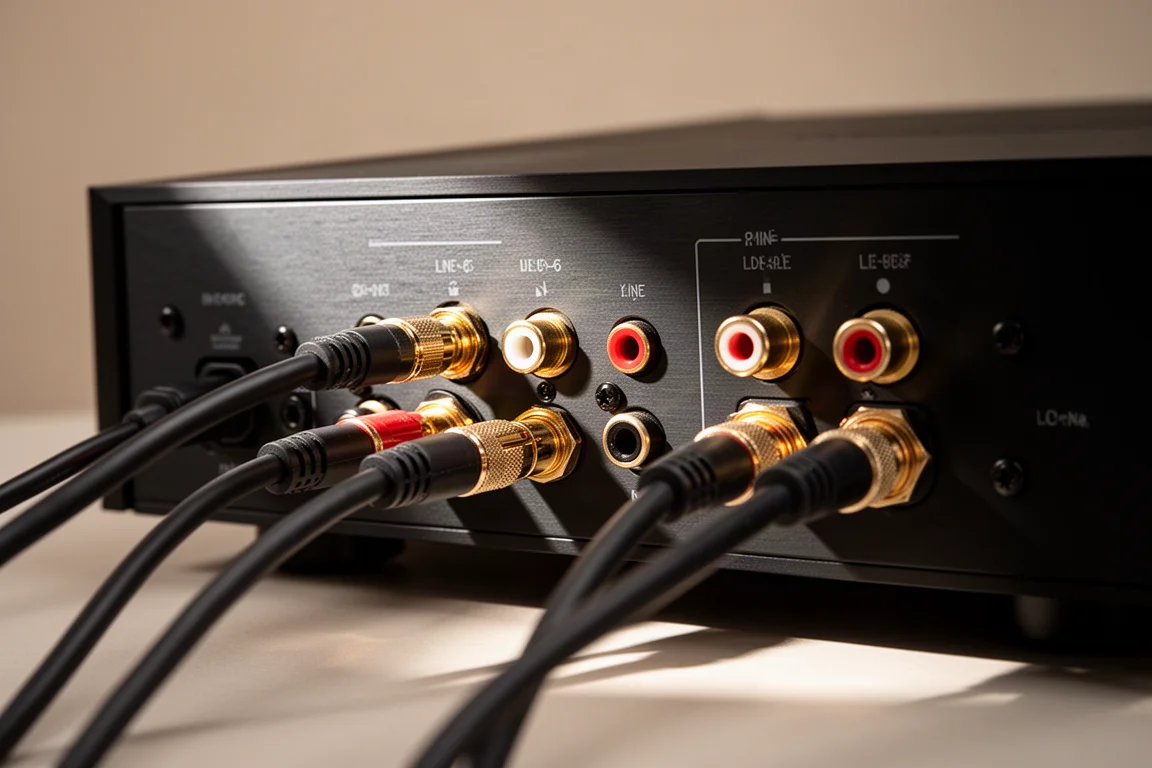
On the digital side there is a coaxial input, a single optical input and a USB input feeding an ESS Sabre ES9280A Pro DAC that accepts high-resolution signals, plus Bluetooth with aptX for convenience. On the analog side there are three RCA inputs, the moving magnet phono stage and a single pair of unbalanced preamp outputs for a third-party amplifier or a subwoofer.
There is no HDMI input, and there is no internal bass management, so a subwoofer’s crossover, phase and level all need to be set manually. There are also no bass and treble tone controls; balance is provided, though accessing it is not especially intuitive.
If streaming is a priority, Arcam’s standalone ST5 streamer is a perfect visual match for the A25 and adds AirPlay, Chromecast and internet radio, but its streaming feature set is limited and the companion app proved unreliable in use, so that money may be better spent elsewhere.
Design and Ergonomics
The matte black and yellow finish is a bold choice that will not sit comfortably in every system rack. More practically, the decorative flap that covers the rear panel does help conceal cable clutter, but it makes connecting cables difficult, particularly when reaching over the top of the amplifier.
Buying Advice
The A25 sits at around $1,500, roughly the same territory as the Audiolab 7000A. The Audiolab offers an HDMI input but less power, and in a direct comparison the Arcam sounded more confident, with greater control over difficult-to-drive speakers.
The Yamaha A-S1000 and the more expensive A-S2000 are easier to live with day to day and allow more flexibility in user control, although the Arcam’s sound was preferred in both cases. That trade-off between sound quality and everyday convenience is the central decision here.
Arcam has since announced new Radia integrated amplifiers that add built-in streaming, high-resolution displays, smart home technology, HDMI and more power. Anyone who wants those features would be sensible to wait, while anyone who already has a streamer or DAC and simply wants a strong two-channel amplifier has less reason to delay.
Conclusion
The Arcam A25 gets the fundamentals right. It is a Class G integrated amplifier with genuine drive, a neutral and unfatiguing tonal balance, a capable built-in DAC and a useful phono stage, all in a package that is simple to set up. Its limitations are real: no HDMI, no streaming, no tone controls and a rear panel that is awkward to work with. Buyers who need those features should look at the alternatives or wait for the newer Radia models, but for listeners who want the amplifier itself to carry the sound quality, the A25 makes a convincing case.
Product link
View more details for Arcam A25
This product is mentioned in the review. Check the specifications, options, and compatibility before buying.
View more details for Arcam A25Further reading
Related Reviews
Hi-Fi Audio
Accuphase C-57 vs Allnic H-7000V: Two High-End Phono Stages Compared
A fully balanced solid-state phono stage with a pitch-black noise floor meets a tube design built for well-loved records. Here is how to choose between them.
Hi-Fi Audio
Active vs Passive Hi-Fi: Five Components for a Modern System
Five components that define modern active and passive hi-fi systems, with the strengths, trade-offs and setup details worth weighing before you buy.
Hi-Fi Audio
Advance Paris A10 Apex Review: A Hybrid Integrated Amplifier That Covers a Lot of Ground
A French hybrid integrated amplifier with a class A tube preamp stage, analogue power meters, and an internal DAC and phono stage good enough to make extra boxes unnecessary.