Aquascaping
Aquascaping Adhesives Buyer's Guide: Super Glue, Accelerator, and Mortar
A practical guide to the four adhesives that hold a reef aquascape together, from extra thick gel and underwater glue tubes to instant accelerator and load-bearing mortar.
Introduction
Aquascaping is one of those jobs where you want to get it right the first time. Rock has to be stacked so it looks natural, and it has to stay that way, whether the tank is still dry on the bench or already full of water. The adhesive you reach for makes the difference between a structure that holds and one that shifts the first time you bump it.
Two-part epoxy is the obvious first guess for many hobbyists, and it is not the tool recommended here. It does not bond well to rock, it tends to crumble and fall apart in the tank over time, it takes a long time to cure when used outside the water, and its color rarely matches natural rock, so the joints stay visible long after the tank has settled.
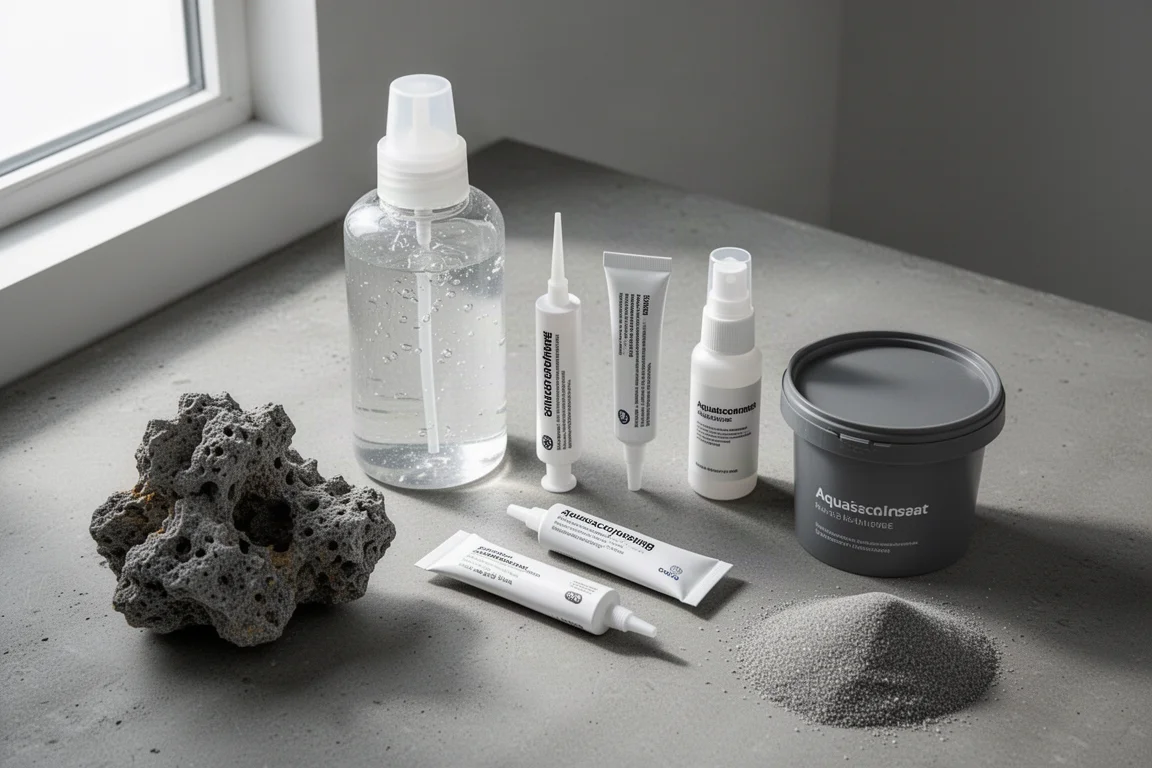
What works instead is a small family of cyanoacrylate products plus one purpose-made mortar: an extra thick super glue gel for dry assembly, slim glue tubes for work underwater or in tight spots, an accelerator that sets the glue on contact, and an aquatic mortar for joints that will carry real weight. There is no single best product across all four, because the right tool depends on whether the rock is dry or submerged, how much load the joint has to bear, and how visible the bond will be.
Matching the Adhesive to the Job
Three questions settle most aquascaping adhesive decisions.
The first is whether the rock is dry or underwater. Extra thick gel in a bottle is the fastest and cheapest way to build a structure on a dry bench. Once water is in the tank, a bottle becomes a liability and a tube format takes over.
The second is how much weight the joint has to carry. Marco rock stacks well on its own and holds together through friction and shape, so most contact points need only a bonded spot or two. A cantilevered section that reaches out from a small contact area is a different problem, and that is where mortar earns its place.
The third is visibility. Clear glue disappears against rock once it has cured, while mortar is grey, fills gaps, and can be disguised with sand and a thin coat of watery glue.
Best for Dry Rock: BRS Super Gel Extra Thick
Marco rock is the most popular rock in the hobby, and it is also one of the easiest to stack. Pieces interlock and hold their position without help, so the job is usually about locking a few key contact points rather than binding an entire structure together.
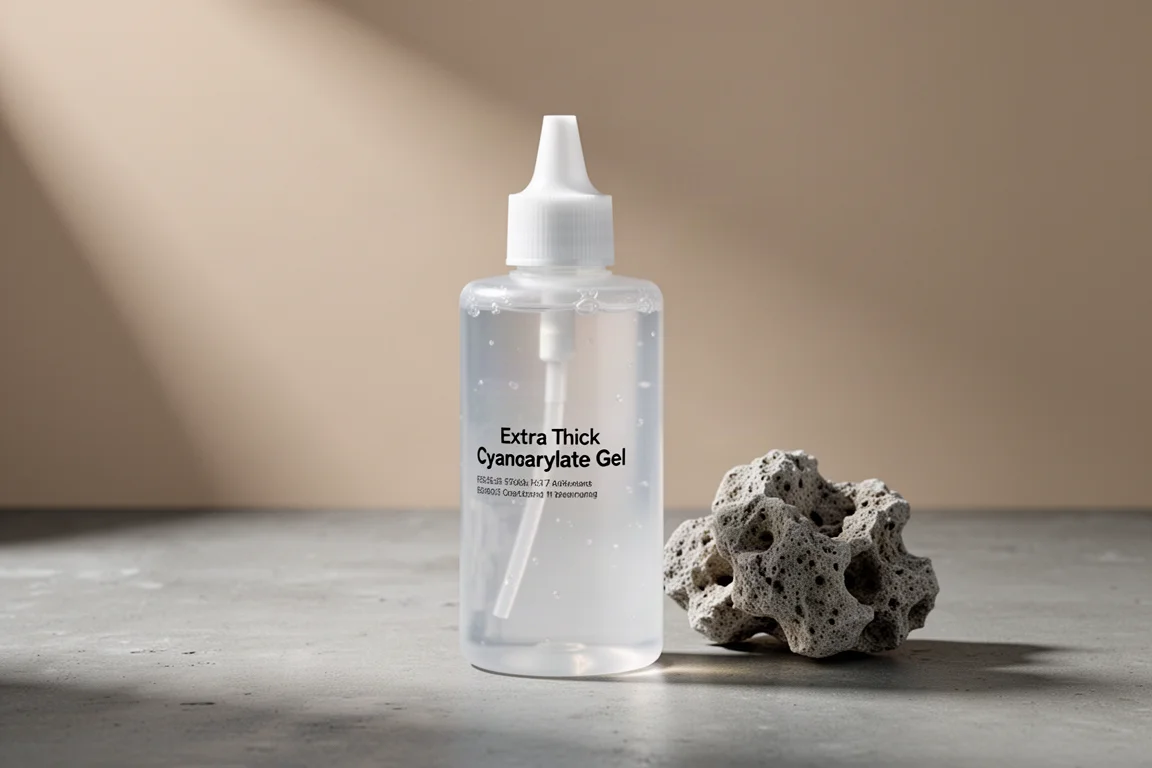
A 10 ounce bottle of BRS Super Gel Extra Thick is the cheapest and simplest way to do that. The gel is thick enough to stay exactly where it is placed, so it can be applied generously outside the tank and pushed into the joint with a small stick or a piece of scrap to form a mould around both pieces of rock.
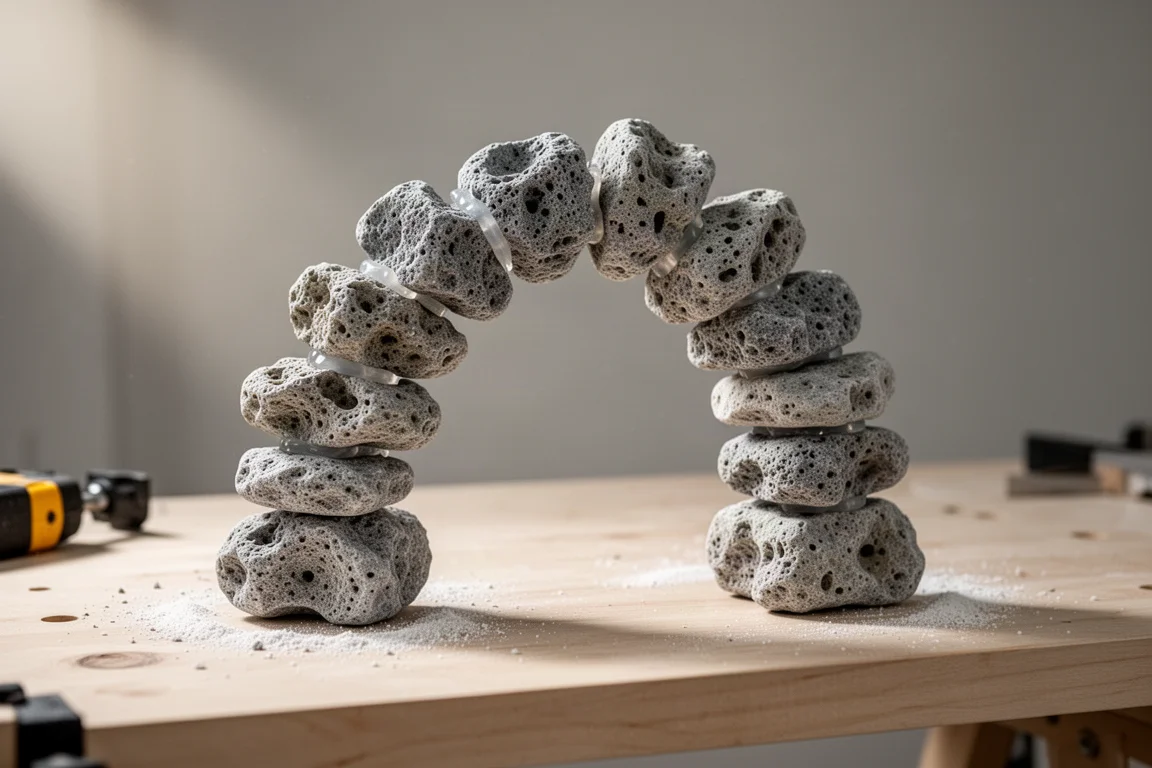
The gel is clear, which means it hides well and is often invisible once the structure is in the water. Sprayed with accelerator, it sets immediately, and a finished section can be lifted and repositioned without waiting. With a generous amount of glue and accelerator, even aquascapes that look like they should not hold together can support weight within about a minute, which keeps a long build moving instead of stalling while each layer cures.
Best for Wet Stacking: BRS Extra Thick Glue Tube
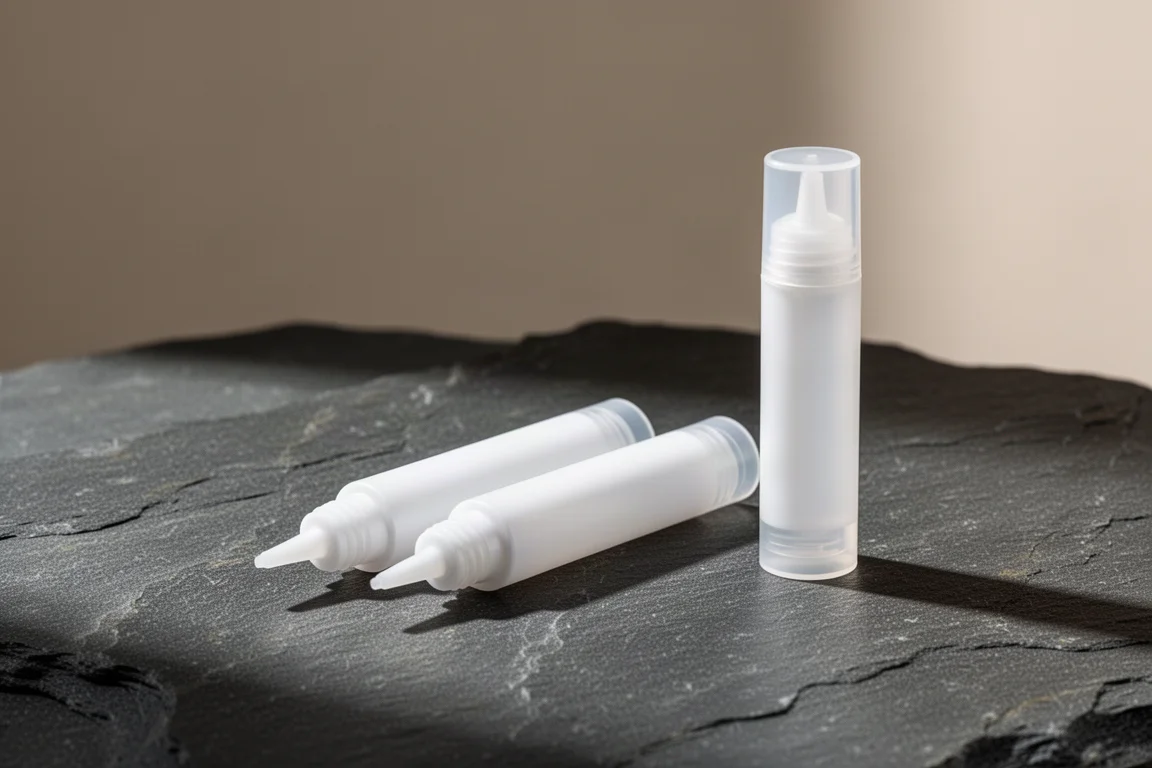
Some builds end up being finished with water already in the tank. The glue is the same as the large bottle, but the packaging matters underwater. A bottle cannot maintain even pressure when it is squeezed below the surface, which allows water to be drawn back into the container and ruin the remaining glue. The 20 gram BRS Extra Thick Glue Tube avoids that problem entirely, because the glue is rolled out under constant pressure and nothing flows back in.
Underwater, the glue forms a skin and a small ball as it leaves the nozzle, which can then be worked into a gap like putty. The slim tube also reaches into places a bulky bottle cannot, which makes it easier to reinforce an awkward joint without dismantling the structure around it.
Tubes cost a little more per unit than the large bottle, and many aquascapers keep several on hand anyway. Leftover glue in a tube keeps for a long time and can be used for other jobs, while an opened bottle has a limited working life. Tubes are also useful on dry rock in hard to reach areas where a precise bead is more practical than a large dollop.
Best for Fast Bonds: BSI Insta-Set
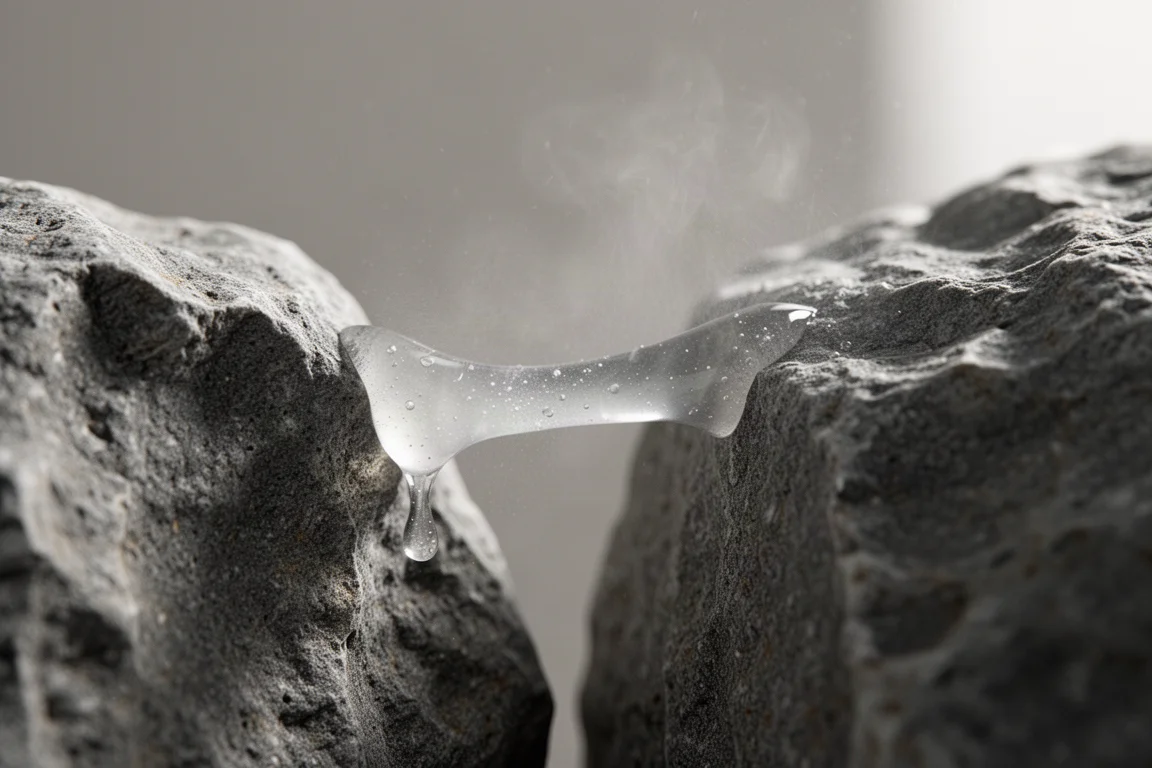
Accelerator is what turns super glue into an instant bond. A spray over a freshly glued joint sets the adhesive on contact, and the structure can be handled almost immediately. That single property is what makes large, complex aquascapes practical, because the build can continue without waiting for each layer to dry.
BSI Insta-Set is the accelerator used most often for this kind of work. It may cost a couple of dollars more than ordering online, but it is stocked at hobby and radio control shops, so it can be picked up locally in the middle of a project instead of pausing a build for a delivery.
Large negative space builds consume a surprising amount of it. The realistic starting point is more than you think you need, and two bottles of glue with several cans of accelerator is not unusual for a single ambitious aquascape.

Best for Load-Bearing Joints: E-Marco Mortar
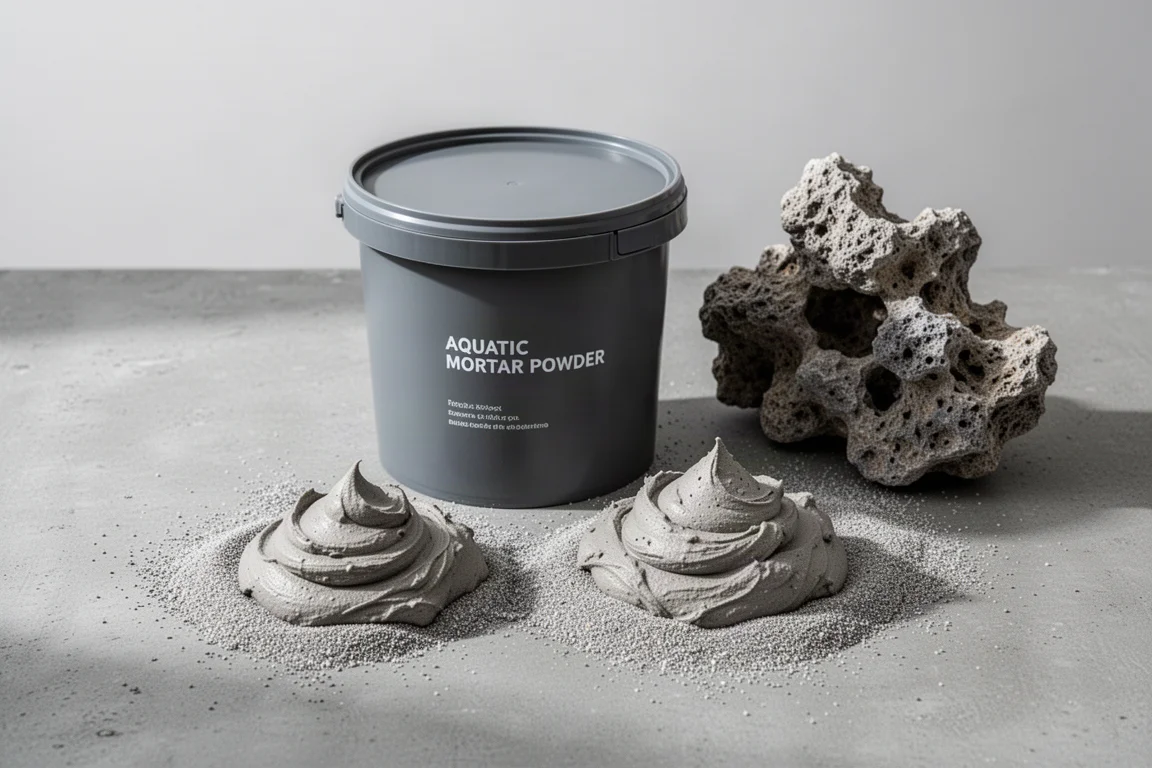
When a structure cantilevers out from a narrow contact point and has to stay that way for years, glue alone is not the right answer. Aquarium mortar is mixed up, pushed into the interlocking area between two rocks, and left to cure into a rigid structural bond that fills the nooks and crannies between pieces.
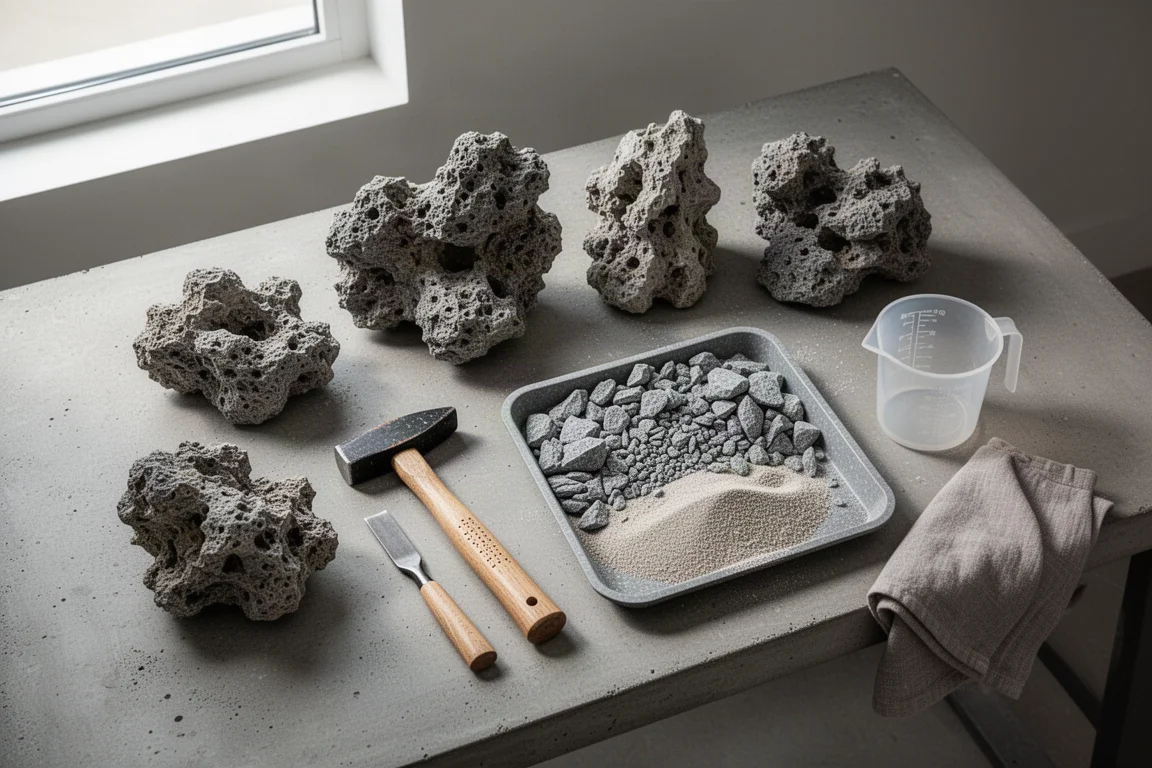
Mortar does a second job that glue cannot: it hides the transition between rocks. Once the joint is filled and smoothed, it reads as a single continuous piece of rock rather than two pieces sitting next to each other. To disguise the grey color, apply a thin, watery super glue over the mortar and sprinkle sand on top. The sand matches the rock, and if you are breaking up rock with a hammer for a build, that process produces the sand you need.
This particular mortar is designed as an aquatic mortar that can cure underwater, and it uses a liquid resin instead of water, which leaves it slightly flexible rather than brittle. Generic cements are a gamble by comparison. One attempt using frag plug cement, cured for months in water that was changed daily, still left every pipe in the system packed with cement. The purpose-made mortar costs a few dollars more and avoids a large bag of leftover cement sitting in the house.
Overall Buying Advice
Most aquascapers do not need all four products for a single build. Match the purchase to the job: dry stacked Marco rock needs a bottle of extra thick gel and an accelerator, a tank that is already filled needs tubes, and any structure with cantilevered sections needs mortar as well.
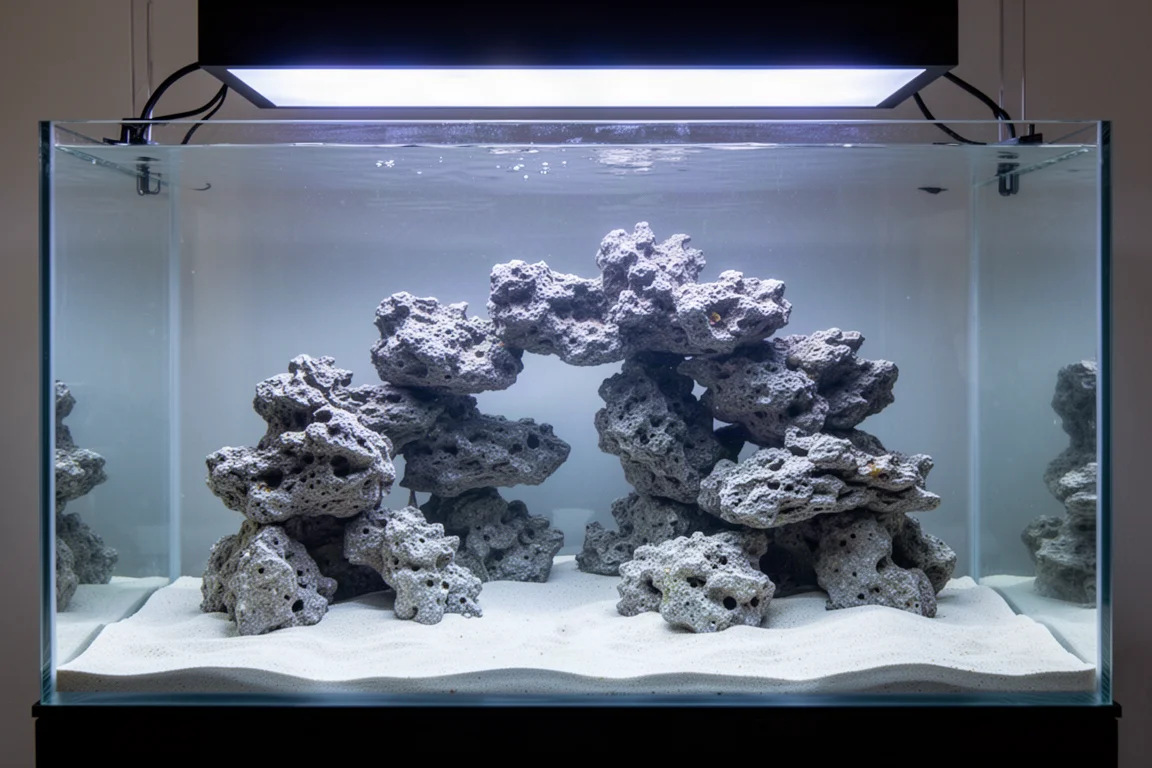
Buy more glue and accelerator than you think you need. Running out halfway through a build is the most common frustration, and spare tubes are cheap insurance because they store well and get used eventually on frags and repairs.
It is also worth setting aside the older rod and pin method. Drilling hard rock accurately is difficult, and getting every piece to line up in the right order during assembly rarely works out as planned. Mortar and super glue produce a more forgiving result with fewer tools, and the joint is stronger for it.
Conclusion
The right aquascaping adhesive depends entirely on the job in front of you. Extra thick gel builds dry rock structures quickly and almost invisibly, glue tubes keep the same bond workable underwater and in tight spots, an accelerator lets the whole build move at speed, and aquatic mortar makes the joints that carry real weight permanent.
Start with the method you are actually using, buy more glue and accelerator than feels necessary, and leave two-part epoxy out of the toolbox.
Further reading
Related Reviews

Aquascaping
Aquascaping Adhesives Compared: Which Bond Holds Up Best?
A practical comparison of five aquascaping adhesives, covering dry rock bonds, saltwater-soaked rock bonds, and which option suits each reef-building job.
Aquascaping
Aquascaping Beginners Guide: Essential Equipment and Shopping Tips
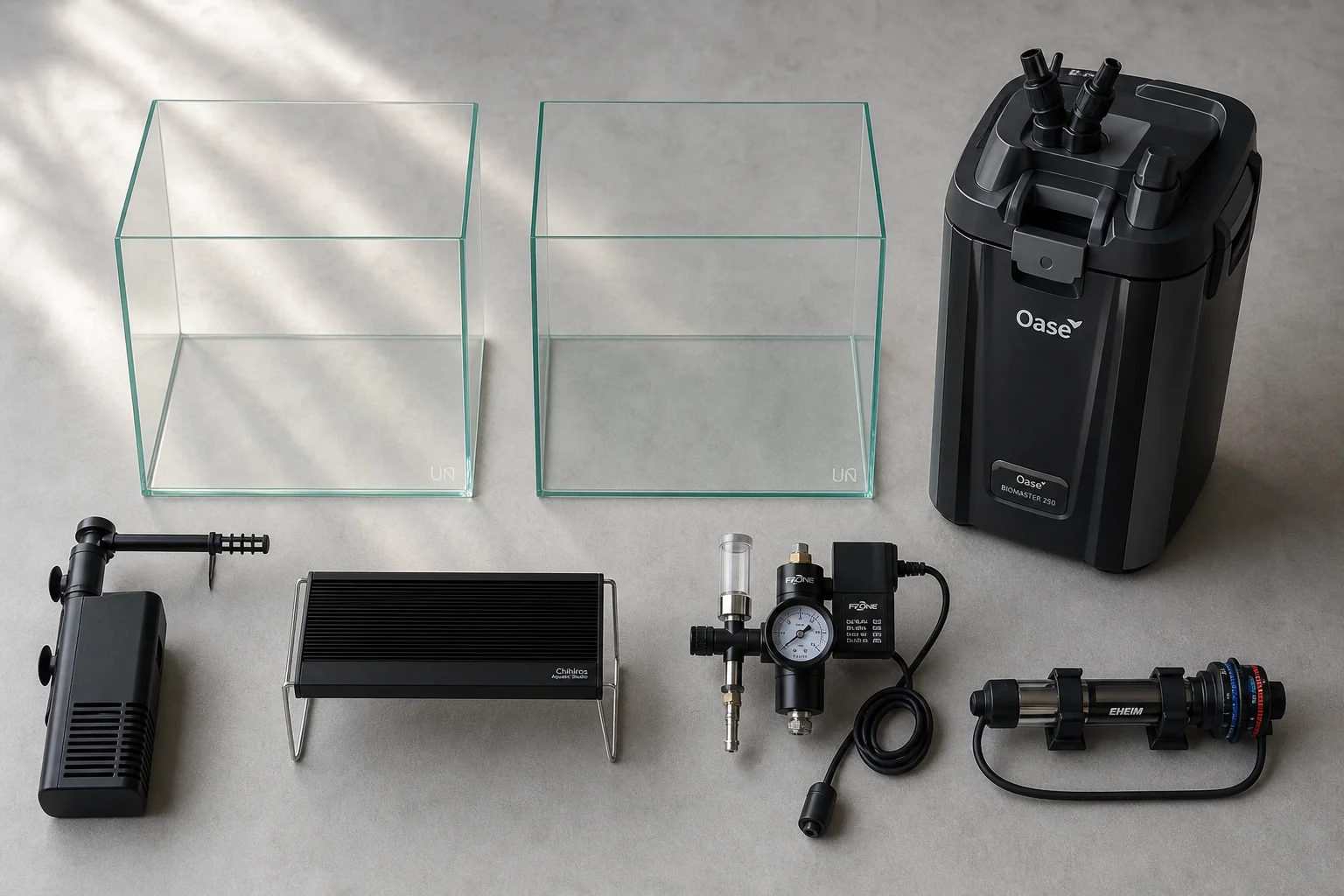
A practical walkthrough of the tanks, filters, lights, heaters, and CO2 systems you need to start aquascaping, with budget-friendly and high-tech options for every setup.

Backpacking Gear
Building a 10 lb Base Weight: An Ultralight Backpacking Gear List
A practical walkthrough of the ultralight pieces behind a 10 lb base weight, from a 765 g pack and a roomy one-person tent to a full camp chair and a dependable water filter.