Aquascaping
Aquascaping Beginners Guide: Essential Equipment and Shopping Tips
A practical walkthrough of the tanks, filters, lights, heaters, and CO2 systems you need to start aquascaping, with budget-friendly and high-tech options for every setup.
Introduction
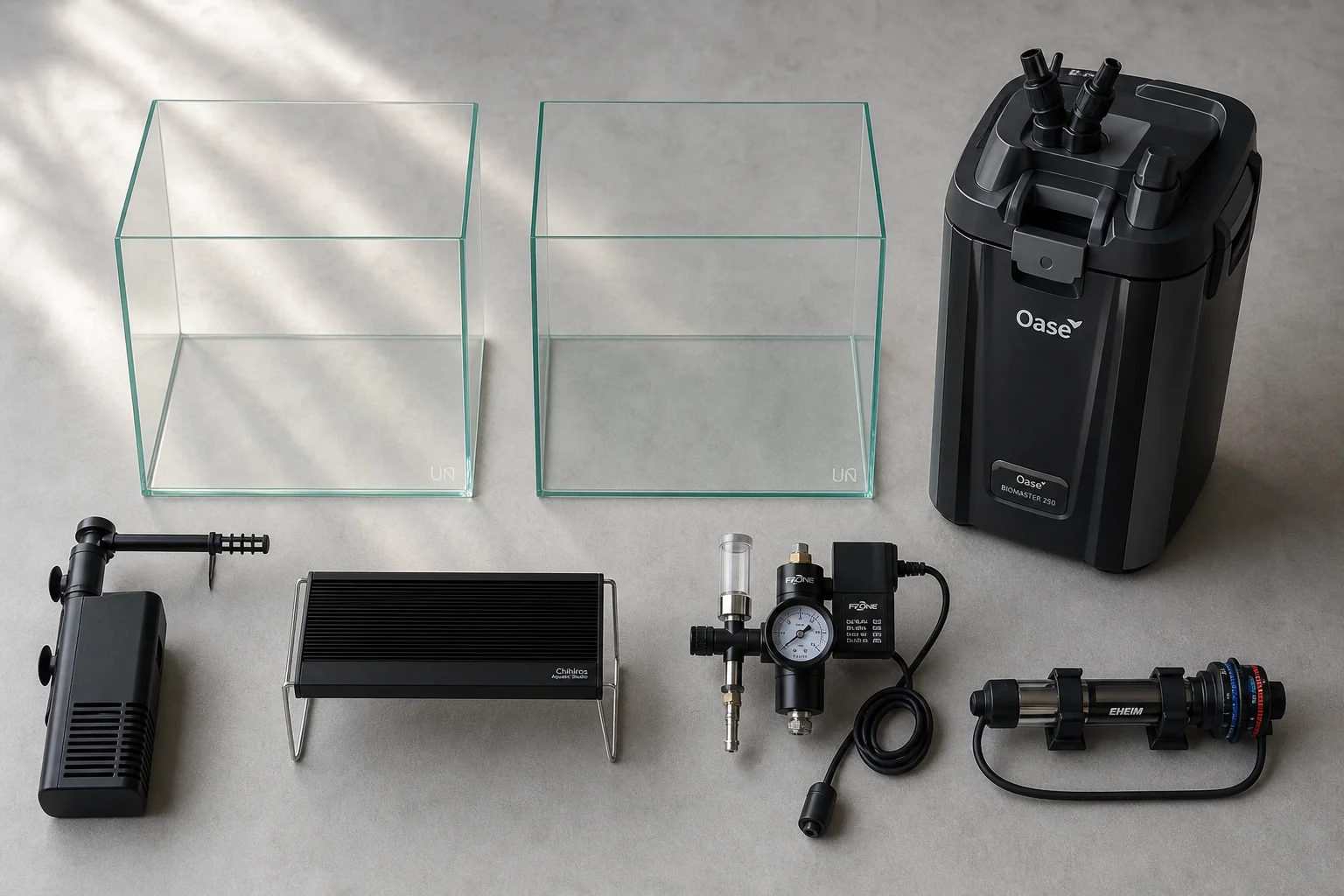
Starting an aquascape requires more than just a tank and water. The right equipment makes the difference between a thriving planted aquarium and a frustrating struggle with algae and plant health. This guide walks you through the essential hardware you need, whether you are building a budget-friendly low-tech setup or a feature-rich high-tech system with CO2 injection.
Choosing Your Tank
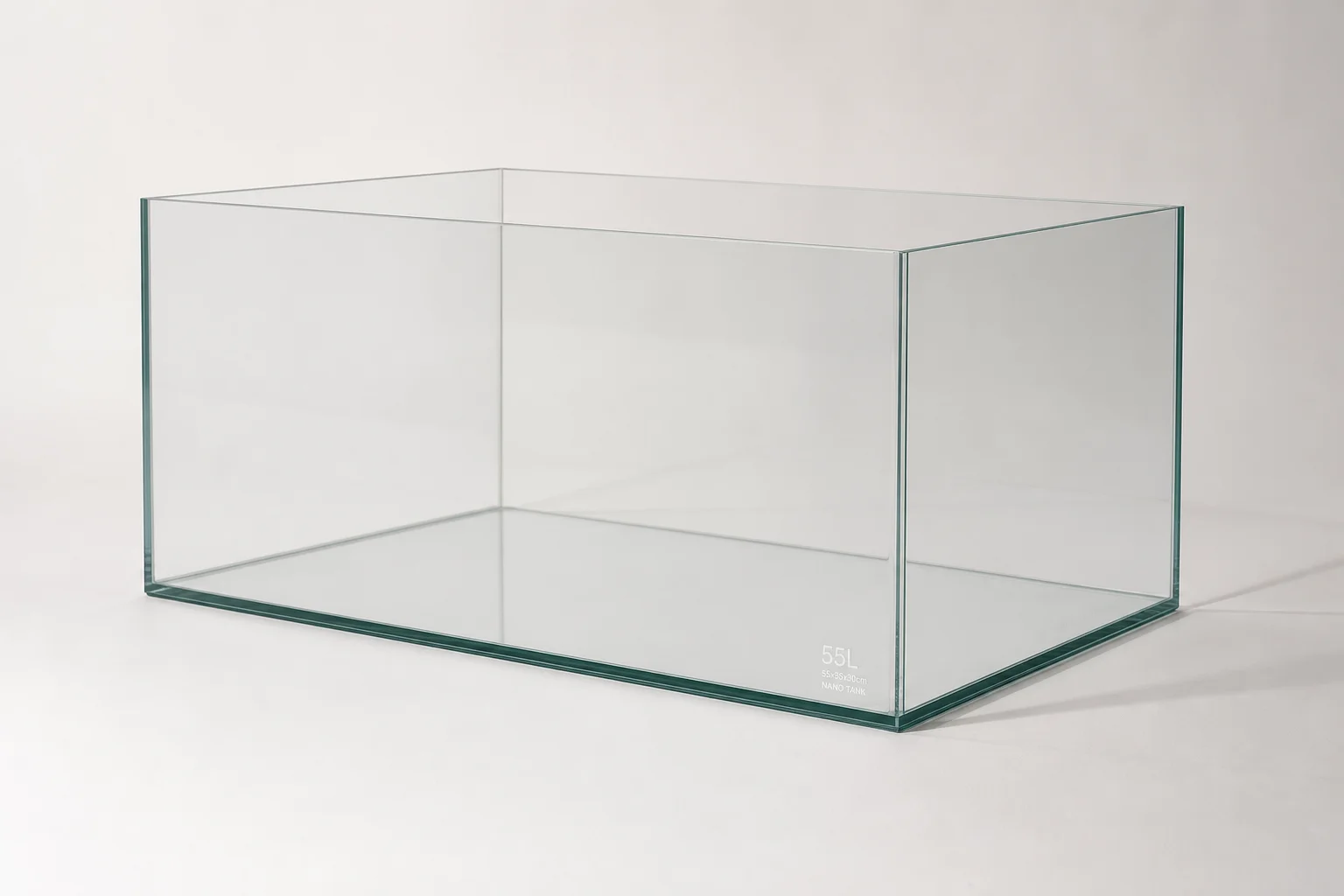
The foundation of any aquascape is the tank itself. For beginners, nano tanks between 35 and 55 litres offer the perfect balance of manageable size and enough volume to maintain stable water parameters. Rimless tanks are preferred over traditional framed tanks because they provide an unobstructed view and allow you to select your own lighting and filtration rather than relying on bundled equipment that may not suit your goals.
The Dennerle Nano Tank is a solid choice for both low-tech and high-tech setups. The 55-litre version provides enough space to keep small fish, shrimp, or a combination of both, while remaining compact enough for a standard cabinet or shelf. Float glass tanks cost less but may show slight green tints when viewed from the side; white glass tanks offer superior clarity but command a higher price. For your first aquascape, either option works well.
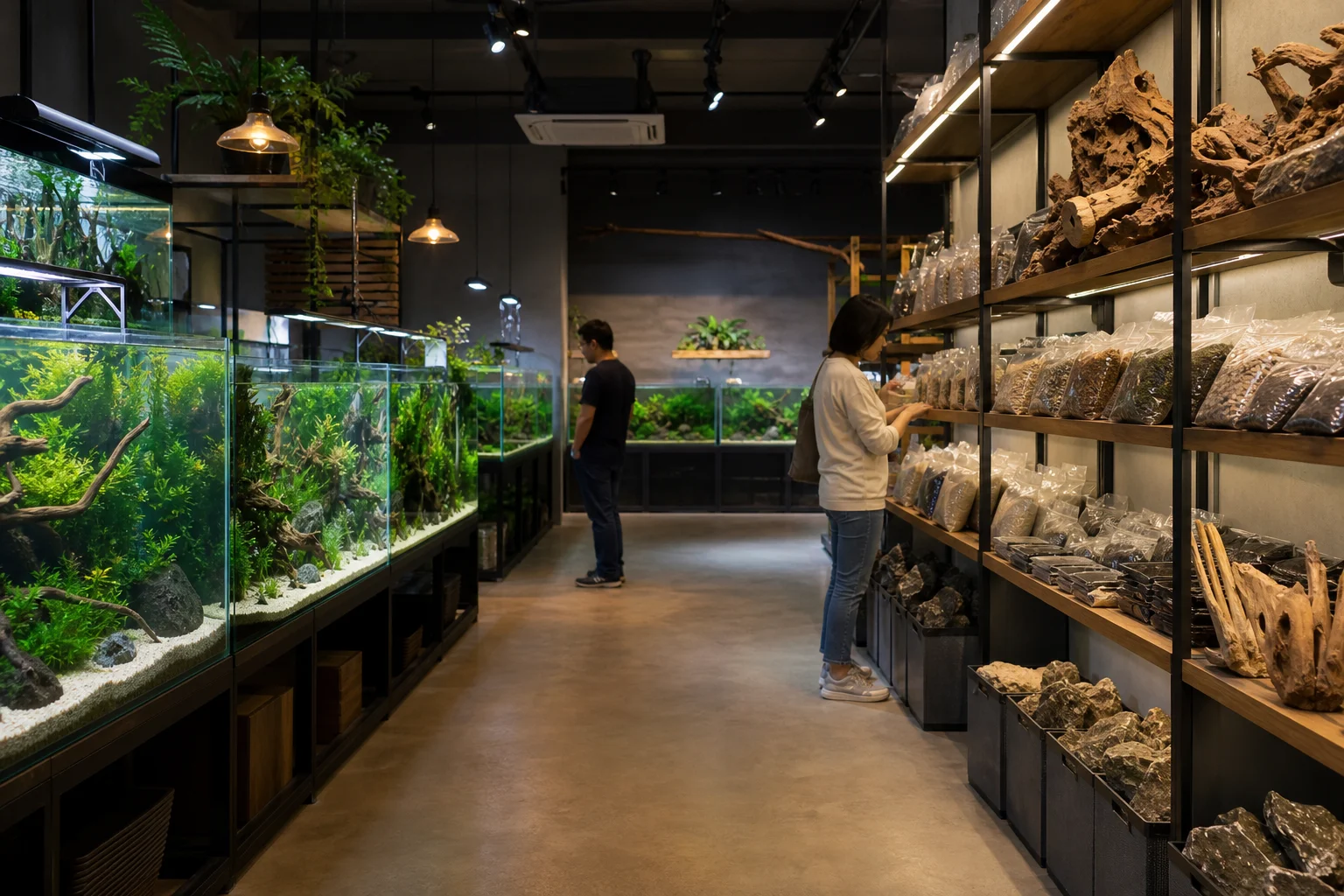
Tank size also determines your equipment choices downstream. A 55-litre tank requires a filter rated for at least 200 litres per hour, a heater between 50 and 100 watts, and a light fixture designed for that footprint. Smaller tanks (30-40 litres) are more affordable but offer less margin for error with water chemistry and temperature swings.
Selecting a Filter System
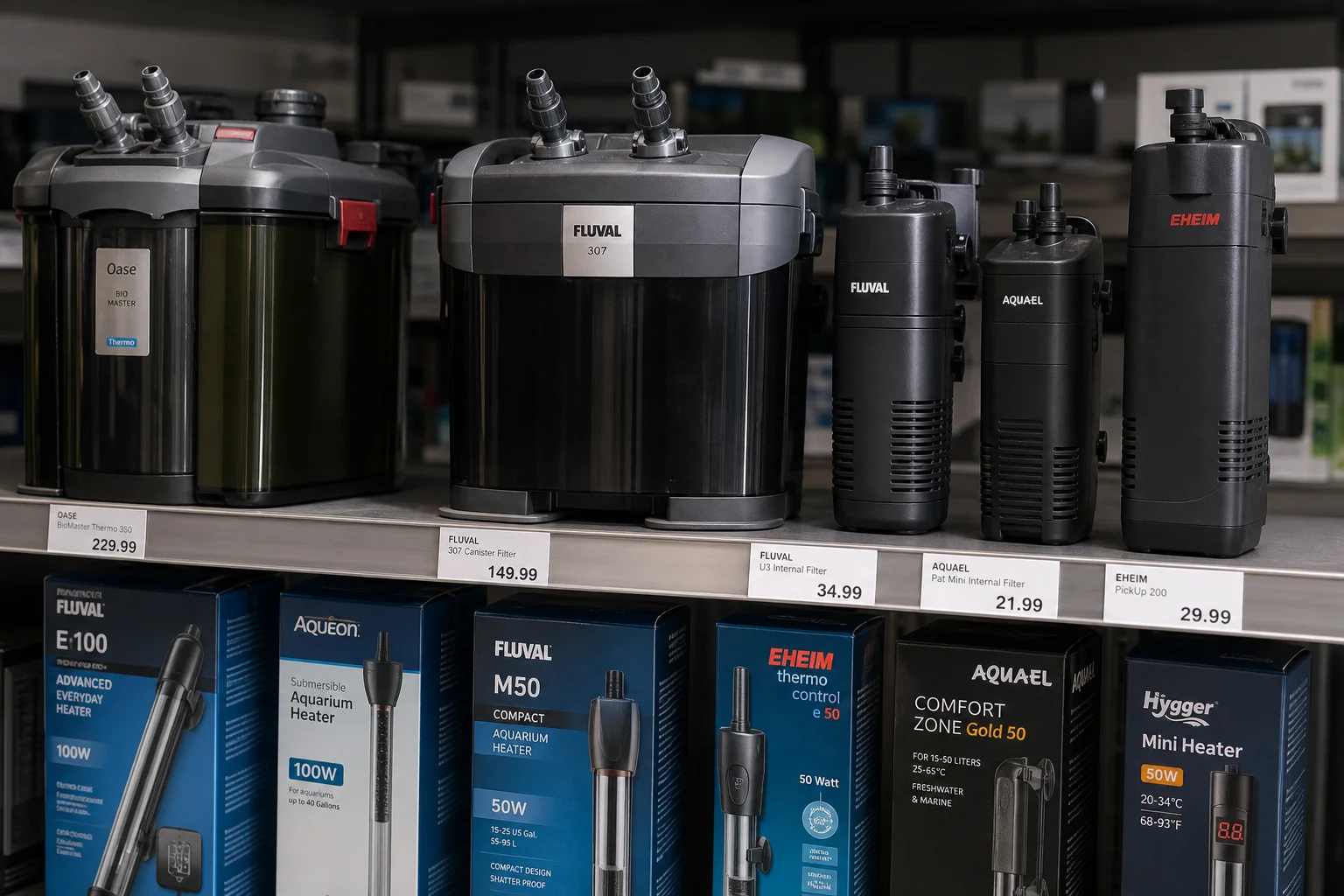
Filtration serves two purposes: mechanical removal of waste particles and biological conversion of ammonia and nitrite. For beginners, you have three main options: hang-on-back filters, internal filters, and external canister filters.
Hang-on-back filters are affordable and easy to maintain but take up space outside the tank and can be visually distracting. Internal filters sit inside the tank and are compact, making them ideal for nano setups where space is limited. External canister filters offer the most flexibility and hide all plumbing behind the tank, but they cost significantly more and require more maintenance knowledge.
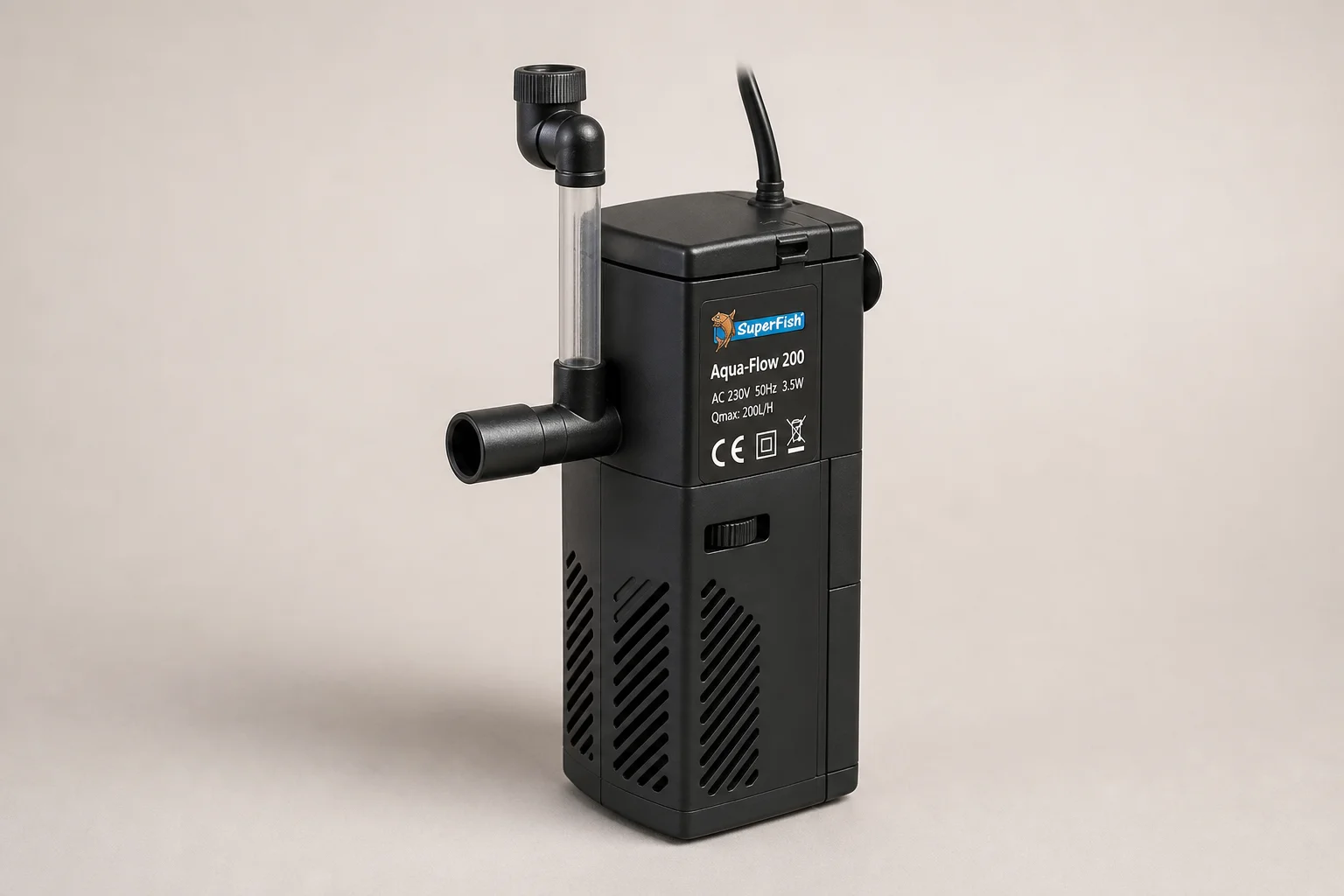
For a low-tech setup, an internal filter like the Superfish Aqua-Flow 200 is sufficient. This model delivers 400 litres per hour, which is roughly ten times the tank volume per hour—a standard recommendation for planted tanks. The compact design means it can be hidden behind hardscape or plants.
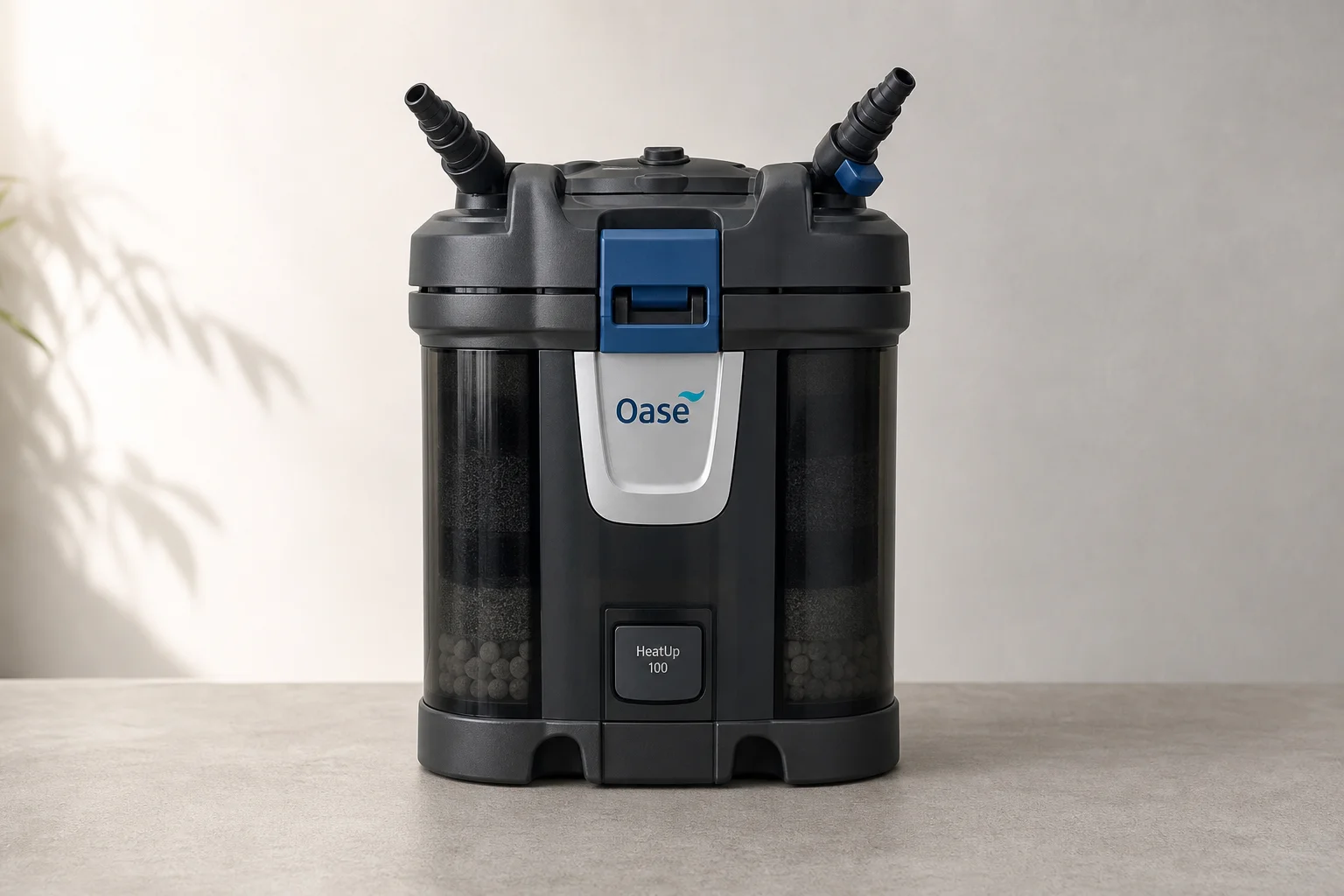
For a high-tech setup with CO2 injection, the Oase FiltoSmart Thermo 100 is an excellent choice. This external canister filter includes a built-in heater, eliminating the need for a separate heater unit and reducing visible equipment in the tank. The integrated heater maintains stable temperature without taking up interior space.
Heating Your Tank
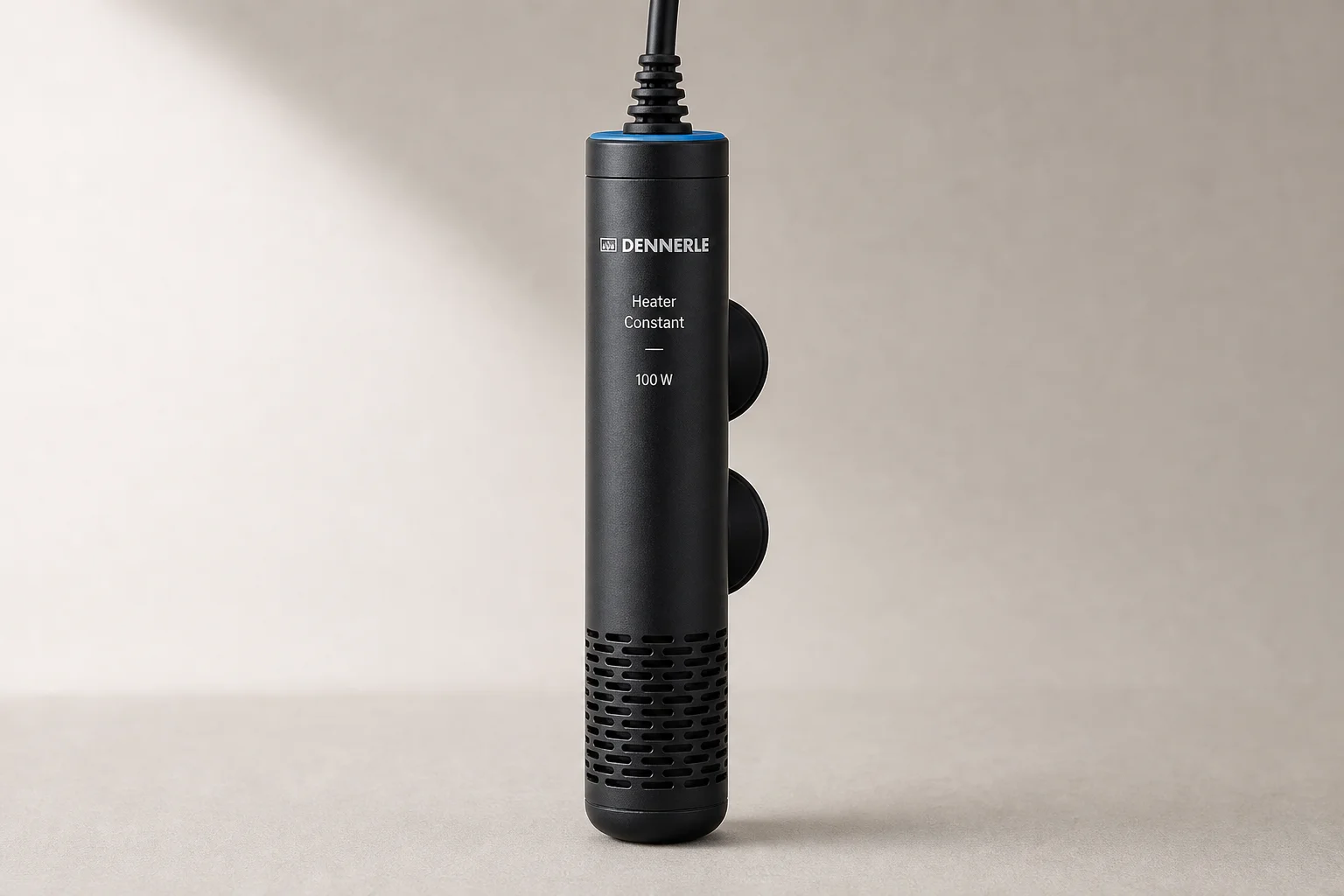
Most planted aquariums thrive at 24-26 degrees Celsius. If your room temperature drops below this range, a heater is essential. For low-tech setups without an integrated heater, the Dennerle Heater Constant offers simplicity: it maintains a fixed temperature of 25 degrees Celsius and requires no adjustment. The 50-watt model suits tanks between 35 and 55 litres. Its minimal design allows you to hide it behind hardscape or dense plant growth.
If you choose an external filter with an integrated heater, you can skip a separate heater unit entirely, simplifying your setup and reducing clutter.
Lighting for Plant Growth
Lighting is critical for photosynthesis and plant health. The intensity and spectrum you choose depend on whether you are running a low-tech or high-tech system.
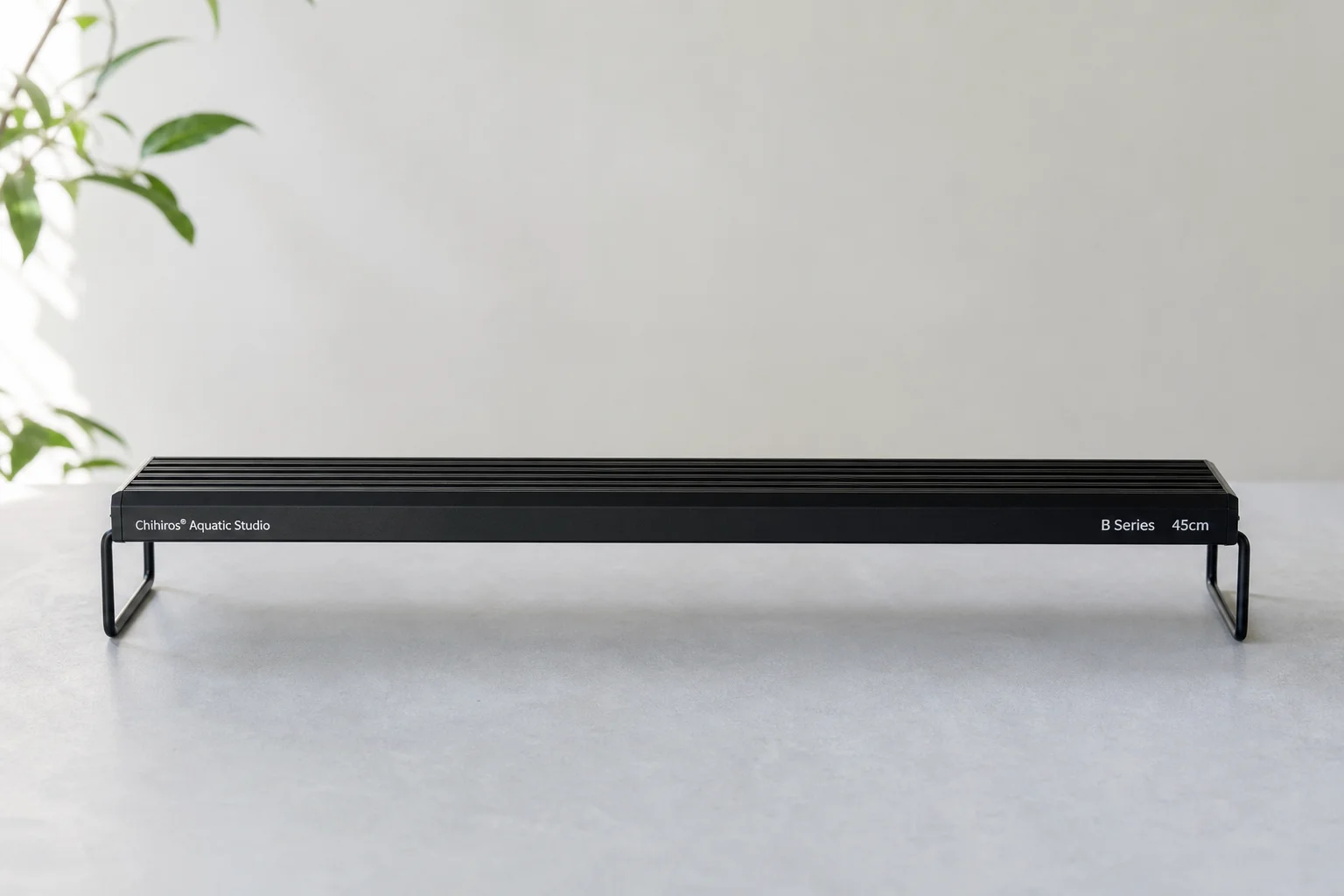
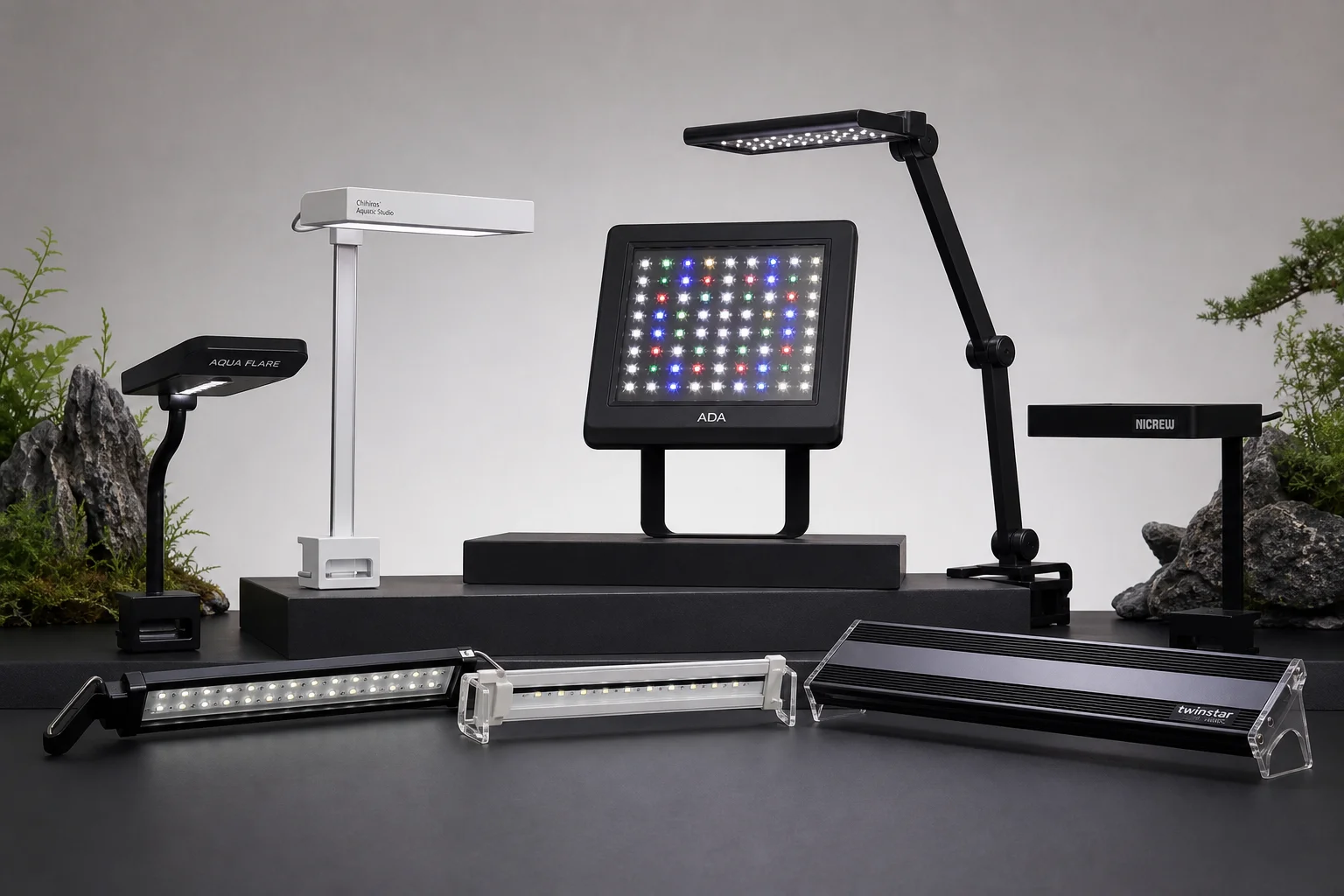
For low-tech setups, the Chihiros B Series offers excellent value. This LED fixture provides sufficient light for slower-growing plants without promoting excessive algae. At roughly half the price of premium options, it is an ideal entry point for beginners experimenting with planted tanks.
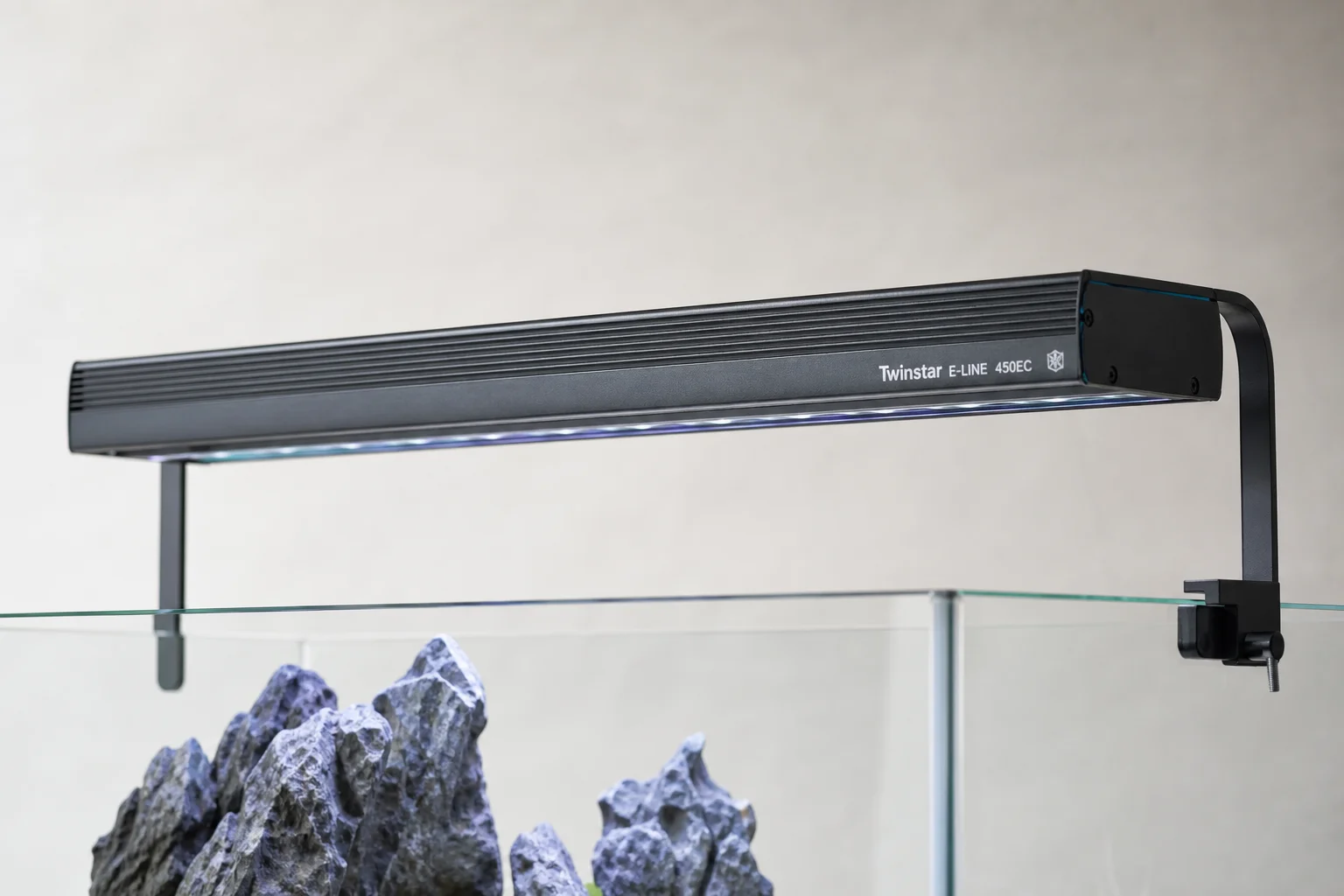
For high-tech setups with CO2 injection, the Twinstar E-Line 450EC delivers higher intensity and a full spectrum optimized for rapid plant growth. The increased light output pairs well with CO2 supplementation, allowing you to grow demanding stem plants and achieve lush, dense growth. This fixture costs more but justifies the investment if you are committed to the high-tech approach.
Adding CO2 for High-Tech Setups
CO2 injection transforms what plants you can grow and how quickly they develop. Without CO2, you are limited to slow-growing, low-demand species. With CO2, you unlock access to vibrant stem plants, carpeting plants, and faster overall growth.
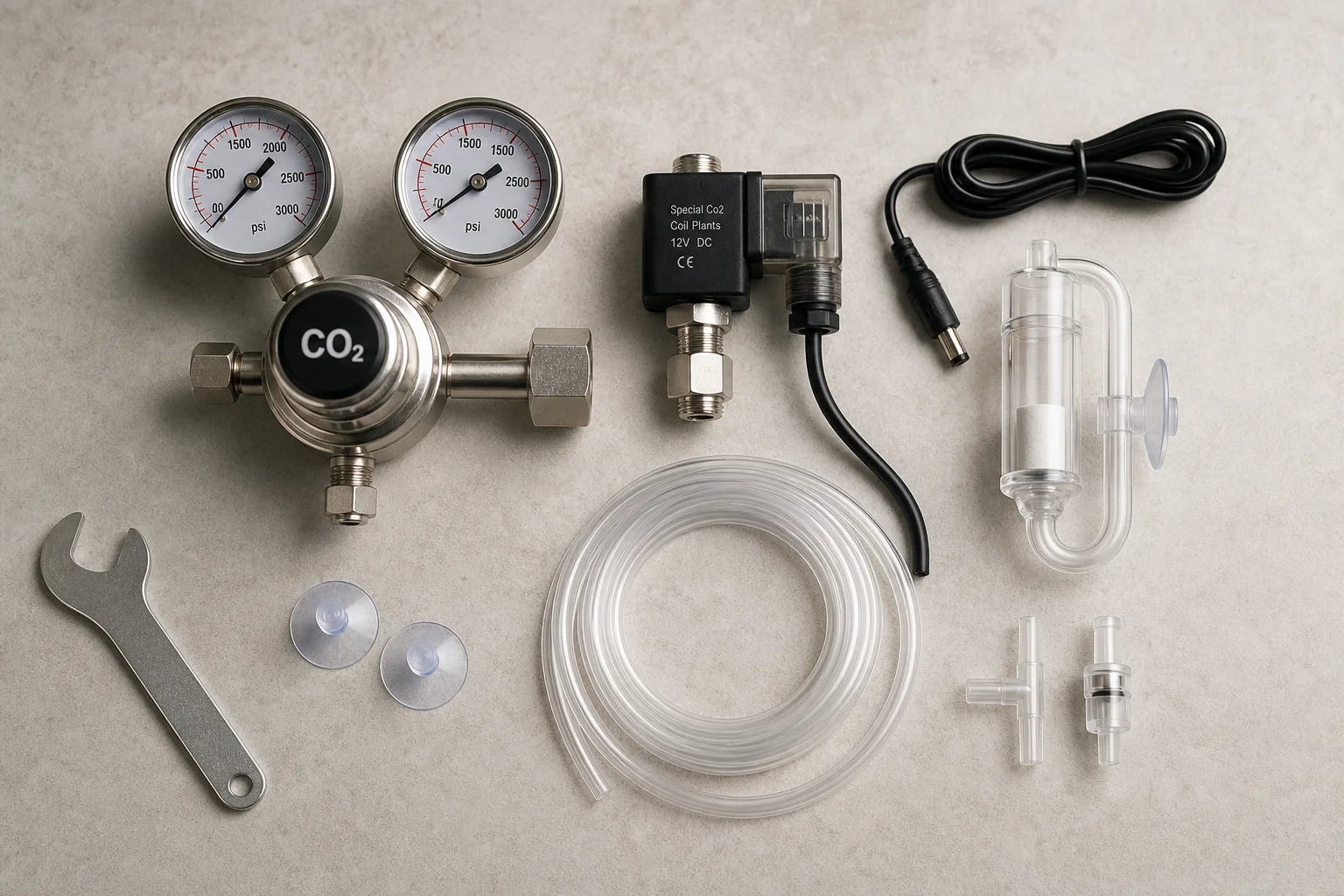
A basic CO2 system consists of a pressurized cylinder, a regulator with a solenoid valve, tubing, and a diffuser. The solenoid valve allows you to shut off CO2 at night when plants are not photosynthesizing, saving gas and preventing pH swings. The diffuser breaks CO2 into fine bubbles for efficient absorption.
For beginners, a 500-gram CO2 cylinder offers an affordable entry point. Larger cylinders last longer but require more upfront investment. A quality regulator with a solenoid valve and a reliable diffuser like the Twinstar CO2 Diffuser ensure consistent gas delivery and efficient utilization.
Finishing Supplies
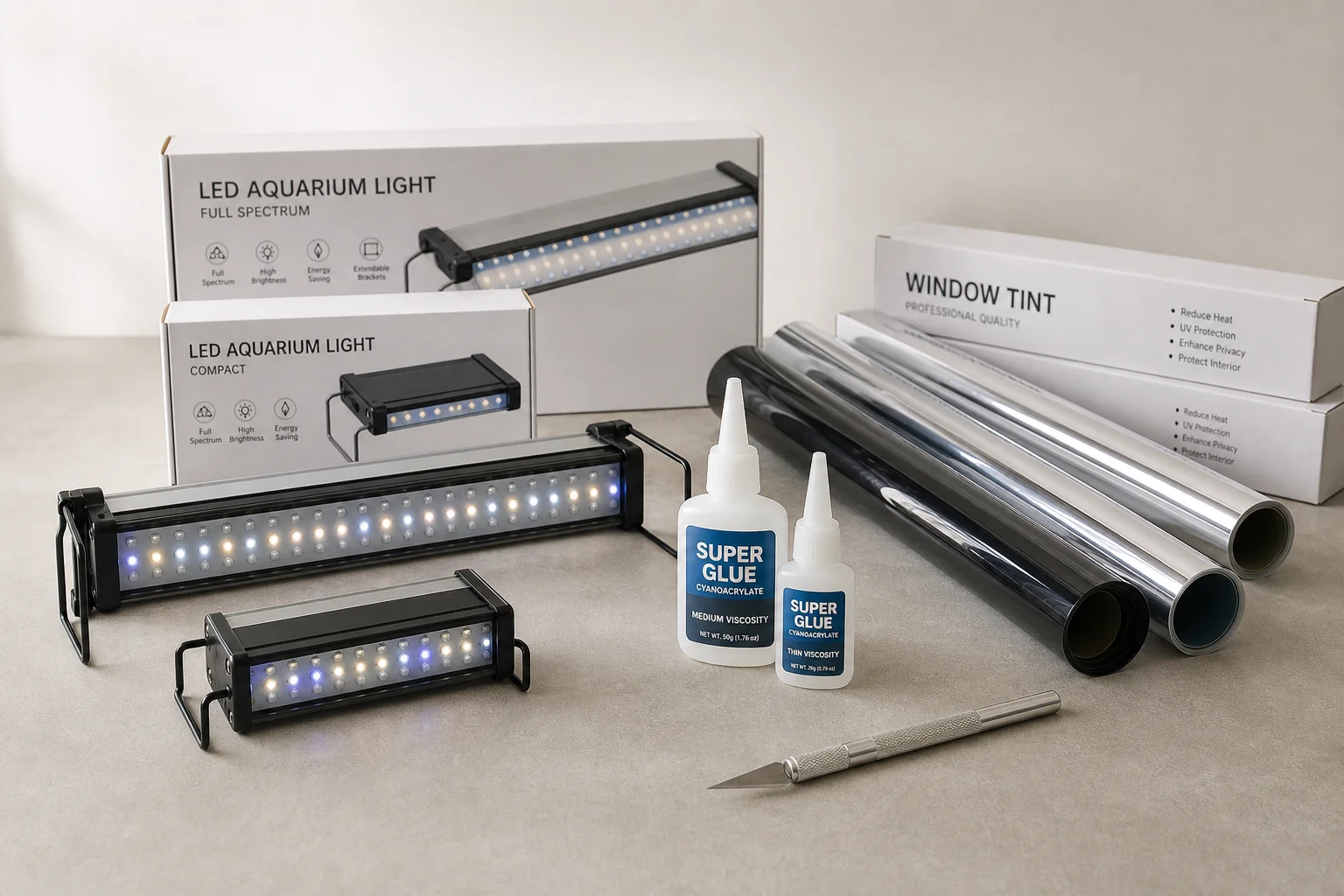
Before you set up your tanks, grab a few inexpensive items from a hardware store. Window tint foil (available in various opacities) can be applied to the back or sides of your tank to reduce reflections and create a clean backdrop. Choose a milky white or neutral colour rather than patterned options.
Super glue is essential for securing hardscape and attaching plants. Liquid super glue works best for bonding wood and stone; gel super glue is better for gluing plants to hardscape without damaging delicate leaves. A sharp blade or craft knife helps you trim plants and prepare materials for assembly.
Conclusion
Equipping a beginner aquascape does not require expensive gear or overwhelming complexity. A rimless nano tank, a simple filter, a basic heater, and appropriate lighting form a solid foundation. If you want to explore high-tech aquascaping with CO2, add a canister filter with integrated heating, a quality light, and a CO2 system. Start with one approach, learn the fundamentals, and upgrade as your skills and budget allow. The best setup is the one you will maintain consistently.
Further reading
Related Reviews

Airsoft Gear
Airsoft Beginner's Essential Gear Guide: What You Actually Need to Start Playing
A practical breakdown of the core equipment required to play airsoft, from eye protection and AEGs to magazines and protective gear, with honest advice on what matters and what you can skip.
Aquarium Equipment
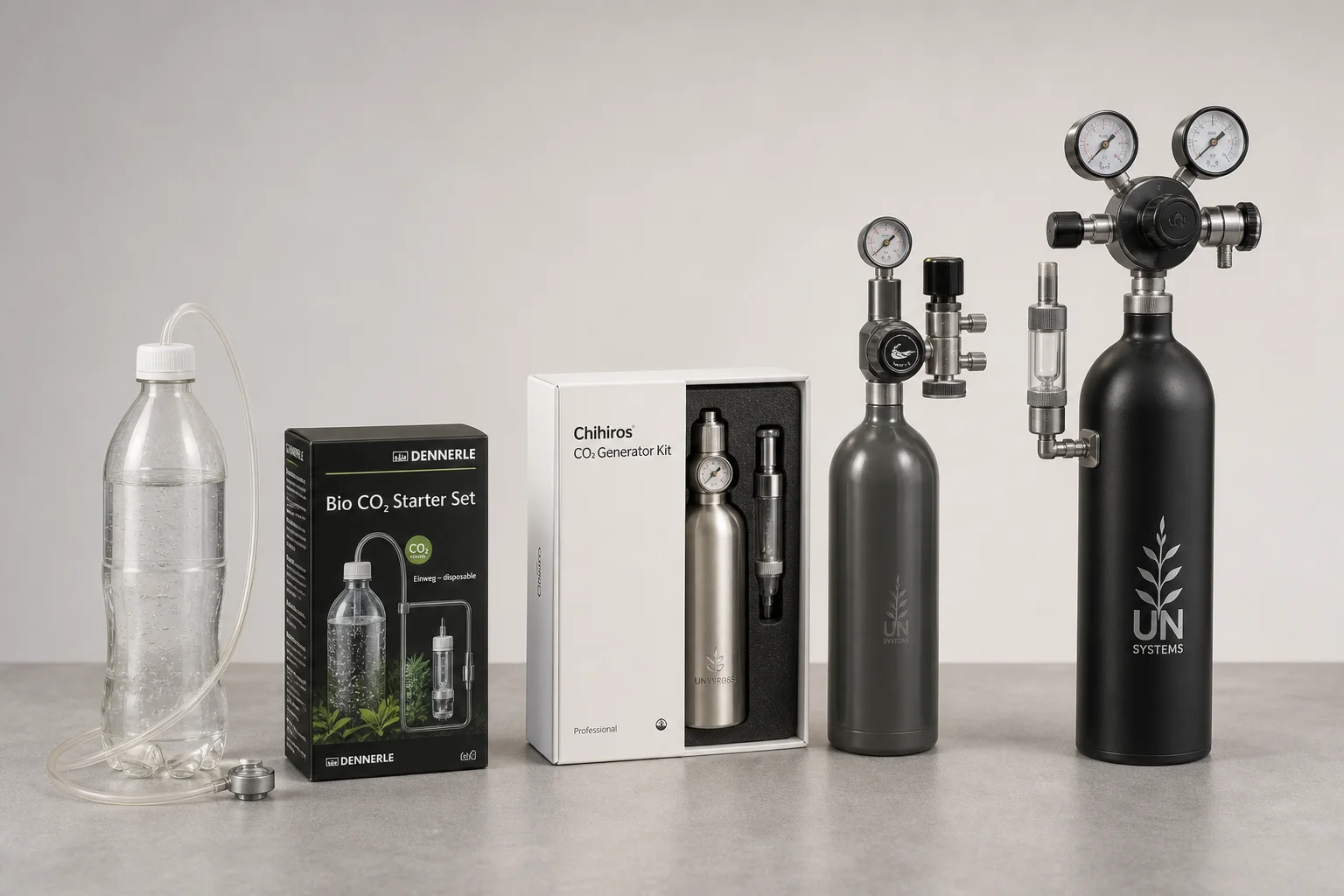
Best Aquarium CO2 Systems: Five Options From Budget DIY to Multi-Tank Setups
A practical guide to five aquarium CO2 systems, from homemade fermentation kits to pressurized cylinders with multi-tank regulators. Find the right setup for your tank size and budget.
Aquarium Lighting
Best Aquarium Lights for Planted Tanks: Budget to Premium Options
A practical guide to nine aquarium LED lights from Chihiros and Twinstar, covering every budget level from entry-level to flagship models for planted tank setups.