Tarps & Shelter
AquaQuest Guide Tarp 13 ft x 10 ft Review: Light Shelter, Serious Storm Protection
A detailed look at the AquaQuest Guide Tarp in 13 ft x 10 ft, covering its 5,000 mm waterproof rating, 1 lb 6.3 oz packed weight, 17 tie-off points, and the trade-offs to weigh before buying.
Introduction
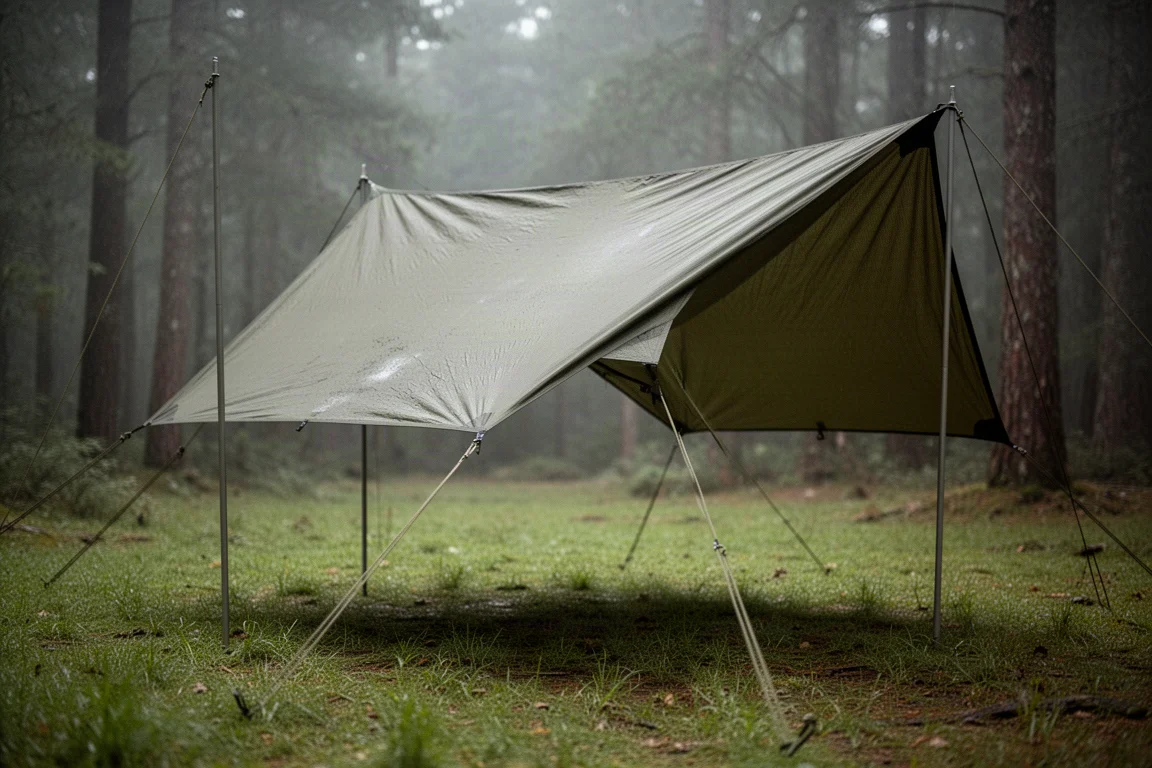
AquaQuest builds tarps at several levels of strength, and the Guide series sits at the lightest end of that range. Lighter also means less material, so the Guide tarps are the least strong of the lineup, though that comparison only holds against the company’s heavier Safari and Defender models. Judged on its own, the Guide tarp is still built to handle serious weather.
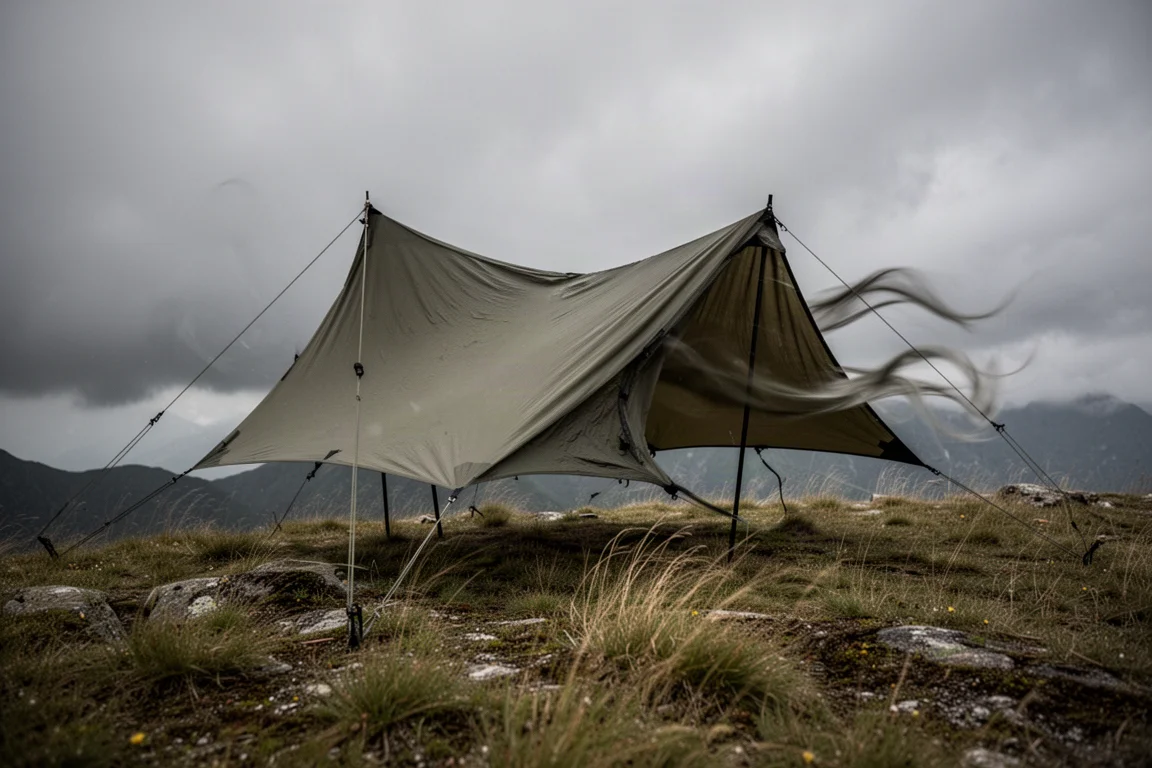
The 13 ft x 10 ft version is the size that gets used most often, and the reason is straightforward. It delivers a large covered area without the packed weight that usually comes with it. In thunderstorms with winds around 35 mph, this tarp has stayed intact and ready for the next trip.
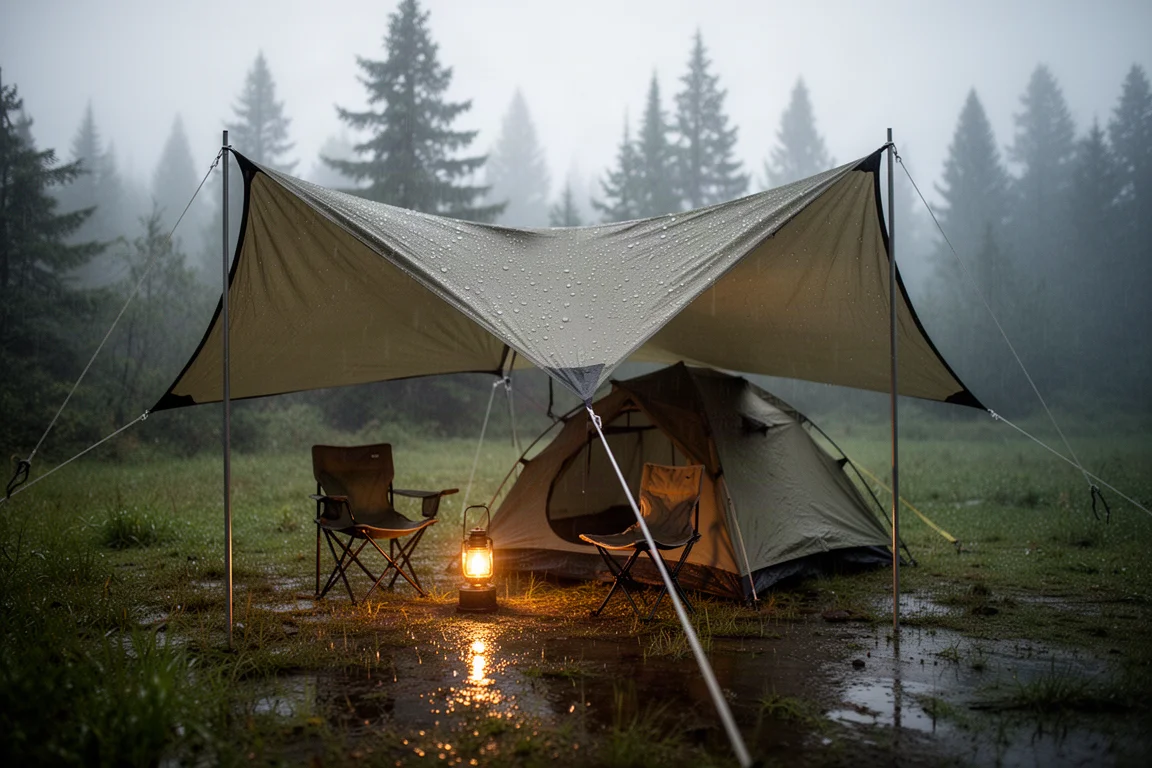
Packed down, it measures roughly 10 in x 4.5 in, and set up it covers 13 ft x 10 ft. For a shelter of that size, the 1 lb 6.3 oz weight is the headline number.
Who This Product Is For
A 13 ft x 10 ft tarp covers one person generously, two people comfortably, and three people without much crowding. There is enough room underneath for a chair, a small table, and a tent at the same time, which turns it into a basecamp shelter rather than a simple rain cover.
That size also opens up setup options. With this much fabric, you can pitch it in a range of formations and adapt to wind direction, rain, snow, or strong sun. Smaller tarps run out of material long before they run out of ideas.
It suits backpackers who want genuine coverage rather than a token layer of protection, paddlers and car campers who value flexibility, and anyone who would rather carry one shelter that handles a wide range of conditions than several specialised ones.
Main Strengths
Storm-Tested Durability
Durability is where the Guide tarp earns its reputation. Storms with winds near 35 mph put enormous force on a taut tarp, and the fabric, stitching, and tie-outs have held up through repeated exposure without tearing or failing. The reinforced stitching at every attachment point is a large part of why.
The Guide tarps also carry a lifetime warranty. That kind of coverage reflects how confident the company is in the materials, and it is unusual at this price point for lightweight shelter.
Waterproofing, Materials, and Packed Weight
The fabric is a ripstop nylon with two coatings, silicone and polyurethane. Its hydrostatic head rating is 5,000 mm, well above the roughly 1,200 mm typical of an average tarp. That rating is the reason the Guide tarp shrugs off sustained rain instead of slowly wetting through.
Weight and packed size follow from the same material choice. At 1 lb 6.3 oz, the 13 ft x 10 ft tarp is light enough to carry inside a pack without dominating the load, and it compresses to roughly 10 in x 4.5 in.
Darker colour options help in summer as well. They diffuse overhead light and reduce the heat coming through, so the tarp works as sun protection alongside its rain and wind duties.
Tie-Out Points and Setup Flexibility
There are 17 tie-off points, including a center attachment. Each one is reinforced, which matters because tie-outs are usually where a tarp fails first under load. The center point in particular opens up pitching options that flat, four-corner tarps cannot match.
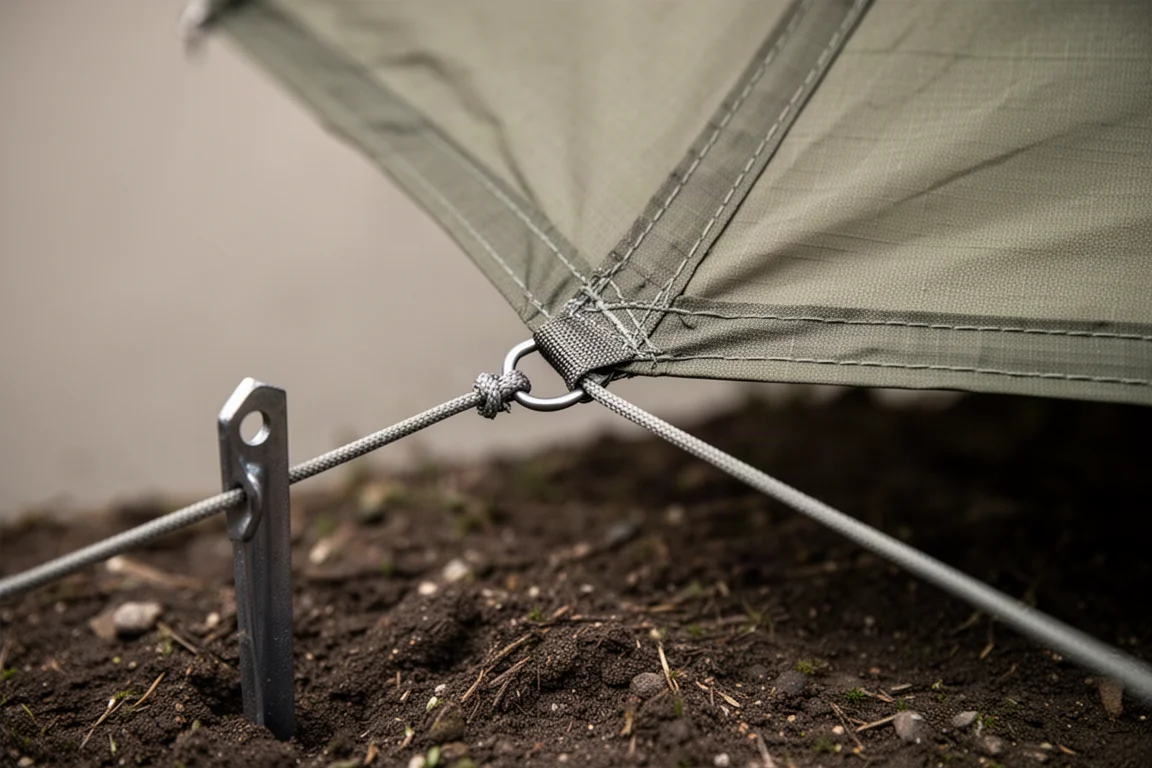
More attachment points mean more configurations: a low storm pitch, an open A-frame for fair weather, a windbreak wall, or a sun shade angled toward the afternoon light.
Things to Consider Before Buying
Price is the first thing to weigh. Less expensive tarps are widely available, but they are usually made from heavier materials such as polyester, and they are typically less strong, less waterproof, and bulkier once packed. The Guide tarp sits above that tier, and the difference shows up in weight, weather resistance, and storage size.
The included storage bag is small. Rolling up a wet tarp in wind and dirt, with sticks and uneven ground underfoot, makes fitting it back into a tight stuff sack a chore. Materials and stitching absorb water too, which adds volume. A slightly larger bag would be an easy improvement.
Silicone-treated nylon also stretches, especially when it gets wet. That is the trade-off behind the low weight and the small packed size. Over hours of rain you may need to re-tension the guy lines and adjust the pitch. It is a minor task, but worth expecting.
Buying Advice
The Guide series comes in several sizes: 10 ft x 7 ft, 10 ft x 10 ft, 13 ft x 10 ft, 15 ft x 15 ft, and 20 ft x 13 ft. Retail prices run about $89, $120, $140, $200, and $230 respectively, and listings frequently sit $10 to $20 below retail.
For one to three people, the 13 ft x 10 ft is the balance point: enough coverage for a full camp setup, light enough to carry, and compact enough to disappear into a pack. If you mainly need a solo shelter and want to save weight and money, the smaller sizes make sense. If you are sheltering a group or want a covered communal area, the 15 ft x 15 ft and 20 ft x 13 ft versions provide the extra fabric.
Colours are limited to forest green, gray, and olive drab. All three are subdued, which suits backcountry use and helps with shade.
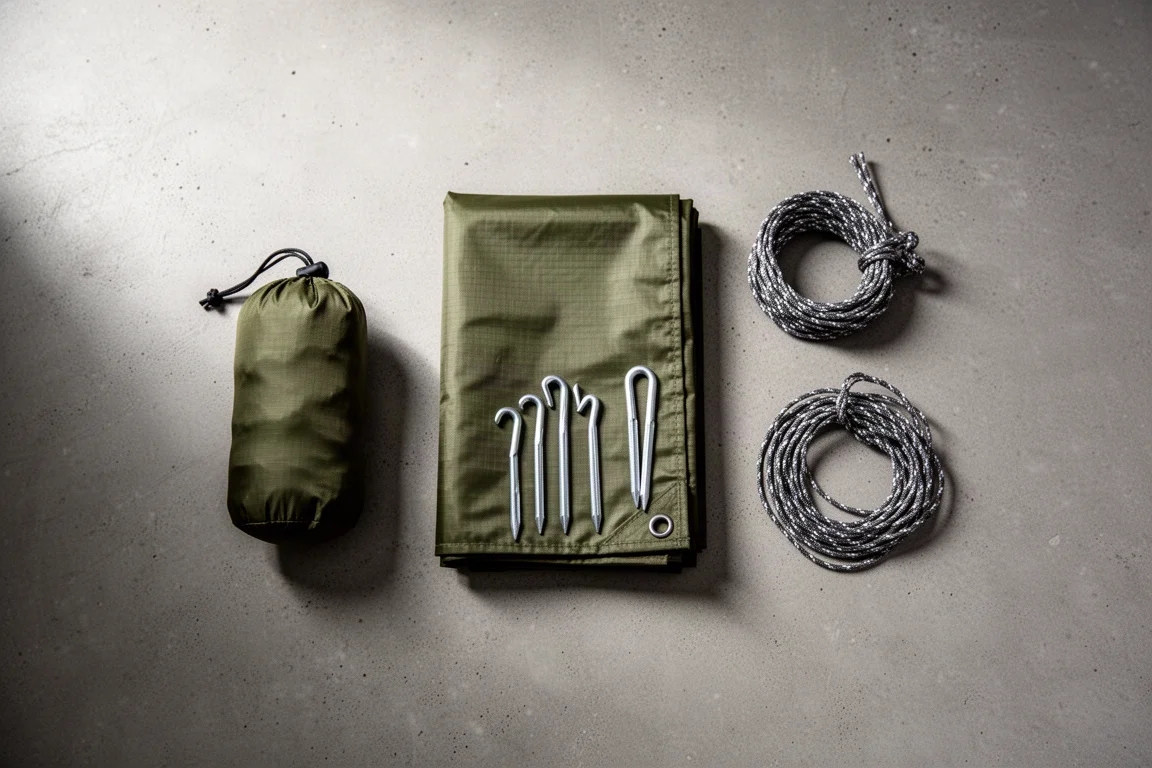
It is worth thinking of this as a long-term purchase. The cheaper route costs less up front, but it comes with more weight, less waterproofing, and a shorter working life. The Guide tarp is the kind of gear you buy once and keep using.
Conclusion
The AquaQuest Guide Tarp in 13 ft x 10 ft gets the fundamentals right. It is light, compact, remarkably waterproof, and strong enough to stand through storms that would destroy a cheap tarp. The 17 reinforced tie-off points make it genuinely adaptable, and the lifetime warranty backs the whole package.
The trade-offs are honest ones: a higher price than basic tarps, a stuff sack that is too tight for wet field use, and a fabric that stretches when wet and needs occasional re-tensioning. None of them undercut the core value.
If you want one shelter that covers one to three people, packs small, and keeps performing trip after trip, this is an easy recommendation.
Product link
View more details for AquaQuest Guide Tarp 13 ft x 10 ft
This product is mentioned in the review. Check the specifications, options, and compatibility before buying.
View more details for AquaQuest Guide Tarp 13 ft x 10 ftFurther reading
Related Reviews

Backpacking Gear
Building a 10 lb Base Weight: An Ultralight Backpacking Gear List
A practical walkthrough of the ultralight pieces behind a 10 lb base weight, from a 765 g pack and a roomy one-person tent to a full camp chair and a dependable water filter.

Road Bikes
10 New Road Bikes Worth Watching: Aero, Titanium, Steel and Endurance Standouts
A practical roundup of 10 new road bikes, from aero flagships chasing single-watt gains to titanium, steel and endurance platforms built for real roads.
Bikepacking Gear
11 Bikepacking Essentials for Long-Distance Cycling
Eleven bikepacking essentials for long-distance cycling, from a steel gravel frame and a two-person tent to helmet lights, packable gloves, and a frame bag that puts weight in the right place.