Camping Tarps
Aqua Quest Safari Hybrid 20x13 Tarp Review: Two Years Under Real Storms
A long-term look at the Aqua Quest Safari Hybrid 20 x 13 tarp, covering build quality, storm performance, real-world setup, and the size trade-offs to weigh before buying.
Introduction
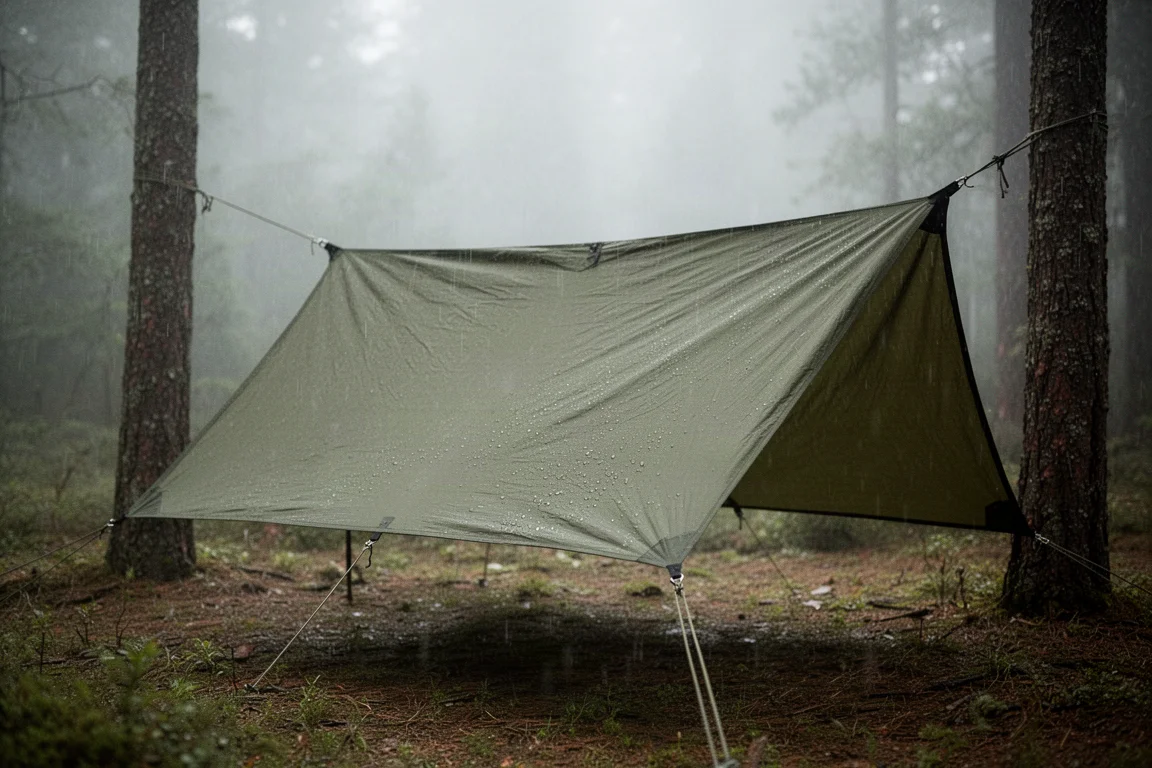
Most camping tarps are sized for one person and a sleeping bag. The Aqua Quest Safari Hybrid 20 x 13 is built for something else entirely: a dry room in the woods, a windbreak for a group, or an awning that turns the back of a truck into a covered porch. It is a genuinely large piece of fabric, and that is the whole point.
This is the medium-duty model in the Aqua Quest tarp range, and one has been in regular use for more than two years, through snowstorms, severe thunderstorms, strong wind and heavy rain. Below is what that long-term use revealed about the build, the real-world flexibility, and the practical trade-offs that come with a shelter this size.
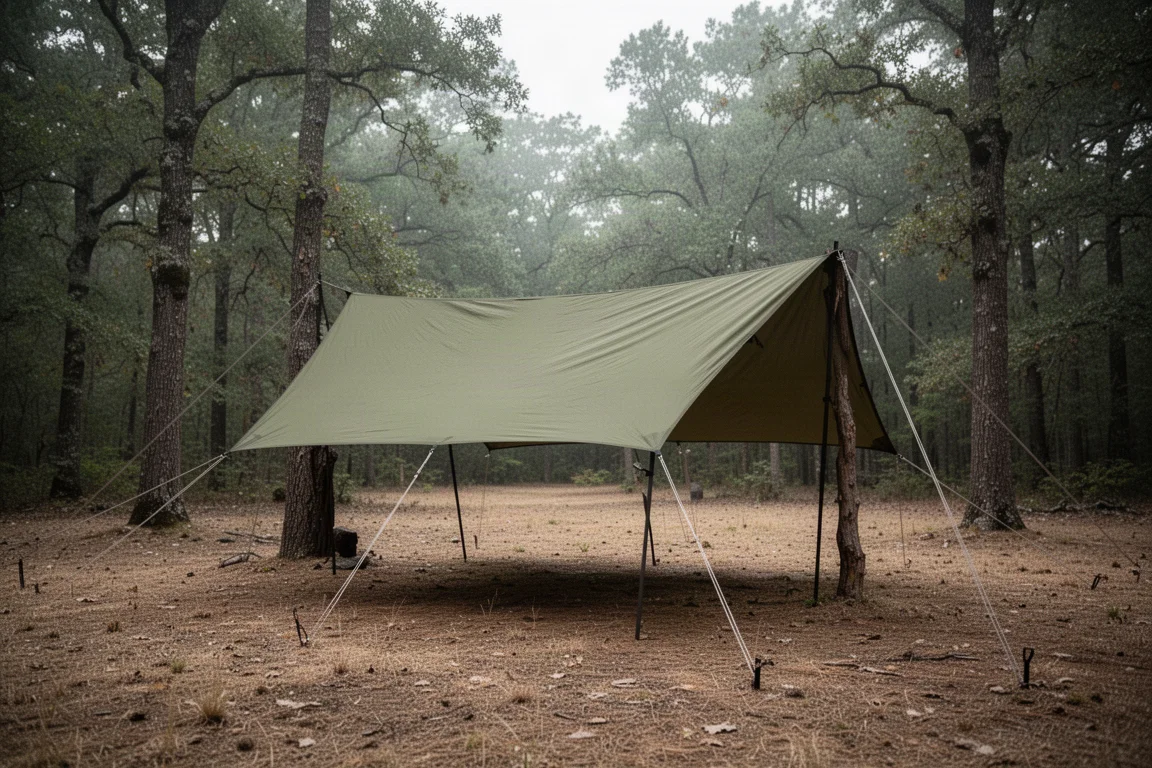
At the time of writing, the tarp sells for around $214 on the Aqua Quest website and roughly $200 on Amazon. It arrives in a stuff sack with a hand hold, side webbing and a drawcord closure at the top, and it packs down to 17 x 7 x 3 inches.
Who This Tarp Is For
This tarp makes sense for anyone who wants a large, protected living area rather than a minimal overnight shelter. It works as a basecamp canopy for a group, as a communal cooking and sitting area when the weather turns, as a ground setup with a sleeping pad or an inner tent underneath, and as an awning attached to a vehicle.
It also suits campers who want one shelter that adapts to different trips instead of owning several smaller tarps. The 25 tie-off points and six lantern loops open up configurations that a small square tarp simply cannot offer.
It is a less obvious fit for fast-and-light hikers who count every gram and every litre of pack volume. The 20 x 13 footprint is a commitment, and anyone who wants to pitch in two minutes inside dense tree cover should look at a smaller size in the same range.
Main Strengths
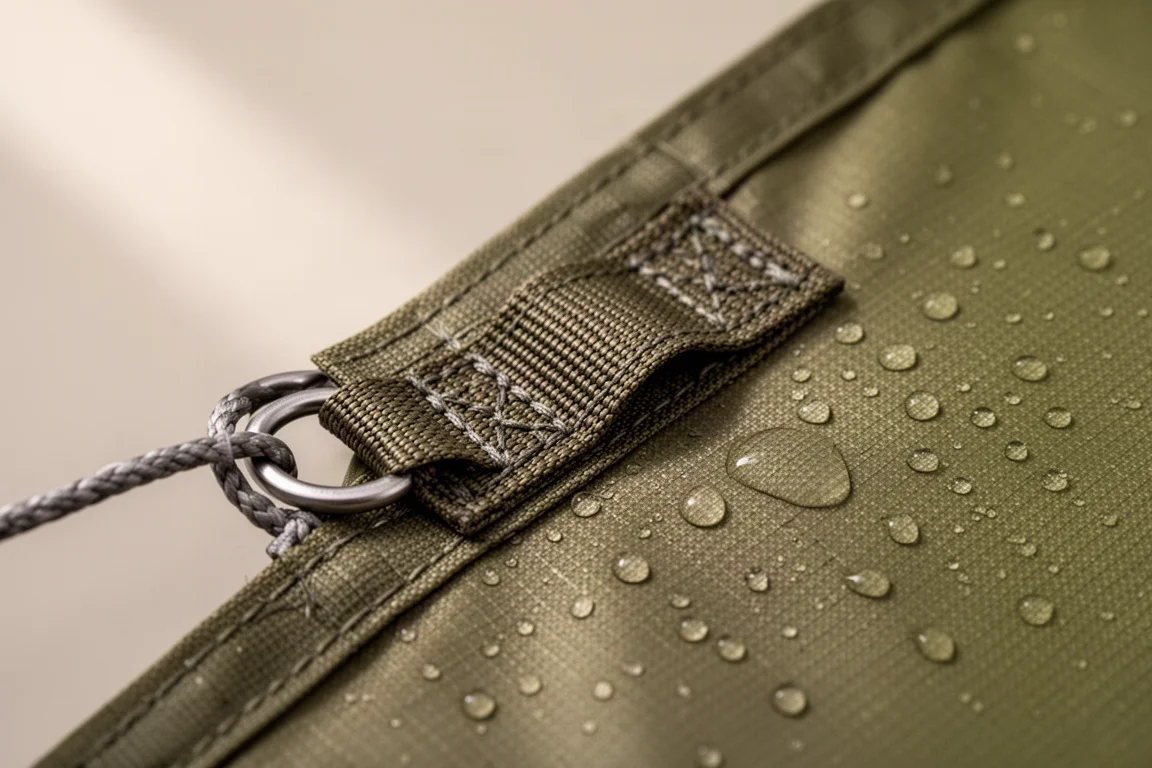
Build quality is the first thing that stands out. The fabric is a 70 denier ripstop nylon, dual coated with silicone and polyurethane, and the construction is seam taped. Each of the 25 tie-off points, which run around the perimeter and across the body of the tarp, uses reinforced stitching rather than a simple hemmed loop.
Aqua Quest rates the Safari Hybrid at a 5,000 mm hydrostatic head, which is the middle of the company’s range. In practice that has translated into zero leaking across two years of hard use, including snowstorms and severe thunderstorms with driving rain and strong gusts. The tarp shows no sign of wear beyond dirt.
Coverage is the other major strength. Under a 20 x 13 tarp, one person or a whole group can stay dry, and the same sheet can block wind, rain and sun depending on how it is pitched. The weight is also reasonable for the size: 4 lb 11.4 oz, which is lighter than some considerably smaller tarps.
The tarp is available in a range of colours, including olive drab, boulder camo, woodland camo and true terrain camo, and in numerous sizes besides the 20 x 13, including 10 x 10, 13 x 10 and 15 x 15. It is covered by a lifetime warranty.
Setup and Real-World Use
The size that makes this tarp so capable is also what makes it interesting to pitch. In forests where tree spacing does not cooperate, the number of tie-off points becomes an advantage rather than a complication. A pitch can run one side out and another side down, or extend an edge outward and drop a corner, so workable configurations exist even in restrictive terrain.
The tarp has been used as an awning over the back of a truck, as storm protection deep in the woods, and as a ground shelter with and without an inner tent. Every one of those combinations worked, which is the clearest argument for choosing a large tarp over a small one.
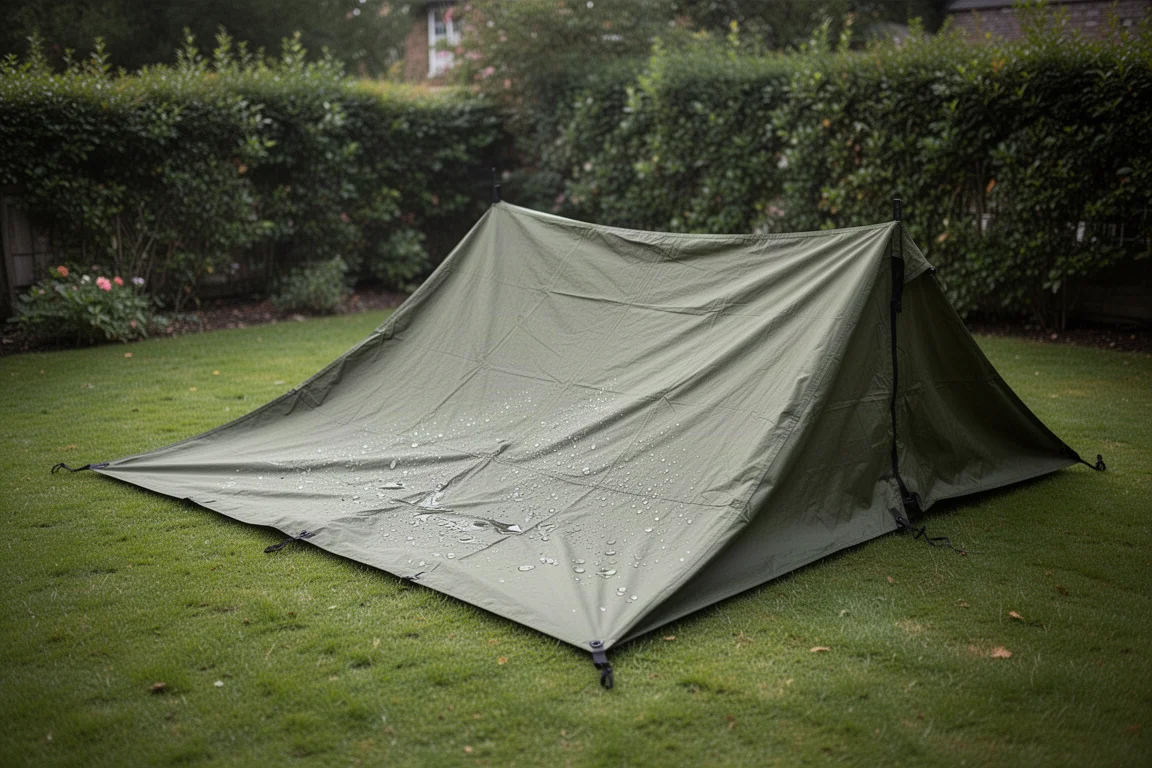
That flexibility does come with a learning curve. Big tarps take time and experience to pitch well, and the first few attempts are usually slower than expected.
Things to Consider Before Buying
The main consideration is size, and it applies in more ways than one. Setting up a 20 x 13 tarp takes longer than a small one, and tree placement can force creative rigging. This is a skill that improves with repetition, but it should be factored into the decision.
Drying is the second issue. A soaked tarp this large needs a serious amount of space once it is home, and a yard or driveway is usually the only realistic option. Anyone without that space should think carefully about whether they want to manage a tarp of this footprint.
Storage volume is the third. Packed in its stuff sack at 17 x 7 x 3 inches, it occupies a noticeable share of a backpack. It is manageable for basecamp style trips and vehicle camping, and less appealing for long distances on foot.
Choosing Between Aqua Quest Tarp Versions
Aqua Quest offers three levels of strength and waterproofing, which makes it easier to match the shelter to the conditions rather than buying one tarp for everything.
The Defender is the strongest and heaviest option, rated at a 20,000 mm hydrostatic head, and it is the sensible pick for exposed places with exceptionally strong winds. The Safari Hybrid is the middle tier at 5,000 mm, and it handles typical summer storms, rain and wind well. The Guide is the lightest and least expensive of the three.
Price moves with the tier: the Guide costs less, the Safari Hybrid sits in the middle, and the Defender costs more. Choosing the right level matters more than choosing the biggest size, because a lighter tarp that stays home is worth less than a heavier one that gets used.
Buying Advice
For a tarp this strong, this waterproof and this well equipped, the price is reasonable. There are cheaper tarps on the market, but in extreme conditions they tend to tear or fail sooner, which makes the upfront saving short lived. Around $200 to $214 buys reinforced tie-offs, seam-taped construction, a lifetime warranty and a footprint that can shelter a group.
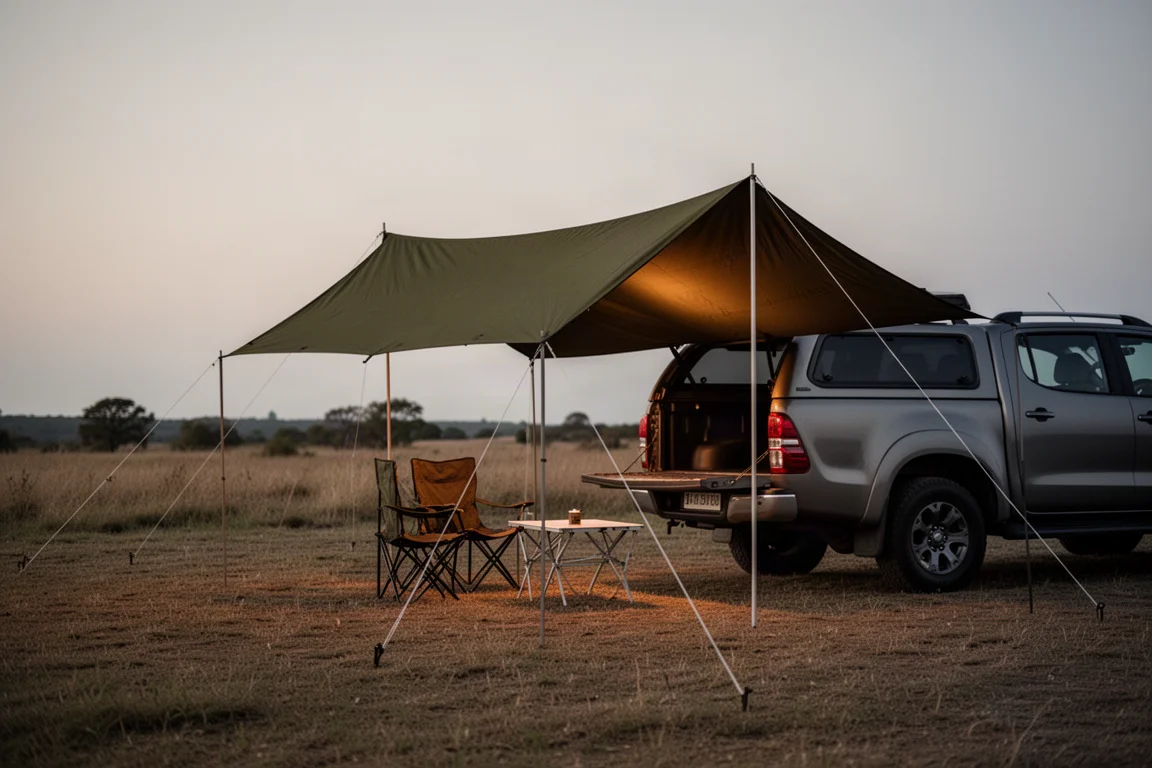
The weight is the pleasant surprise here. At 4 lb 11.4 oz, this is not a burden for the coverage it provides, and it makes the tarp practical for vehicle camping, basecamp trips and pack-in camps where a large shared shelter is worth carrying.
The honest advice is to buy it for the size you actually need. If a 20 x 13 shelter sounds like more work than benefit, the smaller sizes in the same construction offer the same materials and detailing in a more manageable package. If the goal is a genuinely large dry space that can be pitched in many different ways, this one delivers.
Conclusion
The Aqua Quest Safari Hybrid 20 x 13 is a serious shelter for campers who want room to live under, not just room to sleep. Two years of storms have not produced a leak, a failed tie-out or any meaningful wear, and the 25 attachment points make it adaptable in places where a smaller tarp would struggle.
The trade-offs are real and worth stating plainly: it takes time and practice to pitch, it needs a lot of space to dry, and it takes up real room in a pack. For anyone whose trips involve a group, a vehicle or a basecamp, those are reasonable costs for the protection on offer.
Product link
View more details for Aqua Quest Safari Hybrid 20x13 Tarp
This product is mentioned in the review. Check the specifications, options, and compatibility before buying.
View more details for Aqua Quest Safari Hybrid 20x13 TarpFurther reading
Related Reviews
Camping Tarps
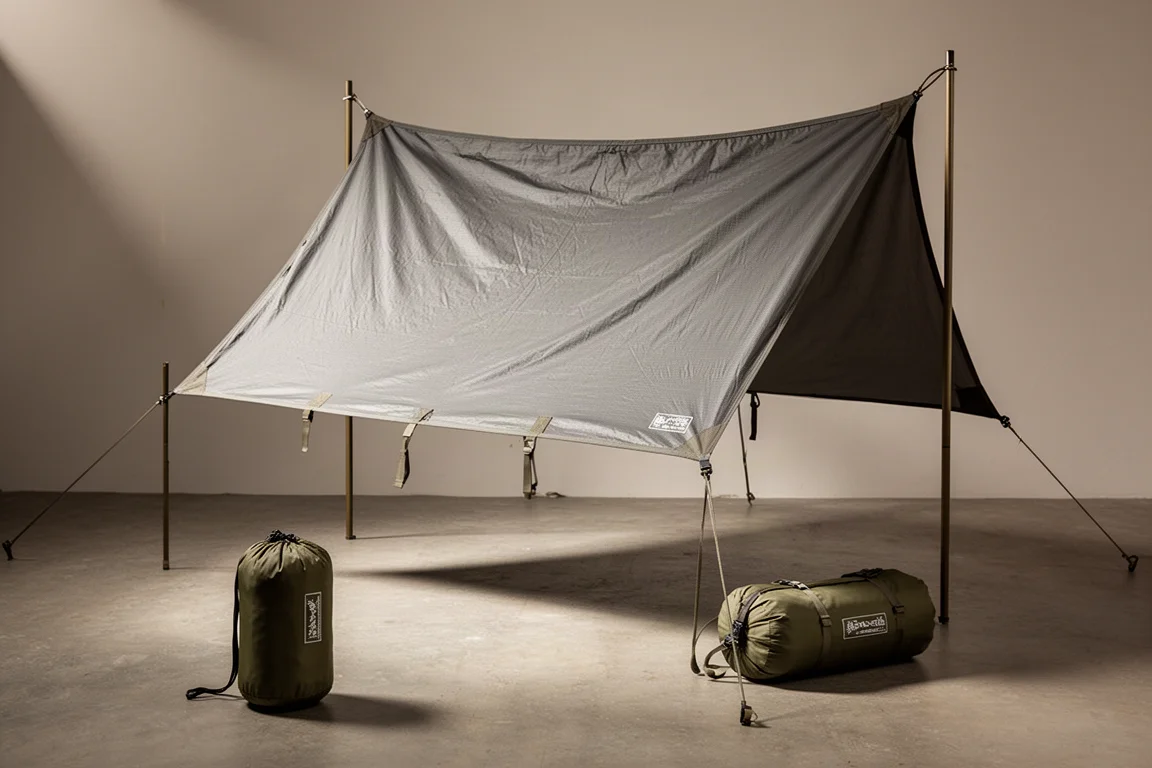
Aqua Quest Defender vs Safari 20x13: Which Large Tarp Fits Your Setup?
A side-by-side look at Aqua Quest's two 20 ft by 13 ft tarps: the 9.2 lb, 20,000 mm Defender and the 4.5 lb, 5,000 mm Safari, plus sizing, setup, and warranty details worth knowing.
Camping Tarps
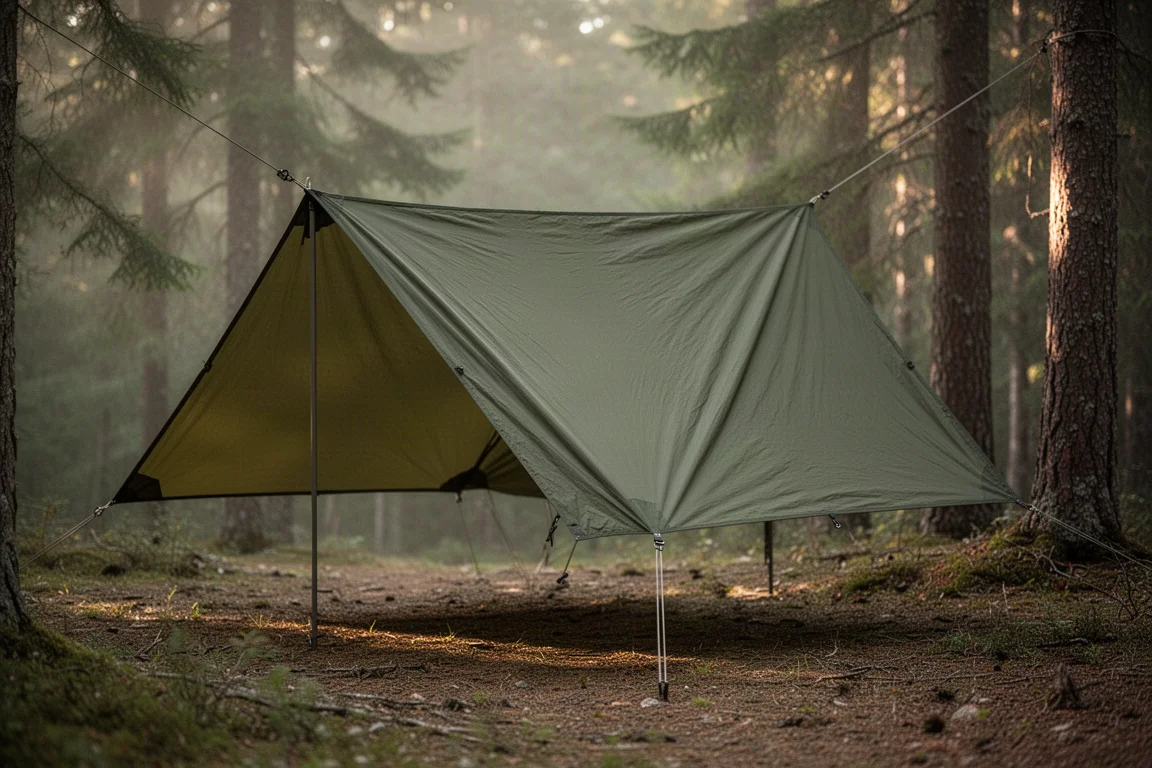
AquaQuest Guide Series Tarp 13 ft x 10 ft Review: Light, Waterproof, Storm Ready
A detailed look at the AquaQuest Guide Series 13 ft x 10 ft tarp, covering its 5,000 mm waterproof rating, 1 lb 6.3 oz weight, 17 tie-off points, and the trade-offs worth knowing before buying.
Camping Tarps
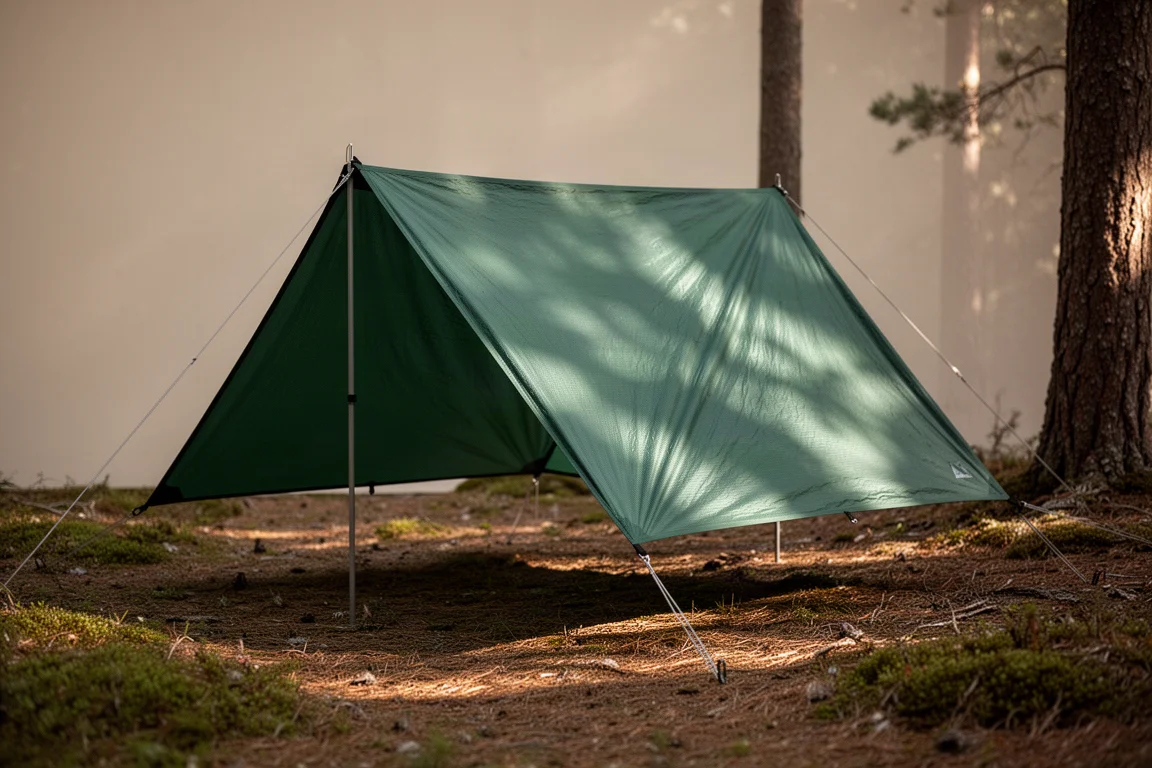
Fjällräven Abisko Tarp Review: Premium Ultralight Materials, Unreliable in Rain
The Fjällräven Abisko Tarp pairs a 1.1 lb packed weight with 40D silicone-treated nylon, but long-term testing found it leaks in steady rain and sags badly once wet.