Camping Tarps
Aqua Quest Guide Tarp 10x10 Review: Light, Strong, and Storm-Ready
A lightweight 10 x 10 ripstop tarp with taped seams, 17 tie-off points, and a 5,000 mm hydrostatic head rating, proven through a year of rough weather.
Introduction
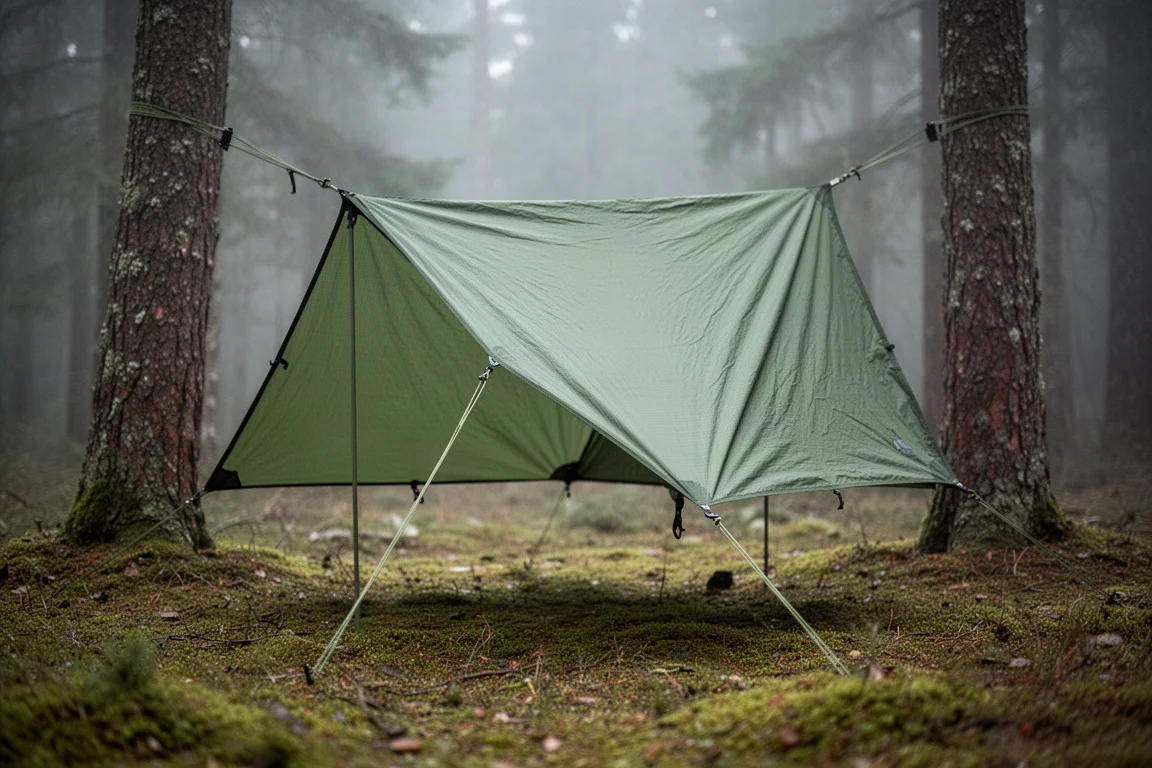
A 10 x 10 flat tarp is one of the most flexible shelter choices you can carry, and the Aqua Quest Guide Tarp is built to keep that flexibility working in genuinely rough weather rather than only on calm nights. The fabric is a 40 denier nylon ripstop with a dual polyurethane and silicone coating, and the whole tarp weighs 1 pound 6.3 ounces.
The idea behind it is simple: a lightweight tarp that behaves like a much heavier one when conditions turn. It has been through more than a year of storms, including thunderstorms with winds of 30 to 40 miles per hour and a shelf-style pitch where the wind loaded the back of the tarp directly. The fabric did not tear, the space underneath stayed dry, and eating and resting under it remained comfortable while the weather carried on.

At 92 square feet of coverage, the 10 x 10 size works for solo campers who want a dry living area and for two people who are comfortable with a compact footprint. Aqua Quest organizes its tarps into series based on strength, and the Guide series sits in the middle of that range: lighter than the heavy duty options, yet considerably more weather capable than a basic utility tarp.
Who This Product Is For
This tarp suits campers who want genuine weather protection without carrying three or four pounds of shelter. Backpackers who count every gram may still look at lighter options, but anyone who wants a dependable tarp that packs down small will find the Guide Tarp easy to justify.
It also fits vehicle-based camping well. Car camping, truck camping, and overlanding setups benefit from the large coverage area and the wide range of pitch configurations, especially when the tarp is supported by adjustable poles instead of trees.
It is a particularly good match for campers who would rather not deal with seam sealing. Because the seams arrive taped, the tarp is ready to use as it comes out of the bag.
Size, Weight, and Materials
The 10 x 10 version provides 92 square feet of coverage and compresses to roughly 11.5 inches by 4.5 inches. It ships with a storage bag that leaves generous room inside, so rolling the tarp up and stowing it does not become a struggle at the end of a trip.
The fabric is a 40 denier nylon ripstop, dual coated with polyurethane and silicone. Color options are limited to green, and the Guide series is offered in several other sizes for campers who need a different footprint.

Waterproofing is rated at a 5,000 millimeter hydrostatic head, and every seam has been taped, including the center seam and the tie-off points in the corners. That means no seam sealing is required before the first trip, which is a meaningful convenience for a tarp in this weight class.
Main Strengths: Storm-Ready Durability
Durability is the headline. Considering how light the tarp is, its resistance to wind and abrasion is impressive, and it has held together in conditions that would reasonably be expected to damage a lighter shelter.
Weight is the second strength. At less than two pounds for a 10 x 10 tarp, the balance between strength and packability is sensible. It is not the lightest tarp on the market, but the weight is fair for the money and fair for the build quality.
Quality shows up in the details. The seam work is clean, with no holes and no light passing through, and every attachment point has been taped and reinforced. Waterproofness follows from that same construction: the tarp has not leaked, and the taped seams remove the usual weak points where water finds a way in.
Setup Options and Tie-Off Points
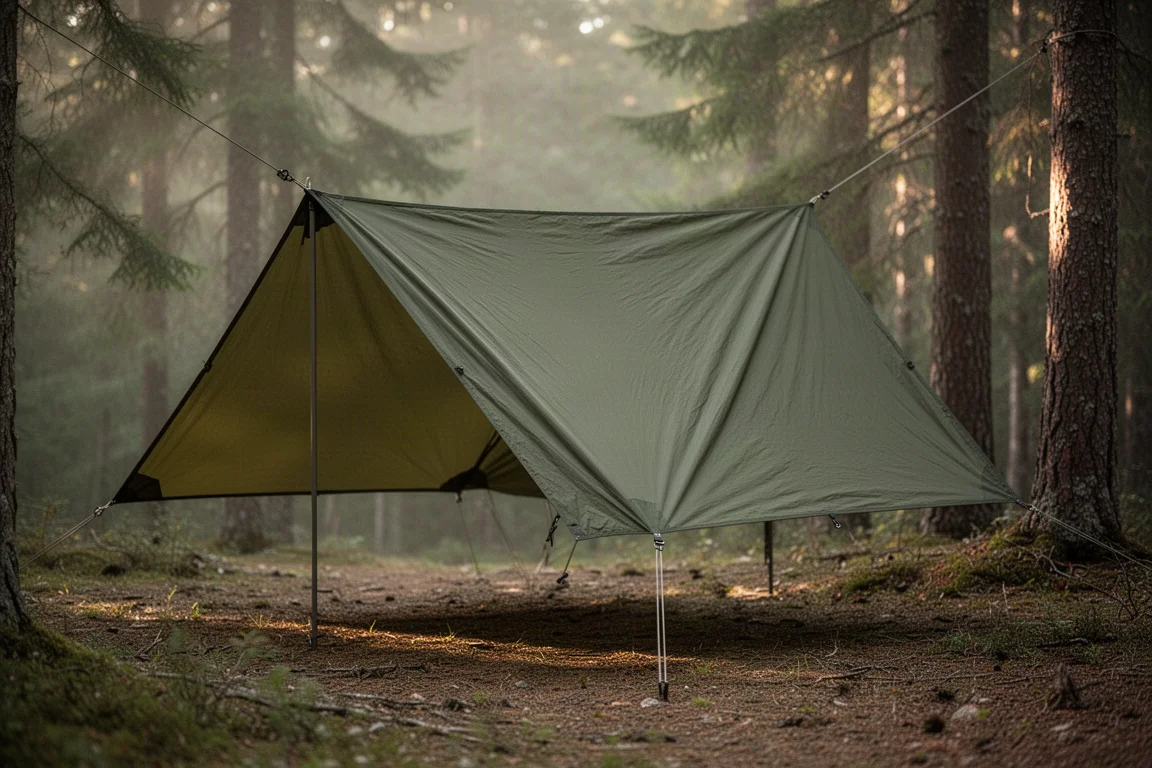
The tarp carries 17 tie-off points, 16 around the sides and one in the center. That center point allows the tarp to be supported from an overhead branch and then staked out, which opens up pitches that would be awkward with a perimeter-only design.
More attachment points translate directly into more configurations and more usable campsites. A tarp with fewer tie-offs is limited to a narrow set of shapes and locations, while this one adapts to trees, poles, and uneven ground without compromise.
There are no grommets anywhere on the tarp, so there is nothing that can tear out under load. Every point is sewn in and reinforced, and none of them have shown any sign of strain.
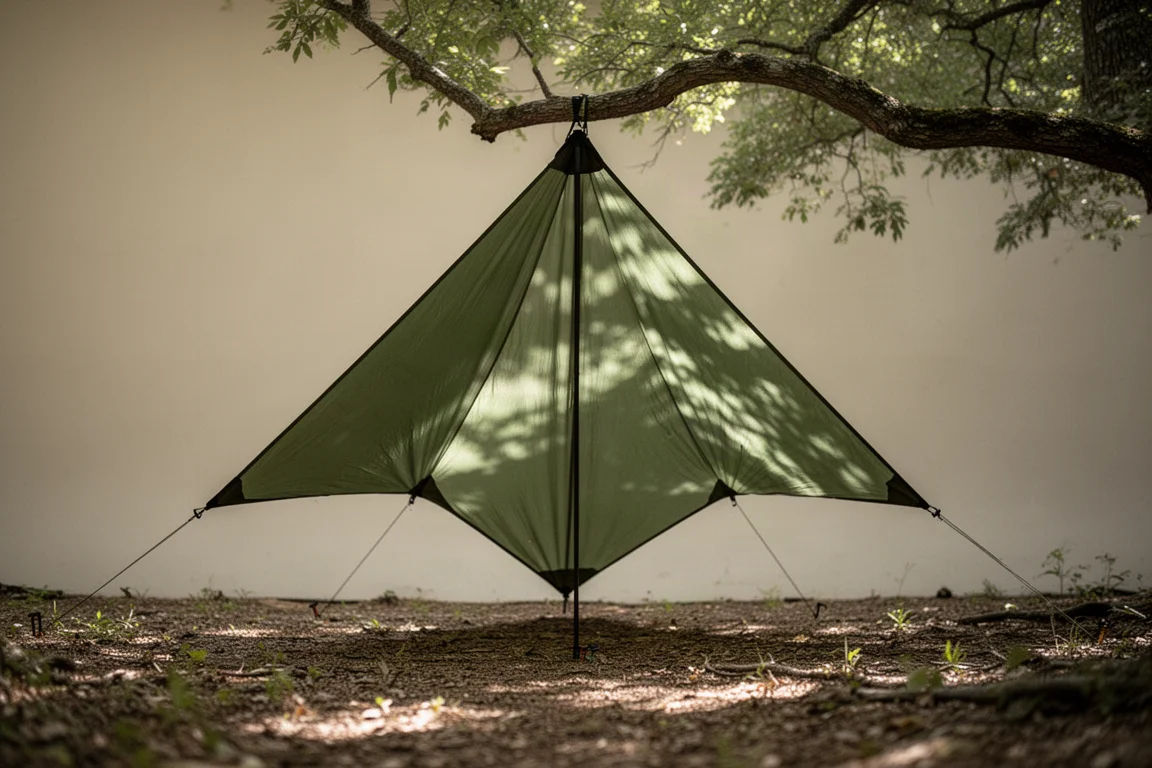
The result is a shelter that can be pitched low and tight when wind is the concern, or opened up for more headroom and airflow when the weather is mild, using the same piece of fabric.
Things to Consider Before Buying
Price is the main trade-off. The 10 x 10 tarp is listed at $100 retail, which is expensive for a tarp, and there are good quality alternatives that cost less. The other sizes in the Guide series follow the same pattern: the 10 x 7 at $80, the 13 x 10 at $120, and the 20 x 13 at $180. Amazon listings are often about $20 lower, though pricing there varies.
It is worth being clear about what that money buys. A $20 tarp will not match this one for strength, and the gap is noticeable in wind and heavy rain rather than on a dry weekend.
Two other points are worth noting. The Guide series is not the company’s heavy duty line, so campers who want maximum strength and are willing to carry more weight should look at that range instead. And the tarp is only available in green.
Buying Advice
Start with size rather than price. The 10 x 10 is the balanced middle option: enough coverage for one or two people and light enough to carry, while the larger sizes suit group shelters and basecamp setups where weight matters less.
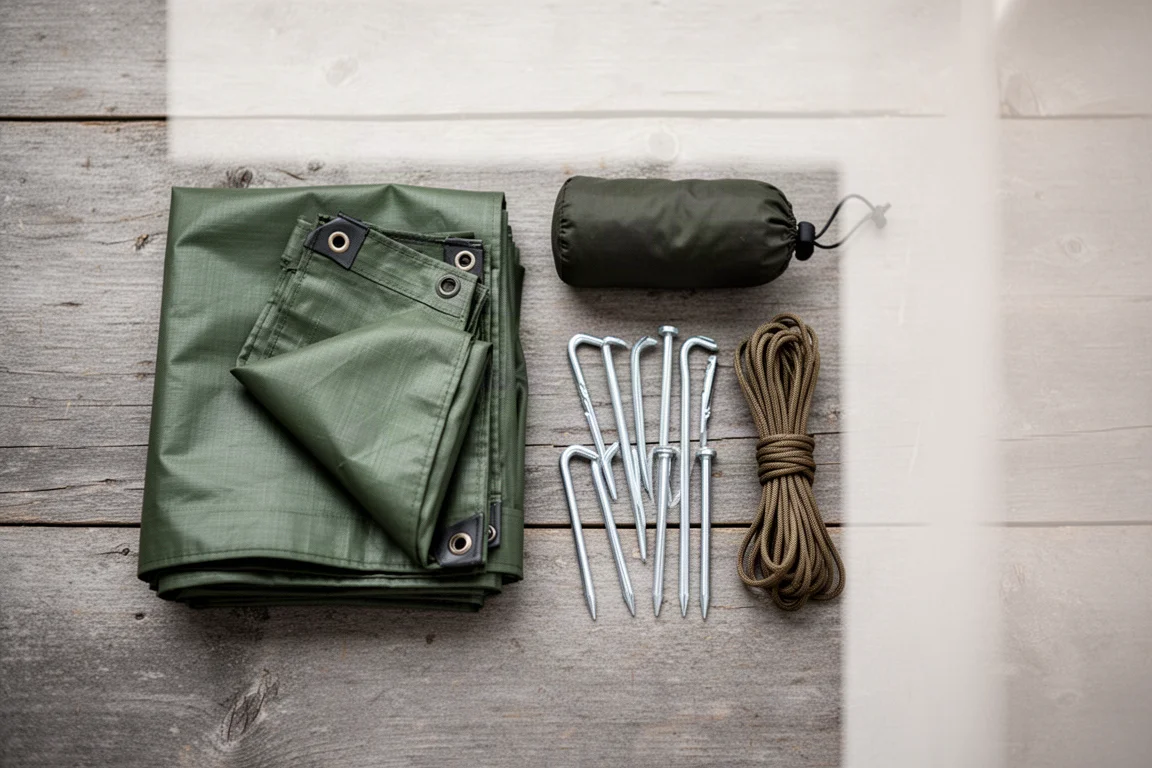
Support structure matters as much as the tarp itself. Poles make the most sense for car camping, truck camping, and overlanding, where the extra weight is irrelevant and the flexibility of a freestanding pitch is valuable. Backpackers will typically rely on trees and trekking poles instead.
Finally, factor in the lifetime warranty. It is part of what the higher price reflects, and it makes the long-term cost easier to accept for a shelter that is expected to see years of use.
Conclusion
The Aqua Quest Guide Tarp 10x10 earns its place as a lightweight shelter that punches well above its weight class. It has held up through serious thunderstorms, strong winds, and long exposure to rain without tearing or leaking, and the taped seams mean it works properly from the first trip.
The honest caveat is price. Cheaper tarps exist, and some of them are perfectly usable, but they will not match this level of strength and waterproofing. For campers who want one dependable tarp that packs small, handles real weather, and does not need preparation before use, the Guide Tarp is an easy recommendation.
Product link
View more details for Aqua Quest Guide Tarp 10x10
This product is mentioned in the review. Check the specifications, options, and compatibility before buying.
View more details for Aqua Quest Guide Tarp 10x10Further reading
Related Reviews
Camping Tarps
Aqua Quest Defender vs Safari 20x13: Which Large Tarp Fits Your Setup?
A side-by-side look at Aqua Quest's two 20 ft by 13 ft tarps: the 9.2 lb, 20,000 mm Defender and the 4.5 lb, 5,000 mm Safari, plus sizing, setup, and warranty details worth knowing.
Camping Tarps
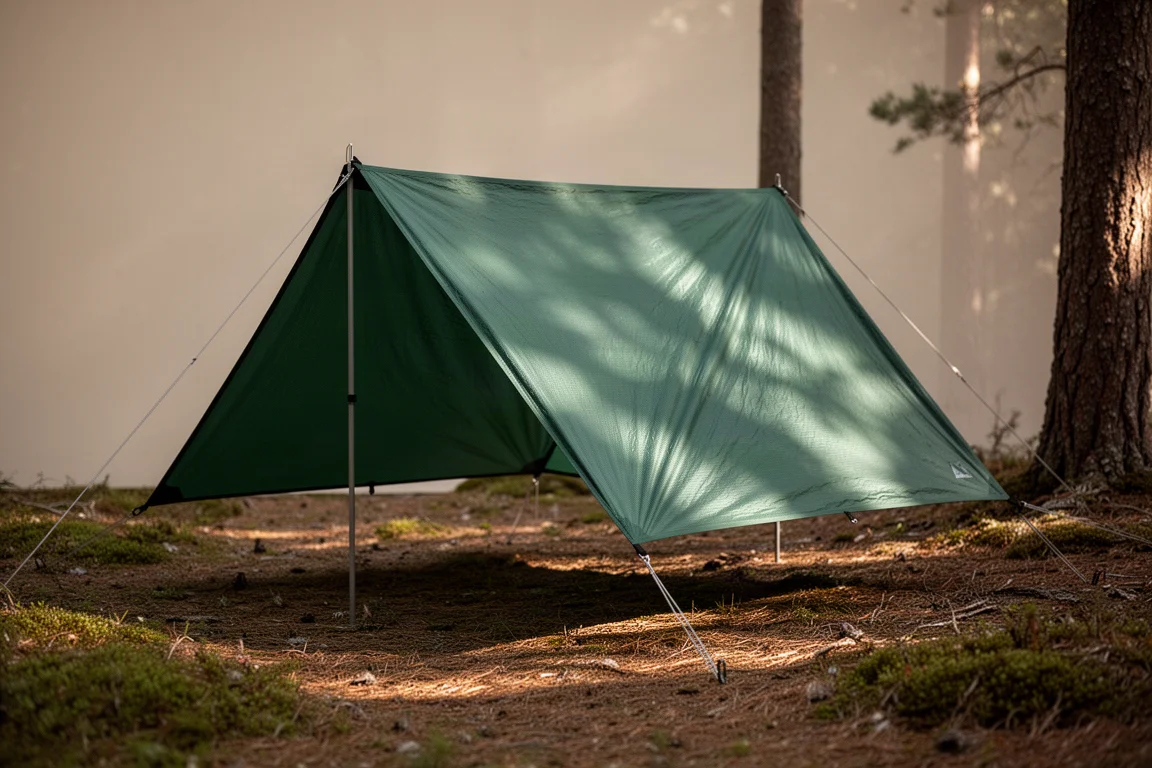
AquaQuest Guide Series Tarp 13 ft x 10 ft Review: Light, Waterproof, Storm Ready
A detailed look at the AquaQuest Guide Series 13 ft x 10 ft tarp, covering its 5,000 mm waterproof rating, 1 lb 6.3 oz weight, 17 tie-off points, and the trade-offs worth knowing before buying.
Camping Tarps
Fjällräven Abisko Tarp Review: Premium Ultralight Materials, Unreliable in Rain
The Fjällräven Abisko Tarp pairs a 1.1 lb packed weight with 40D silicone-treated nylon, but long-term testing found it leaks in steady rain and sags badly once wet.