Astrophotography Telescopes
Apertura CarbonStar 200 Review: A Fast Newtonian Built for Astrophotography
An 8-inch f/4 carbon fiber Newtonian with dedicated coma correction, excellent image scale for popular astro cameras, and a few quirks worth knowing before you buy.
Introduction
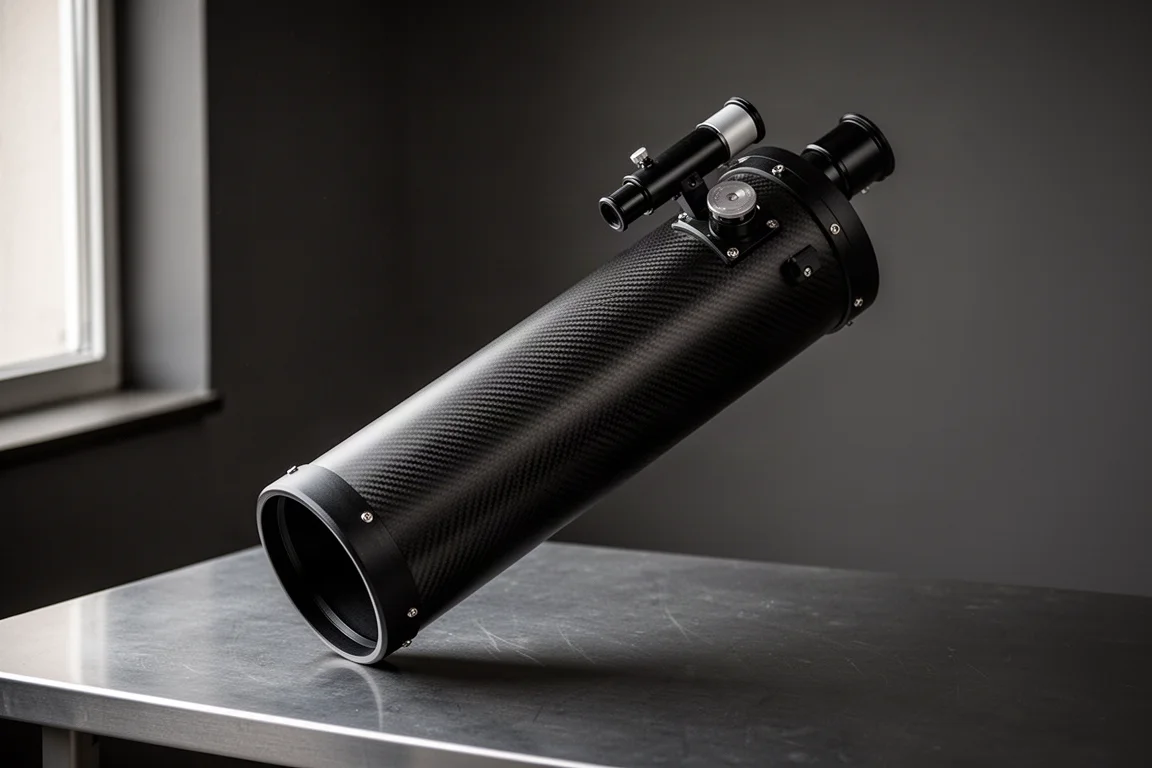
The Apertura CarbonStar 200 is a Newtonian astrophotography telescope with thoughtful upgrades and optimizations across the board. As someone who usually shoots with refractors, this mirrored design changed my perspective on what a reflector can offer, quirks included. High Point Scientific sent the scope over for an extended test, and after a month of real imaging sessions, here is the full picture.
Optical Design and Performance
This is an f/4 telescope with an 800 mm focal length. That is considered fast in terms of light gathering ability, and it sits in the mid-range for magnification and field of view. If you are used to compact refractors, 800 mm feels genuinely deep. An image of the Western Veil Nebula gives a good sense of what to expect, complete with a glorious diffraction spike on the bright central star.
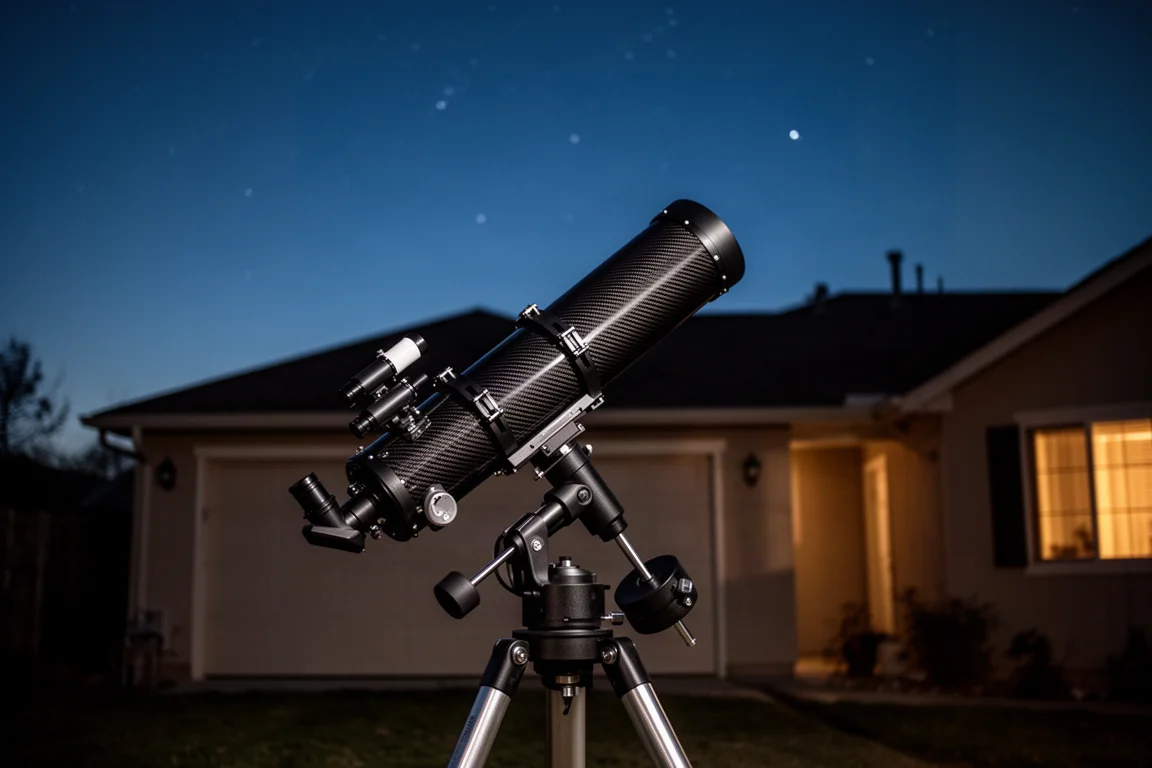
The field of view you get depends on the camera attached, and there is good news here: the CarbonStar 200 is a perfect match for the ASI 533 and ASI 2600 sensors. If you own either of these camera sensors in any brand, this OTA provides an ideal image scale, with crisp images and beautiful round stars.
Coma Correction and Field Illumination
The CarbonStar line offers dedicated coma correctors for both the 150 mm and 200 mm versions. For the 200 mm, the corrector is a 1.1x unit, retaining the 800 mm focal length at f/4. With the corrector in place, star quality is perfect across an APS-C sensor field. I captured round stars edge to edge using the 2600 MC Pro and MM Pro.
The corrector is an optional accessory I would definitely recommend if you are using a crop sensor, though you can probably get away without it if you are shooting with the 533. Across a crop sensor camera, the field illumination is excellent, and targets like the Pac-Man Nebula, the Lagoon Nebula, and the Triffid fit nicely at 800 mm. Andromeda, being a huge target, would require a two-panel mosaic with a crop sensor at this focal length.
Collimation and Light Control
Inside the optical tube there are 13 knife-edge baffles, which help produce images with better contrast and reduce susceptibility to stray light. A rear cap is included for further light leak prevention, but if you image in the backyard you will want a simple dew shield. I forgot mine while pointing near the garage and some red light snuck into my first few subs. Lesson learned. High Point sent a matching CarbonStar dew shield, but pricing was not yet available.
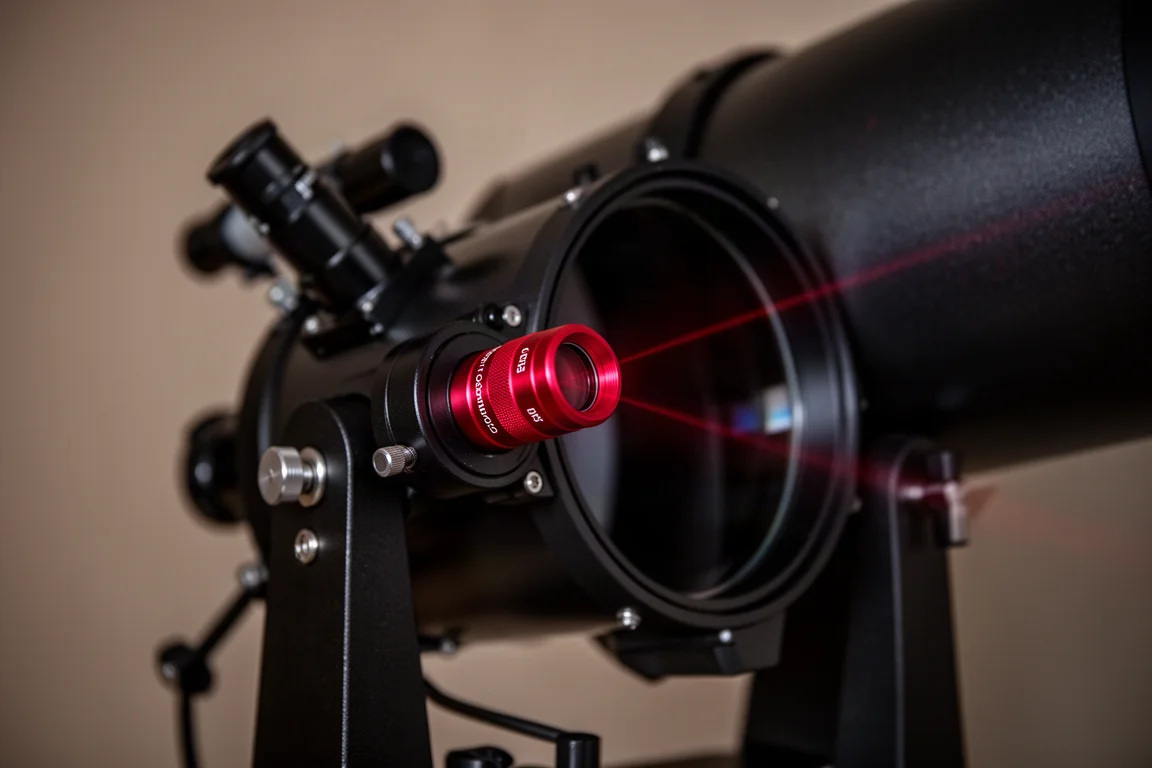
Being a Newtonian reflector, collimation is part of the deal. Do yourself a massive favor and pick up a simple laser collimator to align the mirrors before each session. The process involves using an Allen key to adjust the secondary mirror so the red light is centered on the primary, then a couple of slight tweaks to the primary mirror adjustment knobs until the red light is centered in the bullseye. Honestly, it is pretty painless, and I do it before every session and after a meridian flip.
Rigging It Up for Imaging
The telescope comes with a small mounting bracket for a guide scope. A mini 32 mm guide scope works fine, and you should be able to balance the load without a problem. I have mainly been using the CarbonStar 200 with the ASI 2600MC Air, which is a match made in heaven. That camera has a Duo sensor design, so I can image and autoguide through the primary scope, and it includes an ASI Air to control the mount, plate solve, and automate the entire session.
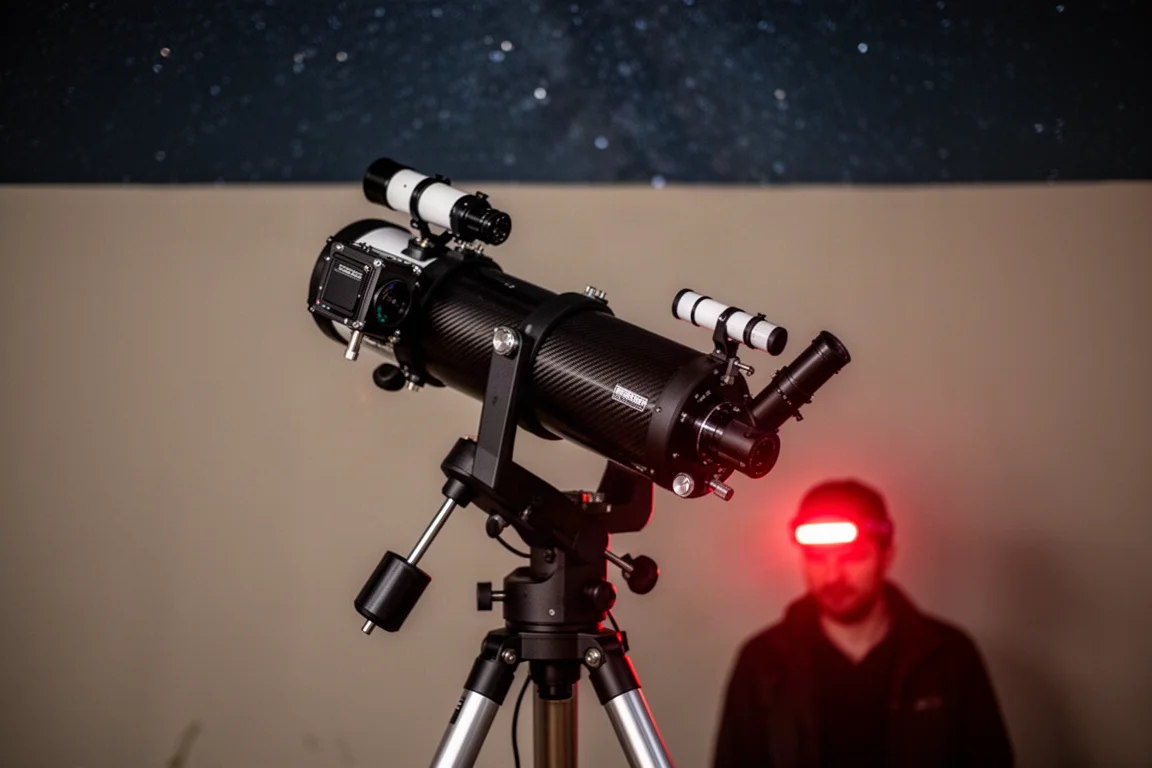
The complete kit is refreshingly simple. The OTA weighs only 15 lbs, so I can pick the whole thing up and carefully carry it in and out of the garage. The scope is a great fit for mid-range equatorial mounts like the AM5, and it can even run on the AM3 or the Skywatcher Wave 100.
Real-World Imaging Results
Because clear nights are scarce in my location, I often have to complete projects with a single night of data, which means every sub needs to count. A fast Newtonian like this helps enormously. Every 3 to 5 minute exposure comes through a big 8-inch aperture at f/4, and that volume of starlight is noticeable when processing.
The Veil Nebula project, shot with the 2600MC Air and the Optolong L Extreme, produced about 4 hours of stacked data with stars looking great right to the frame edges, straight off the stack with no gradient removal applied. Notably, focus held steady through a meridian flip and across roughly a 4-hour period without an autofocuser, which was a pleasant surprise, possibly thanks to the carbon fiber construction. A second project on the Cave Nebula, again with the L Extreme plus some RGB data for natural star colors, confirmed the consistent field illumination.
On diffraction spikes: the big ones glimmering on the brightest stars are lovely, but the medium-sized spikes throughout the frame are less appealing to me. Reducing star size across the image helps draw attention back to the subject.
Who This Telescope Is For
If clear nights are not common where you live, a big light bucket like this makes sense. Soaking 40 hours into a single project is not realistic from my backyard, so gathering as much light as possible in one night is the priority. A fast 8-inch aperture lets me pour on the starlight and attempt more challenging projects without changing my routine, and the cameras I already use complement the system perfectly.

I plan to keep using this telescope into the fall and winter on longer cold nights to see what else I can create with it.
Buying Advice
If you shoot with an ASI 533 or ASI 2600 class camera and want maximum light per night, the CarbonStar 200 is an easy recommendation. Budget for a laser collimator, plan on adding the dedicated coma corrector for crop sensors, and pick up a dew shield to guard against stray light. If you are strictly a refractor purist, the diffraction spikes and collimation routine are the two things to weigh before committing.
Conclusion
The Apertura CarbonStar 200 pairs a fast 8-inch aperture with smart touches like knife-edge baffles, a dedicated coma corrector option, and a light 15 lb OTA that works comfortably on mid-range mounts. With excellent field illumination on crop sensors and steady focus over long sessions, it earns a place in an astrophotography kit, quirks and all.
Product link
View more details for Apertura CarbonStar 200
This product is mentioned in the review. Check the specifications, options, and compatibility before buying.
View more details for Apertura CarbonStar 200Further reading
Related Reviews
Astrophotography Telescopes
Askar 111 F Review: A Flat-Field Quadruplet Refractor Built for Deep-Sky Imaging
A 111 mm flat-field quadruplet APO with a 766 mm focal length, full-frame image circle, and an optional 0.74x reducer. Here is how it fits into an astrophotography setup.
Astrophotography
ASKAR FRA400C Review: A Versatile 400mm Refractor for Astrophotography and More
The ASKAR FRA400C is a compact 72mm refractor that balances reach, versatility, and portability for astrophotographers and visual observers.
Astrophotography
Askar SQA106 Review: A Premium 106mm Astrograph With Exceptional Optics
The Askar SQA106 is a premium 106mm quintuplet astrograph with impressive sharpness across full-frame sensors, though its price and weight demand careful consideration.