Astrophotography
Apertura All Night Imaging Power Supply Review: Portable Power Built for Astrophotography
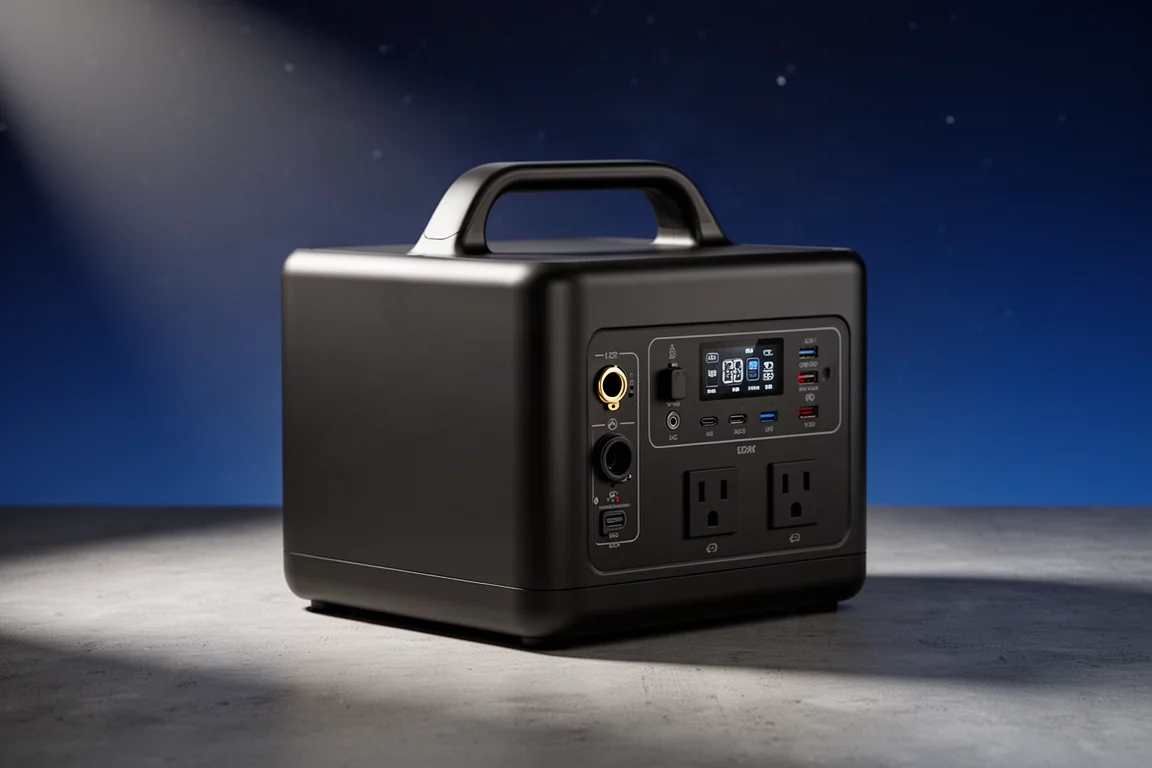
A 518Wh portable power station with stable 12V output, astronomy-style DC ports, USB-C 100W power delivery, and a full cable kit for imaging rigs.
Introduction
Astrophotography is one of the most rewarding corners of the hobby, and also one of the most gear-hungry. Between the mount, camera, electronic filter wheel, automatic focuser, and whatever device controls it all, a full imaging night needs a lot of power delivered through the right connectors, at a stable voltage, from dusk to dawn.
The usual answer is an extension cord snaking out to a wall strip, but that only works if you image where the outlet is. Trees, buildings, and heavy light pollution often push observers toward remote dark-sky sites, campgrounds, and national parks. That is where a dedicated portable power supply earns its place, and the Apertura All Night Imaging Power Supply is designed specifically for this kind of use.
Why Portable Power Matters for Astrophotography
A portable supply untethers your rig from the backyard. It lets you travel to dark sky sites, camp under genuinely dark horizons, and image from locations that would otherwise be impossible. The catch is that not all power supplies are created equal: some have enough capacity but the wrong ports, some sag in voltage as the battery drains, and some force you to hunt down non-standard adapters.
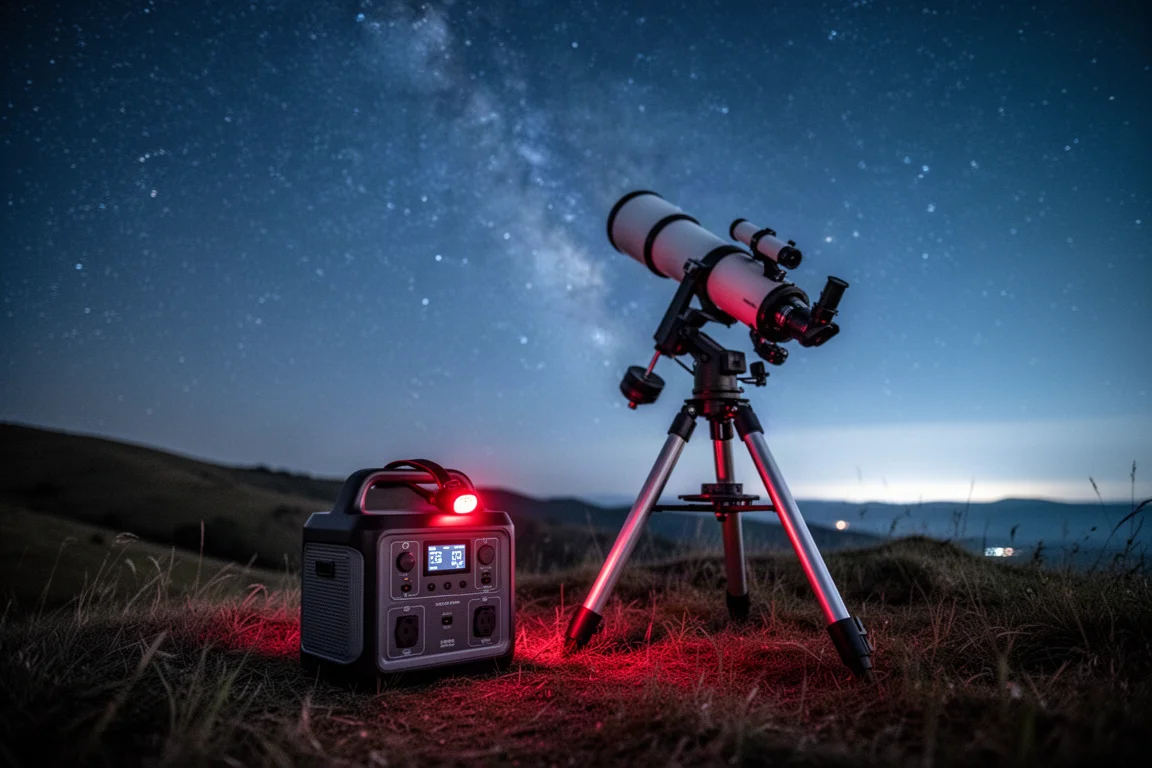
The All Night Imaging Power Supply aims to remove those compromises in one package, with a feature set clearly shaped around the needs of amateur astro imaging.
Battery Capacity: 518 Watt Hours
The foundation is a 518 watt hour capacity built on EV grade lithium batteries. For context, the most popular dedicated astronomy lithium batteries typically hold around 150 to 160 watt hours, roughly a third of what this unit offers.
In real use, the numbers hold up. With a full imaging rig connected, including a laptop running off USB, an entire night of imaging left 50% of the battery remaining. Exact results will vary with your setup, but this supply comfortably runs a rig all night long, which is exactly what the name promises.
Voltage Stability From 100% Down to 1%
Capacity is only half the story; the power also needs to stay stable across the whole night. This supply uses a 24 volt internal design that steps down to 12 volts. Most astronomy equipment runs on 12V, so a native 12V pack might seem more efficient, but it ties the DC output to the battery voltage, which drops as the pack discharges.
By running the internal pack at a higher voltage and converting down, the output stays steady for sensitive equipment from a full charge all the way down to 1%. For cameras, filter wheels, and focusers that misbehave on sagging voltage, that design choice is a meaningful advantage.
Port Selection That Matches Real Gear
Apertura equipped the unit with the ports most hobby gear actually uses, avoiding the need for custom adapters:
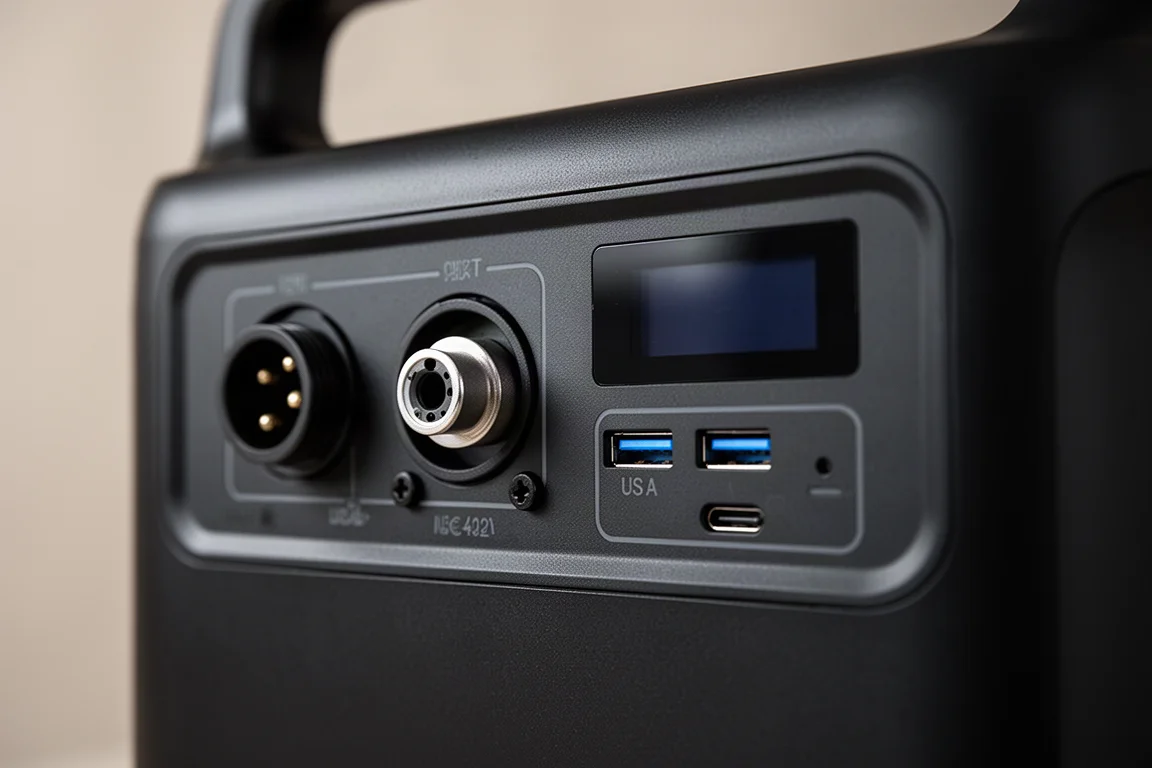
- Two 12V DC ports with a combined 10 amp output, using the common 5.5x2.1mm astronomy-style connectors
- USB-A ports compatible with Qualcomm Quick Charge 3.0 for fast charging
- Two USB-C ports with power delivery support, one capable of up to 100W, enough to run compatible laptops without their bulky power bricks
- Two 110V AC ports for gear that is neither a barrel plug nor USB
The power delivery port is a genuine highlight. More laptops and PC solutions are moving to USB-C PD, and unlike AC-to-DC conversion on many supplies, running devices through PD here avoids the efficiency loss you would otherwise accept. That said, the AC ports still earn their place for the equipment that fits neither category.
Cables and Accessories in the Box
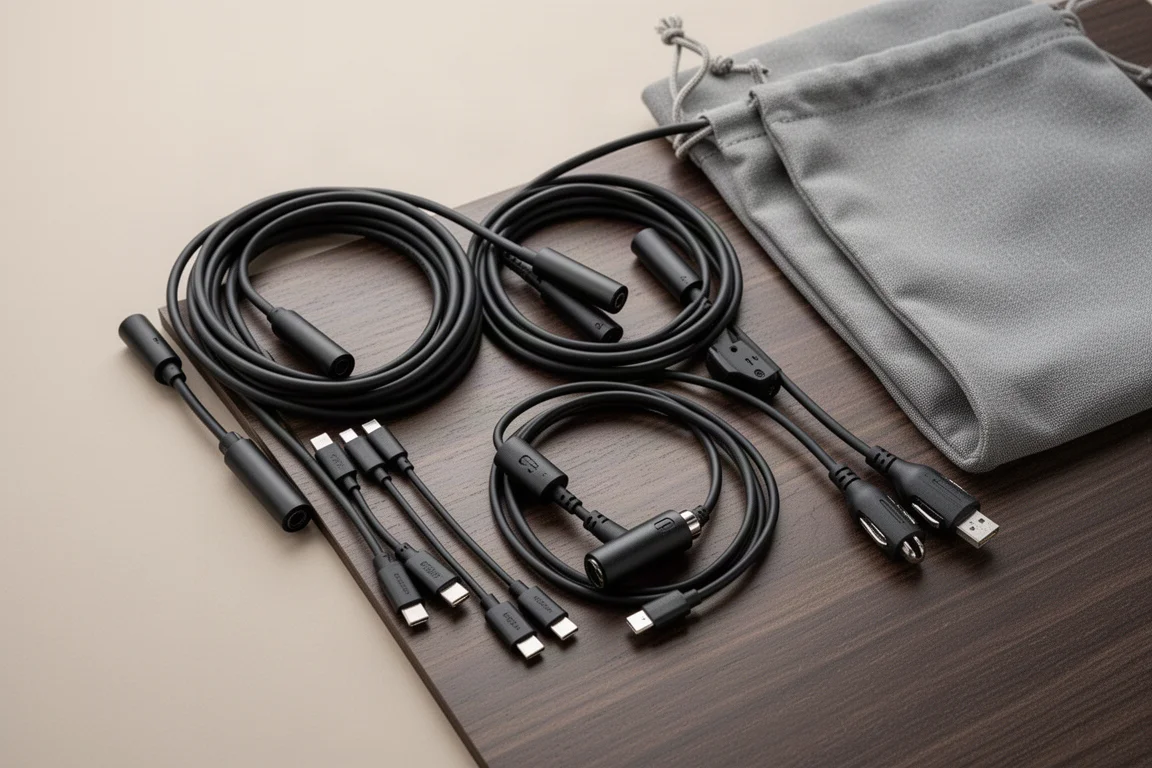
One of the most practical aspects of this supply is that it arrives with essentially every cable you are likely to need:
- Three 5.5x2.1mm to 5.5x2.1mm DC cables: a 2 meter and a 1 meter for the mount and devices on the telescope, plus a half meter cable for routing power between devices on the scope
- A 2 meter 5.5x2.1mm to 5.5x2.5mm DC cable, ideal for larger iOptron and Meade mounts that use the less common 5.5x2.5 barrel jack
- Two 5.5x2.1mm to car power style plug adapters, handy for mounts such as Sky-Watcher models that rely on this connector
- Two Y splitter cables that turn the two DC ports into four, with all DC cables rated for the full 10 amp maximum
- A USB-C to USB-C power delivery cable rated for the full 100W standard, which is rarer than it should be
- An AC adapter that recharges the unit in about 8 hours, plus a car adapter for topping up on the go
- A carrying bag that holds all the cables when you are done
Things to Consider Before Buying
Recharging takes around 8 hours from the included AC adapter, so plan ahead before a full night of imaging. The unit is also built around a generous feature set, so if your needs are minimal, a smaller and cheaper battery may suffice. For anyone running a full rig with a laptop, mounts with less common barrel sizes, or USB-C PD devices, the extra capacity and port variety are exactly what make it worth considering.
Who This Power Supply Is For
This supply suits astrophotographers who image away from home, whether that is a remote dark sky site, a campground, or a corner of the yard the extension cord cannot reach. It is equally useful for Bortle 7, 8, or 9 observers who need to travel to find acceptable skies.
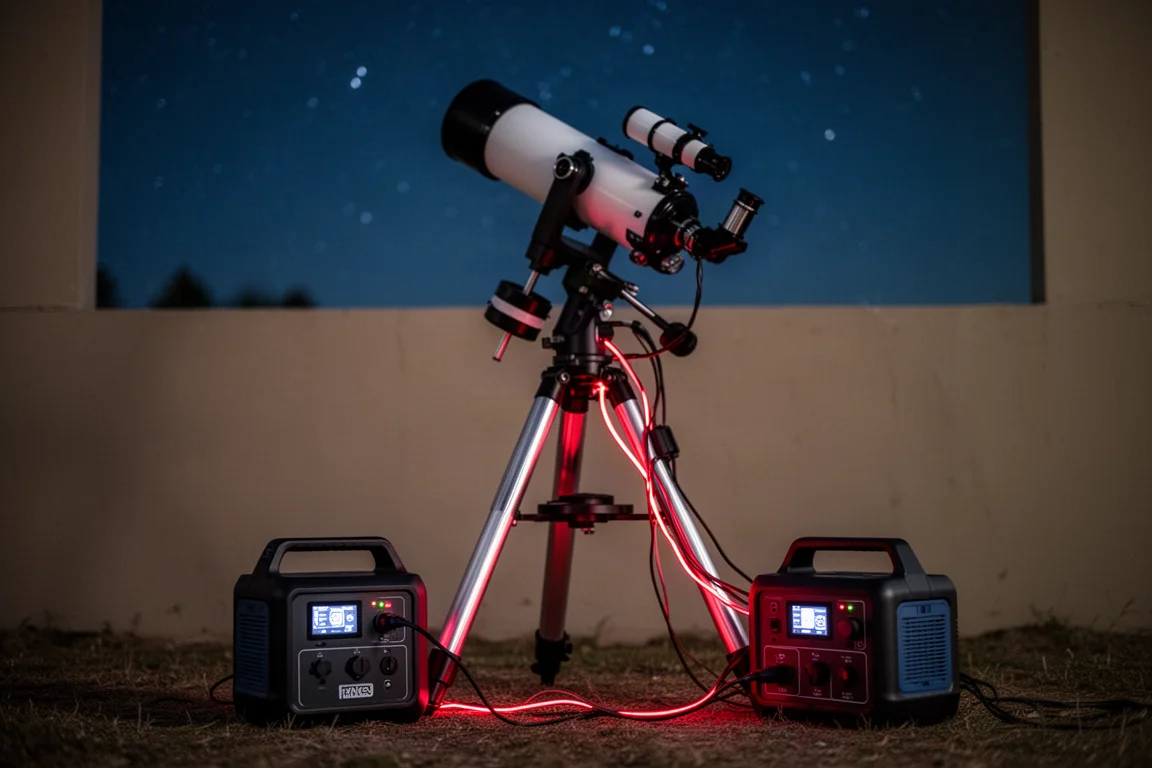
If you run a mount, camera, filter wheel, focuser, and a laptop in the same night, and you want stable voltage and the right connectors without hunting for adapters, this is a strong fit. Even in the backyard, having a self-contained power source simplifies setup.
Buying Advice
Before buying, tally what your rig actually draws and which connectors it uses. If your mounts or accessories need 5.5x2.5mm barrels, car plug style inputs, or 100W USB-C power delivery, check whether a smaller battery even offers those options. The All Night Imaging Power Supply covers all of them out of the box, which is its core argument: with how few clear nights we get, it is worth not gambling an imaging session on underpowered or poorly matched gear.
Conclusion
The Apertura All Night Imaging Power Supply combines 518 watt hours of capacity, stable 12V output from full charge to nearly empty, astronomy-appropriate DC ports, fast USB charging, 100W power delivery, AC outlets, and a genuinely complete cable kit. Whether you are imaging from a dark sky site or your own backyard, it delivers the power and the connectors to keep a full rig running until sunrise.
Product link
View more details for Apertura All Night Imaging Power Supply
This product is mentioned in the review. Check the specifications, options, and compatibility before buying.
View more details for Apertura All Night Imaging Power SupplyFurther reading
Related Reviews
Astrophotography
ASKAR FRA400C Review: A Versatile 400mm Refractor for Astrophotography and More
The ASKAR FRA400C is a compact 72mm refractor that balances reach, versatility, and portability for astrophotographers and visual observers.
Astrophotography
Askar SQA106 Review: A Premium 106mm Astrograph With Exceptional Optics
The Askar SQA106 is a premium 106mm quintuplet astrograph with impressive sharpness across full-frame sensors, though its price and weight demand careful consideration.
Astrophotography
Astro Imaging Gear 2026: Eight New Products Worth Watching
A look at the most interesting new astrophotography and astronomy products announced this year, from fast telescopes to smart cameras and wireless accessories.