Integrated Amplifiers
Anthem STR Integrated Amplifier Review: Still Competitive After Six Years
A close look at the Anthem STR Integrated Amplifier, covering its power, room correction, DAC and phono stage, plus the trade-offs worth weighing before buying.
Introduction
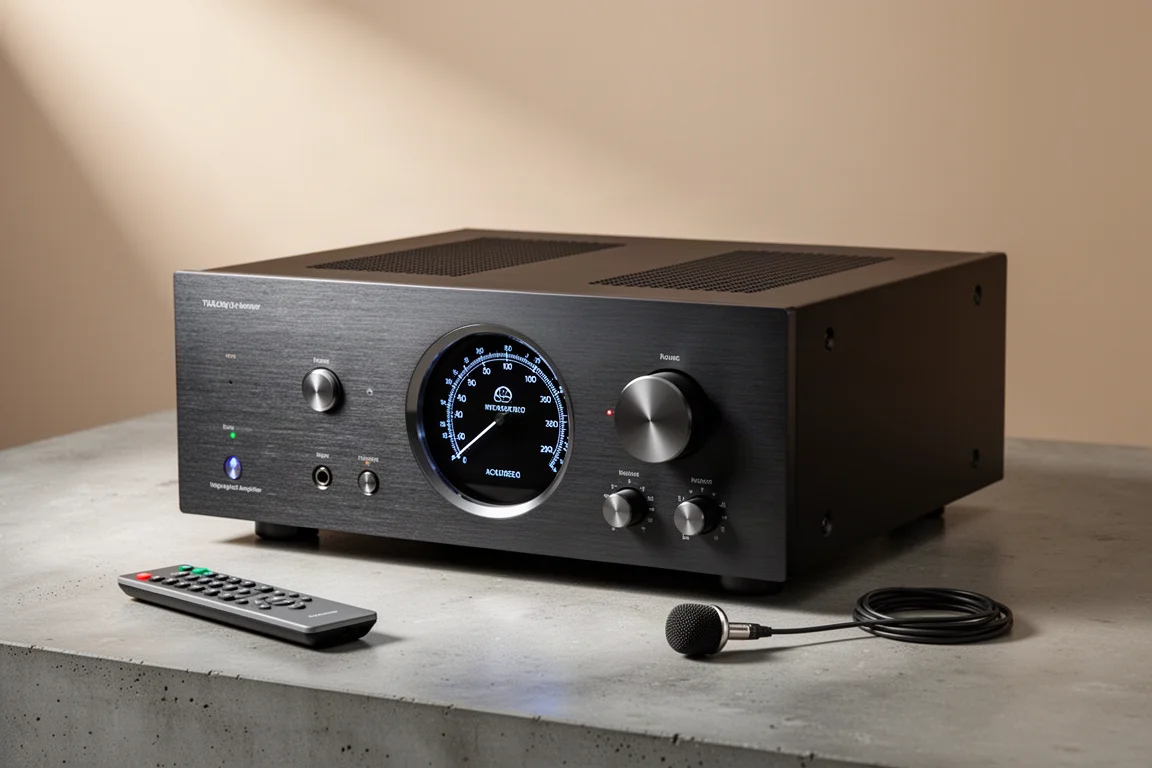
The Anthem STR Integrated Amplifier arrived in 2018, and in a market where replacements are often announced before the first orders have shipped, that makes it unusually long-lived. It remains the only integrated amplifier Anthem offers, and no successor has been confirmed. More than six years on, the question worth answering is simple: does a class AB integrated amplifier from 2018 still make sense today?
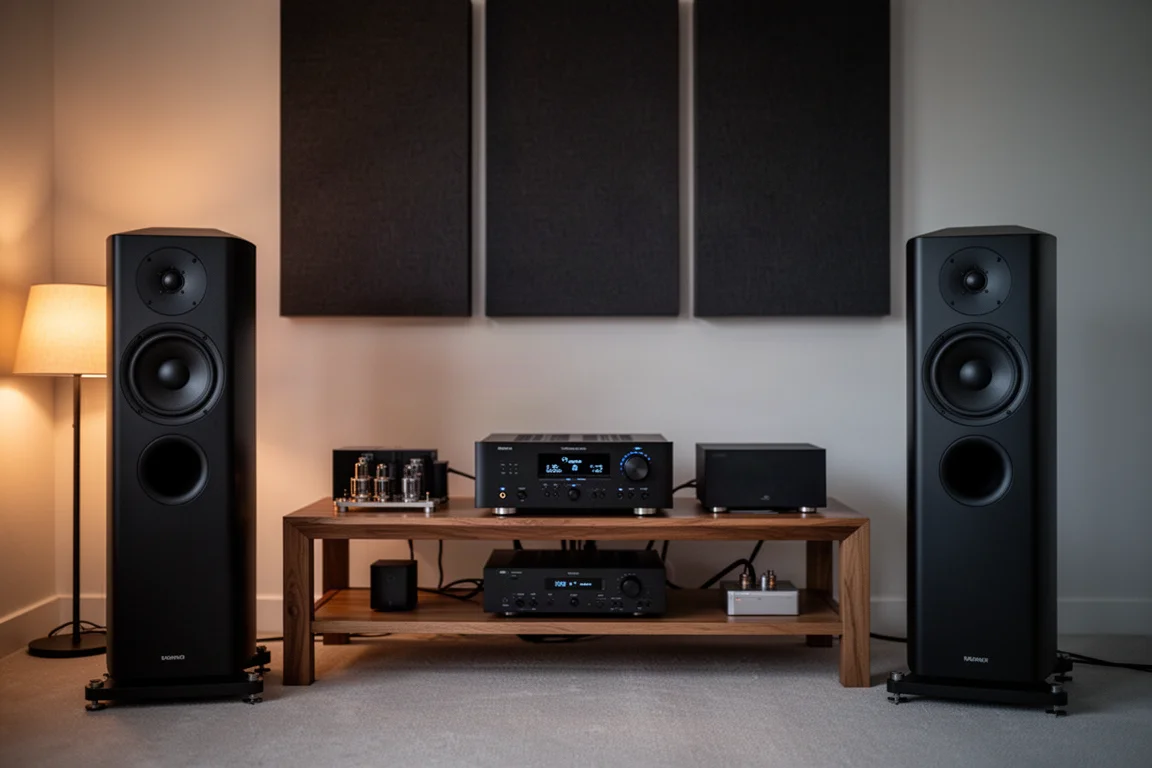
This review covers the power on offer, the room correction and preamp flexibility that keep the STR relevant, how it sounds with a range of speakers, and the features it does without. For anyone shopping in the premium integrated amplifier category, the picture is clearer than the age of the product might suggest.
Who the Anthem STR Integrated Amplifier Is For
The STR is built for listeners who want a single box that can drive demanding loudspeakers and integrate subwoofers without giving up control. It is rated at 200 watts per channel into 8 ohms, 400 watts into 4 ohms and 550 watts into 2 ohms, so it is specified to work with a wide spread of speakers, including low-impedance designs.
It also suits anyone who plans to run one or two subwoofers. Full preamp outputs include dual subwoofer outputs that can be configured for mono or independent use, with bass management handled inside the amplifier. Settings can be saved into profiles and assigned to individual inputs, which is genuinely useful if you compare speaker or subwoofer combinations over time.
This is not the amplifier for someone who wants everything built in. Streaming, Bluetooth and smart home control are absent, so buyers who prefer a single app-driven system will want to look elsewhere or plan on an external streamer. For listeners who already own a good streamer or DAC and care most about amplification, room correction and subwoofer integration, the STR fits neatly.
Main Strengths: Power, Flexibility, and Room Correction
The headline strength is headroom. With ratings that extend down to 2 ohms, the STR can drive most loudspeakers on the market. It was paired with everything from large reference floorstanders to compact standmounts, along with several subwoofers, and no pairing proved problematic.
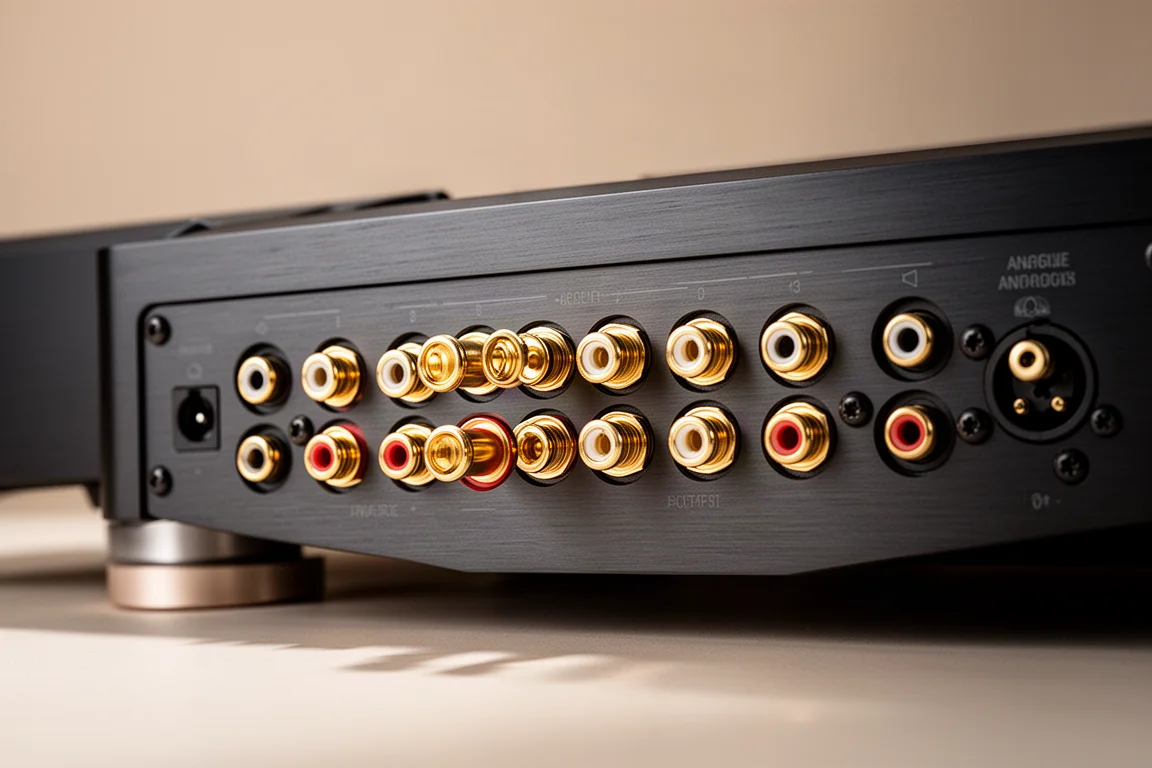
Connectivity is broader than the age of the design suggests. There are five analog inputs, four unbalanced and one balanced, plus a phono stage with two separate inputs, one for moving magnet cartridges and one for moving coil. Both can be tailored to suit a specific cartridge through the on-screen menu. On the digital side you get two optical, two coaxial, one AES/EBU and one USB input, with the built-in DAC supporting high-resolution signals up to 32-bit/384kHz and DSD 2.8 to 5.6. Two further USB ports handle software updates and the supplied calibration microphone, and there is an Ethernet jack, an RS232 port and trigger outputs.
Anthem Room Correction, or ARC, is the feature that keeps the STR competitive. It is free to use, unlike some competing calibration platforms, and it runs from desktop software or a mobile app once the amplifier is connected to the home network through its Ethernet port. The desktop version produced the better results in testing, while the mobile app is convenient and can use either the supplied microphone or the microphone built into the device. ARC walks through a series of measurements, displays the response of the speakers, or the speakers and subwoofer, in the room, and then lets you adjust the target curve or accept Anthem’s recommendation before saving the filters to the amplifier. A quick measurement mode is handy for speaker placement and for finding the best listening position. Two-channel results are exceptionally natural, and the before-and-after difference is easy to hear.
Sound Quality in Practice
The STR is a neutral amplifier. Its overall tonality sits closest to the Yamaha A-S2000, particularly in the bass and lower midrange. Against a McIntosh MC312 paired with an external preamp on the same speakers, the Anthem has slightly less body and weight in the lower midrange and upper bass, which can make it sound leaner by comparison. What it gives up in heft it returns in agility: bass is nimble, focused and detailed, with or without a subwoofer.
The midrange is neutral and uncolored, letting the character of the speakers come through, which is exactly what you want from an integrated amplifier. Treble is clean and focused, though it lacks the organic air and atmospheric decay that a costlier McIntosh delivers. Driving Klipsch Cornwall IV speakers, the Anthem sounded crisper and clearer through the upper midrange and treble.
Dynamics are a genuine strength. The STR sounds precise and snappy in the low bass and upper midrange, and it can feel explosive next to more expensive alternatives. Control across the soundstage is ample, with strong separation and clear front-to-back layering. It never gets in the way of a speaker’s own soundstage abilities. Although it is a stereo component, it is punchy and dynamic enough to be genuinely enjoyable with films in a 2.1 or 2.2 setup.
The internal DAC holds its own as well. Used with an external streamer over an optical connection, the Anthem’s DAC was more refined, with better channel and spatial separation than the DAC in the streamer, while the streamer’s analog output sounded mildly weightier and warmer. The gap is small enough that a separate DAC is unlikely to be money well spent unless you are shopping far upmarket or chasing a specific chipset character.
Vinyl playback is another quiet strength. The built-in phono stage is very good, and the separate moving magnet and moving coil inputs can be tailored to your cartridge through the menu. Preset EQ curves, including curves associated with particular recording labels, can be experimented with, and the audible differences vary from subtle to noticeable depending on the curve. With the cartridge setups used in testing, records sounded excellent, and the internal phono stage should be more than enough unless your turntable setup is extremely exotic.
How the Anthem STR Compares With Other Integrated Amplifiers
The closest competitor is the Yamaha A-S2000. The Anthem is more powerful and more customizable, while the Yamaha counters with modern conveniences such as streaming and HDMI connectivity, plus its own room correction system. The Anthem sounds a little more refined and controlled when driving a wider range of loudspeakers, but unless your speakers are genuinely power hungry or you listen at very high levels, the two are evenly matched. The Yamaha also offers two sets of five-way binding posts, which the Anthem does not, though the Anthem’s savable speaker profiles cover similar ground in a different way.
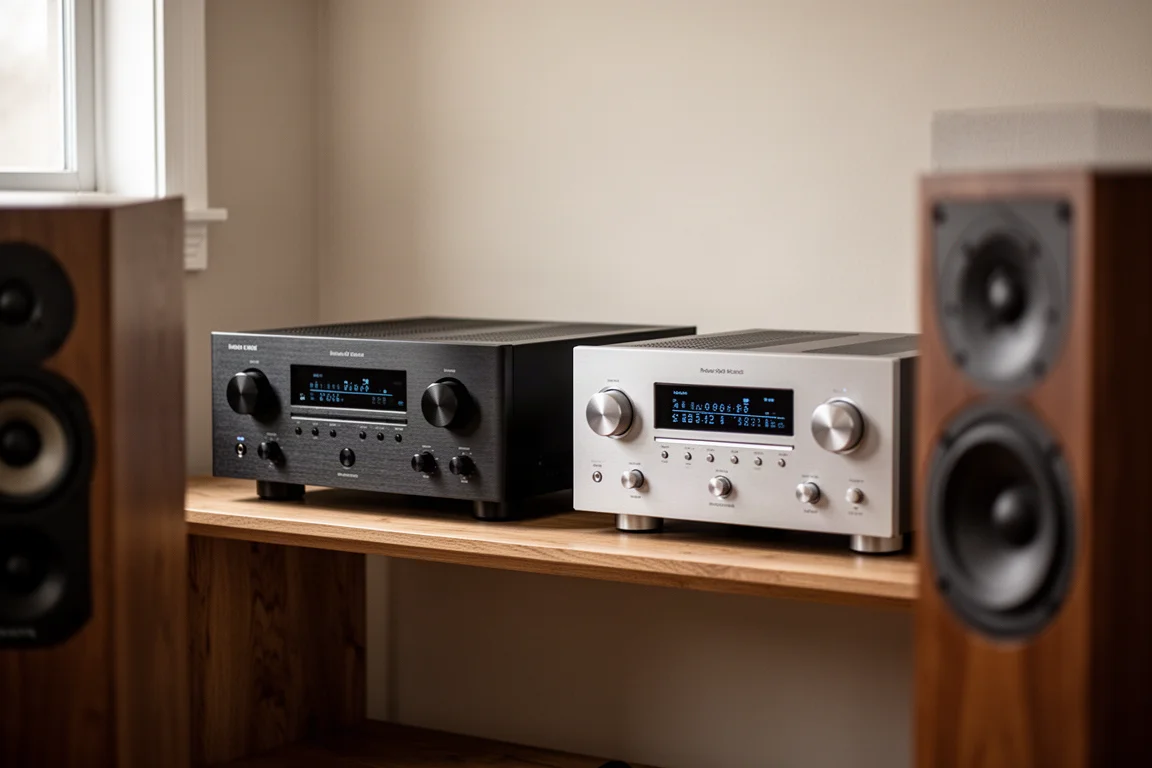
At around $3,000 more, the McIntosh MA7200 is the obvious step up. The Anthem has the edge on features for the money, while the McIntosh sound follows the same richer, weightier character as the MC312 with an external preamp, which some listeners will prefer. Both are handsome amplifiers: the Anthem is the sleeker, more modern design, while the McIntosh offers its trademark look with illuminated blue meters. Neither is objectively better, and the choice comes down to the sound you want to live with.
The Audiolab 9000A is the most interesting comparison because it is newer, launched in early 2023, yet offers fewer options and features. It is less powerful at 100 watts per channel and cheaper, though not by much. It has no room correction, a more basic phono stage limited to moving magnet cartridges, some limitations on high-resolution audio, and a simple set of preamp outputs that force a choice between adding a more powerful amplifier or connecting a subwoofer. Bass management and EQ are absent. It sounds terrific, but it shows how little the Anthem has dated.
Things to Consider Before Buying
The clearest limitation is connectivity. There is no Wi-Fi, no Bluetooth, no AirPlay and no built-in streaming, and no smart home integration. Setup relies on the on-screen display and its menu tree, which can feel overwhelming at first, though it becomes easier with familiarity.
ARC also demands some patience. The amplifier needs to be connected to the home network by Ethernet, and it can be particular about network settings. Following the manual closely matters; skipping that step can leave you stuck in a connection loop. Once the connection is made, the calibration process itself is trouble-free. Results were also slightly better from the desktop software than from the mobile app.
Finally, weigh the price against your priorities. At around $5,000 the STR is not a budget component, and it is far from the most expensive integrated amplifier available, especially once its power and room correction are factored in. If wireless convenience and HDMI are essential, that budget is better spent elsewhere.
Buying Advice
The case for the Anthem STR rests on three things: power that extends down to 2 ohms, subwoofer and preamp flexibility that is rare at this level, and free room correction that ranks among the better automatic calibration systems available. Buyers who run two subwoofers, who own demanding speakers, or who want to fine-tune each input separately will get a great deal of value here.
Where it asks for compromise is convenience. Plan on an external streamer if you need one, and be prepared to work through the menu system and a wired network setup to get the most from ARC. Neither is difficult once it is done, but both are part of the ownership experience.
For anyone weighing this against newer, feature-led amplifiers, the comparison is worth making carefully. The STR gives up streaming, HDMI and wireless control, and it keeps pace on sound quality, driving ability and calibration. If that feature list is not a dealbreaker, the fundamentals are still very strong. And if you already own one, the years of service since launch suggest the investment has held up well.
Conclusion
Six years after launch, the Anthem STR Integrated Amplifier remains a compelling choice for listeners who put amplification, subwoofer integration and room correction first. Its features trail the newest designs and its wireless omissions are real, but its sound quality and flexibility keep it competitive with amplifiers that cost considerably more. Buyers who can live without built-in streaming will find a powerful, neutral and highly customizable integrated amplifier that still earns its place.
Product link
View more details for Anthem STR Integrated Amplifier
This product is mentioned in the review. Check the specifications, options, and compatibility before buying.
View more details for Anthem STR Integrated AmplifierFurther reading
Related Reviews
Integrated Amplifiers
Advance Paris A10 Classic Review: Vintage Looks and a Lively, Punchy Sound
The Advance Paris A10 Classic pairs glowing blue VU meters and a tube stage with one of the widest input sets on any integrated amplifier. Here is what it does well and what to weigh before spending $2,500.
Integrated Amplifiers
Advance Paris A12 Apex Review: A Modern Integrated Amplifier With Vintage Character
A dual mono integrated amplifier with 180 watts per channel, a tube front end, VU meters, and a connectivity list that covers turntables, televisions, computers, and headphones.
Integrated Amplifiers
Advance Paris Nova Range Review: AI130, AI190 and Modular Upgrades
A practical look at the Advance Paris Nova range, including the AI130 and AI190 integrated amplifiers and the modular streaming, Bluetooth and remote accessories that expand them.