Bookshelf Speakers
Amphion Argon1 Review: A Neutral Finnish Bookshelf Speaker Worth the Premium
A two-way Finnish bookshelf speaker with a titanium dome tweeter, tight bass, and a remarkably neutral midrange. Here is what to know before buying.
Introduction
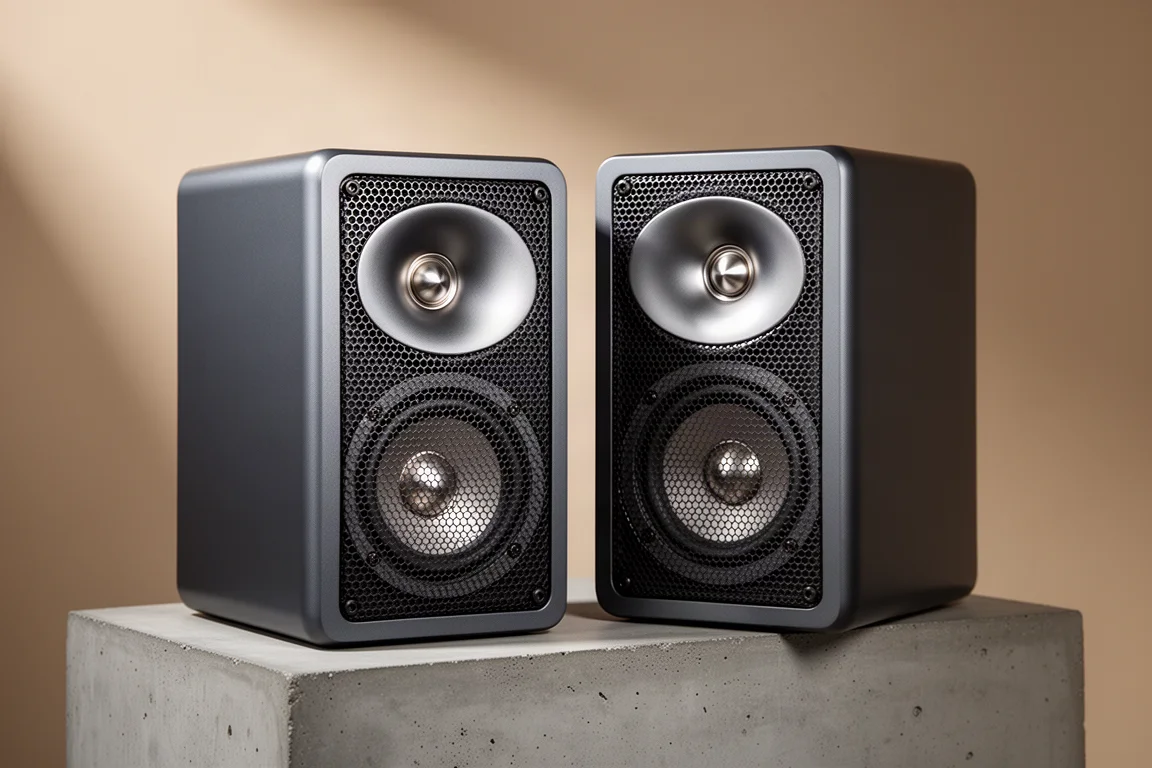
The Amphion Argon1 is a two-way bookshelf speaker from a Finnish manufacturer that builds its products in Finland rather than moving production elsewhere. The company is small, with around 17 full-time employees, and keeps design and manufacturing in the same facility. That approach gives the brand tight control over quality, and it is also part of why the Argon1 carries a premium: it sells for roughly $1,900 per pair.
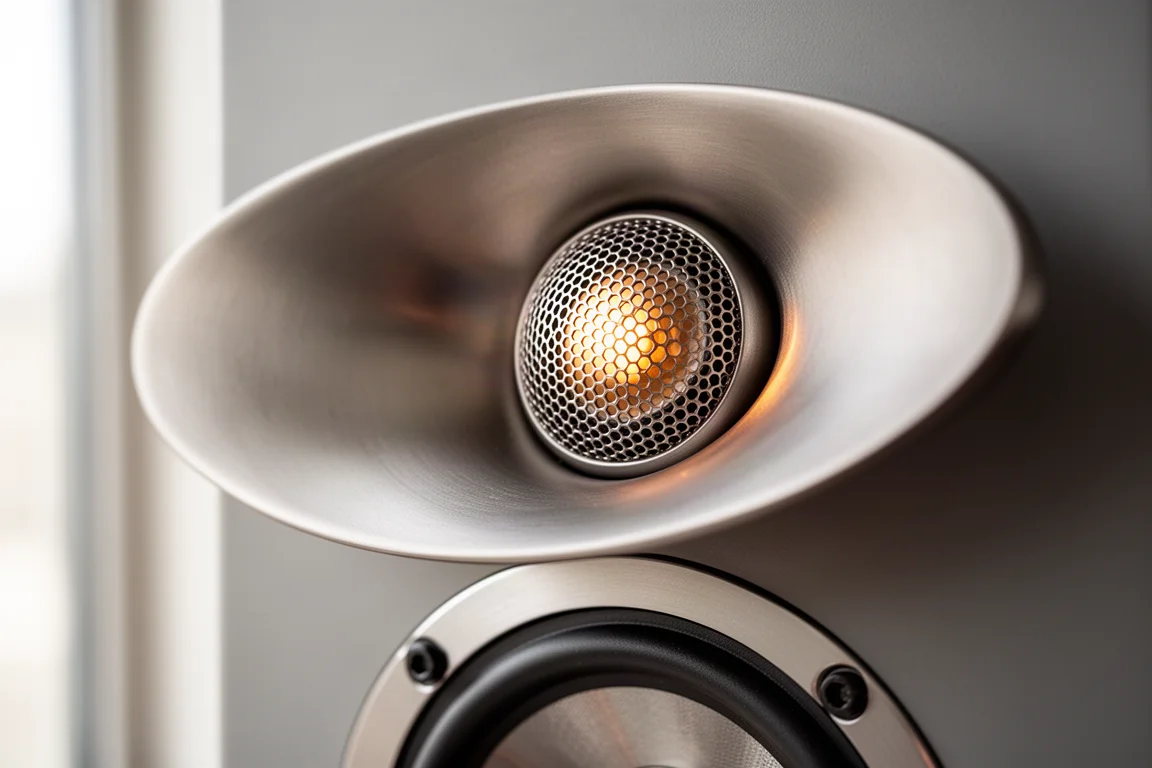
The recipe itself is straightforward. A titanium dome tweeter sits at the top of the baffle inside a large waveguide, with a 5.25 inch aluminum alloy woofer below it and a rear-firing port in the cabinet. The claimed frequency response reaches from 45 Hz to 25,000 Hz, and the speaker is rated at 8 ohm nominal impedance with 86 dB sensitivity.
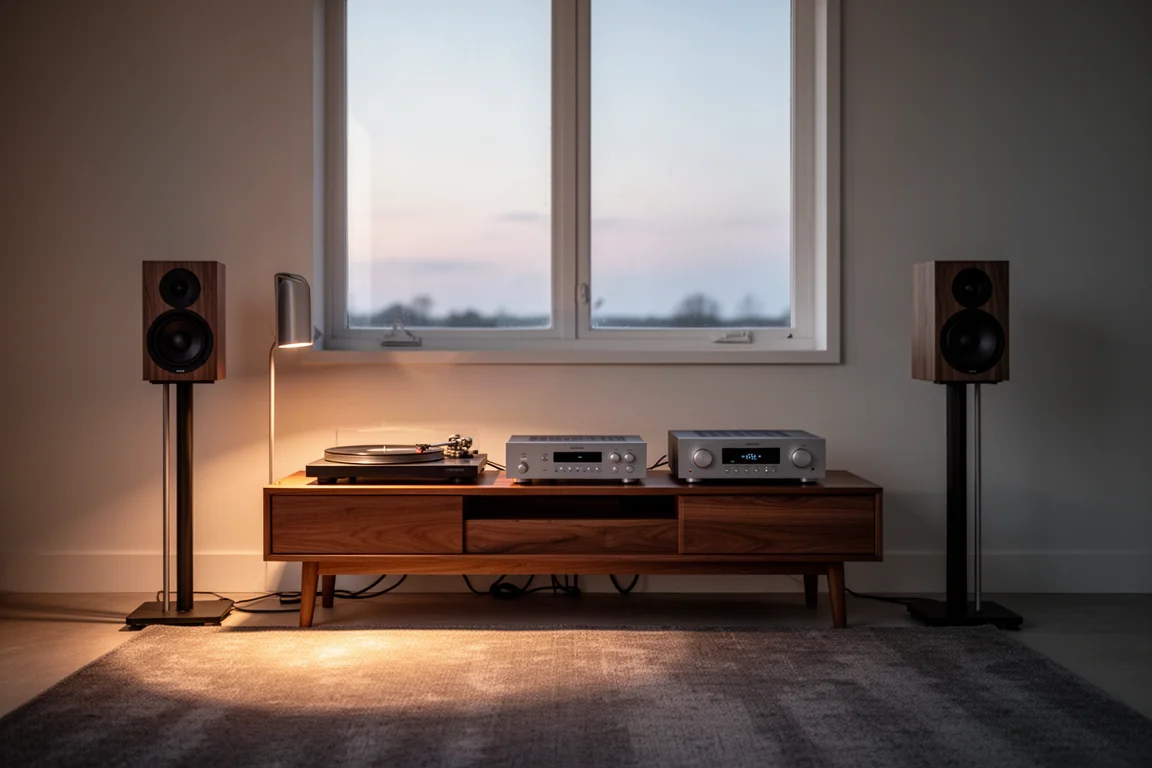
This guide covers how the Argon1 behaves in a real room, what it does better than most speakers at its price, and the handful of details worth knowing before you order a pair.
Who the Amphion Argon1 Is For
The Argon1 suits listeners who want to hear the recording rather than the speaker. It is unusually neutral across the range, so it rewards good source material and capable electronics instead of smoothing over them.
It also works as a high-end nearfield monitor. The cabinet measures 12.5 inches high, 6.3 inches wide, and 10.4 inches deep, and there are threaded inserts on the back if you want to mount it. For a desk setup or a small room where accuracy matters more than sheer scale, that flexibility is genuinely useful.
Finally, it is a good fit for people who watch as much as they listen. Dialogue in films and television is one of the speaker’s strongest showings, with no coloration or midrange congestion to obscure voices.
Main Strengths
Neutral, Recording-Led Sound
Neutrality is the defining trait. Feed the Argon1 a baritone vocal and it stays rich and solid. Feed it heavily produced electronic material and the midrange reads cooler and more clinical. The speaker does not layer on a house sound, and instrument separation is excellent, with layers that stay distinct even in dense mixes.
It is also transparent to the electronics in front of it without losing its own identity. Paired with a range of integrated amplifiers and separate preamp and power amplifier combinations, the character stays consistent: tight bass, an articulate midrange, and a clean top end.
That consistency is worth noting, because the speaker is not fussy about which amplifier you use, only about how much clean power you give it.
Bass, Dynamics, and Room Presence
Despite the modest woofer size, the Argon1 plays larger than its dimensions suggest. Bass is fast and articulate rather than thick, and the region around 80 to 100 Hz has real punch when the material calls for it. The speaker takes power well, and amplifiers tend to run out of headroom before it shows any sign of strain.
For most music, a subwoofer is not required. Adding one still pays off: with a sealed subwoofer crossed over at around 60 Hz and a matching high-pass filter on the speakers, the low end integrates cleanly and the whole presentation opens up.
Midrange and Treble Detail
The midrange and top end are the standout elements. Vocals keep their natural weight, and the titanium dome tweeter avoids the hard, forward character that metal domes sometimes bring. Percussion sounds accurate, with cymbals and rim shots reproduced cleanly rather than aggressively.
That combination of detail and restraint is rare. The result is a speaker that stays engaging over long sessions instead of turning bright or fatiguing.
In practice, this is the part of the performance that makes the Argon1 feel like a step up rather than a sideways move.
Things to Consider Before Buying
The price is the first consideration. At roughly $1,900 per pair, the Argon1 sits above similarly specified bookshelf speakers, and much of that premium reflects manufacturing in Finland.
Sensitivity is 86 dB, so the speaker needs a reasonable amount of power. A solid amplifier delivering around 50 watts is enough to get the best from it, but a weak or budget amplifier will not show the Argon1 at its best.
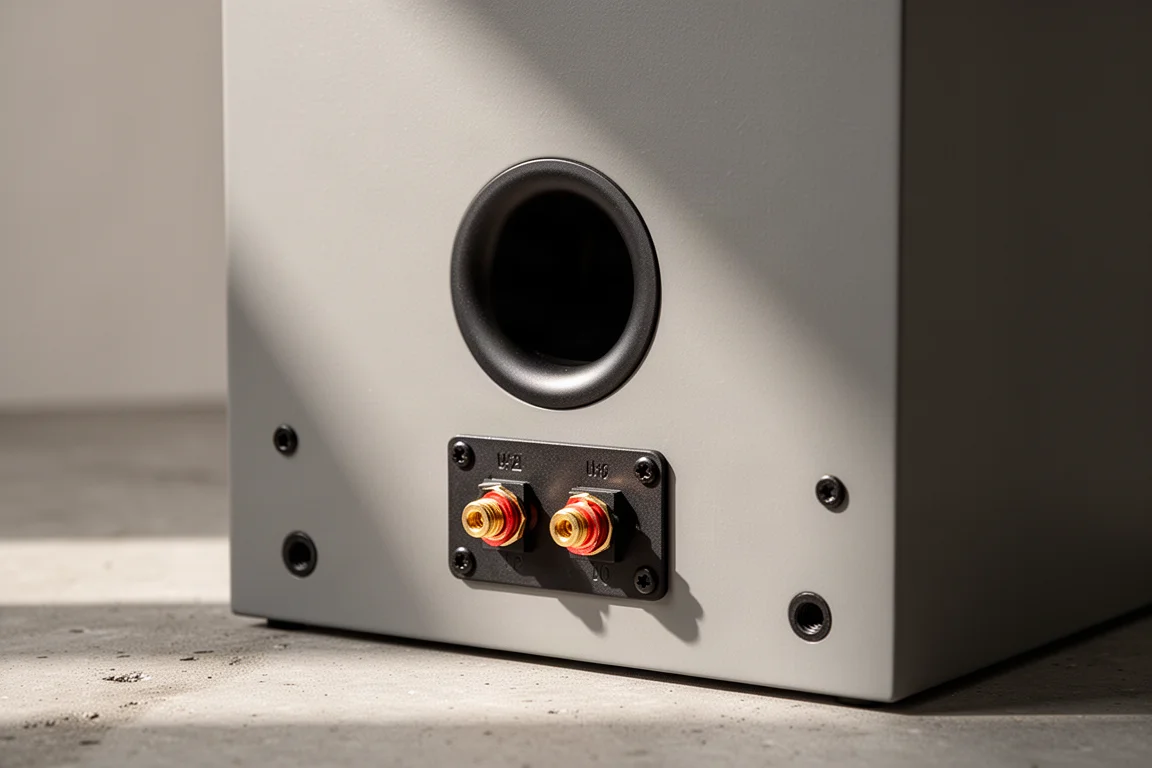
The binding posts are the one area that feels below the price. They work, and there is no reason to expect a performance penalty, but they feel less substantial than the rest of the cabinet. The grilles are permanently attached as well, so there is no option to run the speakers bare if you prefer that look.
Cabinet and Finish
Build quality is a strength. The painted finish has a deep, multi-coat look with a sealant on top, and the rear port is finished as a flangeless, one-piece design that extends inside the cabinet rather than stopping at the surface. The cabinet is heavy for its size, which usually points to an inert, well-damped enclosure.
Buying Advice
Buy the Amphion Argon1 if you want a neutral, revealing bookshelf speaker that works equally well for critical listening, nearfield monitoring, and film dialogue. It is the kind of speaker that makes more sense the more seriously you take your source material.
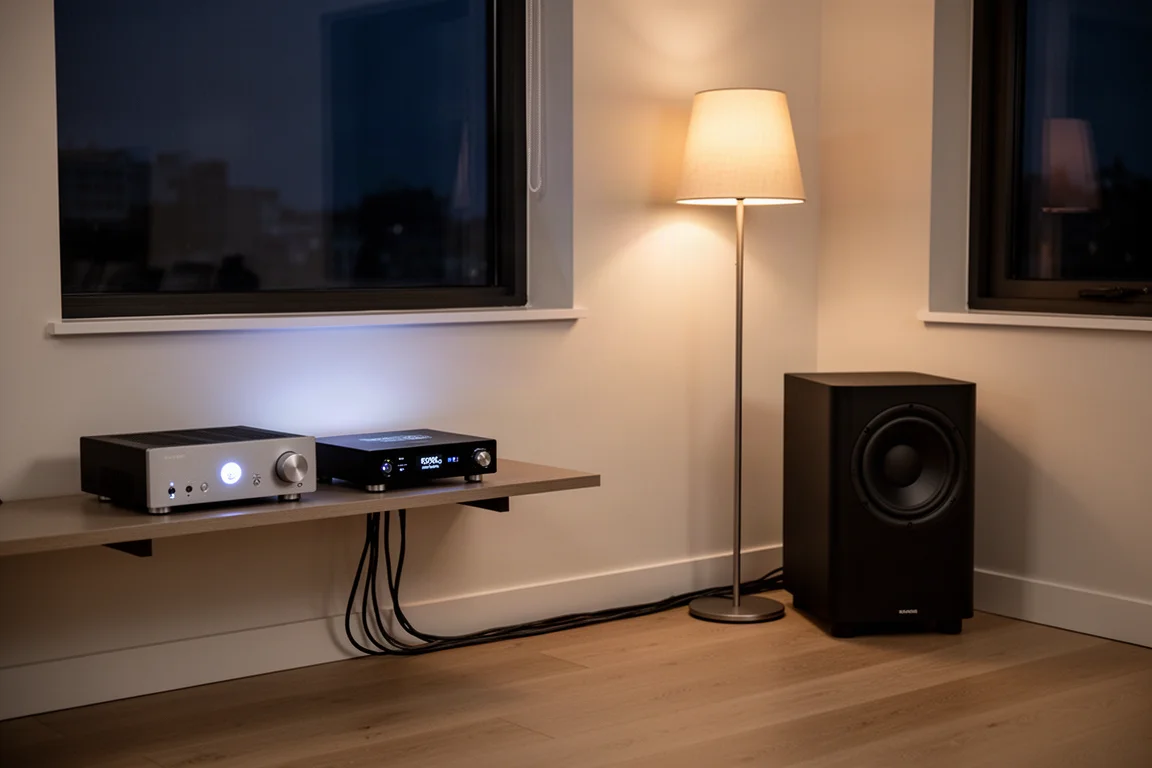
Budget for a capable amplifier alongside the speakers, and consider a subwoofer if you want the deepest bass. Neither is strictly necessary, but both let the Argon1 perform closer to its potential.
If your priority is a warmer, more forgiving sound, or you want maximum output per dollar, other speakers at this price will suit you better.
Conclusion
The Argon1 earns its premium through neutrality, midrange quality, and a top end that stays detailed without turning harsh. The trade-offs are the price, the binding posts, and the fixed grilles. For listeners who value accuracy and long-term listenability over fireworks, it is a compelling choice.
Product link
View more details for Amphion Argon1
This product is mentioned in the review. Check the specifications, options, and compatibility before buying.
View more details for Amphion Argon1Further reading
Related Reviews
Bookshelf Speakers
Acoustic Energy A100 Mark II Review: A Compact Standmount With an Expansive Soundstage
The Acoustic Energy A100 Mark II brings clarity, natural tonality and a wide soundstage to an entry-level standmount, with a few setup details worth knowing first.
Bookshelf Speakers
Acoustic Energy AE-100 Mark II Review: Compact Bookshelf Speakers With Standout Imaging
A compact British two-way bookshelf speaker with deep, layered imaging, fast bass, and a slight treble lift to weigh against a crowded $500 field.
Bookshelf Speakers
Acoustic Energy AE100 MK2 Review: Measured Performance and Four Alternatives
A close look at the Acoustic Energy AE100 MK2 bookshelf speaker, what its measured performance reveals, and four alternatives with different trade-offs.