Stereo Power Amplifiers
Adcom 545 Mark II vs Adcom 555 MS: Vintage Value or Modern Reliability
A side-by-side look at the vintage Nelson Pass-designed Adcom 545 Mark II and the current Adcom 555 MS, including what real ownership actually costs.
Introduction
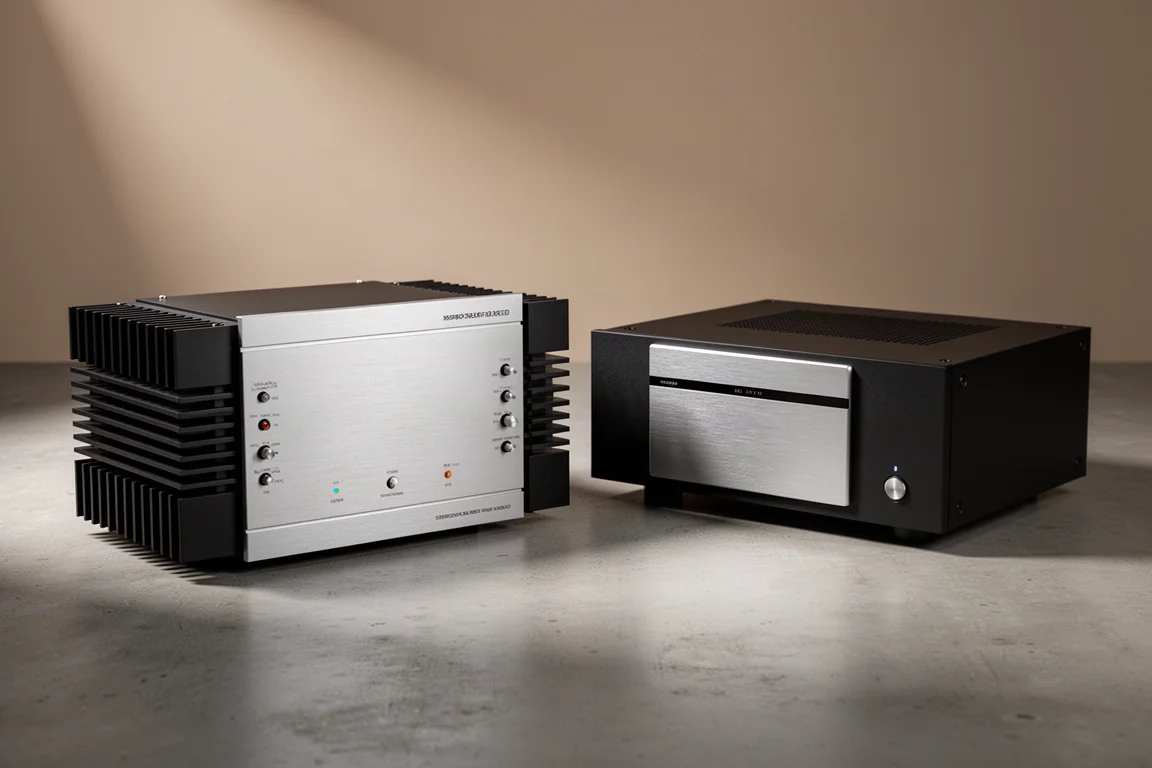
The Adcom 545 Mark II and the Adcom 555 MS sit at two ends of the same story. One is a 1980s power amplifier designed by Nelson Pass, the engineer now best known for Pass Labs and First Watt. The other is the current-production Adcom, built on the same no-frills philosophy but with new parts and a warranty behind it.
Both are high-current stereo power amplifiers that put a short signal path ahead of a long feature list. The question for most buyers is not which one sounds better in the abstract, but which one makes more sense to own today.
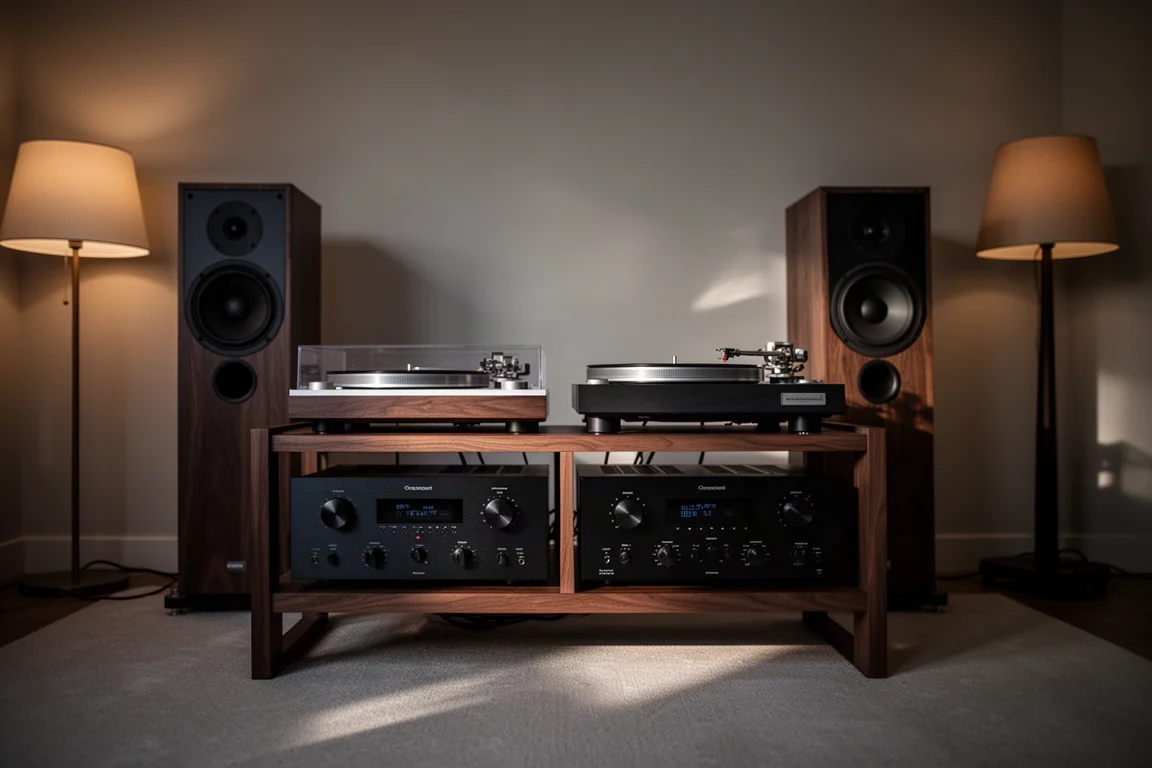
On the used market the vintage unit is the cheaper entry point. Once refurbishment is factored in, the gap narrows considerably, and that changes the calculation for anyone weighing the two side by side.
Why the Adcom Name Still Matters
Nelson Pass designed the original Adcom amplifiers in the 1980s. His priorities were a short signal path, enough power at low distortion, and the ability to drive reactive loads like a real loudspeaker. Those same ideas carried through into the companies he founded afterwards.
That philosophy is still visible in the current Adcom. The modern amplifier keeps the short-path, high-current, no-frills approach and adds the reliability that comes with new components.
For buyers, the practical takeaway is that both amplifiers were designed around the same assumption: they will be connected to a wide range of speakers in ordinary rooms, not to one reference pair.
Adcom 545 Mark II: The Vintage Nelson Pass Design
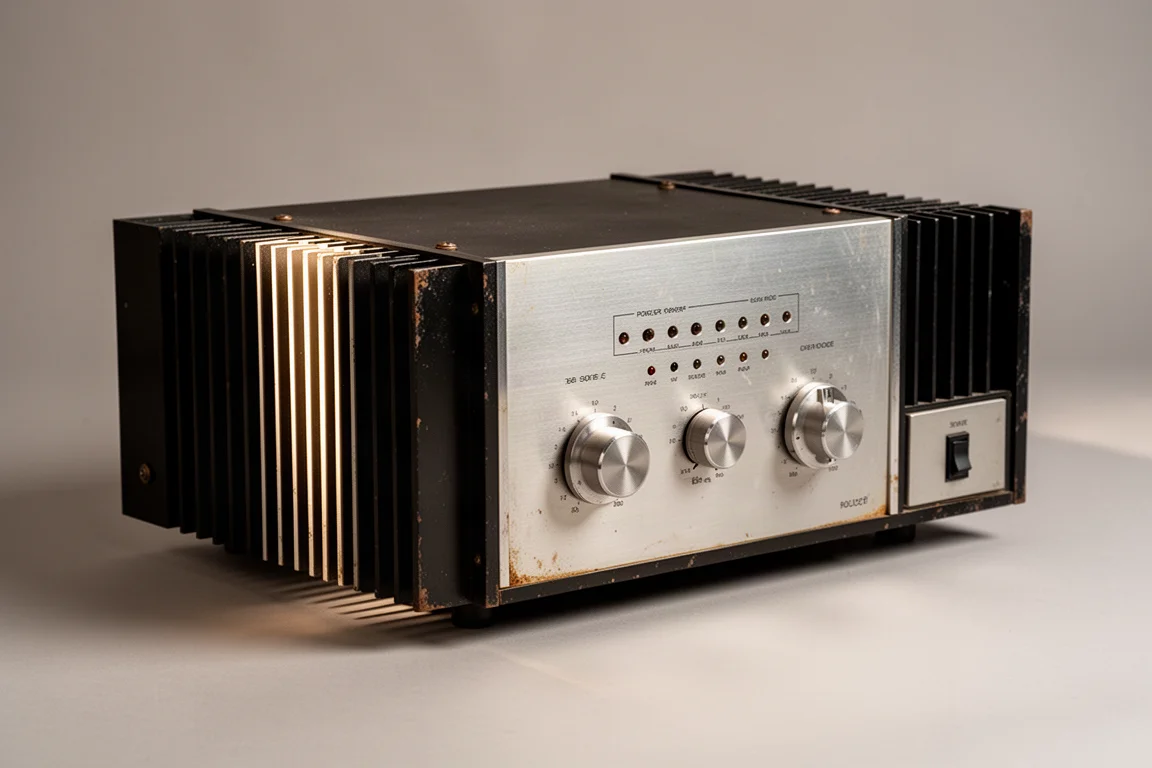
The 545 Mark II outputs 100 W into 8 ohms and, as a high-current design, is expected to double that figure into 4 ohms. It has relatively low distortion for a 1980s amplifier, along with thermal protection and a distortion alert that lights if distortion passes 1%. The casing was notably good for an amplifier that sold for around $500 at the time.
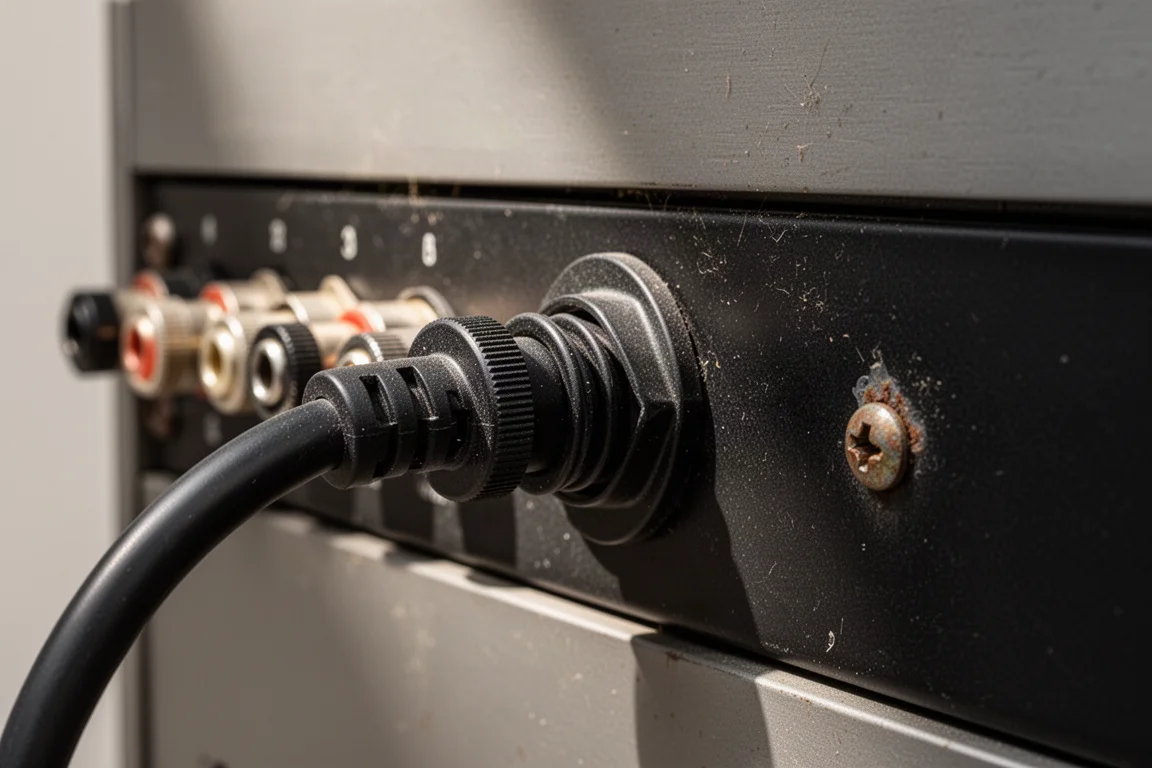
The rear panel is where age shows. The power cord is permanently attached, and the plastic binding posts tend to squeak.
Sound is the reason this amplifier still has a following. It is neutral rather than warm or coloured, with a wide and deep soundstage, strong bass emphasis and a damping factor that keeps low notes controlled. It also pairs well with a tube preamplifier, which adds body without pushing the amplifier away from neutral.
One limitation to note: this model has single-ended inputs only.
What It Costs to Own a Vintage Adcom
Used prices for a 545 Mark II sit somewhere around $300 to $500. That is not the full cost of ownership.
Amplifiers of this age should be recapped, and after that work the total investment lands around $800 to $1,000. Converting the fixed power cord to a socket so you can use your own cable adds roughly $100 to $200 depending on the technician’s bench time, and upgraded binding posts are a further cost on top.
Done properly, the amplifier is effectively new again and should be functional for another 20 to 30 years. Budget for the refurbishment, not just the purchase.
Adcom 555 MS: The Modern Adcom
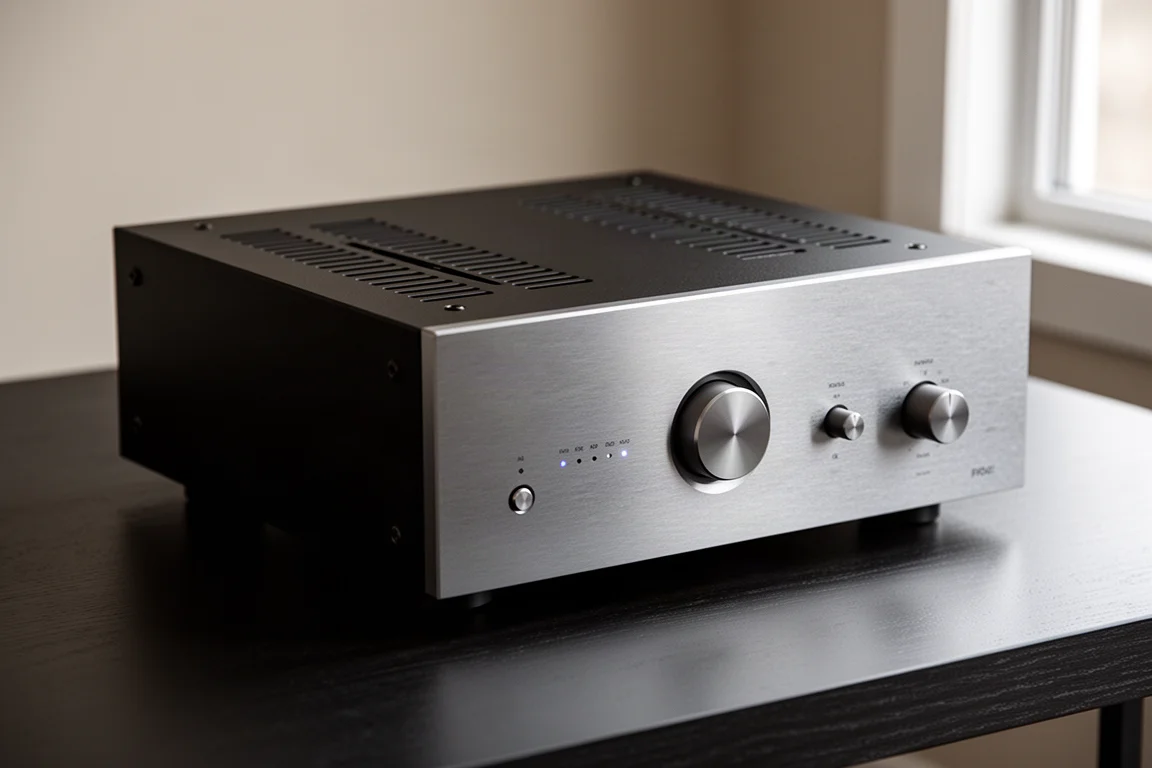
The 555 MS is the current-production counterpart. It outputs 125 W into 8 ohms and nearly doubles to 200 W into 4 ohms. Two units run in bridge mono are rated at 400 W into 8 ohms.
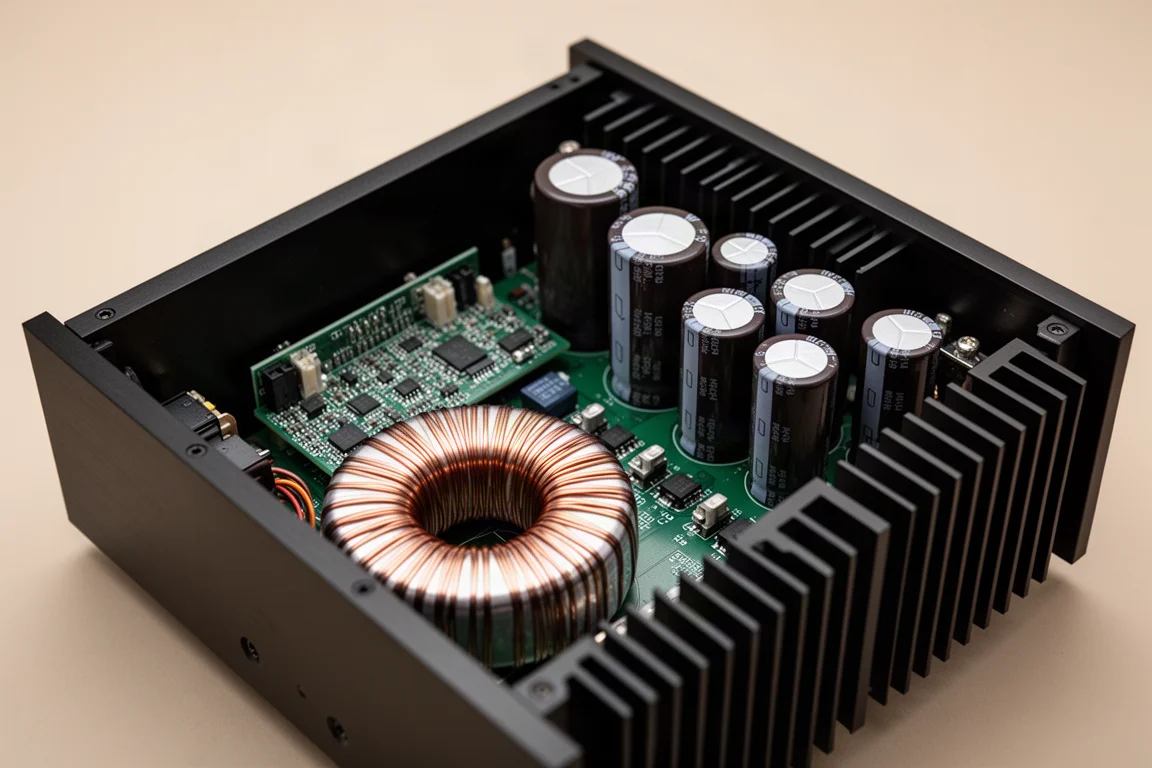
Inside it uses a larger toroidal transformer than the vintage design and four chunky filter capacitors, which is part of why it weighs a little more. New capacitors mean no recapping is required, and the amplifier is expected to run for another 20 to 30 years as delivered.
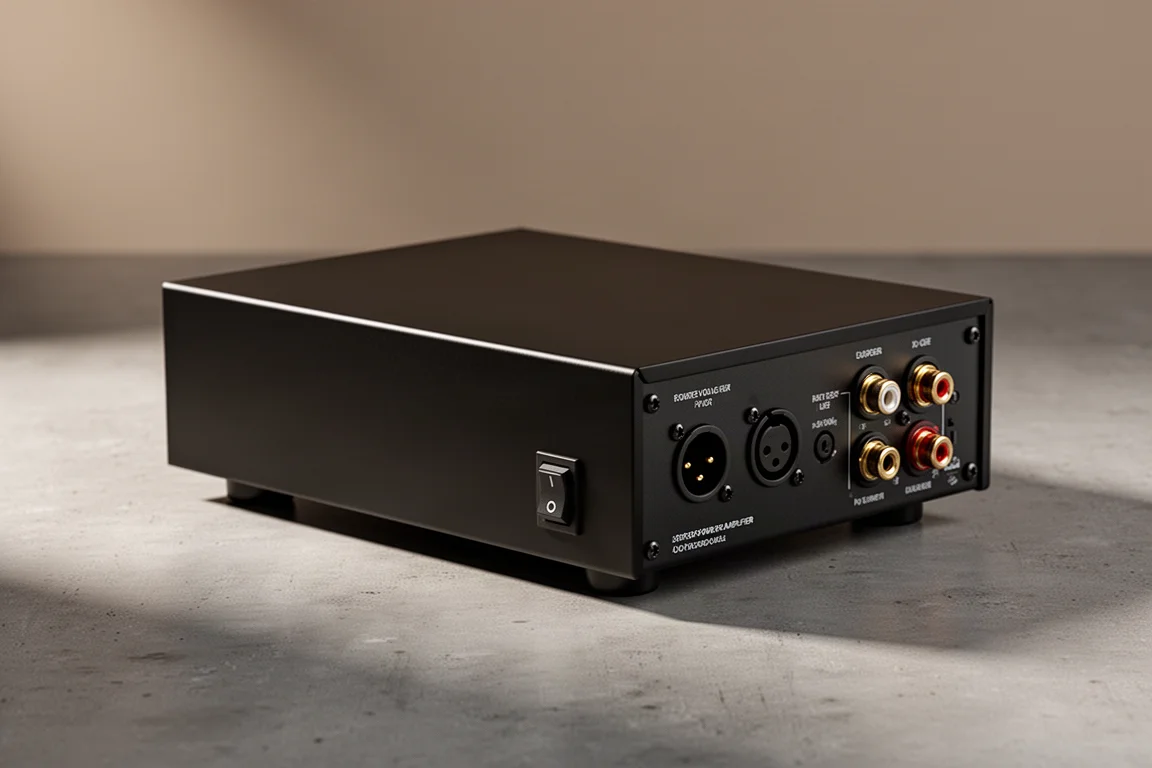
The rear panel addresses the two annoyances of the older model. The power cord is detachable, so a damaged cable does not take the whole amplifier out of service, and the binding posts no longer squeak, though they are still plastic.
Protection carries over from the vintage units: thermal protection plus a distortion indicator that triggers above 1% distortion. Warranty coverage and dealer service support are part of the package.
This model has single-ended inputs only. A higher model in the range adds XLR balanced inputs and a little more power output.
How the Two Compare in Sound
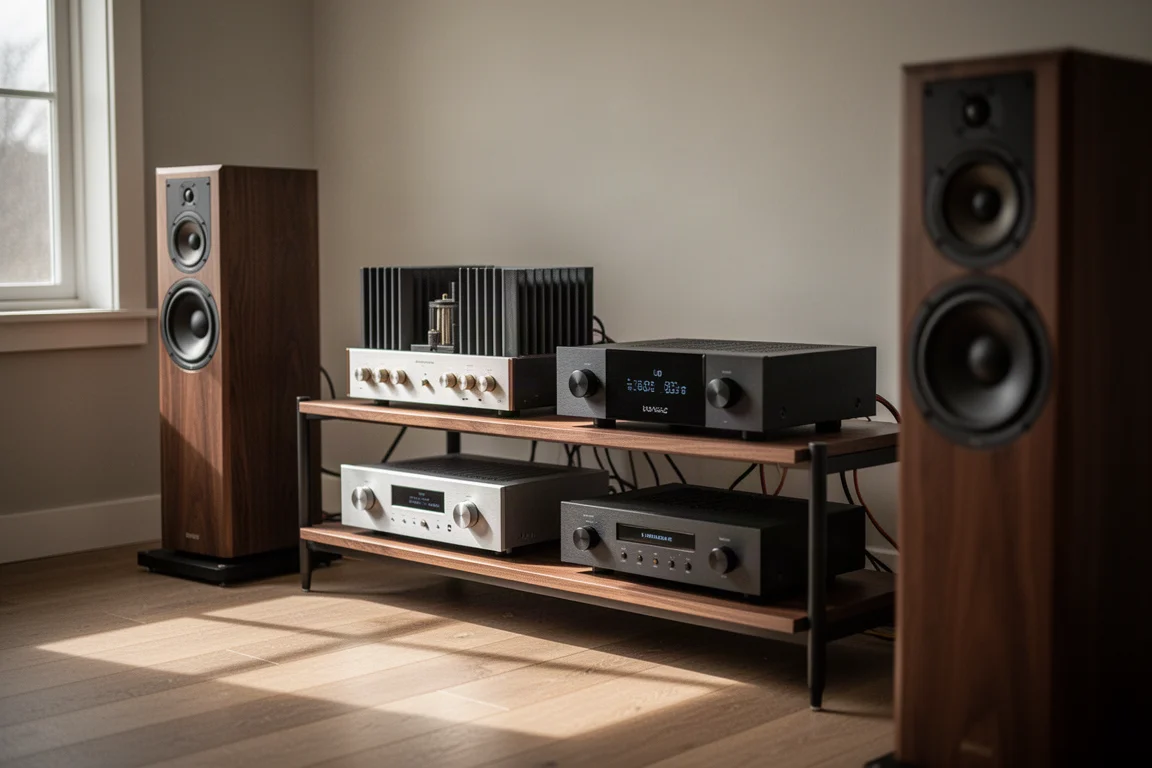
Both amplifiers share the same overall character: neutral and balanced, with a wide and deep soundstage, strong bass and a treble that stays non-fatiguing as long as your speakers do.
Neither is a straight wire with gain. Both carry a little warmth and richness, particularly in the bottom end, and a meaty texture through the midrange. That is what keeps them from sounding clinical or lean the way some neutral amplifiers can.
The differences are small, and they become clearer once the vintage unit has been recapped and returned to spec. The modern amplifier has slightly more control and weight in the bass, a little more transparency, and a more refined, detailed treble. It is worth saying plainly that this is not a claim that either Adcom matches the performance of a Pass Labs design.
Buying Advice: Which Adcom Makes Sense for You
The vintage 545 Mark II is the better entry point if you are comfortable with refurbishment and want the lowest purchase price. Expect roughly $800 to $1,000 all in once the amplifier has been recapped, and accept the fixed power cord and single-ended inputs unless you pay to change them.
The 555 MS at around $1,400 suits buyers who want the same sound and design philosophy without the service work. It arrives with new capacitors, a detachable power cord, warranty coverage and dealer support, and it is the version to choose if reliability matters more than the lowest possible outlay.
Either way, match the amplifier to your room. Both have enough power for small to medium rooms and can drive most speakers. A very large room is the case for adding a second unit rather than a bigger one.
Conclusion
The 545 Mark II and the 555 MS are two versions of the same idea, separated by four decades of parts and paperwork. Buy the vintage amplifier if you enjoy the restoration process and want the lower entry price. Buy the modern amplifier if you want the same neutral, high-current character with none of the maintenance.
Further reading
Related Reviews
Stereo Power Amplifiers
Amped 2400 Review: A 17 lb Class D Stereo Amplifier Rated at 400 W and 800 W
A compact 17 lb class D stereo amplifier rated at 400 W per channel into 8 ohms and 800 W into 4 ohms, with strong low-level noise performance and clear limits under sustained output.

Backpacking Gear
Building a 10 lb Base Weight: An Ultralight Backpacking Gear List
A practical walkthrough of the ultralight pieces behind a 10 lb base weight, from a 765 g pack and a roomy one-person tent to a full camp chair and a dependable water filter.

Road Bikes
10 New Road Bikes Worth Watching: Aero, Titanium, Steel and Endurance Standouts
A practical roundup of 10 new road bikes, from aero flagships chasing single-watt gains to titanium, steel and endurance platforms built for real roads.