Camping Tents
ALPS Mountaineering Trail 2 Person Tent Review: A Very Fast Pitch With Real Trade-Offs
A single-wall trekking pole shelter with one of the simplest pitches you can find. Here is how it goes up, what it does well, and the concerns to weigh first.
Introduction
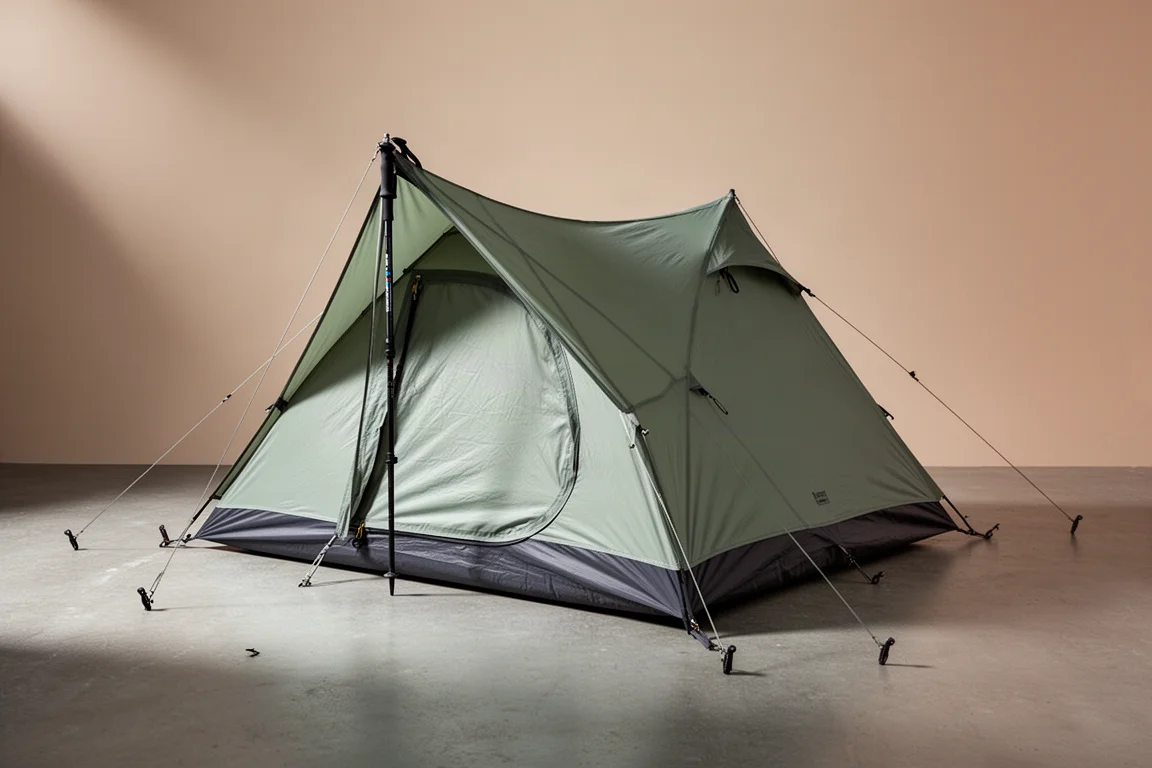
The ALPS Mountaineering Trail 2 Person Tent is a two-person, single-wall shelter that pitches using a trekking pole rather than a dedicated frame. That design choice shapes almost everything about it: the body and the fly are one interconnected piece, the packed bundle is straightforward, and the pitch itself is remarkably short.
On a complexity scale where 0 is easiest and 10 is the most complicated, this tent sits at roughly 2. Staking out the perimeter, inserting the pole, and tightening a few adjustable lines is essentially the whole process.
This article walks through the full setup step by step, then looks at where the tent performs well and what deserves a closer look before you commit. The pitch is genuinely simple. Whether the tent is the right purchase is a separate question, and it depends on a few details covered below.
Who This Tent Is For
This is a shelter for campers who already carry trekking poles and want to put them to work. Because no pole is included, the tent only makes practical sense if you hike with poles anyway or are willing to buy a pair alongside it.
The two-person rating describes interior capacity rather than entry convenience. There is a single door, with the back of the tent positioned opposite it, so two occupants share one access point. That layout suits couples and solo campers who want extra room for gear more than it suits two people moving in and out independently.
It is also a good match for anyone who values a short, low-fuss pitch at the end of a long day. If you have ever wrestled with a multi-piece pole set in fading light, the appeal here is obvious.
Setup and Ease of Use
Start with a ground sheet if you plan to use one. The tent does not come with one, so you provide your own, and a simple sheet of plastic does the job. It is not a waterproofing layer. Its purpose is to protect the underside of the floor from debris and to keep it clean.
From there, unpack the components. The guy lines and stakes travel in their own small bag, and the tent body and fly come out as one unit because the single-wall construction joins them together. Unfold that unit, lay it over the ground sheet, and orient the door in the direction you want.
Walk the perimeter and extend each adjustable stakeout line, which has a metal loop at its midpoint. Give yourself leeway at this stage rather than pulling everything tight immediately. Then stake the perimeter with five stakes: one at the back and two along each side. The doorway stays unstaked for now. Six stakes complete the pitch in total.
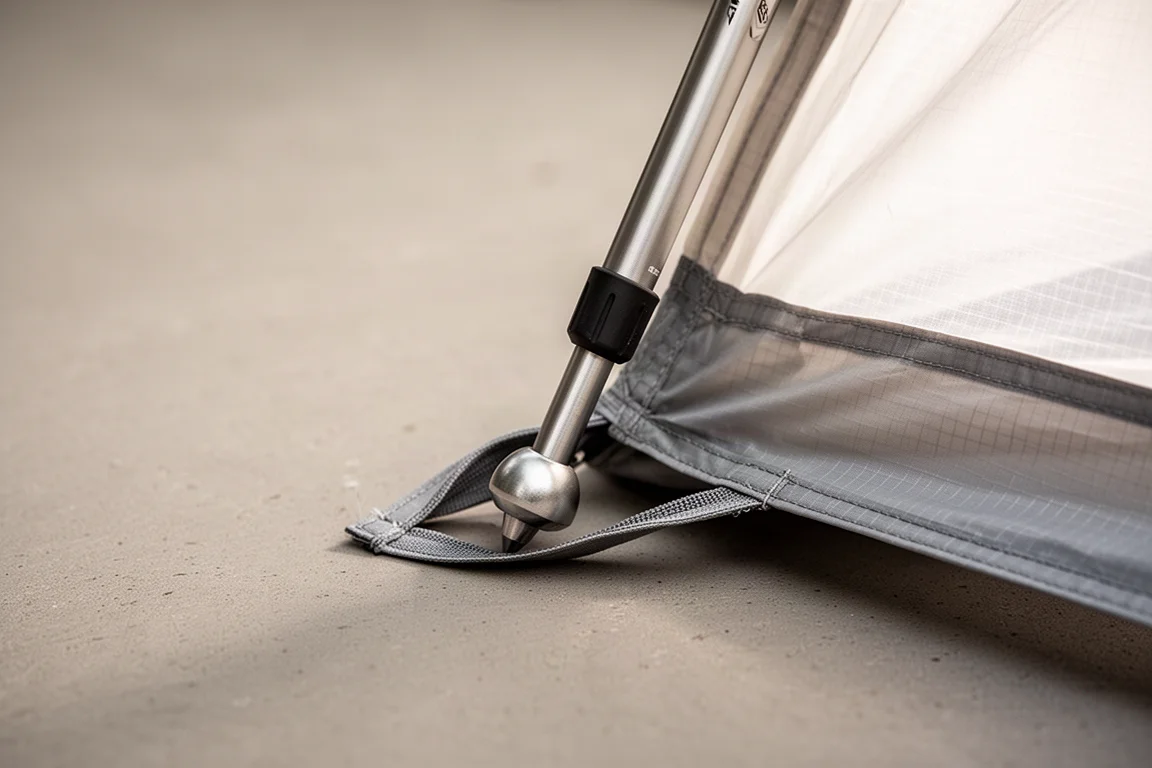
Extend your trekking pole to 51 inches and fit the protective cap over the tip. This step matters. The cap sits between the metal tip and the tent fabric, and skipping it risks tearing a hole from the inside. The pole then goes grip-first into a sleeve at the bottom of the floor, with the capped end seated at the top of the tent.
Close the mesh door, zip the front panel, and stake out the doorway. Now make your final pass around the tent, tightening each stakeout point until the pitch is taut, and open the vents. Internal straps inside the tent can be attached to the pole if you want, or left hanging to hold a lantern or a headlamp.
If you keep the perimeter loose to begin with and tighten at the end, the whole process stays smooth. The most common way to make it harder is to stake everything tight from the start.
Main Strengths
The headline strength is speed. Fewer components, no separate fly to attach, and a single pole to seat mean the tent goes up quickly and without much thought. That is the payoff of the trekking pole design, and it is a real one.
Single-wall construction also simplifies packing. Because the body and fly are interconnected, there is nothing to separate, fold, or misalign when you break camp.
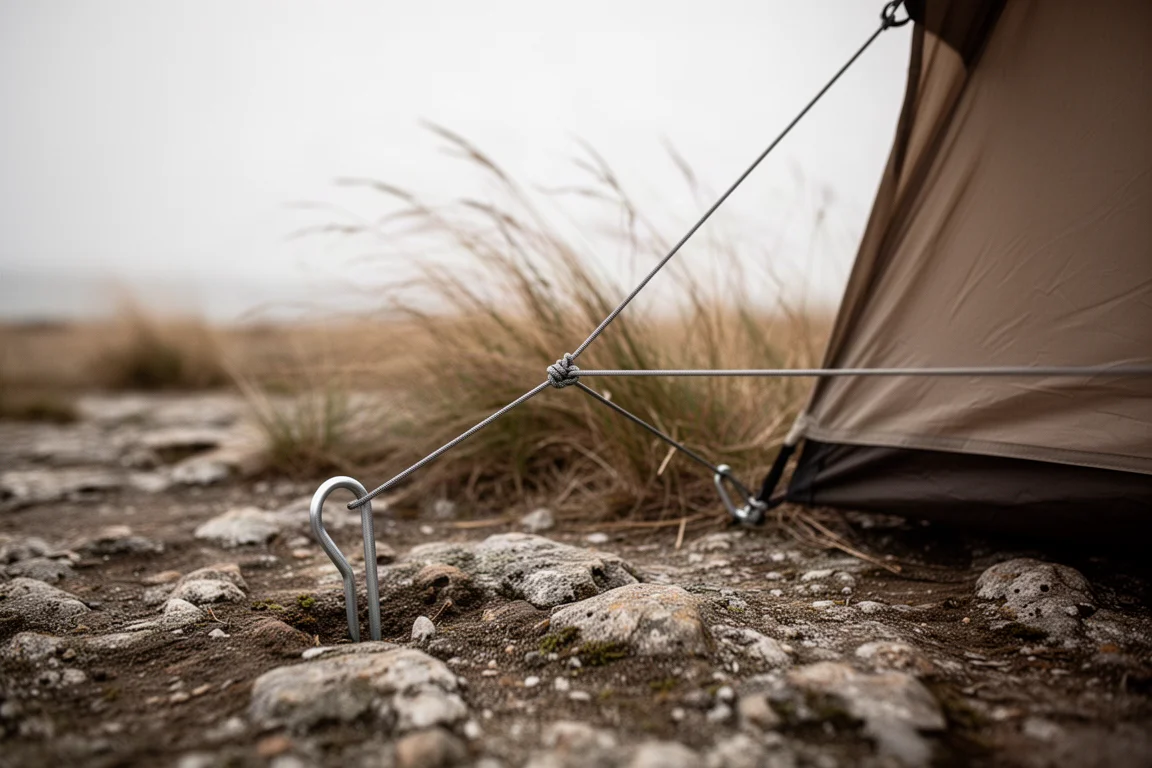
The tent includes numerous guy-out points and ships with matching guy lines. In stormy or windy conditions, taking the time to attach and tension them is worthwhile, and the hardware is there to do it.
Inside, the hanging straps add practical convenience for a lantern or headlamp, and the vents can be opened once the pitch is finalised to improve airflow.
Things to Consider Before Buying
The trekking pole is not included and the tent cannot be pitched without one. That is an additional purchase for anyone who does not already hike with poles, and it is a hard requirement rather than an optional accessory.
The ground sheet is also not included. You can camp without one, but if floor protection matters to you, budget for a sheet alongside the tent.
The single-wall layout and the single door are the design trade-offs behind the fast pitch. There is one entry point for two occupants, and the body and fly cannot be separated to tune ventilation the way a double-wall shelter can.
Early observations of this tent point to quality and performance concerns that have not yet been resolved, with further assessment still pending. A cautious approach is reasonable here: the setup is excellent, but the longer-term picture is not settled, and it is sensible to wait for a fuller evaluation before committing.
Finally, the protective pole cap is not a suggestion. Using the trekking pole without it can damage the tent fabric from the inside, so it belongs in your routine every time you pitch.
None of these points make the tent a bad choice on their own. Together, though, they define who should buy it and who should hold off, which is the useful distinction.
Ground Sheet and Guy Line Notes
There is a common belief that an exposed ground sheet lets water run underneath and cause leaks. That is not how it works. A ground sheet exists to shield the floor from rocks, roots, and grit, and it has nothing to do with whether the tent keeps rain out. If a tent relies on a sheet of plastic to stay dry, the tent itself is the problem.
Once the tent is pitched, you can tuck the edges of the ground sheet under the floor if you prefer a tidy finish. It is optional and purely a matter of preference.
Guy lines deserve equal attention. This tent has plenty of guy-out points, and in windy or stormy weather they should be attached and tensioned rather than left in the bag. On an exposed pitch, that extra anchoring is what keeps the shelter stable and the fabric from flapping.
Buying Advice
The strongest reason to choose this tent is the pitch. If you already carry trekking poles and want a two-person shelter that goes up in minutes with almost no learning curve, the design delivers exactly that, and the setup is unlikely to frustrate you even in poor light or bad weather.
Go in with the requirements accounted for. A trekking pole is mandatory, the protective cap is mandatory, and a ground sheet is a sensible addition if floor protection matters to you. Priced as a mid-range option among trekking pole shelters, the tent’s value depends heavily on whether you already own the pole it needs.
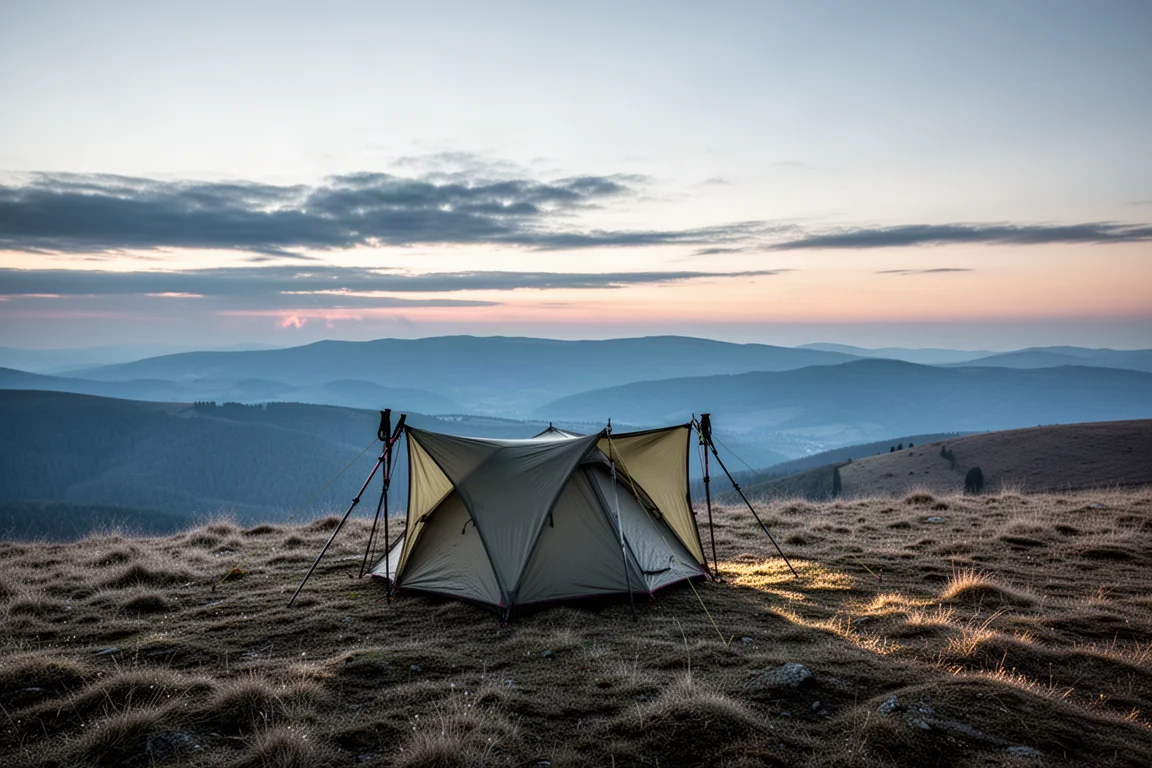
Weigh the open questions honestly. The unresolved quality and performance concerns are the main reason to pause, and they are worth taking seriously rather than dismissing because the pitch is easy. If a quick, simple shelter is your priority and you are comfortable monitoring how the tent holds up over time, it remains a reasonable candidate. If you want a proven, fully settled purchase today, waiting is the more sensible path.
Either way, the decision comes down to a clear trade: exceptional setup simplicity in exchange for a few requirements and some unanswered questions.
Conclusion
The ALPS Mountaineering Trail 2 Person Tent is one of the simplest shelters to pitch that you are likely to encounter, and that simplicity is genuine rather than marketing. The single-wall build keeps the component count low, the perimeter staking is straightforward, and the whole process rewards a little patience at the tightening stage.
It also asks things of you. A trekking pole, a protective cap, and ideally a ground sheet all sit outside the box, and the single door and single-wall design are the trade-offs behind the speed. The unresolved quality and performance questions are the part to weigh most carefully.
For campers who already hike with poles and want a fast, unfussy two-person pitch, this tent is worth a close look. For anyone who wants certainty before buying, it is reasonable to hold off until the picture is clearer.
Product link
View more details for ALPS Mountaineering Trail 2 Person Tent
This product is mentioned in the review. Check the specifications, options, and compatibility before buying.
View more details for ALPS Mountaineering Trail 2 Person TentFurther reading
Related Reviews
Camping Tents
3F UL Gear Taiji Two-Person Tent Review: Field Waterproofing Results and Buying Advice
The Taiji pairs an attached fly with a removable inner, but sustained rain exposed untaped vent seams that need sealing before this shelter can be trusted.
Camping Tents
3FUL Gear Lanshan 2 Pro 4-Season Review: A Sub-$200 Single-Wall Trekking Pole Tent
An early look at the 3FUL Gear Lanshan 2 Pro 4-Season, covering its straightforward pitch, generous interior space, and the condensation and seam-sealing questions that come with any single-wall shelter.
Camping Tents
Alps Mountaineering Lynx 1-Person Tent Review: Big Value in a Small Budget Tent
A close look at the Alps Mountaineering Lynx 1-Person Tent, covering real interior dimensions, materials, setup time, ventilation limits, and who should buy it.