Camping Tents
Alps Mountaineering Ranger Cot Tent Review: A Stand-Up Summer Shelter
A three-season camping tent with stand-up headroom, room for a cot, and excellent ventilation, held back by a complicated setup and a tight cot fit.
Introduction
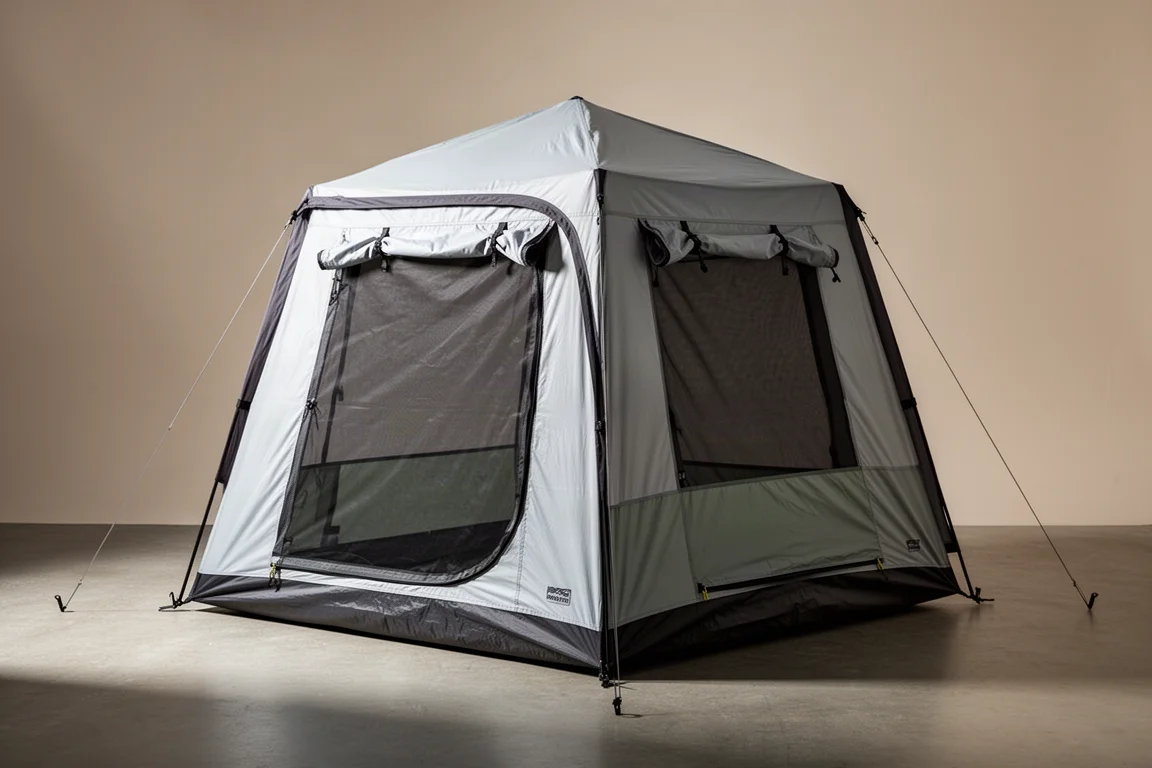
The Alps Mountaineering Ranger Cot Tent is a three-season shelter built around three specific goals: enough headroom for one person to stand upright, enough floor space for a standard camping cot, and enough mesh to keep warm-weather air moving. Across two trips so far, the design largely delivers on all three, with the strongest results in ventilation and interior volume.
It is not a flawless tent. Setup is genuinely complicated, the included documentation is minimal, and the cot fit is tighter than it should be. None of those issues are severe enough to rule the shelter out, but each one shapes who should buy it.
Who the Ranger Cot Tent Is For
This is a car camping and campground shelter rather than a backpacking tent. At 16 lb packed and roughly 2 ft long, it is not something most people will carry on their backs, but it is easy to move from a vehicle to a pitch.
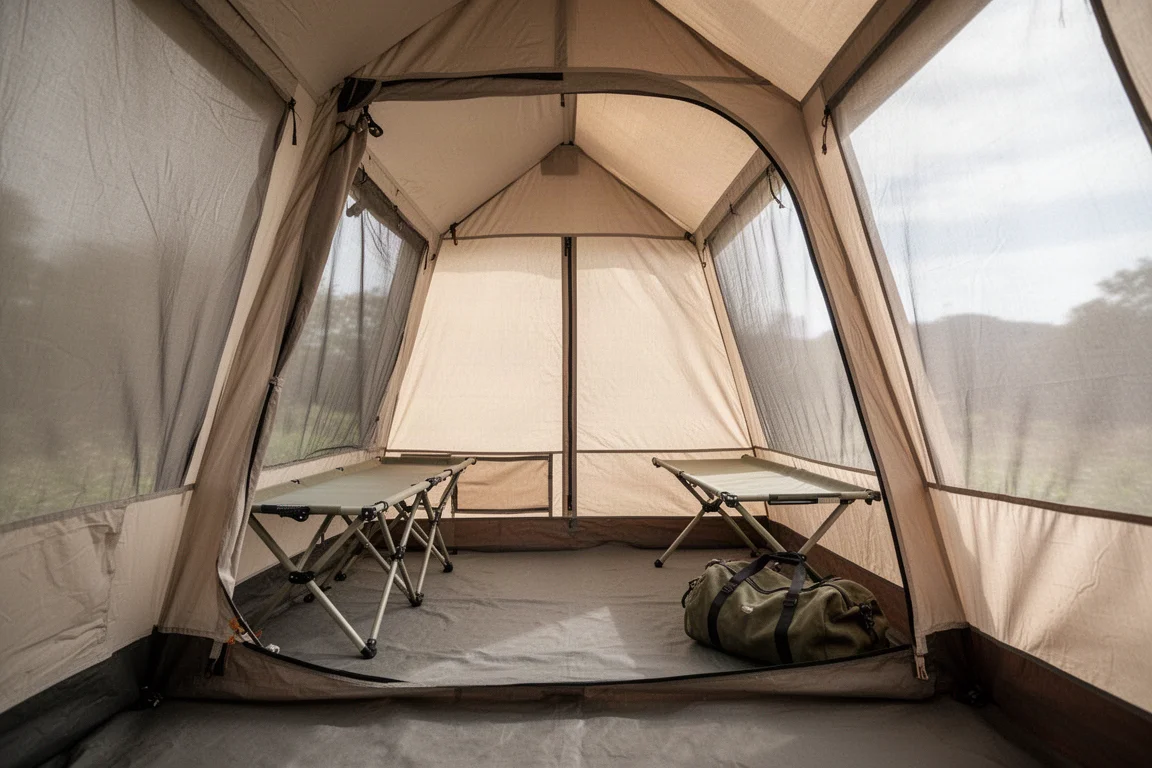
With a cot inside, it is effectively a one-person tent. Without a cot, two people fit comfortably. It suits campers who want to stand up while changing clothes, who prefer sleeping on a raised cot instead of the ground, and who camp mainly in warm conditions where airflow matters more than heat retention. Anyone around 6 ft 1 in or shorter can stand upright inside it.
Main Strengths: Space, Height, and Ventilation
The dimensions tell most of the story. The Ranger Cot Tent measures 91 in long and 75 in tall, which is 6 ft 3 in of interior height. Width runs roughly 48 in at the middle and about 63 in at the base, so the floor widens as it approaches the ground. A bathtub floor rises about 6 in around the perimeter.
The entrance is one of the most practical elements of the design. The door is large, uses two-way zippers, and has a storm flap covering the closure. Getting in and out with gear is straightforward, which is not always true of tall tents with narrow openings. Inside, there are rings around the body for the two included mesh caddies, a small sleeve at the top for hanging a light, and an access port in the corner for running a power cord from a campground hookup.
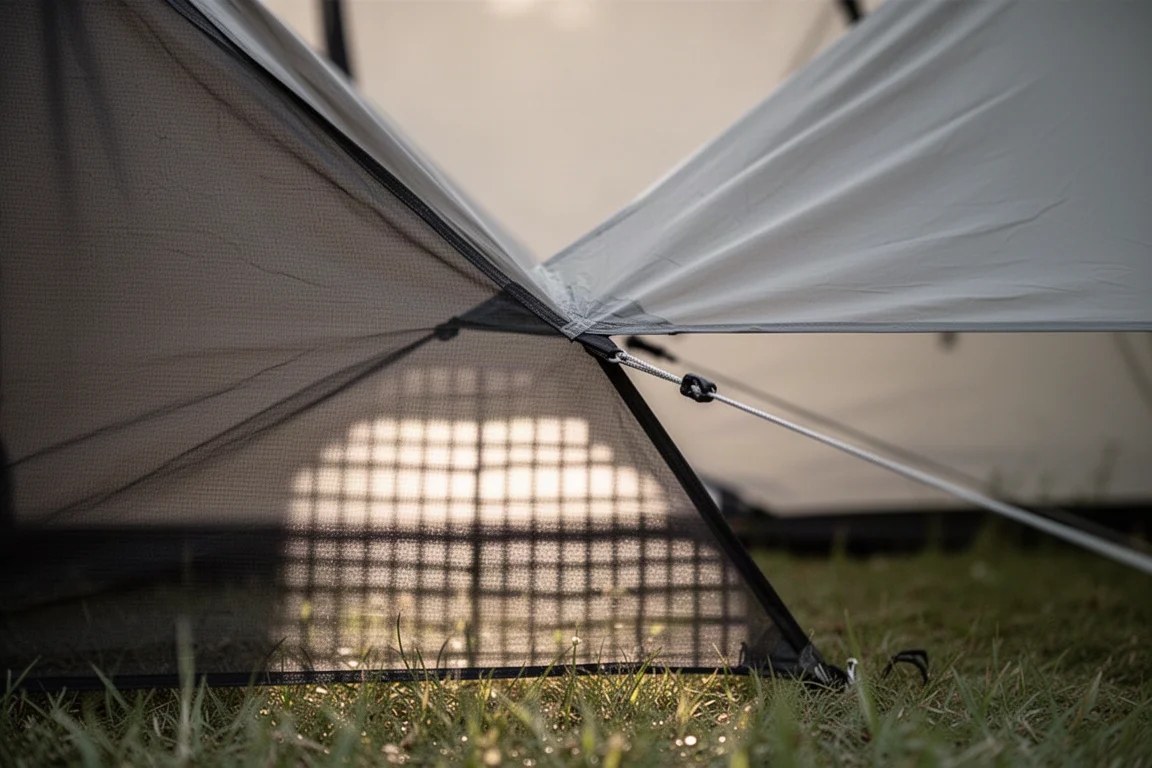
Ventilation is the standout feature. The body carries a large mesh panel at the door, substantial mesh on both sides and the rear, and a wide mesh section at the front, while fabric covers the top and runs along the perimeter. Because the fly pulls away from the body, moisture has room to escape rather than collect. Condensation stayed minimal on both trips, including a cold trip where the tent was closed up as much as safety allowed. For summer camping, this is exactly the behaviour you want.
Weather Protection and Build Quality
The fly is 75D 185T polyester with a 1,500 mm waterproof rating, and the floor is 210D polyester Oxford with a 5,000 mm hydrostatic head rating. The frame mixes steel and fiberglass poles, and the tent ships with steel shepherd hook stakes, 11 of them, plus 7 guy lines.
Weather testing so far covers rain that turned into snow as temperatures dropped to roughly 10 degrees Fahrenheit. Nothing leaked during the rain, the snowfall, or the melt. That is encouraging for a tent with this much mesh, but serious sustained rainfall has not been tested yet, so treat the waterproofing as promising rather than fully proven.
Build quality is fairly good, especially for this brand, which has a history of budget-focused products with mixed consistency. There are a few loose threads here and there, but nothing structural. The tent is made in China, and rising tariffs have pushed prices up across this category, so sale pricing is worth watching.
Things to Consider: The Setup Process
Setup is the biggest compromise. The frame uses four orange poles and three fiberglass poles, all of different lengths and thicknesses, and they have to go in specific locations in a specific order. Get the sequence wrong and the tent simply cannot be pitched. Expect 15 to 20 minutes of work when setting up alone, possibly a little less with a second pair of hands.
The larger frustration is documentation. No printed setup instructions are included. Instead, a small slip of paper inside the storage bag points buyers to an online setup guide. Even that guide shows corrections being made mid-process, which says a lot about how fiddly the sequence is. If you camp somewhere without cellular service, you cannot fall back on it.
The practical answer is to pitch the tent at home at least once, ideally twice, before a trip. Once the order of the poles is committed to memory, setup is slow but manageable. It is a chore rather than a dealbreaker.
Things to Consider: Cot Fit, Storage, and Weight
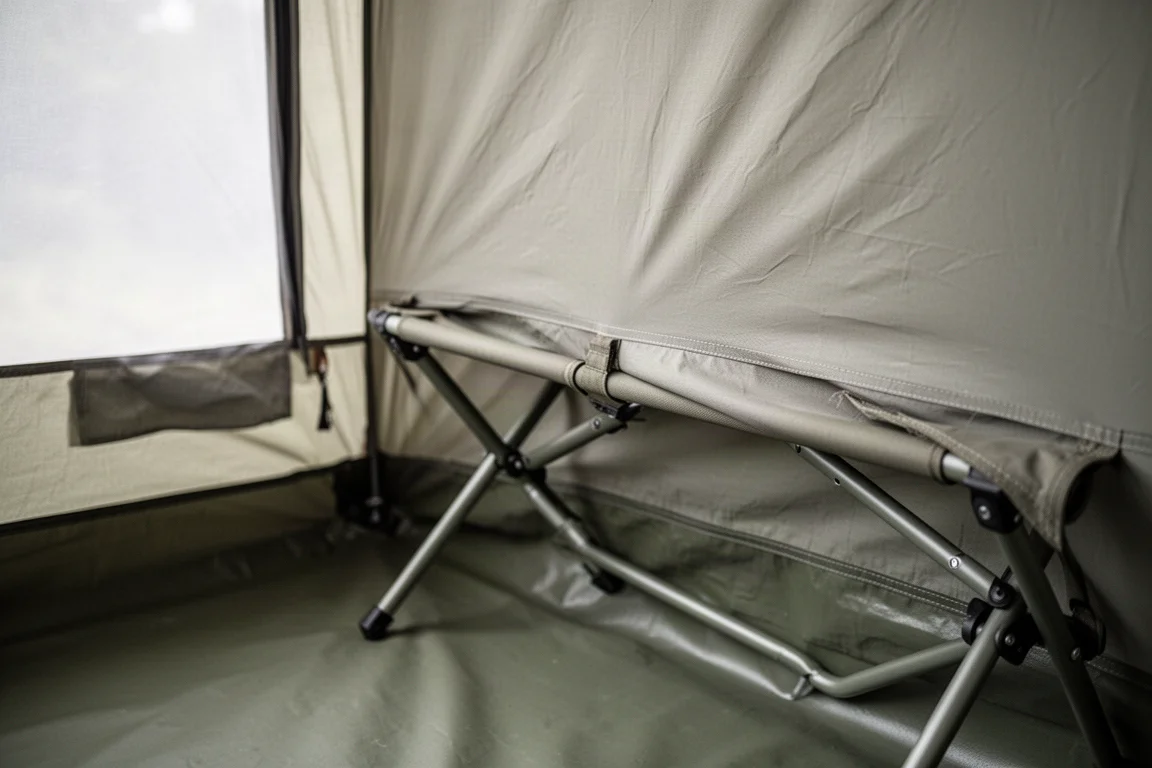
A standard folding camp cot does fit, but only just. The cot presses against the fabric and stretches the walls, which means care is needed to avoid snagging or tearing the mesh. A few extra inches of length and width would have solved this entirely.
The storage bag is another weak point. It is too small to swallow the tent again once it has been used, at least without an unusually tight roll, so the bag often stays unzipped on the way home. A slightly larger stuff sack would be an easy fix.
Weight and packed size are worth planning around. The tent weighs 16 lb and packs to roughly 2 ft long by 6.5 in wide and 6.5 in tall. It is also boxy enough to catch wind: gusts of only around 9 mph are enough to move it, so staking the perimeter and guying out the fly at each corner should be standard practice even on calm days.
Buying Advice
Retail price is $280, and it has been seen around $238 on Amazon, with discounts as low as $100 turning up for shoppers who search around. That range matters, because the value case changes dramatically at the lower end. Near full retail, you are paying for a very large, very tall summer shelter with a few rough edges. At a steep discount, those rough edges are much easier to live with.
Buy it if you want stand-up headroom, cot-compatible floor space, and airflow that keeps condensation down in warm weather. Skip it if you want a fast, intuitive pitch, if you need a genuinely spacious cot setup without fabric contact, or if you are looking for a lightweight shelter to carry.
If you do buy it, pitch it once at home and work out the pole order before your first trip. That single step removes most of the frustration people are likely to run into in the field.
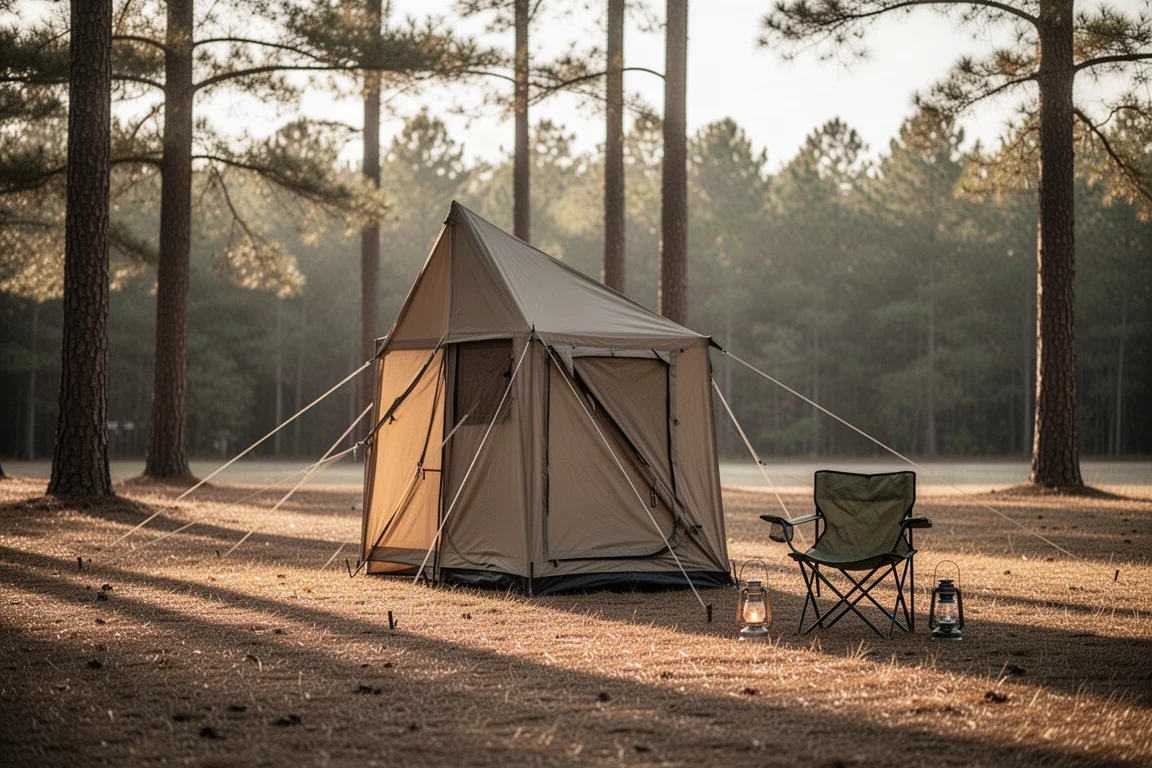
Treat the current waterproofing results as early positive signs rather than a final verdict. The tent has handled rain, snow, and melt without leaking, and the materials suggest it should hold up well in heavier rainfall, but that test has not happened yet. Buyers who camp in sustained downpours may want to wait for longer-term feedback before committing.
Conclusion
The Alps Mountaineering Ranger Cot Tent gets the big things right. It is tall enough to stand in, long enough for a cot, and ventilated well enough to stay dry inside during warm-weather camping. The setup process is the clear weak point, made worse by the absence of printed instructions, and the cot fit and storage bag both deserve another pass from the design team. For car campers who prioritise interior space and airflow, and who are willing to learn the pitch sequence once, it is a distinctive and largely capable summer shelter.
Product link
View more details for Alps Mountaineering Ranger Cot Tent
This product is mentioned in the review. Check the specifications, options, and compatibility before buying.
View more details for Alps Mountaineering Ranger Cot TentFurther reading
Related Reviews
Camping Tents
3F UL Gear Taiji Two-Person Tent Review: Field Waterproofing Results and Buying Advice
The Taiji pairs an attached fly with a removable inner, but sustained rain exposed untaped vent seams that need sealing before this shelter can be trusted.
Camping Tents
3FUL Gear Lanshan 2 Pro 4-Season Review: A Sub-$200 Single-Wall Trekking Pole Tent
An early look at the 3FUL Gear Lanshan 2 Pro 4-Season, covering its straightforward pitch, generous interior space, and the condensation and seam-sealing questions that come with any single-wall shelter.
Camping Tents
Alps Mountaineering Lynx 1-Person Tent Review: Big Value in a Small Budget Tent
A close look at the Alps Mountaineering Lynx 1-Person Tent, covering real interior dimensions, materials, setup time, ventilation limits, and who should buy it.