Hi-Fi Amplifiers
AIYIMA T9 Pro Review: A Compact Integrated Amplifier With More Headroom
A practical look at the AIYIMA T9 Pro, a compact integrated amplifier with a TPA3250 chipset, tube preamp stage, digital tone controls, and a 32V power supply option.
Introduction
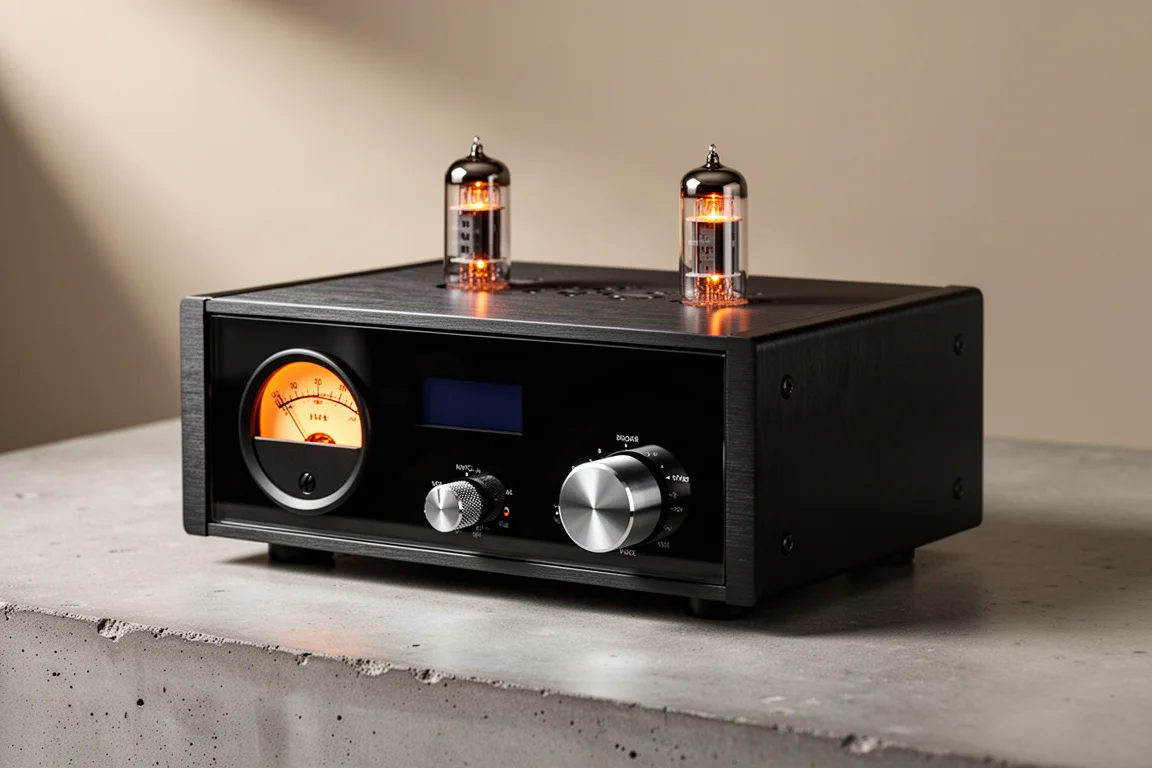
The AIYIMA T9 Pro is a compact integrated amplifier that takes the familiar T9 formula and reworks several of its parts. The analog VU meter is still on the front panel, the two tubes still sit on top, and the amplifier shares the same enclosure as the first-generation T9. What changes is the display, the amplifier chipset underneath, and the power supply headroom the amp will accept.
That mix matters for anyone building a desk system, a small living room setup, or a secondary system around a television, a computer, or a disc player. The T9 Pro sits in a family of closely related designs that includes the original T9, a later T9 revision, and the Douk Audio ST-01 Pro. They share a great deal of engineering and a similar tonal character, so the sensible way to judge the T9 Pro is by the practical differences: inputs, controls, remote, and power.
Who This Amplifier Is For
The rear panel covers more ground than most amplifiers at this size. There is a Bluetooth antenna, a full-size USB input, a full-size optical input, a full-size coaxial input, and an analog line input. There is also an analog output, which means the T9 Pro can feed a subwoofer or a pair of powered speakers and serve as a standalone preamp.
In practice that turns it into a hub for a small system. A television can connect over optical, a computer over USB, a disc player over coaxial, and a phone over Bluetooth, with everything controlled from one volume knob on the front.
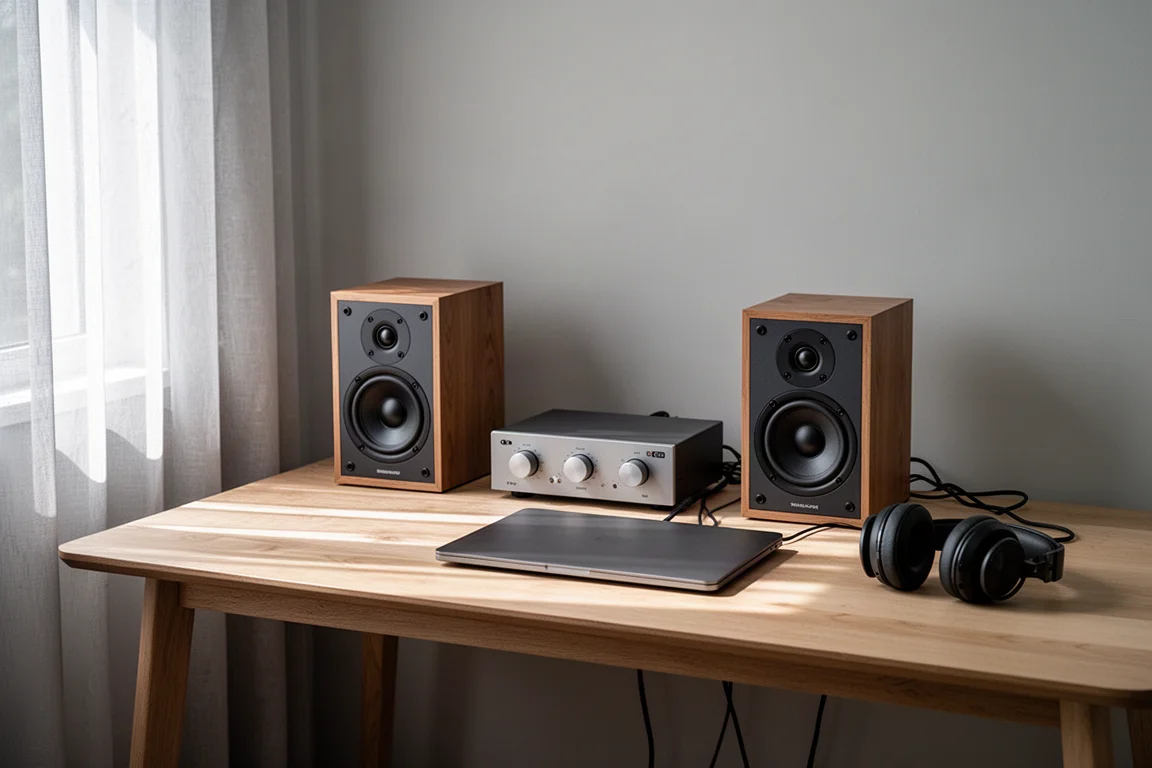
It suits listeners running efficient to moderately demanding speakers in a small or medium room, and anyone who wants tube character without adding a separate preamp. Buyers who need to drive genuinely difficult loads should compare amplifiers built around the TPA3255 chipset instead. The TPA3250 used here is closer to that chip than the silicon in the earlier T9, but it is not the same part and it does not deliver the same output.
Main Strengths
A Digital Front Panel With a Nod to the Eighties
The most obvious change is the front panel. The analog VU meter stays on the left, but the rest of the face is digital, with a readout and a set of illuminated indicators that move with the music. It reads as an eighties touch, and it is the kind of detail that either appeals immediately or does not.
The knurled volume knob in the centre also handles input selection, and the display reports the incoming sample rate, tracking changes between 44.1 kHz and 48 kHz without fuss. Brightness is adjustable and can be turned all the way off for listeners who prefer a dark rack.
TPA3250 Power and a 32V Supply Option
Under the lid, the T9 Pro uses a Texas Instruments TPA3250 amplifier chipset, which sits closer to the widely used TPA3255 than the earlier T9 designs. The practical benefit is a higher ceiling for the power supply: the T9 Pro accepts a 32V, 5A supply, while the original T9 and the Douk Audio ST-01 Pro top out at 30V. Most units ship with a 24V supply, and a 32V version is available as an option.
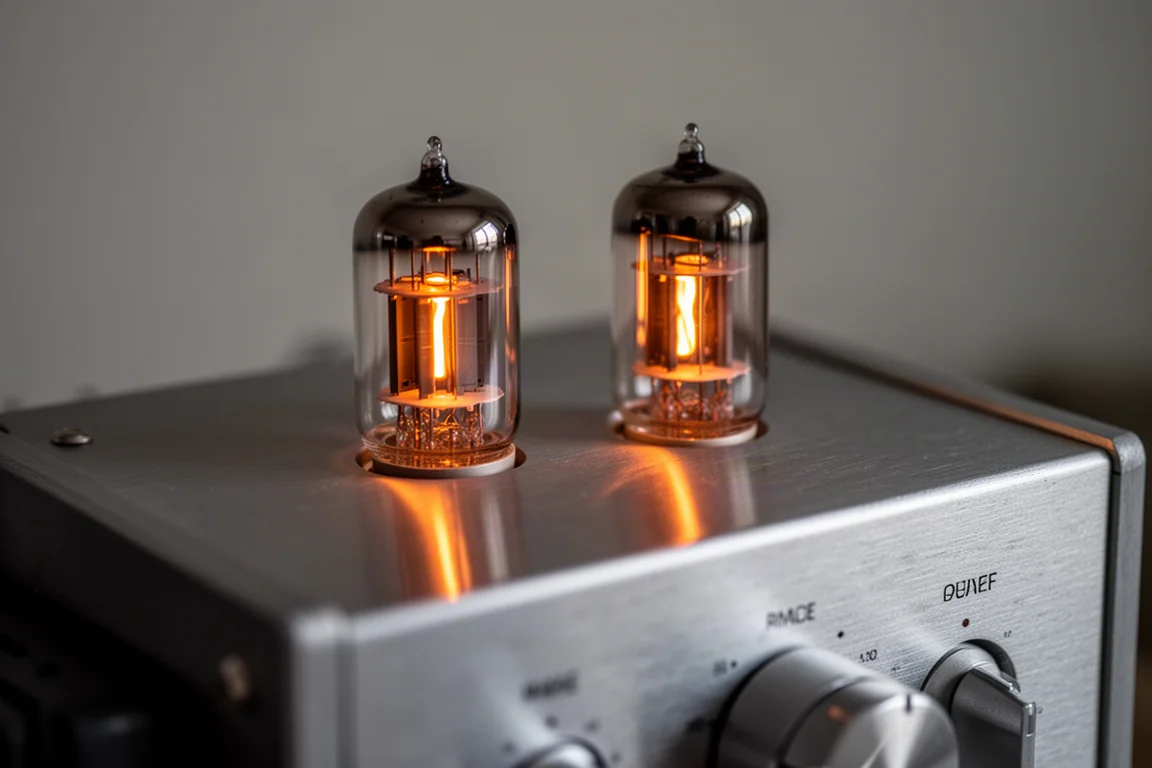
Tone control is handled in the digital domain rather than through a motorised potentiometer, which has a useful side effect. Bass and treble can be returned to exactly flat, with no guesswork about whether the controls are back where they started. The two tubes on top are marked as GE and are common types that are easy to roll.
Paired with Wharfedale Evo 4.1 speakers, which are not an easy load to drive, the amplifier held its footing. With the bass lifted a couple of notches, low notes landed with authority and the rest of the music did not fall apart around them, while the midrange and the top end stayed clean rather than turning crunchy.
Things to Consider Before Buying
Looks Remain a Matter of Taste
The digital display and the animated lights are the main dividing line in this family. Listeners who prefer the calmer, analog-only face of the T9 will not be won over by the T9 Pro, and that preference is legitimate rather than cosmetic nitpicking, since the amplifier sits in plain view on a desk.
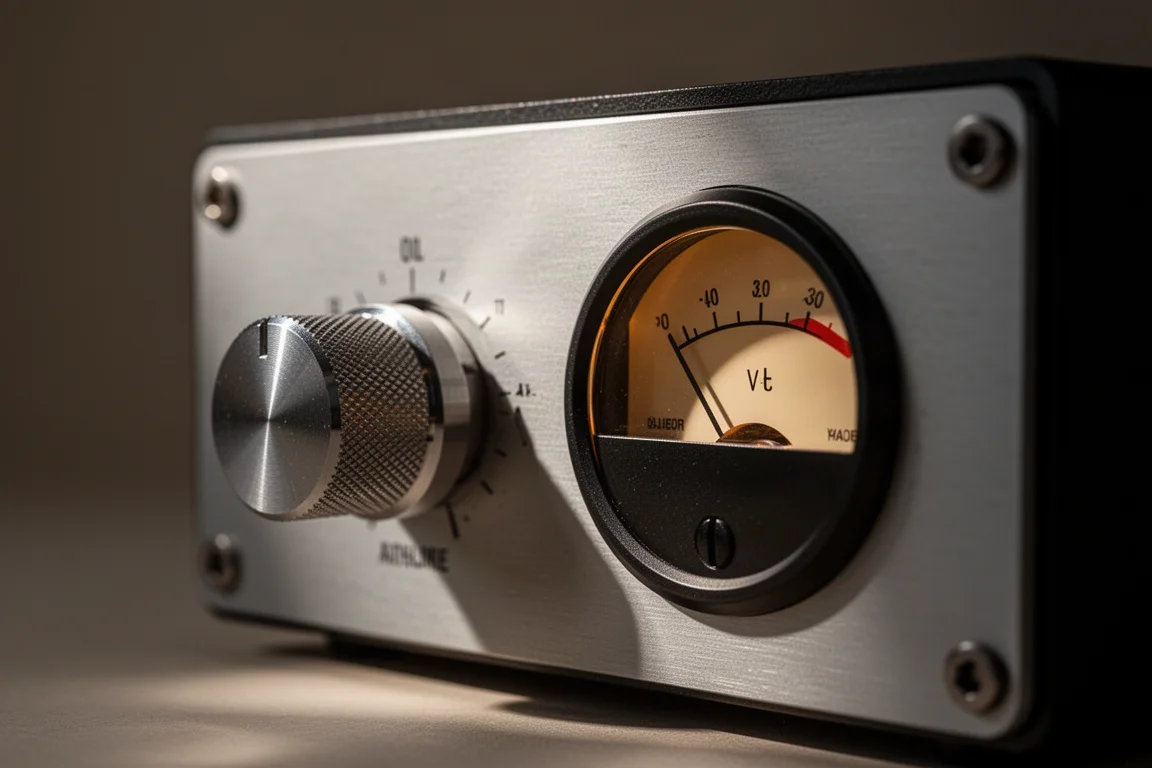
Build quality, on the other hand, has moved in the right direction. The volume knob feels substantial, the surrounds around the connections are neatly finished, and the overall assembly is tidier than earlier generations.
Power Limits and Speaker Matching
The T9 Pro is not a high-output amplifier in the sense that TPA3255 designs are. It will drive a wide range of speakers well, but very demanding loads will expose the difference, and buyers with inefficient stand-mounts should plan around that rather than expect the amplifier to compensate.
The auto-off behaviour is worth knowing about as well. The amplifier waits roughly 30 seconds before sleeping once the signal stops, which is longer than the ST-01 Pro’s roughly 15 seconds. That delay is long enough that it will not cut out between tracks, which was a common annoyance on the earliest version of this design.
Buying Advice
Choose the T9 Pro if you want the extra power supply headroom, the improved remote, and the digital tone controls that return precisely to flat. The remote is a clear step up from the credit-card style handsets common on compact amplifiers, with bass, treble and volume controls plus direct display brightness adjustment.
Choose the original T9 or the ST-01 Pro if you prefer the analog look and do not need the higher supply ceiling. Sonically the three sit close together, and the T9 Pro’s advantage is a slightly cleaner midrange rather than a different overall character.
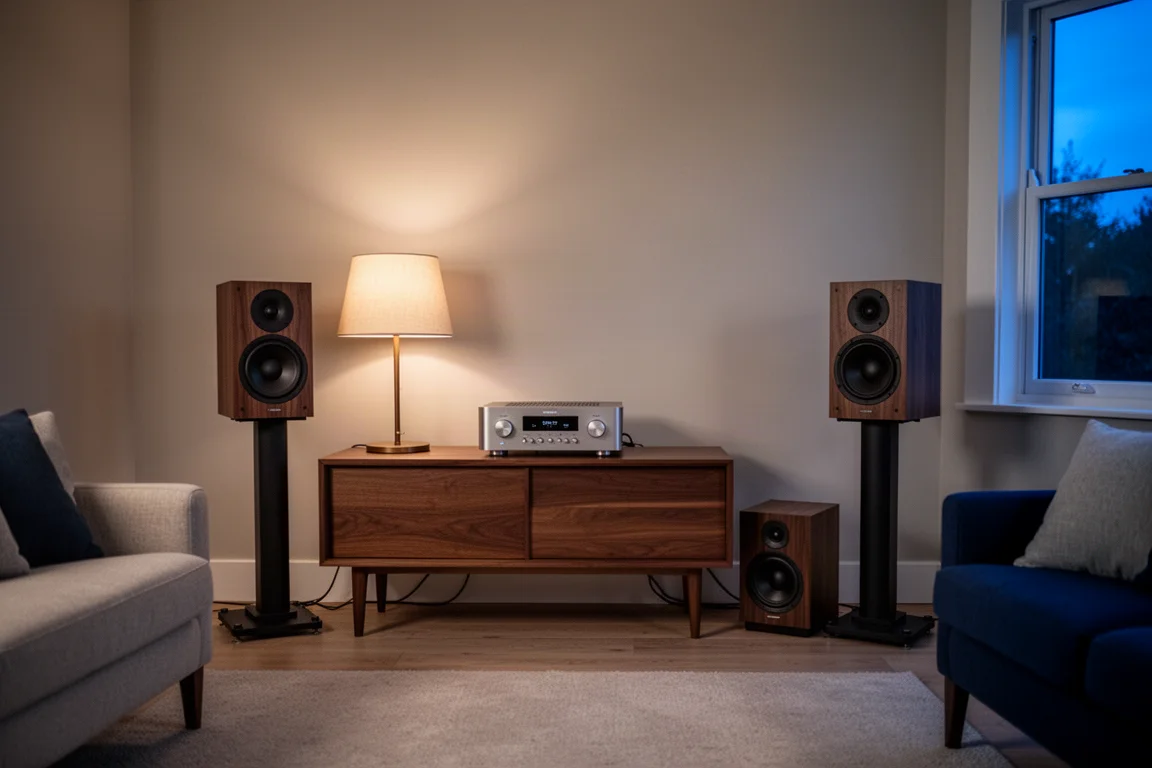
If the 32V version is available where you buy, it is the version to take, since the extra supply headroom is the main technical reason to pick this model over its siblings. Units are stocked and shipped from within the US by an importer, and the amplifier is also listed on Amazon, so availability is straightforward for buyers in that market.
Conclusion
The AIYIMA T9 Pro is a well-rounded compact integrated amplifier. It keeps the tube preamp stage and the VU meter that made the T9 appealing, adds a full set of digital and analog connections, accepts a more powerful supply, and pairs all of that with a genuinely better remote. The digital front panel is the one thing buyers will either like or avoid, and that decision is mostly about aesthetics rather than sound. For a small system that needs one box to handle a television, a computer, a phone, and a subwoofer, it is an easy amplifier to live with.
Product link
View more details for AIYIMA T9 Pro
This product is mentioned in the review. Check the specifications, options, and compatibility before buying.
View more details for AIYIMA T9 ProFurther reading
Related Reviews
Hi-Fi Amplifiers
Accuphase E-280 Review: Entry-Level Accuphase With Flagship Attention to Detail
A close look at the Accuphase E-280 integrated amplifier, covering its champagne build, AAVA volume control, sound quality, and the speakers and sources that suit it best.
Hi-Fi Amplifiers
Advance Paris A10 Classic vs Yamaha A-S301: Two Integrated Amplifiers Compared
A practical comparison of a $350 integrated amplifier and a $2,500 reference model, covering the differences that matter and the ones that do not.
Hi-Fi Amplifiers
Affordable Chinese Amplifiers Worth Buying: Five Budget Hi-Fi Amps Compared
A practical look at five affordable amplifiers, what each one does well, and the trade-offs to weigh before you buy.