Hi-Fi Amplifiers
Aima T9 vs Duke Audio ST-01 Pro: Which Affordable Tube Amp Should You Buy?
A close comparison of two budget tube integrated amplifiers: what they share, where they differ, and which one fits your system.
Introduction
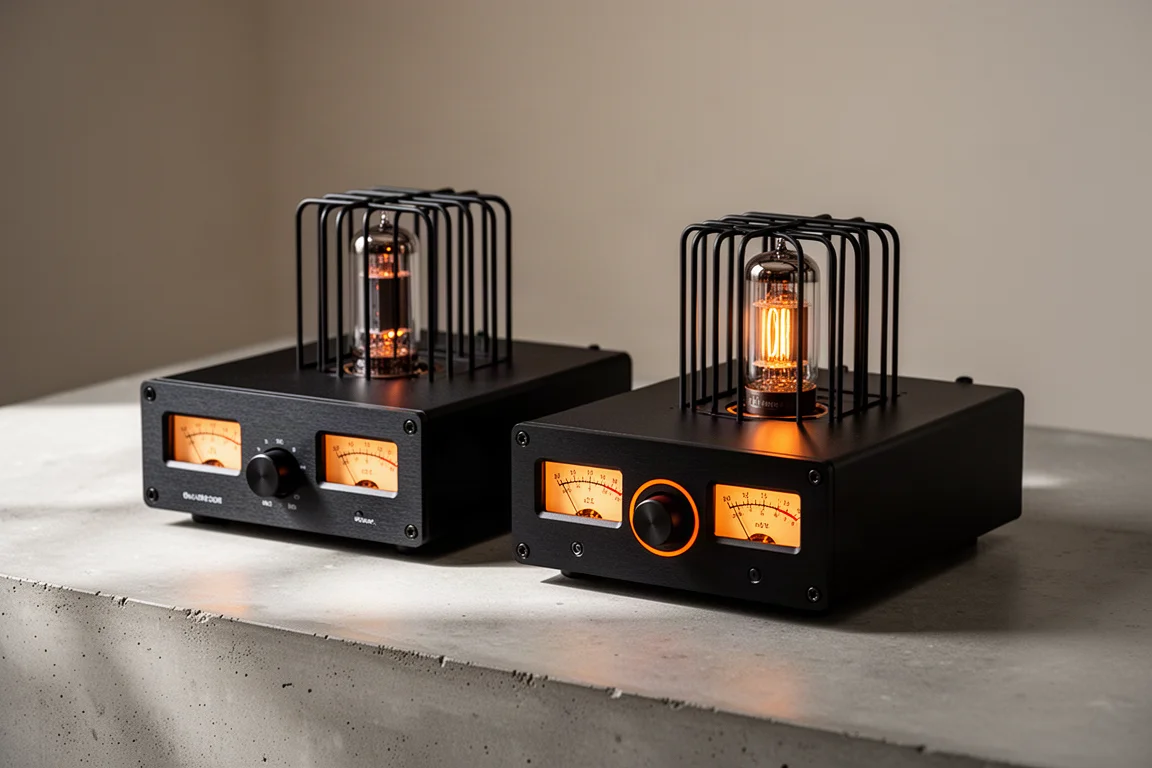
Getting into hi-fi does not have to be expensive, and the Aima T9 and the Duke Audio ST-01 Pro are two of the clearest examples of that idea. Both are compact integrated amplifiers with a DAC built in, a tube in the signal path, and a price that sits right at the entry point of the hobby. They also look so similar that the obvious question is whether they are the same product sold under two different names. They are not.
The core recipe overlaps almost completely, but the two amplifiers differ in styling, in a handful of features, and in one behaviour that will matter a great deal to some listeners and not at all to others. Here is what is worth knowing before you choose.
What Both Amplifiers Get Right
Both units are integrated amplifiers, which means the DAC is already inside. A television, a CD player, a network streamer, or a computer can be connected digitally and played straight through the amplifier without adding a separate digital-to-analog converter. The rear panel covers a full-size optical input, a full-size coaxial input, USB, a Bluetooth antenna, an auxiliary output, and speaker terminals. For the money, that is a generous set of connections.
Both amplifiers use a Texas Instruments 32-21 chipset. That family of chips tends to sound natural rather than clinical, which suits long listening sessions.
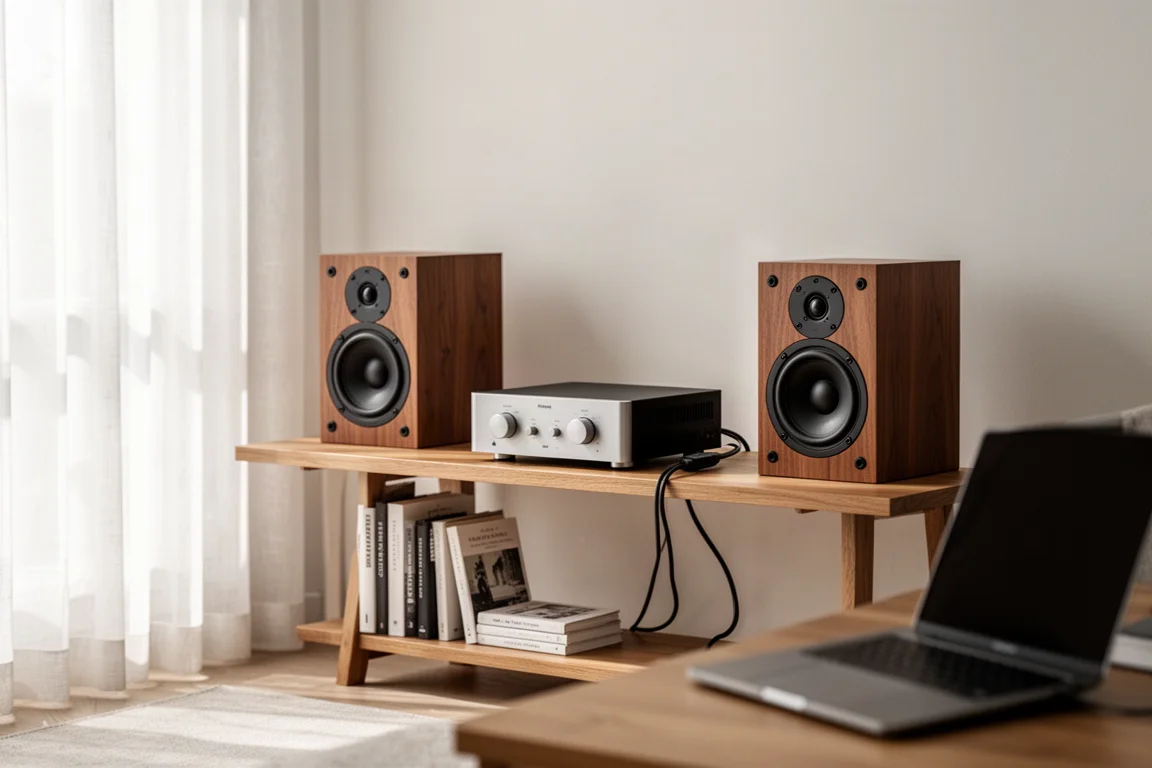
A line output is included on both as well, and it is more useful than it first appears. It allows a subwoofer to be added, lets the amplifier drive powered speakers, or turns the unit into a preamp for another component. Analog inputs are present too, so a turntable can be connected as long as it has a built-in phono preamp, or an external phono stage can be used. The tubes are user-replaceable, and the stock supply is a 24 volt, 4.5 amp brick, with the option to run up to 30 volts for anyone who wants to experiment. A remote control is included with the package.
Aima T9: The Affordable Entry Point
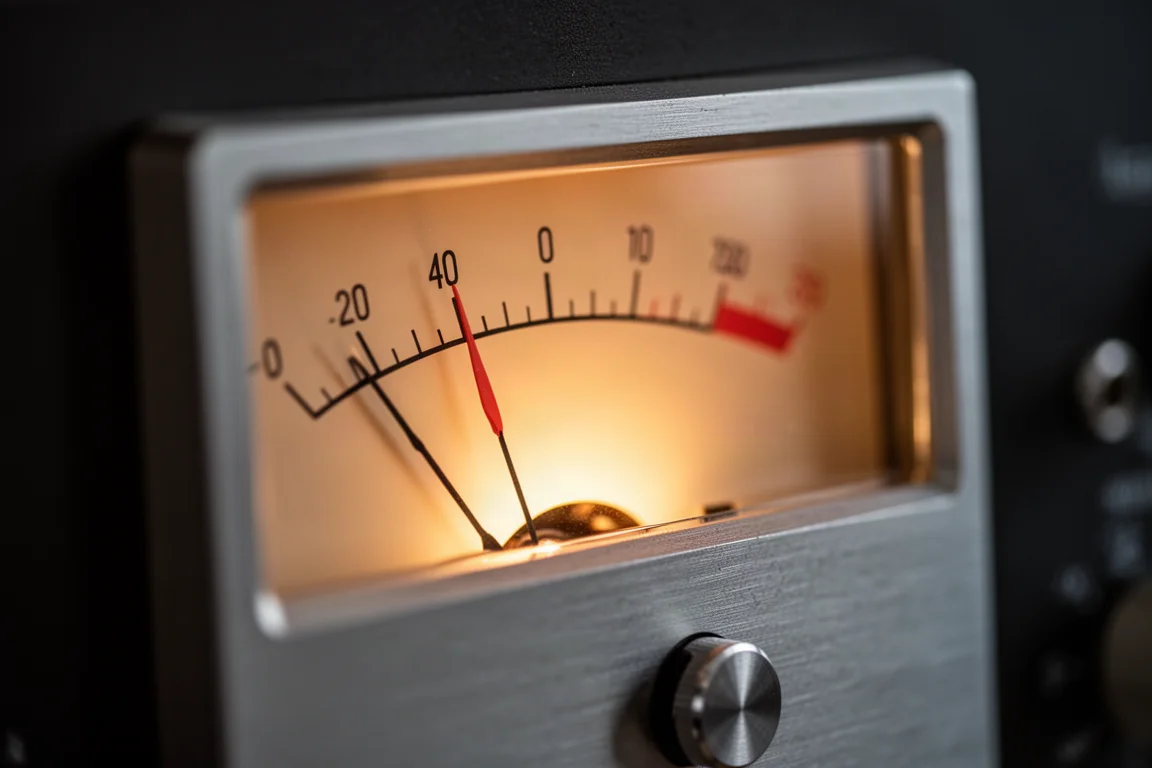
The T9 is the better known of the two and has earned a strong reputation as one of the best value entry points into tube amplification. It offers everything described above, adds a VU meter that gives the front panel a distinctly analog character, and sits at roughly $130.
There is one quirk worth knowing about. First-generation T9 units go to sleep, effectively clicking off, after a few seconds without a signal. That behaviour has been a common complaint among owners who leave a system running all day, and a newer revision of the T9 has addressed it.
For most buyers the T9 remains the safer purchase, simply because it is easy to find and easy to recommend. It does everything a first amplifier needs to do, and it does it without asking for much money.
Duke Audio ST-01 Pro: Same Recipe, Different Finish
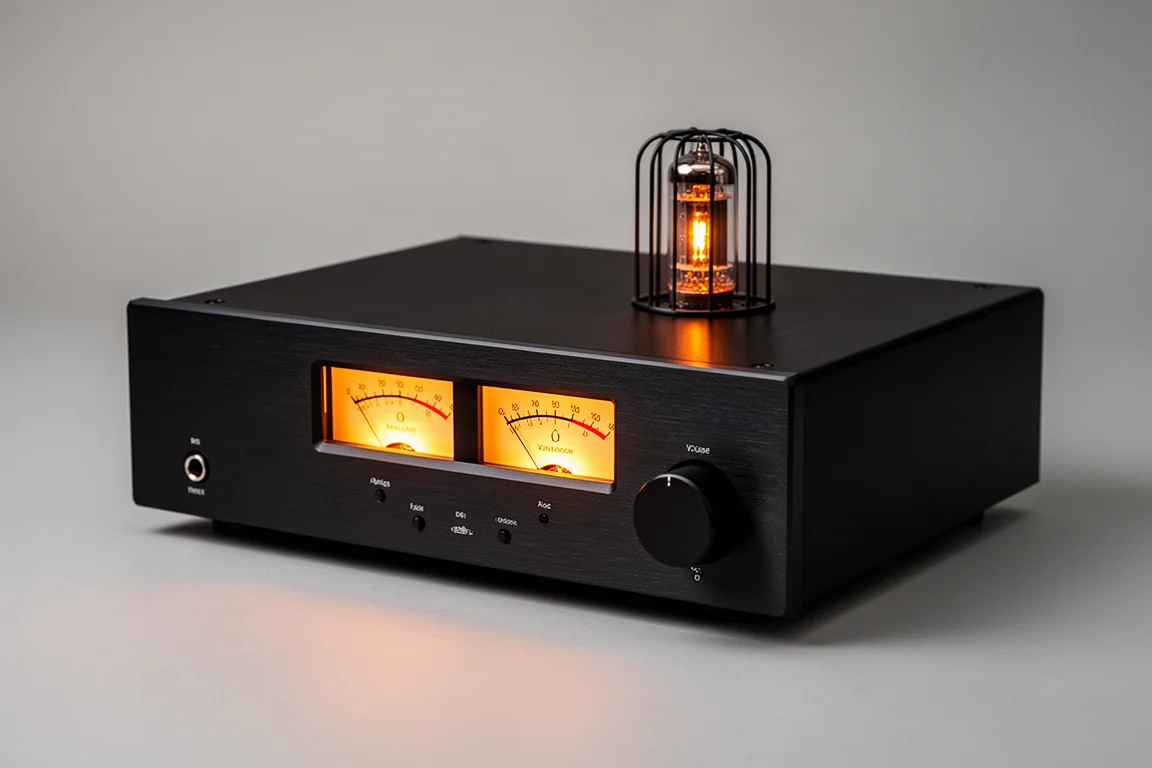
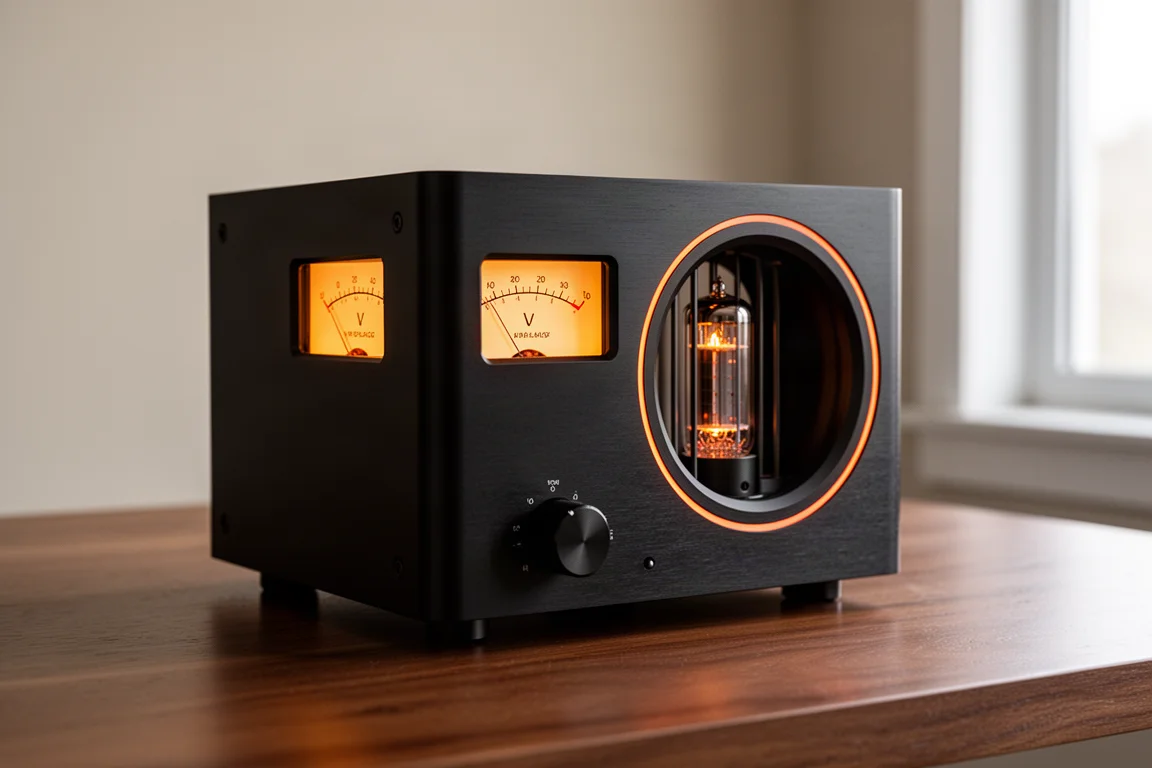
Duke Audio has a long history with VU meters, and the ST-01 Pro leans into that heritage. The meter sensitivity can be adjusted up or down using a set screw on the underside of the chassis, so the needles can be made to move more or less with the music. Visually, the ST-01 Pro is set apart by orange rings around the tube interface, and styling is the main reason many listeners prefer it.
The ST-01 Pro also adds a USB thumb drive input for direct playback from a flash drive. Track navigation from that input is limited, so it is best treated as a background listening convenience rather than a primary source. The more meaningful difference is that it does not go to sleep when the signal stops, which suits anyone who leaves a system powered on through the day.
The amplifier is sold through Duke Audio directly rather than through Amazon, and it runs around $140. The brand also makes speaker switchers and other components built around VU meters, so the design language is consistent across the range.
How They Sound in Practice
Sonically, the two amplifiers are extremely close. Any differences between them are slight, and they can be explained by variables that are difficult to control: the power supplies may not be identical, the optical cables used were different, and there is no guarantee the tubes fitted to each unit are the same. The ST-01 Pro may sound a touch fuller in the low end, but it is fair to treat the two as functionally equivalent.
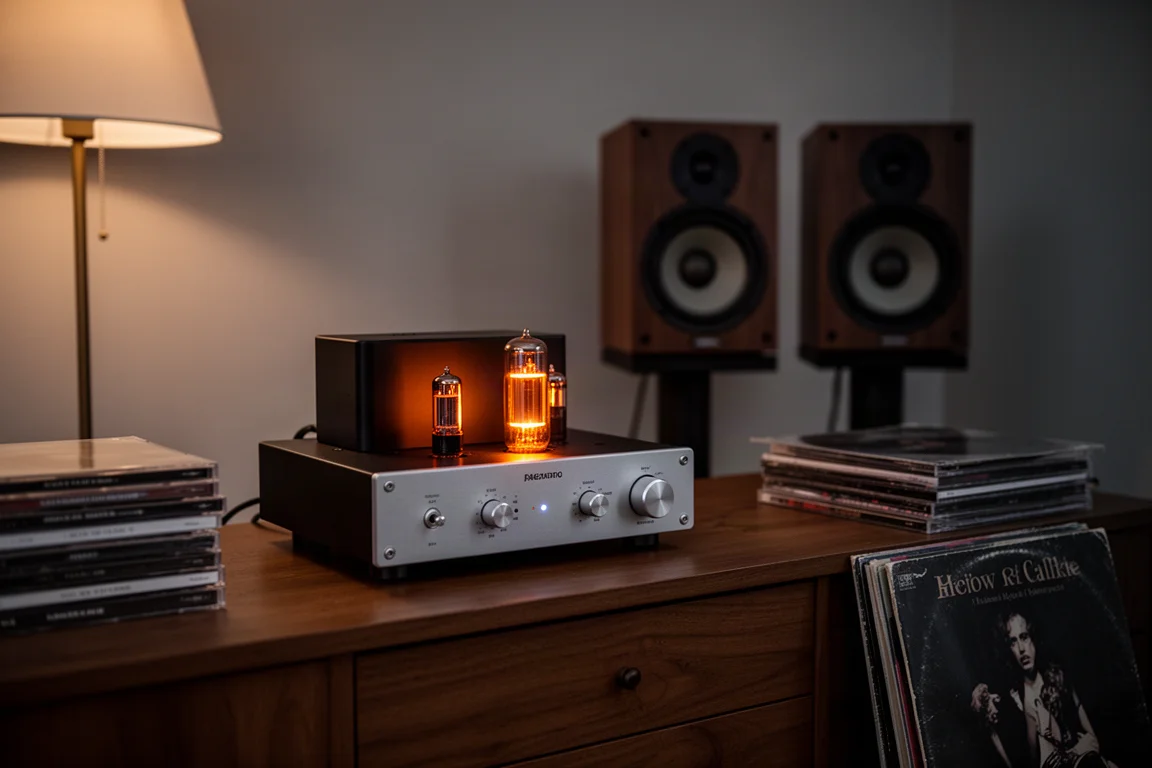
Power is where the shared chipset shows its ceiling. Driving a pair of Wharfedale Denton 80th Edition speakers, which are not especially sensitive, both amplifiers reached around 85 dB comfortably and peaked into the 90s. That is enough for most rooms and most listening levels.
The real limitation is instrument separation at louder volumes. Push either amplifier hard and parts of a mix begin to meld together. That is the trade-off that comes with a very affordable integrated amplifier. Spending more does not automatically guarantee better sound, although more established brands at higher prices often do deliver more. Both of these perform better than their price suggests. Bluetooth is available on each, but it is not the strongest way to listen to either one.
What to Consider Before Buying
A few practical points are worth weighing before you commit.
Sleep behaviour is the biggest one. If you leave your system powered on for hours, the first-generation T9 will click off during quiet passages. The newer T9 revision resolves this, and the ST-01 Pro does not do it at all.
Power supply upgrades are possible. The T9 accepts a supply up to 30 volts, and the included 24 volt brick is a common format that is easy to replace if you want to experiment later.
Tubes are replaceable on both amplifiers, which gives you a route to tuning the sound down the line, although the stock tube type is not always clearly documented.
Speaker matching matters more than the spec sheet suggests. Both amplifiers are comfortable with ordinary bookshelf speakers in a small room, but very insensitive speakers will expose the power ceiling and the separation limits described above.
Which One Should You Choose?
If you want the amplifier that looks the part, gives you a VU meter you can tune to dance the way you like, and never clicks off mid-session, the Duke Audio ST-01 Pro is the more satisfying choice. It costs a little more, and it is bought directly rather than through the usual retail channels.
If you want the easiest purchase, the T9 remains the default recommendation. It is widely available, priced at the lower end of the two, and its newer revision resolves the one behaviour that used to be a genuine annoyance.
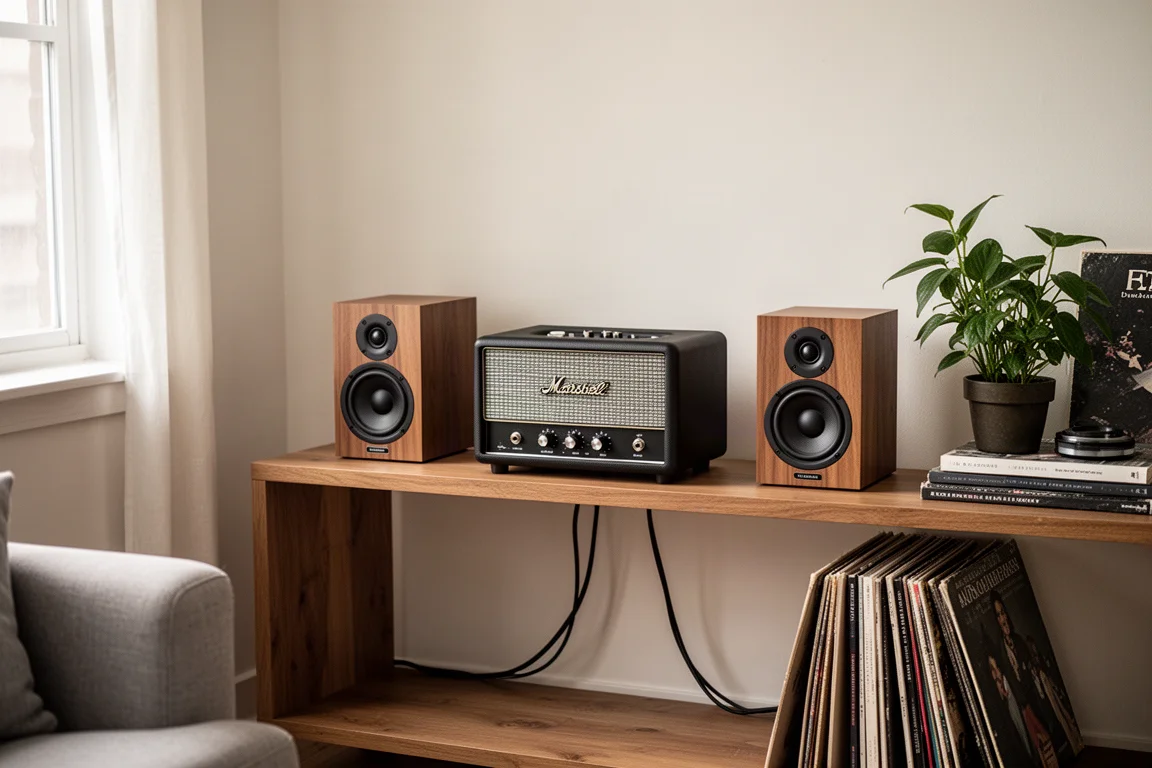
Either way you are getting a DAC, a tube, analog inputs, a line output, and a usable amount of power for the price of a modest pair of headphones. Neither amplifier is a compromise on features, only on the headroom and instrument separation that more expensive designs bring.
Conclusion
Both of these amplifiers are genuinely good, and the choice between them comes down to small things. The ST-01 Pro offers better styling, an adjustable VU meter, and no sleep behaviour. The T9 offers the lowest price, the widest availability, and the reassurance of a newer revision that fixed its one real flaw. Pair either one with reasonably sensitive speakers in a small room, and you have a complete system for very little money.
Further reading
Related Reviews
Hi-Fi Amplifiers
Accuphase E-280 Review: Entry-Level Accuphase With Flagship Attention to Detail
A close look at the Accuphase E-280 integrated amplifier, covering its champagne build, AAVA volume control, sound quality, and the speakers and sources that suit it best.
Hi-Fi Amplifiers
Advance Paris A10 Classic vs Yamaha A-S301: Two Integrated Amplifiers Compared
A practical comparison of a $350 integrated amplifier and a $2,500 reference model, covering the differences that matter and the ones that do not.
Hi-Fi Amplifiers
Affordable Chinese Amplifiers Worth Buying: Five Budget Hi-Fi Amps Compared
A practical look at five affordable amplifiers, what each one does well, and the trade-offs to weigh before you buy.