Sleeping Bags
AEX Sansen 20° Down Sleeping Bag vs Sea to Summit Ascent: Two Down Bags Compared
A close look at two three-season down bags, the value-focused AEX Sansen 20° and the roomier Sea to Summit Ascent, plus the pad sleeve detail worth knowing before you buy.
Introduction
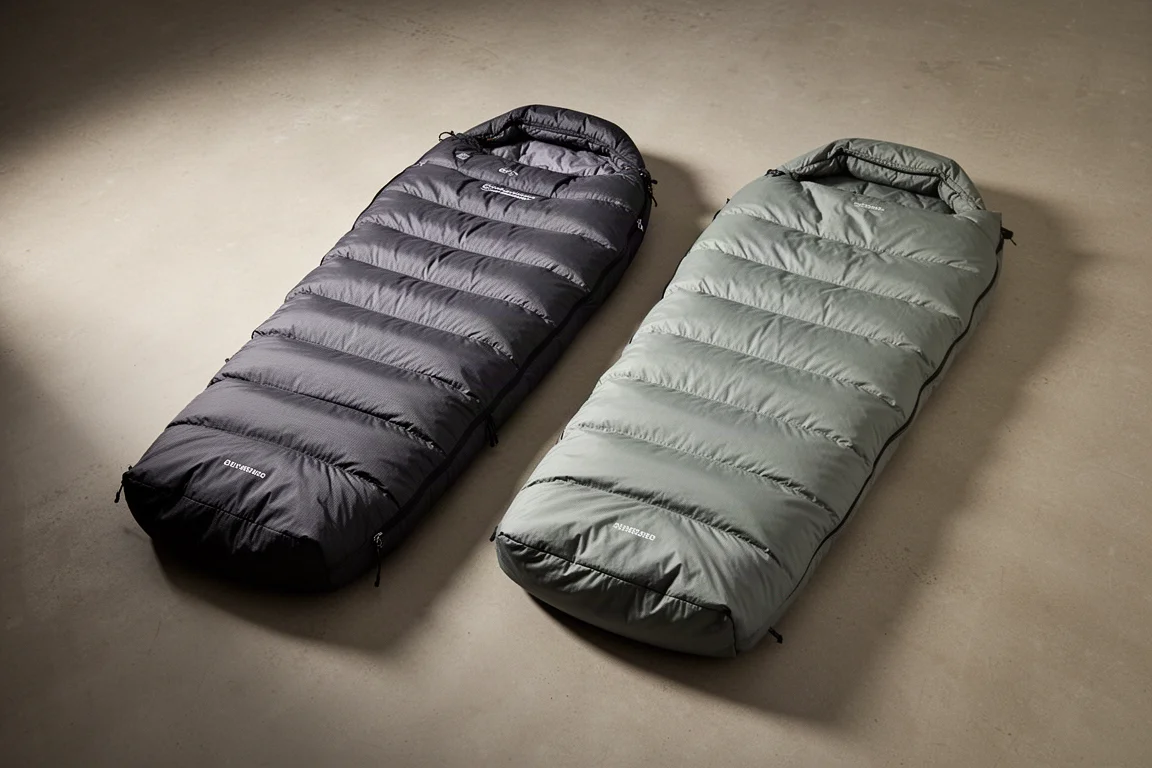
Two down sleeping bags with a similar brief and a very different price. The AEX Sansen 20° down sleeping bag lands at $200 in the regular size, while the Sea to Summit Ascent down sleeping bag carries a $470 price tag. Both use a dual-zipper layout that opens the bag out like a blanket, both weigh within an ounce of each other, and both are aimed at three-season campers who want down insulation without moving into ultralight territory.
The interesting part is where they diverge. Fill power, interior shape, and one specific design detail on the AEX change how each bag behaves once you are actually lying in it on a sleeping pad.
What Matters in a Cold-Weather Down Bag
Fill power tells you how much loft a given weight of down provides, and it is the number most buyers compare first. A 700 fill power bag and a 750 fill power bag are close enough that shape and draft management usually matter more in practice.
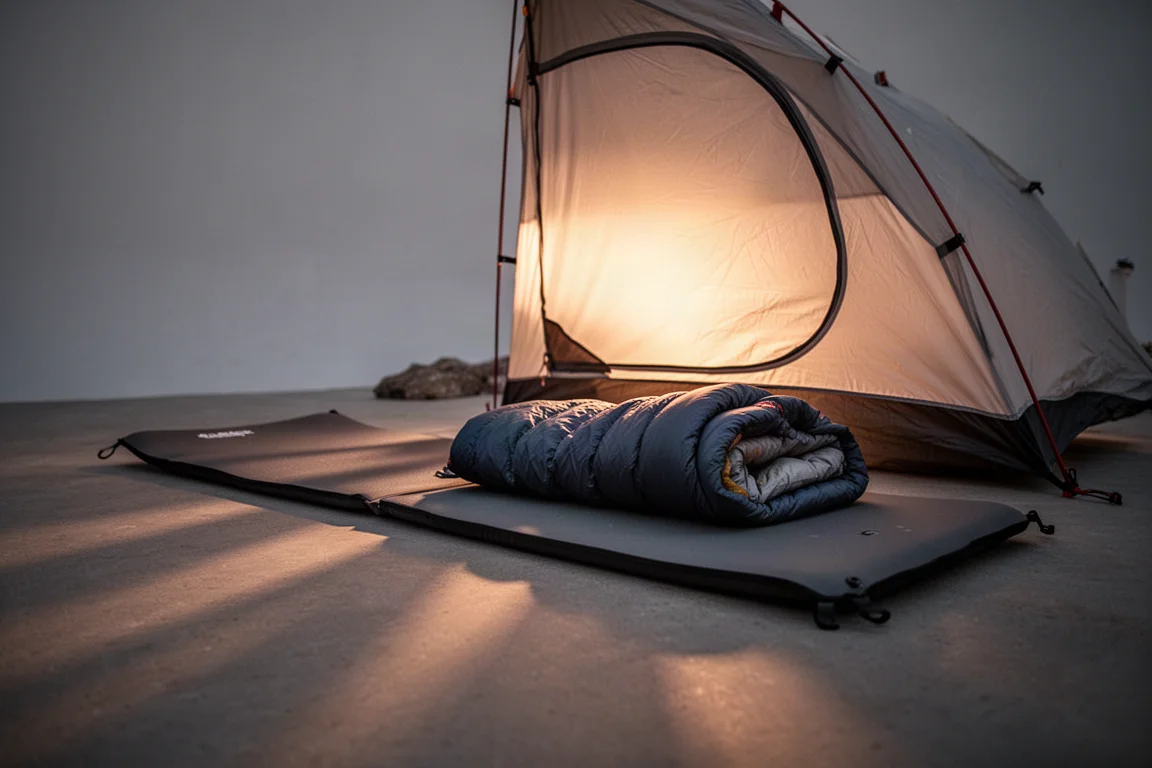
Beyond fill, the details that shape a night’s sleep are the taper through the torso and legs, how the hood cinches down, whether the zipper track is sealed against drafts, and how the bag attaches to a pad. That last point is easy to overlook when reading a spec sheet, and it is exactly where these two bags separate.
Certifications are worth a glance too. Responsibly sourced down and recycled shell fabrics are increasingly standard at this price level, and both are present on the AEX bag.
AEX Sansen 20° Down Sleeping Bag: What You Get
The AEX Sansen is a regular-size mummy bag built around 700 fill power RDS certified duck down and bluesign certified recycled fabrics in the body. The shape is a traditional mummy with a tapered hood, a fairly wide torso, and a foot box that tapers down but still leaves enough room for your feet to move without a lot of dead space.
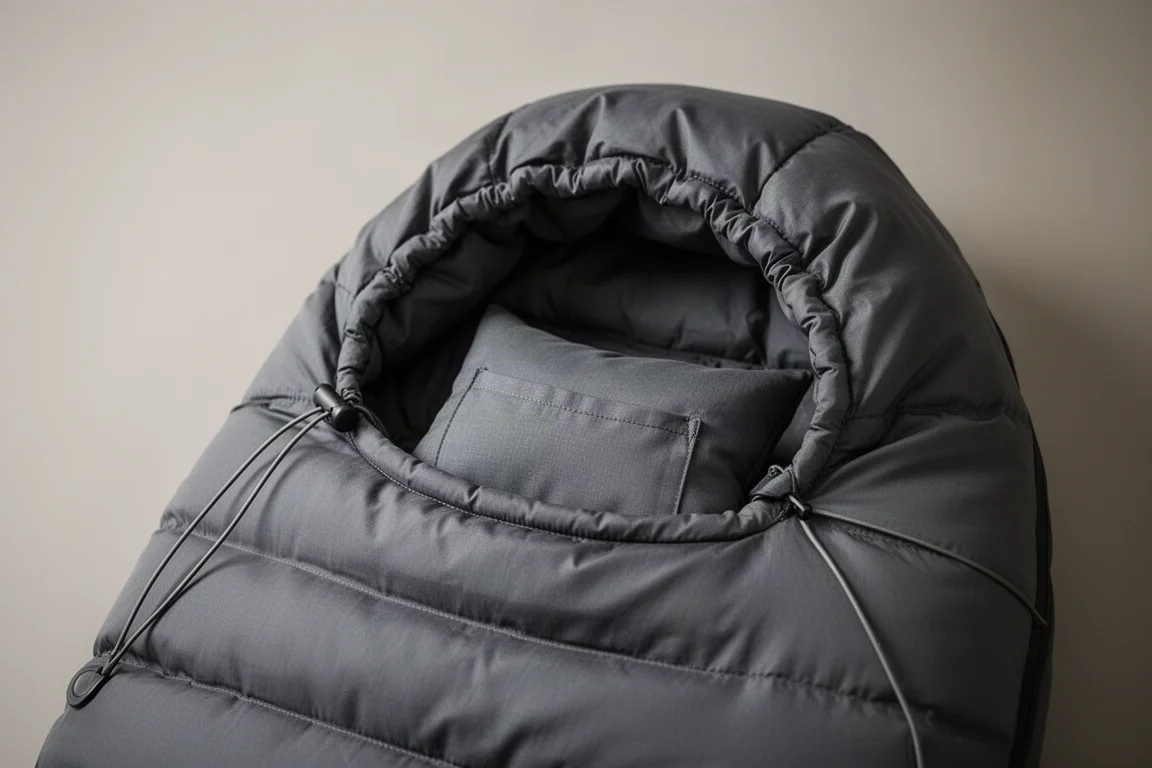
Working from the top down, the hood is moderately sized and cinches with a shock cord to close off draft-prone gaps, and there is an integrated pillow pocket inside it. A small hidden pocket sits in the torso area. Two size 5 YKK zippers run down the sides so the bag can be flipped open like a blanket, which makes it feel less claustrophobic and more bed-like. A draft collar runs around the zipper track, and the zipper extends roughly three-quarters of the way down toward the foot box for easy entry. All baffles are horizontal, which keeps the down from migrating to the sides, and the foot box is well insulated and spacious.
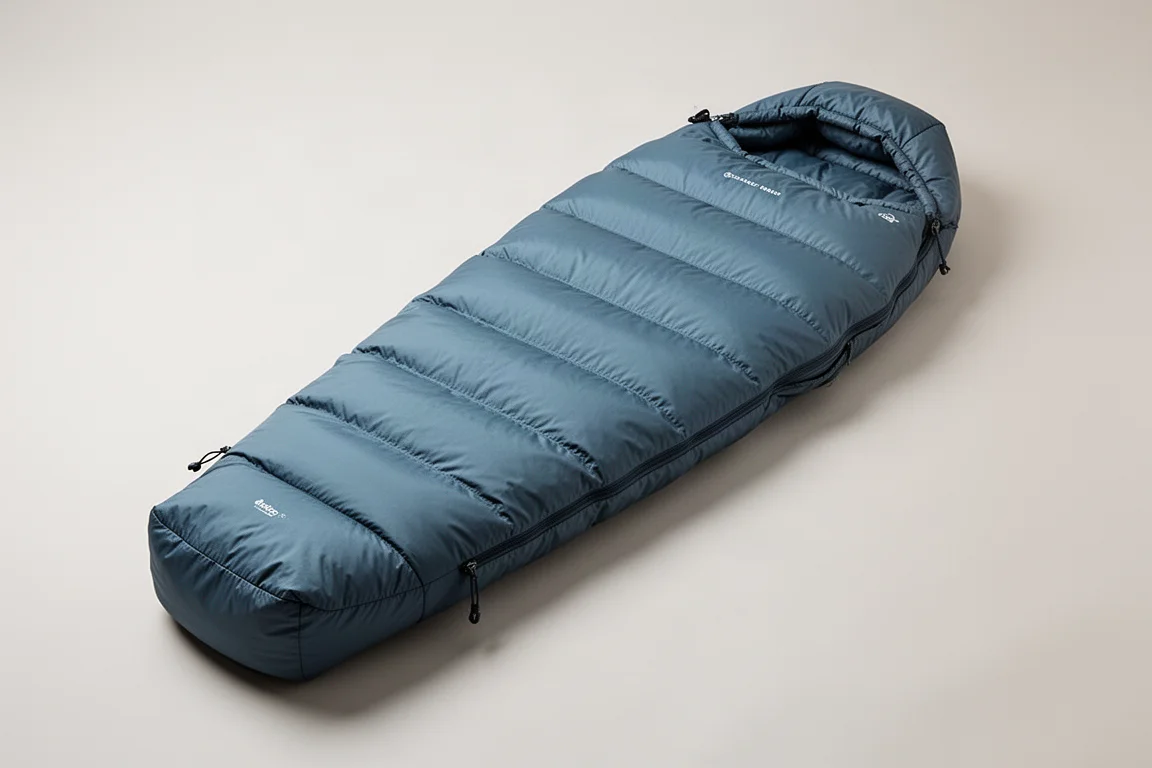
The bag also has a sewn-in pad sleeve, with elastic and stretchy mesh plus nylon fabric at the top and a webbing strap at the foot box to hold it to a sleeping pad. Total weight in the regular size is 2 lb 5 oz, and it carries a 20-degree comfort rating at $200.
In the field it has been a warm, comfortable bag, including nights down to freezing temperatures and in mixed conditions. The foot box in particular is comfortable, and the dual zipper access makes it easy to get in and out.
The Pad Sleeve Problem to Know About
Two issues stand out, and one of them is significant enough to change the buying decision.
The smaller one is the draft collar, which sits into the zipper track at the top of the bag and gets caught in the zipper fairly often. It needs to be pulled clear each time you close the bag.
The larger issue is the sewn-in pad sleeve. Start with the webbing strap at the foot box. When it is pulled tight, as most people will naturally do, it compresses the baffle in that spot and creates a cold spot, and it also puts pressure on your shins. Loosening the strap helps somewhat, but lying on your side still reduces loft in that exact area, and over time the down there may not loft properly. Removing the webbing strap entirely is a practical answer, and it trims a little weight as well.
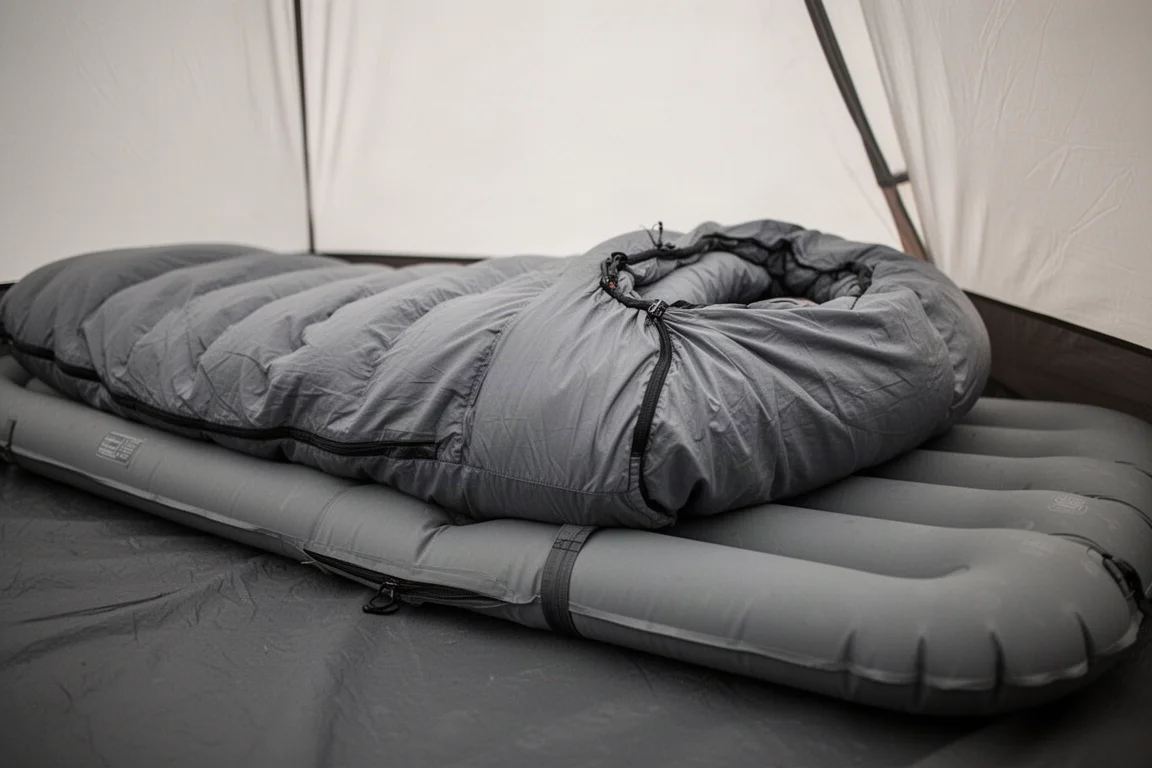
The attachment at the top of the bag is the bigger concern. On a 25-inch wide pad, zipping both sides closed makes the bag extremely tight across the chest and shoulders, whether your head is inside the hood or out of it. The shock cord presses against the chin, and you can feel the tension on your face. Zipping the bag fully closed becomes difficult. Since the regular size fits correctly in length, this is a consequence of the sleeve rather than the bag being undersized.
The workaround is to detach the top of the bag from the pad and remove the foot box strap, which is what makes the bag comfortable on those nights. That is counterintuitive, because the sleeve exists to keep the bag in place as you move. Wide pads in the 25-inch range are becoming more common rather than less, so this is worth weighing carefully if that is your setup.
Sea to Summit Ascent Down Sleeping Bag: The Roomier Alternative
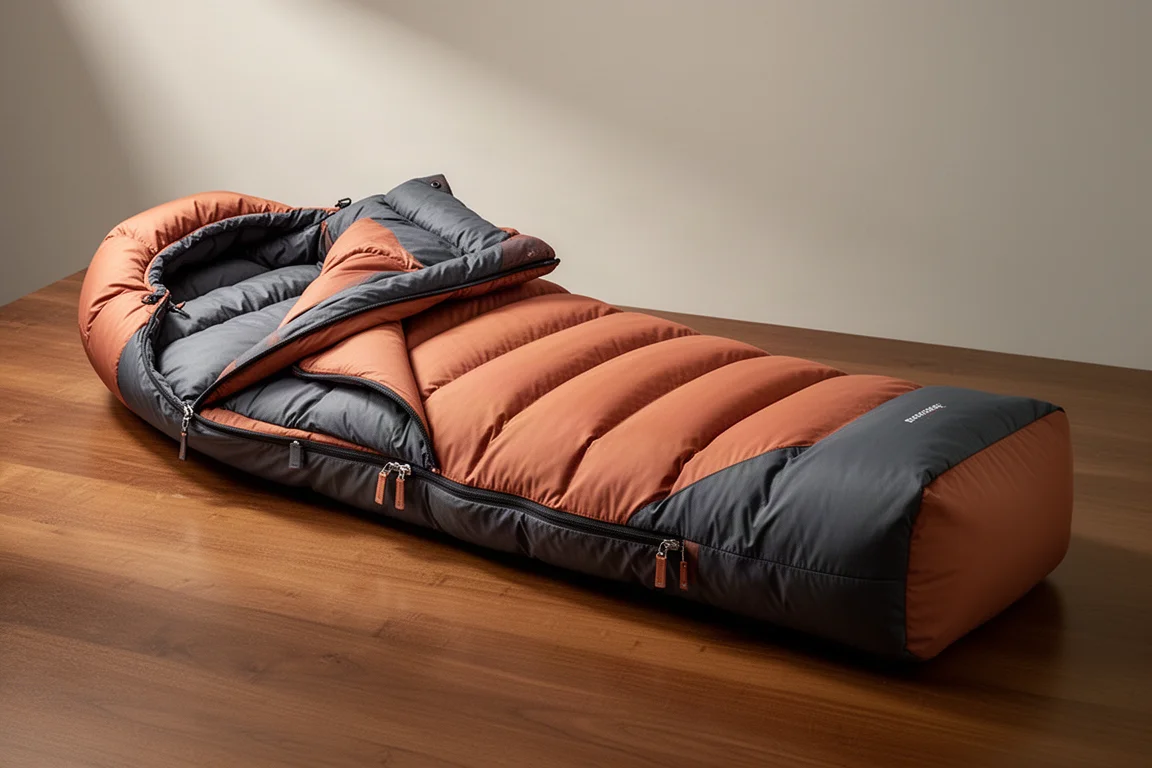
The Sea to Summit Ascent covers much of the same ground. It uses a dual zipper function that opens the bag out, its taper is less aggressive and the overall cut is closer to rectangular, so there is noticeably more room inside. A zipper at the foot box lets you put your feet out to regulate temperature, a genuinely useful feature on warmer nights.
It weighs 2 lb 4 oz, one ounce less than the AEX bag, and uses 750 fill power down against the AEX’s 700. The difference in price is substantial at $470, which is $270 more than the AEX.
Buying Advice: Which Bag Fits Your Trip
At $200, the AEX Sansen delivers a lot: certified 700 fill power down, recycled shell fabrics, dual YKK zippers, horizontal baffles, a well-insulated foot box, and solid construction. If you sleep on a narrower pad, or you simply leave the sleeve unattached, that combination is hard to argue with on value alone. If you plan to use the pad sleeve with a 25-inch wide pad, expect to run the workaround of detaching the top and removing the foot box strap, and decide whether that trade is acceptable to you.
The Sea to Summit Ascent is the easier bag to live inside if interior room matters to you. The roomier cut, the foot box vent, the slightly lower weight, and the higher fill power all add up, and the price reflects that.
The practical split looks like this. Choose the AEX Sansen if your priority is a well-equipped down bag at an approachable price and you are flexible about how the bag attaches to your pad. Choose the Ascent if you want more space inside the bag, a vent you can open at the foot, and you are comfortable paying considerably more for those advantages.
Conclusion
The AEX Sansen 20° is a warm, well-built bag with a strong feature list for $200, and its field performance is genuinely good once the pad attachment is out of the picture. The sleeve tension on a 25-inch wide pad is the detail that holds it back, and it is the reason to check your pad width before ordering. The Sea to Summit Ascent solves the room question and adds a foot box vent, at a price that makes it a different kind of purchase entirely.
Further reading
Related Reviews
Sleeping Bags
Best Down Sleeping Bags Under $300: Four Backpacking Options Worth a Look
Four down sleeping bags that stay under $300, compared on fill power, baffle design, hood comfort, and packed size.
Sleeping Bags
Best Sleeping Bags and Sleep Systems: Five Premium Down Picks Compared
Five premium down sleeping bags and sleep systems compared on warmth, weight, construction, and value.
Sleeping Bags
Big Agnes Lost Ranger UL 3-in-1 Sleeping Bag System Review: One Bag, Three Setups
A practical look at the Big Agnes Lost Ranger UL 3-in-1 Sleeping Bag System, covering how the three configurations work, where it shines, and the details worth weighing before buying.