Indoor Gardening
AeroGarden Sprout vs Click and Grow Smart Garden 3: Three-Month Head-to-Head
We grew the same tomatoes and lettuce in both compact smart gardens for three months. Here is how they compared on growth, nutrients, pumps, and day-to-day fuss.
Introduction
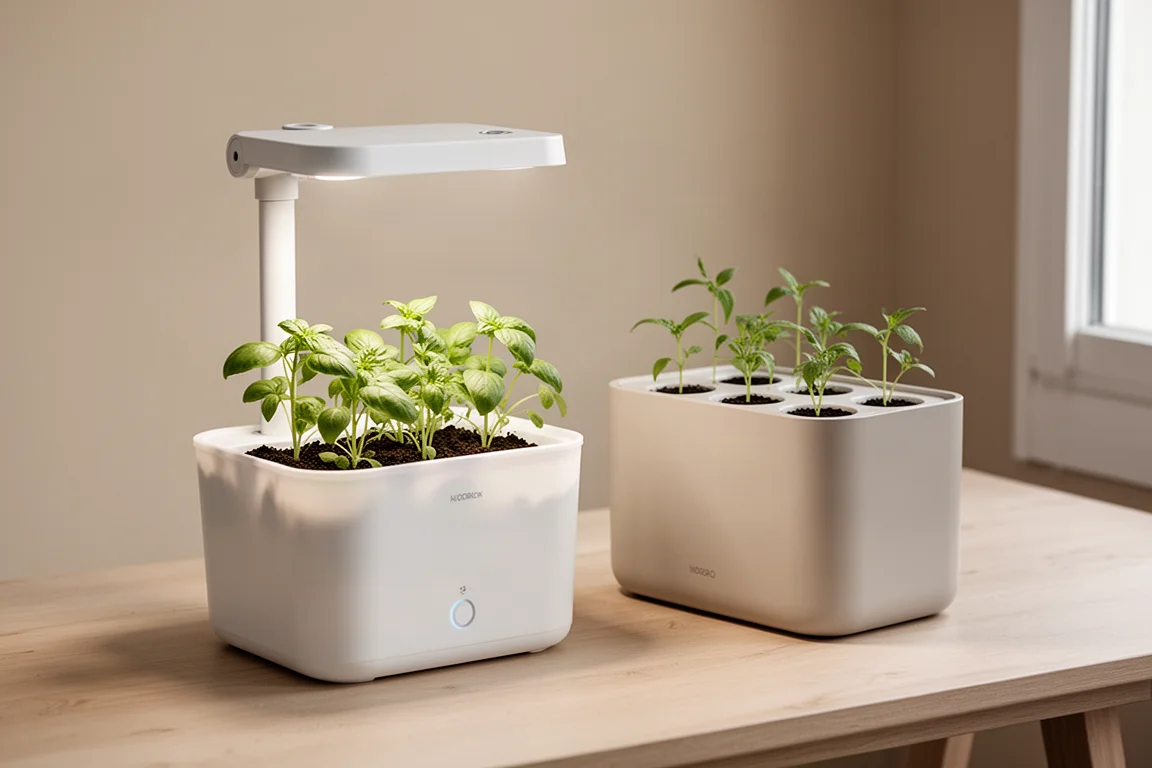
Compact countertop hydroponic gardens promise fresh herbs and vegetables with minimal effort, and two of the most popular small options are the AeroGarden Sprout and the Click and Grow Smart Garden 3. Both systems grow three plants at a time, both are roughly the same size, and both look deceptively similar on a shelf.
To find out which one actually performs better, we ran a three-month head-to-head growing the same two crops in each: orange hot tomatoes in the back hole and mini butterhead lettuce in the front. The results revealed some meaningful differences that are easy to miss in a spec sheet.
How the Two Systems Differ
Both units have space for three plants, though three full-size plants in a unit this small is ambitious. In this test, two holes were used and the third was covered, since any open hole with water, light, and nutrients risks algae growth. Neither system includes a plug for the unused hole, so a golf ball, a small clay pot saucer, or any similar cover works fine.
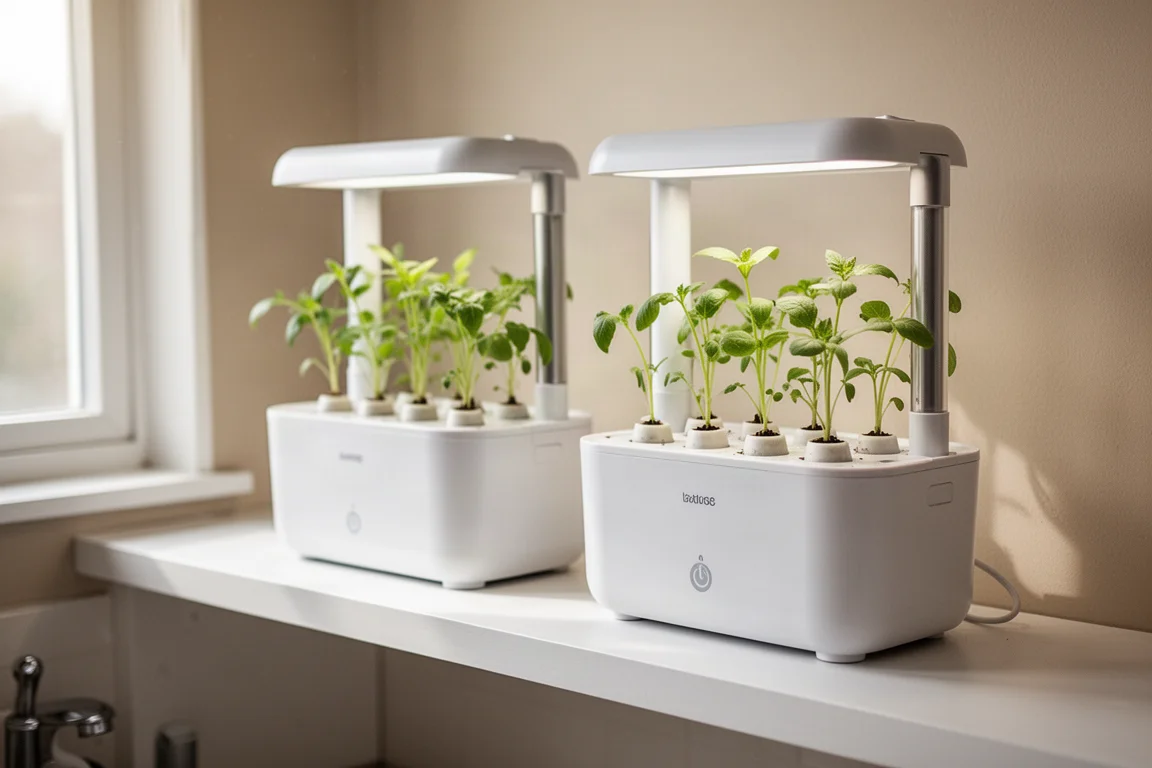
The planting approach is quite different. On the AeroGarden Sprout, you drop a sponge pellet into a small plastic basket and add your own seeds, topping it with a sticker label. The Click and Grow Smart Garden 3 uses much larger, fully contained pods with a wick that pulls water up from the reservoir. These larger pods are easier to seed and nicer to handle, but they give the roots far less room to expand than the AeroGarden baskets do.
If you want to use your own seeds in the Click and Grow, experimental pods with removable tops are available, though it takes a bit of fiddling to get inside the container.
Nutrients and Root Space
This is the single biggest philosophical difference between the two systems. The Click and Grow builds nutrients into its pods, so all you ever add is water. That makes it wonderfully low-maintenance: no measuring, no schedules, no bottles to shake.
The AeroGarden takes the opposite approach. You plant inert grow-anything pods, add your own seeds, and dose liquid nutrients into the reservoir roughly every two weeks (four millilitres for the Sprout). That is more work, but it also means you control exactly what your plants receive and can feed a long-lived, fruiting plant as its needs grow.
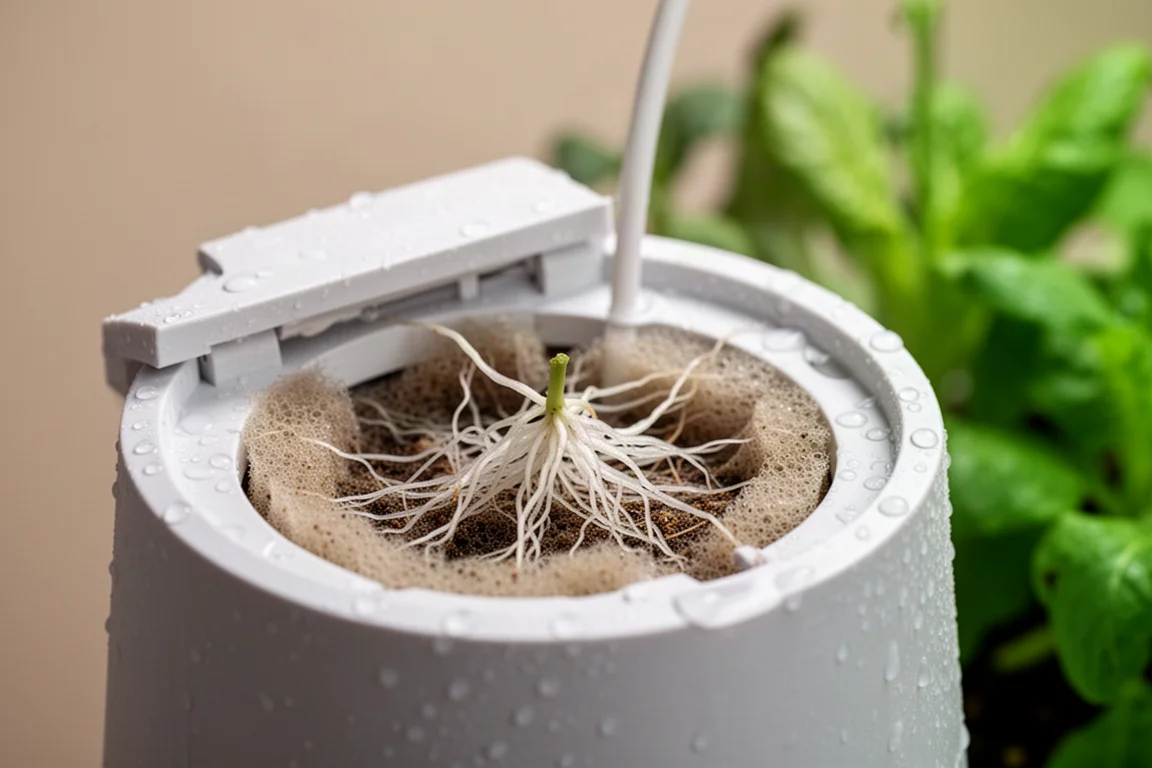
That distinction matters most for long-term crops. A tomato plant can sit in a system for months, and the question hanging over the Click and Grow was whether one sealed pod with a fixed nutrient load could sustain fruit development. On the root side, the contrast was even more dramatic: after three months, the AeroGarden showed a dense mass of roots spreading through the reservoir, while the Click and Grow pods offered only a small cup and a wick, leaving a tomato effectively root-bound.
Early Growth: The First Weeks
At the nine-day mark, both systems showed germination, and the humidity domes came off on both sides. Leaving domes on too long is a genuine risk: condensation touching the leaves can burn them, and one AeroGarden seedling showed exactly that kind of damage where a droplet had been pressed against the dome.
Not everything went smoothly. The Click and Grow lettuce pod simply refused to germinate. Two seeds from the same packet as the AeroGarden planting produced nothing, and a second pair also failed. Only much later did a single plant finally appear, leaving that pod well behind from the start.
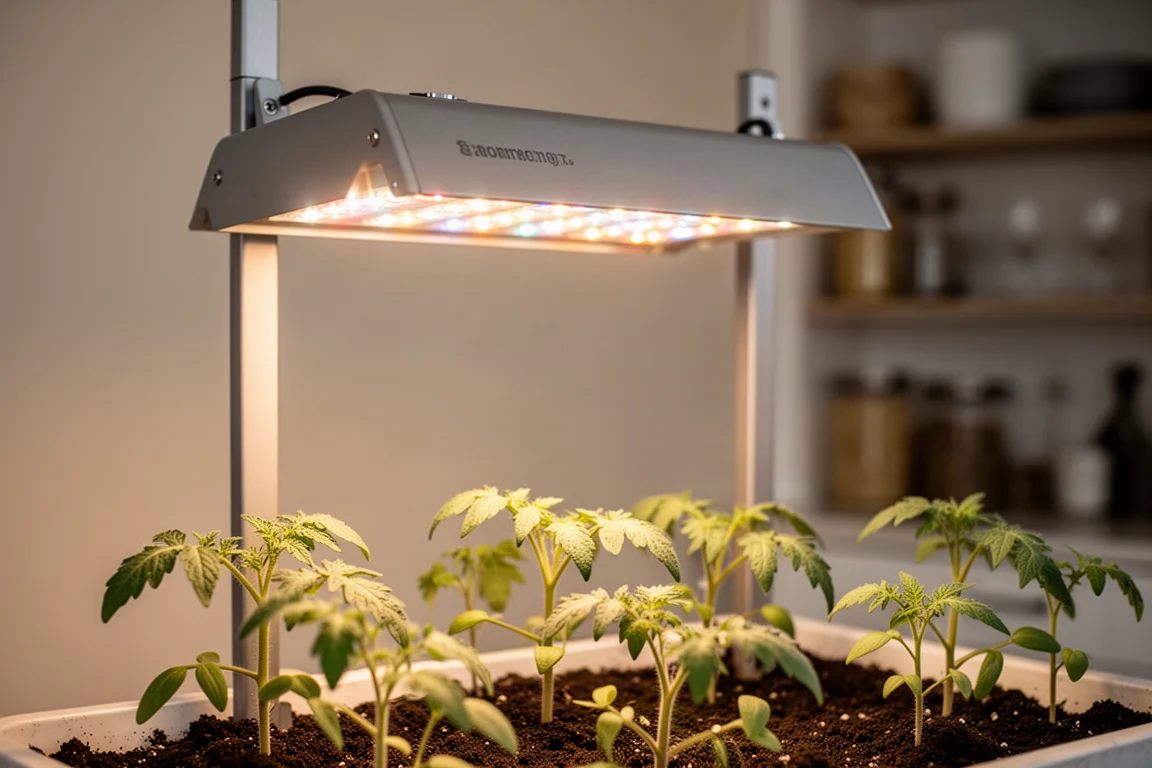
Light height is the other early point of separation. The general guideline is to keep the light four to six inches above the top of the plant. The AeroGarden Sprout’s light raises easily in small increments with a pull. The Click and Grow’s lowest setting sits lower than the Sprout’s, and its only adjustment is a rigid extension piece that jumps the height by roughly four inches at once. It also takes the light off the unit to install, and losing those extension pieces leaves you with no way to raise the lamp at all.
One more practical detail: the AeroGarden has a pump to circulate water; the Click and Grow has none, relying entirely on the wicks in its pods. The AeroGarden’s pump even doubles as a low-water alert, chirping when the reservoir runs dry.
Mid-Experiment Check: Three and a Half Weeks
By three and a half weeks, the growth gap was visible. Everything on the AeroGarden side was bigger, even though the nutrient light had been blinking for a couple of days before feeding was done. The Click and Grow lettuce leaves looked darker green but noticeably smaller, and the late-arriving seedling was only just getting going.
There was nothing at all to do on the Click and Grow side beyond topping up water. On the AeroGarden side, nutrients went in and the clock reset for another two weeks. That is the trade-off in a nutshell: more involvement in exchange for more control.
What Won: Final Observations
At the three-month mark, the difference was stark. The AeroGarden tomato, despite repeated forgotten feedings and some crispy leaf edges, was loaded with tomatoes, with one ripening and more flowers still setting. The final harvest produced about thirteen small tomatoes.
The Click and Grow tomato grew tall and spindly, produced plenty of flowers, and managed only a handful of fruit, with visibly yellowing and unhealthy foliage. Its roots had nowhere to go, and there was no way to supplement its nutrient supply the way you instinctively want to with a long-term crop. The lettuce side told a similar story: the AeroGarden lettuce surged ahead immediately, while the reseeded Click and Grow pod eventually produced a plant, but one that formed a looser, more open head than the tight little gem shape it should have had.
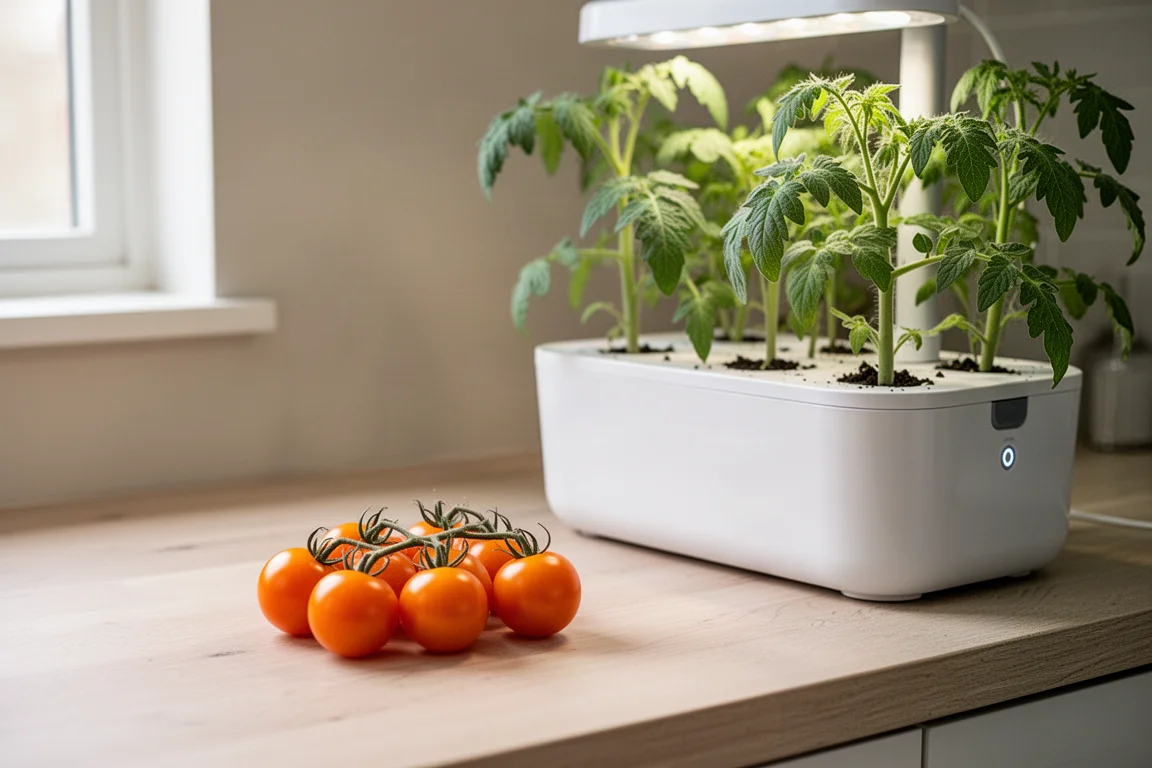
Two smaller annoyances on the Click and Grow also stood out. Its water gauge is a simple floating indicator that is easy to overlook, especially behind leafy growth; there was more than one moment where the reservoir had dropped far lower than expected. And its light, while able to go higher overall than the Sprout’s, can only do so in large jumps using the removable extension, which adds fiddliness and risk of losing parts.
Buying Advice: Which One Should You Get?
If you want more control, better long-term performance with fruiting plants, and flexibility to grow whatever seeds you like, the AeroGarden Sprout is the stronger choice. The pump, the nutrient dosing, the infinitely adjustable light, and the roomy root space all add up to a system that handled three months of heavy growing, even through periods of neglect.
If you are brand new to indoor gardening and want the absolute minimum fuss, the Click and Grow Smart Garden 3 is still a reasonable pick. Water is genuinely all you add, there is no pump to worry about, and the larger pods are pleasant to plant. Just understand its limits: it is best suited to quick crops like herbs and lettuce rather than plants that will live in the unit for months.
Conclusion
Neither system is wrong; they simply suit different growers. Over a full three-month trial with tomatoes and lettuce, the AeroGarden Sprout came out ahead on plant health, harvest volume, root room, and adjustability, while the Click and Grow countered with unmatched simplicity. For most people considering one of the two, the Sprout’s flexibility and stronger long-term results make it the safer bet.
Product link
View more details for AeroGarden Sprout
This product is mentioned in the review. Check the specifications, options, and compatibility before buying.
View more details for AeroGarden SproutFurther reading
Related Reviews
Indoor Gardening
AeroGarden Eight-Pod System Review: A Budget Hydroponic Garden That Works
After a few months of growing dill, a shishito pepper, and micro tomatoes, here is what this eight-pod hydroponic system gets right and what to watch for before buying.
Indoor Gardening
AeroGarden Buying Guide: How to Choose the Right Model for What You Want to Grow
From the 3-pod Sprout to the 24-hole Farm Plus, here is what actually matters when picking your first AeroGarden, plus the growing tips nobody tells beginners.
Indoor Gardening
AeroGarden Farm After 8 Years: What I Wish I Knew Before Buying
A long-term look at the AeroGarden Farm, the 12XL alternative, and why a Rise Garden won out on space efficiency.