Experimental Aircraft
Aero Pup: A Rugged Two-Seat Kit Aircraft Now Available in the USA
An Australian-designed two-seat bush plane with foldable wings, a chromoly steel fuselage, and an $18,000 base kit price now being manufactured in the US.
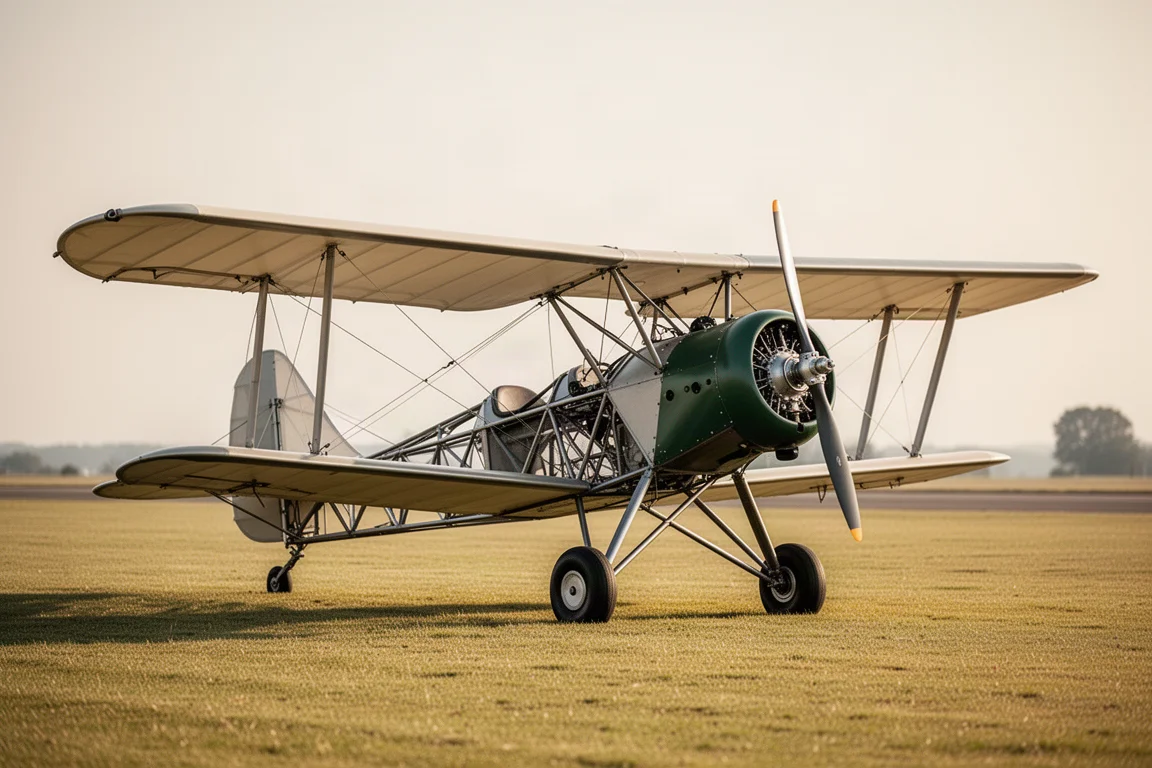
Introduction
The Aero Pup is a two-seat light aircraft originally designed in Australia, where an estimated 65 to 75 examples are flying. Field Aero now holds the rights to manufacture and sell the aircraft in the USA, and kits are being sold from Lakeland, Florida. For buyers looking at the affordable end of kit aviation, it is one of the more interesting new arrivals on the market.
The design philosophy is simple: a rugged, easy-to-maintain aircraft that can operate in and out of just about any flat piece of land, at a price point that keeps flying accessible. This review walks through the construction, controls, avionics, and performance so you can judge whether it fits your plans.
Construction: Built to Be Over-Engineered
The Aero Pup is deliberately described as slightly over-engineered, and the wing structure shows it. Each wing uses three spars: a leading edge spar, a central web spar with extruded webbing that carries the primary loads with more strength and less weight than a typical hollow spar, and a trailing edge spar for rigidity. Each wing contains 12 CNC-machined ribs made from aircraft-grade plywood, the leading edges are aluminum, and the whole airframe can be wrapped in a covering of your choice. The demonstrator uses Oratex.
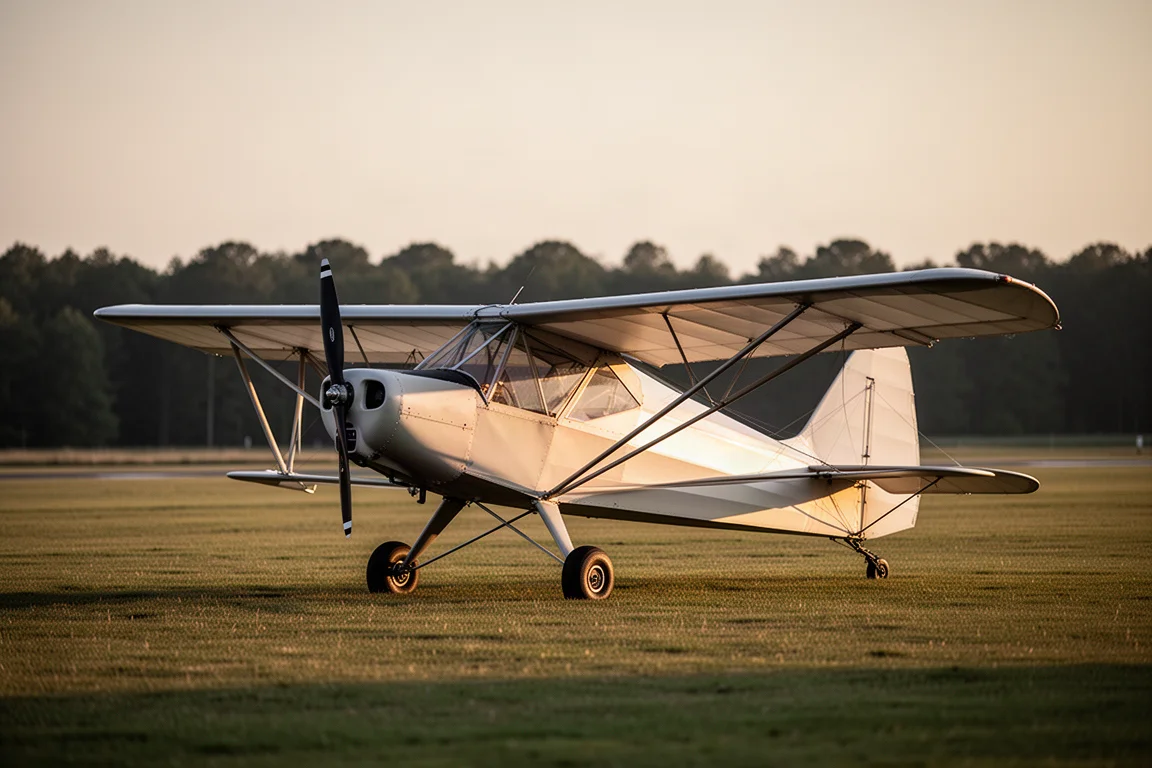
The fuselage is a welded chromoly steel cage designed for two people, with a cockpit about one inch wider than a Cessna 172. That robustness shows in the safety record: there has never been a safety issue with the aircraft other than some ground loops, and even then only minor repairs were needed before the aircraft flew again. Removable side panels give full access to the rudder pedal area and the avionics stack behind the instrument panel, and the rudder pedals are adjustable for pilots of different heights. Floats are planned and will require no fuselage modification.
Controls and Foldable Wings
The initial versions use a control stick in the center of the cockpit, so either seat can fly, which also makes getting in and out easier. The elevator is driven by a push-pull tube directly from the stick, so there is no slop between the stick and the elevator. The ailerons run through a torque tube connected to push-pull cables routed out through the wings.
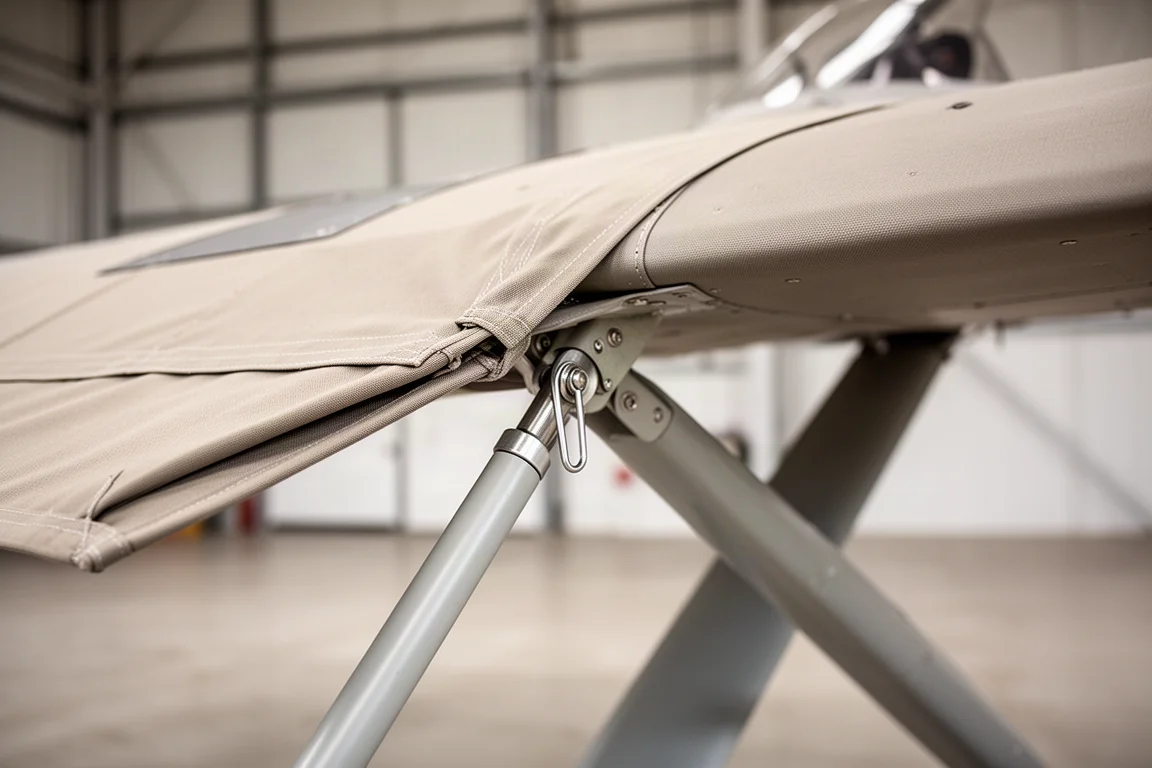
A standout feature is that the wings fold. Pull a pin at the front and a safety pin at the strut, and the wing folds back without disconnecting any control cables or fuel lines. The horizontal stabilizer is removable with three bolts, while the vertical stabilizer is part of the fuselage structure itself.
Landing Gear and Fuel System
The standard landing gear uses a house-made polyurethane doughnut shock absorber, poured in a vacuum chamber and cured for 24 hours, providing good shock absorption at low cost. A hydraulic shock option is available for pilots who plan to fly regularly into rough areas. A steerable tailwheel connected to the rudder is offered as an option, with a more robust tailwheel also available.
The US version adds a fuel tank bay. The original Australian design riveted the fuel tank to the main and trailing edge spars, making maintenance difficult. The new arrangement covers the wing from tip to root rib, secures the tank with straps similar to a Cessna or Decathlon, and fastens the top skin with screws. To service the tank you simply unscrew the skin, remove the straps, and lift the tank out, with no de-riveting required. An aluminum panel under the tank bay means any leak drains over aluminum rather than fabric.
Avionics and Panel Options
The panel is fully customizable, but the demonstrator shows what an optional package looks like. It centers on a Dynon HDX seven-inch display covering attitudes, navigation, and all engine parameters, paired with a knob panel for changing heading and altimeter settings without navigating menus. An intercom serves both pilot and copilot headphone jacks, and the panel keeps an old-school layout with circuit breakers and switches for everything.
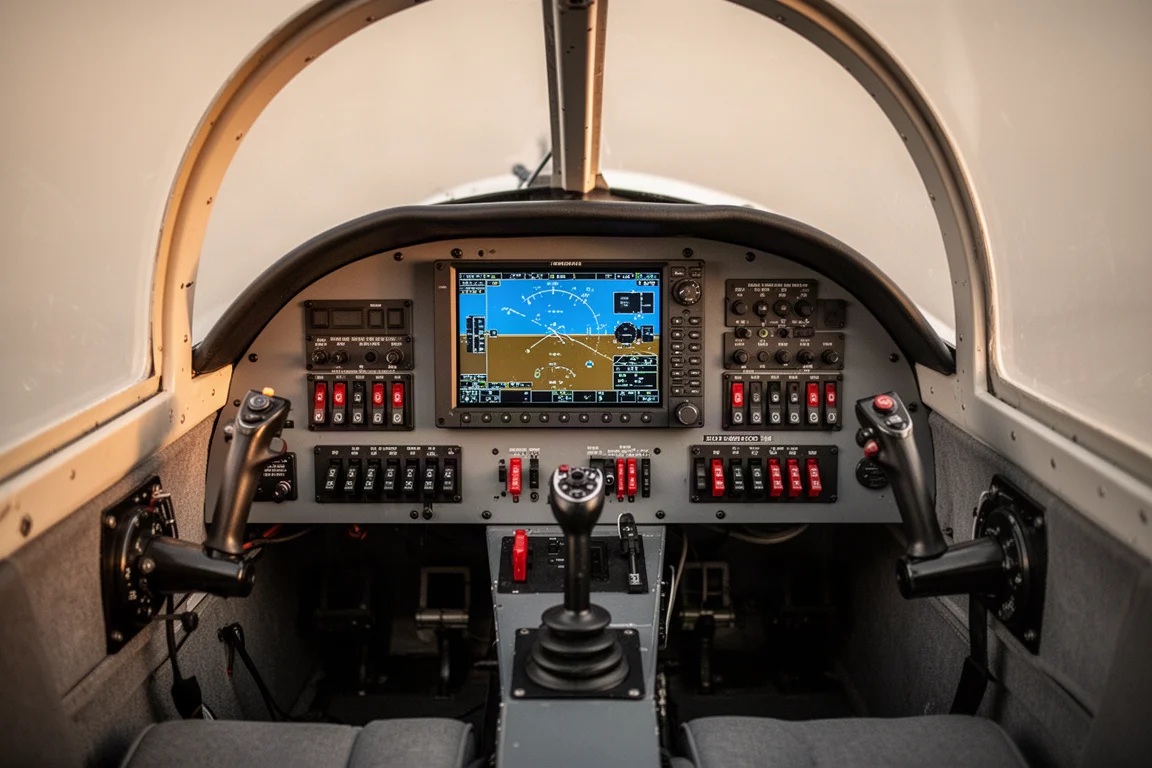
The demonstrator also has an in-flight adjustable pitch propeller controlled from the panel, either manually or in an automatic mode that works like a constant-speed prop. Throttles are placed on both left and right sides so whichever pilot is flying has one hand on the stick and one on the throttle.
Engines and Performance
There is no single base engine. Australian examples commonly fly with Jabiru, D-Motor, VW conversions, and O-200 conversions, and the sweet spot is 80 to 100 horsepower. Some examples have flown with 65 horsepower, though that calls for longer takeoff runs. The demonstrator pushes the envelope with a 130-horsepower UL Power UL 350i from Belgium, driving a three-bladed in-flight adjustable prop, and delivers takeoff runs of less than 100 feet for short takeoff and landing competitions.
In the 80 to 100 horsepower range, typical figures are a cruise of about 105 knots (105 mph), takeoff and landing in about 400 feet, a stall speed of about 35 mph with full flaps, and a gross weight of 1,650 pounds. If placarded to 1,310 pounds it can be flown on a sport pilot certificate, and in normal or experimental amateur-built category it offers a useful payload of roughly 1,000 pounds.
Performance and Pricing
The base kit is currently priced at $18,000, positioned at the lower end of the aviation cost envelope. That covers the firewall back, minus covering, avionics, and hydraulics. Firewall-forward packages, avionics packages, hydraulic toe brakes, and covering material (currently Airtech, with Oratex available as an option) are all offered as extras.
Buyers should note that the manufacturer says prices will rise soon due to increasing material and shipping costs, so anyone interested is advised to move quickly. Details are available at the company’s website.
Conclusion
The Aero Pup brings a proven Australian design to the US kit market with a focus on ruggedness, ease of maintenance, and affordability. The three-spar wing, foldable wings, chromoly steel cage, and accessible fuel tank bay make it easy to live with, and the $18,000 base kit keeps the entry cost well below most aviation alternatives. For pilots who want a simple, tough two-seat bush aircraft and are comfortable with an amateur build, it deserves a close look.
Product link
View more details for Aero Pup
This product is mentioned in the review. Check the specifications, options, and compatibility before buying.
View more details for Aero PupFurther reading
Related Reviews
Experimental Aircraft
Timber Tiger ST: A 95% Scale Ryan ST Replica You Can Build From a Kit
The Timber Tiger ST is a 95% scale replica of the classic 1933 Ryan ST, engineered for modern engines, easier kit construction, and light sport compliance.
Experimental Aircraft
Spacewalker II Review: The Grassroots Plans-Built Aircraft Worth the Work
A close look at the Spacewalker II, a two-place tandem tube-and-fabric taildragger you can still build from plans today, with real flight numbers and owner impressions.
Aviation
Aero Technics ACH 212 Solo Review: A Carbon Fiber Solo Kit Aircraft You Can Build Fast
A nearly 30-year-old Czech design still offered only as a kit: 90% carbon fiber, quick-release wings, a 350 to 400 hour build, and performance that surprises.