Hi-Fi Speakers
Acoustic Energy AE300 MkII Review: Warm, Refined Sound Without the Premium Price
The Acoustic Energy AE300 MkII brings a redesigned cabinet, trickle-down driver technology and a rich, expressive mid-range to a compact £649 standmount.
Introduction
Acoustic Energy is one of those brands that keeps a low profile. It is a small British company, but it is well respected by people who work inside the hi-fi industry, largely because of the people behind it. The company’s first speakers, the A1s, arrived in 1987 and went on to reach legendary status as some of the finest British monitors ever produced. After a stretch of ownership outside the UK, a management buyout by the original team around 2016 put the brand back on a clearer footing, and a run of well-regarded designs followed.
The 300 series had long been the weak spot in the range, and Acoustic Energy has addressed that directly. The AE300 MkII has been completely redesigned, with new cabinets, crossovers and drivers, and it retails for £649 a pair. The question is whether it can now stand alongside its stablemates.
Who the AE300 MkII Is For
The AE300 MkII is built for listeners who care about tone and texture more than forensic analysis. Its balance leans warm: a rich mid-range, a slightly plump bass, and highs that stay civilised while remaining expressive. That makes it a natural fit for vocal-led recordings, acoustic instruments, and long listening sessions where generosity matters more than clinical precision.
It is also a smart option for anyone who wants the character of a traditional British monitor without paying traditional British monitor money. In performance terms it lands very close to the AE500, which sits above it in the range and costs more because of its carbon drivers and real wood veneer finish.
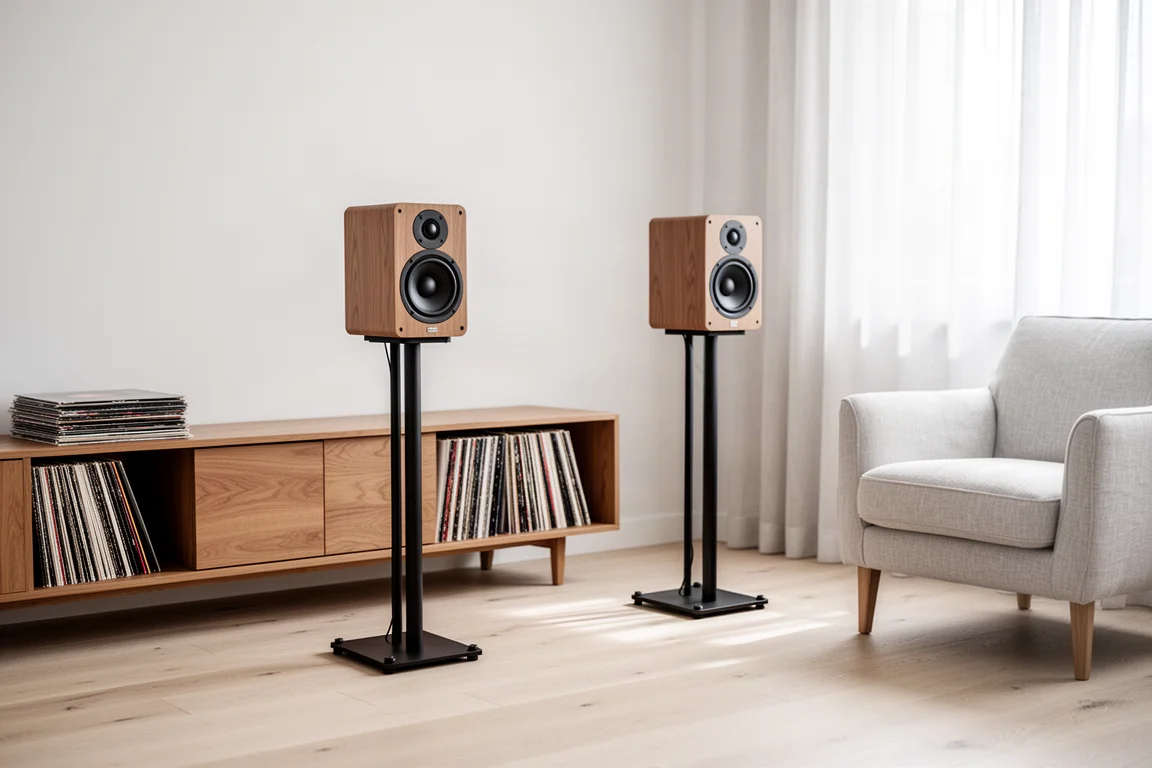
Because the cabinet is compact, easy to place and forgiving of amplification, it suits modest rooms and affordable integrated amplifiers just as comfortably as it suits more ambitious systems.
Design, Drivers, and Build Quality
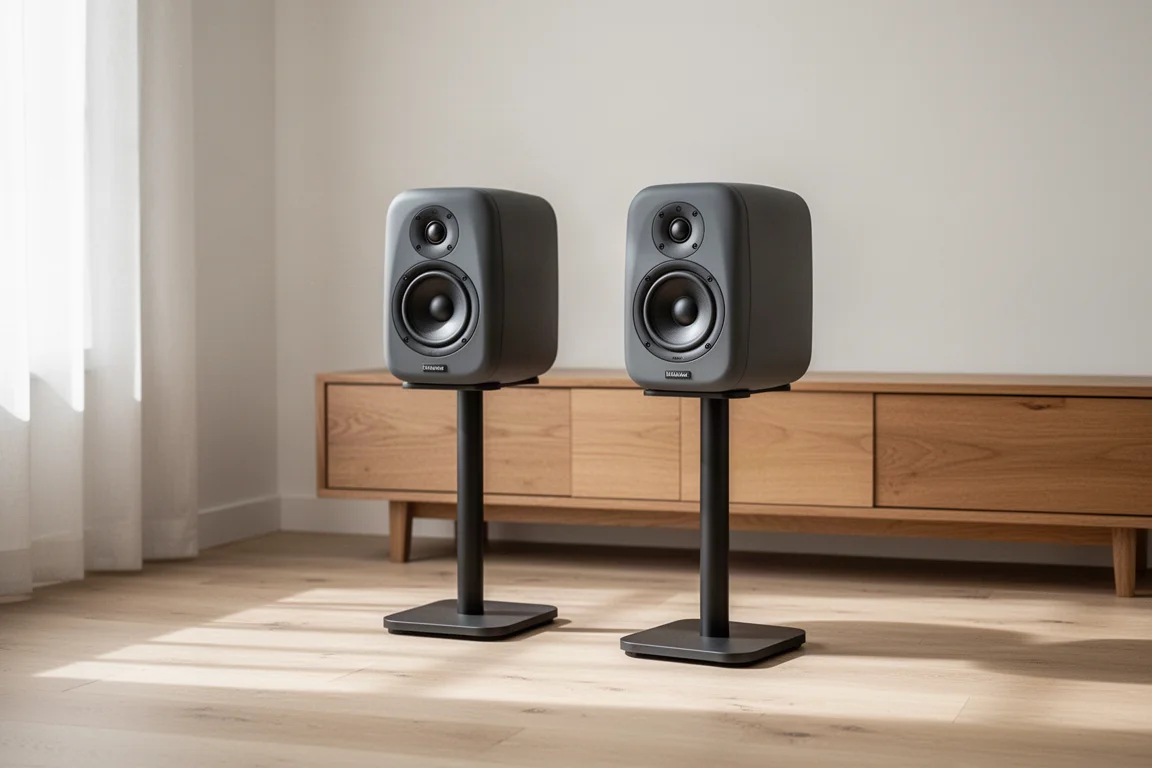
Each cabinet measures roughly 12.6 x 6.7 x 10.6 in (320 x 170 x 270 mm) and weighs 7 kg (15.4 lb). Real wood veneer was dropped to hit the target price, and in its place is a rubberised matte finish that is genuinely pleasant to touch and, in person, more attractive than photographs suggest. Curved edges give the cabinet a softer, more considered look.
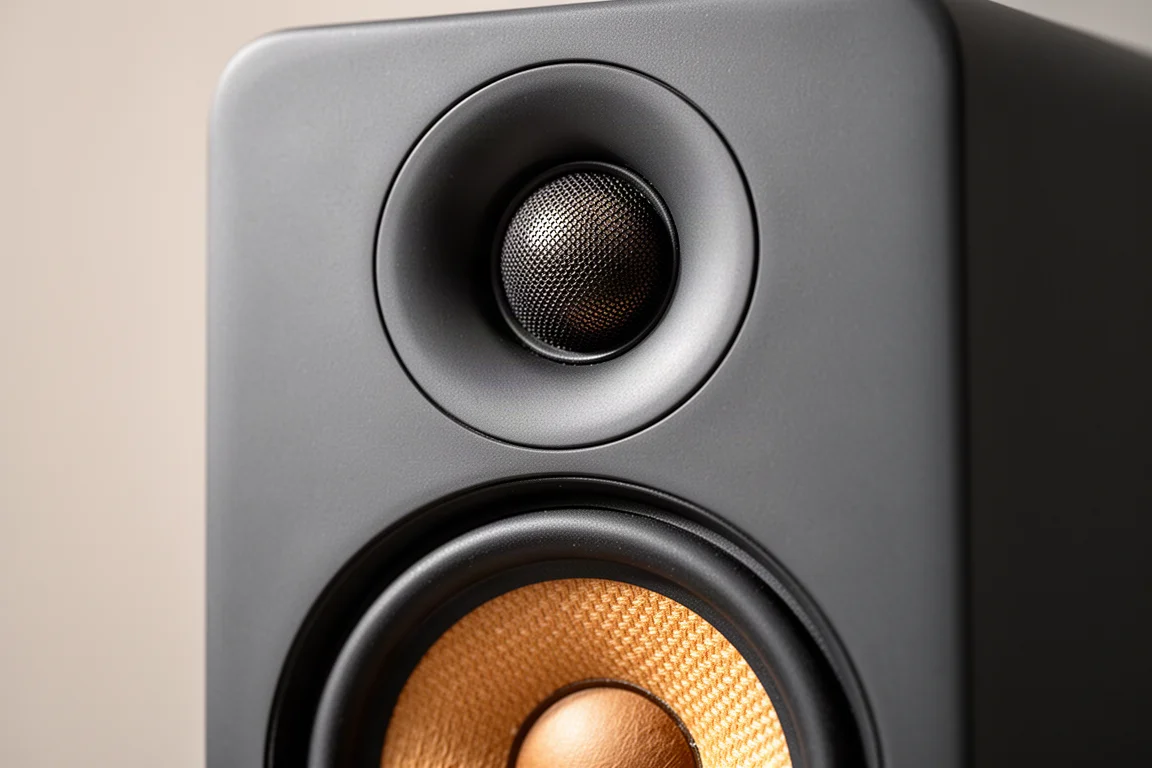
The driver package trickles down from the flagship Corinium project. A 120 mm (4.7 in) paper cone midwoofer is infused with coconut husk fibres to increase stiffness, while the 29 mm (1.2 in) soft fabric dome tweeter sits in a waveguide to aid dispersion and is driven by a neodymium motor structure.
Around the back, the binding posts are of good quality, and the port is slotted to reduce chuffing noise. The cabinet itself is a composite of MDF and bitumen, which adds damping against vibration and resonance.
Sound Quality and Main Strengths
The MkII is a clear step forward from the original. Where the first generation lacked resolution and sounded dark or rolled off at the top, the new version is tighter in the bass, cleaner through the mid-range and noticeably more open in the highs.
Measured against the smaller AE100 MkII, the AE300 MkII comes across as a refined version of the same idea. It adds bass weight and considerably more acoustic mass in the mid-range, and it handles details such as cymbal hits with greater refinement, although the amount of detail pulled from recordings is broadly similar. The tonal balance shifts from neutral towards the warm side, as though the same information were presented in a cosier acoustic envelope.
The overall character will be familiar to anyone who has lived with traditional British monitors: a slightly plump bass, a rich mid-range, and highs that remain composed while staying well expressed. All of it arrives through a wide, deep soundstage with solid stereo imagery.
How the AE300 MkII Compares With Other Speakers
Within the Acoustic Energy range, the AE300 MkII is the middle child and, on this evidence, the value pick. The AE100 MkII remains a remarkable speaker for £279 a pair, but it cannot match the extra bass weight or the mid-range richness of the 300. The AE500 goes further still with its carbon drivers and real wood veneer, yet the AE300 MkII gets close enough that the gap in price looks considerably larger than the gap in performance.
Against rivals, the AE300 MkII holds its own in different ways. The Dali Opticon 2 MkII at £999, built in Denmark, matches it closely for tone and resolution and shifts from quiet to loud passages more easily thanks to a larger 165 mm (6.5 in) midwoofer, though the Acoustic Energy design is arguably the more attractive of the two. The Q Acoustics 5020 at £599 counters with a punchier mid-bass and a more even balance across the frequency range, which makes it more consistent across genres, while the mid-focused presentation of the AE300 MkII rewards vocal-centric music and acoustic instruments in particular. The Elac Debut 3.0 DB63 at £379 shares the rich mid-range character but reproduces slightly less detail. The Monitor Audio Silver 100 7G at £799 costs more and runs a touch bright, so partnering equipment and positioning matter, but set up well it digs deeper into recordings with deeper, tighter bass and crisper transients. Even then, the AE300 MkII is not far behind, and its more relaxed presentation is a preference plenty of listeners will share.
Placement and Amplifier Pairing
The AE300 MkII is easy to place. A fairly conventional toe-in angle, with the speakers pointing just wide of the listener’s shoulders, produced a wide soundstage, a secure central image and a sweet spot with usable width. Having the two drivers positioned so close together, with the tweeter sitting in a reasonably sized waveguide, helps the off-axis response by keeping dispersion smooth through the crossover region.
It is forgiving of amplification as well. A £349 Cambridge Audio AXA35 drove the speakers well, which confirms that they are relatively easy to drive, although an amplifier with more grip and control in the bass and through mid-range transients is a worthwhile upgrade. A neutral-sounding amplifier lets the character of the speakers come through rather than imposing its own.
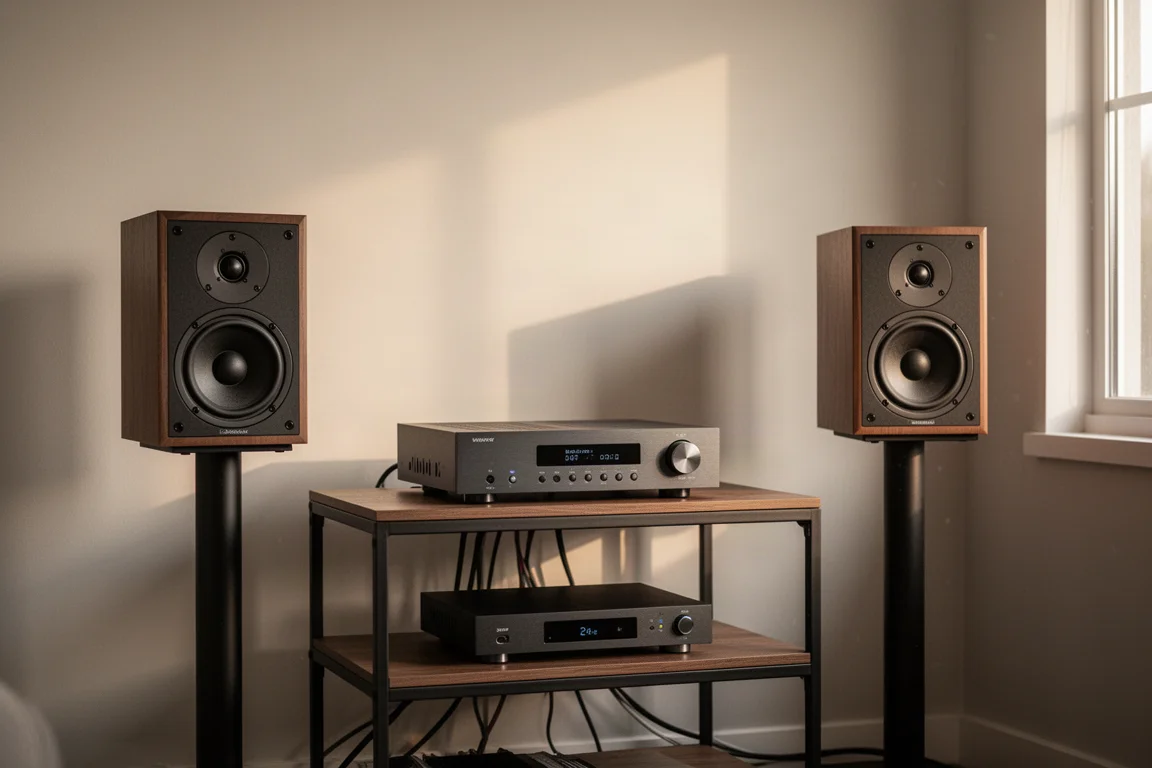
That makes system building straightforward. A modest integrated amplifier and a compact streamer are enough to get the AE300 MkII sounding balanced, and the speakers will not demand exotic electronics to make their case.
Things to Consider Before Buying
The AE300 MkII is not the last word in neutrality, and it is not intended to be. If you want a flat, studio-style balance that treats every genre the same way, this is not the speaker for that job.
At £649 a pair there are also more dynamic speakers with greater bass punch, so listeners who prioritise slam and scale have alternatives worth auditioning.
The finish is another consideration. Real wood veneer was removed to meet the price, so the cabinet wears a rubberised matte material instead. It looks and feels good, but it is not a wood finish.
Finally, with very high-end amplification the speakers will eventually reveal limits in dynamics and micro-detail. That is a fair trade at this price, and it is worth knowing before you build a system around them.
Buying Advice
If your priority is tone, richness and an easy, relaxed listen, and most of your music is vocal-led or acoustic, the AE300 MkII is an easy recommendation at £649 a pair. It delivers much of the character of far more expensive traditional British monitors, and it does so without demanding expensive electronics or careful room treatment.
If you need a different balance, the alternatives are clear. The Q Acoustics 5020 at £599 offers a more even, genre-agnostic presentation. The Monitor Audio Silver 100 7G at £799 rewards careful setup with greater bass depth and detail. The Elac Debut 3.0 DB63 at £379 keeps the warm mid-range character at a lower price, and the Dali Opticon 2 MkII at £999 brings a larger midwoofer and more dynamic headroom. Within the Acoustic Energy family, the AE100 MkII at £279 is exceptional value if you can live with less bass weight, while the AE500 asks more for its carbon drivers and wood veneer.

Whichever way you go, match the amplifier to the character of the speaker. The AE300 MkII is happiest with an amplifier that has a little grip in the bass and a neutral mid-range, and it will reward that pairing with a wide, generous sound that is easy to live with over long sessions.
Conclusion
The Acoustic Energy AE300 MkII is an attractive, well-constructed standmount that delivers very good all-round performance, adding body and richness to the sound of the already excellent AE100 MkII. Its warm, expressive mid-range gives it a tonality that will appeal to listeners who have been craving much more expensive traditional British monitors.
It is not the last word in neutrality, and at £649 there are speakers with more bass punch and greater dynamic swing. But there is little else to criticise. For listeners who know what they want from a compact speaker, the AE300 MkII is a confident and highly enjoyable buy.
Product link
View more details for Acoustic Energy AE300 MkII
This product is mentioned in the review. Check the specifications, options, and compatibility before buying.
View more details for Acoustic Energy AE300 MkIIFurther reading
Related Reviews
Hi-Fi Speakers
1723 THX Tower vs 1528 Bookshelf: Which Speaker Fits Your Room?
Two speakers at roughly the same price, built very differently. How the 1723 THX tower and the 1528 bookshelf compare on construction, bass, power needs, and sound.
Hi-Fi Speakers
Acoustic Energy AE 300 Review: Deep Bass From a Compact Standmount
A two-way standmount with real wood veneer, surprising low-end weight, and a warm, easygoing character. Here is what to know before buying.

Hi-Fi Speakers
Acoustic Energy AE1 40th Anniversary Review: A Modern Take on a British Classic
A compact standmount that revives a 1980s favorite with all-new parts, a warm mid-centric balance, and a price of £1,499 per pair.