Astrophotography
90mm APO Refractor Comparison: Airy Disk 96, RedCat 91, and Askar 91F
Three 90mm-class apochromatic refractors tested side by side for deep space astrophotography, covering optics, design, accessories, and price.
Introduction
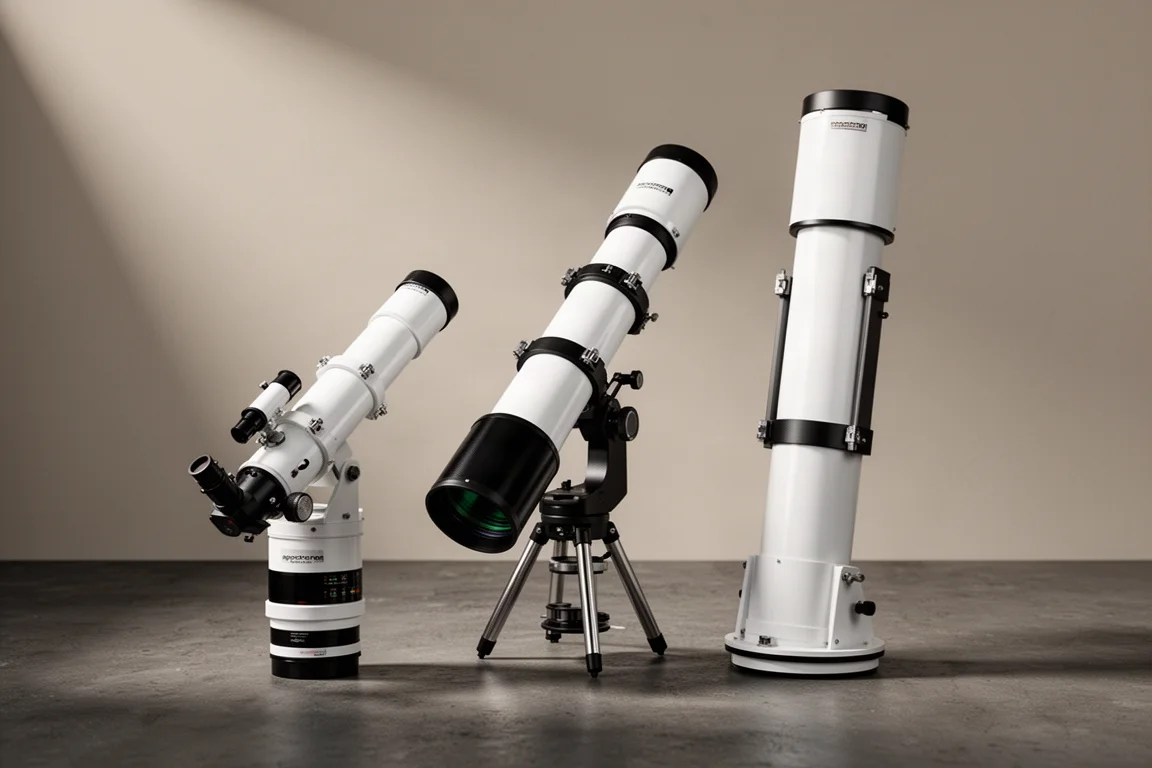
Three apochromatic refractors with a little over 90mm of aperture, all aimed squarely at deep space astrophotography, make for a genuinely interesting comparison. The Airy Disk 96 APO triplet, the William Optics WIFD RedCat 91, and the Askar 91F flat-field each take a different approach to the same job, and their differences show up clearly once you put hours of data through them.
This comparison draws on three clear nights of imaging under a Bortle 3 sky, with one hour per telescope per night on Gyulbudaghian’s Nebula in Cepheus. All three are optically quite good, so the real question is not which one is “best” but which one fits your target types, your camera, and your budget.
How the Telescopes Were Tested
Each refractor received one hour of imaging time per night across three nights around the new moon, always while the target was high in the sky. The best 60 frames from each telescope were then stacked for comparison.
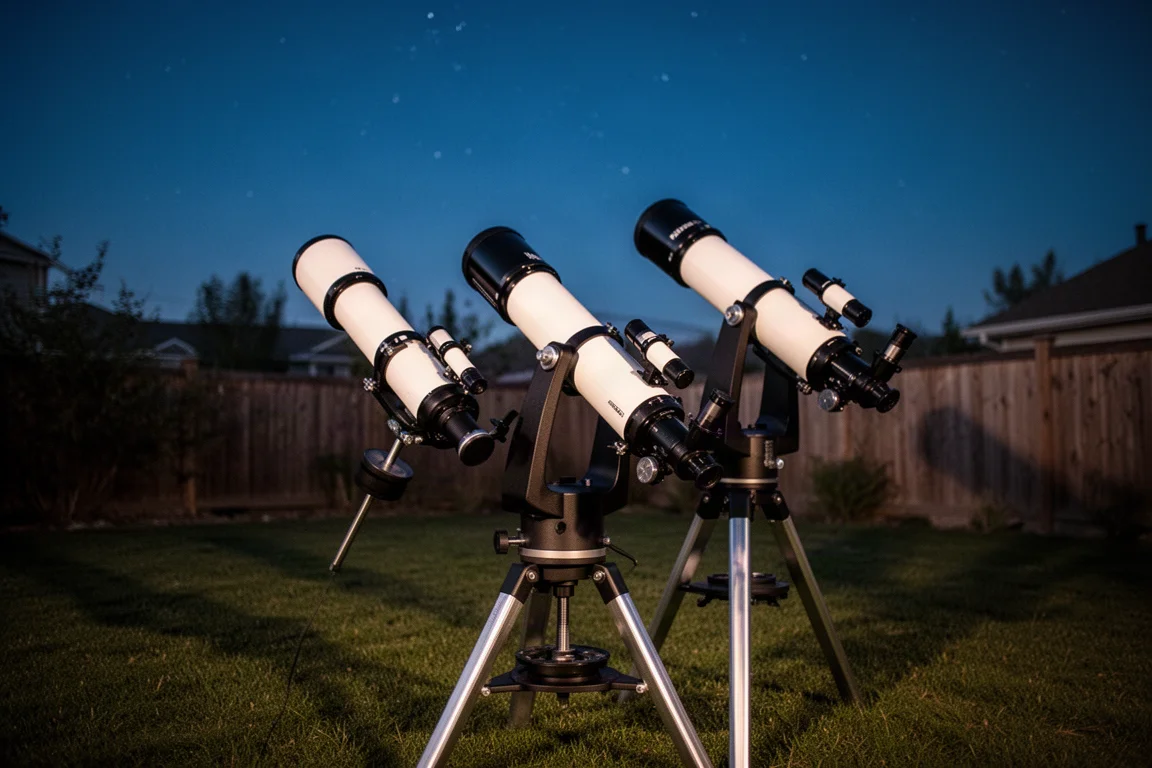
The imaging setup was identical throughout: a ZWO AM5 mount with autoguiding and a color APS-C camera, the ASI2600MC Air. Single three-minute exposures were inspected for vignetting, then three-hour stacked results with full calibration including flats were compared side by side, along with aberration analysis and a heavily saturated star test to expose any color correction weaknesses.
Optical Results: Stars and Color Correction
Zoomed out, the stacked results differ mainly in framing. The Askar 91F is the most zoomed in thanks to its longer focal length, the Airy Disk sits in the middle, and the RedCat 91 delivers the largest field of view with the brightest focal ratio.
On the RedCat 91, the field is very flat with no vignetting to speak of, which is unsurprising given its image circle supports medium format, making an APS-C sensor feel tiny by comparison. The Airy Disk and the Askar 91F both show mild vignetting on APS-C, with slightly darker sides than the center, but nothing extreme and perfectly acceptable, especially since flats correct field illumination anyway.
Aberration inspection in PixInsight shows all three performing well. The center of the Askar and possibly the Airy Disk hint at a touch of chromatic aberration, while the RedCat shows essentially none. Extreme corners may be very slightly misshapen on the Askar and the Airy Disk on the smallest stars, though larger stars stay fairly round; the RedCat’s stars look a little rounder overall.
A heavily saturated star test, a good way to accentuate color correction, shows excellent color correction on all three: no magenta cast, with a natural variety of oranges and yellows. One transparency-worthy nuance: the deep blue of a bright blue star is slightly less brilliant on the Askar, a bit muted but close on the Airy Disk, and at its richest on the RedCat, which picks up deeper sky blues. This is correctable in post-processing and shows up only under extreme saturation, but it does suggest the glass types differ. Notably, the Airy Disk is the only one of the three that discloses its ED glass type: Hoya FCD100.
On the finished, processed images, the Askar’s longer focal length pulls out a little more fine detail in bright areas, while the RedCat’s faster focal ratio captures more detail in the dim, larger nebular structures, where the longer focal length image becomes too grainy from a lower signal-to-noise ratio. That is the core trade-off: pixel scale versus speed, smaller details versus fainter extended structure. There are advantages and disadvantages with any telescope, and it is not just about price but about what you are going for.
Optical Configurations and Focal Lengths
The Airy Disk is a triplet, the Askar is a quadruplet, and the William Optics is a quintuplet, referring to the number of glass elements. The Airy Disk and the Askar each use one ED element, while the William Optics uses three.
Because the Airy Disk is a triplet, photographic use calls for a field flattener; the 0.92x universal field flattener reducer works well here. The Askar and the William Optics are astrographs, with their corrector elements built inside the telescope, so no external flattener is needed.
The focal lengths spread widely despite similar apertures: the Askar 91F runs 609mm at f6.7, the Airy Disk 529mm at f5.5 with the 0.92x reducer, and the RedCat 91 448mm at f4.9. Brighter focal ratios and wider fields are harder to keep optically perfect, which lines up neatly with the pricing.
Focusers, Rotators, and Mounting
All three worked well on the AM5 mount using plain extension with no counterweights, and all three use dual-speed focusers.
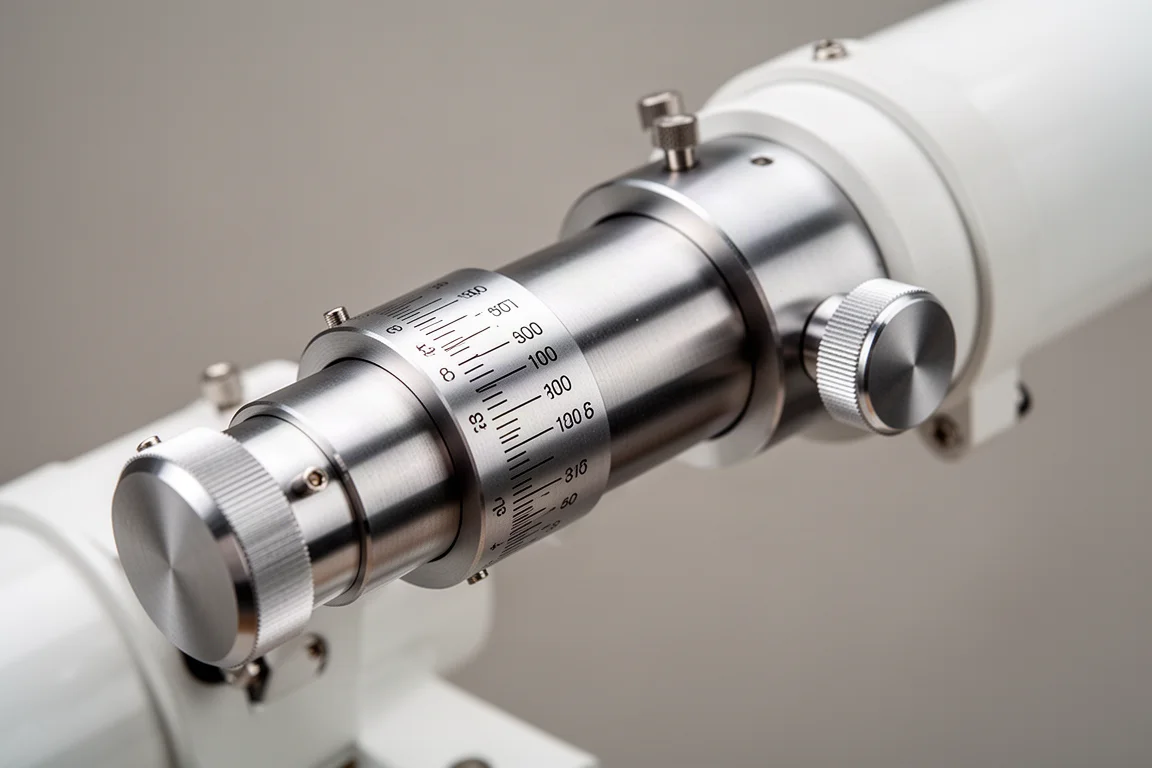
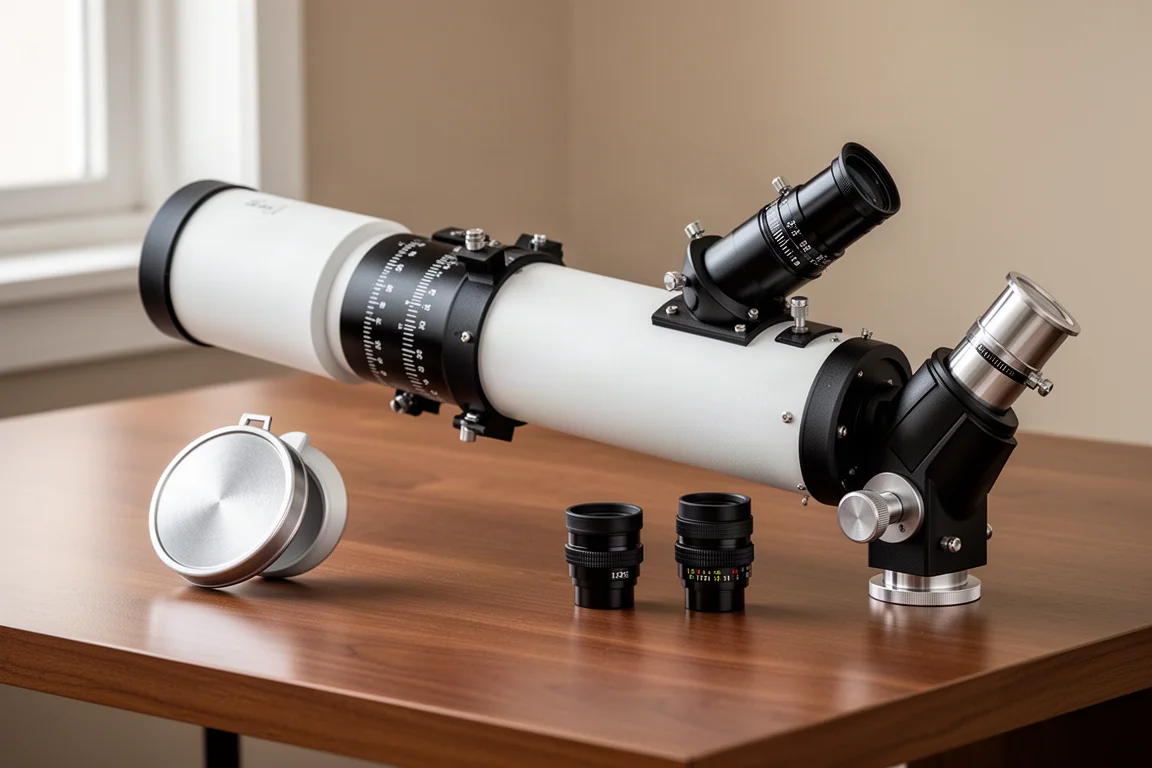
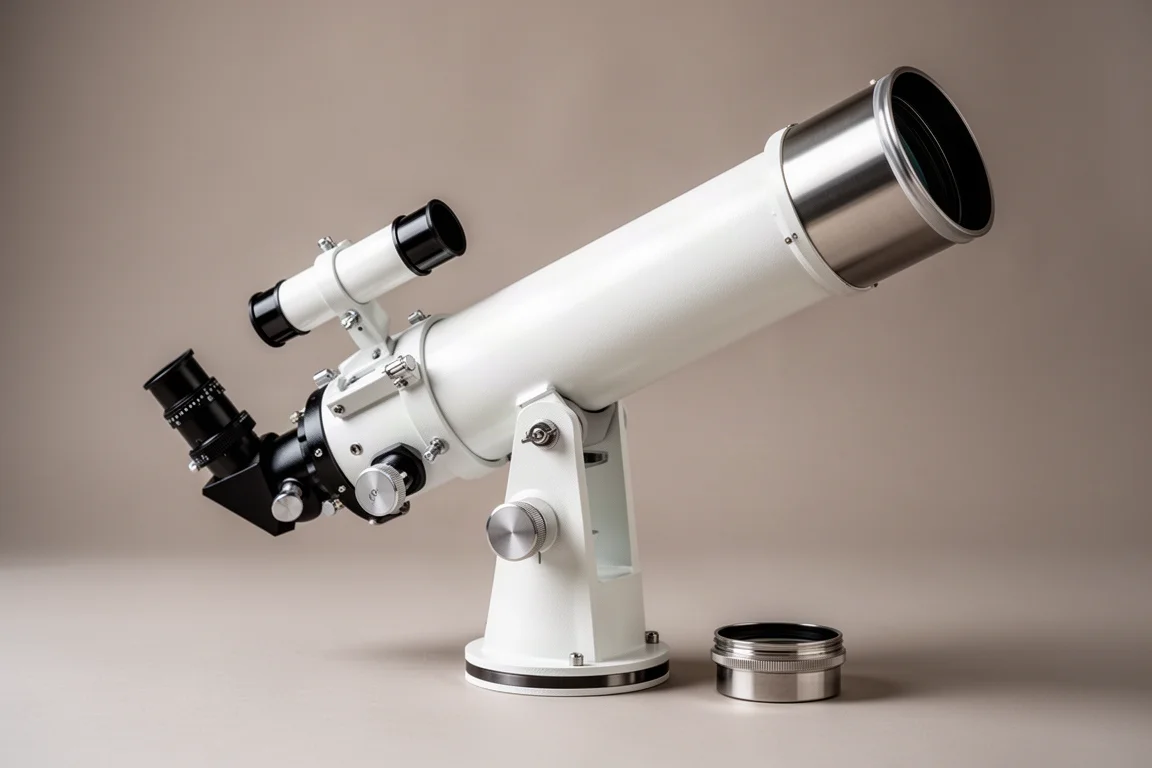
The Airy Disk and Askar focusers are fairly similar, both with markings on the draw tube that make returning to rough focus easier once you have found it the first time. The Airy Disk’s camera angle adjuster is an optional extra that screws onto the focuser for about $50, while the Askar’s rotator is built in. The William Optics also has a built-in rotator.

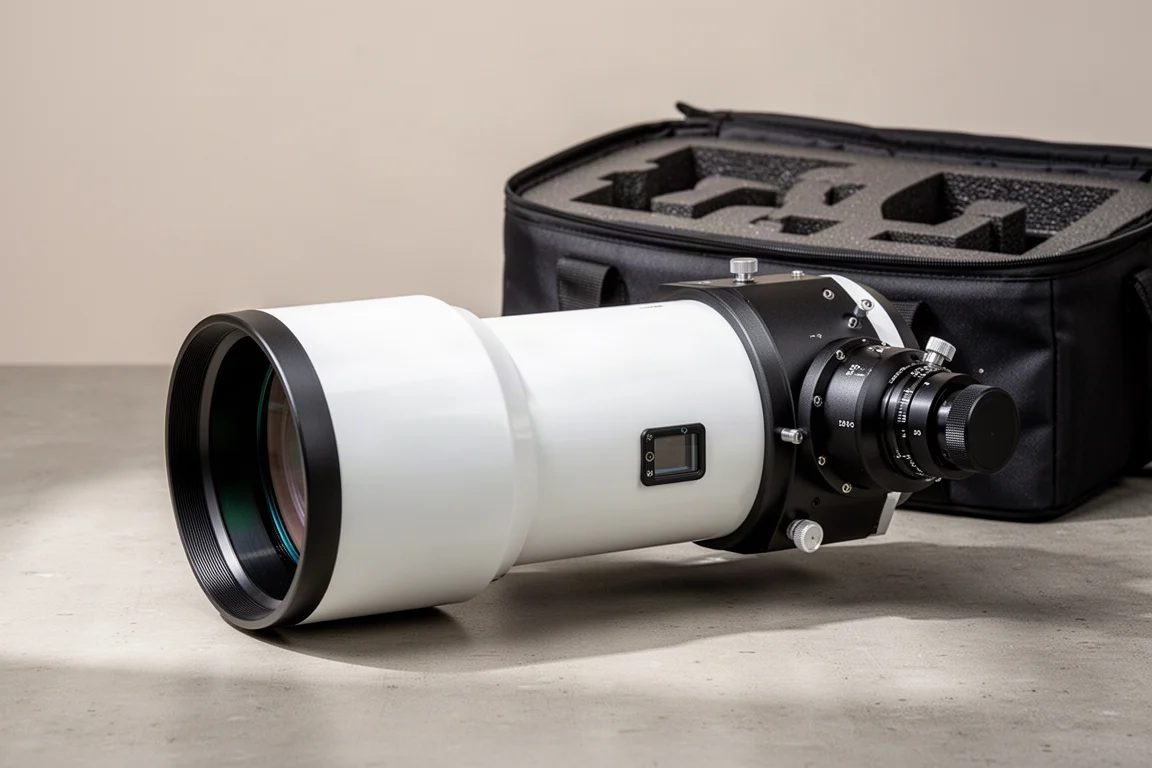
The RedCat 91’s focuser is the outlier: William Optics’ patented internal focus design, WIFD, where the focus knob moves lens elements inside the tube rather than sliding a draw tube and camera in and out. The claimed benefits are better field illumination and less tilt with heavy filter wheels and cameras. An indicator window on the side of the telescope helps you return to repeatable focus.
Design, Accessories, and Everyday Usability
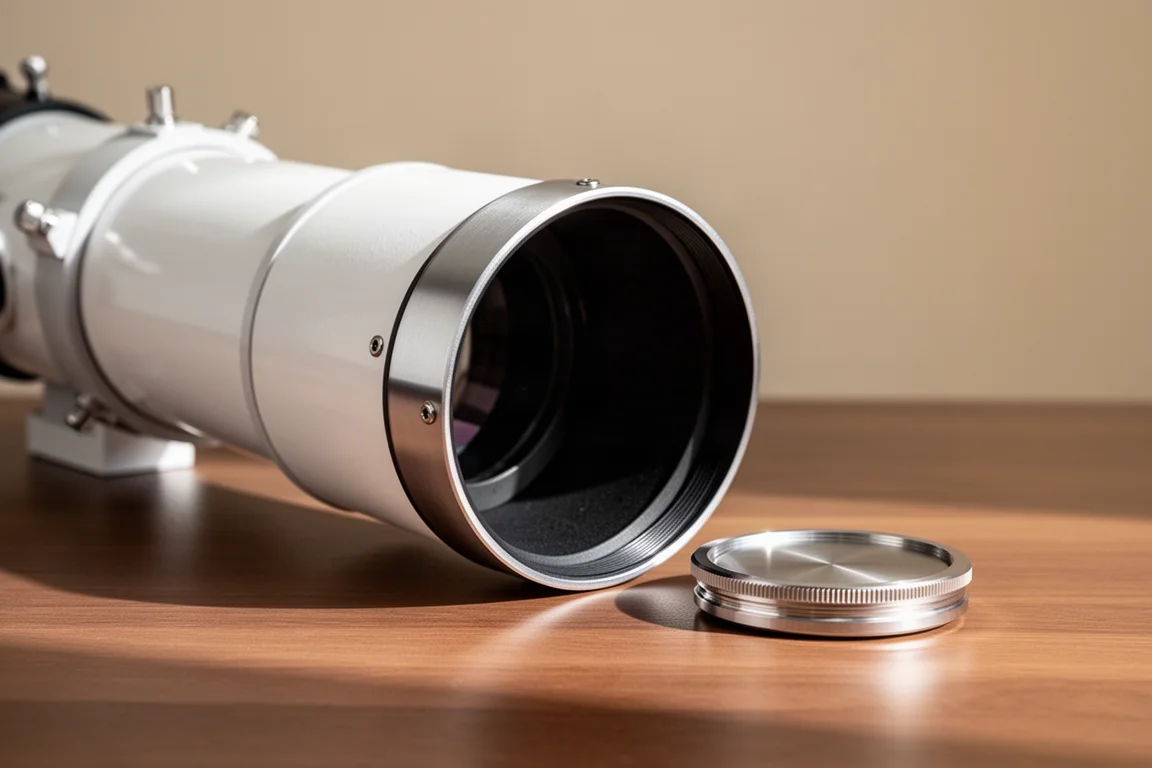
The dew shield retracts on the Airy Disk and the Askar; on the William Optics it screws off instead of retracting. Lens caps differ too: the Askar ships with a basic push-on metal cap with felt inside, the Airy Disk has a metal screw-on cap, and the William Optics includes its patented cap with a built-in Bahtinov mask under the screw-off front section.
Visual use is a mixed picture. The Askar 91F is the most generous, including a visual back for 2-inch and 1.25-inch accessories, a 1.25-inch erecting prism, and two eyepieces. The Airy Disk 96 includes a visual back for 2-inch and 1.25-inch accessories. The RedCat 91 includes nothing for visual use, which reflects its design intent as an astrograph first and foremost.
The RedCat 91 is also the only one of the three that comes with a case, and it is a heavy-duty soft-sided affair with internal foam and cutouts for everything included.
Pricing and Value
As configured in US dollars, the Askar 91F costs $999, the Airy Disk 96 APO triplet with CAA and flattener costs $1,489, and the William Optics RedCat 91 WIFD costs $2,798. The ordering follows the optical difficulty: the slowest scope at f6.7 is the cheapest, the fastest at f4.9 is the most expensive, and the f5.5 scope sits in between.
Which One Should You Buy?
Any of these three can be recommended depending on your needs and budget. If you want the tightest framing and the most detail in bright structures, and you appreciate a full visual accessory kit, the Askar 91F is the value pick. If you want a classic triplet with disclosed premium glass and flexible focal length via a reducer, the Airy Disk 96 is a strong middle path. And if wide, fast, flat fields for large nebulae matter most, and you value the internal focus design and included case, the RedCat 91 justifies its premium.
What ultimately matters is whether the telescope meets your creative needs for the kind of astrophoto you want to make, and each of these earns its place for a different kind of imager.
Conclusion
Optically, all three of these 90mm-class APOs are quite good and all three produce images you would be happy to publish. The RedCat 91 stands out for its flat field, clean star colors, and innovative internal focuser; the Airy Disk 96 offers disclosed Hoya FCD100 glass and flexible focal length at a mid-tier price; and the Askar 91F delivers more reach and a complete accessory package at the lowest cost. Match the focal length and focal ratio to your targets, and you cannot really go wrong.
Further reading
Related Reviews
Astrophotography
ASKAR FRA400C Review: A Versatile 400mm Refractor for Astrophotography and More
The ASKAR FRA400C is a compact 72mm refractor that balances reach, versatility, and portability for astrophotographers and visual observers.
Astrophotography
Askar SQA106 Review: A Premium 106mm Astrograph With Exceptional Optics
The Askar SQA106 is a premium 106mm quintuplet astrograph with impressive sharpness across full-frame sensors, though its price and weight demand careful consideration.
Astrophotography
Astro Imaging Gear 2026: Eight New Products Worth Watching
A look at the most interesting new astrophotography and astronomy products announced this year, from fast telescopes to smart cameras and wireless accessories.