Astrophotography
4-Inch APO Refractor Shootout: Four Imaging Telescopes Compared
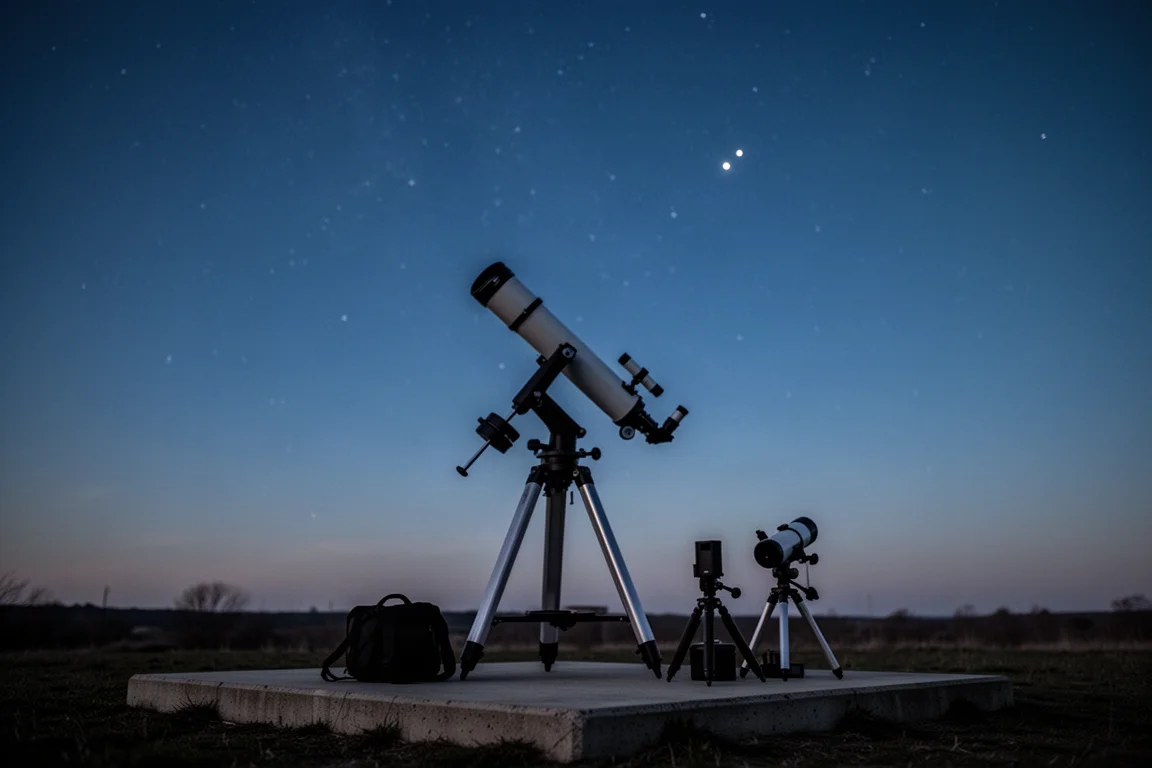
Four 100mm-class APO refractors tested on the same night with the same full frame camera, the same mount, and the same target.
Introduction
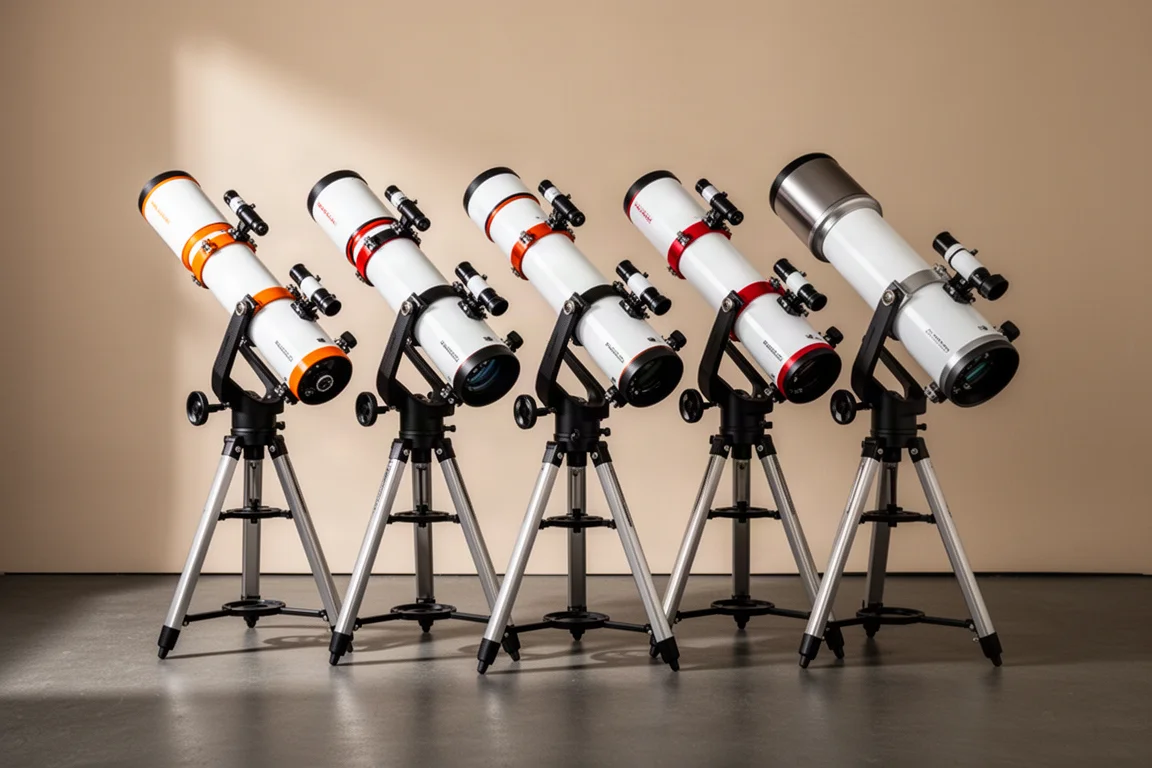
Four telescopes, all roughly 100mm of aperture, all marketed as capable astrophotography instruments, and all priced very differently. On paper they sound similar enough, but pricing gaps like this raise an obvious question: what exactly are you paying for? To find out, all four were set up on the same night, on the same mount, pointed at the same target high in the sky, with the same camera attached. Features, build quality, and image performance were compared directly.
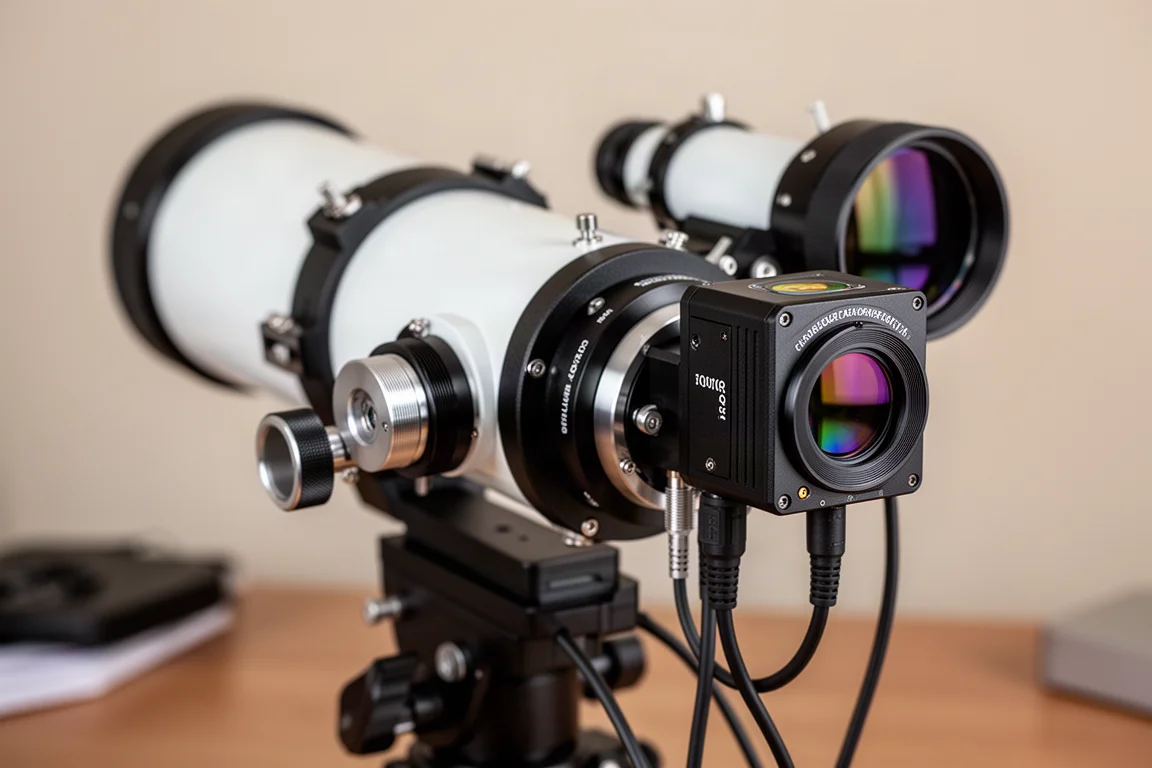
The imaging test is deliberately demanding: a full frame color astronomy camera with small pixels, the ASI6200MC. That combination stresses a telescope’s field flatness, corner star quality, and illumination far more than a smaller sensor would, and it should surface real differences between these scopes. All four can also be used visually with an eyepiece, but this comparison looks at them purely from a photographer’s point of view.
One important note before choosing any of these: a 4-inch refractor is only one part of a deep sky astrophotography system. A tracking mount with sufficient capacity typically costs as much as or more than the telescope itself. For this class of scope, something like a Sky-Watcher EQ6-R, an iOptron CEM40, or a harmonic drive mount such as the ZWO AM5 is a reasonable pairing.
The Contenders and the Test Setup
The four telescopes tested are the Askar 103 APO, the Founder Optics FOT106, the ZWO FF107 APO, and the Sky-Watcher Esprit 100ED. Loan arrangements aside, the important part is that the testing was consistent: five frames of five minutes each per telescope, shot with no Moon, with the target high in the sky, on a Sky-Watcher EQ6-R mount. Short integrations keep the target in the same part of the sky so that atmospheric differences stay minimal and the telescope remains the main variable.
Shooting at native focal length with a full frame sensor is where corner performance gets exposed, and it is where these four scopes begin to separate themselves.
Build Quality and Focusers
The Askar 103 APO is a triplet with one ED glass element. It weighs 5,730 grams (12 lb 10 oz) with the 1x flattener installed and measures about 30.5 inches with the dew shield extended. It comes with a soft-sided case with thick custom foam, a Vixen dovetail, tube rings with a guide scope plate, and two Synta-style finder shoes. The rack and pinion focuser offers 100mm of travel and indexed rotation, and the manual rotator feels well damped. Two build quality nits stood out: the focus knob worked loose during testing (fixable with a set screw), and the flattener showed some inconsistent coating finish. Changing between the 1x flattener and the 0.8x reducer is a simple swap with shared threads and 55mm of back focus, though fitting the 0.6x reducer required removing a stubborn section of the telescope, which took a strap wrench.
The Founder Optics FOT106 is an ED APO triplet weighing 6,724 grams (14 lb 13 oz) with its included field flattener, measuring about 27.5 inches. It ships in a hard case with a top handle, M42 and M48 adapters, and substantial rings on a Vixen dovetail. The focuser is excellent: silky smooth rack and pinion with 95mm of travel, a full-assembly rotator with a lock, and a nicely designed knurled lock knob. One learning curve: locking the focuser too hard can shift the focus position slightly, so you either hold focus while locking or learn a lighter touch. A threaded adapter (recommended over the included rotolock for imaging) provides the standard 55mm back focus.
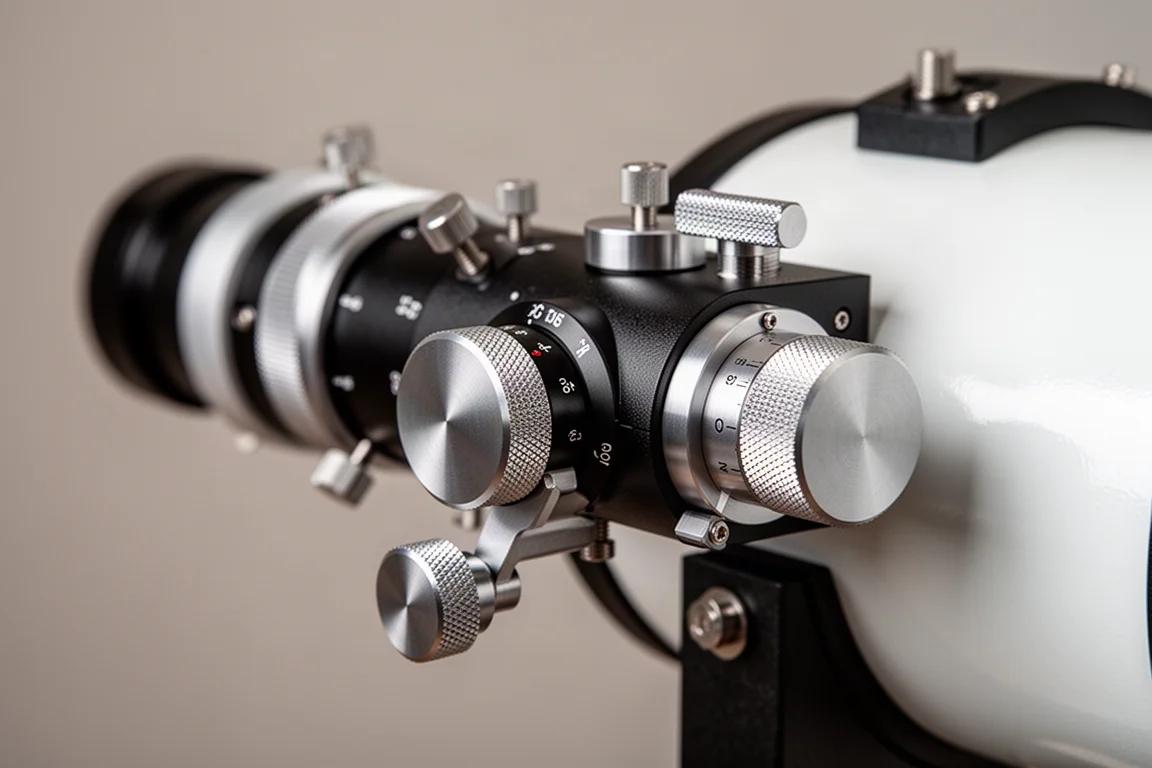
The ZWO FF107 APO is an astrograph, meaning the flattener is built into the optical design. It weighs 6,966 grams (15 lb 6 oz) and measures 30 inches with the dew shield out. The hard case is thoughtfully laid out and lets you pack the telescope with rings and dovetail still attached. The focuser is rack and pinion with 86mm of travel, indexed for both focus position and rotation, with full 360-degree camera rotation. Mechanics feel solid throughout. A 0.7x reducer is available and installs with adapters providing 55mm of back focus off a 48mm thread. One caution: some odd reflection artifacts showed up on full frame frames, possibly specific to the review sample.
The Sky-Watcher Esprit 100ED is the heavyweight of the group at 7,282 grams (16 lb 1 oz) with its flattener attached, and about 25 inches long. It is a super APO triplet using two elements of FPL53 glass, and its dedicated flattener also uses ED glass. It comes with the most extras by far: a star diagonal, a 48mm T-ring, a visual back, a right-angle correct-image finder, and the flattener. The 3.3-inch rack and pinion focuser is beautifully made with 90mm of indexed travel, and its lock lever is one of the best designs around: it locks without shifting the focus position. Camera rotation uses a two-ring system that works but is awkward to loosen once tightened, and it lacks rotation indexing. The padded case with ball inserts protects well, but you must fully disassemble the telescope to fit it back in.
Image Comparison: Full Frame Performance
With flats applied, vignetting on all four scopes calibrates away cleanly, so corner illumination is not a dealbreaker on any of them. The Esprit showed the gentlest roll-off; the FOT106 showed slightly more corner darkening; the Askar and ZWO sat in between.
Corner star quality told a more interesting story. The Askar 103 APO looked pretty decent across the field, with one bright star showing minor distortion. The FOT106 showed a bit more distortion, with some cross-shaped stars and occasional elongation that could be tilt or field curvature. The ZWO FF107’s corner stars looked slightly soft, alongside the reflection artifacts mentioned earlier. The Esprit 100ED was the sharpest scope in the center but had noticeably distorted far corners on full frame, with stars elongated and crossed; even correcting the elongation may not fully satisfy a discerning imager at this sensor size.
Cropped down to APS-C size, roughly what an ASI2600-class camera would see, the picture changes. The Askar looks clean, the FOT106 shows a bit more distortion but richer color, the ZWO looks good, and the Esprit’s apparent sharpness benefits partly from its shorter 550mm focal length putting more stars in each crop. In heavily saturated center crops, the FOT106 and Esprit showed richer, more natural color, while the Askar and ZWO looked slightly muted in blue, something processing and integration would likely mitigate.
Reducer Results
Testing also covered the optional reducers sent along with the Askar and ZWO scopes. The Askar 0.6x reducer brings the scope down to f/4 and shows substantial light fall-off on full frame. The ZWO’s 0.7x reducer showed even more dramatic fall-off, meaning reduced full frame illumination is a real consideration for both. The Askar 0.8x reducer, bringing the scope to f/5.6, delivered the best full frame field of the three, and all reduced configurations looked quite good once calibrated.
Star quality with reducers separated them further. At f/4, the Askar showed notable chromatic aberration across the field with soft, winged corner stars. The ZWO with its 0.7x reducer also showed fair chromatic aberration and soft corners, with the reducer clearly adding magenta fringing compared to the native astrograph configuration. The Askar 0.8x reducer was the clear winner here, with much less chromatic aberration, sharper stars, and only minor distortion on bright stars. On an APS-C crop, distortion essentially vanished on all three, with the Askar 0.8x looking especially flat.
The practical takeaway: if you want speed for narrowband and plan to fix artifacts in post, the f/4 path works. For broadband work, the 0.8x reducer or the native 1x flattener configuration will give noticeably better star quality.
Which One Should You Buy?
If build quality and included accessories matter most, the Esprit 100ED makes a strong case: excellent focuser, generous extras, and proven FPL53 glass, at the cost of the heaviest tube, an awkward rotation system, and less impressive full frame corners. If you want the smoothest mechanical experience with a dedicated flattener included, the FOT106 is compelling, with the nicest focuser feel of the group and rich star color, accepting slightly more corner distortion on full frame. The ZWO FF107 APO appeals if you want an integrated astrograph with indexed rotation and clean mechanics, keeping in mind the reflection artifacts observed and the reducer’s added fringing. The Askar 103 APO is the value-oriented system play: affordable optional flatteners and reducers, a straightforward imaging train, and the best-behaved reducer in the test, offset by a few small build quality concerns and more muted star color.
Conclusion
All four of these 4-inch refractors are capable astrographs, and on an APS-C sensor the differences shrink considerably. The Esprit stands out for optical pedigree and mechanical polish, the FOT106 for focuser quality and color, the ZWO for its integrated astrograph design, and the Askar for flexible, affordable accessory options. Matching the telescope to your sensor size, budget, and reducer needs matters more than any single winner in a test this close.
Product link
View more details for Askar 103 APO
This product is mentioned in the review. Check the specifications, options, and compatibility before buying.
View more details for Askar 103 APOFurther reading
Related Reviews
Astrophotography
ASKAR FRA400C Review: A Versatile 400mm Refractor for Astrophotography and More
The ASKAR FRA400C is a compact 72mm refractor that balances reach, versatility, and portability for astrophotographers and visual observers.
Astrophotography
Askar SQA106 Review: A Premium 106mm Astrograph With Exceptional Optics
The Askar SQA106 is a premium 106mm quintuplet astrograph with impressive sharpness across full-frame sensors, though its price and weight demand careful consideration.
Astrophotography
Astro Imaging Gear 2026: Eight New Products Worth Watching
A look at the most interesting new astrophotography and astronomy products announced this year, from fast telescopes to smart cameras and wireless accessories.