Polski · E-Bike Conversion Kits
Swytch Kit Eco Review: Converting a Regular Bike Into an E-Bike
A practical look at the Swytch Kit Eco, a front hub conversion kit that turns an ordinary bike into a pedal assist e-bike with roughly 15 minutes of setup.
Wprowadzenie
The pitch behind the Swytch Kit Eco is refreshingly simple: keep the bike you already own and add a motor to it. The kit arrives as a small stack of boxes, and the headline promise is that almost any bicycle can be converted into an e-bike without replacing the frame, the gears, or the brakes.
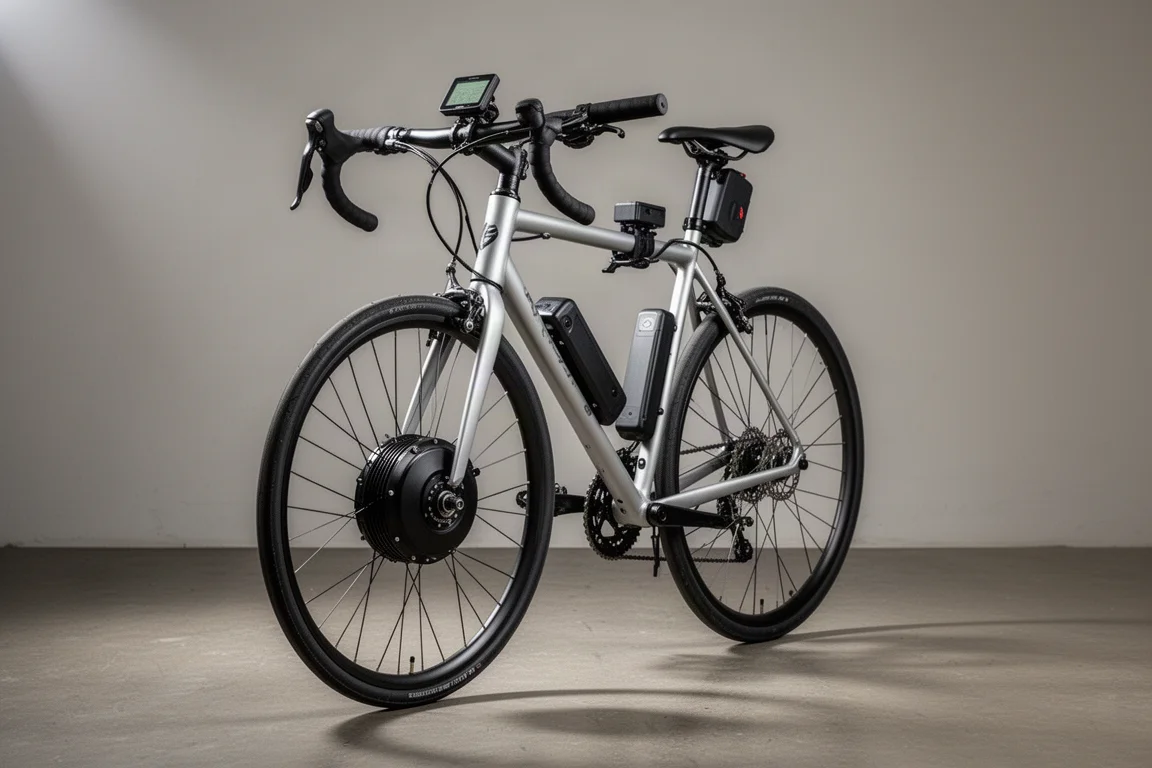
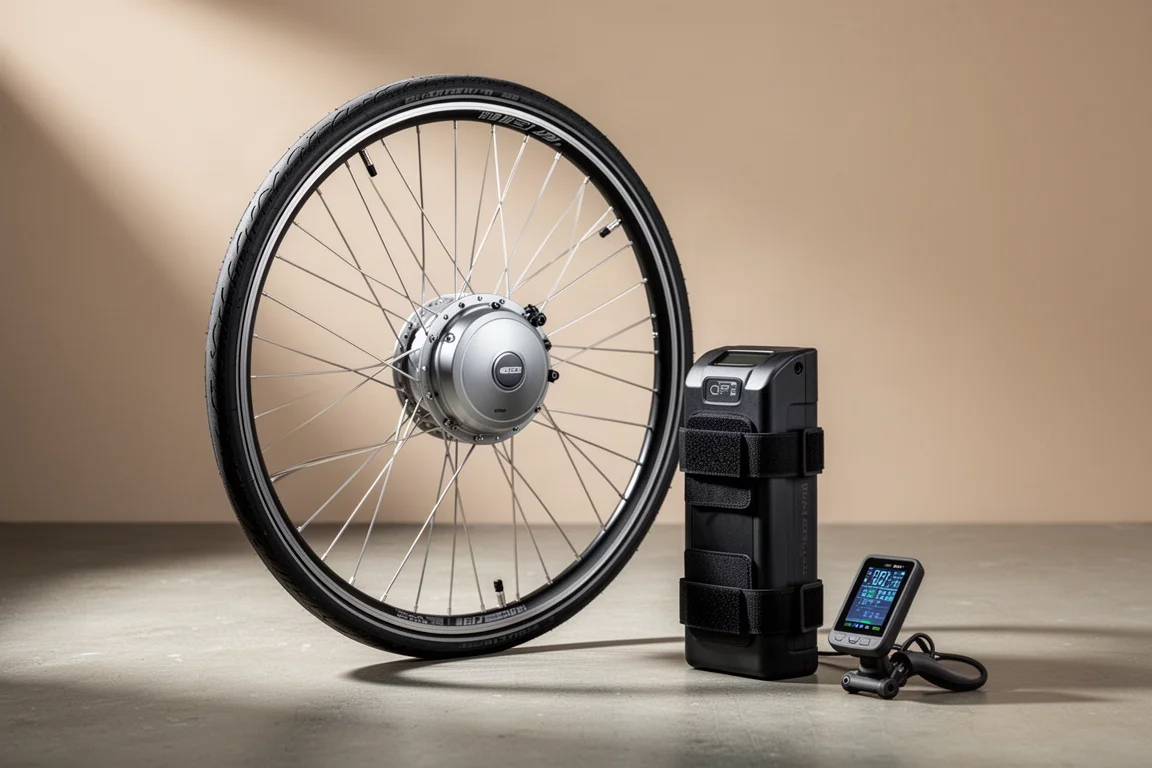
The version tested here places the motor inside a replacement front wheel rather than the rear, which sets it apart from most e-bikes on the road. It runs as a pedal assist system, meaning the motor adds power while you turn the cranks rather than driving the bike on its own, which is what keeps it within the rules for legal use in the UK.
Setup, in practice, took far less time than expected. It is a genuinely approachable project for a rider with basic tools and a willingness to follow instructions carefully.
For Whom This Product Is Intended
Ten zestaw ma najwięcej sensu dla rowerzystów, którzy mają już rower, który lubią, i po prostu chcą wsparcia na trudniejszych odcinkach trasy. Dojeżdżający do pracy, którzy codziennie pokonują długą, stale wznoszącą się drogę do domu, są najoczywistszymi beneficjentami, ponieważ wspomaganie zamienia harówkę w coś do opanowania bez zmiany charakteru roweru.
Pasuje również do każdego, kto chce zachować dotychczasową pozycję na rowerze, siodełko i sposób przewożenia bagażu. Ponieważ system to pedal assist, rowerzyści, którzy chcą czuć pedałowanie ze wsparciem, a nie bycie niesionym, odnajdą się w nim znajomo.
Jest jeden szczegół zamówienia wart poznania przede wszystkim: rozmiar koła musi być określony przy zakupie, ponieważ silnik jest wbudowany w samo koło. Zestaw użyty tutaj zamówiono w rozmiarze 26 cali, aby dopasować go do roweru, do którego został zamontowany.

What Comes in the Box and How Setup Works
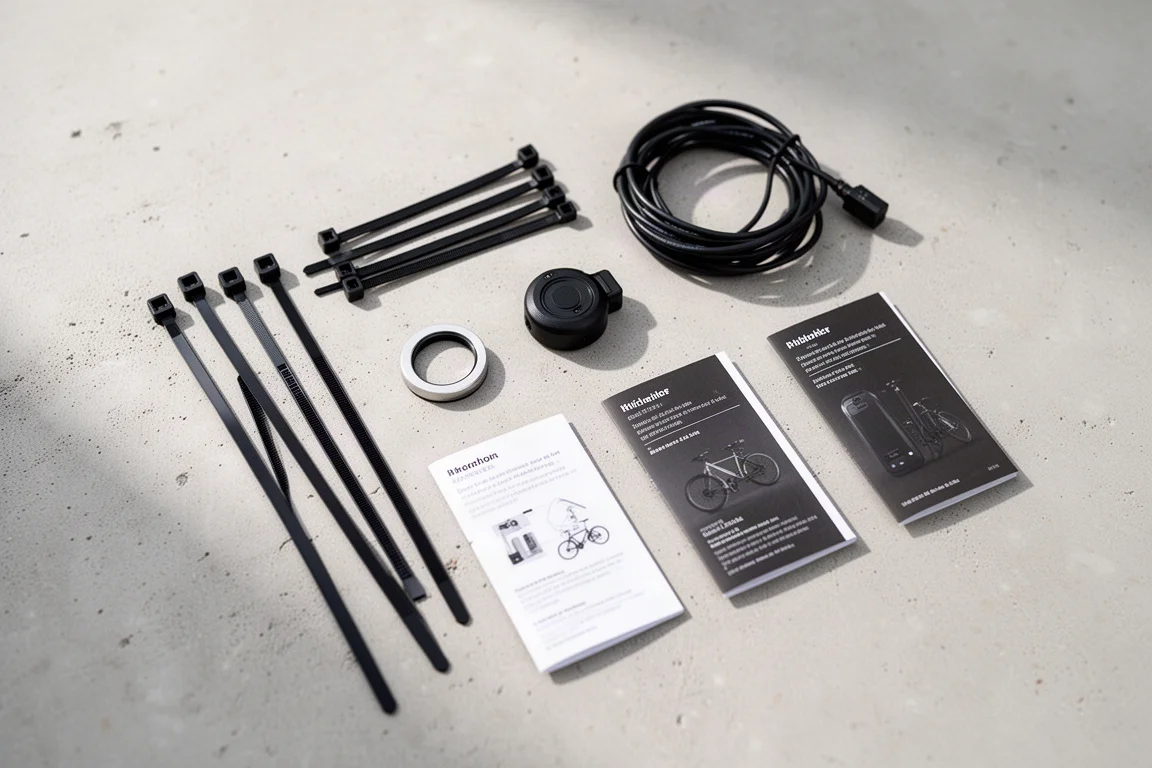
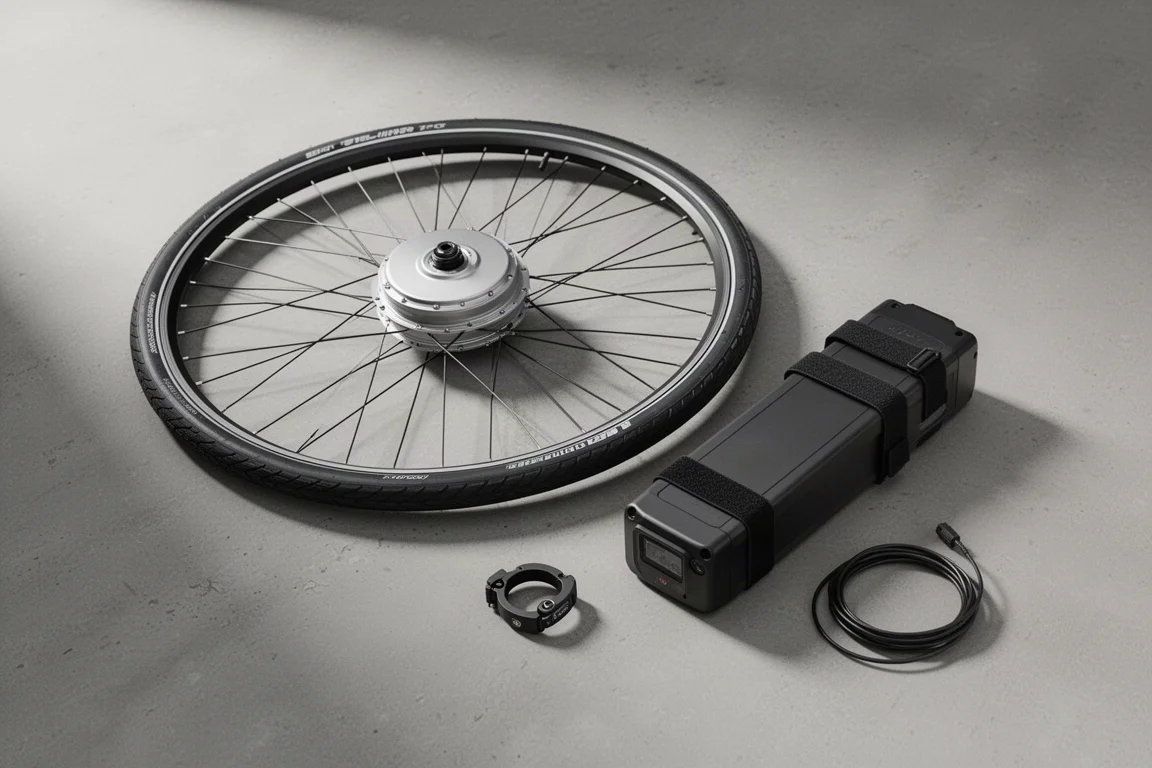
Unboxing is straightforward, and the packaging is unusually restrained for the cycling industry. Almost everything inside is cardboard, with very little plastic, and the parts that do use plastic are functional rather than decorative. Inside you get a handlebar mount and clamp, cable ties, a sticky metal ring and clip pieces, a magnet disc for the crank axle, a pedal sensor, and a front unit that serves as both the battery clamp and a junction box where the wheel and rear cables connect.
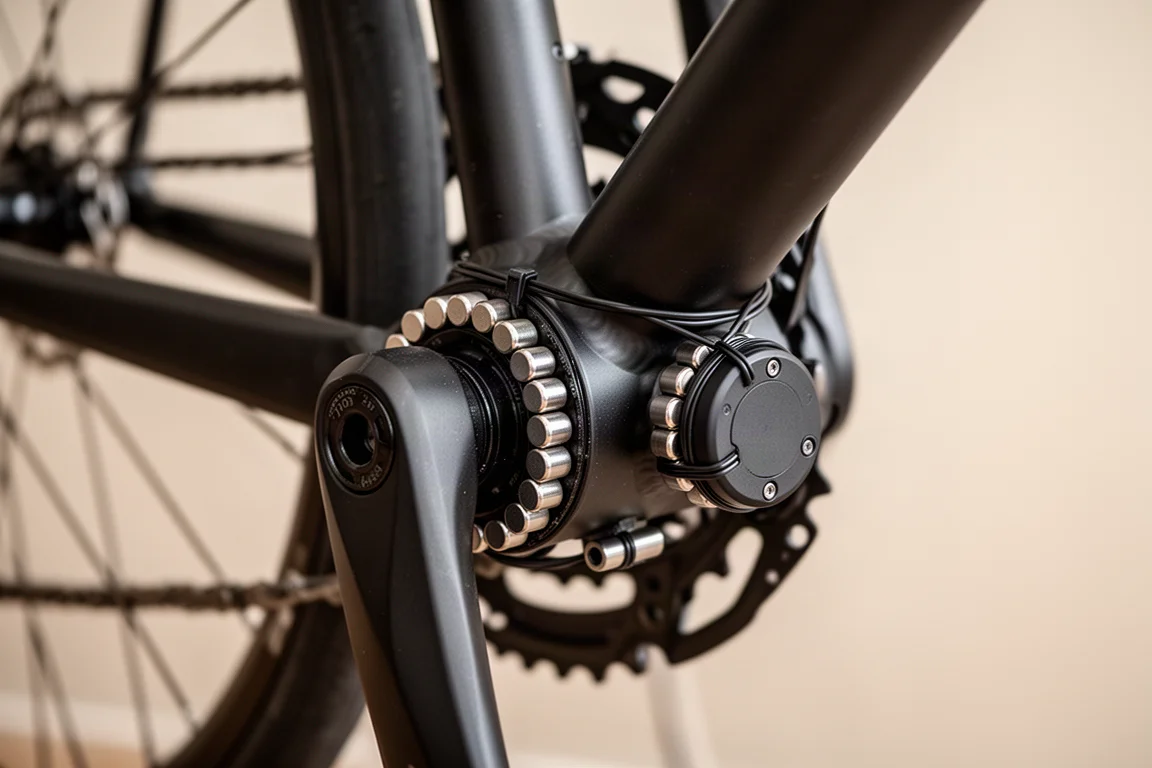
The kit also includes three printed instruction booklets, which is a notable contrast to many modern accessories that ship with little more than a QR code. That documentation matters, because the pedal sensor is the one part that needs patience. The magnet ring sits behind the crank and the sensor has to line up very closely with it. When the two drift too far apart, the system simply does not register pedalling. Once aligned and cable tied in place, it stays reliable.
Weight is worth measuring before installation. A standard front wheel on the test bike weighed 1,037 grams, while the wheel with the motor inside came in at 2,886 grams. That difference is the price of the assist, and it is felt when lifting the bike rather than when riding it.
Główne zalety
The strongest argument for this kit is how quickly it changes a bike. Realistically, it is a 15 minute job for one person working without distractions, and it does not require a second pair of hands. The trickiest step is positioning the magnet sensor correctly, and everything after that is cable ties and connectors.
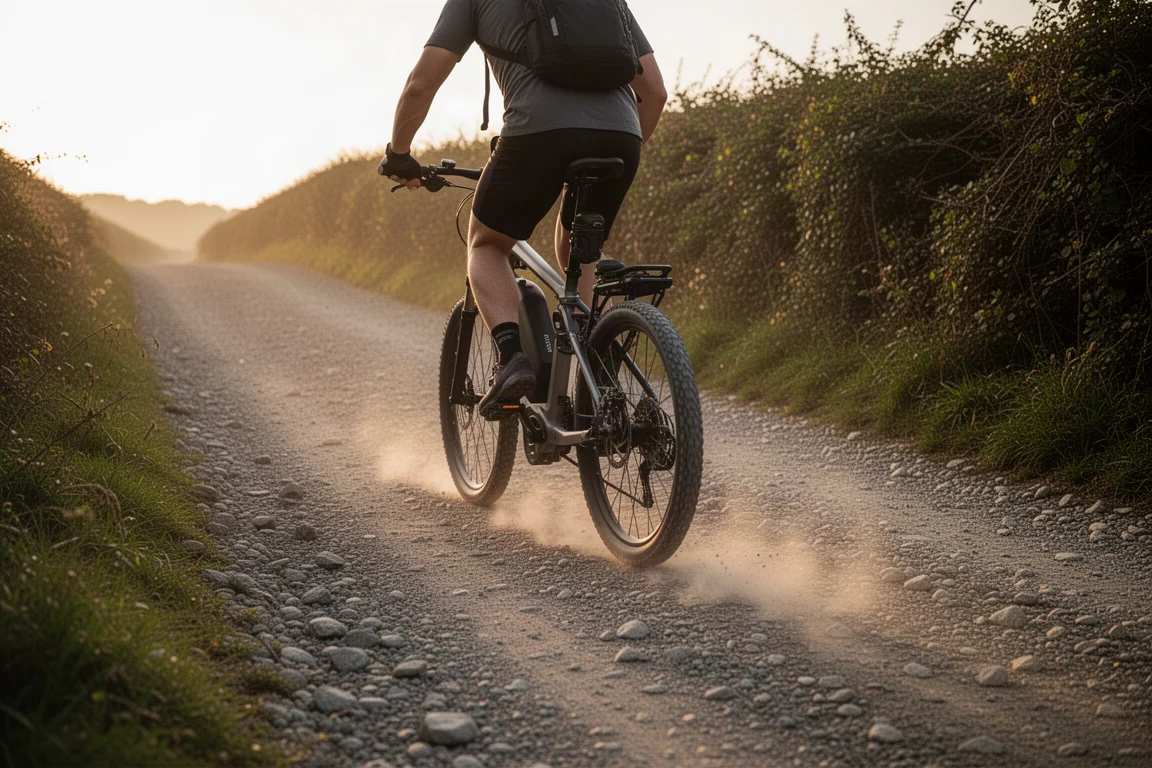
On the road, the assist engages smoothly once the crank is turning, and the system responds well to being in an easier gear when setting off, where it kicks in almost immediately. On a genuinely steep climb, the motor kept working without slipping, holding speed even when the gradient was well beyond what the rider would normally manage unassisted. The front wheel drive arrangement raised questions about traction beforehand, but the added weight over the front end means grip has not been an issue.
Noise is another point in its favour. In a quiet indoor space the motor is clearly audible, but outdoors it fades into the background and ends up sounding closer to a grippy tyre rolling on tarmac than to a motor. Riders sharing a lane will barely notice it.
Real-World Riding Notes
The kit was fitted to a bike that was already on the heavy side, and with the power pack and motor wheel added it became heavier still. That weight is relative. Against a light, fast road bike, a converted commuter will always feel slower to lift and slower to accelerate under leg power alone. Against the same bike without a motor on a long uphill commute, the difference is dramatic.
Battery life became the open question during testing. The version used here is quoted at roughly 35 km of range, which is a realistic figure for a moderate commute, and the battery arrives needing a charge before the first ride. The junction box also leaves a few cables unaccounted for in the instructions, which suggests they are intended for accessories such as lights rather than being spare parts.
Things to Consider Before Buying
The main consideration is weight. A conversion adds a substantial motor wheel and a battery pack, and if the bike is already heavy, the finished build will be a genuine heft to move around by hand. That is a fair trade for assisted climbing, but it is not a weightless upgrade.
Second, the sensor alignment is unforgiving. Riders who dislike fiddly mechanical work should plan for a careful half hour rather than a rushed five minutes, and should be prepared to reposition the sensor if the assist does not engage.
Third, wheel size has to be chosen correctly at the point of ordering, and the front hub layout means the kit is not suited to every fork or every bike. Finally, charging becomes part of the routine. The pack uses a standard UK plug, and riders who are used to leaving a bike untouched for weeks will need to build a charging habit.
A Note on the Eco Version
The specific Eco kit used here appears to be an earlier variant of the system rather than the version currently promoted. Its quoted range and its heavier power pack differ from what is typically listed for newer kits, and it is not obviously part of the current lineup. Buyers shopping today should confirm exactly what the current kit includes, particularly the range figure, the battery weight, and which wheel sizes are available, before ordering.
Buying Advice
This kit is worth considering if you want assistance on a specific bike rather than a whole new machine, and if the idea of a short, single person installation appeals to you. It rewards riders who commute regularly over rolling or steadily climbing terrain, and it keeps the bike feeling like a bicycle rather than a small motorbike.
Before ordering, check three things: the wheel size on your current bike, the condition of the front fork and its mounting points, and whether you are comfortable working with cable ties and a sensor that needs precise alignment. If those all line up, the conversion is a quick and surprisingly tidy project.
Wnioski
The Swytch Kit Eco delivers on its central promise. A regular bike becomes an assisted bike in about 15 minutes, with a pedal assist system that is legal for UK road use, a front hub motor that grips well on steep climbs, and packaging that keeps waste to a minimum. The trade-offs are honest ones: extra weight, a sensor that demands accuracy, and a battery that needs charging before the first ride and afterwards. For riders with a long uphill commute and a bike they already love, that exchange makes a great deal of sense.
Link do produktu
Zobacz więcej szczegółów: Swytch Kit Eco
Ten produkt jest wymieniony w tej recenzji. Przed zakupem sprawdź specyfikację, dostępne warianty i kompatybilność.
Zobacz więcej szczegółów: Swytch Kit EcoWięcej do przeczytania
Powiązane recenzje
E-Bike Conversion Kits
Recenzja Switch Electronic Conversion Kit: moc na przednim kole do codziennych rowerów
Zestaw silnikowy w przednim kole, który zamienia zwykły rower w elektryczny, z lekką baterią Switch Air i dłuższą opcją Switch Max dopasowaną do różnych dojazdów.
E-Bike Conversion Kits
Swytch Go Kit i Swytch Air Kit: który zestaw do konwersji na e-bike pasuje do Twojego roweru?
Praktyczny przewodnik po dwóch zestawach do konwersji ze wspomaganiem pedałowania, które zmieniają istniejący rower w e-bike, obejmujący cenę, montaż, wybór baterii i to, dla kogo jest przeznaczony każdy z zestawów.
E-Bike Conversion Kits
Recenzja Swytch Go Kit: niedroga moc dla roweru, który już masz
Swytch Go Kit zamienia istniejący rower w 250W rower dojazdowy ze wspomaganiem pedałowania, z półgodzinnym montażem, wymiennymi bateriami, wodoodpornością IPX6 i ceną startową £299.