Polski · Car Fridges
Iceco APL 55 Review: A Dual-Zone Car Fridge Built to End the Ice Runs
A dual-zone portable car fridge with independent temperature control, real freezing capability, and Bluetooth monitoring, plus what to know about power, weight, and price before buying.
Introduction
Ice is the quiet cost of every camping trip. A large cooler runs about $500 new, and the roughly 60 bags of ice you can buy for another $200 do not last. A cooler of this size needs about three bags every three days, which works out to nine or ten bags a week. After roughly six weeks of trips, the ice spend alone starts to rival the price of the cooler itself, and that assumes a shop selling ice is always within reach. Anyone who wants to stay out for a week straight does not want to drive back into town every three days for another bag.
The Iceco APL 55 answers that specific problem. It is a portable car fridge with enough room for roughly the same amount of food as a favorite cooler, and it takes ice off the packing list completely. It is not a budget purchase and it does need power, but it changes how long a trip can comfortably run.
Who This Fridge Is For
This fridge suits campers who go out often and stay out long. If the usual pattern is a weekend every few months with a bag of ice, a cooler still makes sense. If the pattern is week-long trips, moving between campsites, and never quite knowing whether the food at the bottom of the cooler is cold enough, the APL 55 is aimed squarely at that routine.
It also works well outside the campsite. Families on long road trips can keep drinks and food cold for days without hunting for ice, and the dual-zone layout lets one side hold fresh food while the other freezes. That flexibility is what separates it from a cooler that simply holds whatever fits inside.
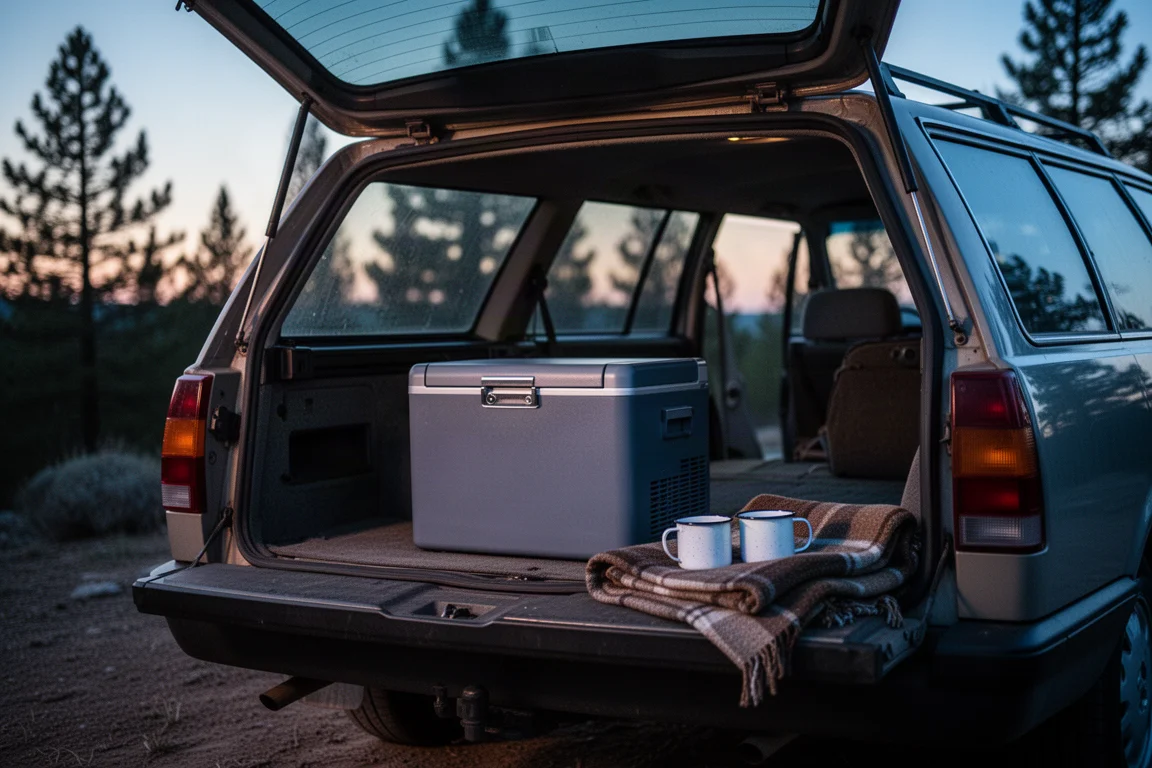
Longer trips are where the difference shows. No ice runs, no water pooling around the food, and no guesswork about temperatures.
Main Strengths
The headline strength is temperature control. A compressor keeps the contents genuinely cold, and this unit can freeze. That is something a cooler cannot do, no matter how much ice goes in.
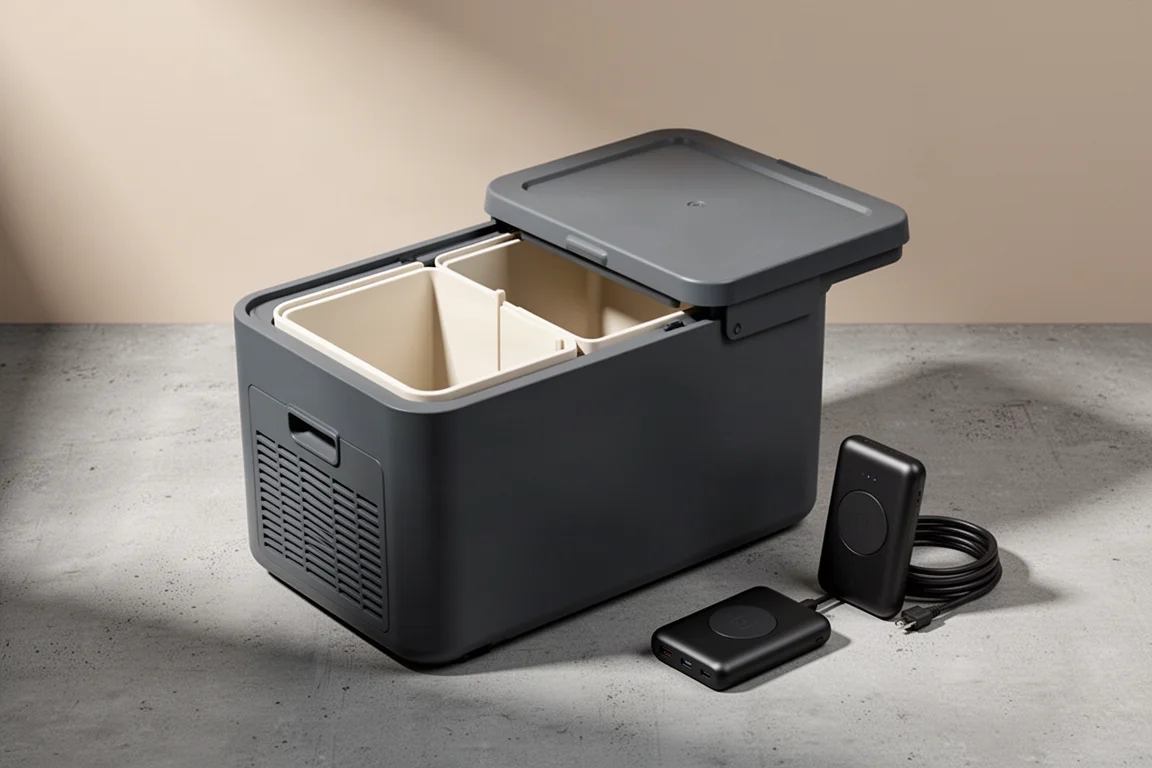
Dual zones make it more useful than a single-compartment fridge. Each side can be set independently, so one compartment can run as a fridge while the other runs as a freezer, and the two can be swapped depending on what is packed. The middle divider comes out, and the whole unit can then be set as one large fridge or one large freezer.
There is also a practical fallback. The walls are thick enough that the APL 55 can be used like a normal cooler when no power source is available. Fill it with ice and it holds temperature, and while driving it slows the ice from melting. That versatility matters for anyone who is not ready to commit to a full power setup.
Dual-Zone Flexibility and Everyday Features
The two compartments can be controlled independently, which is the feature that shapes how the fridge gets packed. Fresh produce on one side, frozen items on the other, or a full-width fridge for a drinks-heavy trip. Changing the configuration is a matter of moving or removing the divider.
A Bluetooth connection to a phone lets you monitor the temperature and make adjustments without opening the lid. That is useful on longer trips when the fridge is buried behind other gear.
The lid opens lengthwise rather than from the side. That sounds minor until you try to fit a fridge into a vehicle: with this layout, the unit can sit lengthways in the car and still open fully. Slow-closing safety hinges keep fingers safe when children are helping.
Small details round it out. There are USB ports for charging devices, an interior light for finding things after dark, and an exterior light as well.
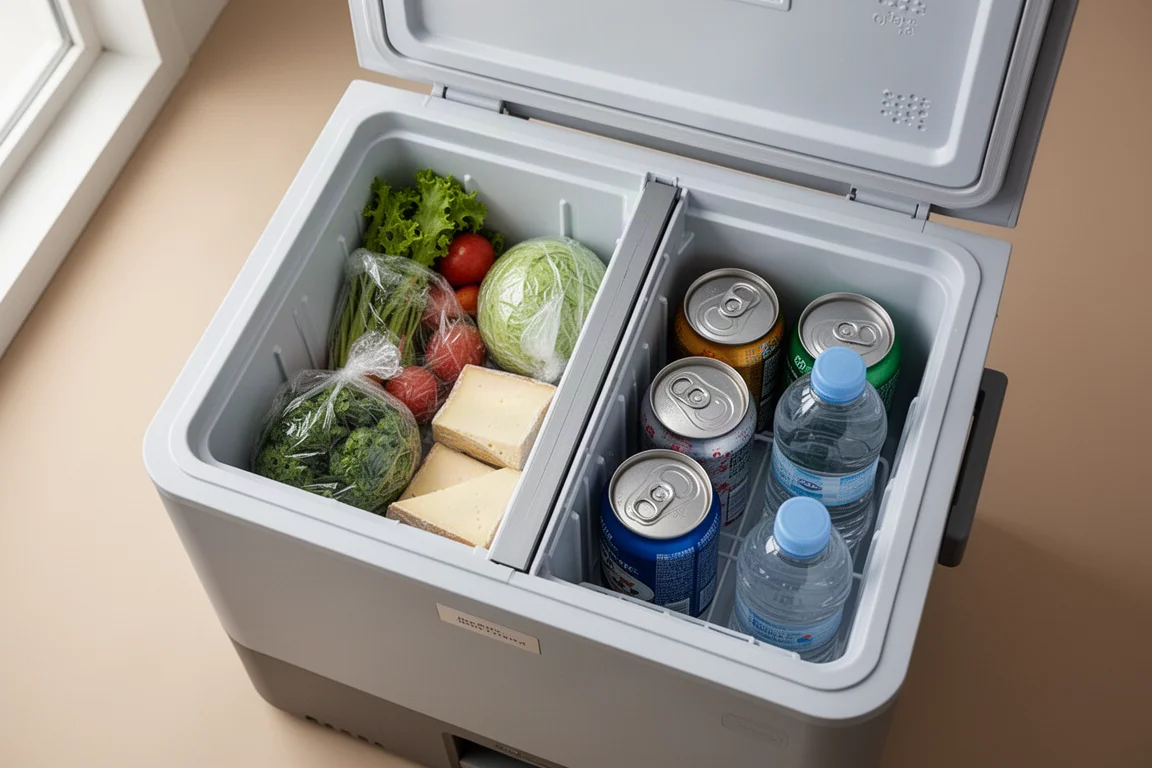
Those features are the difference between a fridge that lives in the car and one that gets left at home.
Powering the Fridge Away From Home
The fridge needs power, and Iceco offers a small power bank with a magnetic back that attaches directly to the rear of the unit. It is light and portable, which makes it a good match for carrying the fridge away from the car for a few hours. Its limit is runtime: it will not last much longer than about 12 hours. A solar panel can keep that battery topped up while the fridge runs, so charging it through the day and running it overnight is possible, though that leaves little margin.
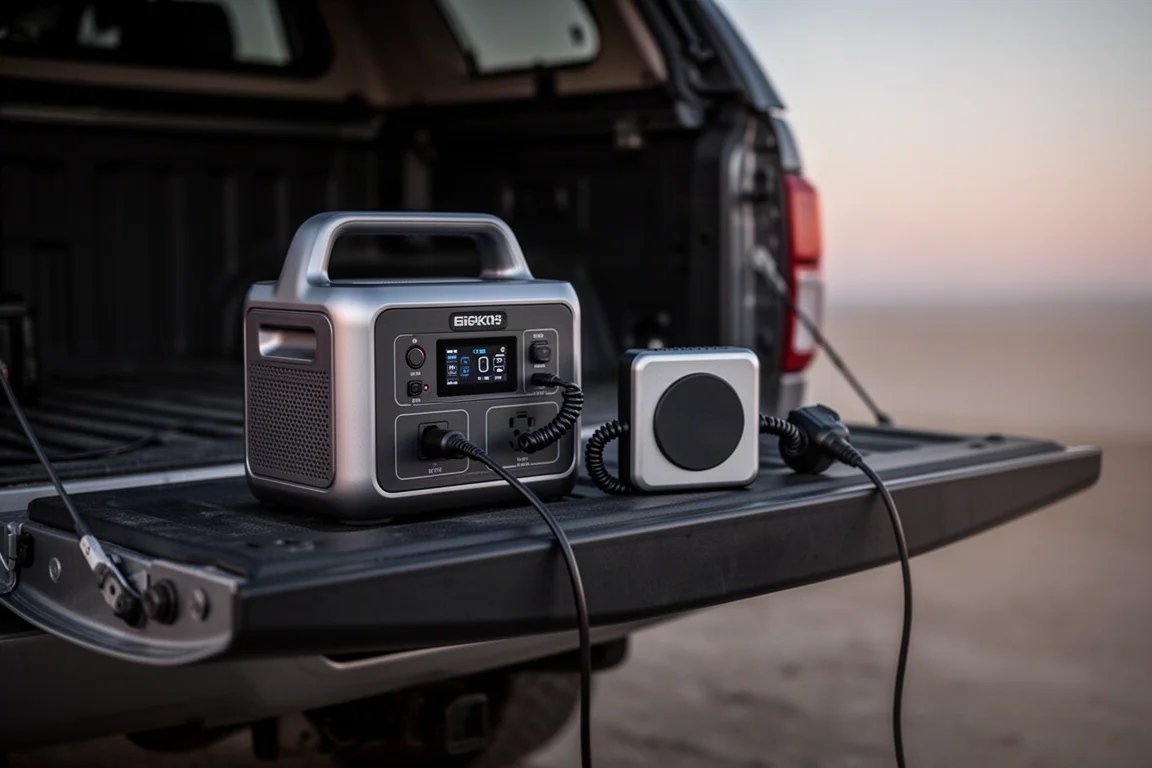
A larger power station is the more comfortable setup. A 1,000W station can run the fridge directly, and plugging the station into the car while driving means the vehicle recharges it during travel and the battery takes over once parked. On a week-long trip in January, the station never dropped below 85% charge. It gained about two hours of charging each day while moving, then ran the fridge on battery for the remaining 22 hours.
Doubling up adds redundancy. The fridge plugs into the small magnetic bank, the bank plugs into the power station, and the power station plugs into the car. Each one keeps the next charged, and the small bank stays ready for trips away from the vehicle.
Capacity and Real-World Use
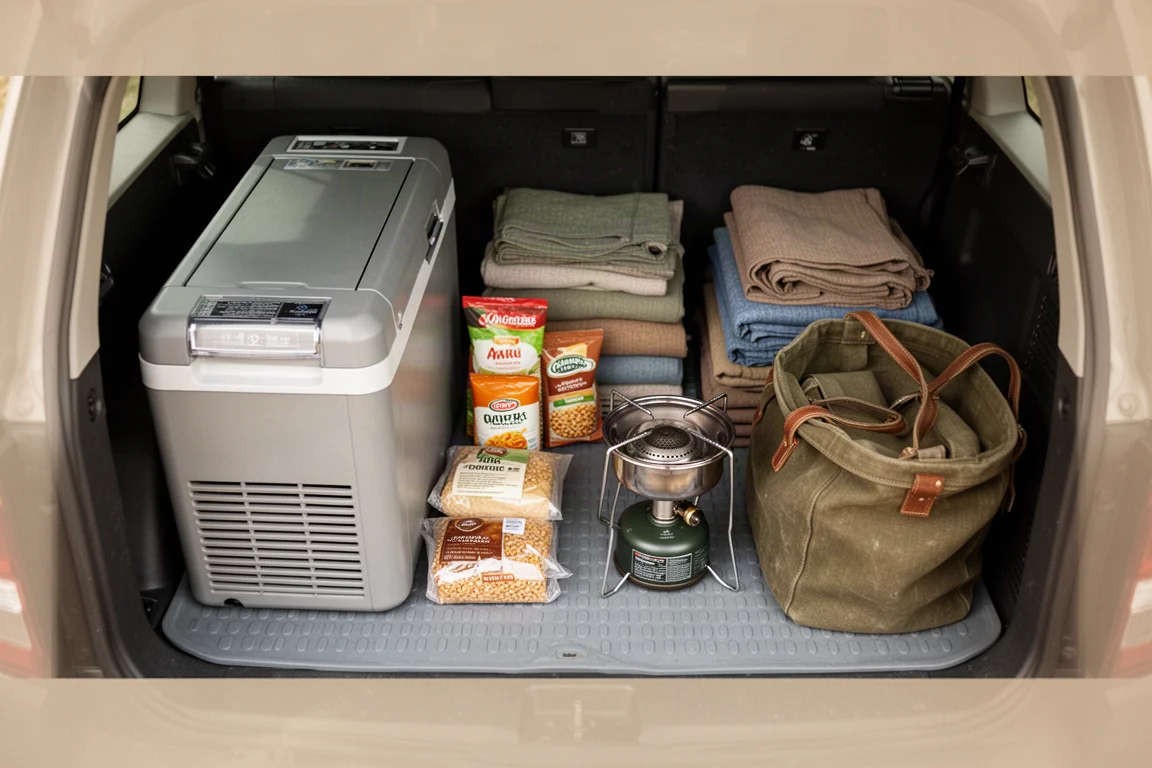
The interior holds a serious amount of food. At one point it carried enough for four lunches, three breakfasts, and two dinners for five people, with some of it already eaten by the time the count was taken. That is a full family’s worth of meals rather than a weekend snack stash.
It is also at home on the road. The same fridge that handles a remote campsite can keep drinks and food cold during a long drive.
Weight is the trade-off. The APL 55 weighs 55 lb empty, against about 30 lb for a similar-size cooler, because of the compressor. That is heavier than a cooler, though less troublesome than it sounds. A drawer slide that mounts the fridge in the vehicle keeps it secure and still allows easy access, which removes most of the lifting.
Access matters more than raw weight once the fridge is full, and a slide solves that neatly.
Things to Consider Before Buying
The fridge is only part of the cost. Power stations and battery banks are an additional expense, and the small magnetic bank on its own covers roughly 12 hours. Pairing it with a solar panel to stretch across a full day and night is possible but tight, so it is worth planning a charging routine before the first long trip.
Without any power source, the APL 55 still works as a cooler. Ice goes in, contents stay cold, and the thick walls slow melting while driving. It is a genuine fallback rather than a compromise, but it does mean carrying ice again.
Weight and placement are the other considerations. It is heavier than a cooler of similar capacity, and it needs a stable home in the vehicle, ideally on a slide.
Buying Advice
The APL 55 is normally priced at $859. During Iceco’s site-wide sales it has dropped to around $687 with a 20% discount on this model, part of promotions that cut up to 30% off some products. At that promotional price it sits about $187 above a comparable Yeti cooler, which is a small gap for a fridge that freezes, runs two independent zones, and never needs ice.
Budget for the whole system rather than the fridge alone. A power station or battery bank changes the total, though a large power station already used for other camp gear can serve double duty here.
The honest calculation comes down to frequency. Campers who head out for a few weekends a year are better served by a cooler and a few bags of ice. Campers who plan week-long trips, move between sites, and want to stop buying ice will find the APL 55 earns its place quickly.
Conclusion
The Iceco APL 55 solves a problem that most cooler owners eventually run into: ice runs, meltwater, and trips cut short by how long the ice lasts. Dual independent zones, real freezing capability, Bluetooth control, and a layout designed around vehicle use make it a flexible piece of camp kit, and the option to run it as an ordinary cooler with ice keeps it useful even without a power station.
It is heavier than a cooler and it works best with a power setup, so the total investment deserves a clear-eyed look. For anyone who camps often and stays out long, that trade is easy to justify.
Link do produktu
Zobacz więcej szczegółów: Iceco APL 55
Ten produkt jest wymieniony w tej recenzji. Przed zakupem sprawdź specyfikację, dostępne warianty i kompatybilność.
Zobacz więcej szczegółów: Iceco APL 55Więcej do przeczytania
Powiązane recenzje
Mountain Bike Tires
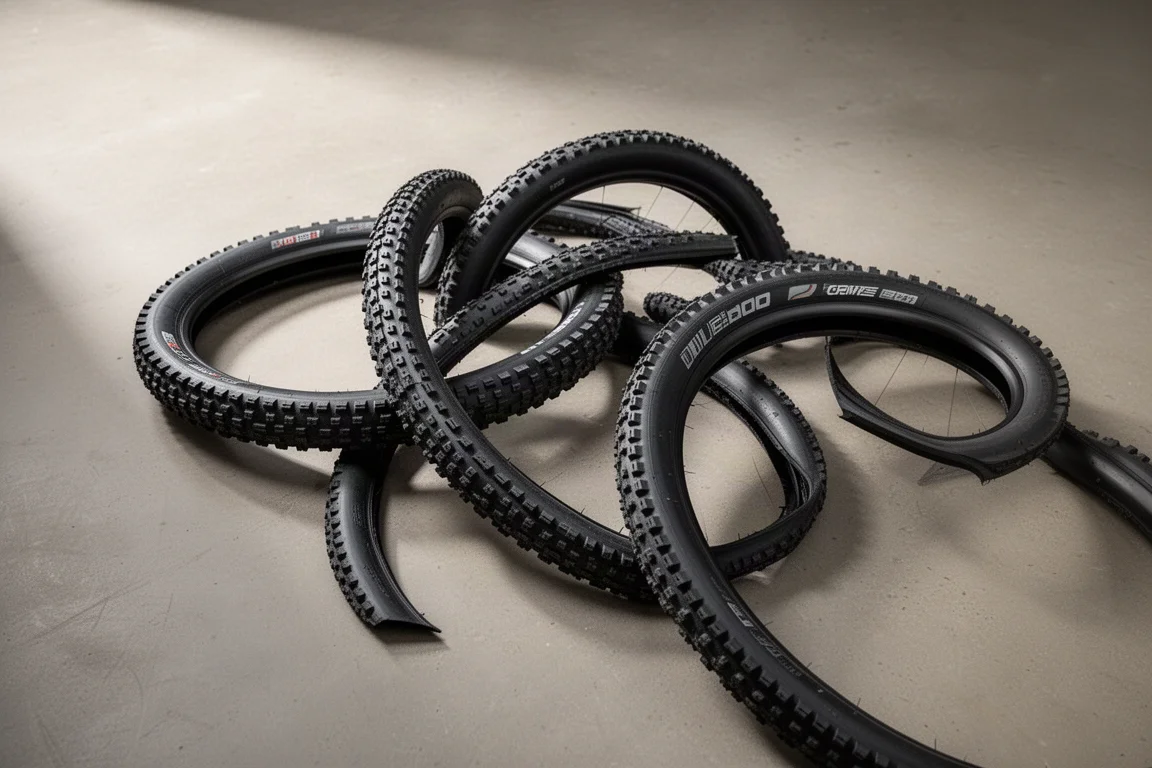
Najlepsze opony trailowe do roweru górskiego: siedem propozycji pod kątem przyczepności, szybkości i trwałości
Praktyczne zestawienie siedmiu opon trailowych — od modeli nastawionych na maksymalną przyczepność po szybko toczące się uniwersały — wraz z kompromisami, które warto sprawdzić przed zakupem.
Mountain Bike Upgrades
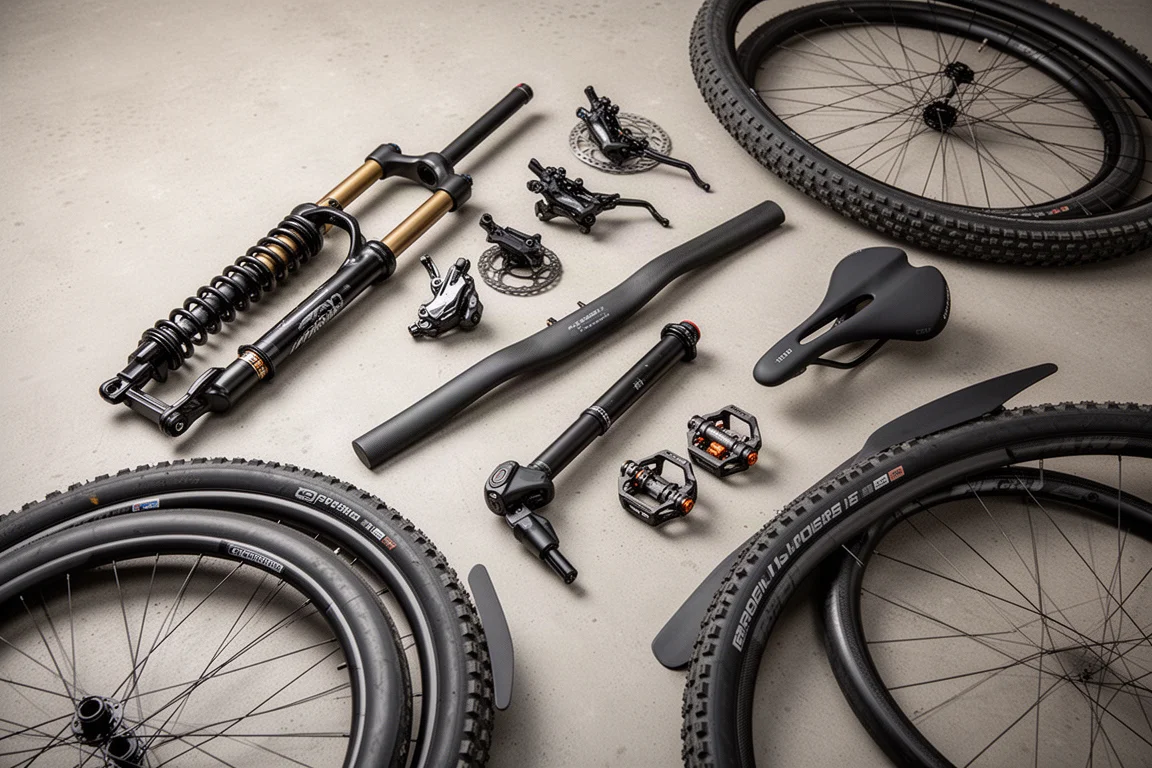
Najlepsze ulepszenia roweru górskiego 2026: 11 części, które poprawiają odczucie jazdy i kontrolę
Jedenaście ulepszeń roweru górskiego — od zawieszenia i hamulców po opony i ochronę przed błotem — wraz z mocnymi stronami i kompromisami, które warto rozważyć przed zakupem.
Mountain Bike Upgrades
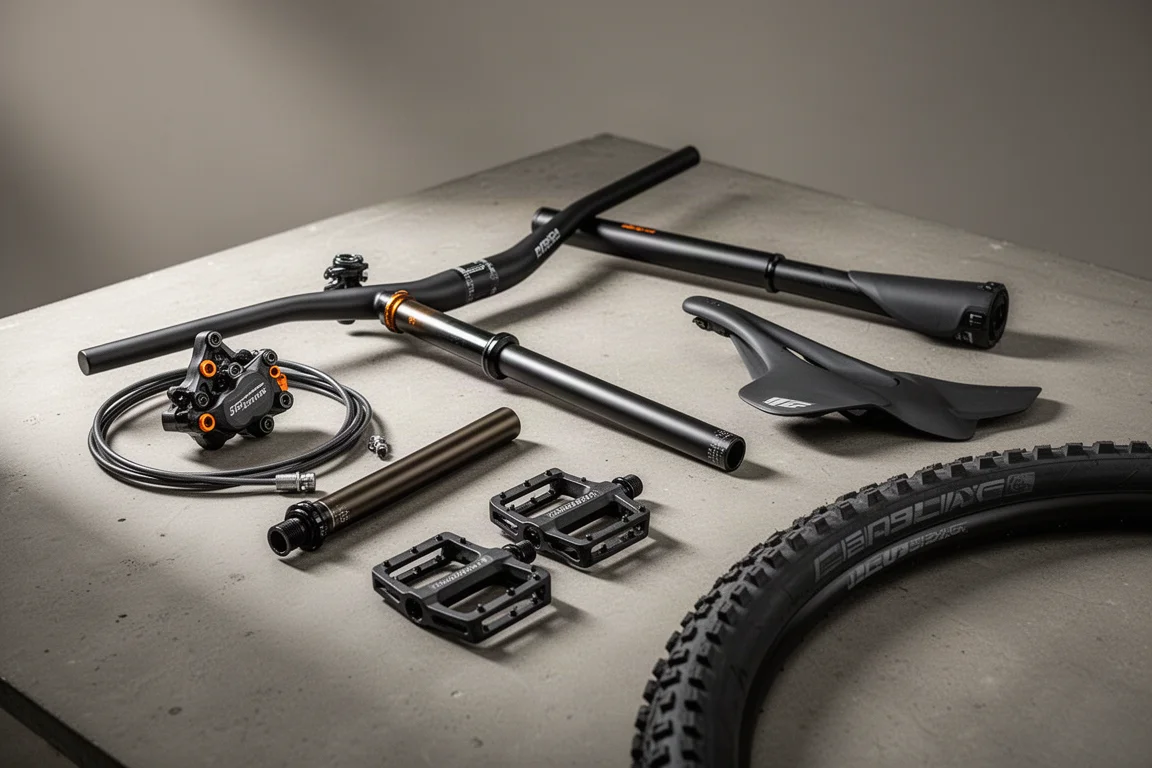
Najlepsze ulepszenia roweru górskiego w rozsądnym budżecie: 9 części wartych zakupu w 2026
Dziewięć przyjaznych dla portfela ulepszeń roweru górskiego — od czterotłoczkowych hamulców i wygodnych gripów, przez krótką sztycę opuszczaną, po szybsze koła i błotnik pasujący do nowoczesnych amortyzatorów.