Nederlands · Music Streamers
PS Audio AirLens Review: A Compact, Unusually Quiet Streamer
The PS Audio AirLens is a standalone network streamer with no DAC inside, a lean tonal character, and a remarkably black background for the money.
The PS Audio AirLens is a compact network streamer that takes the streaming transport seriously and nothing else. It is priced at $2,000, a figure that positions it as a more affordable entry into PS Audio’s lineup and as a dedicated transport rather than a full-featured all-in-one. The pitch is straightforward: bring the streaming source down to a smaller footprint and a lower price, with particular attention paid to reducing noise, jitter, and EMI so the digital signal stays as clean as possible.
It is also worth noting that PS Audio goes further by suggesting that streaming has not been heard properly until you hear the AirLens. Whether or not you accept that framing, the design decisions behind the unit are easy to examine, and they explain a great deal about how it sounds.
Who This Streamer Is For
The AirLens makes the most sense for a specific kind of system. If you already own a DAC you like, the AirLens slots in ahead of it as a dedicated streaming source. You are not paying for a DAC, a preamp, or a headphone amp you already have.
Existing PS Audio owners are an obvious audience. The unit pairs naturally with PS Audio converters, and the company’s own guidance points to the I2S connection as the best way to use it.
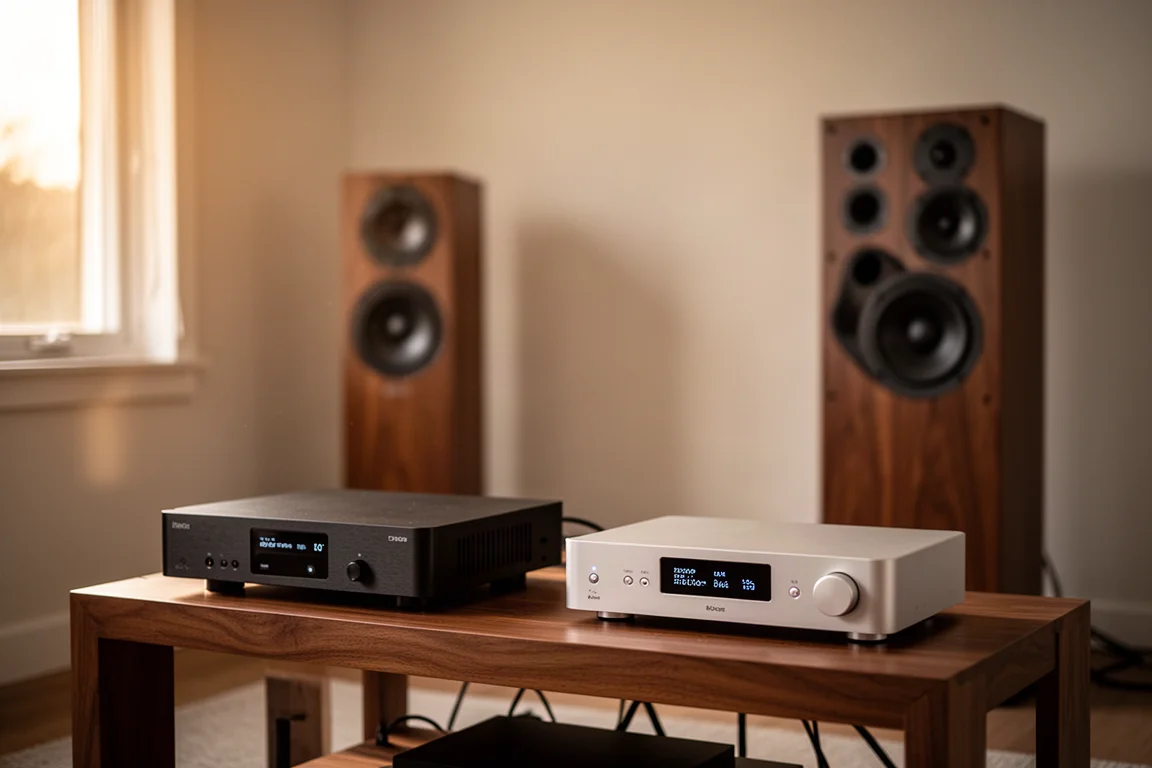
It is also a reasonable fit for listeners who want a compact, quiet transport rather than a full-featured all-in-one. The trade-off is that you need to be comfortable with a lean feature set and a small number of connection options.
Roon users should take note as well. The AirLens works as a Roon endpoint and supports Roon’s digital volume control, which lets you manage listening level without adding an analog preamp to the chain.
Main Strengths
The most striking quality of the AirLens is how quiet it sounds. Notes emerge against a very dark background, with performers and instruments rendered as though they were individually spotlit. That sense of blackness between the notes is usually associated with considerably more expensive streamers, and hearing it from a $2,000 unit is the strongest argument in its favor.
Imaging is the other standout. Instruments are separated with precision, and the soundstage has a grand, spacious quality that makes it easy to follow individual lines in a dense mix. Detail retrieval is high without tipping into harshness when the rest of the system is well matched.
Galvanic isolation on the outputs is central to the design. There is no physical connection between the input and output circuits, and the signal crosses that gap through the air. PS Audio states that this approach helps reduce noise, jitter, and EMI, and the resulting calm in the presentation is consistent with that description.
PS Audio also states that the I2S output sounds better than the coax output, and that holds up in listening. Through I2S the presentation gains air, spaciousness, better imaging, fuller bass, and more texture. Coax works, but I2S is a clear step up in almost every respect.
Digital Outputs and Connectivity
There are only two digital outputs on the AirLens: coax and I2S. Both are intended to feed the digital input of a standalone DAC, or the DAC section of an integrated amplifier, receiver, or AVR. If you were hoping for optical or USB outputs, this unit does not offer them.
That restraint is deliberate. PS Audio treats the AirLens as a serious music streamer, and limiting the outputs to the ones the company considers best is part of that statement. Coax exists because it is the common connection most DACs accept, while I2S is presented as the highest-quality path.
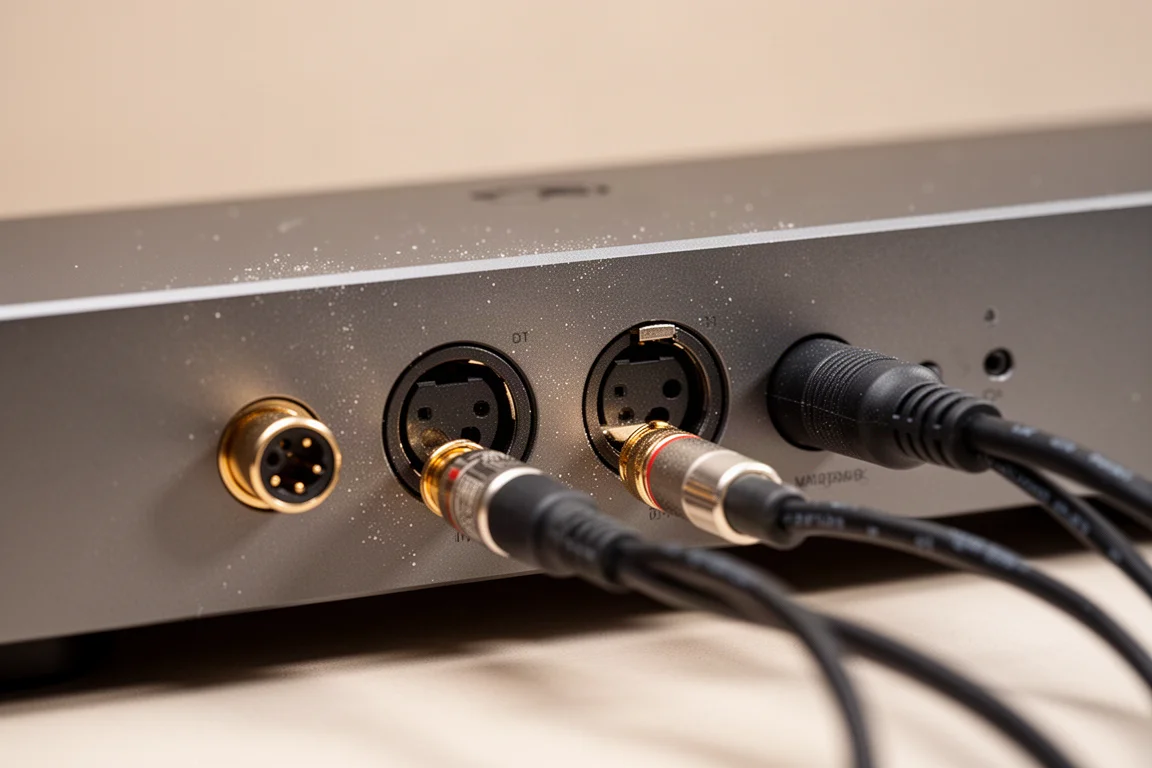
Eight DIP switches on the underside handle sampling rate and DSD configuration. The settings are straightforward once you consult the manual, and they give you a way to match the output to your DAC without menus or software.
One practical consequence of the two-output design is that your DAC choice matters more than usual. A DAC with an I2S input lets you hear what the AirLens can do at its best.
How It Sounds With Different Setups
The AirLens does not sound like the warmer, richer, more easygoing presentation often associated with PS Audio components. Its character leans leaner and more focused, with an emphasis on separation and imaging rather than body.
Pair it with a DAC that also stretches the soundstage and thins the tone, and the result can become too lean. A revealing, wide-open converter tends to exaggerate that quality rather than balance it, and the combination can end up less musical than either piece suggests on its own.
Pair it with a fuller-bodied, warmer DAC and the balance shifts in a very satisfying direction. The leanness of the streamer offsets the richness of the converter, and you get bass weight, texture, and control alongside the AirLens’s black background and precise imaging. The top end stays detailed and sparkling without becoming analytical, and the overall result is musical rather than clinical.
This is why the AirLens is such a natural match for PS Audio’s own converters. The two house characters complement each other rather than doubling down on the same strengths. With a DAC from another brand, the pairing can come across as analytical, so it is worth thinking about the tonal balance of the rest of your chain before committing.
Streaming Platform Performance
The AirLens supports Roon, Tidal Connect, Spotify Connect, and DLNA-compatible software. Which platform you choose has a noticeable effect on what you hear.
Through Tidal Connect the unit sounds exactly as you would expect at this price: competent, clean, and entirely convincing. Moving to Roon is where it starts to feel like it punches above its price. Spaciousness increases, the presentation gains body, and instrument separation becomes more exact. The already dark background gets quieter still, and the blackness between notes becomes more pronounced.
That improvement matters because it addresses the AirLens’s main tonal weakness. Roon gives the leaner character a fuller foundation, and the combination of a quiet floor, spotlit notes, and precise separation is what makes this streamer stand out.
The level of background silence here is comparable to far more expensive streamers, even if those references remain a step ahead overall. At $2,000, getting close in that particular quality is a meaningful achievement, and it is likely a product of the galvanic isolation and the attention paid to noise reduction throughout the design.
Things to Consider Before Buying
The AirLens asks you to supply the DAC, the preamp or volume control, and the amplifier. If you want a single box that does everything, this is not that product.
Its two digital outputs are limited, and there is no optical or USB option. That is a real constraint if your DAC only accepts USB.
Tonally, the unit leans lean and bright rather than warm and full. Systems that are already forward or thin may find the combination fatiguing, and the match with your DAC deserves careful thought.
Finally, the platform you stream from changes the sound meaningfully. If you are not set up for Roon, you will not hear the AirLens at its best, and that is worth factoring into the decision.
Buying Advice
The AirLens is easiest to recommend to two groups. The first is existing PS Audio owners who already have a PS Audio DAC, especially one with an I2S input. In that context the tonal match is excellent and the black background and imaging come through clearly. Budget for a good I2S cable as well, because the coax output is a genuine step down.
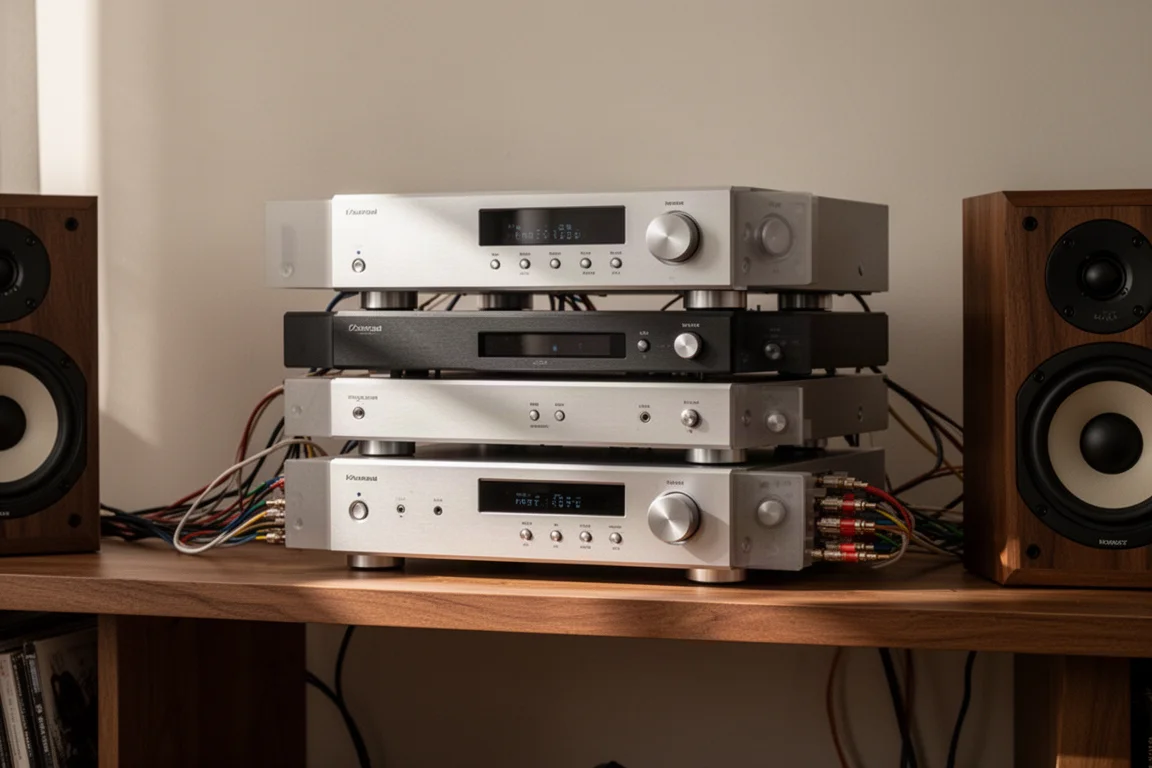
The second group is Roon users with a full-bodied DAC from any brand. Roon unlocks the extra spaciousness and body that make the AirLens feel like a bargain at $2,000, and the streamer’s quietness will flatter a well-sorted system.
If your DAC is thin-sounding, if you rely on Tidal Connect alone, or if you need USB and optical outputs, look carefully before buying. The AirLens is a specialist component, and it rewards a system that is built around its strengths.
Conclusion
The PS Audio AirLens is not the streamer its price and PS Audio’s warmer house sound might lead you to expect. It is a compact, focused, unusually quiet transport with a lean tonal character, excellent imaging, and a level of background silence that is rare at this price.
That combination works beautifully when it is matched with a full-bodied DAC, particularly a PS Audio converter over I2S, and it works even better when Roon is the streaming platform. Get the pairing right and the AirLens delivers a high-end streaming experience in a small, relatively affordable package. Get it wrong and the analytical edge will be hard to overlook.
Productlink
Bekijk meer details over PS Audio AirLens
Dit product wordt in deze review genoemd. Controleer voor aankoop de specificaties, opties en compatibiliteit.
Bekijk meer details over PS Audio AirLens