Español · Ski Boots
Atomic Hawks Ultra XTD 130 BOA GripWalk Review: Low-Volume Hybrid Touring Boot
A close look at the Atomic Hawks Ultra XTD 130 BOA GripWalk, a narrow, low-volume hybrid touring boot with a moldable Mimic liner, BOA lower closure, and a true 50/50 construction.
Introduction
The Atomic Hawks Ultra XTD 130 BOA GripWalk may have one of the longest names in ski boots, and the spec sheet behind it is just as busy. It is a 130 flex, low-volume hybrid touring boot built around a True Flex polyurethane shell, a BOA closure on the lower cuff, a full GripWalk sole, and tech fittings for pin bindings.
That combination places it squarely in the crossover category: light enough for climbing, robust enough to spend a full day on the lifts. The more interesting questions are where its real limits lie and whether the fit works for your foot.
Who is the Atomic Hawks Ultra XTD 130 BOA GripWalk for
This boot is aimed at skiers who want a single pair of boots for both lift-served days and self-propelled days, and who have a narrow, low-volume foot. Atomic lists a 98 mm last, and the shell itself is marked 94 mm, making it a genuinely narrow fit.
In the tested size, the sole length is 282 mm, and it’s worth noting that this is a small platform. It also weighs around 1,800 g, keeping it competitive with other boots in the hybrid touring zone.

The profile points toward skiers with an off-piste mindset: people who spend most of their season in softer snow, tour occasionally, and value a tight, precise connection over a roomy, immediately comfortable fit. If your foot is wide or high-volume, this is not the boot to start with.
Shell, liner, and fit
The shell uses True Flex polyurethane, a material chosen so the flex stays consistent regardless of temperature. The construction relies on ribs and varying wall thicknesses, with a reinforced section at the rear that Atomic calls the energy backbone. There is also a friction pivot at the upper cuff, which is common on touring boots and makes cuff alignment slightly more complicated, though the shell is moldable enough to work around it.
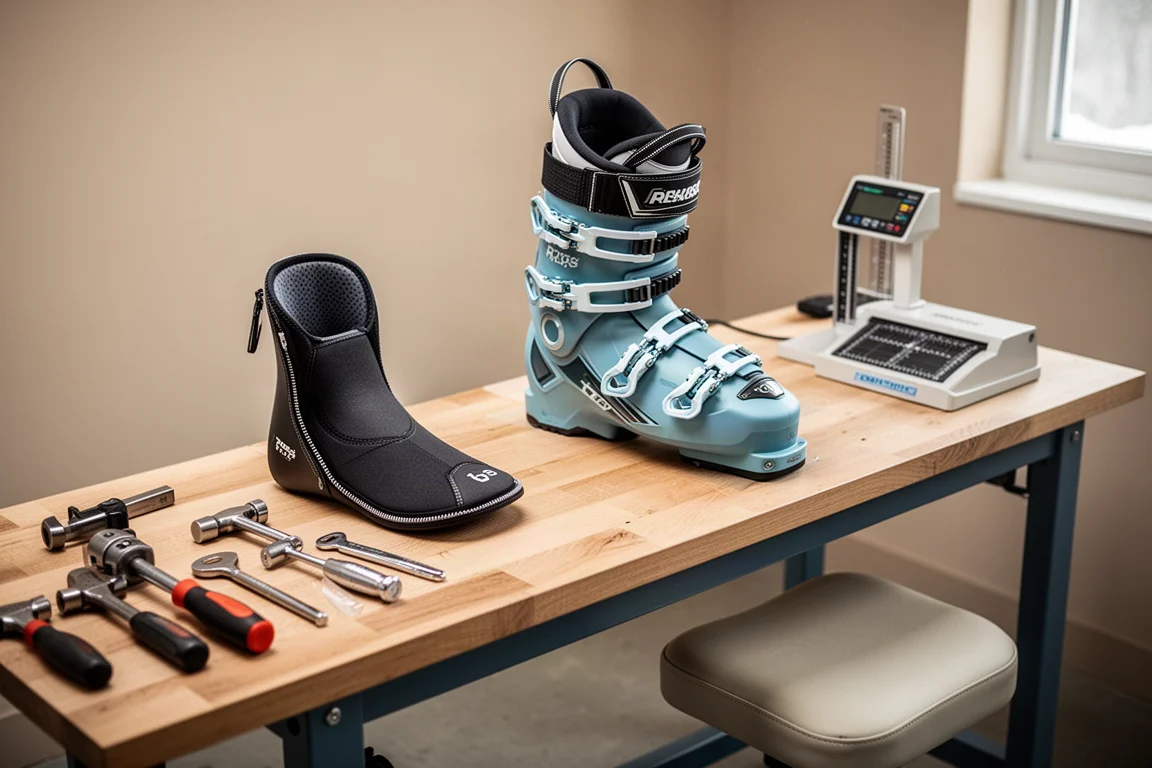
The liner is the Mimic Platinum, a dense, heat-moldable design with an aggressively articulated heel pocket and four pull tabs. Those extra tabs exist because molding matters so much here: the fit is so tight from the start that the liner must be positioned precisely before heating.
Molding that liner is not optional. Out of the box, this boot simply doesn’t fit most feet. After molding, the liner becomes thin but supportive and ergonomic, which is what makes the tight shell usable. The practical rule is blunt: if this boot feels comfortable before molding, it’s probably too big. Because the liner is so dense, it also shouldn’t pack out much, so day one and day one hundred should feel similar.
Main strengths: touring comfort and powder performance
The walk mode is the most powerful in Atomic’s lineup, with roughly 54 degrees of articulation in the upper cuff. That translates to a comfortable, natural stride on the ascent, and the walk lever and buckles are easy to operate with gloves or mitts, even in cold, windy conditions. The BOA dial pops open in a single motion at the bottom of a descent.
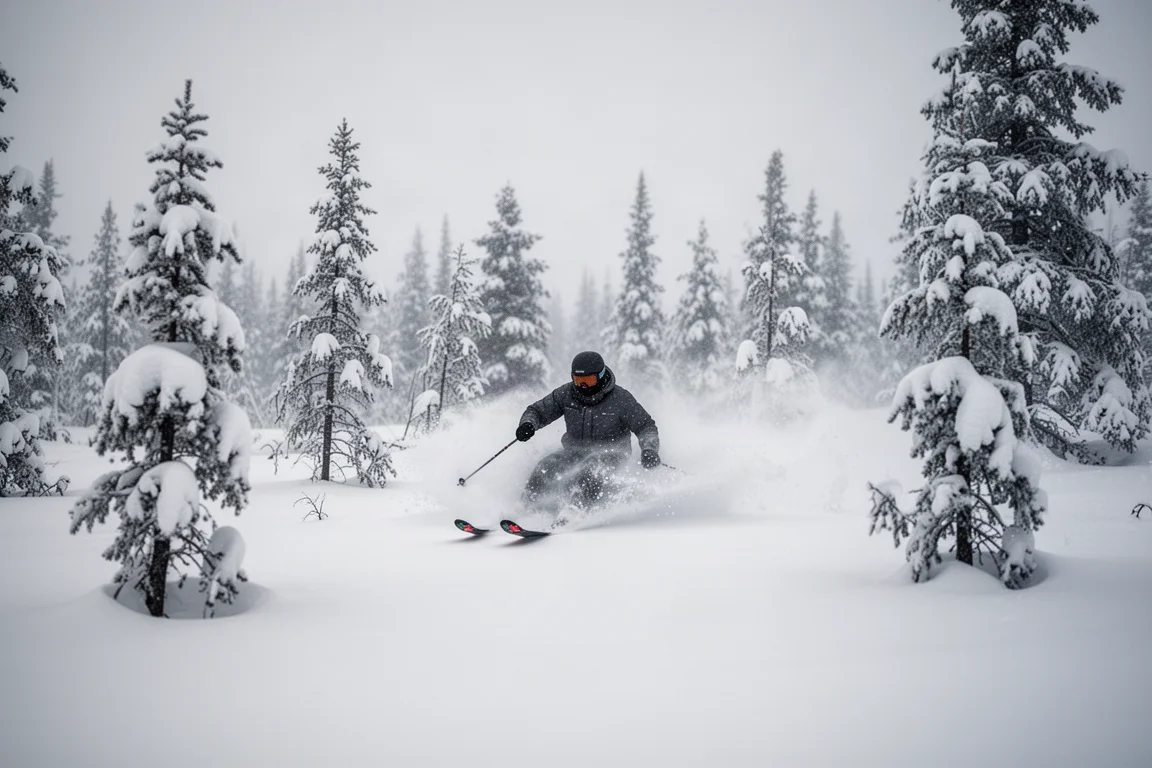
On the downhill side, the story is a tight, locked-in fit that sends almost every movement straight to the ski. In low-angle terrain, wind-affected soft snow, and deep resort powder, the boot felt composed and precise, with no obvious limitations. A full lift-served day of roughly 25,000 to 30,000 vertical feet also stayed comfortable, which says a lot for a boot this light.
It’s a true 50/50 boot in the sense that it can genuinely do both jobs, provided you accept that its ceiling on hard snow sits below a dedicated alpine boot. For soft snow and off-piste terrain, the fit and low weight do most of the work for you.
BOA closure, walk mode, and hardware
The BOA system on the lower cuff is the most discussed feature here, and the benefits outweigh the drawbacks. One click is a very small adjustment, making it easy to fine-tune tension on the fly, whether it’s a single click mid-ascent or one or two clicks tighter at the top of each lift. The main trade-off is that a single cable pulls both lower zones with roughly the same pressure, so you can’t tension the instep area independently. Skiers with a very sensitive or high instep may notice that.
Up top there are two touring-style buckles that lock forward, plus keeper flaps that hold the buckle ladder in place when you release tension. The 50 mm power strap uses a switch closure: flip it open and the strap slides free, flip it closed and it ratchets down. That’s a genuinely useful detail when your hands are cold and you’re trying to get the boots off at the end of the day.
Other details worth knowing: forward lean comes set at 15 degrees and can be adjusted to 13 or 17, though moving it to 17 at home is physically difficult and much easier with a vise and the right tool. The rear walk mechanism can be swapped for a fixed bar if you plan an extended stretch of lift-served skiing only. The sole is a full GripWalk design with rubber tread through the middle of the foot and no replaceable alpine toe and heel lugs, and there are tech fittings for true pin bindings. After hard use, including shell damage from ski edges, the BOA closure never released or showed signs of failure.
Firm snow and carving: where the compromises show
On firm snow with higher edge angles, the difference between this boot and a dedicated 130 flex alpine boot becomes clear. The Hawks Ultra XTD doesn’t offer the same support at the very top of the cuff, and you can feel the shell bend and twist slightly when you push a hard carving turn.
GripWalk soles also give a marginally less precise connection at the toe piece on firm, icy surfaces, which shows up as a small loss of power transfer. That said, in softer packed powder and warmer conditions, the gap largely disappears. The honest summary is that the boot is excellent in soft snow, very good in mixed conditions, and simply not built to be a hard snow carving weapon.
Things to Consider Before Buying
The liner must be heat molded for the boot to work at all, which means this is not a purchase to make online without support. The last is narrow and the volume is low, so a wide or high-volume foot won’t get along with it regardless of molding. Forward lean changes beyond the stock 15 degrees are awkward to do at home.
At around $950, the boot costs less than buying a dedicated alpine pair plus a dedicated touring pair, but you’re trading away firm snow precision to get that value. Skiers who spend most of their season on hard groomed runs and rarely tour will be better served elsewhere.
Buying Advice for the Atomic Hawks Ultra XTD 130 BOA GripWalk
Start with a boot fitter. Try the boot on with an open mind, because the initial fit will feel extremely tight and that’s expected rather than a sign of the wrong size. Plan for liner molding as part of the purchase, not an optional extra, and expect the fit to change dramatically once the Mimic Platinum liner has been heated and set.
If you have a narrow, low-volume foot, split your season between soft snow and touring, and want one boot to cover both, the value here is strong. If you chase firm snow carving or have a wider foot, look at a different boot in the crossover category or a dedicated alpine model.
Conclusion
The Atomic Hawks Ultra XTD 130 BOA GripWalk is a specialist, and it’s honest about that. It delivers a remarkably precise, locked-in fit, comfortable touring performance, and confident soft snow handling, while giving up a little top-end support on firm snow. For the right foot and the right ski day, that trade is an easy one to accept.
Enlace de producto
Ver Atomic Hawks Ultra XTD 130 BOA GripWalk con más detalle
Este producto aparece en la reseña. Antes de comprar, revisa las especificaciones, las opciones y la compatibilidad.
Ver Atomic Hawks Ultra XTD 130 BOA GripWalk con más detalleMás lecturas
Reseñas relacionadas
Ski Boots
Resumen de botas de esquí 2027: seis botas de flex 130 que vale la pena conocer
Seis botas de esquí de flex 130 para 2027, más una mejora de forro de bajo volumen, comparadas por peso, ajuste, sensación de flexión y facilidad de uso.
Ski Boots
Análisis de la bota de esquí Armada AR One: un Cabrio de tres piezas que por fin lo hace bien
La primera bota de esquí de Armada combina el diseño Cabrio de tres piezas con ingeniería de Atomic, una carcasa termoformable y una horma de 100mm que calza mejor que cualquier Cabrio anterior.
Ski Boots
Análisis de las botas de esquí Armada AR1: un híbrido de cabrio y overlap para esquiadores de park y freeride
La primera bota de esquí de Armada combina una carcasa cabrio de tres piezas con hebillas estilo overlap y una hebilla tipo honda accionada por cable. Aquí te contamos dónde brilla y qué valorar antes de comprarla.