Floorstanding Speakers
Zu Audio Definition Six Review: A High-Sensitivity Floorstander Built for Scale
The Zu Audio Definition Six pairs two 10-inch coaxial drivers with an active 12-inch subwoofer and 101 dB sensitivity. Here is what it does exceptionally well and what to weigh before buying.
Introduction
Zu Audio is an American speaker company that designs and builds its loudspeakers in Ogden, Utah. Its drivers are made in the United States, and the cabinets and finishing work are completed in the company’s own factory rather than being farmed out. The Definition Six is the largest Zu speaker to date and the sixth generation of the Definition line, which started in 2003 and skipped a fifth generation altogether. Pricing starts at $25,000 a pair and rises with the finish selected, with custom finishes also possible.
That is a serious outlay, so the useful question is not whether the Definition Six is good, but what kind of listener it rewards and where it asks for compromises.
Who This Speaker Is For
The Definition Six is aimed at listeners who put scale, weight, and drive ahead of nearly everything else. Large speakers of this type tend to spoil their owners. Once you grow used to life-size dynamics and the sense of ease that comes with a big cabinet, going back to a smaller speaker can feel like a letdown. The character here is unflappable: music moves along without any sense of strain or impending distortion.
It also suits owners of low-power amplifiers. A sensitivity rating of 101 dB and an 8-ohm impedance that does not drop far below that figure make it an easy load to drive, which opens up possibilities with modest tube and solid-state designs.
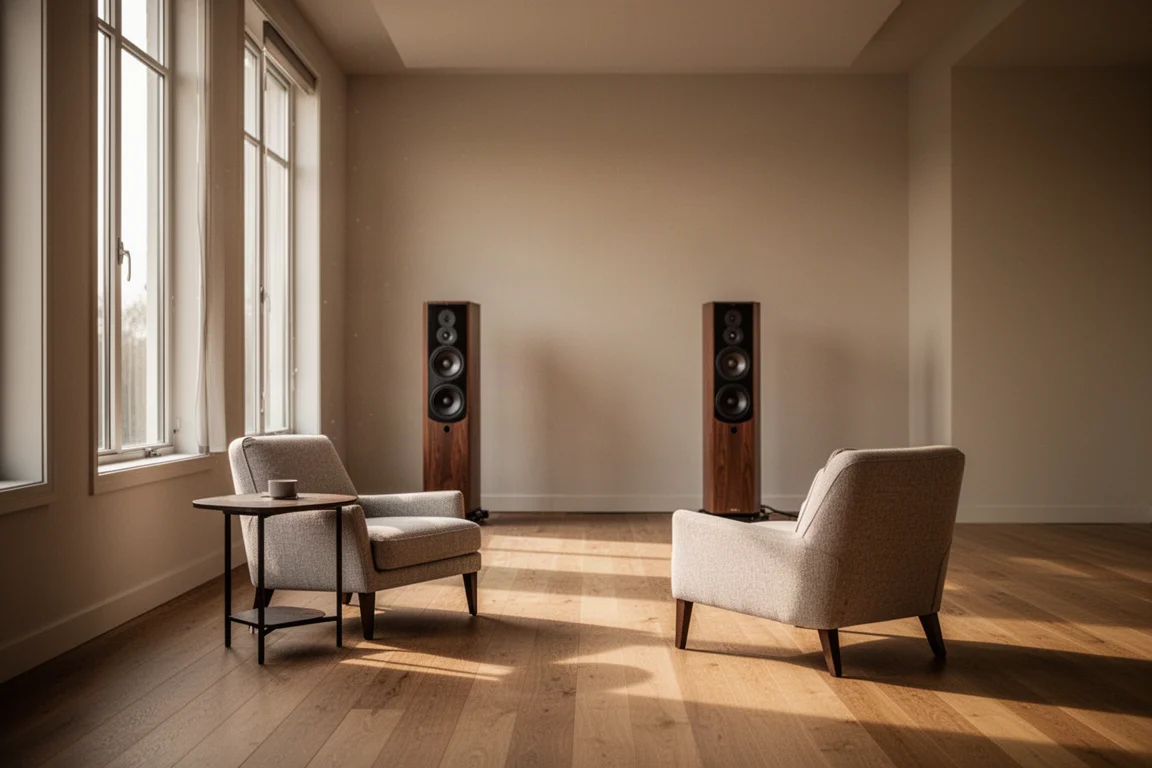
Room size matters as much as amplifier choice. In a normal to large listening room the Definition Six should satisfy most listeners, and only in very large spaces would its limits start to appear. Listeners who prioritise transparency, purity, or a deep, holographic soundstage are better served by other designs. Buyers working with a smaller budget should also note that the DW6, known as the Dirty Weekend Six, is one of Zu’s least expensive models and carries a good deal of the same character.
Design and Driver Configuration
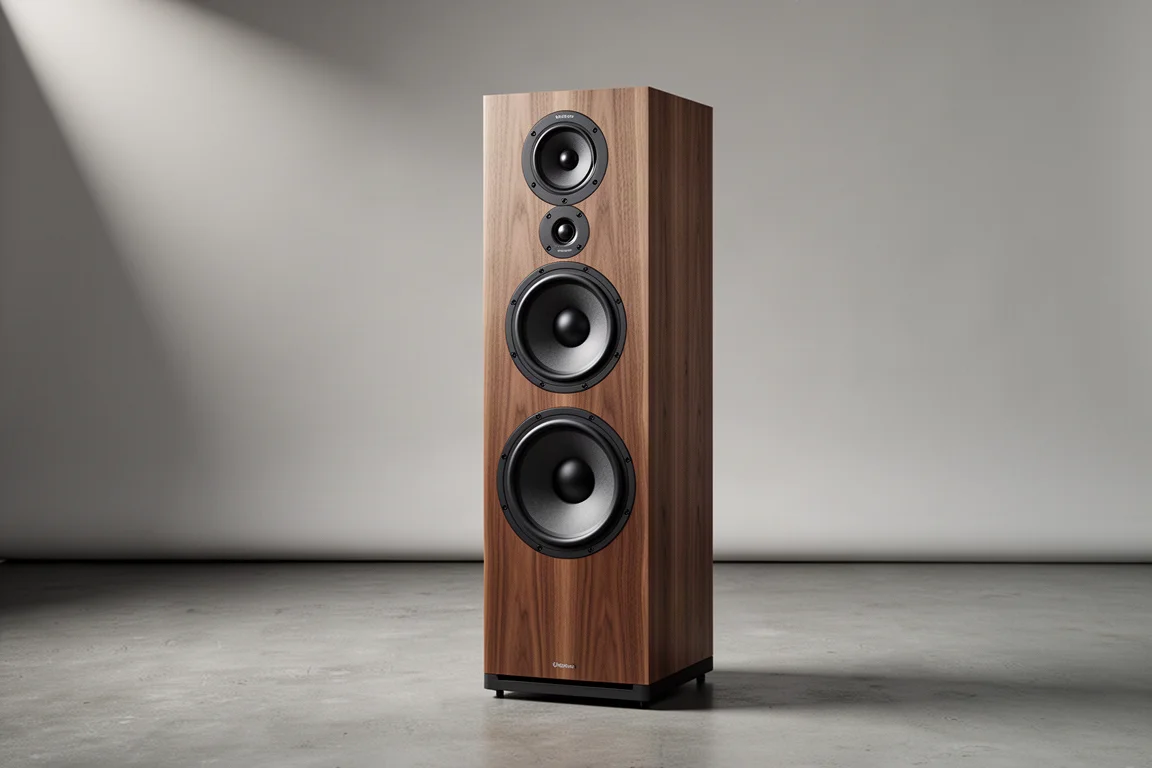
The driver layout is unusual and worth understanding before auditioning. Two 10-inch coaxial drivers sit in the upper cabinet, each one a woofer with a tweeter mounted at its centre, closely related to the driver used in the Zu Soul Six. Between those two coaxial units is a separate tweeter, included to fill the space both literally and in the frequency range between them. Near the bottom of the cabinet is an active 12-inch subwoofer, powered by a 400-watt Class D amplifier built around a Hypex OEM board with a linear power supply.
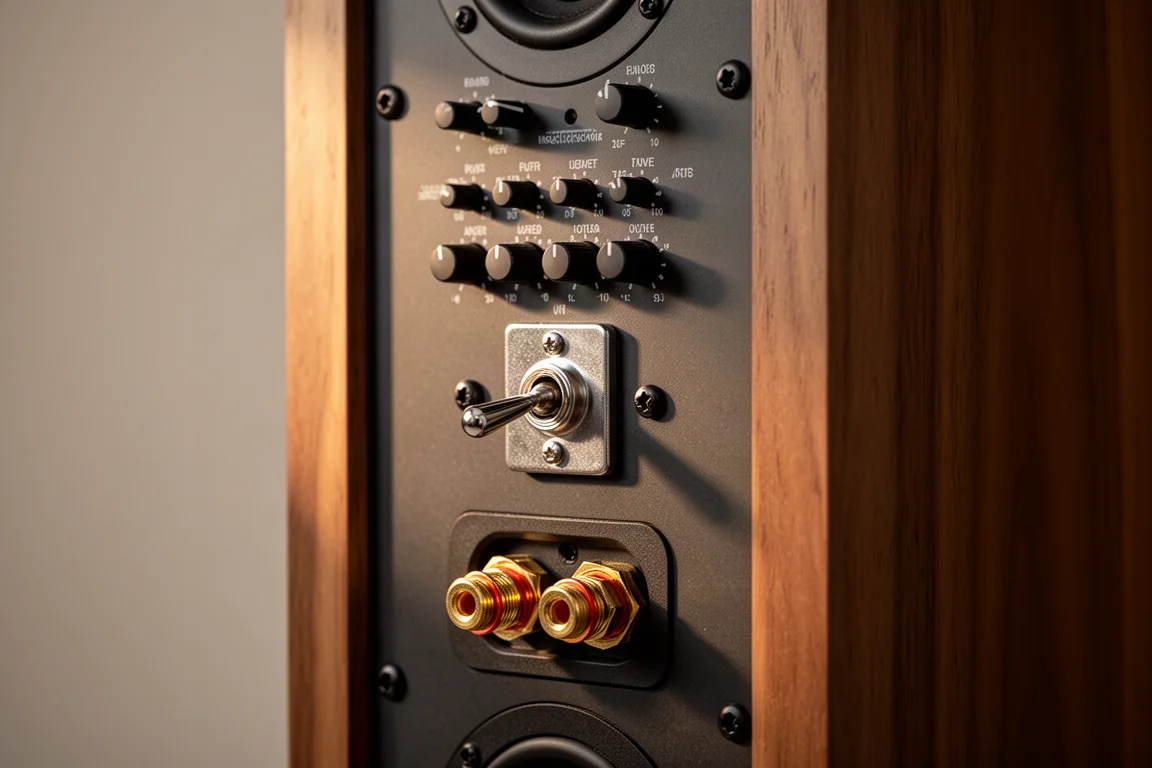
Rear controls cover subwoofer level, a low-pass filter with 45 Hz as the recommended starting point, and a parametric EQ intended for solving room problems rather than casual tuning. A heavy-duty toggle switch bypasses the subwoofers completely, which is useful for late-night sessions or rooms where deep bass becomes intrusive. The two 10-inch drivers run without a crossover, while the tweeter has a Jupiter capacitor in line.
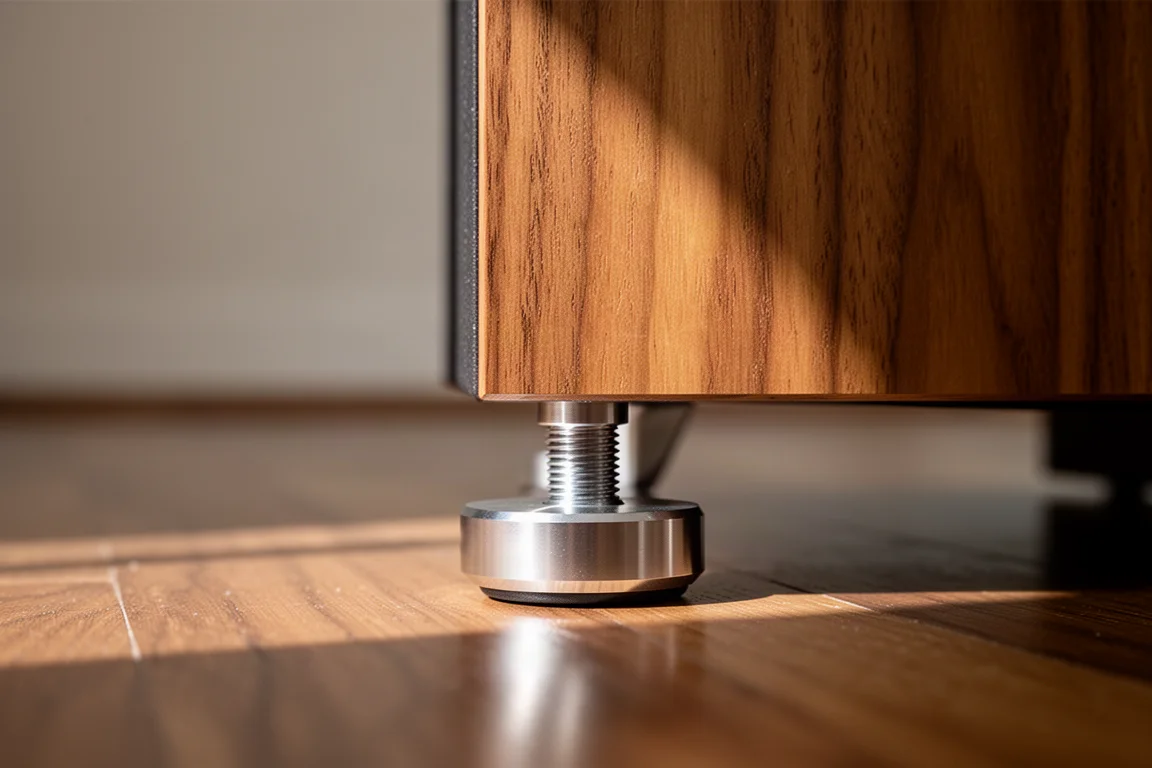
Cabinets are built from a lightweight, strong tone wood chosen for its damping properties rather than the MDF used by many manufacturers. Even fully loaded, the cabinet material keeps the overall weight manageable for a speaker of this size, though it remains a heavy component to move. Setup is helped by the leveling feet on the base, which adjust without tilting the cabinet back, settle the speaker without wobble, and allow it to be repositioned easily because they are not spiked.
Connections are equally flexible. Standard binding posts run directly to the full-range drivers, and a Neutrik 8-pole speakON connection is wired in parallel for listeners who prefer that termination technique. The subwoofer section is fed through Lundahl transformers for isolation, and all processing stays in the analog domain. Units arrive with roughly three weeks of factory burn-in.
Main Strengths: Energy, Scale, and Drive
The Definition Six is at its most convincing with live recordings. On a 1978 live Rolling Stones set, vocals arrived with real force, the sense of a singer pushing everything into a performance rather than a polite studio take. Guitar tone carried the rawness of an amplifier in a room, and the drums and bass locked in with a drive that goes beyond what most audiophile speakers deliver at any price.
That energy is the core of the appeal. Broadly speaking, audiophile designs tend to excel at refinement, tone, soundstaging, and imaging, and many of them do those things better than this speaker. What the Definition Six does instead is communicate power and momentum, and that quality is genuinely addictive once you are used to it. A live Frank Sinatra set with the Count Basie Orchestra, a recording that can turn bright or hard on some systems, played with ease here, and the vocals communicated directly.
Bass from the active 12-inch subwoofer has texture and form, and nudging the subwoofer level up produced a visceral low end that the music could be built around. It is worth remembering that the two 10-inch drivers generate significant bass on their own, reaching down to roughly 40 to 50 Hz, so the speaker can be run with the subwoofers switched off and still sound complete.
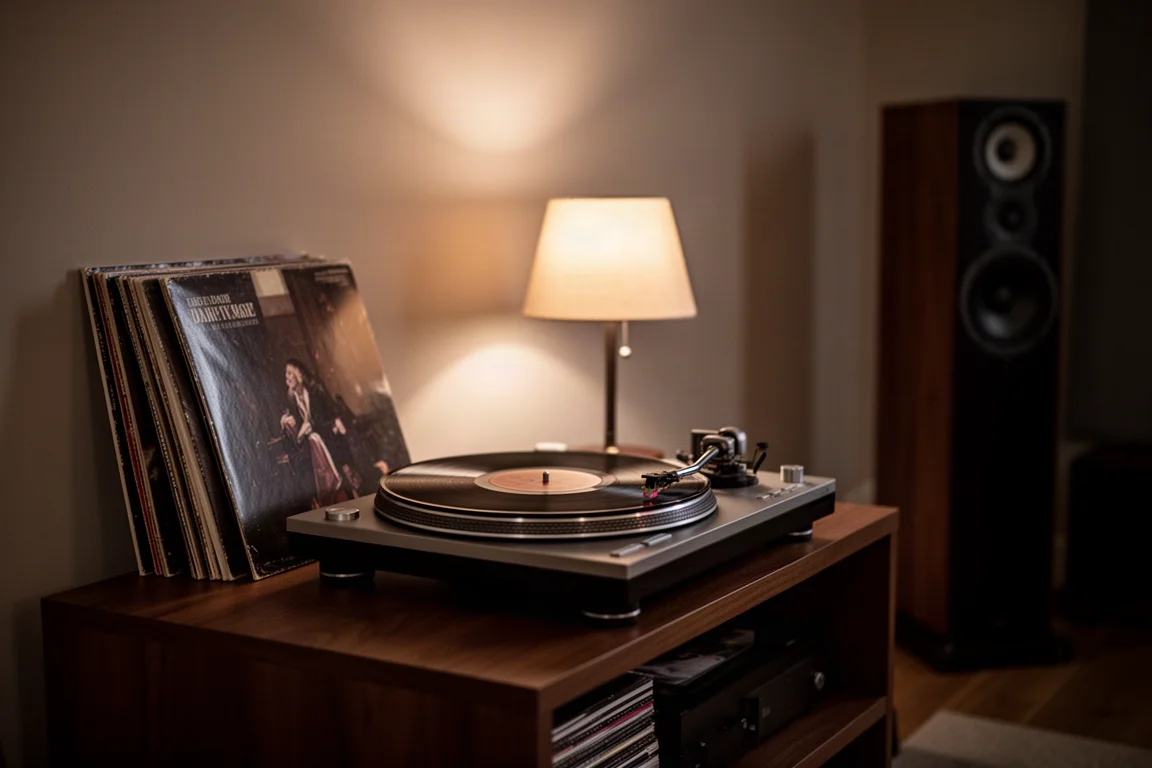
Amplifier pairing proved straightforward. The speaker worked well with a Pass Labs XA25 and also with a First Watt SIT-3, an 18-watt-per-channel design into 8 ohms, which underlines how little power the 101 dB sensitivity demands.
Midrange Character and High Frequency Response
The midrange is where the Definition Six gets to the heart of a performance. Vocals carry conviction and intent, and the speaker makes the belief behind a recording audible rather than merely reproducing the notes. On solo piano recordings, the sense of scale and dynamics of a nine-foot grand came through better than most audiophile speakers manage, and one listener described it as the best piano sound heard in the room.
High frequencies are relaxed rather than forward. That does not mean dull or dark: the treble simply refuses to thrust detail at the listener, which is part of the reason the speaker stays so easy to listen to at high volumes. A more forward top end would tire the ears quickly during loud sessions.
The soundstage deserves an honest note. It can be wide, but it is dimensionally flat compared with some competing designs. The Definition Six is not built around transparency and purity, and listeners who judge a speaker primarily on those qualities will find other options more satisfying. That is not a flaw so much as a different set of priorities, and it is the reason this speaker divides opinion less than it might.
Things to Consider Before Buying
The compromises are clear and worth weighing carefully. Transparency and purity are not the priorities here, and the soundstage lacks the depth that some listeners expect at this price. Very quiet late-night listening is also less rewarding than expected, which is a mild surprise given the 101 dB sensitivity rating. The speaker seems to want a bit more volume before it comes alive.
Size and weight are practical considerations. This is a large floorstander that needs space, and placement matters: a moderate degree of toe-in with a listening distance of around 10 feet worked well. The leveling feet made that positioning simple, since the cabinet can be slid around without the hassle of spikes.
Price is the other factor. The Definition Six starts at $25,000 a pair and increases with the finish selected, with custom finishes available on request. Because Zu sells direct worldwide, it is worth confirming finish options, lead time, and current pricing before committing.
It is also worth being honest about what you are buying. This is a speaker that trades some traditional hi-fi virtues for energy, scale, and physicality. If those trade-offs read as acceptable rather than disappointing, the rest of the ownership experience is unusually straightforward for a component at this level.
Buying Advice
Match the speaker to your priorities. If you want life-size scale, dynamics, and drive from live and acoustic recordings, the Definition Six is a compelling and genuinely distinctive option. If you want maximum transparency and a deep, three-dimensional soundstage, another design will serve you better.
The high sensitivity is a real advantage, since it makes the speaker a natural partner for low-power amplifiers. The subwoofer bypass and the analog rear controls add day-to-day flexibility, letting you run the speaker full range with the subs off or dial in the low end to suit the room. The lightweight cabinet material keeps the weight manageable, and the leveling feet make placement far easier than spiked designs.
If the budget does not stretch this far, the DW6 remains one of Zu’s least expensive speakers and a sensible way to explore the same house character before stepping up. Because the brand sells direct worldwide, a conversation about finishes, room size, and amplifier pairing before ordering is a good use of time.
Finally, plan for the room as carefully as the purchase. A normal to large space lets the Definition Six breathe and play to its strengths, while an oversized room will eventually reveal its limits. Get that balance right and the speaker delivers the kind of presence that is difficult to walk away from.
Conclusion
The Zu Audio Definition Six is an extraordinary speaker for the right listener. It does not check every audiophile box, and no speaker does. What it delivers instead is the liveness of music, its power, its weight, and the way it reproduces vocals and piano with remarkable conviction. For buyers who value those qualities above refinement and soundstage depth, and who have the space and the budget to support a speaker of this scale, it is a deeply rewarding choice. Buyers who prioritise transparency, purity, and dimensional imaging should look elsewhere and will find plenty of alternatives.
Product link
View more details for Zu Audio Definition Six
This product is mentioned in the review. Check the specifications, options, and compatibility before buying.
View more details for Zu Audio Definition SixFurther reading
Related Reviews
Floorstanding Speakers
Acoustic Energy AE109 Mark II Review: A Refined Floorstander at £699
The Acoustic Energy AE109 Mark II is a slim, warm sounding floorstander that delivers clarity, midrange body and strong imaging in small to medium rooms.
Floorstanding Speakers
Acoustic Energy AE509 Review: A Slim Floorstander With Deep, Defined Bass
A practical look at the Acoustic Energy AE509, a slim floorstanding speaker with carbon fibre drivers, deep and well-defined bass, and an easy-going character that rewards careful system matching.
Floorstanding Speakers
Arendal 1528 Tower 8 Review: Reference Neutrality With Real Demands
A close look at the Arendal 1528 Tower 8, a nearly five-foot, 200-pound floorstander that rewards generous space, serious power, and high listening levels with reference-grade neutrality.