Military Surplus
Zippered vs Traditional US Military Poncho Liner: Which Surplus Blanket Fits Your Kit
A practical comparison of the zippered and traditional US military poncho liners, covering build, warmth, packed size, condition grades, and how to spot genuine surplus.
Introduction
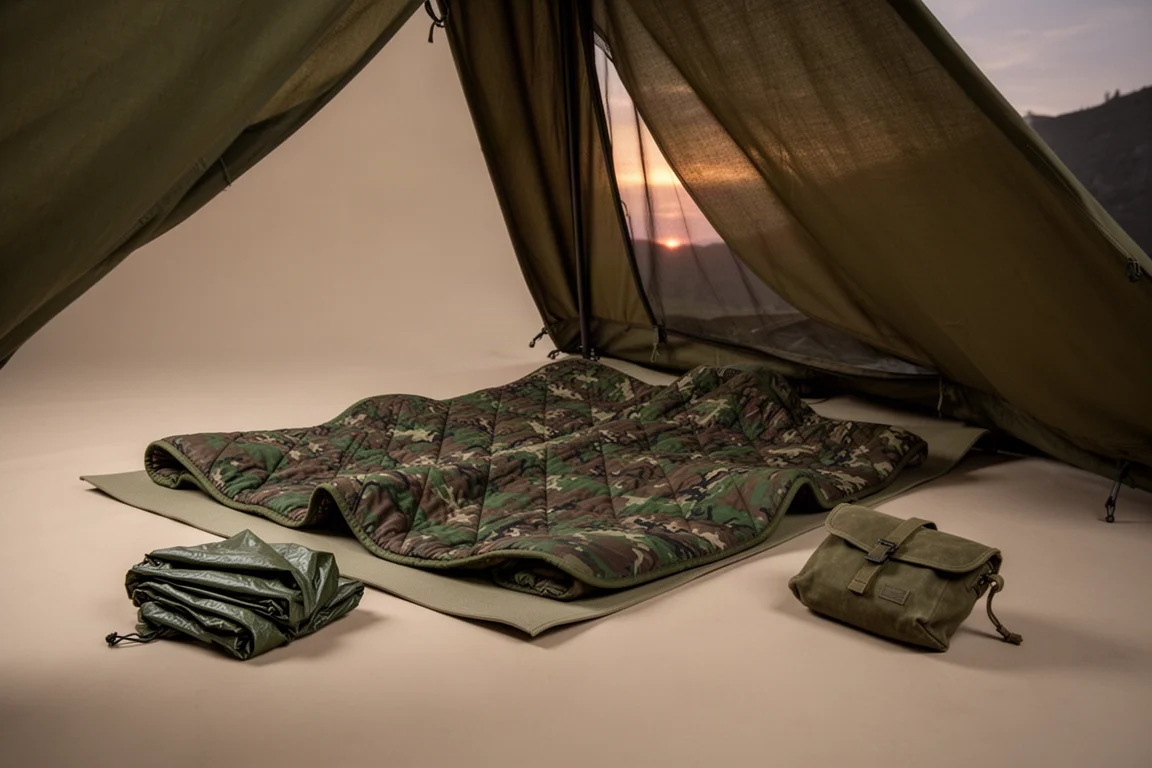
The United States military poncho liner has been issued since the Vietnam era, and its core design has barely changed. It is a quilted nylon blanket that ties into a wet weather poncho, doubles as a light sleeping bag, and packs down small enough to live at the bottom of a rucksack.
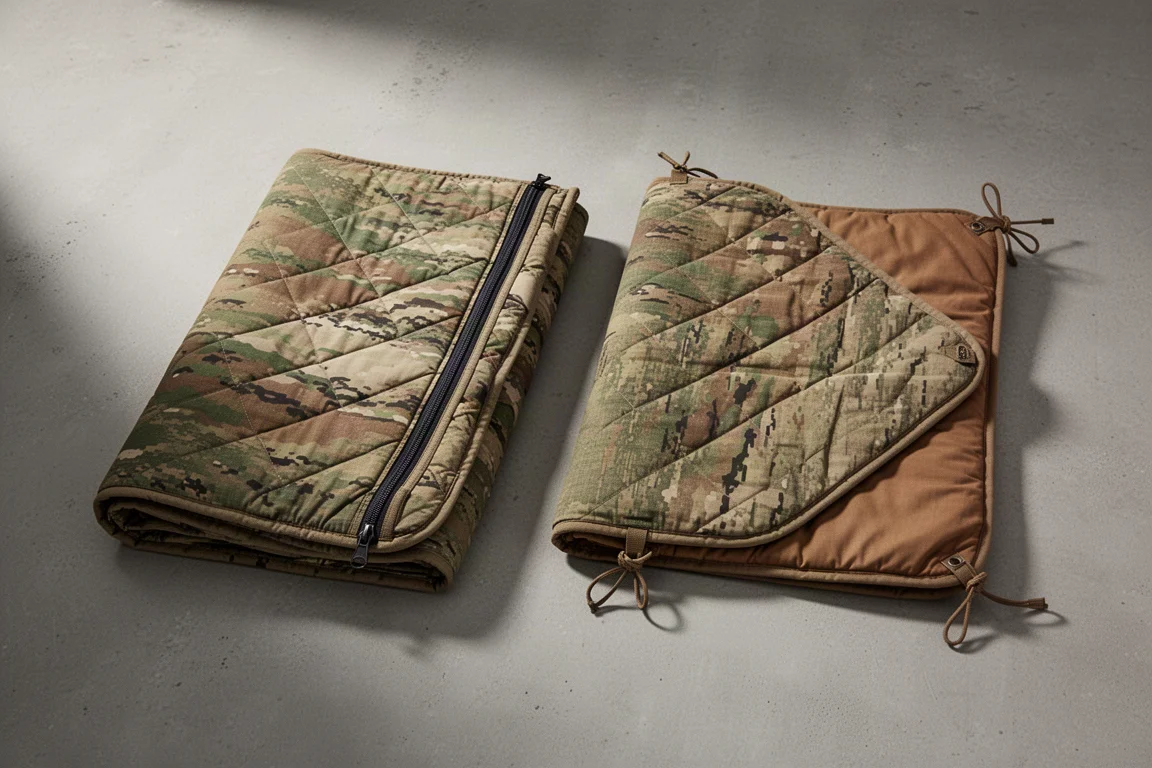
The newest revision adds one meaningful feature: a zipper that runs around the body of the liner. Both versions covered here carry the same issue label from Winston-Salem Industries for the Blind, and both use the same ripstop nylon shell over polyester batting. Dimensions and weight are effectively identical, at roughly 88 inches long by 64 inches wide and just under two pounds each. The difference is how the blanket closes.
That single change shapes the entire buying decision. Because the two liners are otherwise so close in materials and measurements, the choice comes down to availability, condition grade, and whether a full-length zipper is worth the extra searching and the slightly higher price that rare surplus examples command.
What the Zippered and Traditional Liners Share
Start with what does not change. Both versions use nylon ripstop on the outside and the inside, with polyester batting sandwiched in the center as the insulation. Both carry the same tie-off points, so either one can be lashed to a wet weather poncho or used on its own as a blanket. Both are rated for roughly 50 degrees Fahrenheit when worn with clothing.
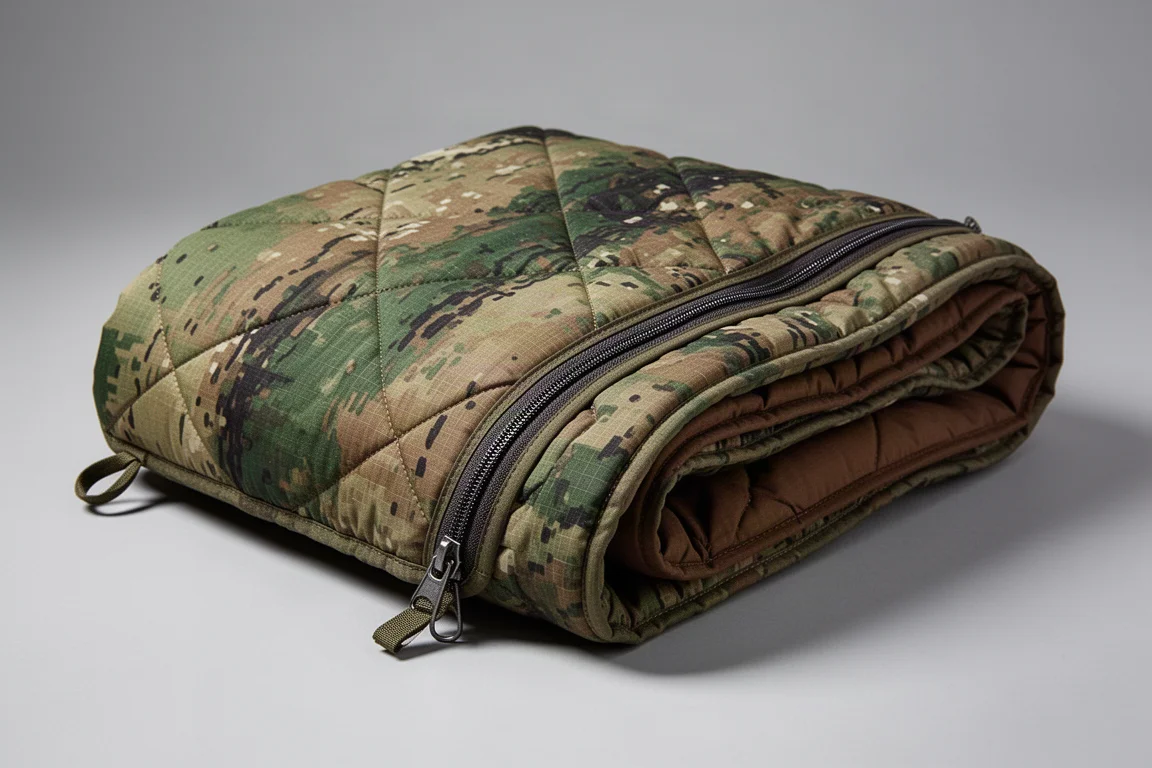
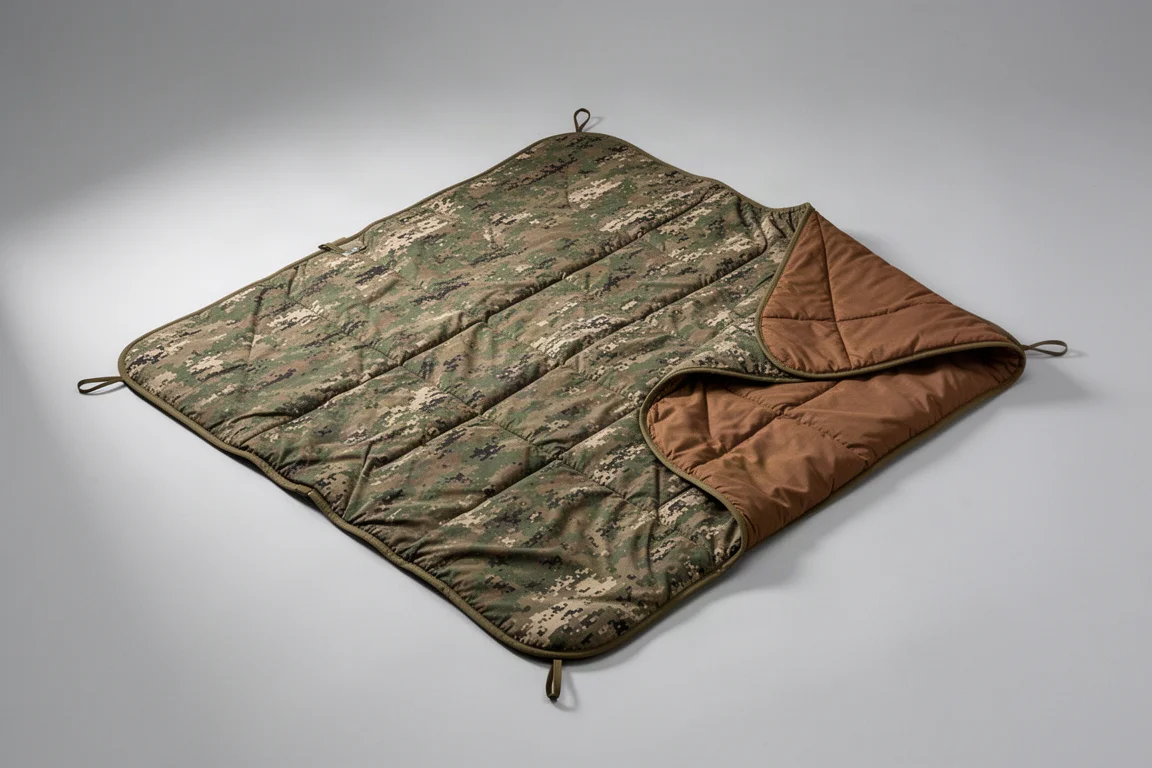
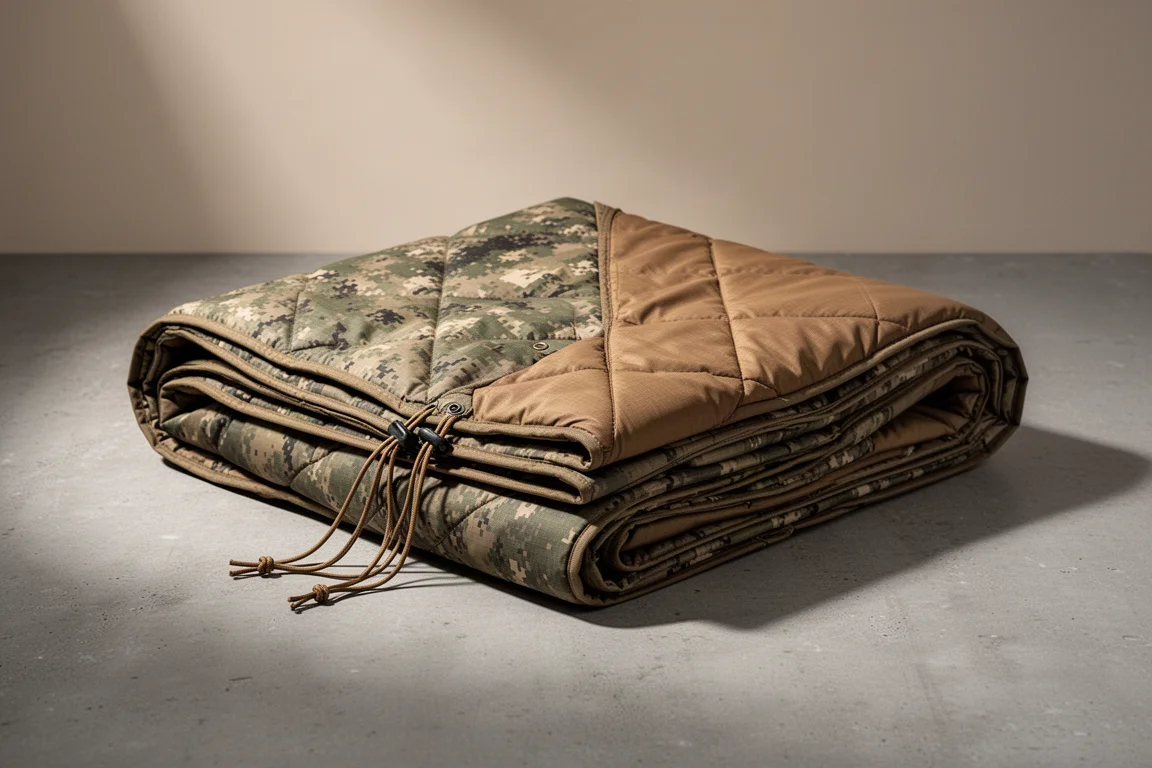
Packed size is also a match: expect a compressed bundle of about 12 inches by 6 inches. Color varies by example rather than by version. The traditional liner is digital woodland camouflage with a brown interior, while the zippered liner is reversible, letting you run coyote brown or digital woodland on the outside. Newer stock simply looks more vibrant, since older liners fade with years of use.
Zippered US Military Poncho Liner: The Latest Variant
This is the newest change the poncho liner has seen. A YKK zipper runs around the body of the blanket, starting at the top, and it includes a pull for cinching the liner closed. The practical effect is significant: you can climb in, zip it up, pull it tight, and get noticeably warmer than you would with a tie-only liner. It behaves much more like a sleeping bag, and it seals out drafts in a way the traditional version cannot match.
The zippered liner is also reversible, so coyote brown or digital woodland can face outward depending on your kit and your preference. Digital woodland is the only camouflage pattern seen on this variant so far, with no confirmed examples in other service patterns.
Availability is the main friction point. These are uncommon, and at times only one or two sellers have them listed, so pricing drifts upward compared with the traditional model. Condition is graded on an A through F scale, where A is the best and F the worst. A grade D example purchased for 32 dollars with free shipping arrived with a melted hole that went all the way through; it was repaired with an iron-on polyester patch and a quick machine stitch on both sides. A second tear near the zipper was reinforced and re-stitched without replacing the zipper itself. Neither repair was difficult, and the liner remains fully usable.
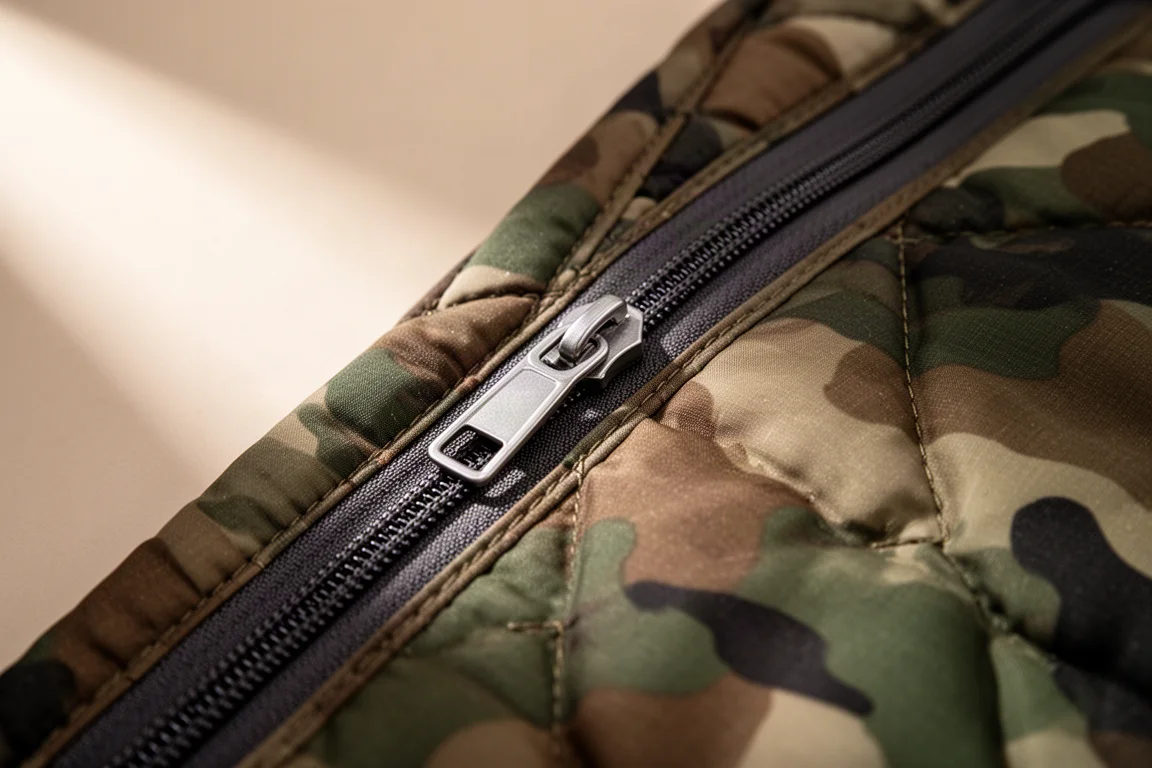
If you buy a lower grade, expect cosmetic wear and the possibility of a small repair. Check the description carefully, and confirm that the zipper is intact, since a working zipper is the entire point of this version.
Traditional US Military Poncho Liner: The Original Design
The traditional liner is the version most people picture. It has no zipper, just nylon tie points that let you attach it to a poncho, bundle it around yourself, or use it as a light sleeping bag. It works, but it does not seal or trap warmth as efficiently as the zippered model, so it is the cooler of the two in the same conditions.
Two practical notes matter here. First, this version is easy to find, with plenty of examples circulating and competitive pricing on online marketplaces. Second, heavily used liners stretch with age. An old, well-loved traditional liner can measure noticeably longer than a brand new one, which is why a well-worn example and a fresh zippered liner can look like different sizes side by side even though they are built to the same dimensions.
The issue label on this version reads liner, wet weather poncho, made by Winston-Salem Industries for the Blind. That label is the detail worth checking before you buy.
How to Tell Genuine Surplus From Copycats
Copycat liners are common, and some are convincing at a glance, which makes the tag the most important thing to inspect. Counterfeit labels frequently contain spelling errors, typos, or grammar mistakes. Others borrow a legitimate military stock number from a different product entirely, which is why a stock number alone proves nothing.
The reliable marker is the manufacturer line. Genuine liners from Winston-Salem Industries for the Blind carry that name on the label, and as far as can be determined, that manufacturer is the only source for the zippered variant. If a seller does not show the tag in the listing, it is worth walking away rather than gambling on a liner you cannot verify.
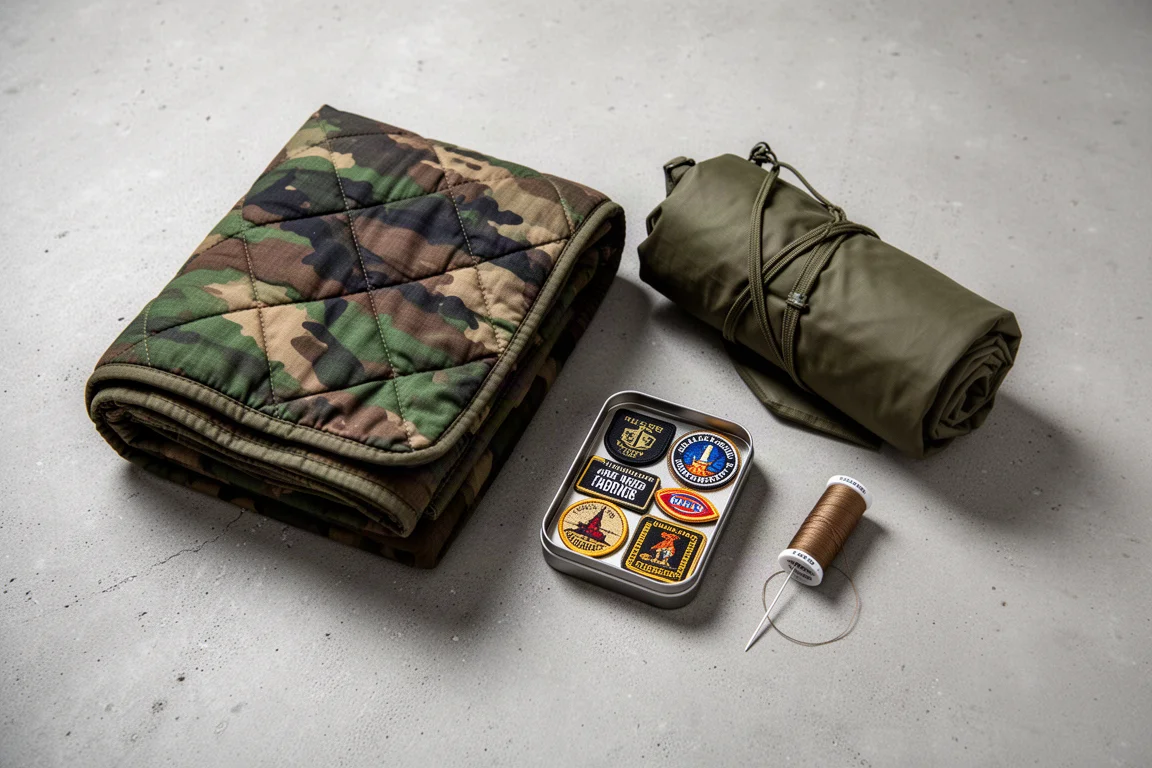
Pay attention to small details as well: stitching quality, the feel of the batting, and whether the zipper hardware matches what you would expect from a military contract liner. These are the differences that separate a real surplus blanket from a lookalike.
Repairs, Care, and Packed Size
Surplus means used, and used gear sometimes arrives with damage. The good news is that poncho liners repair easily. A hole that burns through the quilted layers can be closed with an iron-on polyester patch, then secured with a simple machine stitch on both faces. A tear running along the zipper can be reinforced and re-stitched in place, provided the zipper track itself is undamaged.
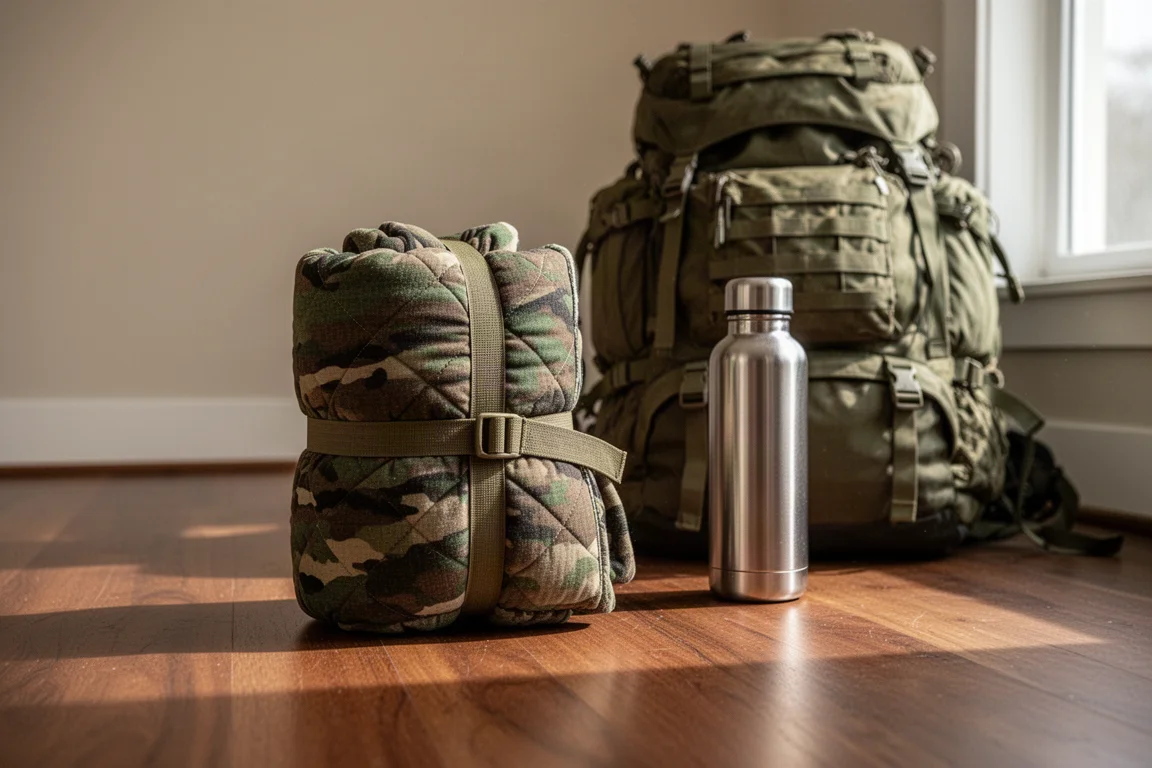
If you buy a lower condition grade, treat repairs as part of the deal rather than a defect. If the damage is beyond a quick fix, returning the liner is a reasonable move. For storage and travel, both versions compress to roughly 12 inches by 6 inches, so neither takes up more room than the other in a pack.
Buying Advice
If you want a poncho liner today with minimal searching, the traditional version is the straightforward choice. It is widely available, generally inexpensive, and works well with a wet weather poncho. Military surplus retail sites tend to price higher than online marketplaces, so it pays to compare before committing.
The zippered version is the better blanket for cold, drafty conditions, and it is the one to buy if you want the sleeping bag style closure. Be prepared to search, since supply is thin and the price runs a little higher than the traditional model. Condition grades B and C have appeared alongside grade D, so you can often choose a cleaner example if you are patient. Only digital woodland has been seen in this variant, so do not hold out for another camouflage pattern.
Given how few of these circulate, waiting for a perfect listing is a real risk. If you find a verified zippered liner at a fair price, with the Winston-Salem Industries for the Blind label visible and an intact zipper, that is a sensible moment to buy.
Conclusion
The zippered and traditional US military poncho liners are the same blanket in nearly every measurable way: same ripstop nylon shell, same polyester batting, same dimensions, same packed size, and the same approximate 50 degree Fahrenheit rating with clothing. The zipper is the one genuine upgrade, and it changes how the liner performs when you need to stay warm.
Choose the traditional liner for value and availability. Choose the zippered liner if you want a surplus blanket that closes up like a sleeping bag and you are willing to hunt for one. Either way, check the tag first, and the rest is easy.
Further reading
Related Reviews
Military Surplus
U.S. Poncho Liner Review: The Woobie Blanket Explained
A practical look at the U.S. poncho liner, the military surplus woobie blanket: what it does well, where it falls short, and how to buy one without overpaying.

Backpacking Gear
Building a 10 lb Base Weight: An Ultralight Backpacking Gear List
A practical walkthrough of the ultralight pieces behind a 10 lb base weight, from a 765 g pack and a roomy one-person tent to a full camp chair and a dependable water filter.

Road Bikes
10 New Road Bikes Worth Watching: Aero, Titanium, Steel and Endurance Standouts
A practical roundup of 10 new road bikes, from aero flagships chasing single-watt gains to titanium, steel and endurance platforms built for real roads.