Stationery
Yu-Plus M-Vision Lead Case and Flicta Multifunctional Pens: What's New and What's Worth It
A closer look at Yu-Plus's new M-Vision mechanical pencil lead case and the Flicta multifunctional pen family, including whether the Standard is worth the upgrade over the Basic.
Introduction
Yu-Plus may be a young stationery brand, but the pace of its releases is remarkable. The brand is a general stationery label from the Japanese subsidiary of China’s largest card game manufacturer, and it debuted in July 2025 with products designed by creative director Yahara. Two new items just landed: the M-Vision mechanical pencil lead case and the Flicta multifunctional pen, available in both Basic and Standard versions.
This roundup focuses on the M-Vision lead case first, then compares the two Flicta models to see whether the 550 yen gap between them is justified.
Yu-Plus M-Vision Mechanical Pencil Lead Case
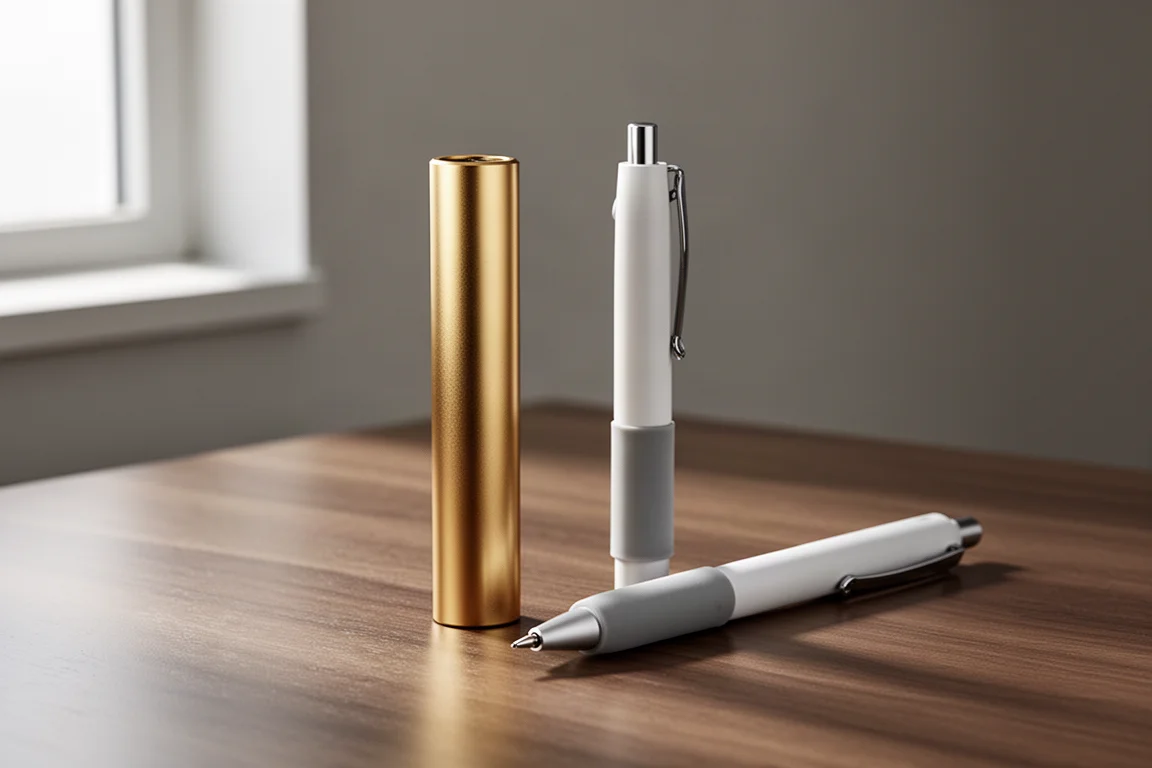
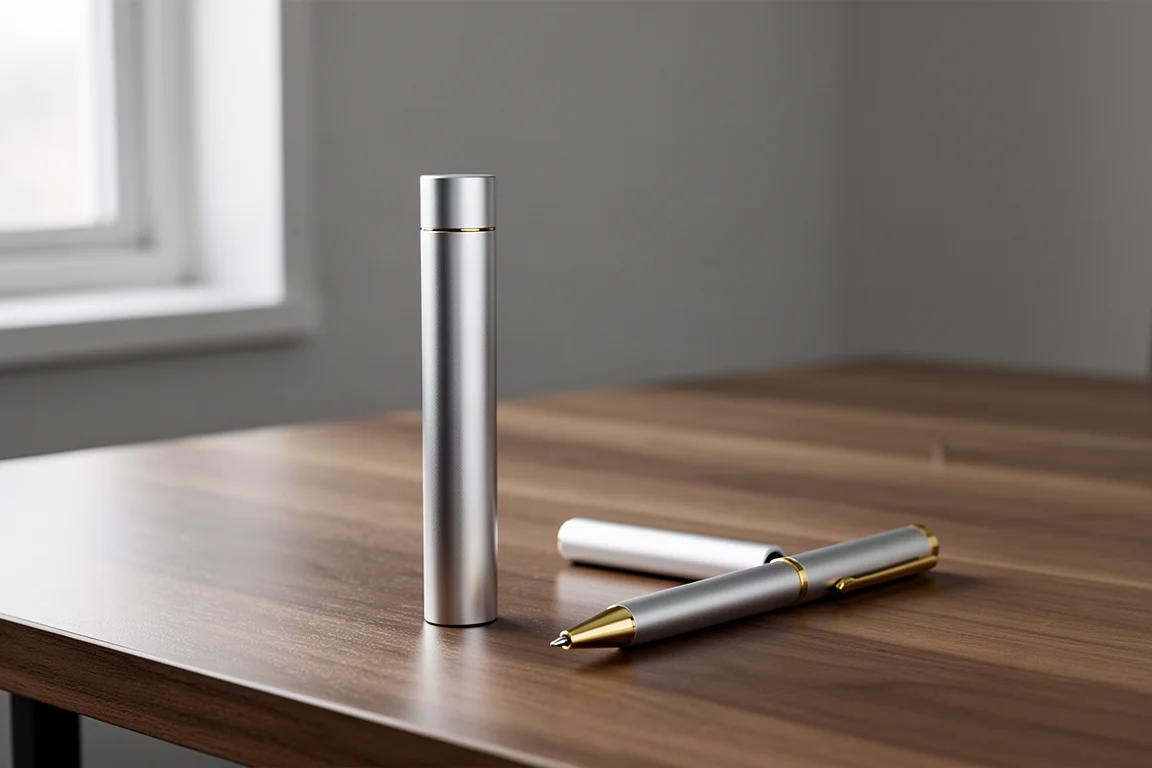
The M-Vision lead case is priced at 1,980 yen including tax. It was pre-sold at the Bun-Fes event held at Loft starting August 29, 2026, with general sales scheduled for September. It comes in three colors: Onyx Black, Titanium Gold, and Alloy Silver.
The body is aluminum, yet it stays remarkably light. The core concept is whether a lead case could be held like an actual writing instrument: at just 10 mm in diameter, it is designed to be stored alongside your regular pens rather than tossed into a pocket. The surface is anodized, so it resists scratches and the finish will not peel off.
Interestingly, the materials differ from the M-Vision Pro, which uses a brass body, yet the color appearance has been adjusted so the case looks like a natural part of the series when placed next to it. That level of finish control at this price is genuinely impressive.
The Dial: Diameter and Hardness in One Case
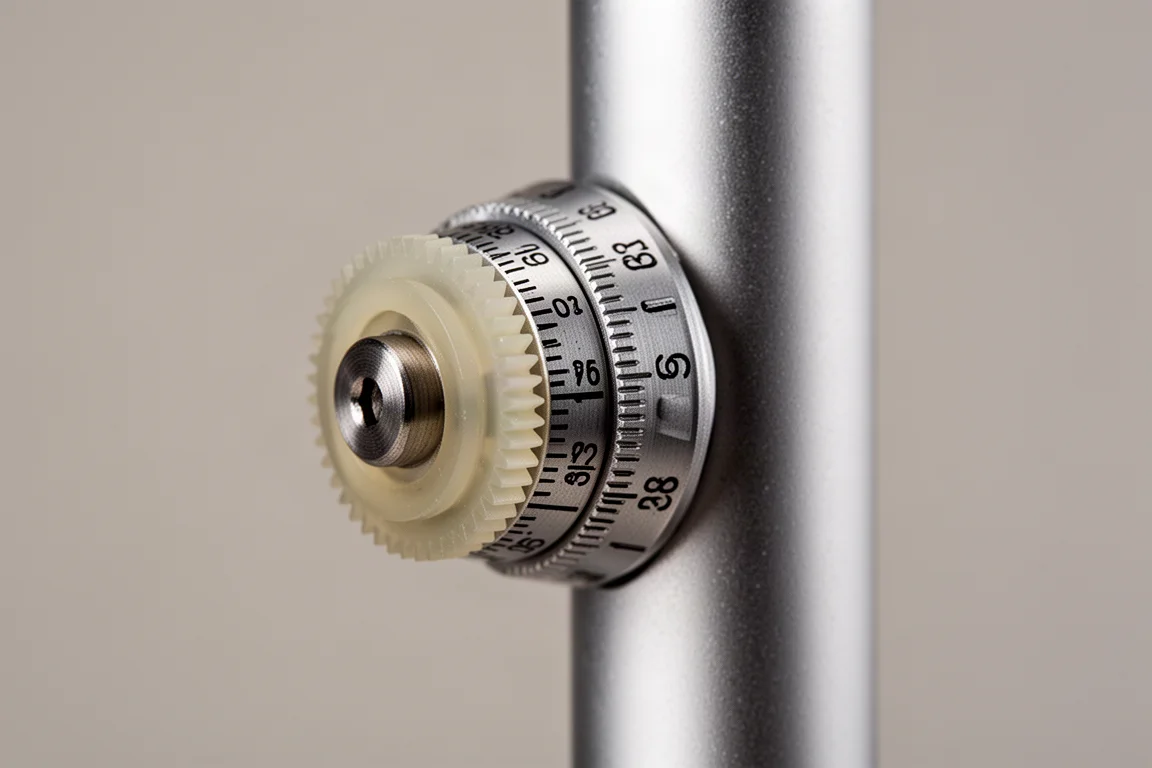
The standout feature is a two-stage dial. The top stage switches between lead diameters, while the bottom stage selects the lead grade. The supported diameters are 0.2, 0.3, 0.4, 0.5, 0.7, 0.9, and 1.3 mm, plus red for color leads. The grades cover 2H, H, F, HB, B, 2B, 3B, and 4B, which spans most commonly used ranges.
This is the first lead case to combine both diameter and grade switching, and it means you never have to worry about forgetting which lead is loaded. The dial itself is resin and rotates with a satisfying clicking sound from internal gears. Note that it only rotates in one direction; forcing it the other way can cause damage.
Cap, Window, and Everyday Practicality
There is more beyond the dial. A window on the side lets you check the remaining amount of lead, solving the all-too-common problem of opening your case away from home only to find it empty.
The cap is a pull-off type with an O-ring inside, so it does not come off easily, and the logo is printed on top. Despite using some resin to keep weight and price down, it does not feel cheap at all. For under 2,000 yen with all these features, it compares well against metal cases from other brands, and it is both practical and genuinely cool.
Flicta Basic vs Standard: Side by Side
The Flicta multifunctional pen comes in two versions. The Basic is 1,650 yen and ships with no packaging at all, while the Standard is 2,200 yen and comes in the same package design as previous Yu-Plus products. Colors split as follows: the Basic comes in Black, Blue, and Ivory, and the Standard in Black, White, and Beige.
They look almost identical side by side. The Basic looks simpler, while the Standard has a slightly chunkier impression. The stated difference is material: the Standard uses an aluminum barrel with a satin-like finish and a metal nose cone, whereas the Basic is resin. Perhaps due to the color, the Basic actually feels more premium in hand.
Both weigh differently but share nearly the same dimensions. Both have a high center of gravity, though the Standard sits closer to the middle, which shows careful engineering. Both grips are rubberized, but the Standard’s grip is uniquely textured, less sticky, and easier to hold. The knock mechanism is a slide-lever type on both, using the same resin knock parts with color indicators applied directly to each button. The clicks are firm and reliable.
Writing Performance: Where the Two Diverge
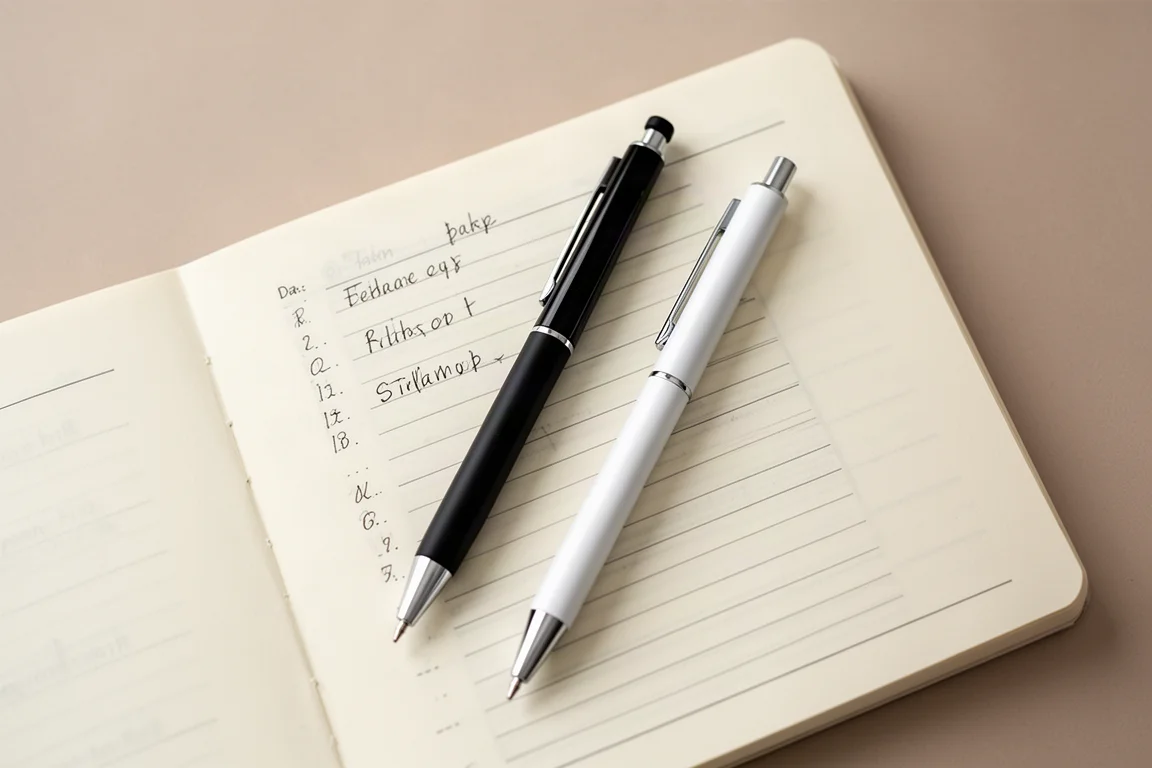
Both are 4-in-1 pens: black, red, blue, and blue-black inks, plus a 0.5 mm mechanical pencil mechanism at the clip. The ink is a 0.5 mm oil-based type labeled 4C, but since this corresponds to the JIS D-type standard, it is compatible with D1 refills rather than proprietary ones. Although not officially recommended, it can also be used with Acro Ink or Jetstream refills. The blue-black inclusion is a rarity on the market today, which is a genuine plus.
In writing tests, the Basic feels good: minimal tip wobble, smooth ink flow, stable output, and a fine-feeling 0.5 mm line that does not flood the page. The Standard is noticeably heavier, especially at the tip, which can be tiring for long sessions, though the grip is very comfortable and the mechanical pencil mechanism writes well.
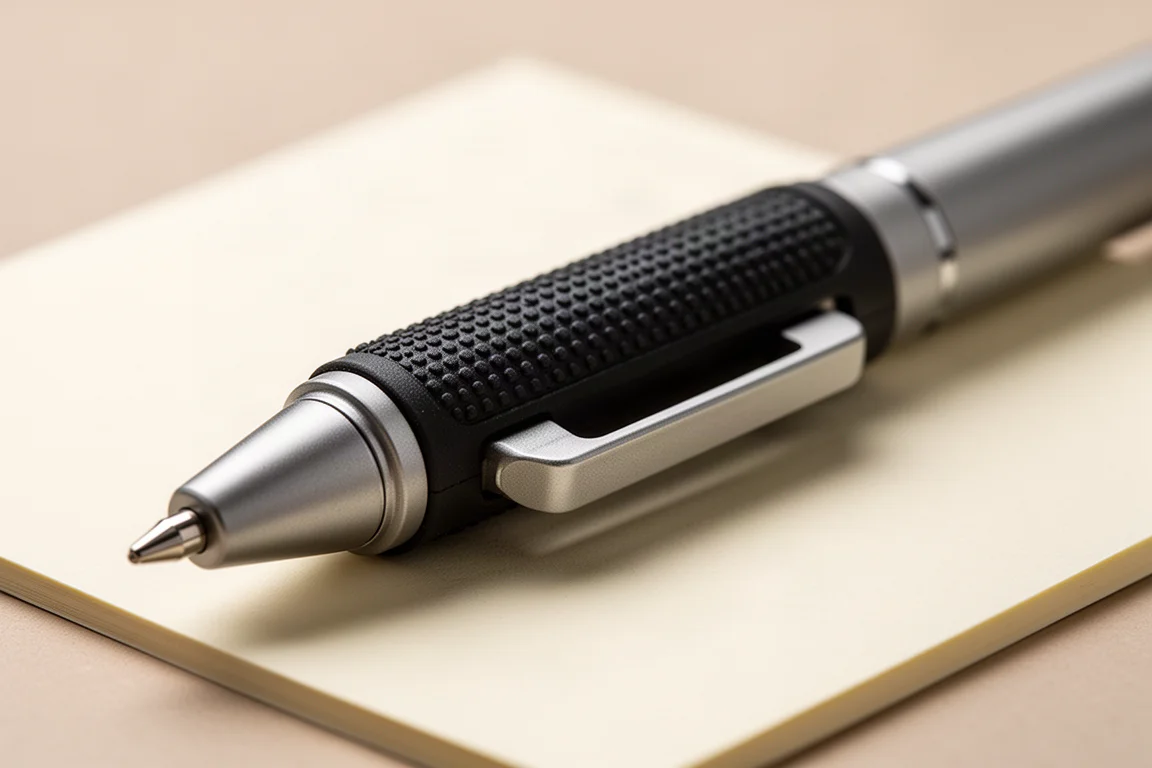
The grips are interchangeable between the two, but swapping the Basic grip for the Standard’s actually worsens the balance: with a light back and heavy tip, the pen slides forward and strains the fingertips. Overall balance matters more than simply weighting the tip.
Verdict: Is the Standard Worth the Extra 550 Yen?
The Basic is the stronger recommendation. It competes well against anything else in its price range, has stylish proportions despite its thickness, offers a comfortable knock, and includes rare blue-black refills. The Standard, while comfortable to write with, feels like a missed opportunity: the design may divide opinions, and around the knock part the finish contrast is stark enough that the white Standard can look cheaper than the cheaper Basic. Holding the Standard more vertically, near a 90-degree angle, makes its tip-heavy balance easier to manage.
Both products were released nationwide in September, so if either caught your interest, now is a good time to pick one up.
Conclusion
The M-Vision lead case is the star of this release: a well-priced aluminum case with a unique two-stage dial, a remaining-lead window, and a tactile feel that stationery lovers will appreciate. The Flicta Basic is an exceptionally well-made resin multifunctional pen that punches above its price, while the Flicta Standard is harder to recommend unless the aluminum finish and metal nose cone specifically appeal to you. Choose the lead case and the Basic pen, and you have a genuinely satisfying everyday carry set.
Product link
View more details for Yu-Plus M-Vision Mechanical Pencil Lead Case
This product is mentioned in the review. Check the specifications, options, and compatibility before buying.
View more details for Yu-Plus M-Vision Mechanical Pencil Lead CaseFurther reading
Related Reviews
Stationery
Musgrave Pencils Review: Four Classic Pencils from Tennessee's Last Pencil Factory
We put four Musgrave pencils to paper, from the classic Harvest to the Unigraph 1200 drawing pencil, to see what a century-old Tennessee workshop can still do.
Stationery
Fountain Pen Tiers Explained: From Starter Pens to Luxury Grails
A practical overview of the different levels of fountain pens and inks, from a sub-$20 starter setup to Italian piston fillers and retractable gold-nib everyday carries.
Stationery
HP Premium 32 lb Copy Paper Review: A Fountain Pen Friendly Everyday Printer Paper
A heavy, smooth 120 GSM copy paper that handles fountain pens far better than standard printer stock, with only minor trade-offs in shading and sheen.