Soundbars
Yamaha True X Surround 9A Review: Dolby Atmos With Rechargeable Surrounds
A close look at the Yamaha True X Surround 9A soundbar system, from its 12 beam drivers and wireless subwoofer to the rechargeable surrounds that double as portable speakers.
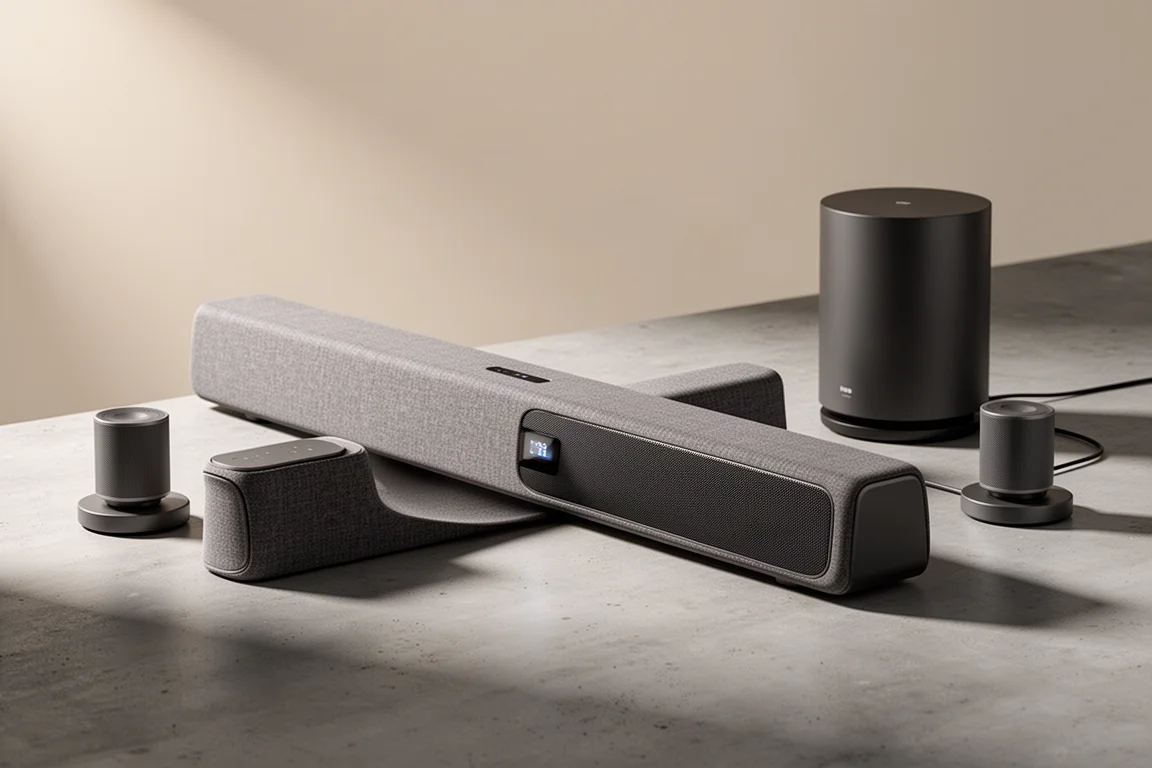
Introduction
Yamaha’s home audio lineage is unusually long. In 1985 the company released the DSP-1, a standalone digital soundfield processor that captured impulse responses from real concert halls and theaters and used digital signal processing to recreate those spaces at home. In 2004 came the YSP-1, the first powered soundbar, which used 42 individual powered drivers and precise digital processing to beam sound around a room from a single enclosure. The True X Surround 9A continues that beam-steering idea, now with Dolby Atmos, wireless surrounds, and modern streaming built in.
The system is available in two configurations. The standalone bar ships with a wireless subwoofer, while the full package covered here adds a pair of wireless rechargeable surround speakers for a more immersive setup.
Who the Yamaha True X Surround 9A Is For
The clearest case for this system is anyone who wants a surround experience without running cables to the back of the room. The rear speakers run on internal batteries and sit on charging pads, so they can be placed behind the couch with no wire stretched across the floor.
It also suits listeners who want more than a movie bar. Each surround can switch into Bluetooth mode with a single button and work as a portable speaker, and an IP67 rating means they can move outside by a pool without much concern about a splash.
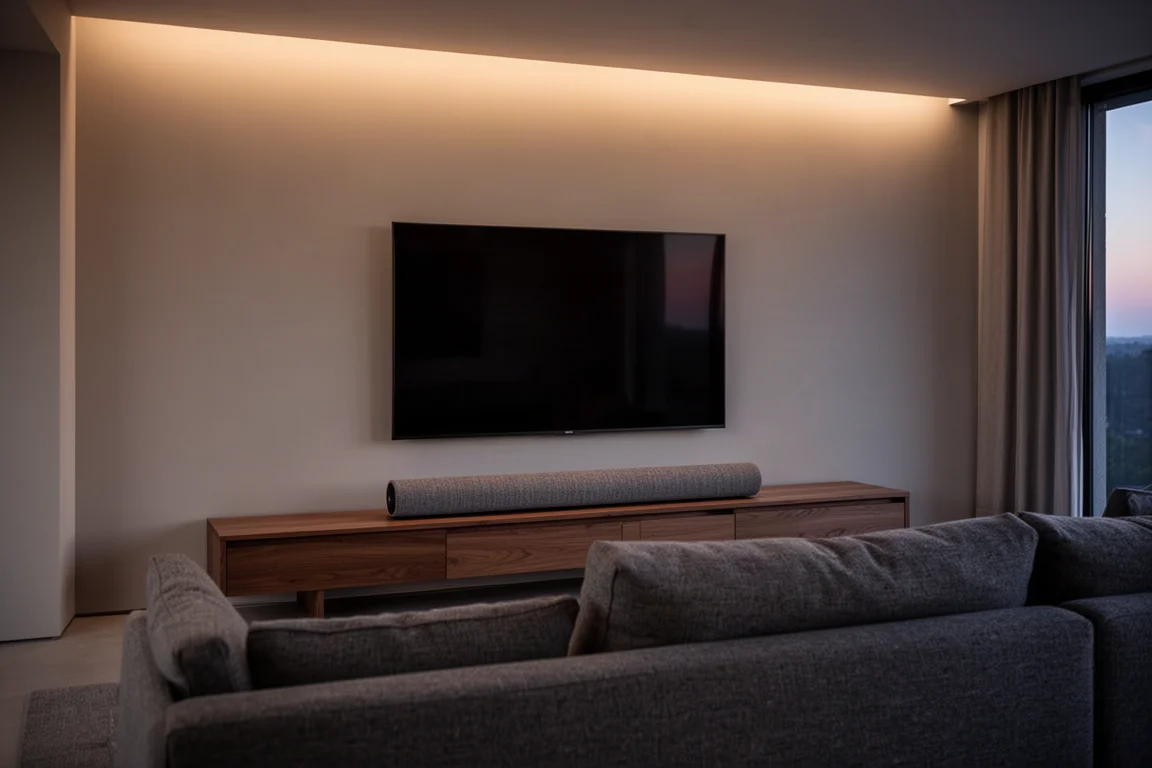
Size matters here too. The main bar is just under four feet wide and about three inches tall, which makes it a good visual fit beneath a 55 to 75 inch TV, and the wireless subwoofer can sit almost anywhere with an outlet nearby.
Design and Build Quality
The bar weighs around 28 pounds and uses a dense, metal-reinforced chassis wrapped in smooth fabric, with minimal visual clutter. Damped circular feet keep it stable, and a subtle display cutout sits behind the grille.
Channels are laid out left, center, and right across the front, each built around Yamaha’s custom 4.4 by 2 inch oval full-range drivers paired with one-inch dome tweeters. Above them sit twelve 1.1 inch beam drivers, six at each end of the bar at roughly a 20 degree angle, firing upward to create the height and width effects.
A small display on the front of the bar shows input selection, volume, and sound mode in real time, and it can be dimmed when it becomes distracting.
Main Strengths
The beam drivers are the heart of the system. Rather than bouncing generic sound off the ceiling, Yamaha times each driver to direct energy toward walls and ceiling, so reflections appear to come from specific points around the listener. With a flat ceiling between roughly 8 and 10 feet, the result is a convincing sense of height: Atmos effects move overhead, dialogue stays locked to the center of the screen, and effects travel across the room.
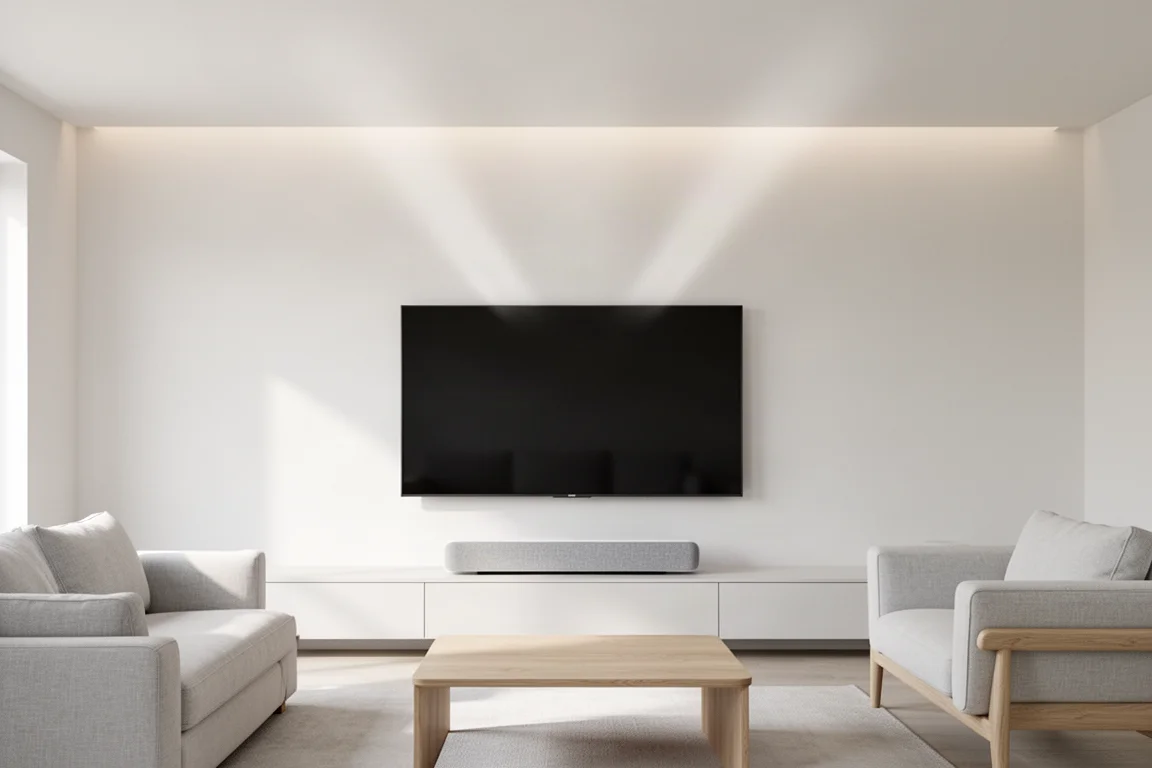
Processing is handled by Yamaha’s Surround AI engine, powered by the same 64-bit chip used in the company’s flagship receivers. It analyzes incoming content in real time and adjusts balance, dynamics, and spatial cues according to the scene, so a quiet dialogue moment is treated differently from a car chase, and the transitions stay seamless.
The system supports Dolby Atmos, DTS:X, and Auro-3D, the last of which Yamaha presents as a soundbar first. Sound modes include 3D Music, which expands the stereo image vertically and horizontally, Straight, which preserves the original signal path for unaltered two-channel playback, Stereo for a traditional left-right layout, and All, which plays through every speaker in the system for maximum room filling.
Dialogue clarity is excellent, and the balance between mids and treble stays natural and detailed without becoming fatiguing over long sessions.
The Wireless Surround Speakers
Each surround is a small cylindrical speaker with dual full-range drivers and passive radiators. Internal batteries run for up to about 12 hours, or the speakers can stay powered on their included charging pads. One button switches them into Bluetooth mode so they can be used as individual portable speakers.
During testing, a full charge averaged two to three days of use, with no dropouts and no lag between the surrounds and the bar. That rear channel separation is something most soundbars only simulate.
The charging pads are convenient but not perfect. They use detachable USB-A to USB-C cables that are only about two feet long, and no power adapters are included in the box. The cables can be swapped for longer ones, and if you prefer a completely wireless look you can charge the surrounds elsewhere and remove the pads entirely.
Bass Performance and the Wireless Subwoofer
The subwoofer is compact but decently built, with a 6.75 inch driver and Yamaha’s newly developed symmetrical flare port, designed to reduce turbulence for deeper, smoother bass. It connects wirelessly, so the main limitation on placement is access to a power outlet.
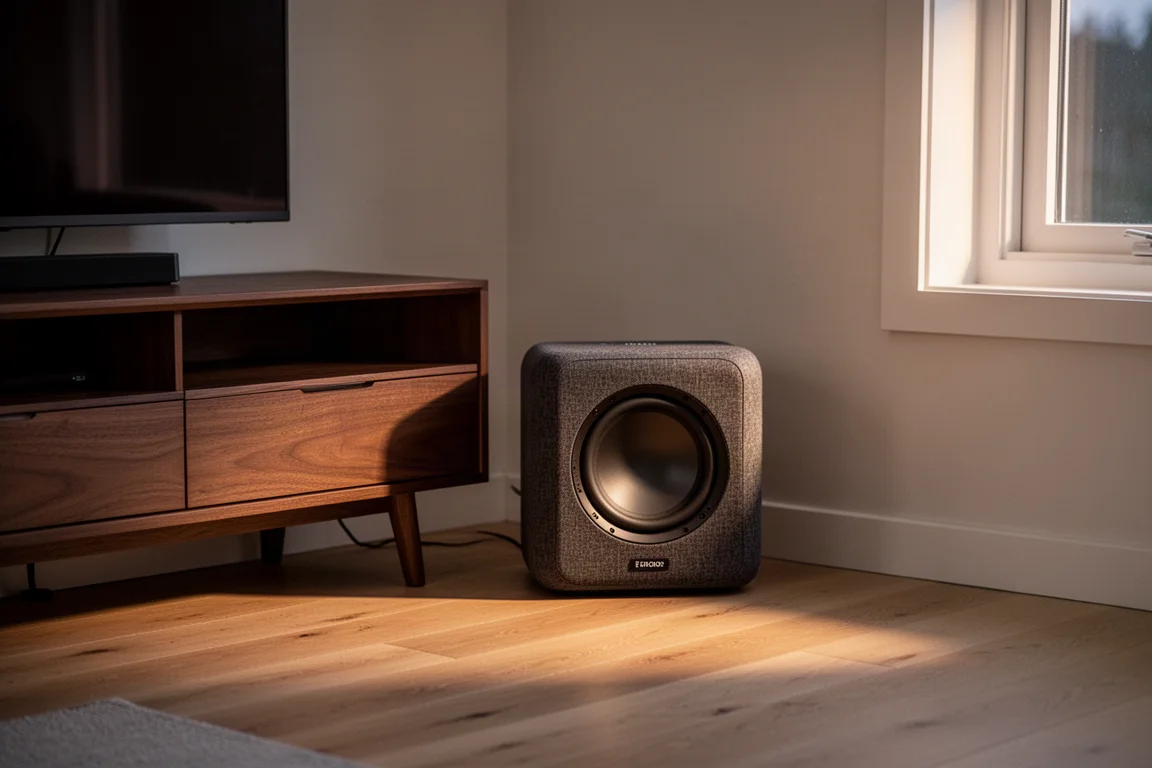
Output is impressive for the size. It will not pressurize a room the way a large separate subwoofer can, but once placement is dialed in it integrates cleanly with the main bar and adds clean, punchy low-end extension to movies and music.
Things to Consider Before Buying
There is no automatic room calibration. Yamaha’s AV receivers use YPAO, a microphone-based system that measures a room and adjusts EQ and delays automatically, and that feature is not part of this system. Instead, the onscreen menu offers manual controls for beam angle, focal length, and ceiling height, so the fine-tuning is done by ear. Beam steering is strong enough that most rooms sound balanced out of the box, but buyers who prefer a system that measures and tunes itself should know this going in.
Connectivity is simple and well thought out: one HDMI input, one HDMI eARC output that lets a TV remote handle volume, and an optical input for older displays. The HDMI input can take a Blu-ray player, streaming box, or game console directly, which is rare in soundbars. It does not support HDMI 2.1 gaming features such as 4K120 or variable refresh rate, and there is no subwoofer output on the back for adding a different sub later. Some competing systems, such as the JBL Bar 1300X, also offer detachable surrounds, though those are not IP67 rated and do not feel as robust.
Streaming covers Wi-Fi, AirPlay 2, Spotify Connect, Tidal Connect, and Bluetooth. The MusicCast app provides access to Amazon Music, Qobuz, Pandora, SiriusXM, and others, and can link the bar with other Yamaha wireless speakers around the home. The app also offers bass and treble sliders and a bass extension option. Setup itself is easier through the TV’s onscreen display: pairing the subwoofer and surrounds happens in the registration section, and a True X Ready setting lets the surrounds power on automatically whenever the bar starts up.
For Dolby Atmos content, Dolby Surround mode produced a slightly more cohesive soundstage than the alternatives, so it is worth trying each decoding option in the onscreen menu.
Buying Advice
The bar on its own sounds strong, but the surrounds add a great deal: real rear channels rather than simulated ones, portable Bluetooth playback, and weather resistance that makes them useful beyond the living room. For most buyers, the full package is the version that delivers the intended experience.
Room conditions matter with beam steering, since the effect depends on reflections. A flat ceiling around 8 to 10 feet high is close to ideal. It is also worth deciding early whether you want automatic calibration, since this system leaves that to manual adjustments.

Source considerations are the other piece. If you plan to connect a console directly to the bar and want 4K120 or variable refresh rate, this system will not pass those signals, so a TV-based connection may work better for gaming.
For anyone who wants Atmos height, clear dialogue, and surrounds that can leave the room when needed, the True X Surround 9A is a confident choice.
Conclusion
The True X Surround 9A brings together decades of Yamaha acoustic engineering, receiver processing, and wireless audio design into a single cohesive package. The twelve beam drivers create believable overhead effects on a typical ceiling, dialogue stays crisp and centered, and the wireless subwoofer adds weight without dominating the room. The rechargeable surrounds are the standout feature, delivering genuine rear channel separation and doubling as IP67 portable speakers.
The trade-offs are clear: no automatic room calibration, no HDMI 2.1 gaming features, and no subwoofer output. None of them undermine the core experience, and the surrounds are worth the step up from the standalone bar.
Product link
View more details for Yamaha True X Surround 9A
This product is mentioned in the review. Check the specifications, options, and compatibility before buying.
View more details for Yamaha True X Surround 9AFurther reading
Related Reviews
Soundbars
Bang & Olufsen Premiere Review: A Compact Soundbar Built to Last
A close look at the Bang & Olufsen Premiere, a compact soundbar with deep bass for its size, automatic sound profiles, and a clear modular upgrade path.
Soundbars
Best Dolby Atmos Soundbars: Six Picks for Movies, Music, and Small Rooms
A practical roundup of six Dolby Atmos soundbars, from compact dialogue-focused bars to expandable systems and an all-in-one flagship.
Soundbars
Bluesound Pulse Cinema Review: A Music-First Soundbar With a Software Catch
A close look at the Bluesound Pulse Cinema, a 3.2.2 soundbar with a genuinely expressive midrange and natural tone, plus the app and expansion limits worth knowing before you buy.