Soundbars
Bang & Olufsen Premiere Review: A Compact Soundbar Built to Last
A close look at the Bang & Olufsen Premiere, a compact soundbar with deep bass for its size, automatic sound profiles, and a clear modular upgrade path.
Introduction
Soundbars used to be the shortcut for people who did not want to deal with receivers, speaker cables, and the rest of the home theater headache. That argument is largely settled now. Soundbars account for roughly half of the home theater market, an industry worth around 10 billion dollars and still growing every year. So when Bang & Olufsen chose to mark its 100th anniversary with a new soundbar, the timing made sense.
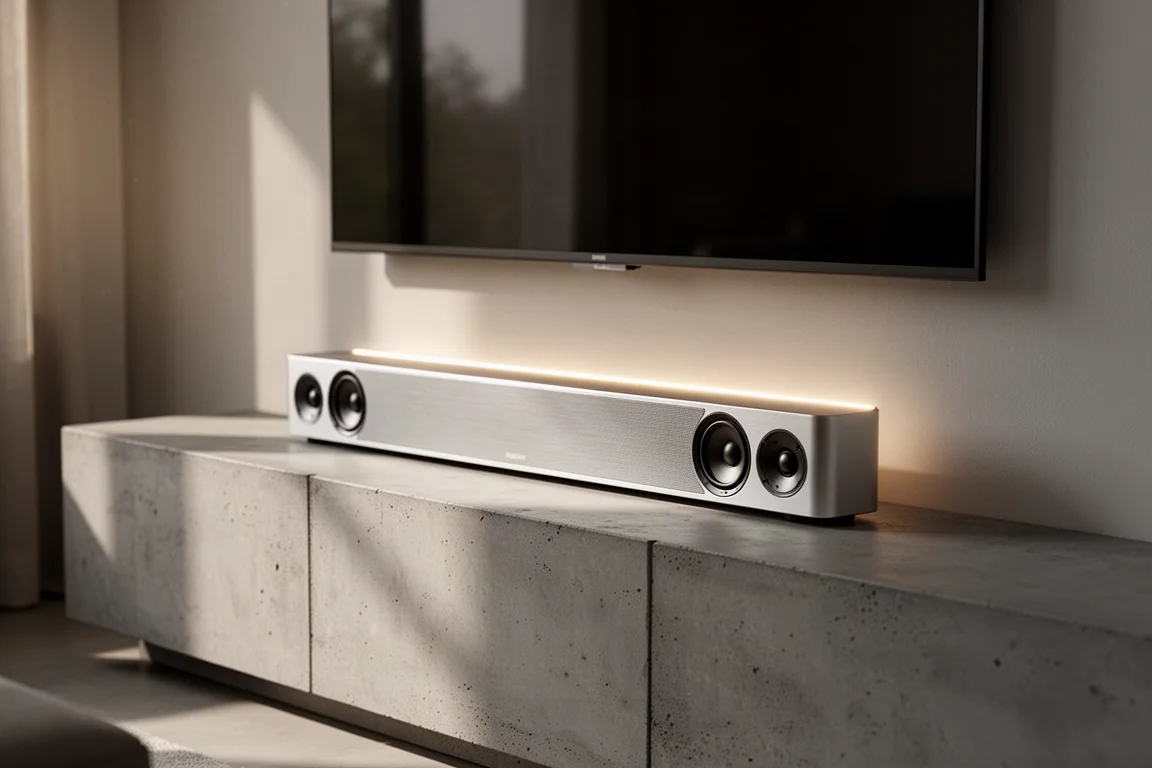
The Premiere sits between the larger Beosound Theatre and the more affordable Beosound Stage. It is smaller than most typical soundbars, measuring a little over 36 inches, or 932 mm, wide, and it is sold with a design philosophy that leans toward long-term ownership rather than an annual model refresh.
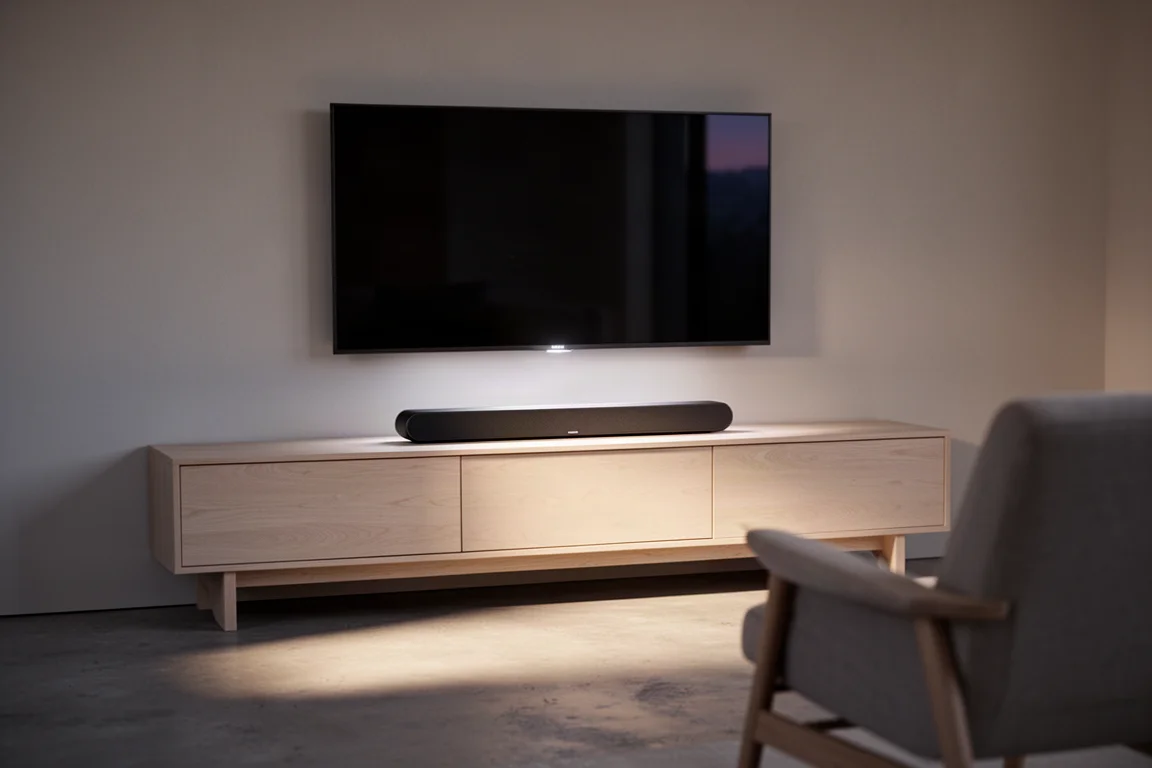
Rather than emulating surround sound with a fixed recipe of channels, upward drivers, and a bundled subwoofer, the Premiere is built as the center of a modular system. That single idea shapes almost everything about how it sounds, how it is set up, and who it makes sense for.
Who the Bang & Olufsen Premiere Is For
This is a soundbar for listeners who want a clean, compact solution that can grow. It is an approachable entry point for anyone buying a first Bang & Olufsen product, and an equally sensible starting point for a larger home theater or whole-home build that happens over months rather than in a single purchase.
It is not aimed at enthusiasts chasing a 9 to 16 channel separate system with large dedicated components. Listeners committed to a traditional 5.1 or 7.2.4 layout with a dedicated subwoofer should also read the details below carefully, because the Premiere takes a different route to low frequencies.
Main Strengths
The Premiere’s strengths are not concentrated in a single headline feature. They come from the combination of a compact cabinet, genuinely deep bass for its size, and software that makes everyday use effortless.

What stands out over time is how little attention the bar demands. It selects the right profile on its own, it turns volume changes into a small piece of visual theater, and it stays balanced whether content is played quietly or loud.
Sound Quality and Tonality
Most standalone soundbars start to fall apart below 40 Hz. The Premiere plays down to around 30 Hz without a dedicated subwoofer, which gives bass-heavy instruments and mid-range rich vocals a sense of weight and scale that is rare in this category. The top end is smooth and controlled, with a gentle treble rolloff and a touch of extra sparkle above 5 kHz, so the balance holds from top to bottom.
The supplied profiles cover movie, music, speech, and night listening, and the bar picks the appropriate one automatically based on the content it receives. Dialogue mode intentionally trims bass and lifts the mid-range to make speech clearer. Stereo playback carries the familiar Bang & Olufsen tone: smooth, balanced, and refined, though it gives up a little spaciousness compared with a proper pair of stereo speakers. With multichannel and Dolby Atmos material the bar is at its most convincing, producing a three-dimensional presentation with real dynamic scale.
Setup and Everyday Use
Setup is refreshingly complete. The bar ships with everything needed for a tabletop or wall-mounted installation, including cables, mounts, and hardware, with nothing sold separately. The app guides the process in about two minutes, including a one-touch automatic room equalization pass.
Room correction mostly addresses low frequencies, and the difference before and after is subtle rather than transformative. Some listeners may prefer to leave room compensation off to get more bass. Beyond that, the bar allows control over virtually every aspect of its sound, and any custom or supplied profile can be set as the default. A light band on the cabinet doubles as the volume indicator, traveling along the bar as volume increases.
Modular Expansion on the Mozart Platform
The Premiere can be combined with other Bang & Olufsen speakers built on the Mozart platform, and up to four additional speakers can be mixed and matched to create a custom surround setup. This is where the bar separates itself from conventional soundbars, which typically stop at the box in the room.
A pair of Beolab 8 speakers is a natural match. Placed in the rear corners, they benefit from the boost of corner placement, while the system’s automatic bass management redistributes low frequencies across every driver for tighter, more even bass throughout the room. Those speakers are not limited to rear channel duties either, so they also fill in the front and sides of the sound stage.
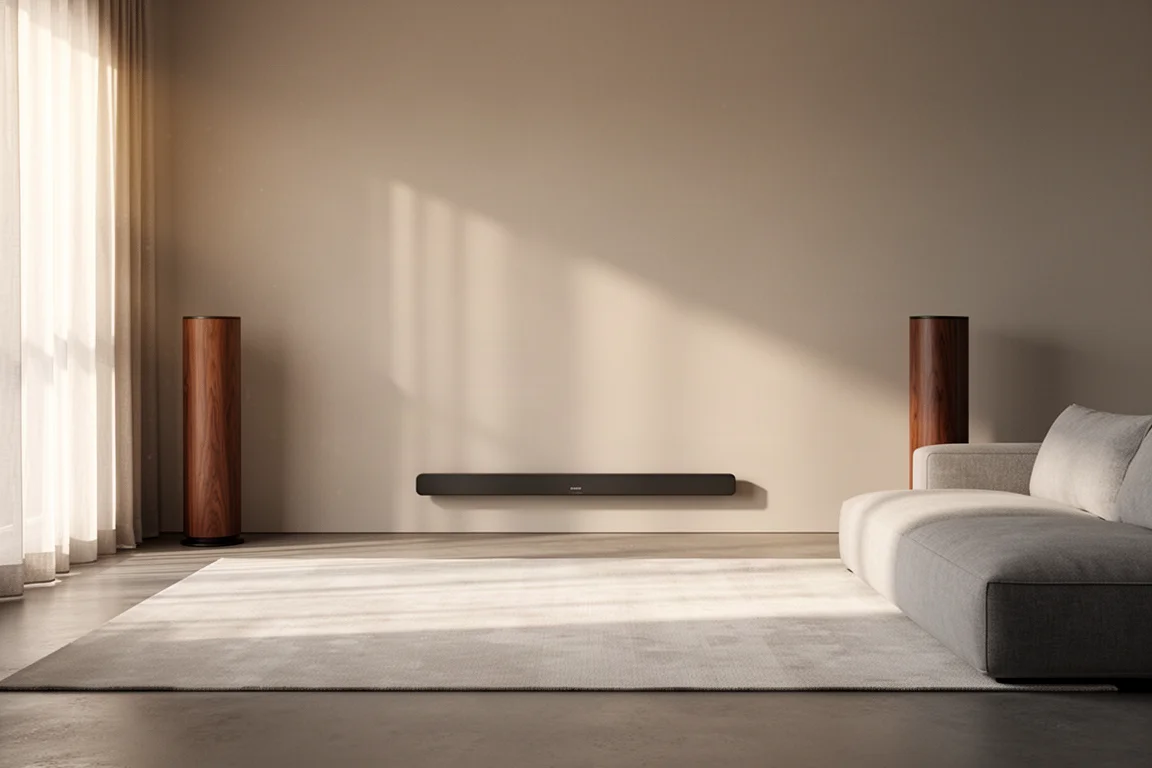
Adding speakers does more than increase output. It turns the bar into the processing hub of a genuinely modular system, and the gain in envelopment is substantial enough that guests may start looking for speakers they cannot see. The bar also works as the brain of a whole-home Bang & Olufsen system, which is a large part of its long-term appeal.
Things to Consider Before Buying
The base price is around $5,800, and the cover is not included. Bang & Olufsen prefers to leave the drivers exposed, which is common in hi-fi but unusual for a soundbar. A cover is an extra purchase: a fabric option in gray melange adds around $325, while hand-carved wood designs in oak or dark oak add up to $1,200 depending on the finish.
Low frequency extension has a ceiling. The Premiere cannot reach down to 20 Hz on its own, and there is no compatible Bang & Olufsen subwoofer, because the brand’s subwoofer is not built on the Mozart platform and will not connect. Listeners who want more low-end impact need to add compatible speakers such as the Beosound Balance, the Beolab 8, or the Beolab 28. The brand’s position is that its image processing distributes bass evenly across connected speakers, creating deeper, smoother, and more consistent low frequencies regardless of where you sit.
Compatibility is also limited in one direction: the Beolab 50 and Beolab 9 are not Mozart platform products, so they cannot be used with the Premiere. Compared with the Beosound Theatre, the Premiere is not a theater killer. It cannot match that bar’s flexibility or outright sound. It does, however, outclass the older Beosound Stage in every way, particularly in a larger room or when expansion is planned.
Physical placement needs some thought. If your television sits on a cabinet, the Premiere is likely too tall to fit underneath it the way a typical soundbar would, and it cannot be laid on its back with the drivers firing upward. A third-party bracket from STB Bracket provides a workaround for cabinet mounting. If the TV is wall mounted, the included hardware covers installation. Enclosing the bar inside a cabinet or console is not an option, since that would compromise its Dolby Atmos performance.
Buying Advice
If the budget allows, the Premiere is easy to recommend over other soundbars, even though the path is less turnkey than an all-in-one package. The argument for it is a long-game one: buy right, buy once, and expand later. That reasoning is sound, but it does come at a cost, and the ceiling on what the bar can do alone should be understood up front.
For listeners who want the closest experience to the Premiere on a smaller budget, the Sonos Ultimate Immersive Set, built around the Arc Ultra soundbar with two Era 300 speakers and a Sub Gen 4, retails at just under $3,000 and is often discounted. On its own, however, the Premiere is clearly the stronger single bar, and the gap widens once additional Bang & Olufsen speakers enter the system. The Sennheiser Ambeo remains a cost-effective all-in-one alternative that handles much of what the Premiere does alone and can feel slightly more immersive in large rooms, but it is a large, heavy speaker that runs hot and needs room to breathe, and it has not seen a real update in some time.
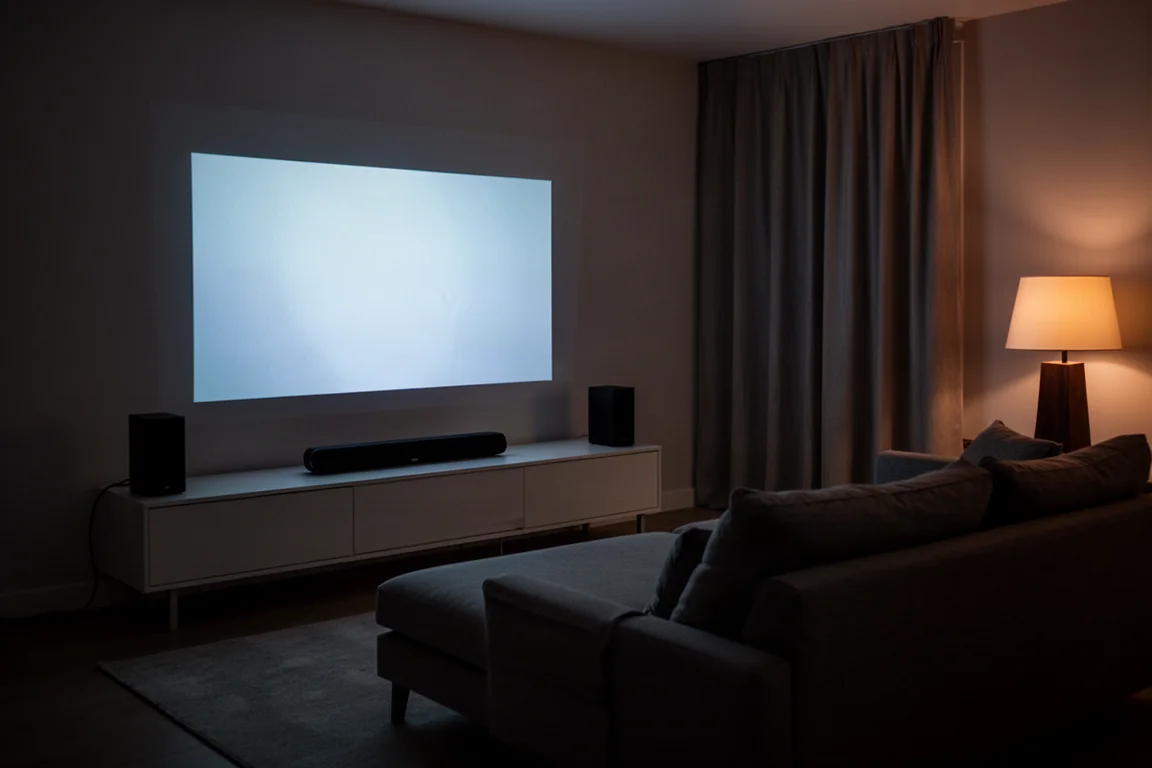
Anyone considering the Premiere should decide early whether expansion is part of the plan. Bought as a single bar, it is a polished and capable solution. Bought as the first piece of a modular system, it makes far more sense, and the upgrade path is unusually clear.
Conclusion
The Bang & Olufsen Premiere is more than a soundbar. It is a processor, a system hub, and a considered entry point into a modular home theater build. It delivers genuinely deep bass for its size, handles Dolby Atmos material with real conviction, and is simple enough to set up and live with that it rarely demands attention.
Its compromises are real: a premium price, a cover that costs extra, no compatible subwoofer, and a ceiling that only lifts when you add more speakers. For listeners who want a compact, elegant bar and a system they can grow into, those trade-offs are worth understanding. For anyone with no plans to expand, it is still one of the more impressive standalone bars available, and one that is likely to stay in the setup for years.
Product link
View more details for Bang & Olufsen Premiere
This product is mentioned in the review. Check the specifications, options, and compatibility before buying.
View more details for Bang & Olufsen PremiereFurther reading
Related Reviews
Soundbars
Best Dolby Atmos Soundbars: Six Picks for Movies, Music, and Small Rooms
A practical roundup of six Dolby Atmos soundbars, from compact dialogue-focused bars to expandable systems and an all-in-one flagship.
Soundbars
Bluesound Pulse Cinema Review: A Music-First Soundbar With a Software Catch
A close look at the Bluesound Pulse Cinema, a 3.2.2 soundbar with a genuinely expressive midrange and natural tone, plus the app and expansion limits worth knowing before you buy.
Soundbars
Bose Lifestyle Ultra Soundbar Review: Clear Dialogue Without Sacrificing Scale
A 5.1.2 Dolby Atmos soundbar built around dialogue intelligibility, with a bigger soundstage, deeper bass, and an ecosystem that expands to 7.1.4.