Welding Equipment
HTP Freedom 250 Pulse MIG Welder Review: A Solid Performer for Controlled Welds
A practical look at the HTP Freedom 250 pulse MIG welder, covering how pulse transfer works, where it shines, and who should consider it.
Introduction
Pulse MIG welding is getting more attention as lower cost machines with pulse features continue to appear on the market. But there are plenty of misconceptions about what pulse actually does and whether it is worth the extra cost. This review looks at the physics behind pulse MIG, where it genuinely helps, and how the HTP Freedom 250 performs in real shop conditions.
How Pulse MIG Welding Works
To understand pulse MIG, it helps to start with the basics of MIG welding. A wire feeds out of the end of the gun, and an electrical arc forms between that wire and the work piece. That arc generates the heat needed to melt the metal, while the wire adds filler material. But there is more happening than most people realize, and it comes down to something called transfer mode.
The most familiar transfer mode is spray transfer. The arc stays on continuously, melting wire off at the same rate it feeds in. It is smooth and efficient, but it puts too much heat into the material for many applications. To reduce heat input, the arc needs to be turned on and off. That is what short circuit transfer does. The wire touches the material, creates a short circuit, an arc starts, and it burns its way up the wire until the arc goes out. That cycle repeats rapidly, producing the crackling, frying bacon sound most MIG welds have. Short circuit transfer reduces heat so you can weld thinner metal and weld out of position, which is why it is the most common mode for general fabrication.
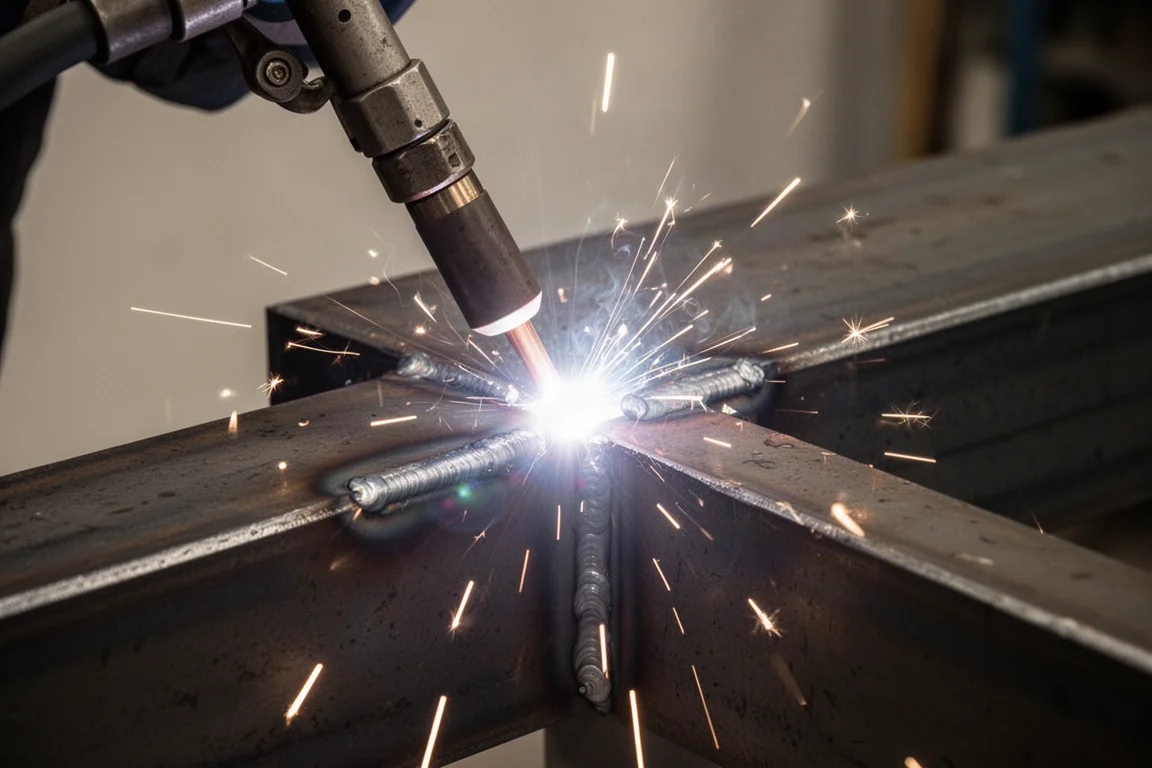
The challenge with short circuit transfer is that it relies on balancing voltage and wire speed so everything runs just right. Much like tuning a carburetor, it can easily fall out of adjustment. It also does not work well on materials like aluminum. That is where pulse welding comes in.
Pulse MIG is essentially a pulsed spray transfer. Electronics increase and decrease the weld current to control and modulate heat without short circuiting. This avoids the spatter that short circuit transfer can create. The comparison is similar to going from a carburetor to fuel injection, where an electronically controlled process handles the fine tuning for you.
Shielding Gas Considerations
Shielding gas plays an important role in pulse MIG. The machine in this review was initially set up with 75% argon and 25% CO2, the most common mix for general fabrication MIG welding in the US. That mix works great for short circuit transfer, but it cannot run a spray transfer. To run spray, you need a higher concentration of argon.
Switching to a 90/10 mix, meaning 90% argon and 10% CO2, allows the machine to run both short circuit and spray transfer. Some markets outside the US use a 92/8 mix for similar purposes. For heavy industrial spray transfer work, a 98% argon and 2% oxygen mix is typical. For all around use, 90/10 is a solid choice because it lets you run pulse, spray transfer, and short circuit all with one gas cylinder.
Using the HTP Freedom 250
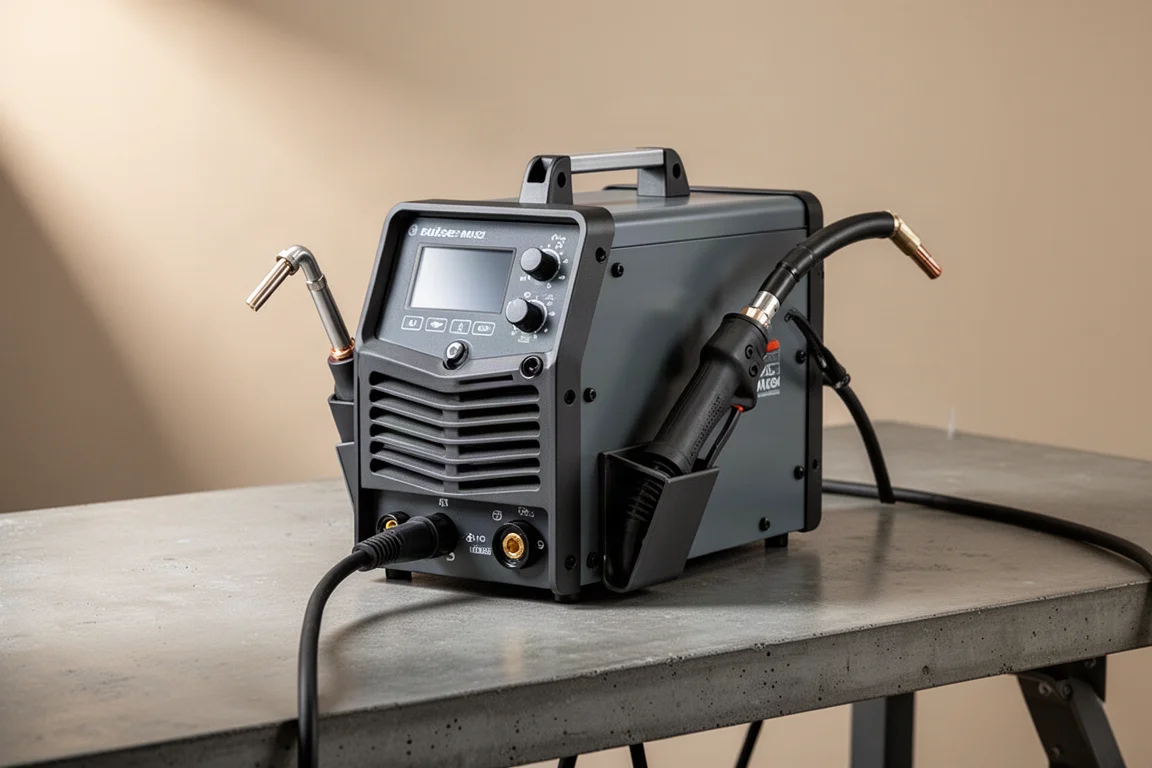
The HTP Freedom 250 is a pulse MIG welder that is relatively new to the market. It follows the HTP Pro Pulse 220, which was an earlier machine in the same lineup. Most modern pulse machines have a similar setup process. You select pulsed MIG, then choose your material, gas, and wire diameter. The machine handles the pulse parameters behind the scenes, leaving you to adjust amperage and arc length.
In testing, the Freedom 250 performed well right out of the gate on a lap joint in 1/8 inch material. The arc length was appropriate for the job, and the weld could be pushed along without issue. There was a slight short circuit crackle at the start, but it settled in quickly. The pulse process noticeably reduced heat input compared to standard short circuit MIG.
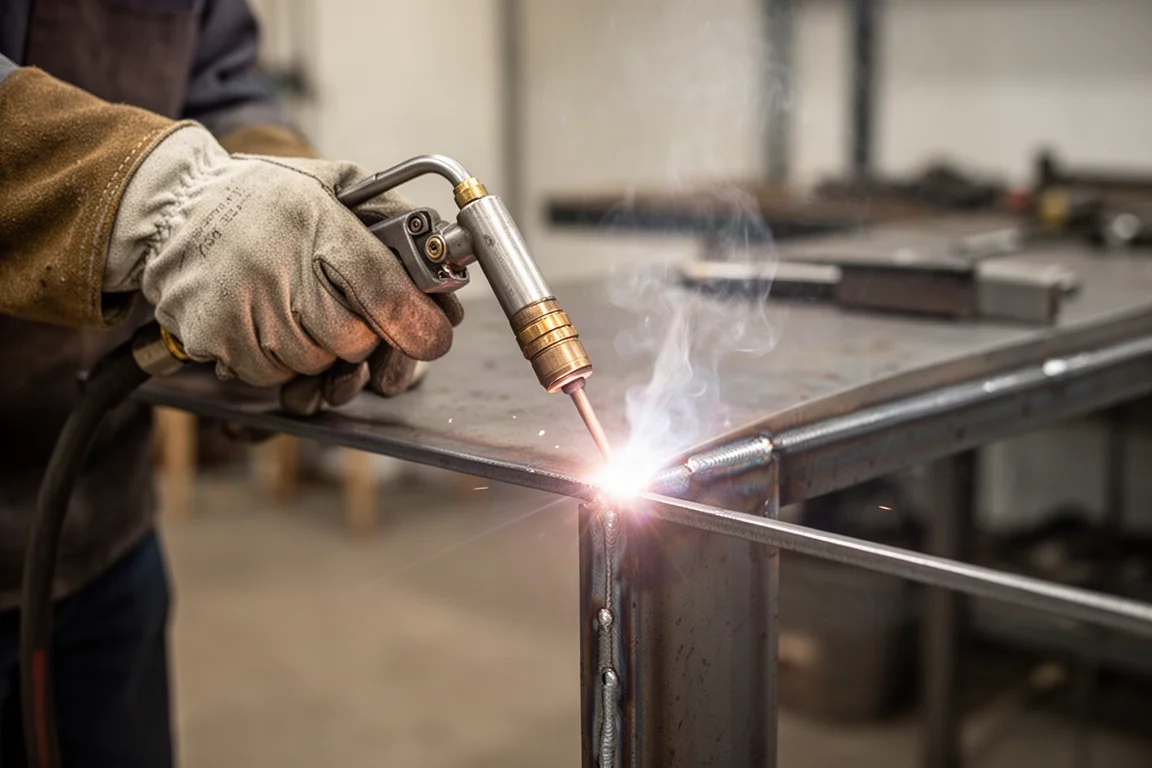
For basic fillet welds on 1/8 inch steel, pulse may not offer enough benefit over short circuit MIG to justify the cost. But it can help reduce spatter and cleanup time if that matters to you.
Welding Thin Steel With Pulse
One area where pulse MIG shows clear value is thin steel. The Freedom 250 was used to weld an outside corner joint on 16 gauge steel. Running pulse without any short circuiting on material that thin is impressive. The process avoids a lot of spatter and keeps heat input low, which helps prevent burn-through and distortion.
For thinner steels, pulse MIG can be a practical choice when you want clean, controlled welds with minimal cleanup. It is not essential for every job, but it makes certain applications noticeably easier.
Pulse MIG on Aluminum
Aluminum is one of the best applications for pulse MIG. Short circuit MIG does not work well on aluminum, so pulse offers a way to limit heat input while maintaining the spray transfer that provides good penetration. It also helps etch off the oxide layer that forms on aluminum surfaces.
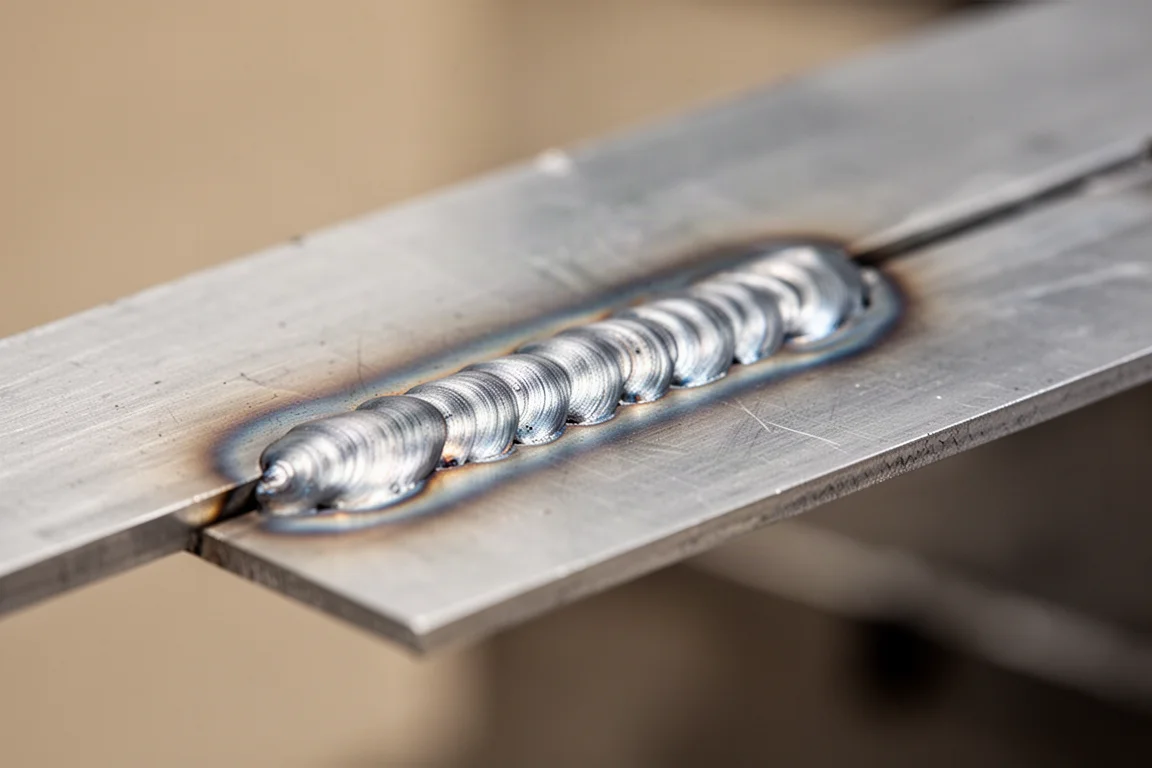
To run aluminum wire, the setup needs some changes. The drive roll must be swapped for one suited to softer aluminum wire, and a gun with a graphite liner helps feed the wire smoothly. Other options include a spool gun or a push-pull gun, but a standard MIG gun with the right liner can work well if the lead is short.
The weld produced on thin aluminum showed a clean stack of dimes appearance. That rippled look comes from technique rather than the pulse itself, but getting a controlled weld on thin aluminum without pulse is significantly harder. Pulse makes it much easier to manage heat and produce a sound weld without burning through the back side.
Who Should Consider the HTP Freedom 250
Pulse MIG is not a technology that every welder needs. But for those who want better heat control, reduced distortion, and nearly spatter-free welds, it is worth considering. The Freedom 250 from HTP is a solid performer, consistent with other HTP machines. It suits repair and maintenance work, portable use, and small-scale production or fabrication.
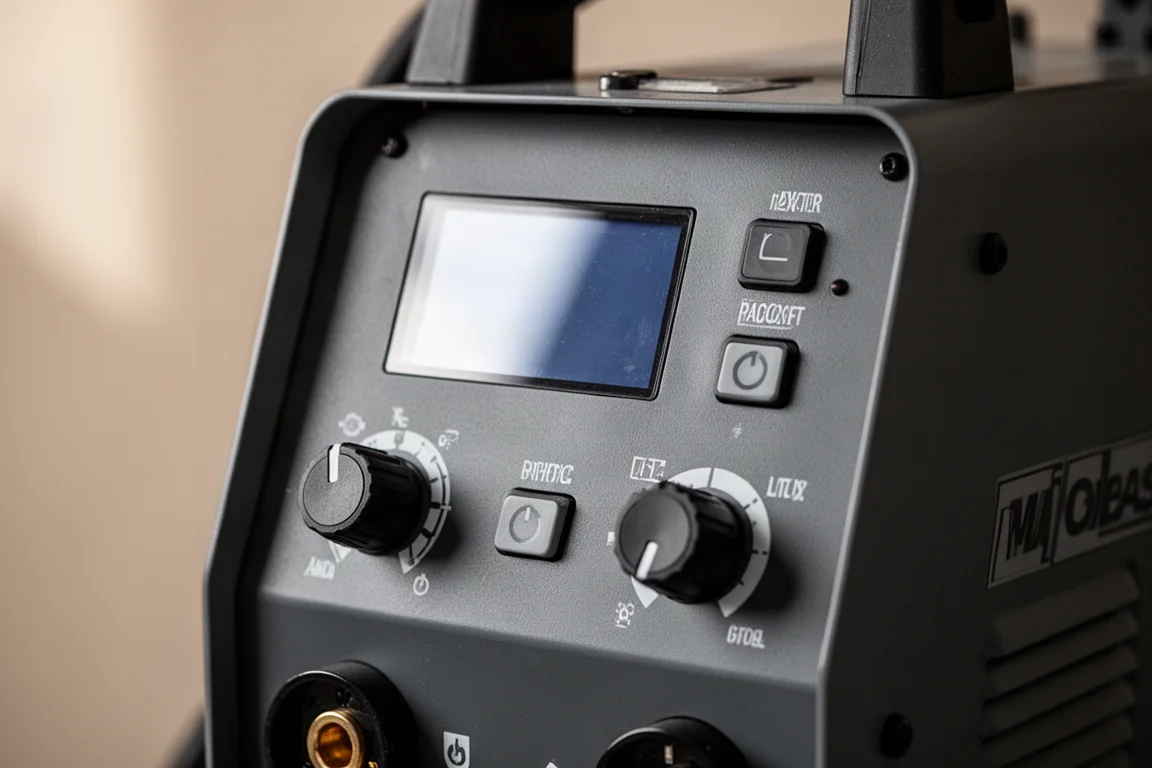
There is a wide variation in how pulse MIG machines run, what wire sizes they support, and how they are set up. Cheaper machines often do not perform well on pulse. The Freedom 250 delivers the kind of controlled, reliable pulse operation that makes the technology genuinely useful.
Buying Advice
If you are considering a pulse MIG welder, think about the type of work you do most often. Pulse shines on thin steel, aluminum, and any job where heat control and spatter reduction matter. If you mostly weld thicker steel in flat positions, a standard MIG machine may be enough. But if you want the flexibility to weld aluminum cleanly and handle thin materials with confidence, pulse MIG is a meaningful upgrade.
The HTP Freedom 250 is positioned as a quality machine in this category. It runs pulse well, is easy to set up, and handles a range of materials. As with any welding equipment purchase, do your homework and choose the machine that fits your specific needs.
Conclusion
Pulse MIG welding uses electronics to control heat input without the spatter and instability of short circuit transfer. It is especially valuable for thin steel and aluminum, where heat management is critical. The HTP Freedom 250 performs reliably across these applications, making it a strong option for repair, maintenance, and small-scale fabrication work. While pulse is not essential for every welder, it offers real benefits for those who need cleaner, more controlled welds.
Product link
View more details for HTP Freedom 250
This product is mentioned in the review. Check the specifications, options, and compatibility before buying.
View more details for HTP Freedom 250Further reading
Related Reviews
Welding Equipment
Berger 135 MP Multi-Process Welder Review: A $120 Flux Core, Stick, and TIG Machine
A practical look at the Berger 135 MP, a budget multi-process welder that handles flux core and stick welding with surprising competence for the price.
Welding Equipment
Hobart Handler 140EZ Review: A Simple MIG Welder for DIY Projects
A look at the Hobart Handler 140EZ, a 120-volt MIG welder with an easy set mode that makes it approachable for hobbyists and first-time welders.
Welding Equipment
HTP Independence 210 AC/DC TIG Welder Review: A Portable Powerhouse
A detailed look at the HTP Independence 210 AC/DC TIG welder, covering its advanced features, build quality, and real-world performance on aluminum, stainless steel, and stick welding.