Road Bikes
X-Lab AD-9 and RS-7: Two Value Road Bikes Worth a Closer Look
X-Lab's AD-9 aero race bike and RS-7 everyday road bike pair aggressive pricing with strong component specs. Here is what to know before buying.
Introduction
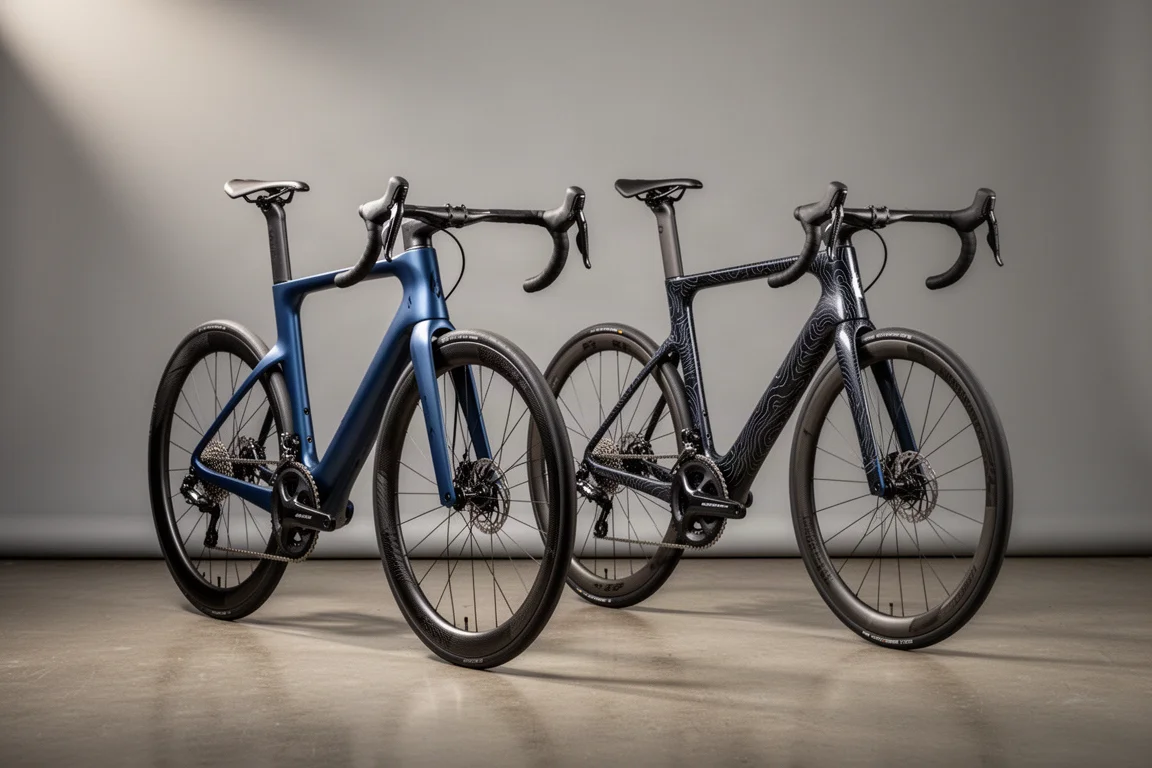
X-Lab is a Chinese bike brand that has built a following quickly, and two of its road models have arrived for testing: the RS-7, a race-inspired everyday road bike, and the AD-9, an aerodynamic road race bike used by the Astana team. The pitch is straightforward. These are modern carbon road bikes with aggressive component specifications and prices that sit well below the established brands.
The two bikes also arrive at very different price points. The RS-7 starts from just over $2,000 with a Shimano 105 12-speed mechanical groupset, while the AD-9 tops out around $8,000 in its most complete build with Shimano Dura-Ace Di2. That spread makes the pair worth looking at separately rather than as a single proposition.

First impressions are positive. Both bikes are size large, roughly a 56 cm frame for a 180 cm rider, and both are built around full carbon frames and forks with the brand’s own finishing kit.
What Sets X-Lab Apart
Chinese bike brands are nothing new in Europe, and plenty of good options have appeared over the last few years. What makes X-Lab different is the route to purchase. Rather than a direct-to-consumer model, the brand is building a dealer and bike shop network, so buyers can walk into a shop and ride away on a bike in the same way they would with Specialized, Trek or Cannondale, but at much lower prices.
X-Lab is owned by XDS, a parent company that also manufactures bikes for other brands. That manufacturing scale is part of how the pricing works, and it is not a new story: Giant built its own brand on the same foundation decades ago. The approach does create an interesting tension, since the same company supplying other bike brands is now competing with them on price.
The specification strategy is familiar too. Both bikes use X-Lab’s own wheels, handlebars, saddles and cranksets, with Shimano groupsets as the only major deviation. Trek, Canyon and Specialized all do something similar, and it helps keep the final price down.
X-Lab AD-9: Aero Race Performance
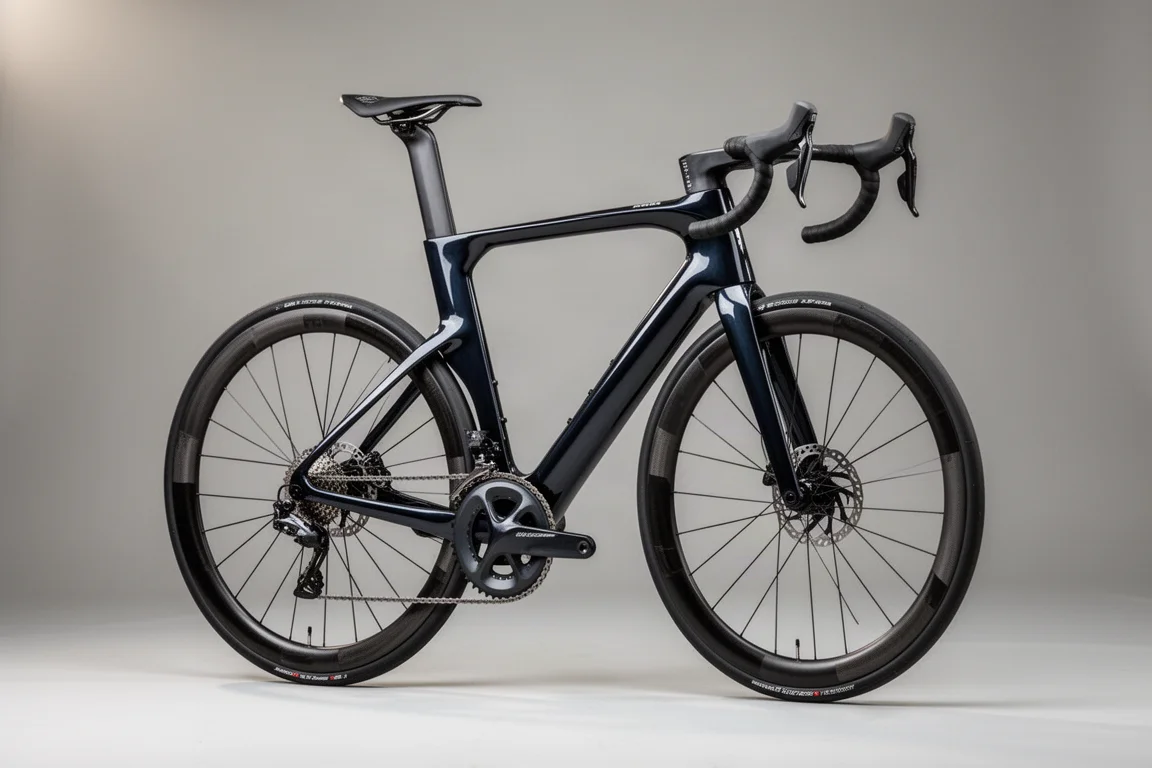
The AD-9 is the aerodynamic road race bike, and the test bike wears a race replica paint finish. A regular paint finish is also available. The shaping is conventional aero design rather than anything radical: a deep head tube, a deep aero down tube with a step profile for the aero bottle that ships with the bike, an aero seat tube that hugs the rear wheel, and a deep inline aero seat post with a single bolt clamp. The dropped rear stays flare out from the seat tube, and the fork tabs are an elaborate detail that drew attention on a group ride.
The build includes through axles, disc brakes and a one-piece carbon handlebar and stem. With top-level Shimano Dura-Ace Di2, X-Lab’s own carbon wheels and that integrated cockpit, the price is $8,000. A comparable build from a well-known brand can run to roughly $14,000 with the same level of parts, which is the core of the AD-9’s appeal.
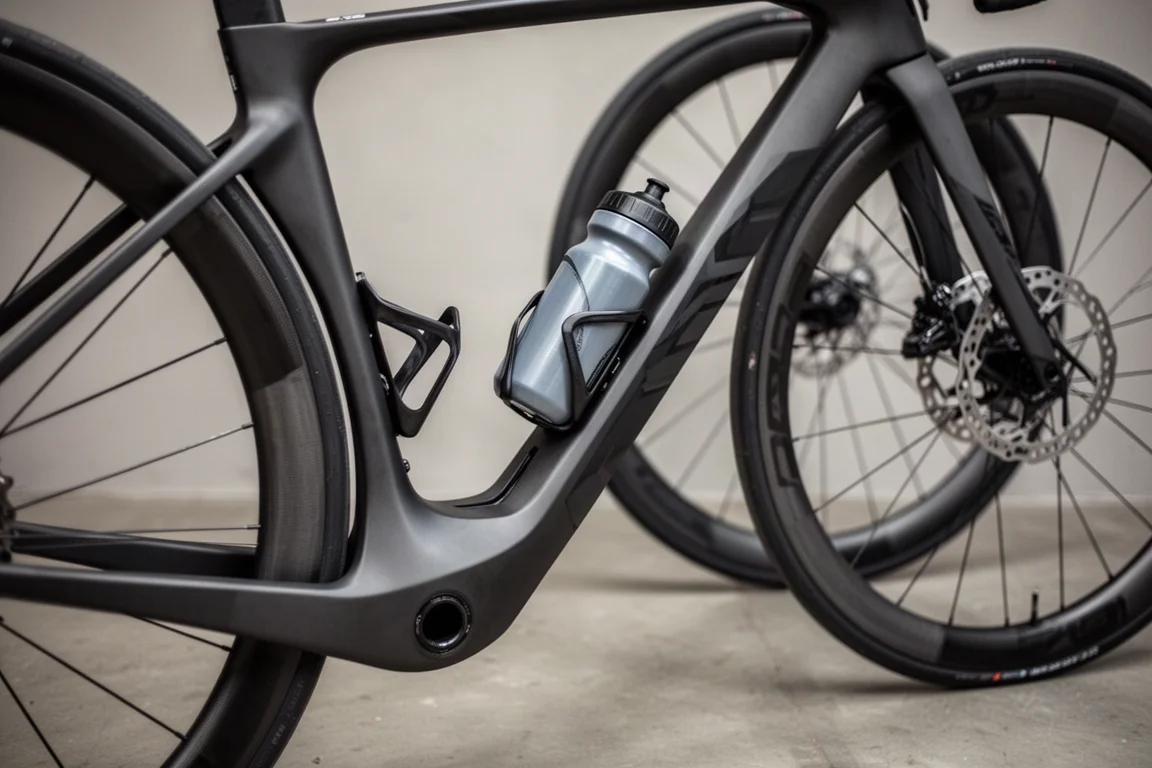
On the scales, the AD-9 came in at just over 6.8 kg in size large without pedals. It also uses a UDH dropout, so a SRAM groupset can be fitted if preferred, and it comes with a sturdy out-front computer mount, something that is not always included these days.
X-Lab RS-7: Everyday Race Value
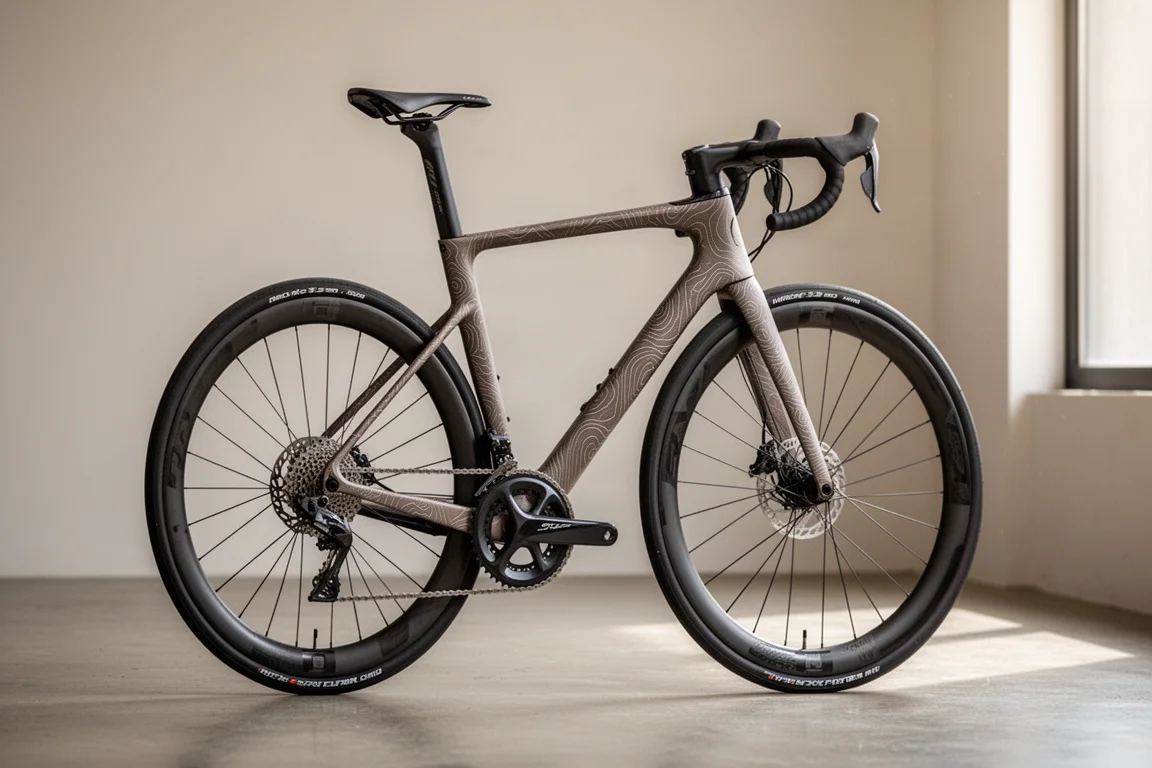
The RS-7 is the race-inspired everyday road bike, and it is the more accessible of the two. Entry builds start from just over $2,000 with a Shimano 105 12-speed mechanical groupset. The version tested steps up to Shimano 105 Di2 electronic 12-speed shifting at $2,800, which is around $1,000 less than a Canyon Ultimate and about $2,000 less than a Specialized Tarmac with the same groupset.
The frame and fork are full carbon, finished in a topographic paint design, with an aero seat post and aero-inspired down tube and seat tube. It shares the one-piece carbon cockpit approach with the AD-9, which is a strong specification at this price, though it does limit adjustment. The bike rolls on X-Lab’s own carbon wheels with 32 mm tires, and the saddle and finishing kit are the brand’s own as well. Weight is 8.4 kg.
Ride Feel and Component Choices
The AD-9 rides like a race bike because it is one. It feels fast and predictable, with geometry numbers that sit in line with other race bikes in the class, and it corners and steers without surprises. Stiffness is high through the hands, the saddle and the pedals, yet the ride is surprisingly smooth rather than harsh, helped by 30 mm Michelin Pro 5 tires. The inline seat post and 165 mm cranks are progressive choices that push the saddle forward and shorten the pedal stroke.
The RS-7 is a different experience. At 8.4 kg with much wider tires, it does not feel as quick, and it can feel a little sluggish compared with the aero bike, but it is smooth, comfortable and genuinely pleasant to ride. The 32 mm tires sit plump on the carbon rims and take the edge off rough road surfaces. Cranks here are 170 mm on a size large, still shorter than many riders expect, and the inline seat post returns for a more forward position. There is also a generous stack of spacers under the stem, which can be trimmed to taste.
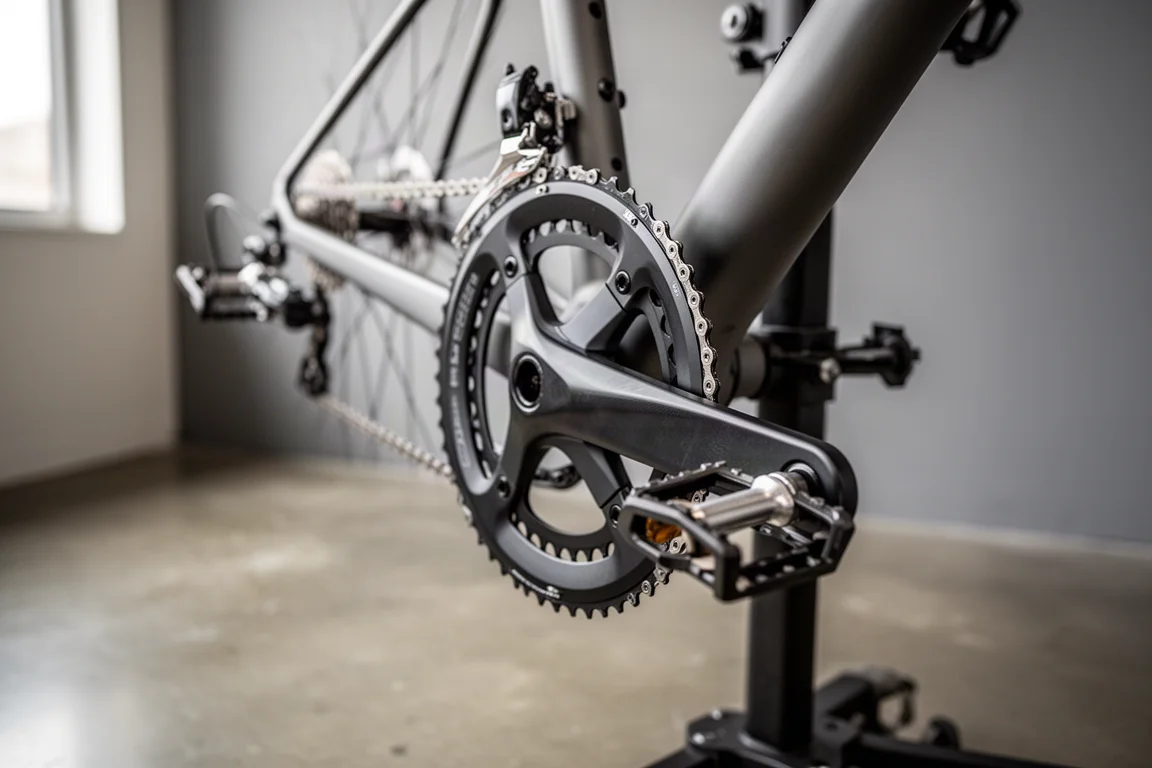
Small details are worth noting on both bikes. The AD-9 ships with one aero bottle rather than two, and the down tube flare does not perfectly match the bottle shape, so aftermarket bottles and cages are an option. The bar tape lacks the grippy feel of some alternatives when riding without gloves. The seat clamp uses small bolts with a maximum torque setting of 2.5 Nm pressing a metal plate into a carbon seat post, which has held firm so far with carbon paste. The RS-7’s rear hub freehub is notably loud.
Power Meters and Finishing Kit
Both bikes include a power meter, which is unusual at these price points. The RS-7 uses a dual-sided aluminium power meter that looks well made, and the AD-9 has its own power meter with a charge port. Questions remain about how accurate, reliable and consistent these units are over time, and that is something worth weighing if training data matters to you.
The wider point is that neither bike needs upgrading out of the box. Carbon wheels, a carbon cockpit, a power meter and a complete finishing kit are all included, which is impressive for bikes in this price range and makes the RS-7 a credible step up from an entry-level road bike.
Availability and Buying Advice
Availability is the main practical consideration. The bikes cannot currently be bought in Europe or the UK, with a launch there scheduled for early 2027 at the soonest. Right now they are sold in the US through a growing network of dealers and bike shops. Buyers outside the US will need to wait, and anyone buying in should check local dealer support for servicing and warranty questions.
The pricing itself is described as a deliberate attempt to gain market share, and it does feel that way. There is a reasonable question about whether prices will rise over the next few years, in the way direct-sale brand pricing crept upward after an initial period of disruption. Brand appeal also matters: the design and logo will not suit everyone, and some riders will be steered by familiarity rather than value.
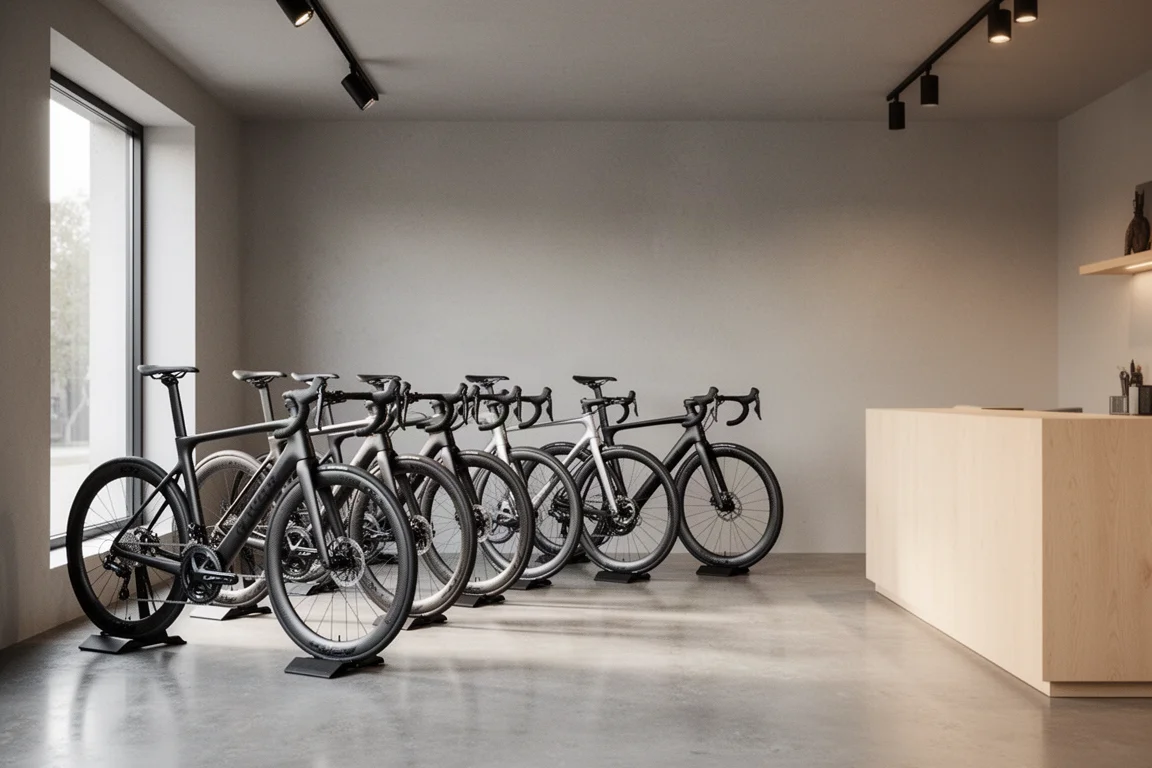
Which bike makes sense depends on what you want. The AD-9 suits riders chasing aero performance and low weight who are comfortable spending at the premium end, particularly those who want race-ready equipment without the flagship price. The RS-7 suits riders stepping up from an entry-level bike who want electronic shifting, carbon wheels and a power meter in a comfortable, sporty package.
Conclusion
X-Lab’s appeal is easy to understand. The prices are low, the specifications are strong, and the early riding impressions are positive on both the AD-9 and the RS-7. The AD-9 delivers a stiff, fast and surprisingly smooth aero race platform at a fraction of the cost of a comparable flagship build, while the RS-7 offers a well-equipped, comfortable everyday road bike with a power meter and electronic shifting for a price that undercuts better-known alternatives.
The caveats are real but manageable. Cockpit adjustment is limited, the power meters still need to prove themselves, and availability outside the US is still to come. For riders in the US who want maximum specification per dollar and can accept a newer brand, both bikes are worth a serious look.
Further reading
Related Reviews

Road Bikes
10 New Road Bikes Worth Watching: Aero, Titanium, Steel and Endurance Standouts
A practical roundup of 10 new road bikes, from aero flagships chasing single-watt gains to titanium, steel and endurance platforms built for real roads.
Road Bikes
2026 Tour de France Road Bikes: Six Race Machines Worth a Closer Look
Six race bikes from the 2026 Tour de France grid, reviewed for paint, silhouette, wheels and the specification details that matter to buyers.
Road Bikes
3T Strada Italia Review: A Radical Aero Road Bike That Rides Smooth
A made in Italy carbon aero road bike with a deep head tube, wide tire clearance and a genuinely comfortable ride. Here is what to know before buying.