Aquarium Equipment
X Aqua In-Out Overflow System Review: A Compact, Quiet Overflow for Reef Tanks
A slim overflow and return system rated for up to 660 gallons per hour, with a pulsing nozzle that uses no moving parts and a footprint that keeps more equipment out of the display tank.
Introduction
Overflow systems have come a long way. The bulky, boxy corner flow panels of the past have largely given way to slim internal weirs and external boxes, and the goal is always the same: get water out of the display and back again while taking up as little visible space as possible.
Most reef keepers want equipment out of the display tank for two reasons. The first is practical, since every inch freed up leaves more room for corals, fish, and aquascaping. The second is visual, because a cleaner, less cluttered tank simply looks better. In a very large system there is enough volume for a bigger overflow to disappear into the background, but in a smaller reef tank every bit of space matters.
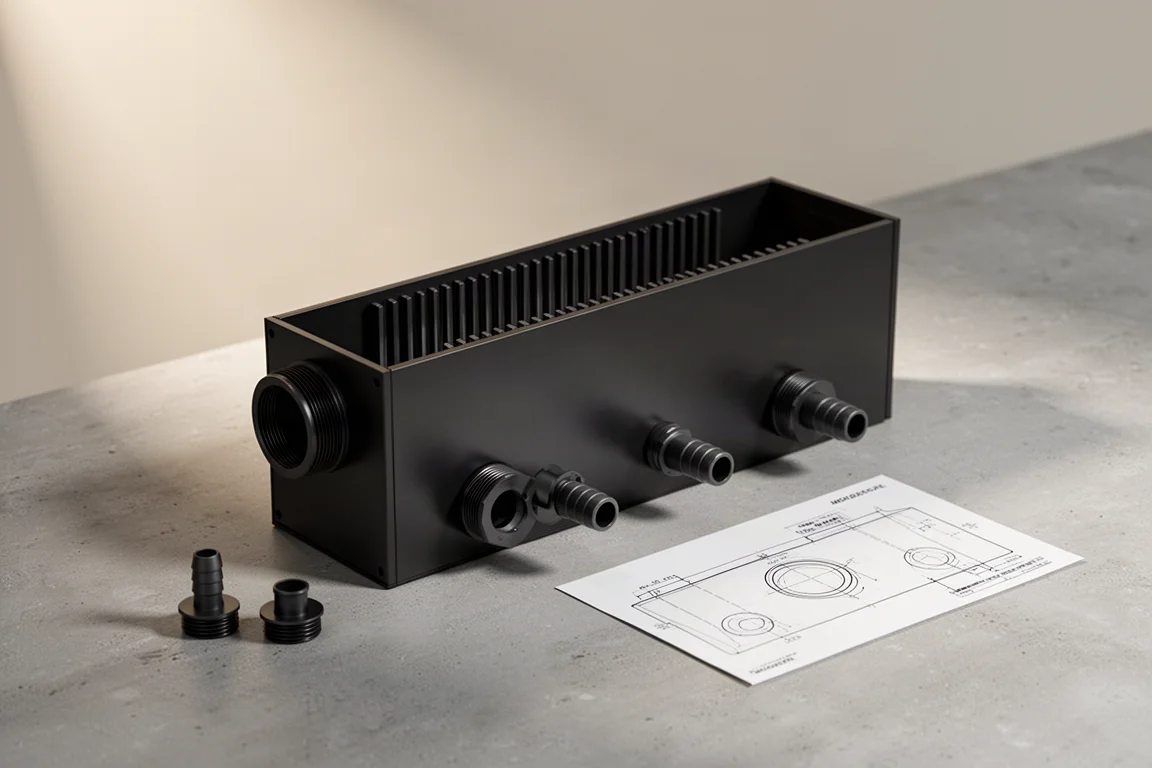
The X Aqua In-Out Overflow System is built specifically for that problem. Its internal section occupies a footprint of just 3.25 by 2.5 inches and protrudes less than 1.75 inches into the tank, while the external portion sits only about two inches off the back of the aquarium. It is rated to handle up to 660 gallons per hour of flow, and it pairs that capacity with a directional return nozzle that produces a pulsing effect using no moving parts and no electricity.
Who This Overflow System Is For
This is a natural fit for reef keepers running smaller or midsize tanks where display space is at a premium. Because the external section protrudes only around two inches, the aquarium can also sit much closer to the wall than it could with a traditional external box built around standard bulkheads, which is a real advantage in tighter rooms.
It also suits anyone who wants the display to look uncluttered. The weir and return are compact enough that they read as part of the tank rather than as hardware bolted onto it, and the low external profile keeps the plumbing out of the way behind the glass.
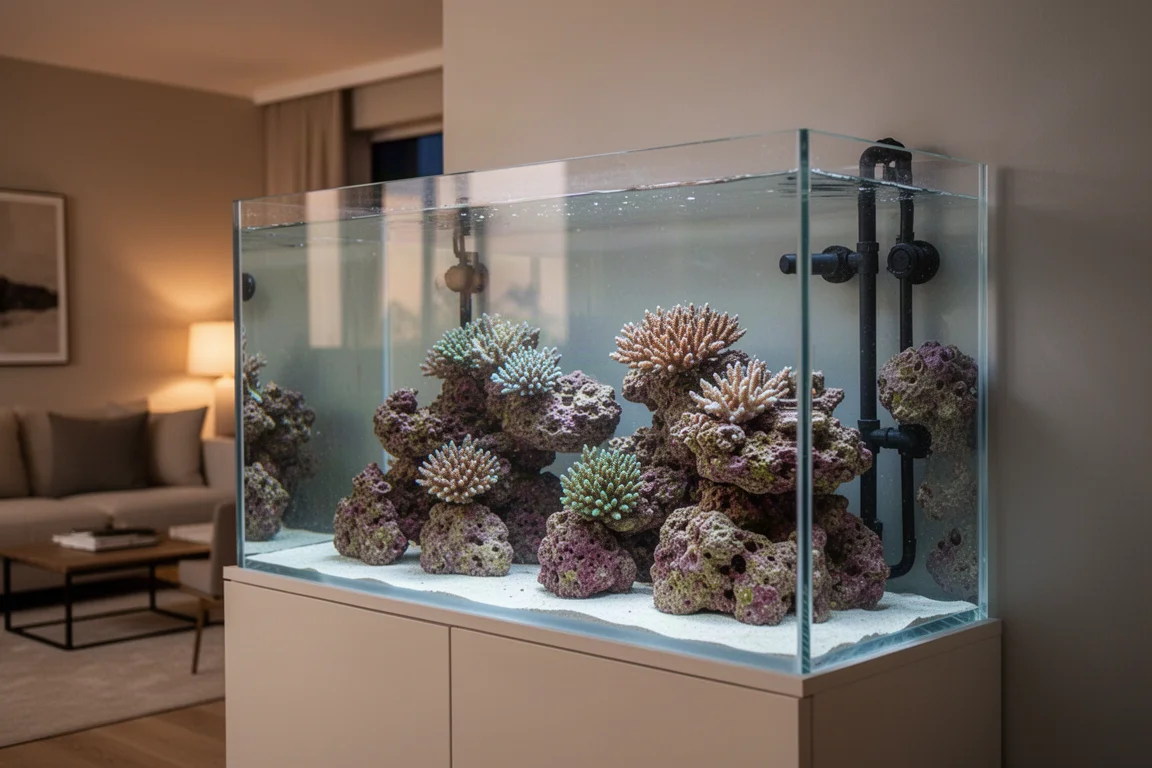
The installation is also flexible about placement. The unit ships as a single piece with the overflow and return attached, but molded channels allow it to be cut with a sharp utility knife so the drain and the return can live in different locations, such as opposite ends of the aquarium.
Design and Footprint
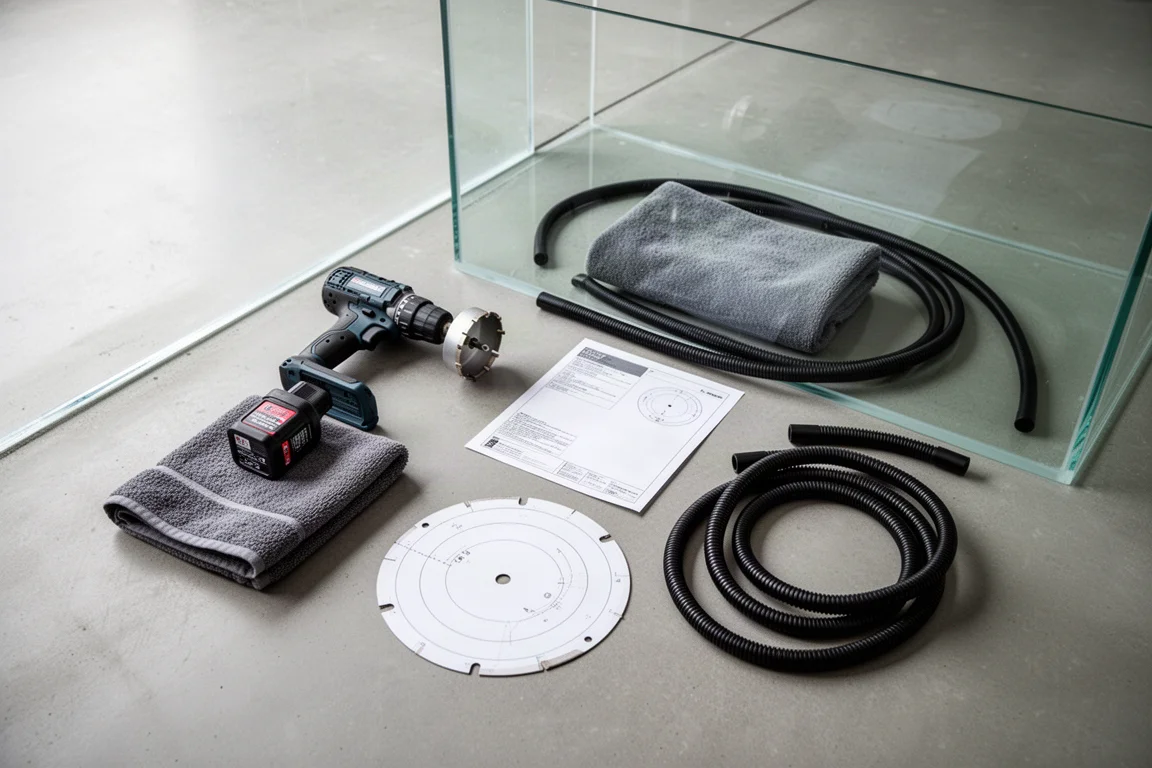
Out of the box, the kit includes the In-Out unit itself, the overflow weir, a pair of return nozzles, an o-ring and nut for the drain as well as for the return, and an adhesive drill template.
The drain and return lines are barbed and accept 1.5 inch and 0.75 inch soft tubing respectively. X Aqua also offers a hose kit with a pair of five foot lengths of black tubing sized to match those barbs. The drain line in that kit is reinforced to hold its shape and resist kinking so water can drain freely, and the black color of both tubes helps prevent unwanted algae growth from building up where it should not.
The compact external profile is the headline here. By keeping the bulk of the assembly thin against the back glass, the design leaves more usable room behind the aquarium than a conventional external box would.
Main Strengths: Quiet Operation and Pulsing Return
Flow capacity is the first strength. At up to 660 gallons per hour, the In-Out moves a serious amount of water for something this small. The second is noise. This is a very quiet overflow system, and it can be virtually silent in normal operation.
If noise does appear, there are two straightforward fixes. Make sure the tubing enters the sump with a slight bend or curve rather than a straight drop, or add a quarter inch to half inch sized hole in the drain tube about two inches above the water level in the sump. Either approach is usually enough to remove noise at the overflow.
The pulsing return nozzle is the most interesting part of the design. Because the pulse is created by the internal shape of the chamber, which causes pressure inside the outlet to fluctuate, there are no moving parts to gum up, stick, or break over time. The pulse itself is gentle. It will not splash, but it does produce a pleasant rippling effect at the water surface, similar to a gentle pulse mode on a small wave pump.
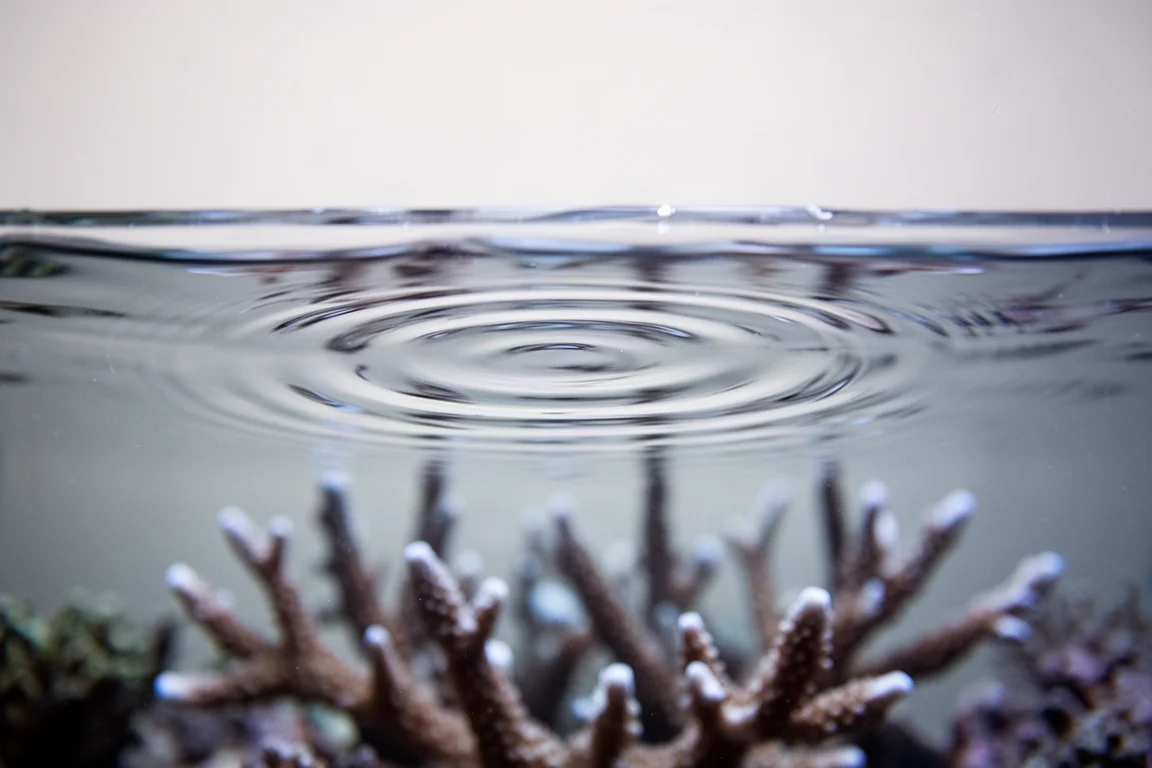
That combination of quiet drainage and low-effort surface movement is what makes the unit appealing for tanks where a broad, calm water surface and a low noise floor both matter.
Installation and Setup
Installation centers on the adhesive drill template. Placed on the outside of the tank and aligned flush with the top edge, it shows all the safe minimum distances, the maximum water level you can expect to achieve, and the minimum and maximum glass hole saw sizes you can use for both the drain and the return. Once the location is decided, you drill directly through the template and peel it away when finished. The spacing is set up for the In-Out as a single unit, and the template can be cut in half if the drain and return are going in separate areas.
From there, the sequence is simple. Install the o-rings into the unit, slot it through the holes from the outside of the tank with the threaded portions facing inward, slide on the bracket for the overflow weir, then thread the nut onto both the drain and the return and hand tighten until snug without over-tightening.
One detail stands out for anyone who has used a standard bulkhead before. X Aqua reverses the usual arrangement, with the seal on the outside of the aquarium and the nut on the inside, which is what makes the slim profile possible. The result is the same watertight seal, and it still seals properly even with a vinyl background applied to the back of the tank. After that, you attach the tubing and your pump of choice and the system is set.
Maintenance and Long-Term Care
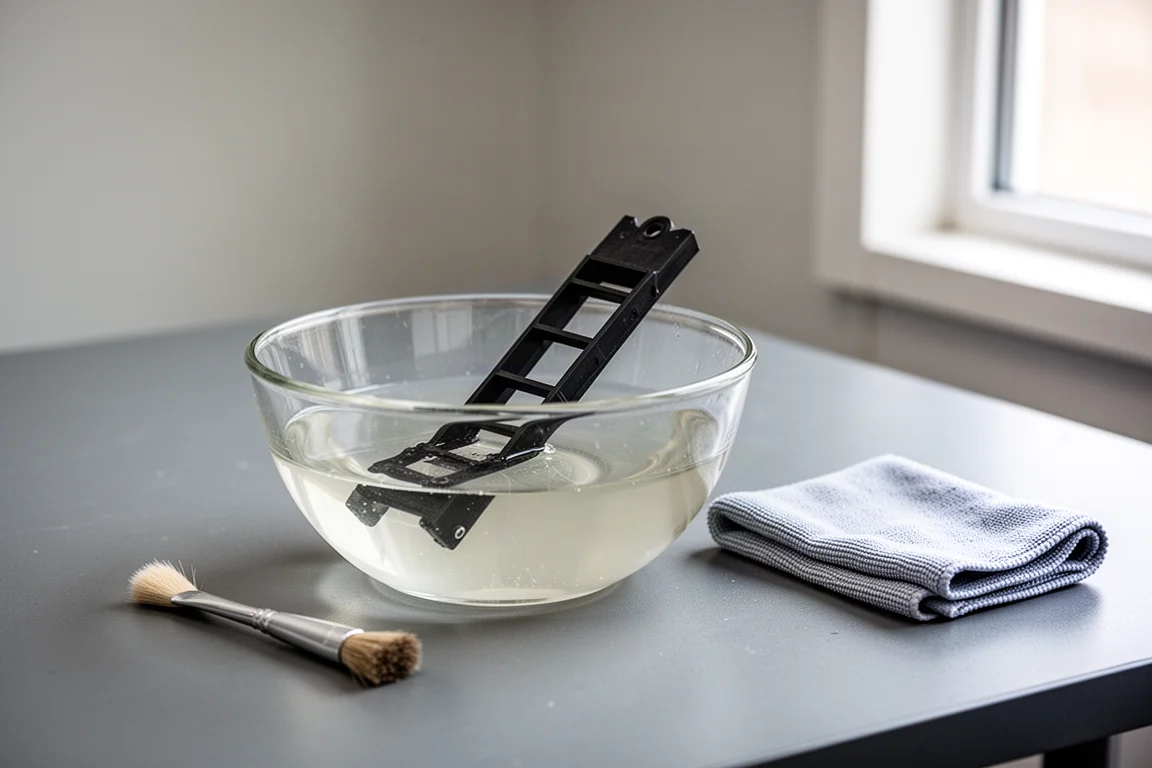
Routine care is straightforward. The weir lifts off easily, so it can be given a citric acid bath or simply scrubbed to remove algae buildup. The return outlet can be cleaned with a simple foxtail brush.
That second step is worth keeping on a schedule. A buildup of biofilms and debris in the return outlet can gradually soften or reduce the pulsing effect, and cleaning the outlet restores it. Neither task requires disassembly of the tank, which keeps long-term upkeep manageable.
Keeping the tubing runs tidy and checking the drain entry at the sump now and then is also worth doing, since that is where the small adjustments that keep the system quiet tend to live.
Things to Consider Before Buying
The main hurdle is drilling the tank. Glass has a reputation for being fragile, so the idea of cutting holes in an aquarium sounds intimidating, but the process itself is genuinely easy with the right hole saw and technique. The included template is designed to take most of the guesswork out of hole sizing and placement, and a successful drill job is the normal outcome rather than the exception.
It is also worth planning the rest of the loop before committing. The barbs are sized for 1.5 inch drain tubing and 0.75 inch return tubing, so matching hose and a suitable pump should be part of the plan, and the rated 660 gallons per hour is the ceiling to stay within.
Two smaller considerations round things out. Cutting the unit in half to separate the drain and return is permanent, so it should only be done when that layout is really wanted. And since the external section sits about two inches off the back of the tank, checking wall clearance before drilling is a sensible final step.
Buying Advice
If display space is the constraint and clutter is the enemy, this overflow makes a strong case for itself. It moves up to 660 gallons per hour through a footprint of roughly 3.25 by 2.5 inches inside the tank and less than 1.75 inches of intrusion, with only about two inches of hardware behind the glass.
Buyers should plan the supporting parts alongside the unit. Matching soft tubing for the drain and return barbs is essential, and the optional hose kit simplifies that with two five foot black lengths, including a reinforced drain line that resists kinking. Choose a pump that works within the 660 gallon per hour rating, and keep a citric acid soak and a foxtail brush on hand so the weir and the return outlet stay clean and the pulsing return keeps performing.
For reef keepers who want quiet drainage, low-profile hardware, and the flexibility to split the drain and return into separate locations, this is a well-considered package that earns its place in a smaller tank.
Conclusion
The X Aqua In-Out Overflow System solves a specific problem well. It moves a lot of water through a very small opening, stays quiet while doing it, and adds a surface-rippling pulse without any moving parts to wear out. Its slim external profile keeps the tank closer to the wall, and the option to separate the drain and return gives it flexibility that many compact overflows lack.
The trade-off is the drilling, which is the one step that requires confidence rather than a credit card. For anyone comfortable with that step, or willing to learn it, this is a compact, quiet, and genuinely thoughtful overflow system for a space-conscious reef tank.
Product link
View more details for X Aqua In-Out Overflow System
This product is mentioned in the review. Check the specifications, options, and compatibility before buying.
View more details for X Aqua In-Out Overflow SystemFurther reading
Related Reviews
Aquarium Equipment
Abyzz Professional DC Pumps: A100, A200, and A400 Reviewed
A closer look at three German-made DC return pumps built for large reef systems, with titanium internals, fine flow control, and a 10-year warranty.
Aquarium Equipment
AdaptiveReef Controller Accessories: Three Tactile Upgrades for Your Reef Controller
A practical look at three AdaptiveReef add-ons that put physical switches, at-a-glance status lights, and a loud alarm within arm's reach of your reef tank.
Aquarium Equipment
Adaptive Reef Controller Boards: Basic vs Deluxe for Cleaner Aquarium Gear
A practical look at the Adaptive Reef Basic and Deluxe controller boards, what each one includes, and how to choose the right size for your tank gear.