Aquarium Equipment
AdaptiveReef Controller Accessories: Three Tactile Upgrades for Your Reef Controller
A practical look at three AdaptiveReef add-ons that put physical switches, at-a-glance status lights, and a loud alarm within arm's reach of your reef tank.
Introduction
Aquarium controllers are remarkable pieces of kit. They monitor, log, and automate almost everything happening in a reef system, and they do it reliably. The recurring inconvenience is how you talk to them. Nearly every action runs through a companion app or a web portal, which works perfectly well until you are standing in front of the tank and your phone is charging in another room.
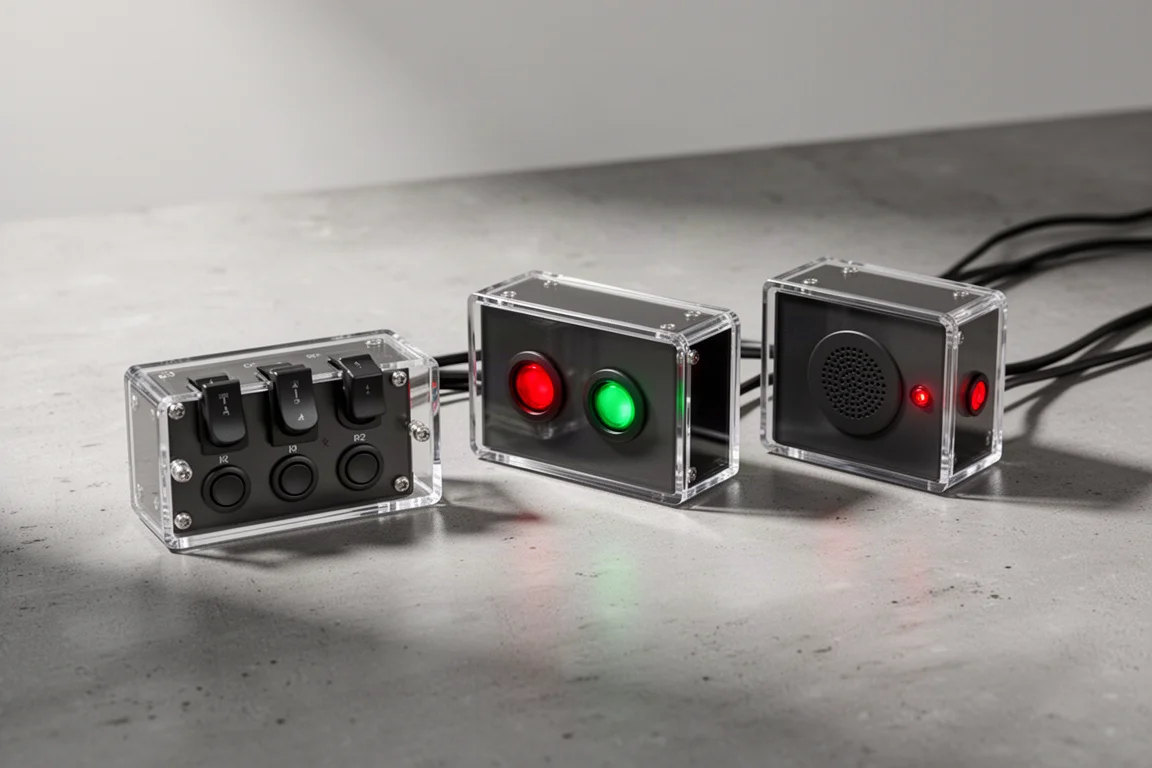
AdaptiveReef builds controller accessories aimed squarely at that gap. They add a tactile layer to a Neptune Apex system: physical switches you can flip, status lights you can read at a glance, and a loud alarm that gets attention whether or not your phone is nearby. There are three boxes in the range, and they solve different problems, so the useful question is not which one wins. It is which one belongs on your setup first.
Why Tactile Controls Still Matter
There is nothing wrong with app control. It is flexible, it is remote, and it keeps a full history of everything your system has done. What it is not is fast when you are already at the tank. Turning off a skimmer so you can empty the collection cup should take a few seconds, not a login, a device search, an outlet list, and a swipe.
The same friction shows up in less obvious places. Maybe your phone died and is sitting on a charger. Maybe you would rather not pull a plug from an energy bar with wet hands. Maybe someone else in the house needs to check on the tank while you are away and does not have your login.
These accessories address that friction directly, and the alarm side of the range adds something apps struggle with: redundancy. A notification that arrives silently on a muted phone is easy to miss. A siren in the room where the tank lives is not.
What All Three Accessories Have in Common
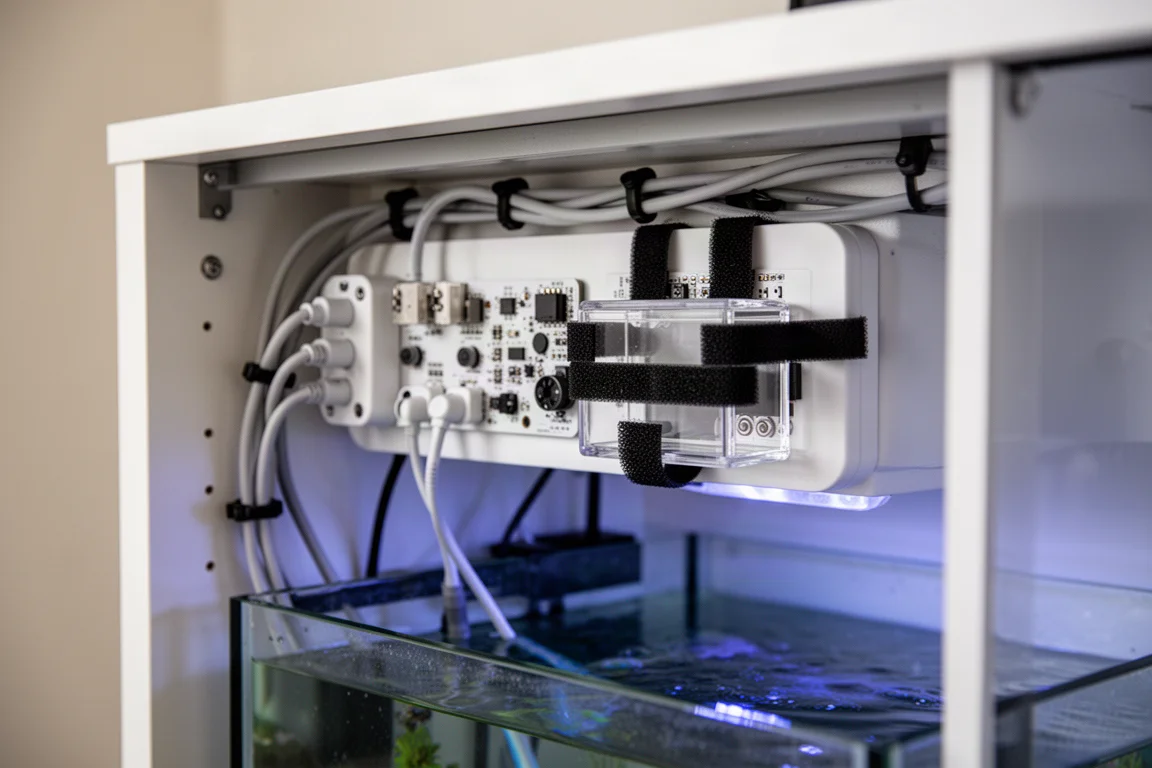
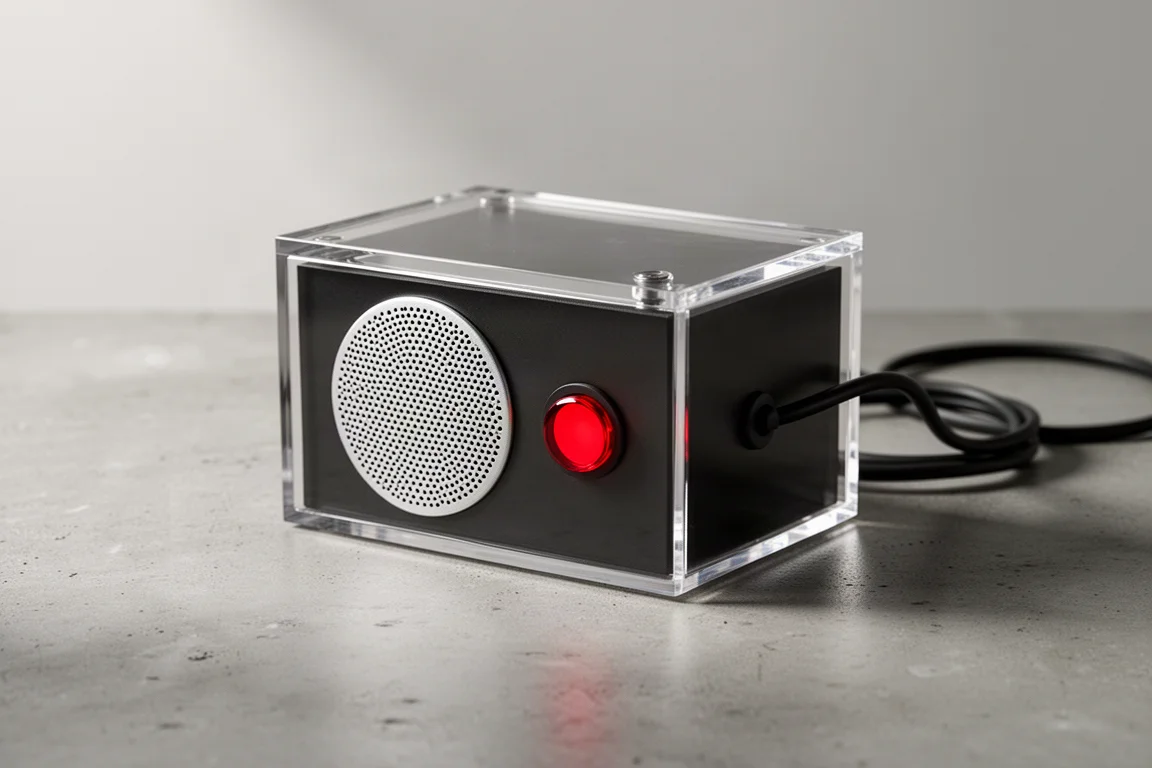
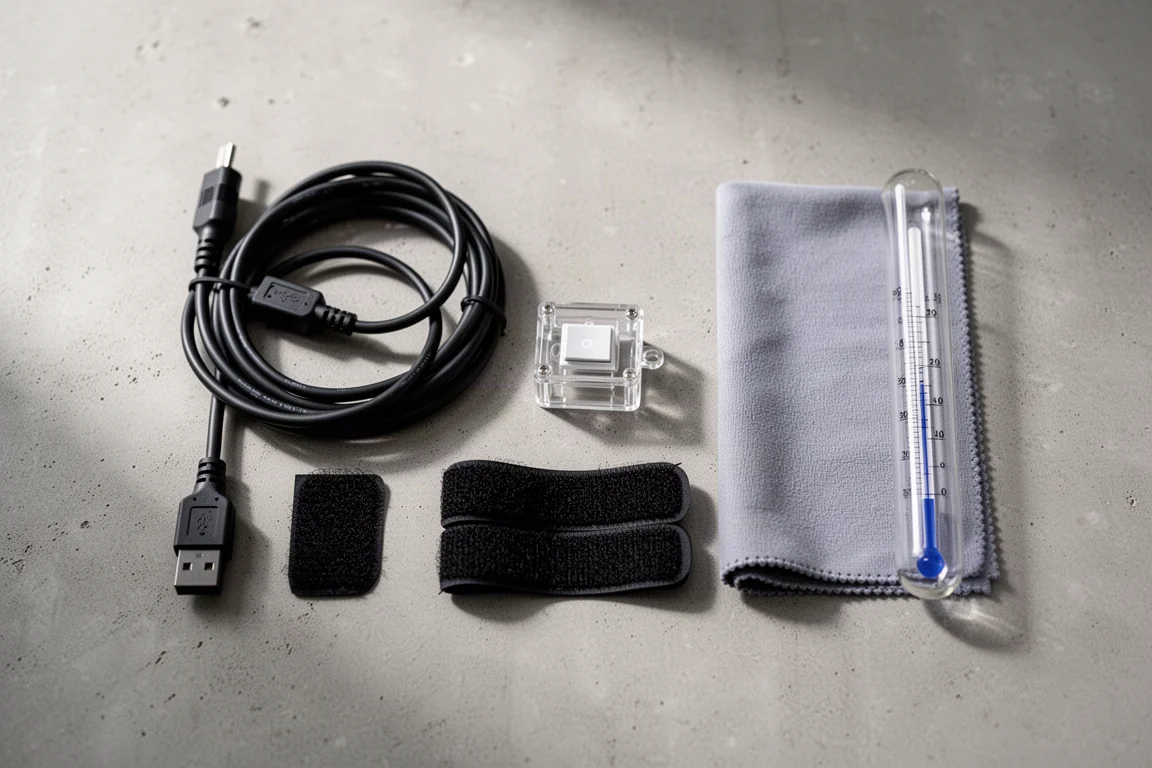
Each accessory ships as a compact acrylic box measuring roughly five inches by three inches by one and three quarter inches. Inside the packaging you get the accessory itself, the cables it needs, printed instructions, and heavy duty double sided velcro strips for mounting to a stand, a wall, or a controller board.
Every unit uses an eight foot cable, which is generous enough to reach from a cabinet mounted controller to a comfortable spot beside the display tank. The mounting strips mean you can reposition a box later without drilling anything.
The connection method differs by model. The switch toggle box links to the Apex head unit through a mini DIN 8 port, while the dual light status indicator and the alarm box both connect to the 24 volt ports on an EB832, FMM, or 1Link module. Check which ports you have free before ordering, because a fully loaded controller board can run short on 24 volt outputs.
All three are third-party add-ons rather than first-party controller hardware, and each one is programmed through the controller software you already use. The supplied instructions include worked examples to get you started, and hobbyist communities and the official controller forums are a good source of sample code if you want to take the automations further.
AdaptiveReef Switch Toggle Box
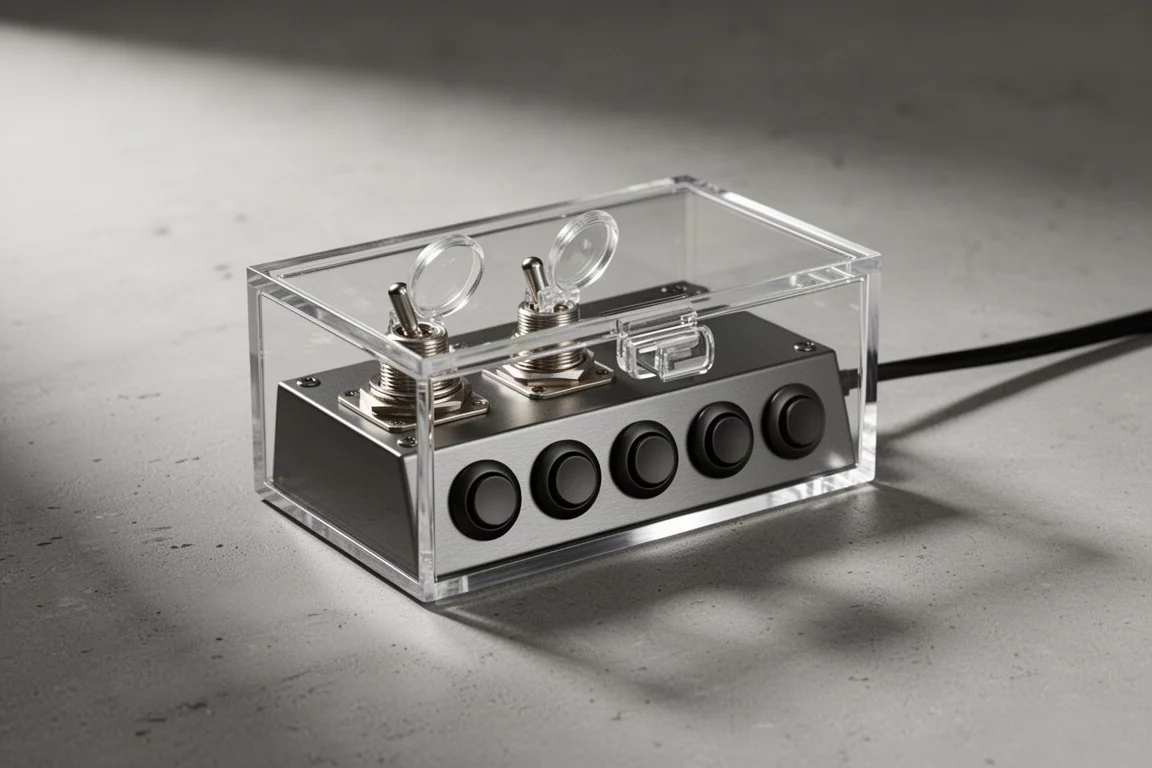
The switch toggle box is the most immediately useful of the three for everyday tank work. It packs six switches into the same acrylic housing: two on/off toggle switches fitted with safety covers, plus four momentary switches in the form of push buttons.
The appeal is speed. Instead of unlocking a phone, opening the app, finding the right outlet in a list and sliding it to off, you walk up and flip a switch. Emptying a skimmer cup becomes a fifteen second job rather than a small project.
The push buttons suit short, timed actions. You could slow the return pump and dim the lights for a photograph, or pause flow for a set period while you work in the tank. The covered toggles handle bigger jobs. A single flip can trigger a maintenance shutdown that takes a return pump, skimmer and other gear offline without powering down the controller or its peripherals. The same switches can turn on cabinet lighting so you can see what you are doing, flip between two different pump schedules for a frag system, or start a vacation mode that adjusts the feeder and automatic water change to suit your absence.

Because the toggles are physical rather than software based, they also make a practical emergency stop. If something starts going wrong quickly, one flip takes equipment offline without navigating any menus.
AdaptiveReef Dual Light Status Indicator
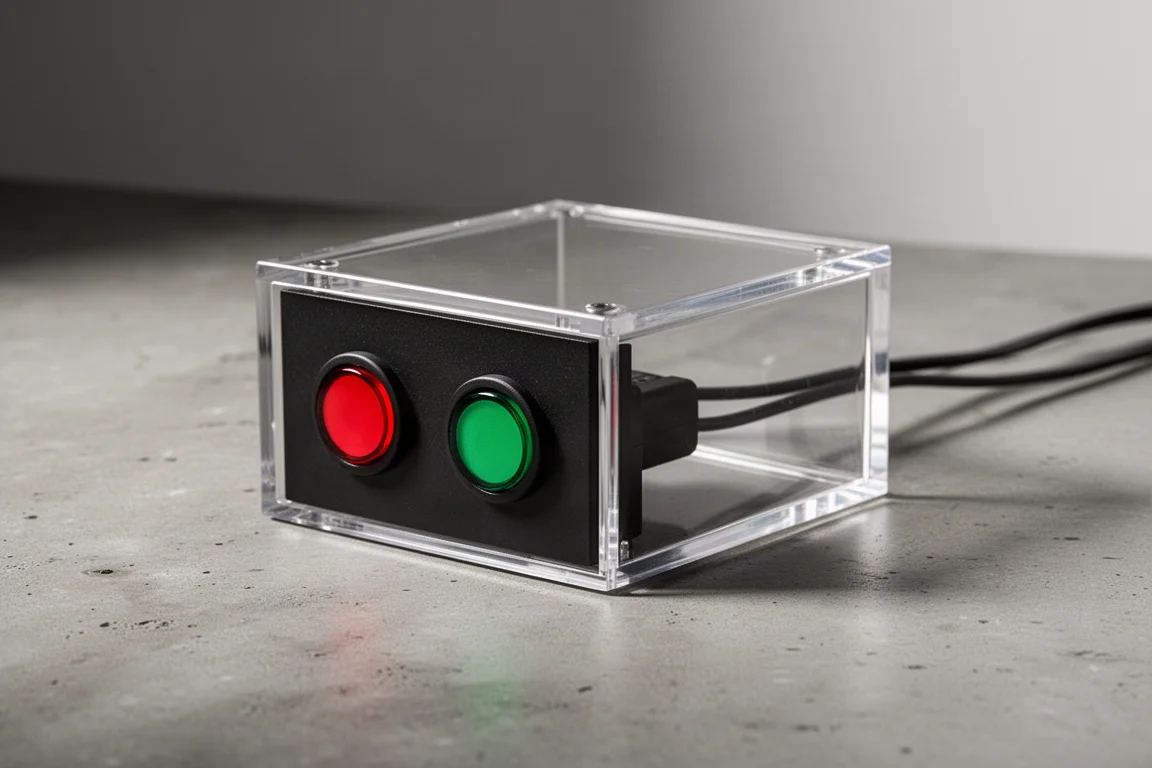
The dual light status indicator is the quietest of the three, and often the most useful in daily life. It carries a red LED and a green LED, each on its own 24 volt cable and each programmable independently.
That independence is the interesting part. You can treat the pair as a single status readout, where green means a piece of equipment is running and red means it is off. Or you can assign each light to a different piece of gear. A dosing pump, for example, can light the red LED while it runs and switch it off when it stops, giving visual confirmation that a schedule actually executed.
The other strength is communication with people who are not you. A tank sitter can be given a simple rule: green means everything is fine, red means call me. Two lights remove a lot of guesswork from that conversation.
Programming is flexible enough to cover reminders and active notifications as well. The green light can stay on for the duration of a feed mode and switch off when that mode ends, while the red light can come on when a skimmer cup sensor trips and go dark once the cup has been cleaned.
AdaptiveReef Audible and Visual Alarm Box
Notifications on a phone are easy to miss. They arrive quietly, get buried under other alerts, or land while the phone is charging in another room. The audible and visual alarm box covers exactly that gap, pairing a loud alarm with a red light that goes off in the room where the tank lives.
The sensible way to use it is as a dedicated channel for events that could genuinely damage a reef system. A return pump failure, a leak detector sensing water, a major pH or alkalinity spike, or a significant temperature spike or swing all qualify. When one of those happens, an alarm inside the house draws attention to the aquarium immediately, so anyone at home can either find you or start addressing the problem themselves without waiting for a notification to be noticed.
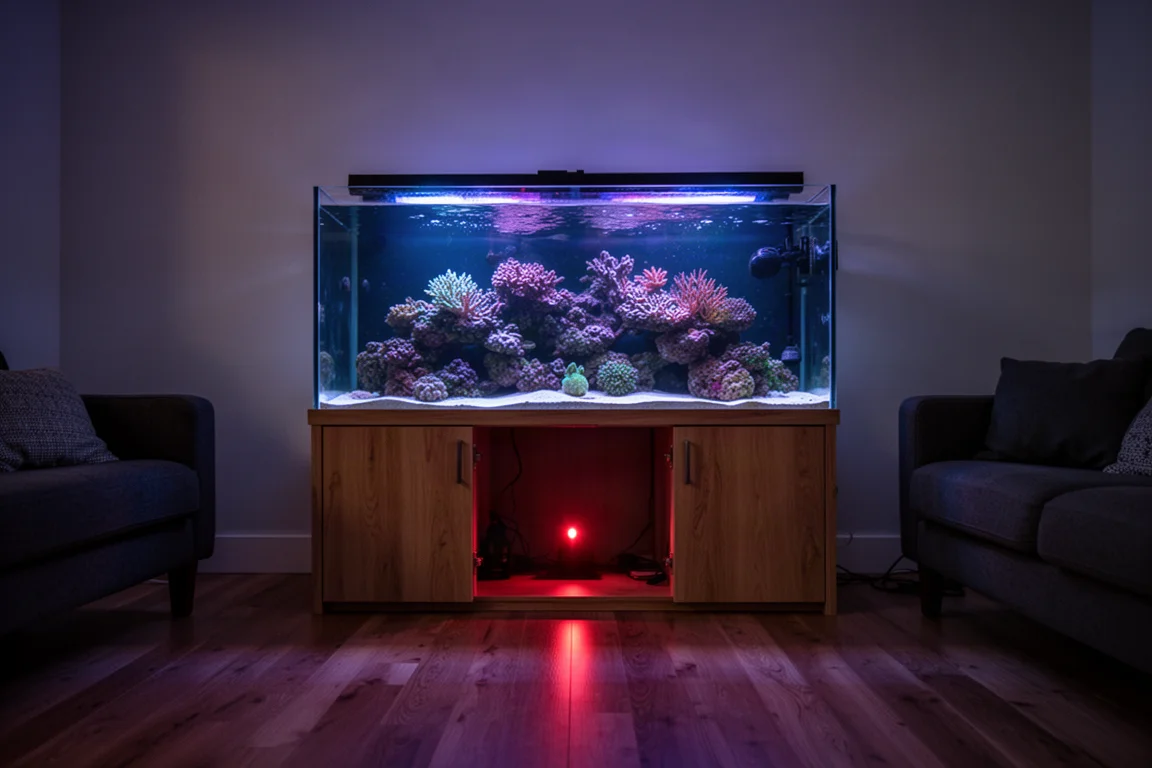
It pays to be selective about what you connect to it. Routine conditions such as an empty top-off reservoir will get irritating very quickly if every occurrence sets off a siren, and an alarm that cries wolf stops being listened to. Reserve it for the events that justify the noise.
Using the Accessories Together
These are not competing options so much as complementary layers, and the pairing that stands out is the switch toggle box with the alarm box. If a toggle switch takes your return pump and skimmer offline for maintenance, the alarm can be set to trip when that toggle has not been returned to its running position after a set period, say an hour or two. That kind of backstop suits anyone with a habit of getting distracted halfway through a job and walking away.
The dual light status indicator slots naturally into the same setup. It gives a quick visual summary of whichever state matters most to you, while the alarm stays reserved for genuine emergencies.
Buying Advice
For most reef keepers, the switch toggle box is the one to buy first. It removes the most frequent friction point, which is triggering an everyday action without touching a phone, and it adds a physical shutdown option that is genuinely reassuring during a maintenance session.
The dual light status indicator is the strongest value argument of the three. Two programmable LEDs are a small addition, but they change how you and anyone else in the house read the state of the tank, and it is by far the easiest accessory to explain to a tank sitter.
The alarm box is the one to add when peace of mind matters more than convenience. If you have ever wondered what happens while you are asleep or at work, this is the accessory aimed squarely at that worry.
Before ordering, check your available ports. The toggle box needs a mini DIN 8 connection on the head unit, while the indicator and the alarm both need free 24 volt outputs. If you enjoy writing custom controller code, all three reward the effort with more elaborate automations. If you would rather not, the included instructions carry practical examples, and the reefing community is generous with ready-made solutions.
Conclusion
None of these accessories change what a controller can do, and that is the point. They change how easily you can do it. A switch within reach, a light that says something useful at a glance, and an alarm that will not sit quietly in a muted app all make a reef system friendlier to live with, which often matters more than another feature buried in the software.
Further reading
Related Reviews
Aquarium Equipment
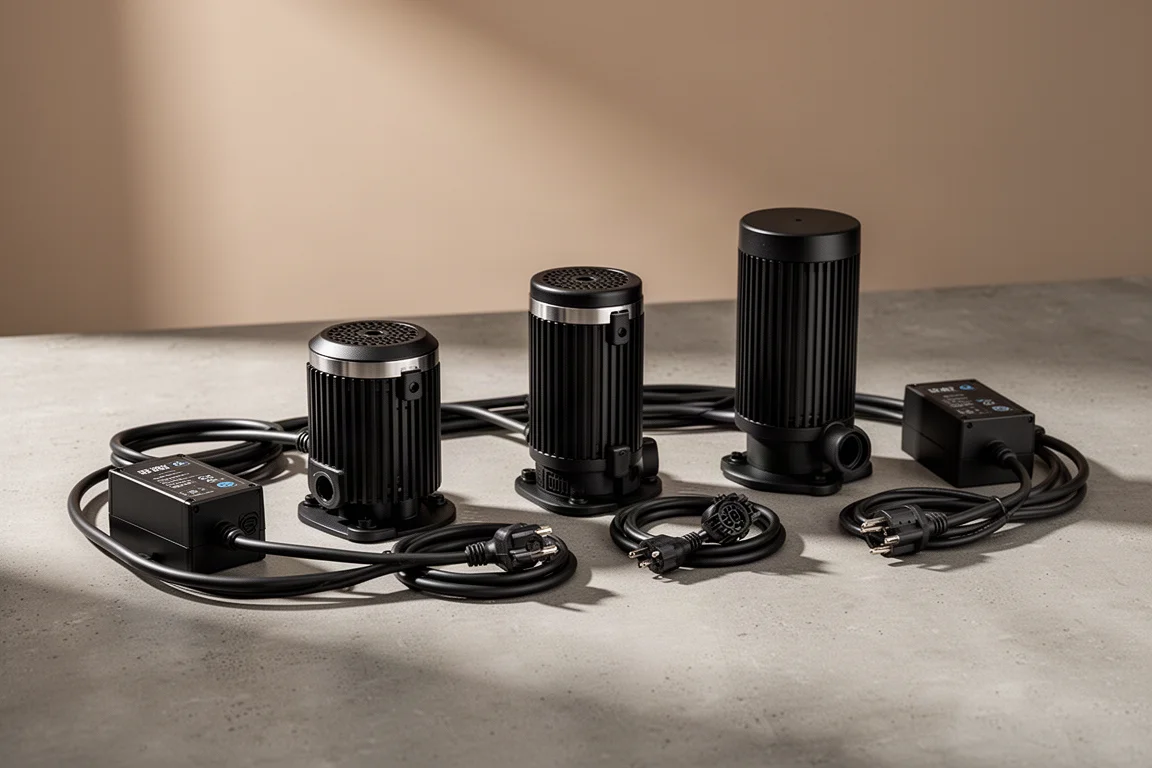
Abyzz Professional DC Pumps: A100, A200, and A400 Reviewed
A closer look at three German-made DC return pumps built for large reef systems, with titanium internals, fine flow control, and a 10-year warranty.

Aquarium Equipment
Adaptive Reef Controller Boards: Basic vs Deluxe for Cleaner Aquarium Gear
A practical look at the Adaptive Reef Basic and Deluxe controller boards, what each one includes, and how to choose the right size for your tank gear.

Aquarium Equipment
Adaptive Reef Controller Cabinet Review: A Practical Home for Reefing Gear
A flat packed, reefing specific controller cabinet with a waterproof PVC build, magnetic front access, and a customizable faceplate system.