Handlebars
WXR Narrow and Super Narrow Handlebars: Do Ultra Narrow Bars Actually Deliver?
A wind tunnel comparison of the WXR Narrow and Super Narrow handlebars against a 36 cm baseline, covering the watt savings, fit notes and handling trade-offs.
Introduction
Handlebar width has been shrinking across road racing for several seasons, and the aerodynamic claims have grown louder with every centimeter removed. The obvious question is whether the numbers behind those claims hold up, and whether a much narrower bar remains controllable when the road gets technical.
British brand WXR, best known for track cycling frames and components, has carried that expertise onto the road with two unusually narrow drop bars. Both were put through a wind tunnel programme at the Silverstone Sports Engineering Hub against a baseline 36 cm handlebar, a width that is common in the peloton and, if anything, already on the narrow side.
What Makes WXR Handlebars Different
WXR built its reputation in track cycling, developing handlebars for Team GB and a complete bike raced by the Malaysian track cycling team at the Tokyo 2020 Olympic Games. That track-focused background shows in the geometry of its road bars.
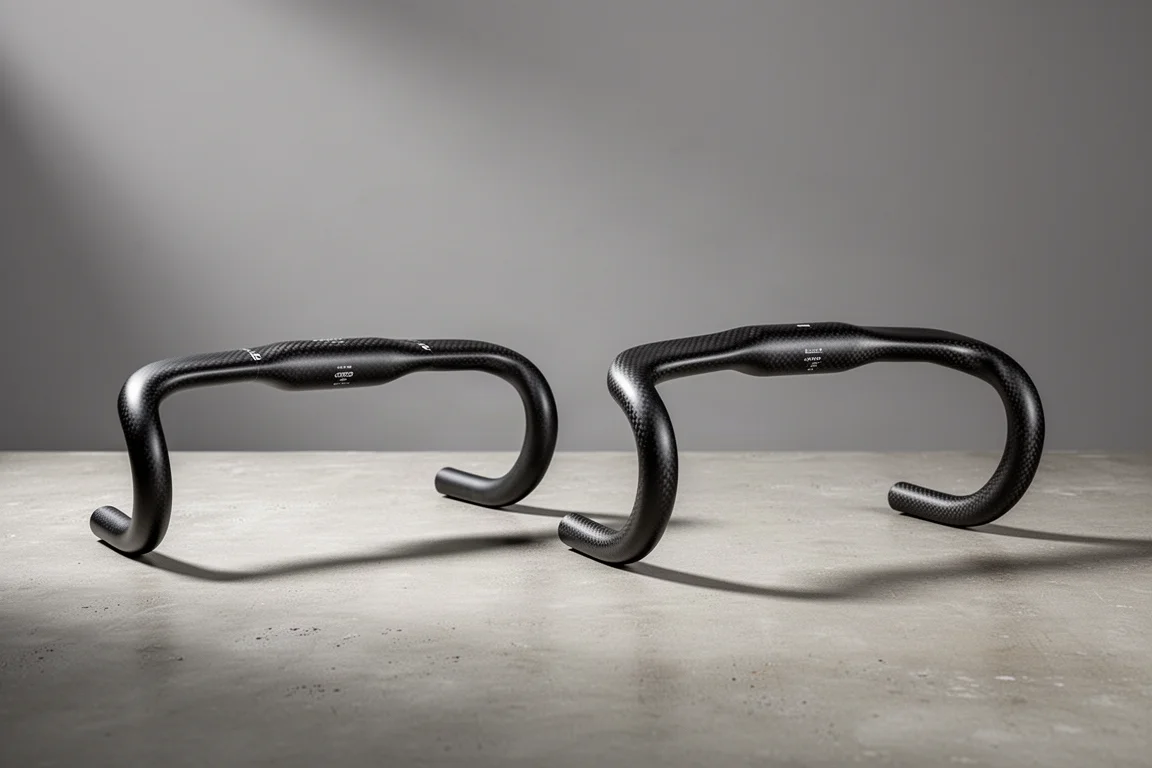
The WXR Narrow measures 30 cm center to center across the tops and 37 cm edge to edge at the bottom. The WXR Super Narrow goes considerably further, at 24 cm center to center at the tops and 35 cm outside to outside at the drops.
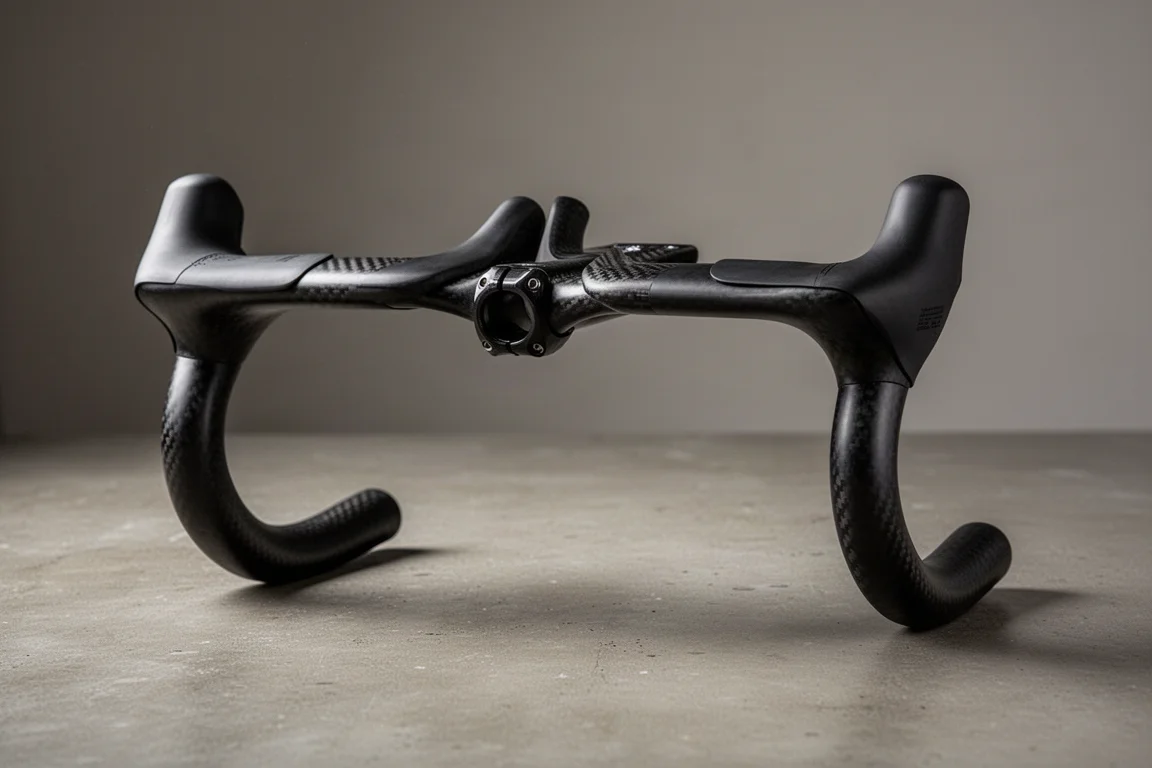
Both bars are UCI legal. The UCI rule requires the widest part of the handlebar, measured outside to outside, to be at least 35 cm, which is why the flared drops on each model are wider than the tops. It also explains how a 24 cm top section can still be raced.
How the Handlebars Were Tested
The comparison covered three handlebars: the two WXR models and a baseline bar measuring 36 cm center to center and around 39 cm outside to outside.
Testing ran across five body positions, three speeds and three yaw angles of 0, 6 and 12 degrees. The comfort position on the hoods was measured at 35 and 45 km/h. A neutral position, slightly more aggressive but still sustainable, was measured at 35, 45 and 55 km/h. The three faster positions, an aggressive breakaway position with elbows at 90 degrees, a drops position used for control and sprints, and a low track-derived position, were measured at 45 and 55 km/h only, because of time constraints.
That range matters because drag savings do not scale evenly. A bar that saves a handful of watts in an upright position can behave very differently once the rider is already low and narrow.
WXR Narrow Handlebars: The Practical Aero Upgrade
The WXR Narrow is the more usable of the two. At 30 cm center to center across the tops it is dramatically narrower than a conventional bar, yet the 37 cm measurement at the drops keeps it within UCI limits and leaves a wider, more stable platform for sprinting and technical riding.
In the comfort position at 35 km/h, moving from the baseline bar to a narrower WXR bar produced a 17 watt gain, with no meaningful change in how the position felt. For most riders at that speed, 17 watts is in the order of 10 percent of total power, which is a substantial return for a component swap.
The data also pointed to stability. Variation in the measurements stayed low in that position, which suggests a locked-in, comfortable posture rather than a nervous one. Riders with broader shoulders may notice pressure on the chest with narrow bars, and a longer stem can help by moving the arms clear of the torso. Climbing out of the saddle takes a little adjustment as well, since the narrower grip changes how the bike is controlled under load.
WXR Super Narrow Handlebars: The Race-Focused Option
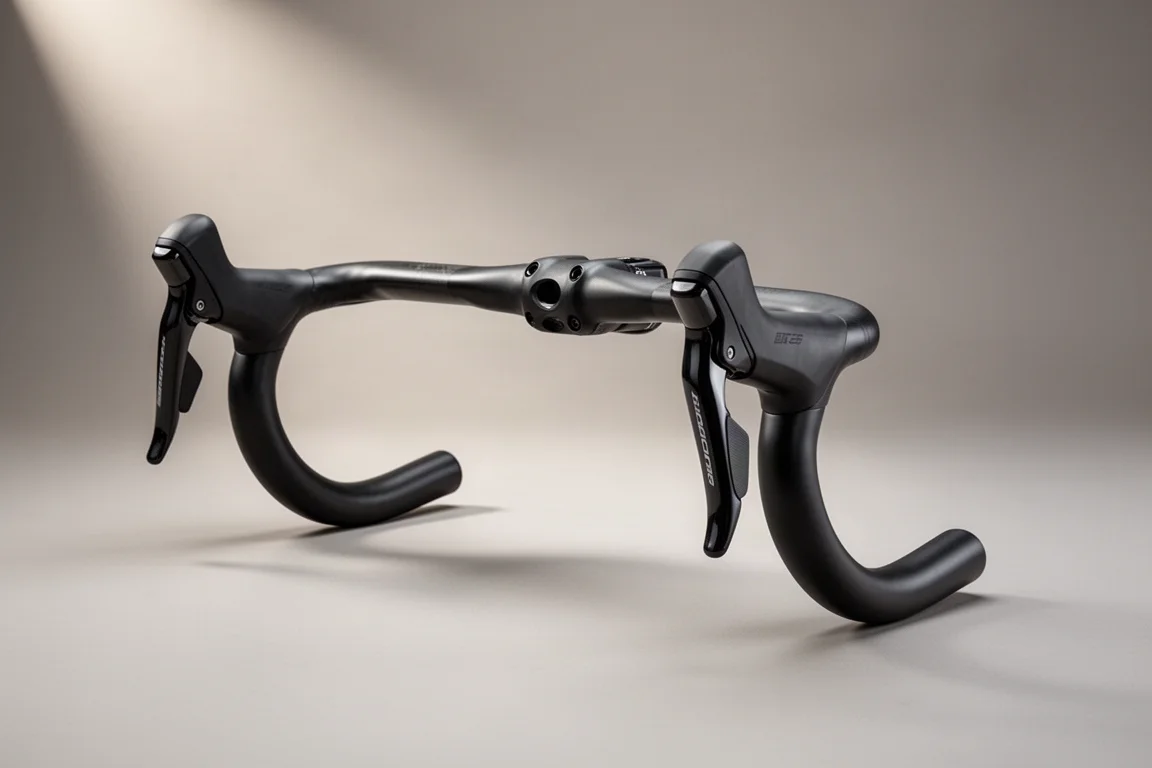
The WXR Super Narrow is the more radical design. Its tops measure just 24 cm center to center, while the drops measure 35 cm outside to outside, which is the minimum the UCI allows. That combination keeps the bar legal for racing while pushing the frontal area of the hands and arms as low as possible.
At 55 km/h, the ultra narrow bar measured in the order of 50 watts better than the baseline bar, with very little change in body position beyond the hands moving closer together. That is a large number in a discipline where single-digit gains are often treated as significant.
The trade-off is comfort. The Super Narrow felt noticeably more cramped than the 30 cm option and was too narrow for a wider shoulder width, which places it firmly in the racer category rather than the all-rounder category.
What the Wind Tunnel Numbers Show
Across the test matrix, three results stood out.

In an aggressive race position at 45 km/h, simply swapping the handlebars saved 34 watts, with the body position verified as unchanged. That is a margin that can decide how long a rider can hold an effort in a race.
At 55 km/h on the ultra narrow bar, the saving over the baseline was in the order of 50 watts. And in a deliberately optimized aggressive position, with the shoulders raised and the head tucked, the gain reached around 65 watts over the baseline bar. That last position is not comfortable or easy to hold, but it does respond to training.
Fit, Comfort and Handling Considerations
Narrow handlebars have a reputation for feeling twitchy, and the data does not support that in every case. Variation in the measurements stayed low in the narrower positions, which points to a stable platform rather than an unstable one.
The more common issue is fit. Narrow bars can compress the chest, particularly for riders with a broader frame, and a longer stem is a practical way to move the arms out of the way of the torso. That is the first adjustment worth trying before writing off a narrow bar.
Handling does feel different at first, but the change is manageable. A criterium race on an airfield circuit, with no unusually tight turns, was completed on the ultra narrow bar without any sense that it was dangerous. Climbing out of the saddle is the movement that needs the most adaptation.
Who Should Consider Ultra Narrow Bars
The 30 cm WXR Narrow sits in a genuinely usable middle ground. It delivered real aerodynamic savings while remaining comfortable enough for regular road riding, and the UCI-legal 37 cm width at the drops keeps sprinting and technical handling predictable.

The 24 cm WXR Super Narrow is a different proposition. Its gains at high speed are the largest in the comparison, but the fit is restrictive and the comfort penalty is real. It suits racers who are willing to adapt their position, and it is best treated as a specialist component rather than a general upgrade.
What to Weigh Before Buying
Cost is where narrow handlebars become genuinely interesting. A premium carbon wheelset can run into the thousands and may deliver around 10 watts at best over an existing set. A high-level handlebar sits in a much lower price bracket, and the position work that supports it costs nothing but time.
That does not make the handlebar automatically the better purchase. Wheels also change how a bike feels, and a bar that does not suit a rider’s shoulder width will not deliver its aerodynamic advantage in a sustainable way. Fit comes first, then the aero numbers.
Buying Advice
Riders who want most of the benefit with the least disruption should start with the 30 cm WXR Narrow. It is UCI legal, it produced a 17 watt gain in an upright comfort position at 35 km/h, and it proved comfortable enough for everyday riding once the position was dialed in.
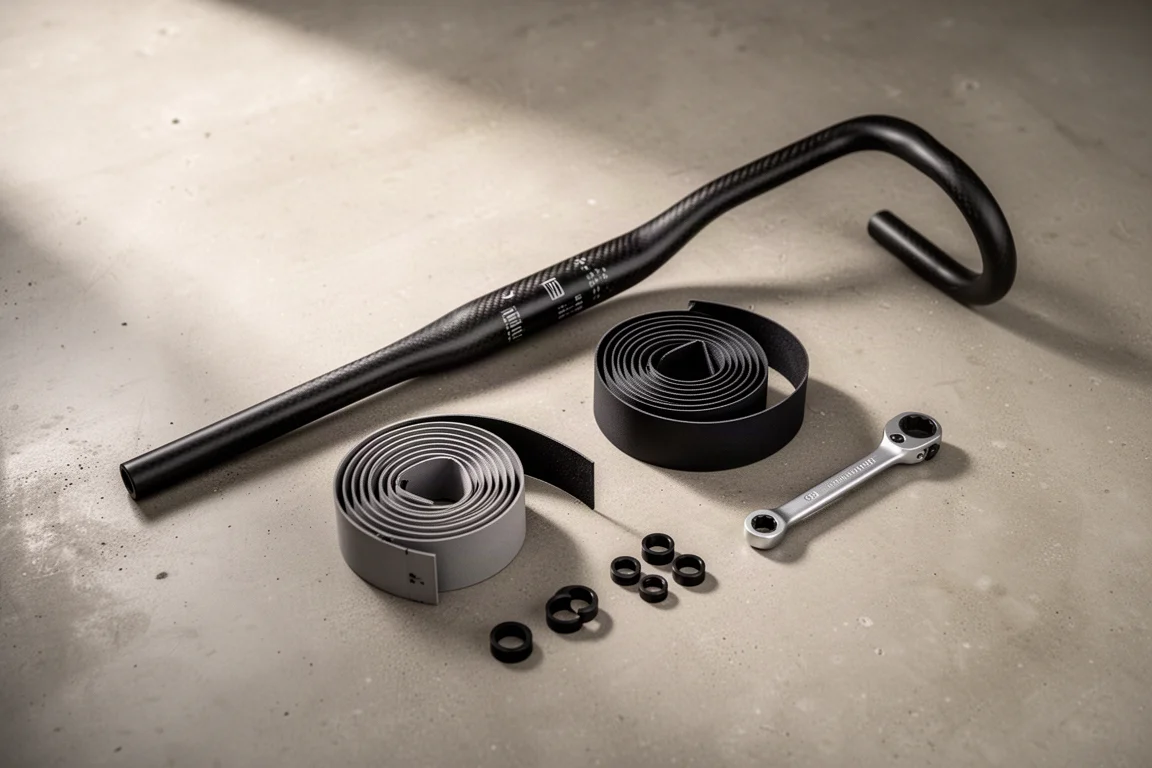
The 24 cm WXR Super Narrow makes more sense for racers chasing the last few watts at 55 km/h, where it measured around 50 watts better than a 36 cm baseline. Be prepared for a more cramped feel and a narrower range of suitable shoulder widths.
Either way, budget for a bike fit or at least a stem change. The aerodynamic case for narrow bars is strong in the wind tunnel, but it only transfers to the road when the rider is comfortable enough to hold the position.
Conclusion
Narrow handlebars are no longer an experiment confined to track racing. The measurements here show meaningful savings at realistic race speeds, and the 30 cm option in particular combines those savings with a position that remains comfortable and stable.
The UCI’s 35 cm outside-to-outside minimum means ultra narrow bars can be raced legally, and with aero gains elsewhere on the bike getting harder to find, more riders are likely to move in this direction. The sensible approach is to choose the width that matches your shoulders and your racing, then refine the fit around it.
Further reading
Related Reviews
Handlebars
Best Drop Handlebars Ranked: 9 Road and Gravel Bars Compared
Nine drop handlebars ranked by reach, drop shape, width range and integrated routing compatibility, from designs that fight the rider to bars that solve a real fit problem.
Handlebars
Redshift Top Shelf Handlebar Review: 50 mm and 70 mm of Rise for a More Relaxed Ride
A close look at the Redshift Top Shelf Handlebar, a flared drop bar with 50 mm or 70 mm of rise built to lift the front end and take weight off your hands.
Handlebars
Redshift Top Shelf and Kitchen Sink Handlebars: Raising Your Front End Without Losing Reach
Two riser drop handlebars that add height at the front end without a flipped stem or a tall spacer stack, and what that means for comfort, control and long-ride position.