Cycling Gear
Winter Cycling Essentials 2026: Five Gear Picks for Cold, Dark Rides
Five winter cycling products that solve real cold-weather problems, from an adaptive front light and a bright rear light to a breathable jacket and a high-visibility helmet.
Introduction
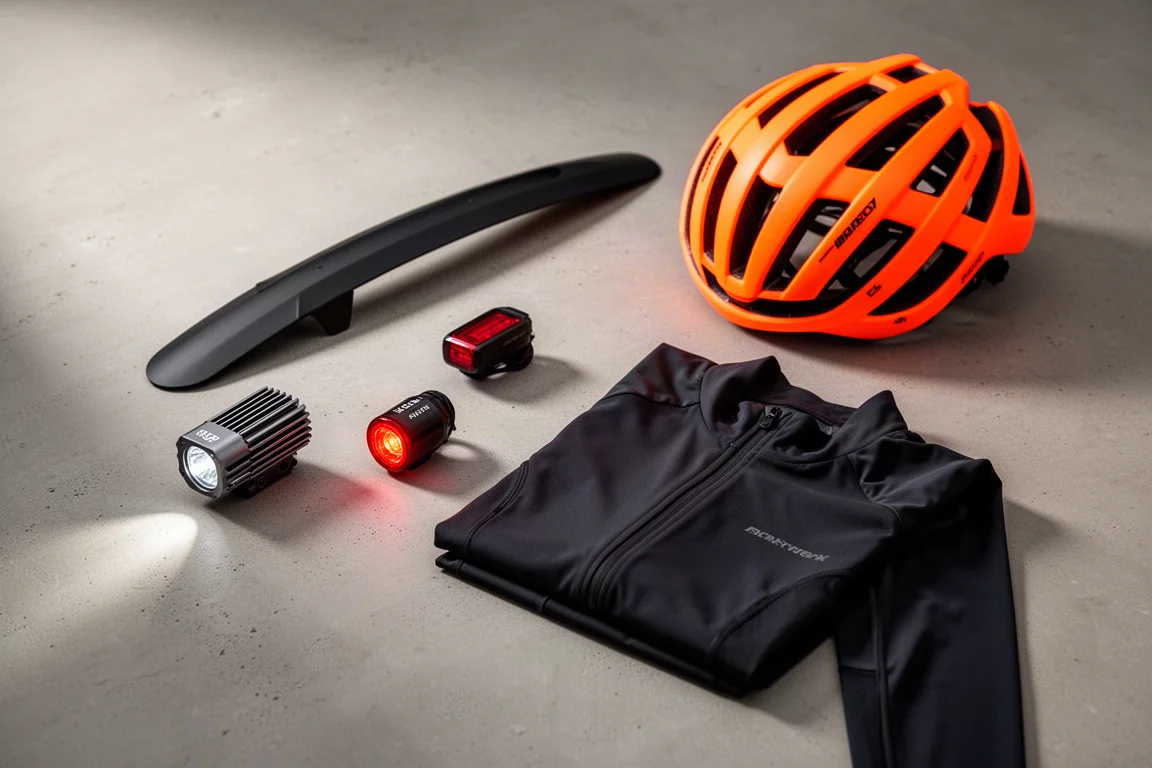
Cold, dark months do not have to mean miserable rides. A handful of well-chosen pieces of kit can change how winter feels on the bike: a front light bright enough to make night riding feel almost like daylight, a rear light that stays visible in filthy weather, a mudguard that keeps the worst of the road off your back, a jacket that copes with changeable conditions, and a helmet that helps you stand out when visibility drops.
These five products cover exactly that ground. Each one solves a specific winter problem, and together they form a practical kit for riders who would rather be outside than on a trainer.
What to Look For in Winter Cycling Gear
Winter kit earns its place by removing excuses. On the lighting side, raw output matters, but so does runtime and how easy it is to know how much charge is left. A light that displays the exact number of hours remaining is far more useful than one that leaves you guessing from a tiny indicator.
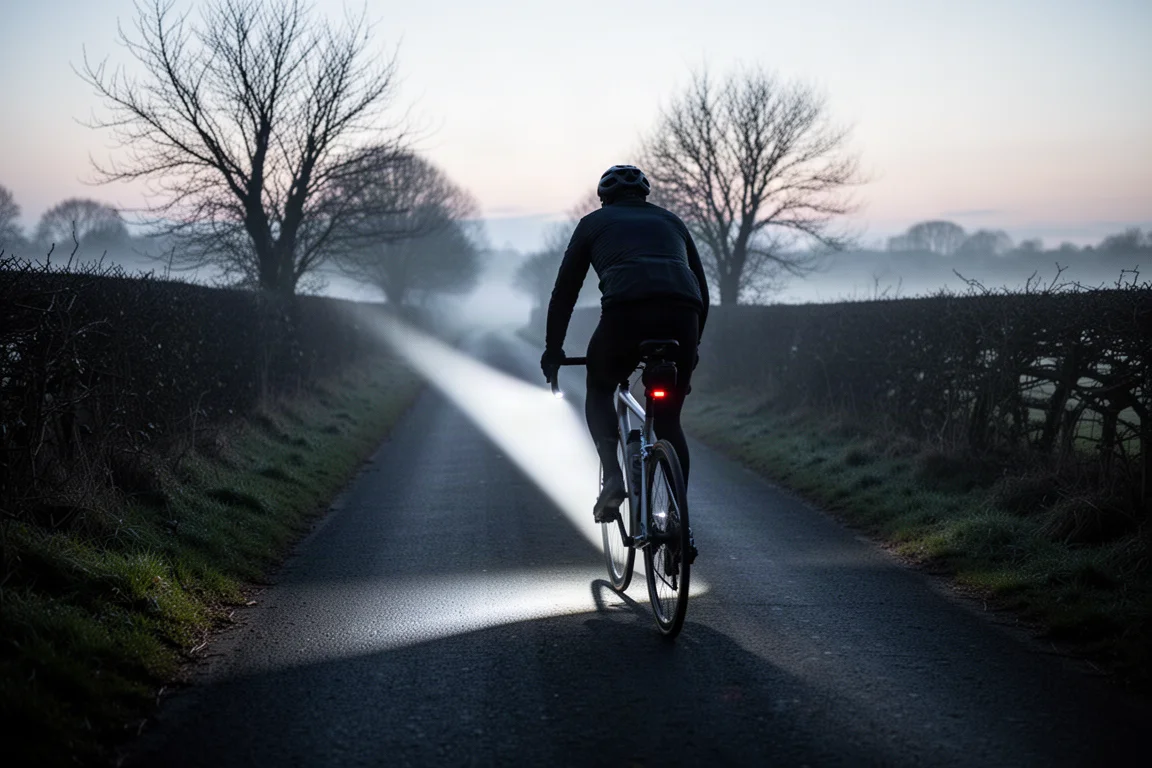
For clothing, breathability is the quality that separates a jacket you reach for every week from one that stays on the hook. Fabric that lets air move through keeps sweat from building up inside, which matters more than outright waterproofing for the showery, changeable conditions that fill much of a typical winter. Visibility is the third pillar: rear lights, high-visibility colours, and reflective details all help other road users notice you earlier. And sometimes the simplest item, a mudguard, does the most to make a wet ride more pleasant.
Exposure Toro 16: A Front Light That Reads the Trail
Exposure has a long-standing reputation for lights that simply keep working, and the Toro 16 sits in the middle of the range. That makes it a sensible choice for most riders, with enough output for gravel, bike packing, and less technical mountain bike trails, and it works on the road as well.
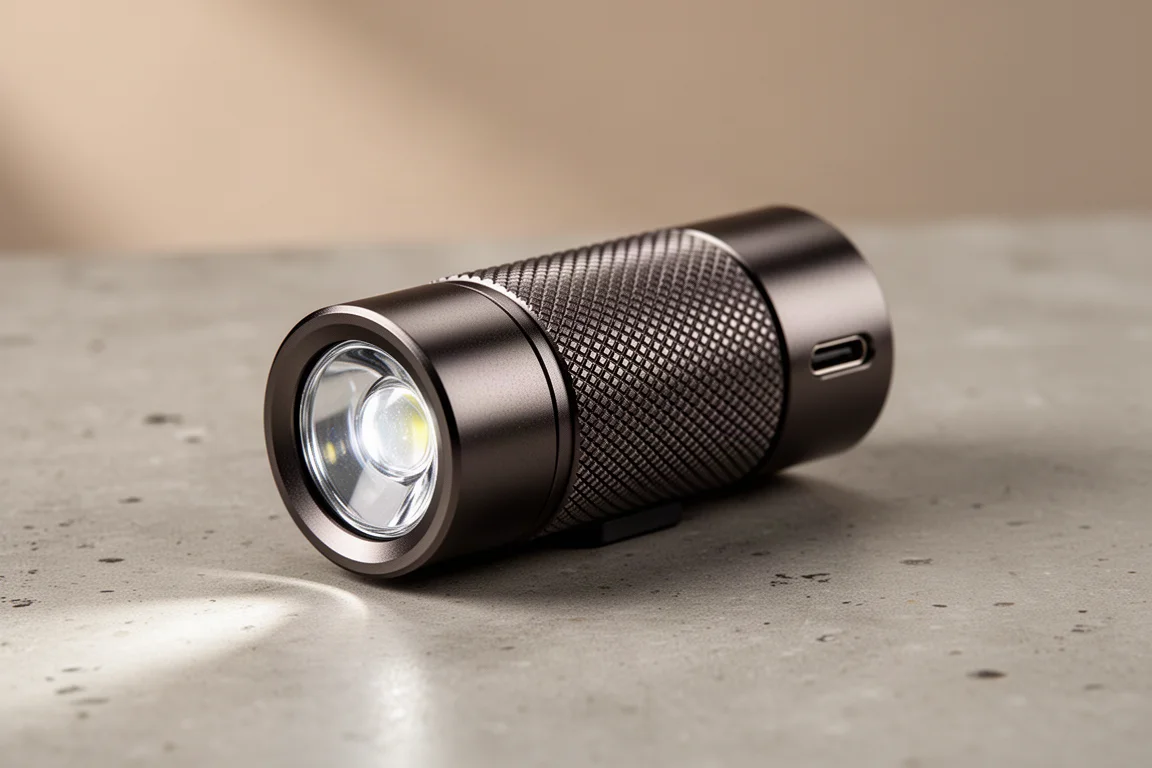
The headline figure is a maximum output of 3,850 lumens from a compact body, which is remarkable for the size. That number is not constant: a system called Reflex uses accelerometers to detect when you pick up speed and boosts output from the 2,600-lumen high mode to 3,850 lumens automatically, so a descent or a technical section gets brighter without you touching a button.
Runtime is displayed as an actual number on a small screen at the back of the light, and a button cycles through the modes to show the remaining time for high, medium, and low. Depending on how the modes are configured, that ranges from around two hours at the brightest setting to 36 hours in the lowest power mode. Even the low setting is bright enough to see by on a country lane. The beam is a round spot with smooth fall-off at the edges and plenty of reach, which helps you hold speed and confidence downhill. On the road, the guidance is to use a lower setting or angle the light down so you do not dazzle other road users.
Charging has moved to USB-C, and a 40-watt plug delivers roughly a three-hour charge from empty, with the port protected by a rubber cover. The housing is CNC-machined aluminium with cooling fins that act as a heat sink around three LEDs. The quick-release clamp is fiddly to fit the first time but very secure once in place, and adapters allow mounting on GoPro-style clamps, the front of the stem, or the steerer tube. A bolt can be loosened to rotate the light so the beam sits in the centre of your path. It is too heavy for helmet use, but bright enough that a helmet light is not needed.
The obvious consideration is price, at £355, which puts it firmly in investment territory. The counter-argument is longevity and support: this brand’s lights are known to last a decade or more, and after-sales service and warranty back that up. For riders planning regular night rides through winter, on road and off, the cost is easier to justify.
Knog Blinder Link: Rear Visibility Without the Radar
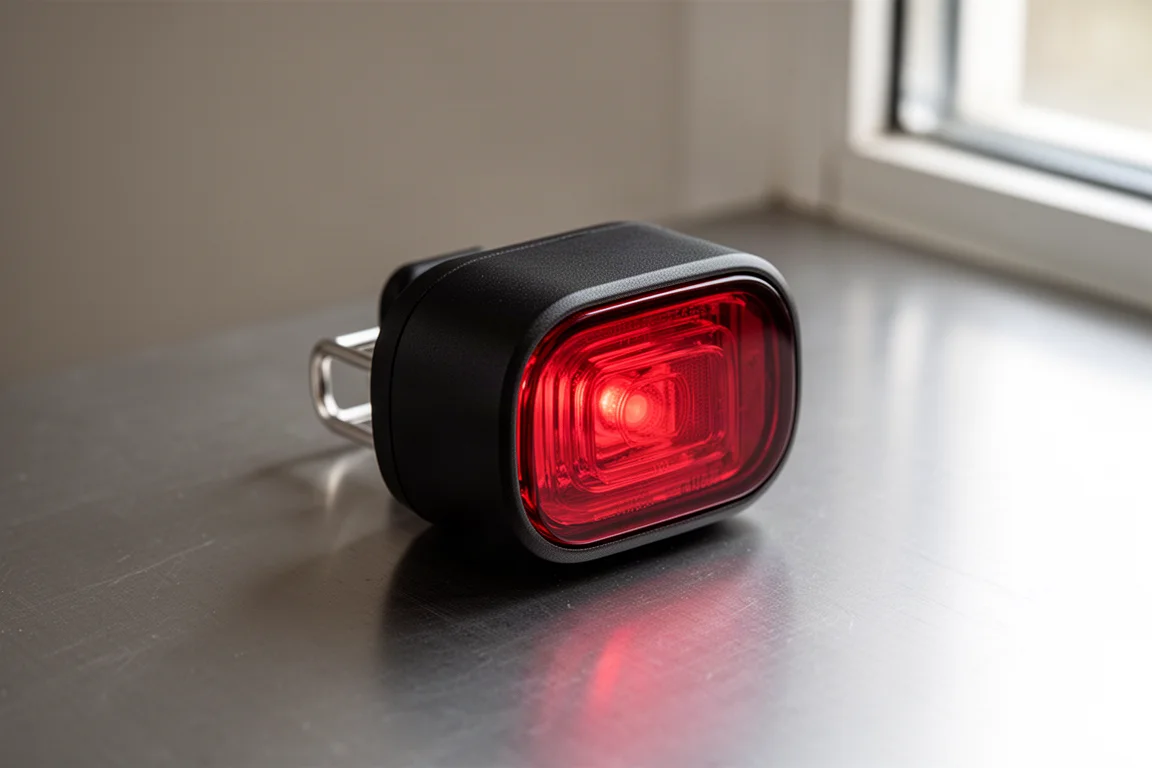
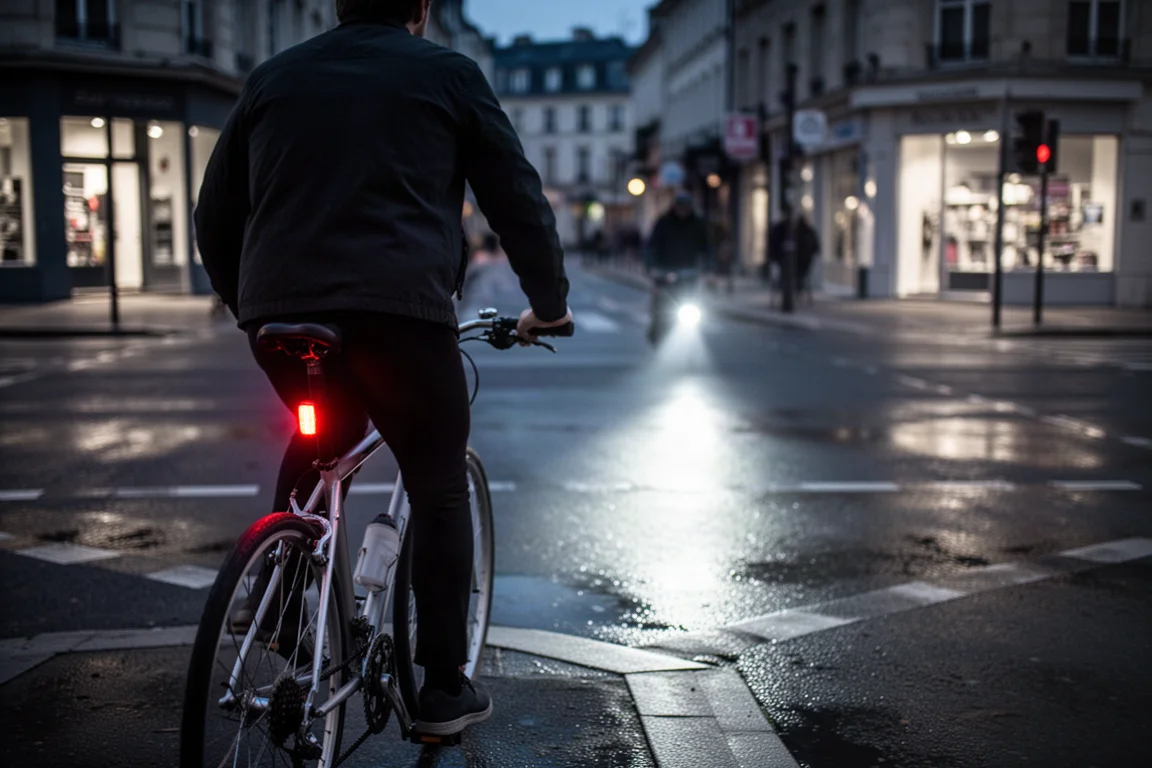
Radar rear lights get a lot of attention, but they are not for everyone. The Blinder Link takes a different approach: maximum visibility from a compact body, with no radar sensor to pair or manage.
Output is 100 lumens, and the claimed visibility distance is one kilometre, which is a meaningful margin on busy roads. There are eight modes, several of them distinctly unusual patterns, and a maximum runtime of 50 hours. The low flash mode runs at 50 lumens for 19 hours, which covers two or three weeks of daily commuting on a single charge.
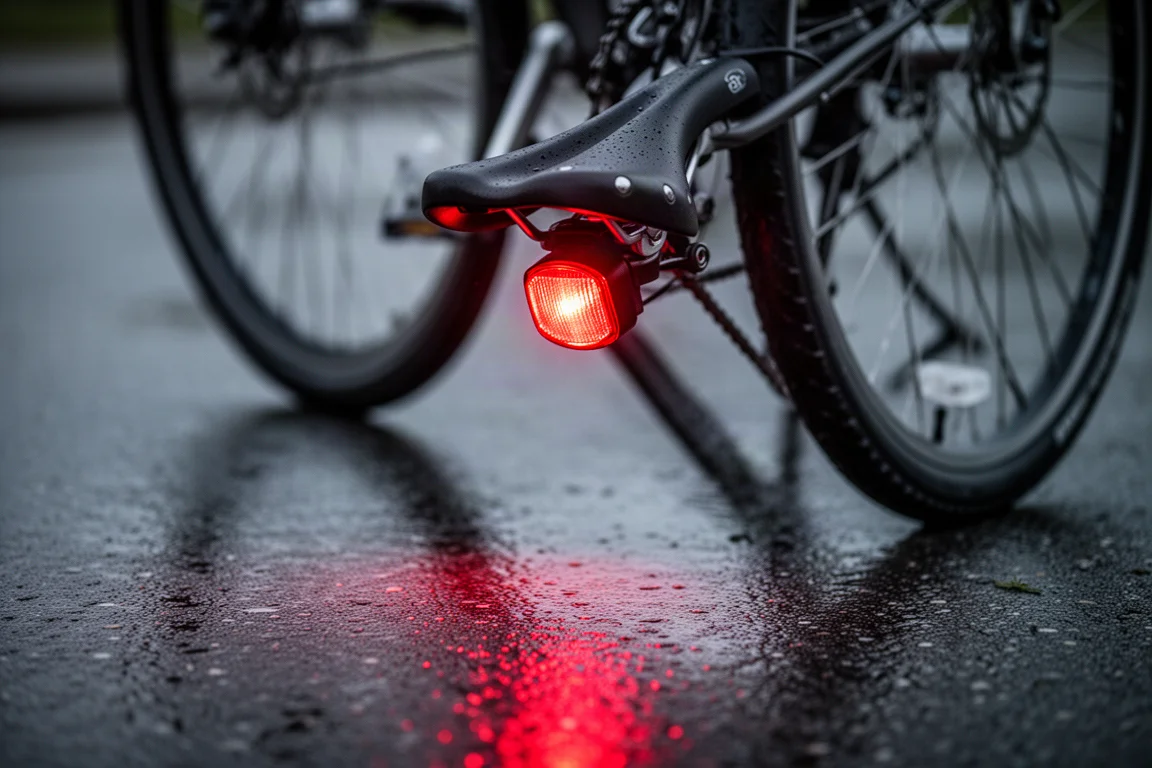
Mounting is where this light stands apart. It fits either a pannier rack or the saddle rails, and the under-saddle position is noticeably more secure than a seatpost mount, with no movement on rough surfaces. Sitting higher and further from the rear wheel also keeps it away from spray and mud. The trade-off is that a saddle bag will not fit alongside it. The light unclips from the bracket for charging through a USB-C port, although no cable is included in the box, and it can also be clipped to a belt loop or a backpack loop. An IP67 rating means it shrugs off rain, mud, and even a jet wash.
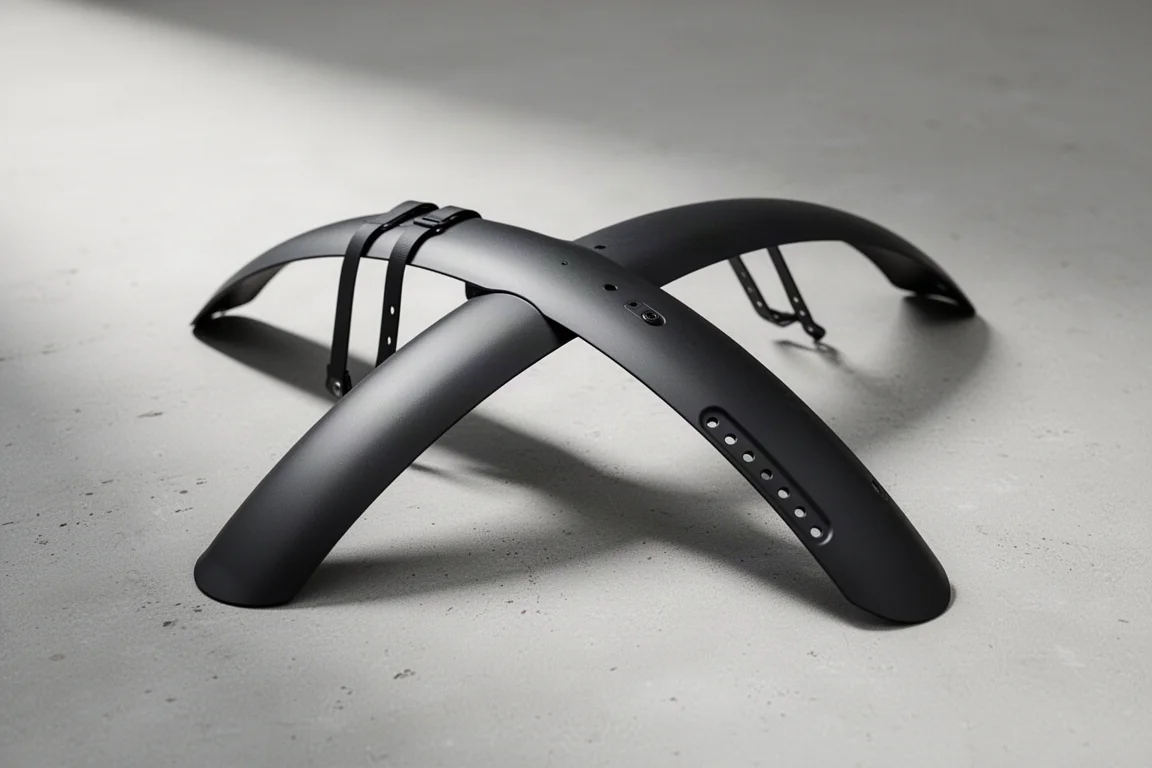
Ass Savers Win Wing: The Simple Answer to Soggy Bottoms
Not every winter upgrade needs to be expensive or clever. The Win Wing is a lightweight rear mudguard that straps onto almost any frame in seconds using two straps, with three holes to adjust the angle.
Its job is straightforward: keep the worst of the mud, water, and road spray from the rear tyre off your back and upper legs. That alone makes a wet ride far more pleasant, and for riders who would rather be outdoors than on a trainer through winter, it is one of the cheapest comfort wins available. It has been around for a few years, which is a good sign for a design this simple, and it comes in a wide range of colours if you want something brighter than black.
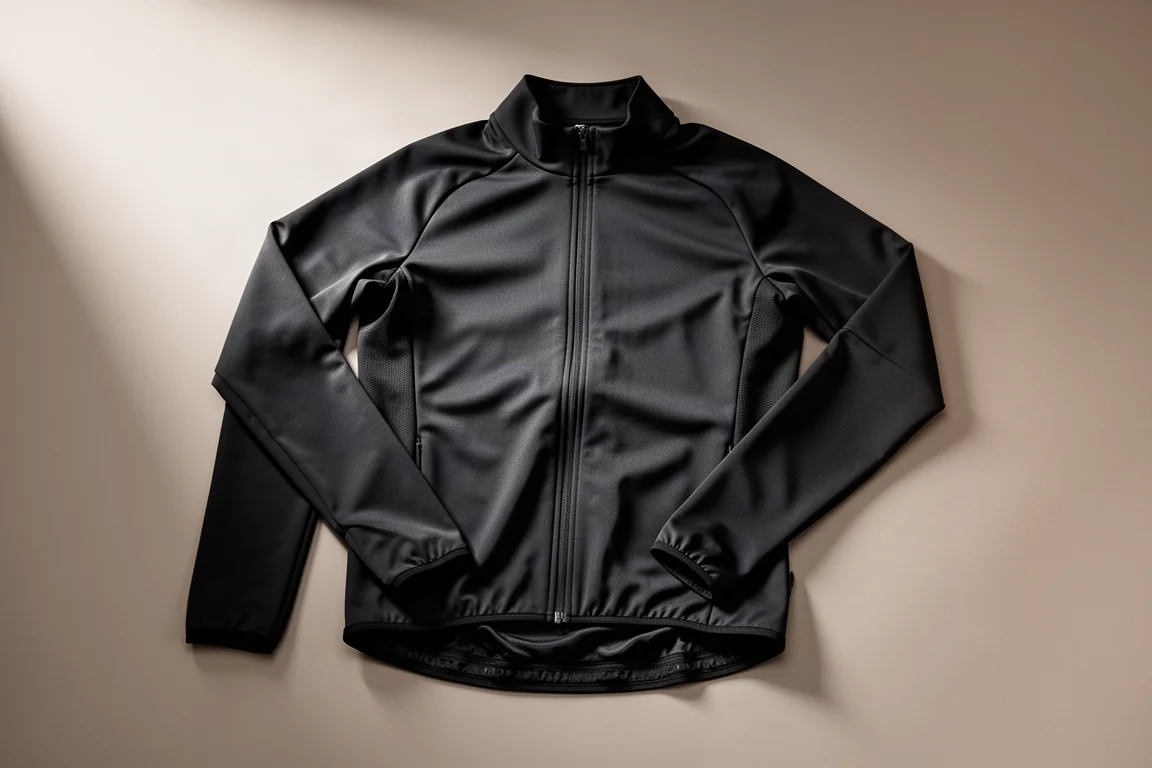
Castelli Perfetto RoS 3: A Jacket for Changeable Conditions
The Perfetto RoS 3 is a significant departure from the jacket it replaces. The new fabric is built around maximising airflow so you do not sweat inside it, while still offering enough rain protection for the showers you actually ride through. It is not a hard-shell rain jacket, and it is not meant to be.
That balance makes it an easy jacket to reach for across a temperature range of roughly 4 to 14 degrees, which covers a large part of a typical winter: dry but windy days, cold starts, and the constant risk of a passing shower. Over an eight-month stretch spanning winter, spring, and autumn, it has been the jacket to grab whenever the forecast looks mixed.
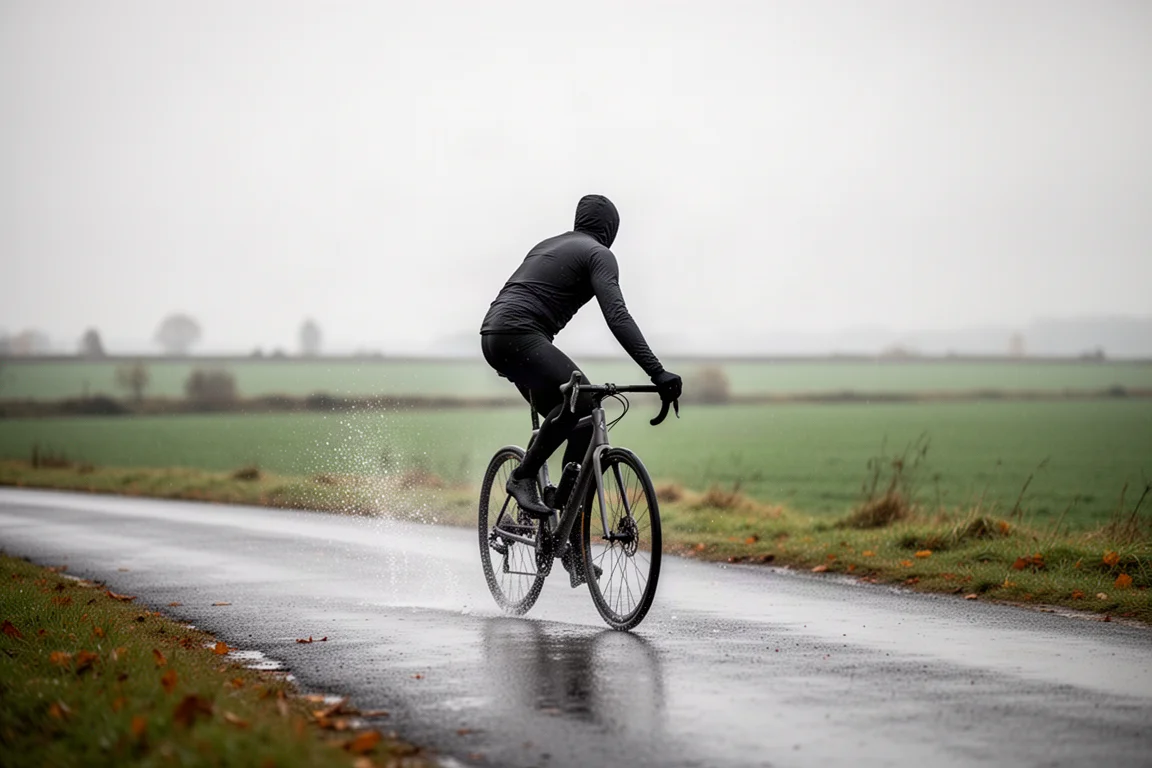
Breathability is the standout quality. Arriving at a junction after a hard climb, the fabric has done its job: no clammy build-up, no sweat marks, just a drier rider than the previous version would have produced. The stretch in the fabric gives a fit closer to a long-sleeve jersey than a jacket, with no restriction on movement. Because it breathes more, it can feel colder than the previous version with the same base layer, so a thicker or long-sleeve base layer is a sensible adjustment. It also performs best at a tempo pace where you are generating heat, rather than on very slow rides. Castelli’s development work also centred on avoiding the harsh chemical treatments used in much weatherproof clothing, and the jacket is available in brighter colours as well as the black shown here.
HJC Furion 3: High-Visibility Head Protection
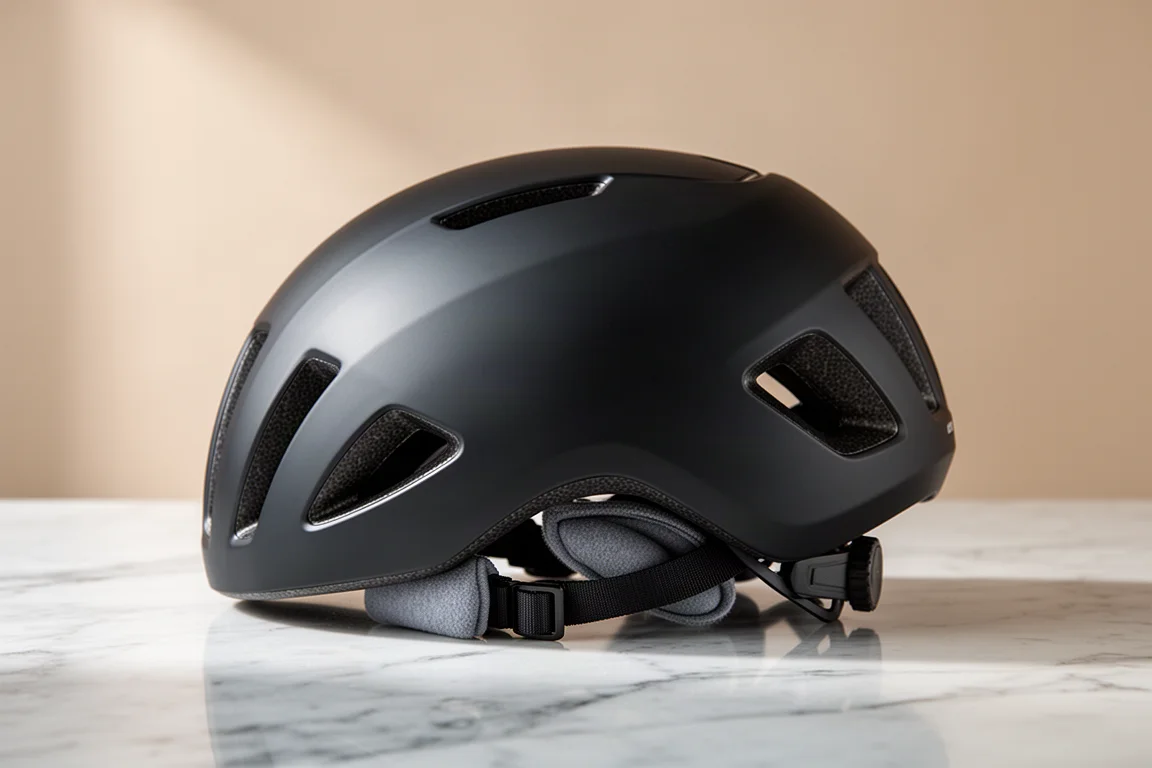
The Furion 3 is an aero road helmet, and this version comes in a bright neon orange. In overcast, low-visibility conditions, that colour does real work: it makes the rider noticeably easier to pick out against grey roads and hedgerows.
There are reflective details at the back for nighttime visibility as well, which adds another layer of reassurance on dark commutes and evening rides. Worn over several weeks of low light and poor weather, the difference in how visible you feel on country roads is tangible. If orange is too bold, the helmet is also available in white, grey, and black, but the brighter option is the one that earns its place in a winter kit.
Buying Advice: Building a Winter Kit That Works
These five items do not need to be bought together. The order that makes most sense depends on how and when you ride. If your winter riding happens after dark, lighting comes first: a front light with usable runtime information and a rear light that stays visible in spray will change more rides than anything else. If you ride gravel or commute on wet roads, the mudguard is the cheapest improvement you can make.
For clothing, match the jacket to the conditions you actually ride in rather than the worst weather you can imagine. A breathable jacket with a base layer you can swap for a thicker one is more versatile than a heavier shell you only wear a few times a season. And if visibility is the main concern, a high-visibility helmet plus a bright rear light is a combination that works in daylight and after dark.
Conclusion
Winter riding is a kit problem more than a motivation problem. A light that adapts to your speed, a rear light that survives mud and rain, a mudguard that takes seconds to fit, a breathable jacket for changeable days, and a helmet that stands out in flat light all remove small barriers. None of them is essential on its own, but together they make the cold, dark months feel considerably less like a compromise.
Further reading
Related Reviews
Cycling Gear
8 Cycling Products Riders Keep Coming Back To
Eight cycling components and accessories with clear strengths, honest trade-offs and long-standing reputations among riders and mechanics.
Cycling Gear
Aero Helmets and Bottle Setups Tested: Six Options Ranked by Measured Watt Savings
Wind tunnel data on six aero helmets and bottle setups, with real watt savings, practical trade-offs, and guidance on what is worth buying first.
Cycling Gear
Aero Road Bikes and Fast Tires Worth Watching in 2026
Four aero road bikes and one fast road tire, with the real strengths, the open questions, and what to check before you buy.