Winter Camping Gear
Winter Camping Gear: Nine Cold-Weather Items Tested in the Field
A field-tested look at nine winter camping items, from boots with removable liners to an extreme cold down system, a tent phone holder, and compression pack liners.
Introduction
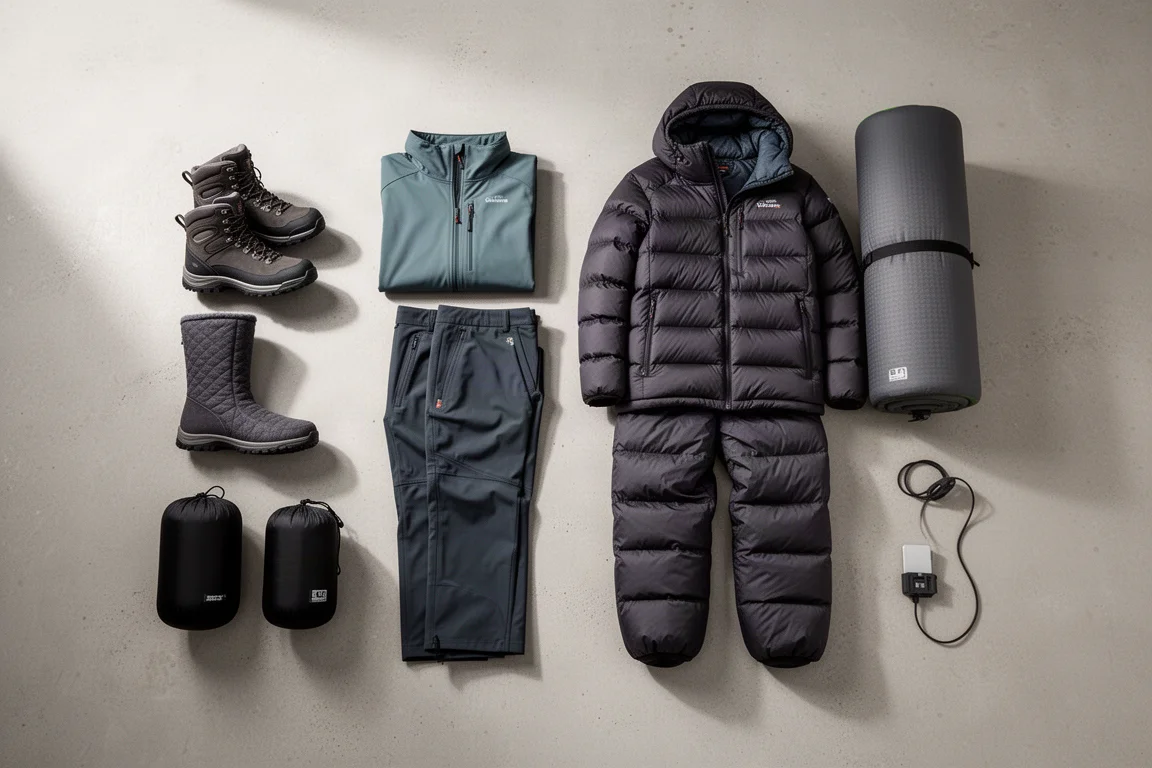
Winter camping gear almost always comes with a trade-off, and a recent cold-weather trip made that clear. Nine items came along: boots with removable liners, a soft shell jacket and pants, an extreme cold down jacket and down pants, a tent phone holder, an insulated sleeping pad, a winter bed, and a set of compression pack liners. Each one had something that made it stand out, and at least one thing worth watching.
This guide walks through what each item does well, where it gives ground, and which kind of camper it suits.
Baffin Borealis Boots: A Removable Liner That Changes Mornings
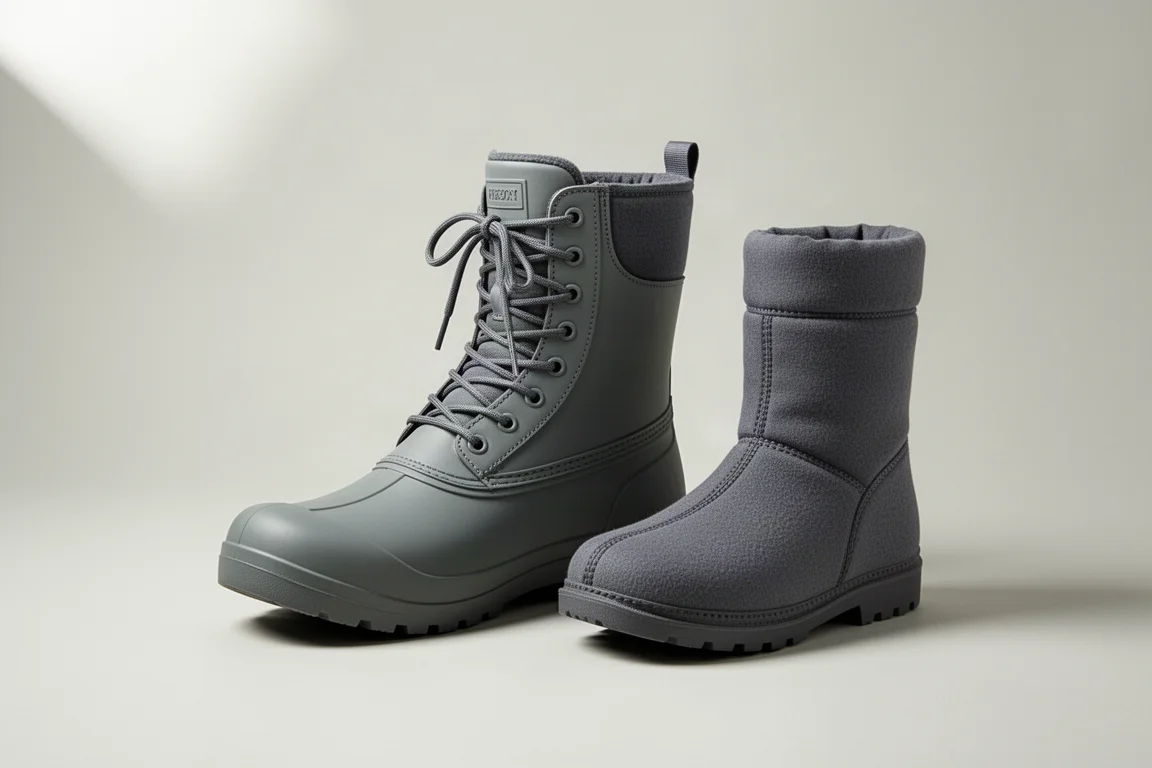
The Baffin Borealis is a lightweight winter boot built around a removable liner. That is unusual outside of heavy expedition footwear, and it matters for winter camping. Pull the liner out, tuck it into a sleeping bag or quilt overnight, and it stays warm and dries out instead of freezing solid. In the morning the boot is not stiff, and the sweat from the previous day has not turned to ice.
On the ski in, the boot proved extremely comfortable. The liner molds to the foot as it warms, hugging without pinch points or constriction while still providing support and grip through awkward terrain. At around -5°C the boots were comfortably warm, arguably too warm for a high-exertion climb at that temperature.
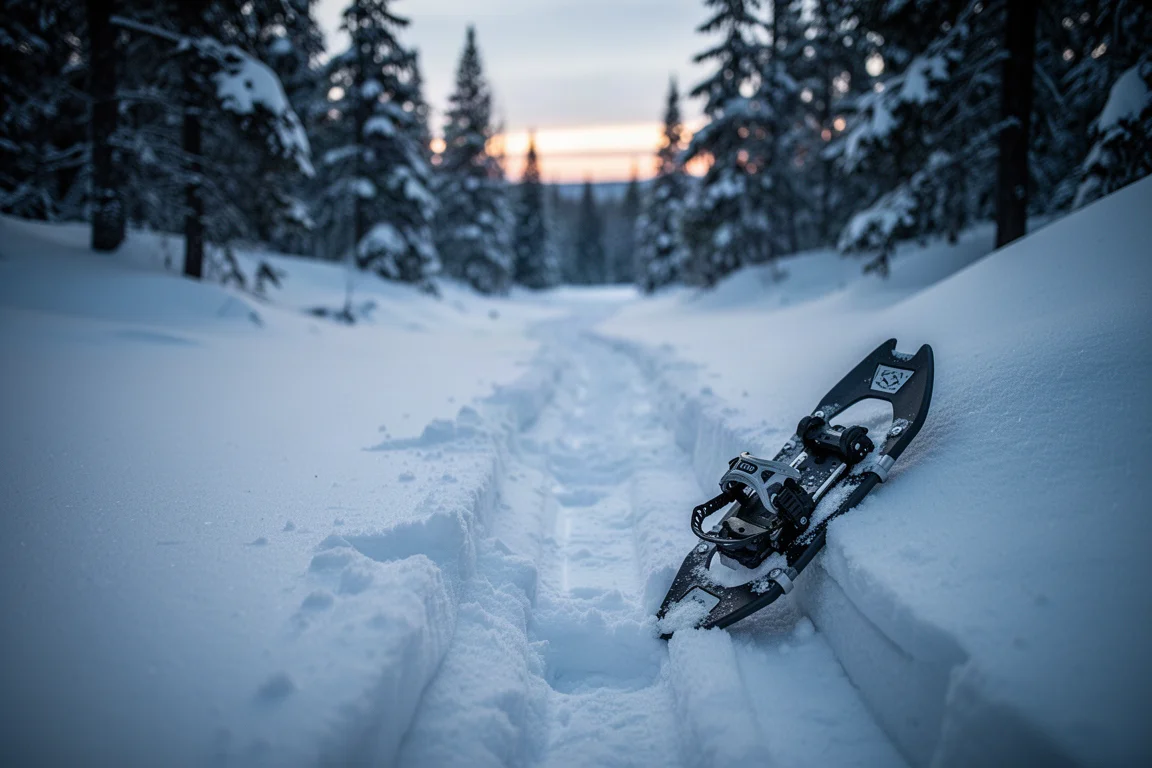
Around camp, with no separate camp booties along, the boots continued to hold warmth. The soft TPU shell stayed pliable rather than freezing, and the liners came back out of the sleeping bag dry and toasty. The catch is reinstalling the liners in the cold, which takes patience. Loosening the laces fully and putting the liners back while they are still warm makes it noticeably easier. The boot’s comfort zone still needs more testing, since -5°C sits on the warm side of its range.
Mountain Hardware Chalkstone Soft Shell Jacket: Breathability Over Membranes
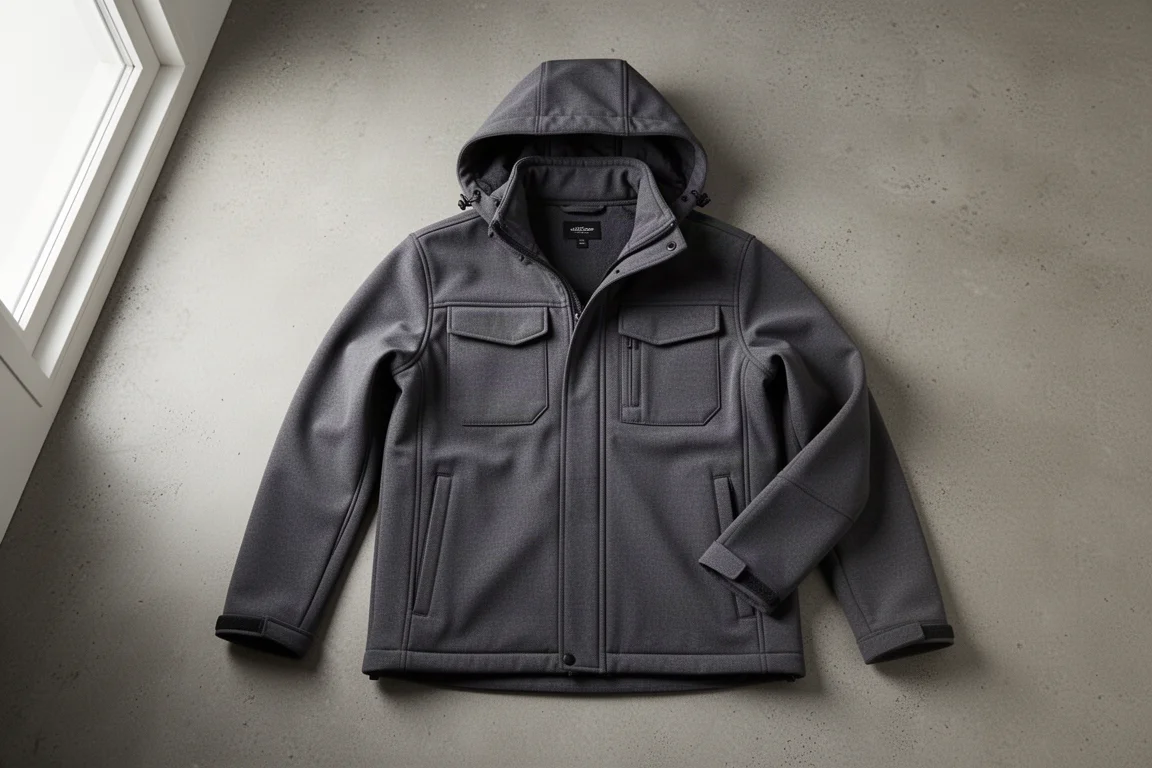
The Chalkstone is a soft shell, which means no waterproof breathable liner. In cold, dry conditions that is an advantage rather than a compromise. Without a membrane, moisture escapes far more easily during sustained exertion, and rain simply is not part of the picture. The jacket keeps the winter shell features that matter, with two chest pockets that hold items close and warm, two hand pockets, and two internal drop pockets.
Ventilation is the main limitation. There are no pit zips, only the center front zip. At a steady pace the fabric’s breathability was enough to keep temperature balanced. Push harder and heat builds faster than it can escape. At -5°C that meant opening the center zip and taking off fogged sunglasses. This jacket looks best suited to colder trips, roughly -10°C and below, where heat buildup is less of a problem.
Outdoor Research Circ 3 Pants: Minimal Soft Shell With a Cuff Guard
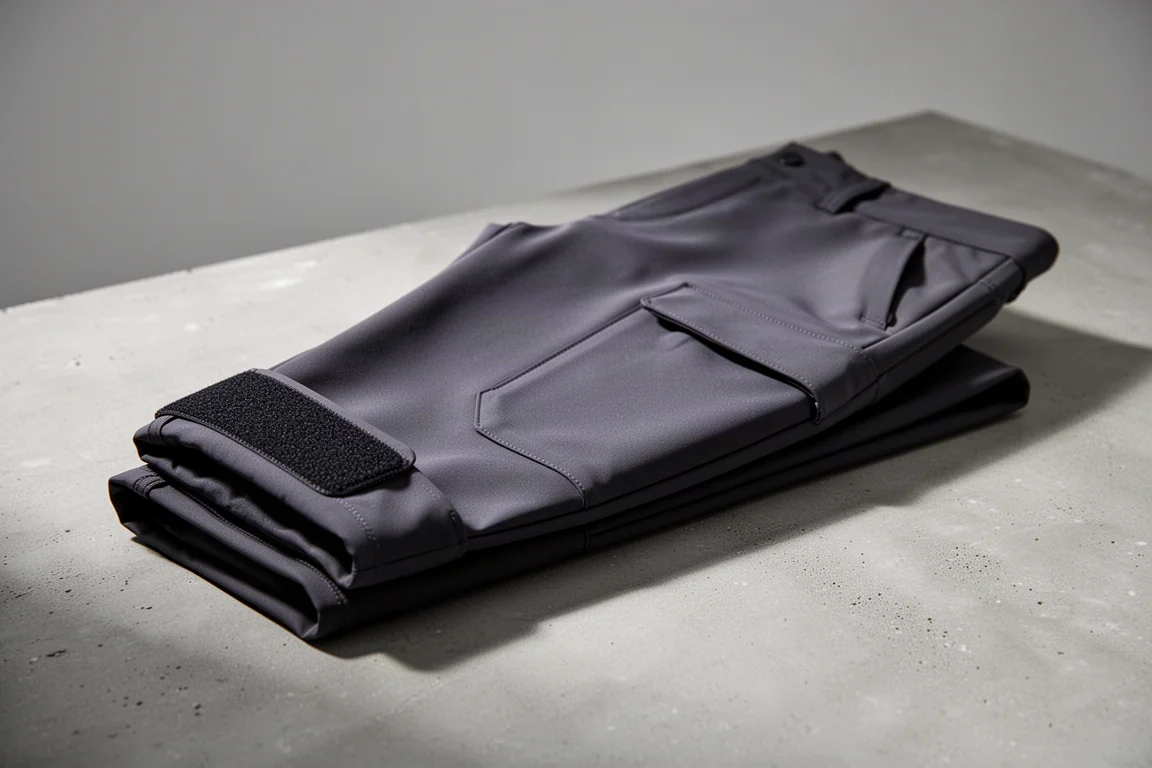
The Circ 3 pants are the lower-body half of that soft shell pairing, and they are deliberately minimal. There is one large pocket and two hand pockets, plus a cuff guard that protects the hem from ski edges and crampon points. Like the jacket, they rely on fabric breathability rather than mechanical ventilation, so there are no thigh zips.
That works at a steady pace and falls short when output spikes. The jacket and pants combination reads as a cold-weather setup first, and a milder-weather setup second.
Stellar Equipment Expedition Guide Down Jacket: Serious Warmth, a Few Gaps
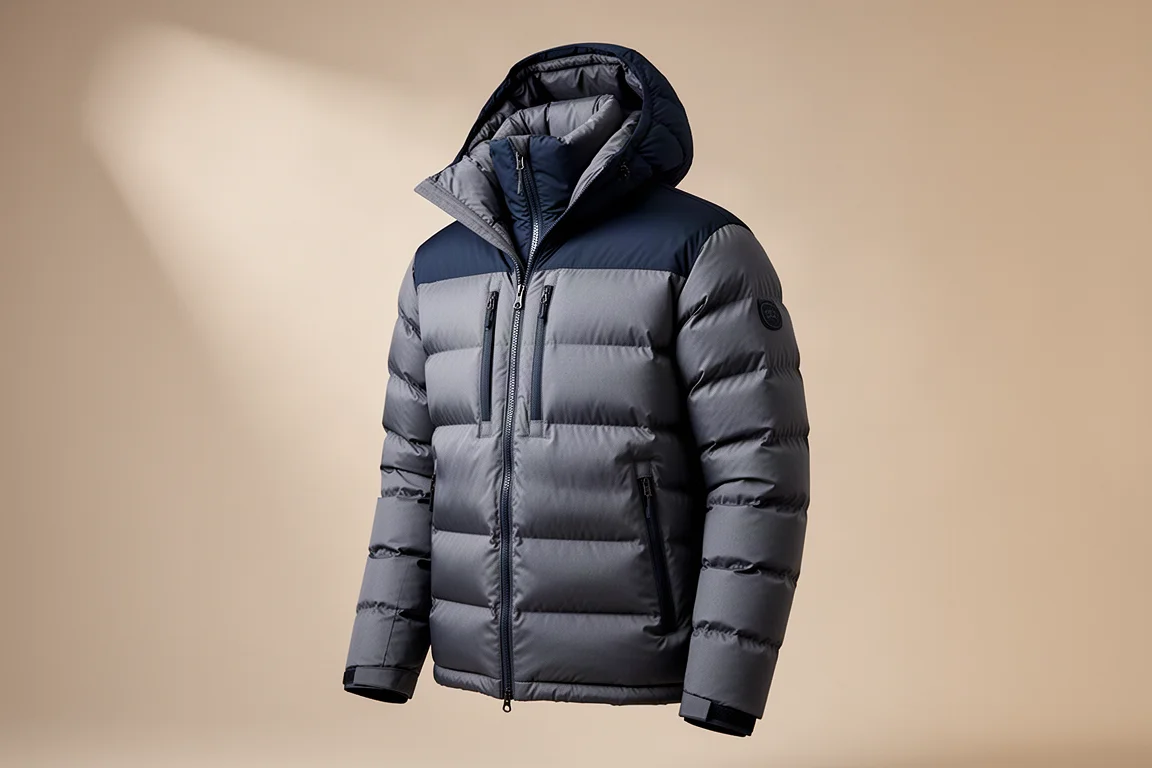
The Expedition Guide down jacket is half of a two-piece system from Stellar Equipment, and it targets the kind of cold that most winter gear does not reach. It is lofty and warm, with two chest pockets, two hand pockets, and internal drop pockets that keep a meal or a pair of gloves warm. The hood is a welcome addition, and the weight is right around one kilogram in size large, with a price of $1,000.
The gap is at the neck. There are cinches at the hem to lock the jacket down around the lower body, but nothing seals the collar and shoulders, so a down draft tube around the neck would make a meaningful difference. An internal zippered chest pocket would also be useful for a phone or small valuables. Stellar rates the jacket and pants together for warmth down to -30°C, a figure that still needs verification in genuinely colder conditions.
Stellar Equipment Expedition Guide Down Pants: The Standout Layer
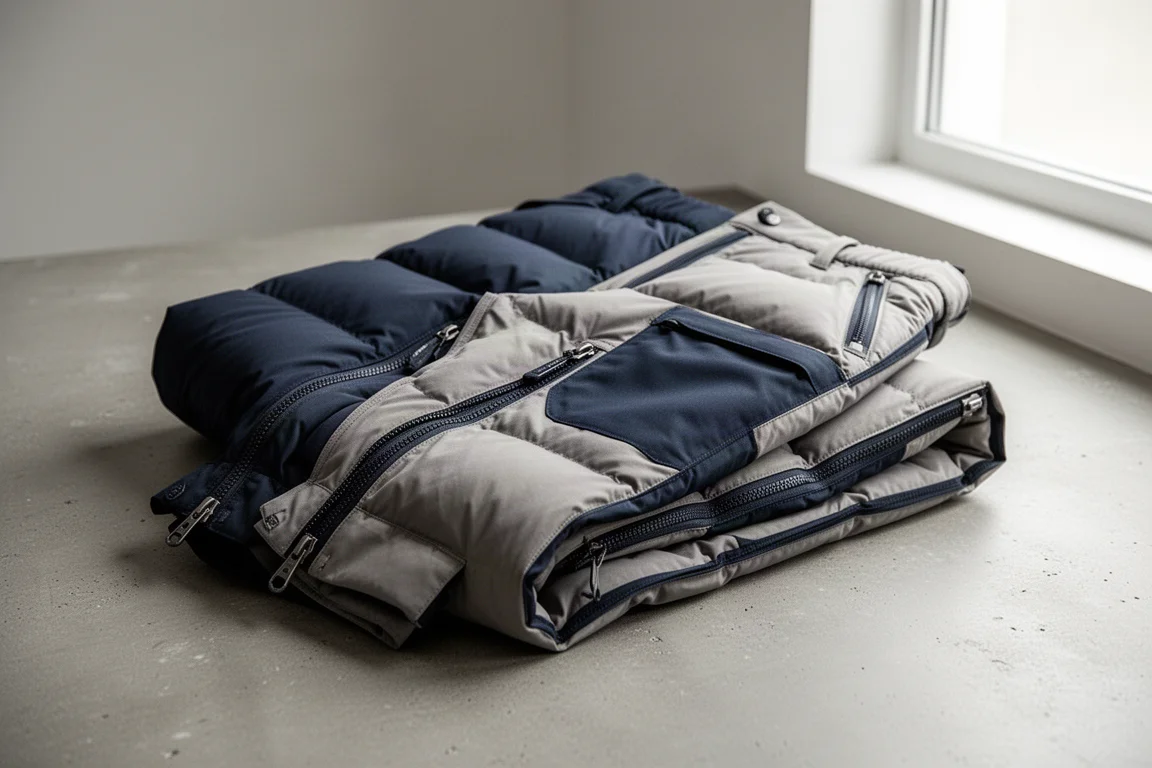
The matching down pants are the piece that impressed most. At 843 grams in size large and $750, they are bulky and extremely lofty, and the warmth they deliver is out of proportion to their weight. Thigh pockets keep small items accessible, and a full-length zip means you can get in and out of them without removing boots. Together with the jacket, the system totals $1,750.
The suggested change is the fabric. A lighter, non-waterproof, breathable material would make the pants close to ideal. Even at the asking price, they read as good value for the warmth on offer.
Atote Caveman TV: A Tent Ceiling Mount for Your Phone
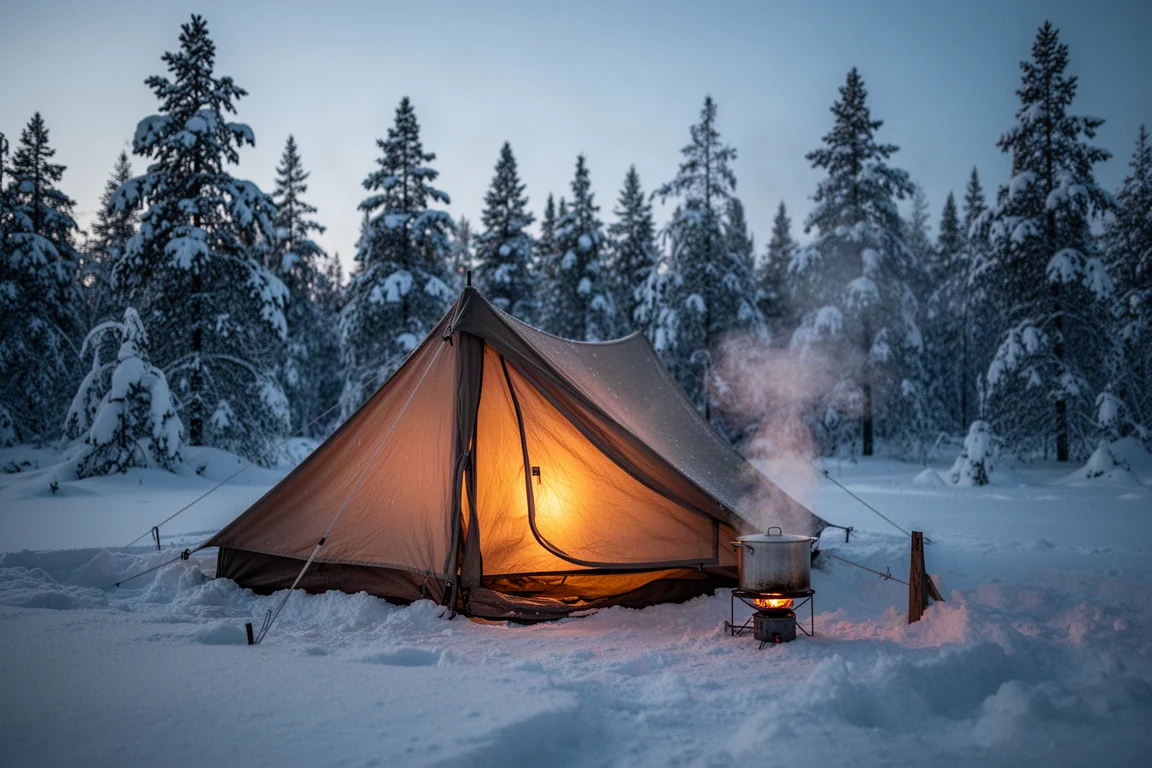
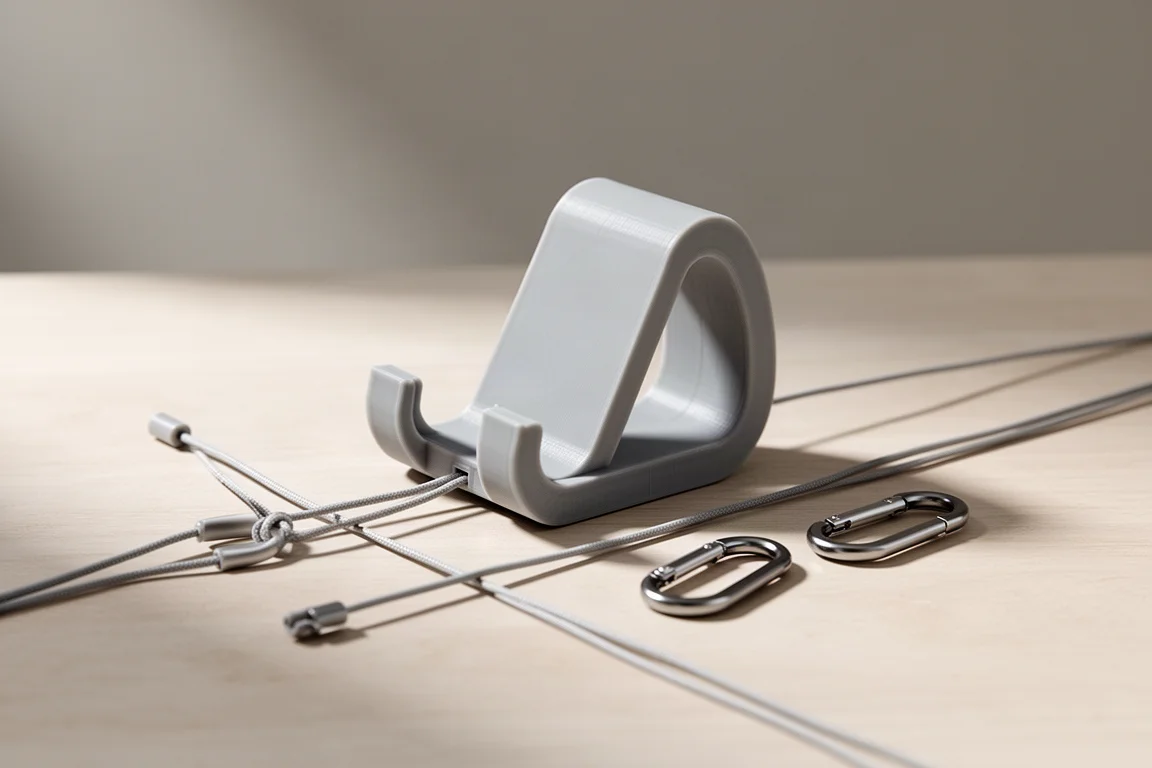
Winter nights are long, and the Caveman TV addresses that directly. It is a 3D-printed holder that suspends a phone above you inside almost any tent. Strings clip to the tent interior, carabiners anchor each end, and loops on the holder let you set the viewing angle. Setup takes a little practice, but once it is dialed in for a given tent, it goes up quickly.
It held up well for a full-length movie with no neck strain, which is the real test of a setup like this. The one wish is more range of adjustment toward the head end of the tent. In extreme cold, a phone left in the holder may need a little warmth, such as a toe warmer stuck to the back, to keep the battery happy.
Eolite XR Pro Sleeping Pad: The Warm Base Layer
The Eolite XR Pro sat at the base of the sleep system and turned out to be both comfortable and very warm. Combined with a winter bed, it carried a full night at temperatures around -20°C to -25°C without any chill. Below that range, the pairing would likely start to feel the cold.
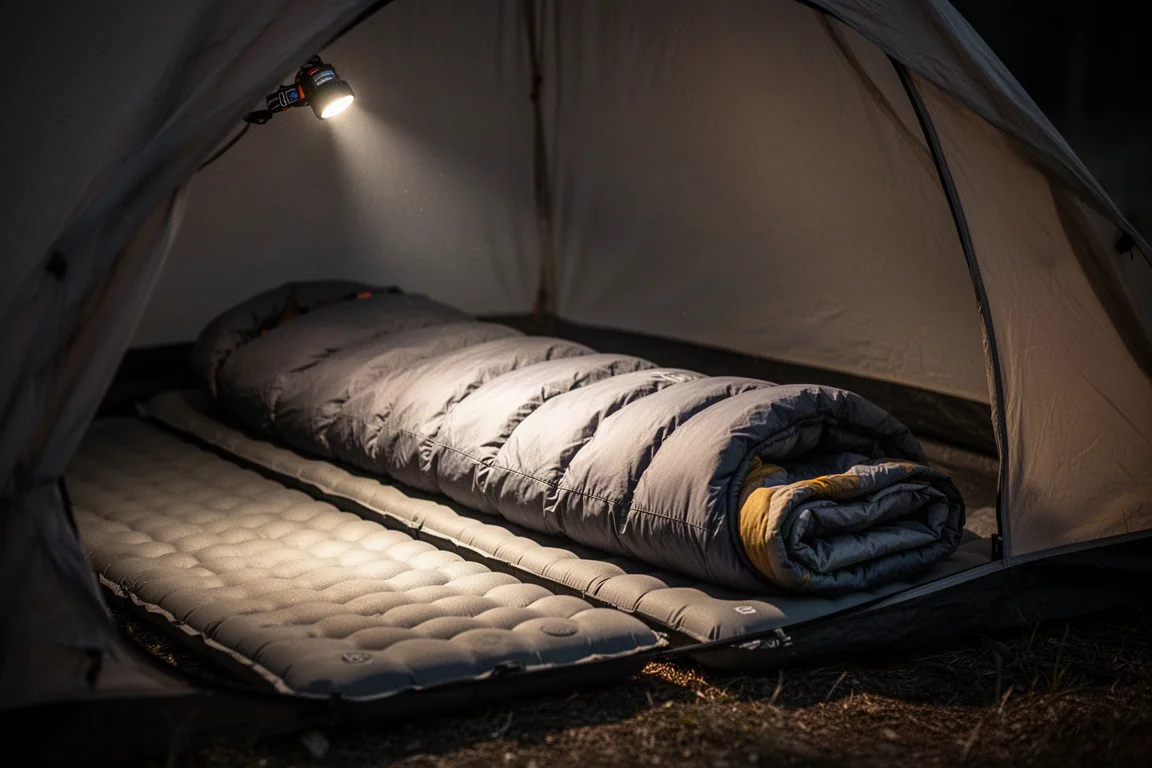
Overnight, warmth held steady as the temperature dropped, and sleep quality was excellent. For winter camping, where cold ground pulls heat out of a bag faster than air does, that margin is the whole point.
Zenvivy Winter Bed: Room to Spare in the Foot Box
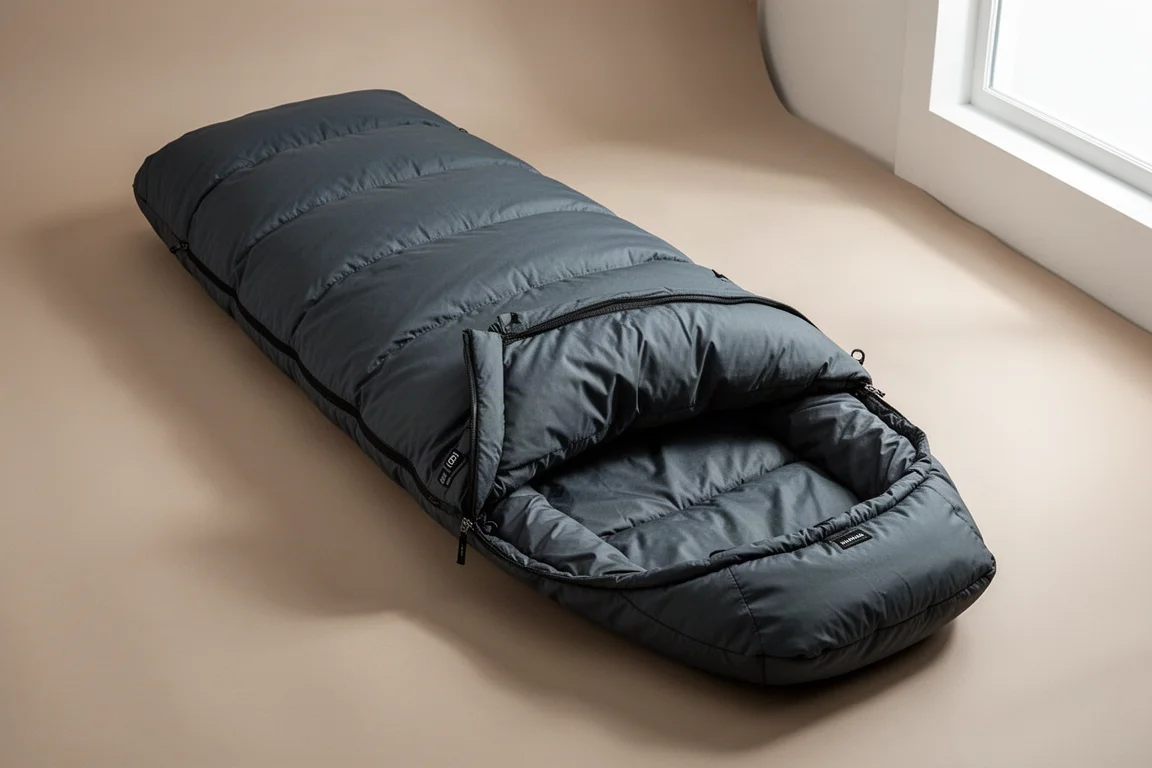
The Zenvivy winter bed is the bag-side half of that sleep system, and its most useful trait is a large foot box. That space leaves room for items you want to keep warm overnight, such as boot liners. It turned out to be genuinely practical: liners tucked into the foot box stayed out of the way, and they did not make the bag uncomfortable to sleep in. A size large was used for the sleep system on this trip.
Zenvivy Pack Liners: Compression With a One-Way Valve
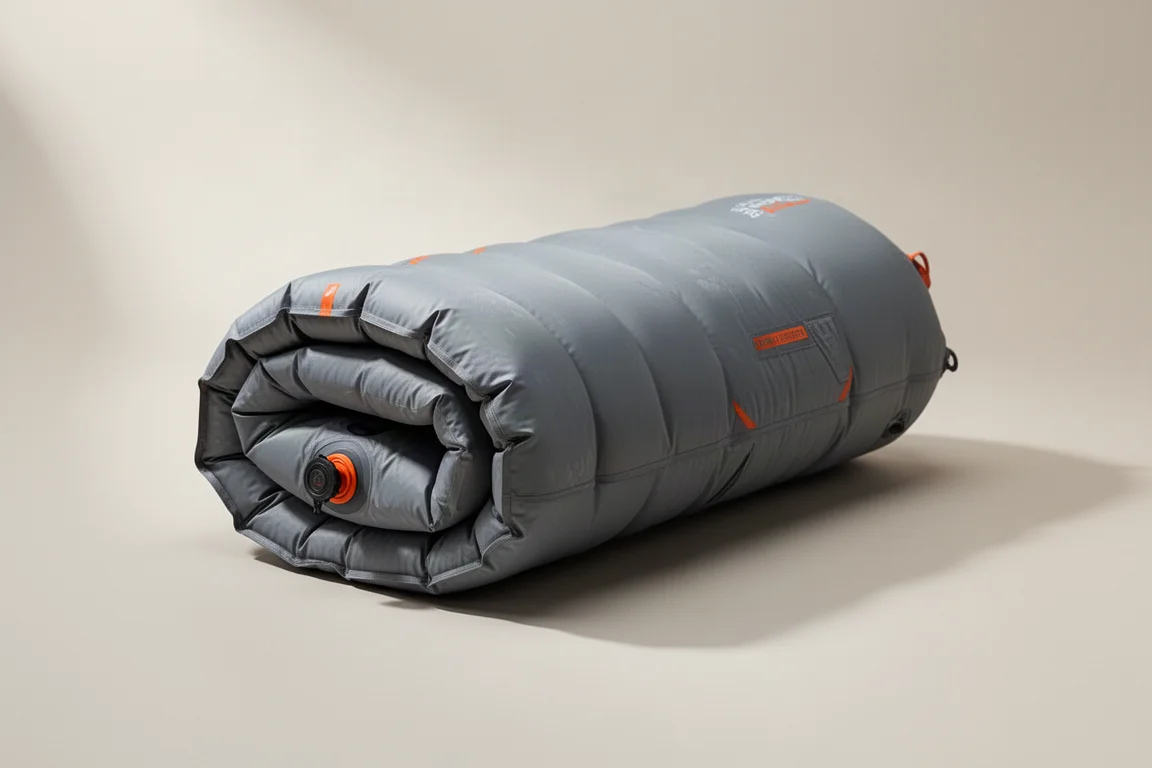
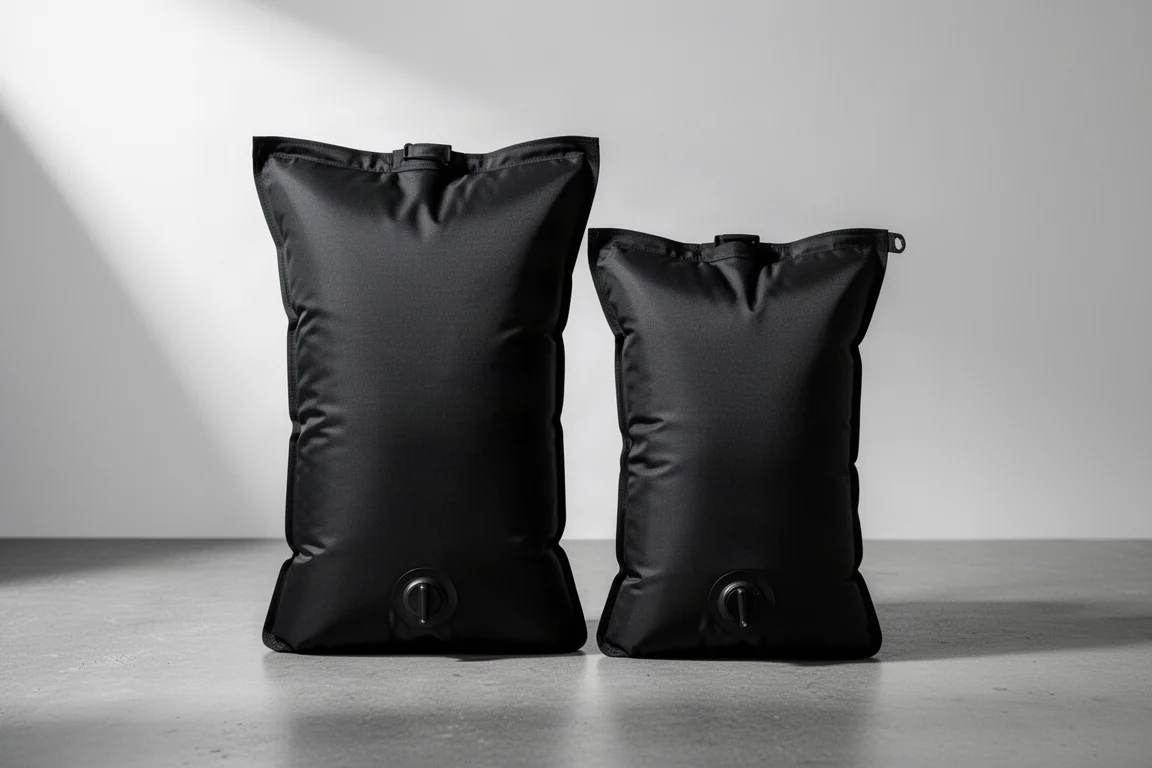
The pack liners are the quiet workhorses of a winter kit. Each one has a one-way valve, so as you compress the bag, air leaves without coming back in. Bulky insulation packs down far smaller than it would in a standard stuff sack, which matters when a down jacket and pants have to earn their place in a pack.
A size large liner held the sleep system, while a size medium carried the down layers and clothing. The jacket and pants compressed down smaller than expected for a combination rated for extreme cold, and that makes them easier to justify bringing on trips that are not extreme. This is the kind of accessory that quietly changes what you are willing to carry.
What to Consider Before You Buy
Winter gear almost always involves a compromise, and this set of items shows where those compromises land. Match each piece to the conditions you actually camp in rather than to the coldest number on a spec sheet. A soft shell without a membrane is a strong choice for cold, dry trips, but it works best when your output stays steady. If you push hard, mechanical ventilation matters more than fabric breathability alone.
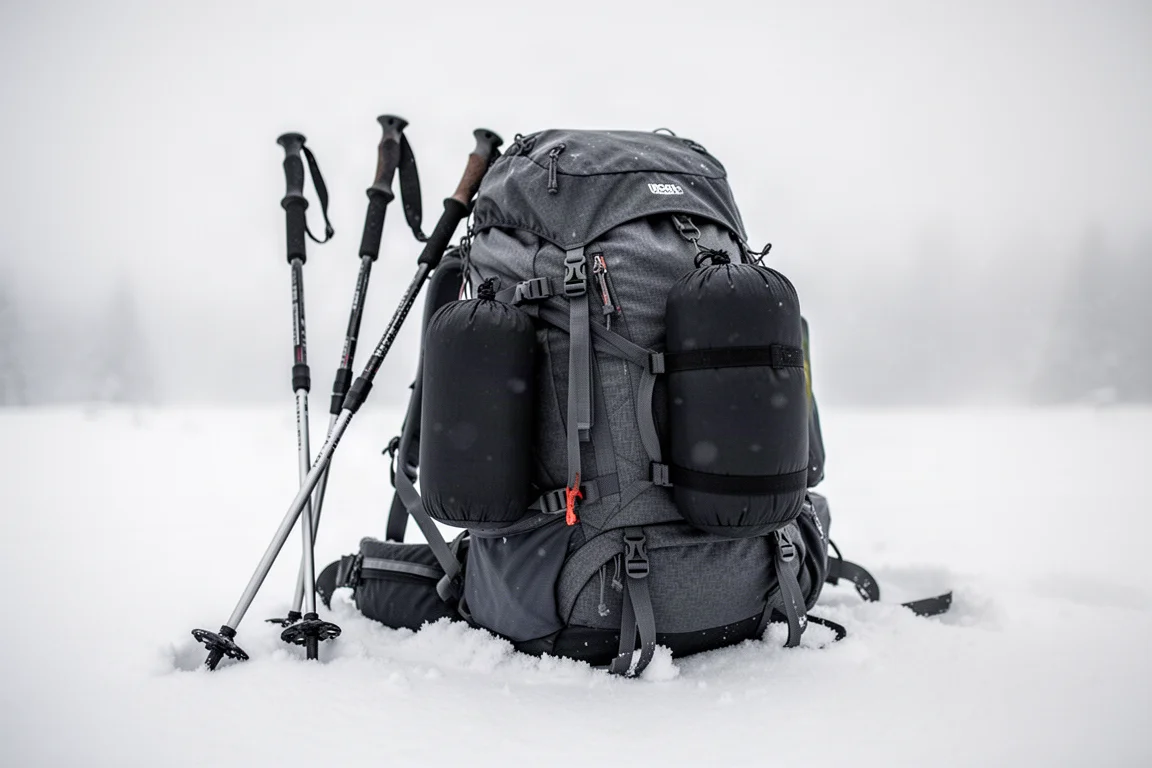
The down system is the opposite case. It is built for extreme cold, and the warmth it delivers is hard to match in a jacket and pants combination with this feature set, which is why it suits trips where low temperatures are the main challenge rather than an occasional inconvenience. The removable-liner boots reward anyone who dislikes cold, stiff footwear in the morning, as long as they are willing to spend a few minutes reinstalling liners. The tent phone holder earns its place on long, dark winter nights, especially solo ones. And the compression liners quietly make all of it easier to carry.
Conclusion
Nothing here is a perfect, compromise-free piece of gear, and that is normal for winter equipment. The Baffin Borealis boots pair exceptional comfort with a temperature sweet spot that still needs narrowing down. The soft shell jacket and pants are at their best on cold, dry days at a steady pace. The Stellar Equipment down jacket and pants deliver the warmth and the feature set for extreme cold, with a neck draft tube and an internal zippered pocket as the obvious next steps. The Atote Caveman TV makes long tent hours genuinely comfortable, the Eolite XR Pro pad and Zenvivy winter bed handle deep cold, and the Zenvivy pack liners keep bulky insulation small enough to bring along. Buy for the conditions you camp in, and each of these earns its space in the pack.
Further reading
Related Reviews
Winter Camping Gear
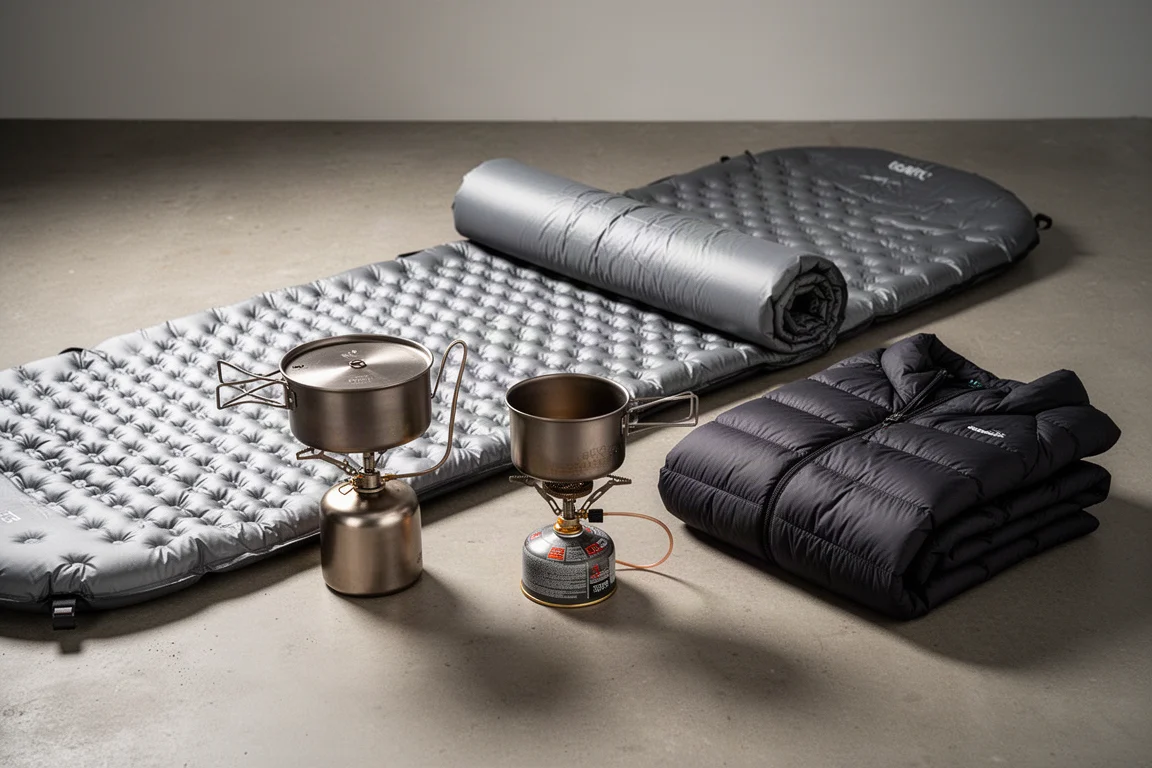
Affordable Winter Camping Gear: Six Budget Pieces Tested Below Freezing
Three reflective sleeping pads, an updated down jacket, a titanium pot and a $25 winter stove, assessed on frozen ground at around minus 12 degrees Celsius.
Winter Camping Gear
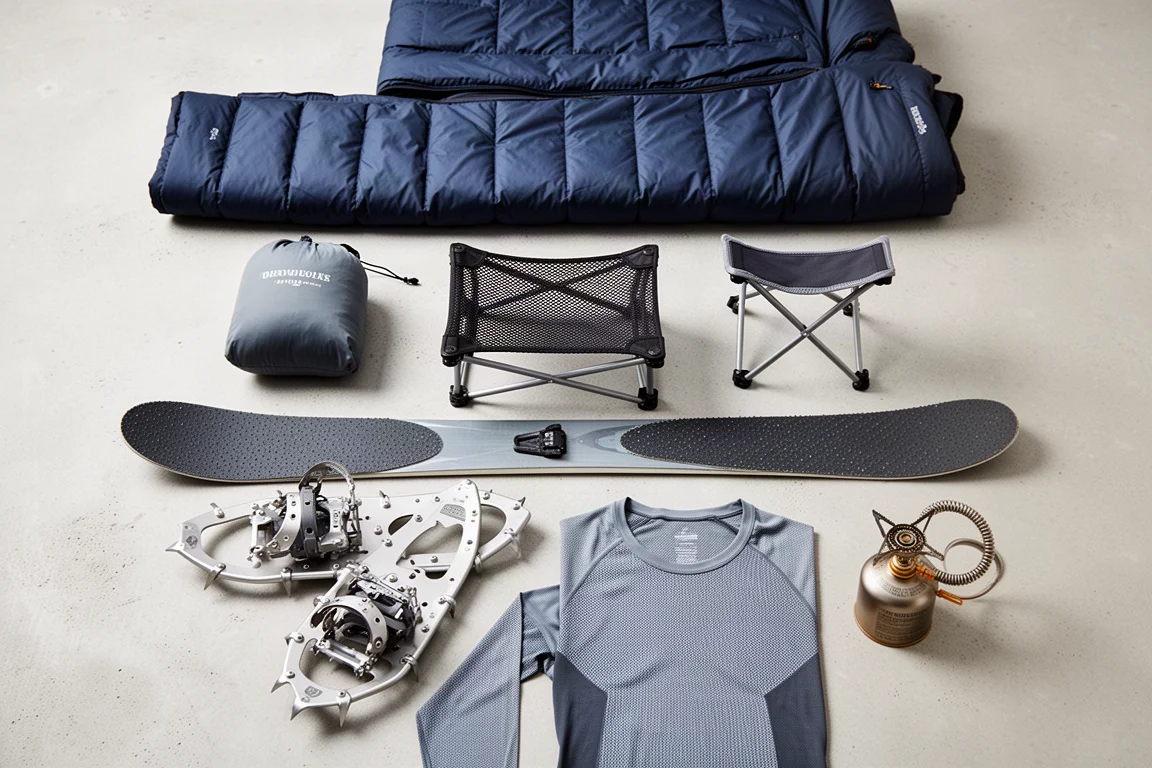
Best Winter Camping Gear 2026: Seven Pieces Worth Packing
A practical look at seven winter camping items, from an insulated parka rated to minus 20 degrees Celsius to a titanium stove built for cold canisters.
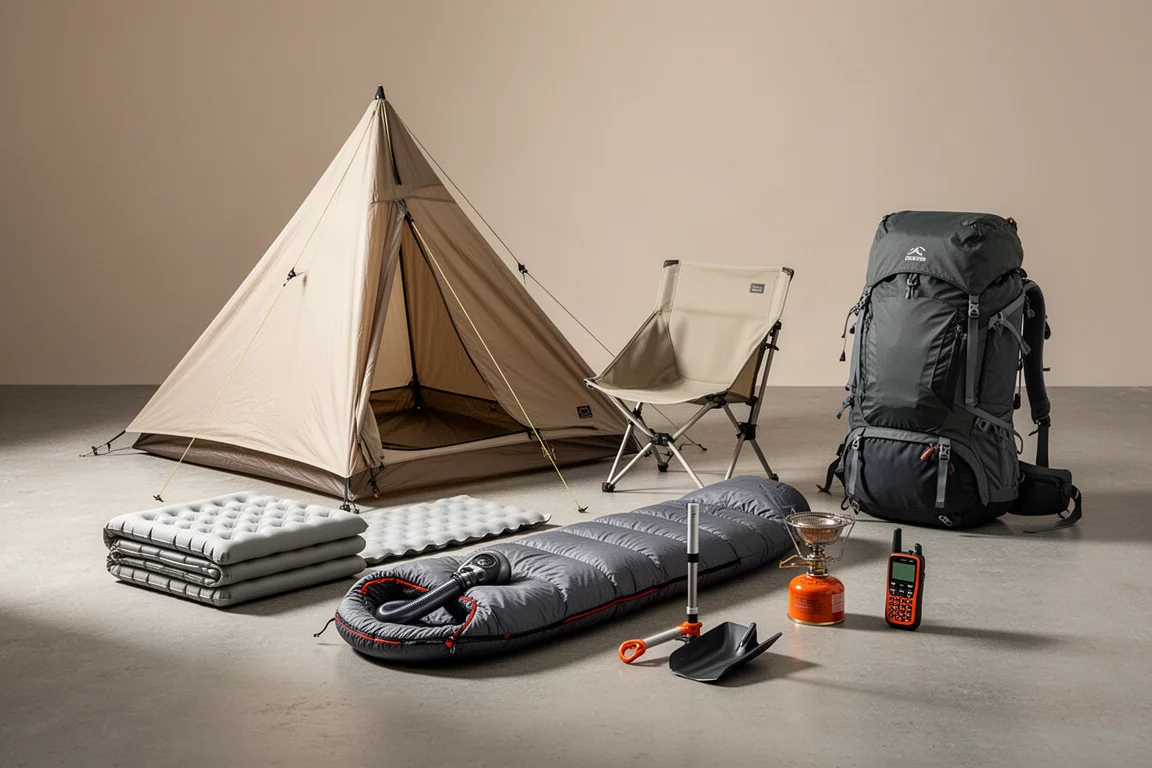
Winter Camping Gear
Ultimate Winter Camping Gear List: Proven Essentials for Cold-Weather Adventures
A curated list of winter camping gear that has proven itself in freezing temperatures, from shelter and sleep systems to cooking and safety essentials.