Winter Camping Gear
Winter Camp Clothing System: Five Pieces That Keep You Warm Below Freezing
A practical winter camp clothing system built around five pieces, with the trade-offs, materials and layering logic worth checking before you buy.
Introduction
Staying warm at winter camp is mostly a problem of what happens after you stop moving. Once the tent is up and the temperature falls well below freezing, the clothing that worked on the trail stops doing the job, and the gap between a comfortable evening and an early retreat into a sleeping bag comes down to the layers you keep in your pack for camp use only.
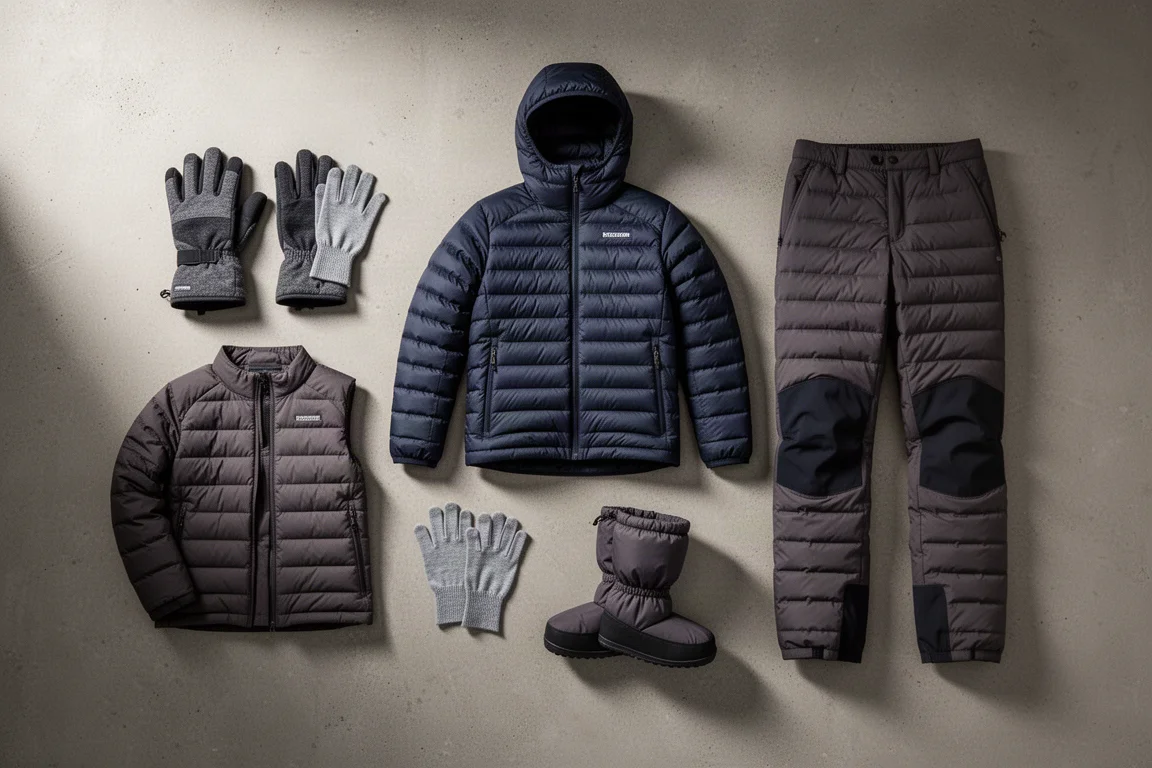
The five pieces below form a camp clothing system that has been used comfortably at roughly minus 20 degrees Celsius, or minus 4 degrees Fahrenheit. None of them is remarkable in isolation. They work because each one has a defined job inside a layered system, and because the whole set is chosen around the reality that you will be standing still in the cold for hours.
What a Winter Camp Clothing System Needs to Do
The routine matters as much as the gear. Arrive at camp, pitch the tent, set up the sleeping system, then collect firewood and water. Only after those chores are finished does it make sense to change out of travel clothes and into camp clothes. The reason is moisture management. There is a good chance you will work up a light sweat while setting up and gathering supplies, and that moisture should not end up trapped in the layers you are about to sit around in all evening.
Camp clothing is not as quick drying as travel clothing, because these layers trade drying speed for warmth. That trade is worth making, but only if you keep perspiration out of them in the first place.
Material choice carries most of the weight in a winter system. Merino wool, polyester and nylon cover almost everything, and the fabric a piece is made from is often more important than the cut or the branding. Merino wool works well as a base layer because it feels best against the skin and does not feel clammy when you are sleeping. Down is used for insulation because it offers one of the best warmth to weight ratios available, which is why it usually becomes the primary insulating layer for winter camping.
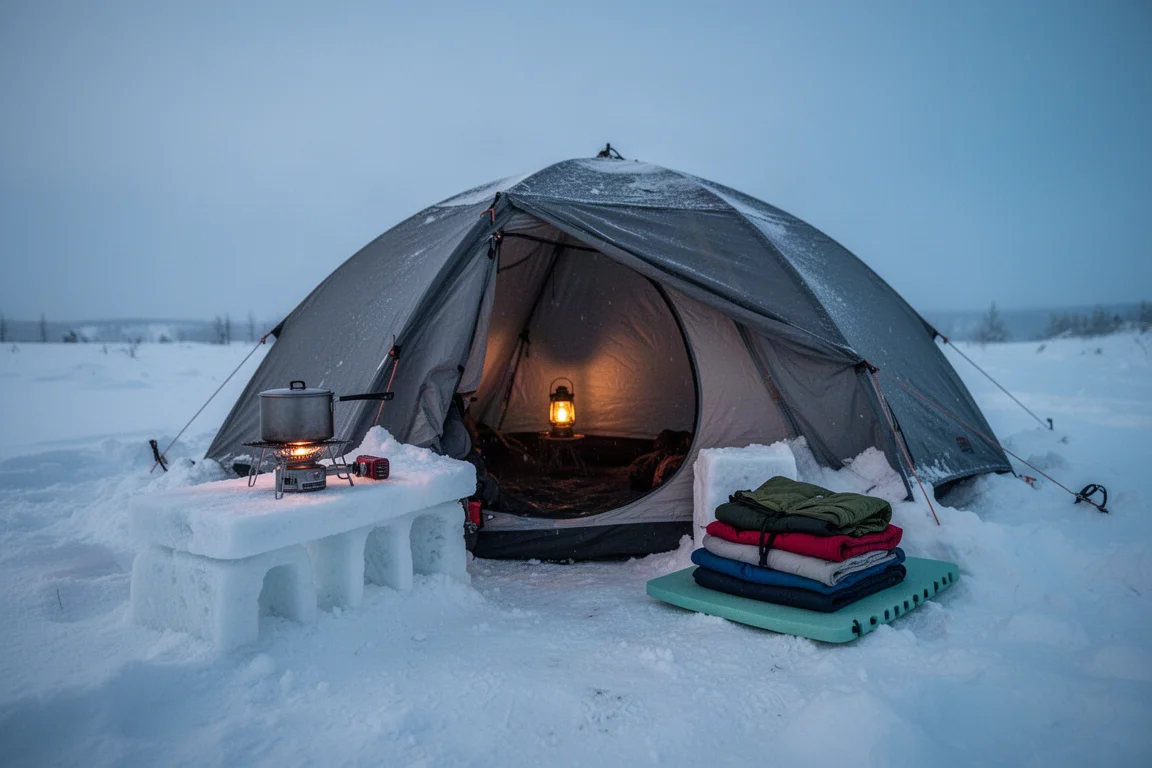
From there the system is simple. A base layer next to the skin, one or two mid layers you can add or remove, and a down outer layer for when you are static. The one caution with down is that it holds onto moisture, so in rain or genuinely wet snow the down jacket and down pants need a waterproof shell over the top.
Mountain Equipment Co-op Surprise Gloves
Hands come first, because cold hands end camp chores early. Mountain Equipment Co-op is a Canadian outdoor retailer that ships internationally, which makes its gear accessible well beyond Canada.
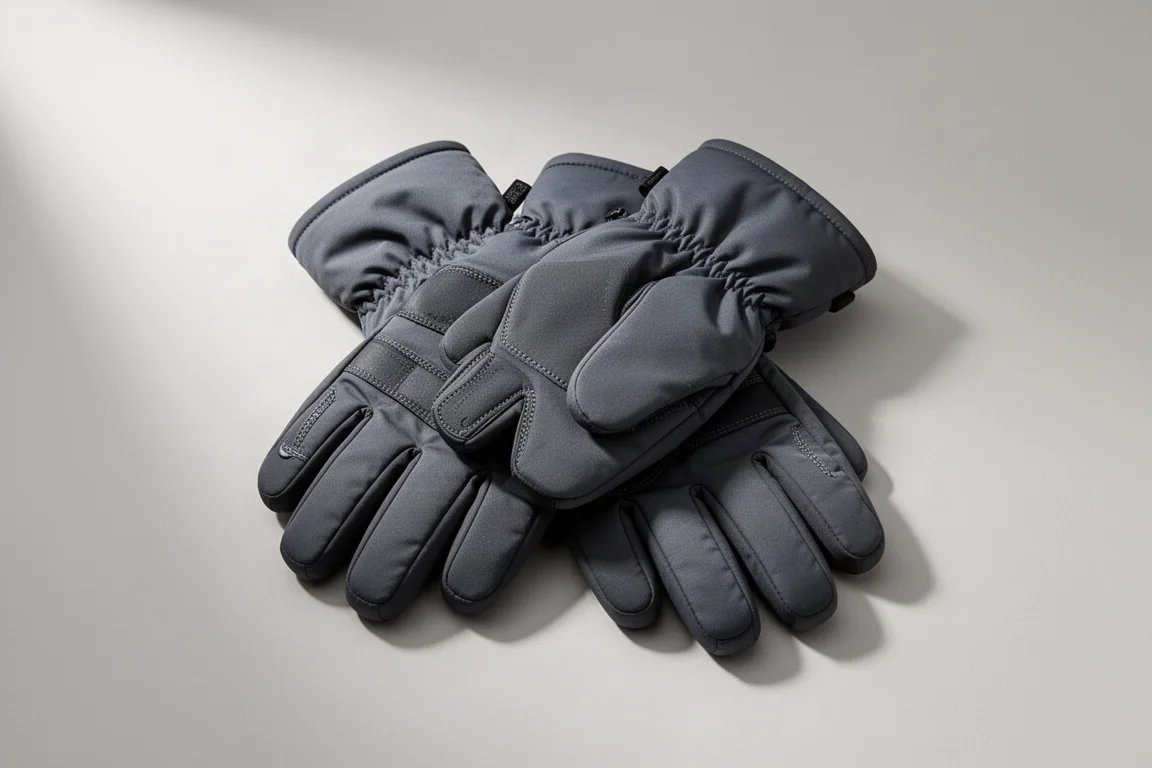
The Surprise Gloves are the insulated outer hand layer. They are highly packable and squish down small, they use synthetic insulation, and they are water resistant. Synthetic fill matters here because the gloves keep insulating reasonably well even if they get wet. Light weight, water resistance and genuine warmth are a difficult combination to find in one pair of gloves, and these were the best of the options considered. They are also affordable, which makes them an easy piece to add to an existing kit.
Gloves are preferred over mitts in this system for a practical reason: camp tasks such as cooking or taking down a tent demand dexterity, and mitts give up too much of it.
Outdoor Research Merino Wool Liner Gloves
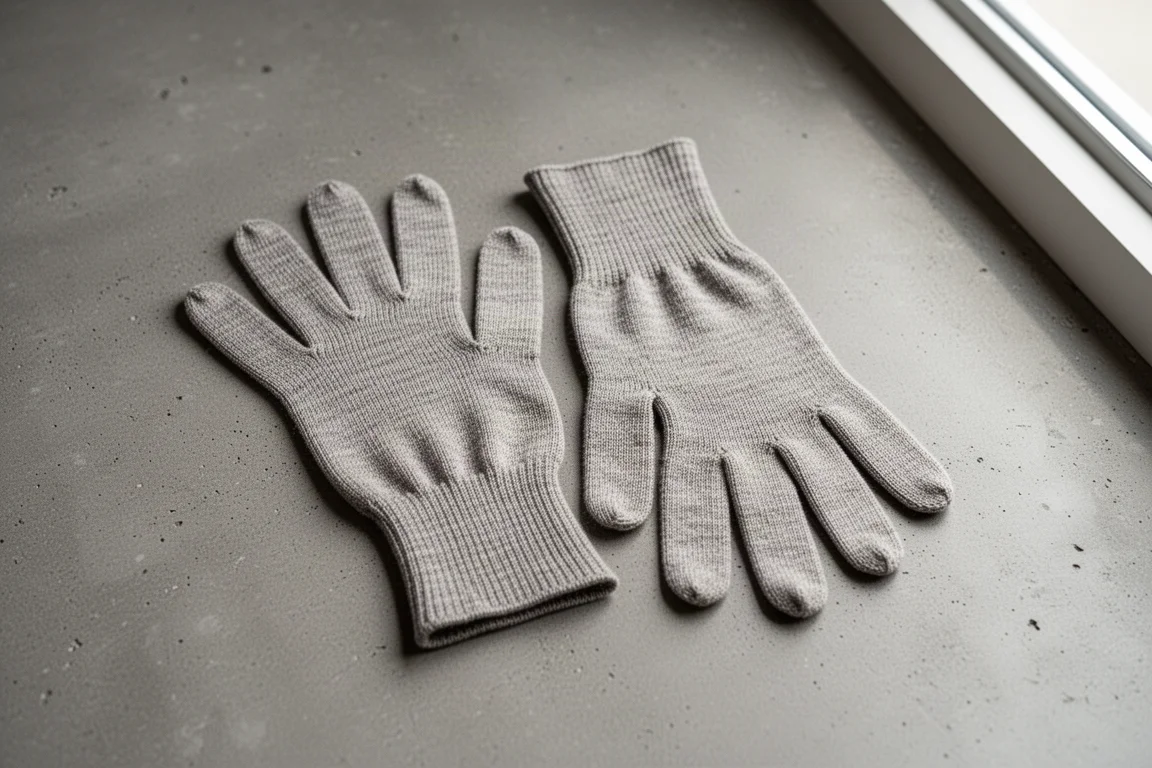
The liner glove sits underneath the insulated glove as a base layer for the hands. That combination is what makes the outer glove practical to remove. Pull the Surprise Gloves off and you still have real dexterity in the liner without exposing bare skin to the air.
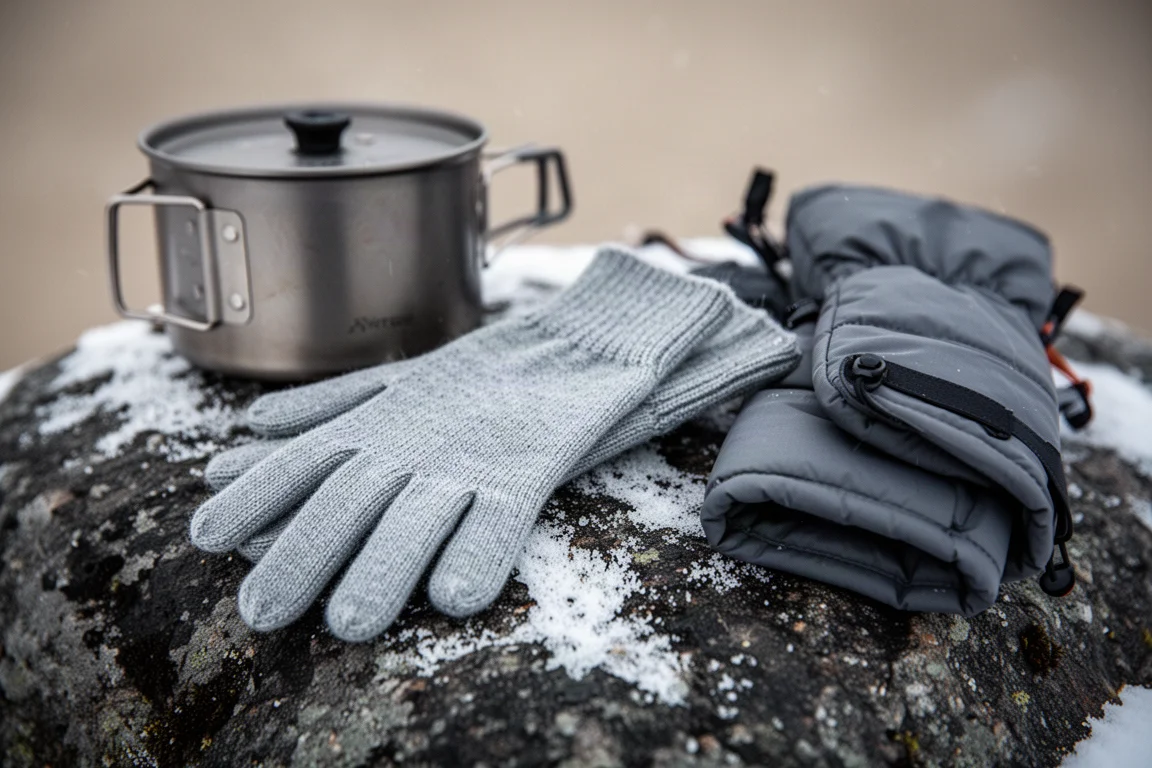
The Outdoor Research Merino Wool Liner Gloves also carry touch capability on the thumb and forefinger. That means reading or using a phone from inside a sleeping bag without pulling your hands out into the cold. Because they count as a base layer, they are worn to bed along with the merino wool shirt and the merino wool long johns, which is part of why merino wool is used so consistently at the base layer.
Decathlon Trek 900 Down Jacket
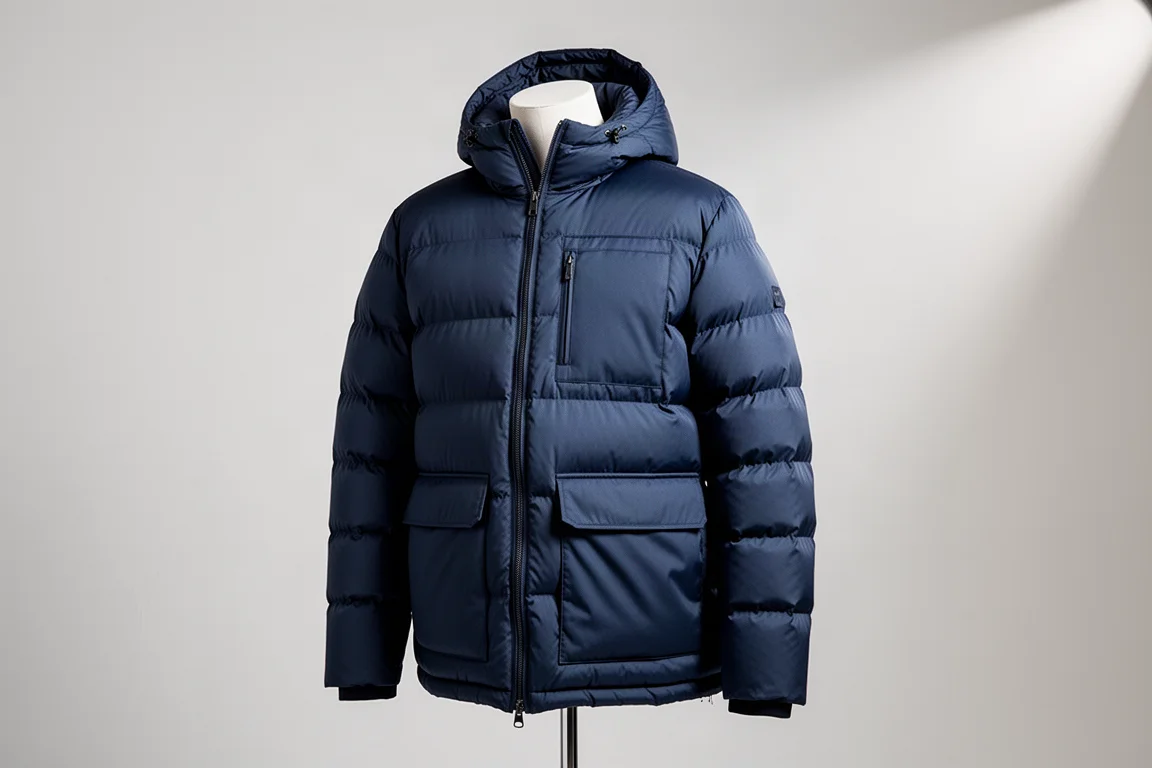
The upper body outer layer is a down puffy, and this one is the Decathlon Trek 900 Down Jacket. At just over one hundred dollars it is unusually warm for winter use and carries a generous set of features for the money.
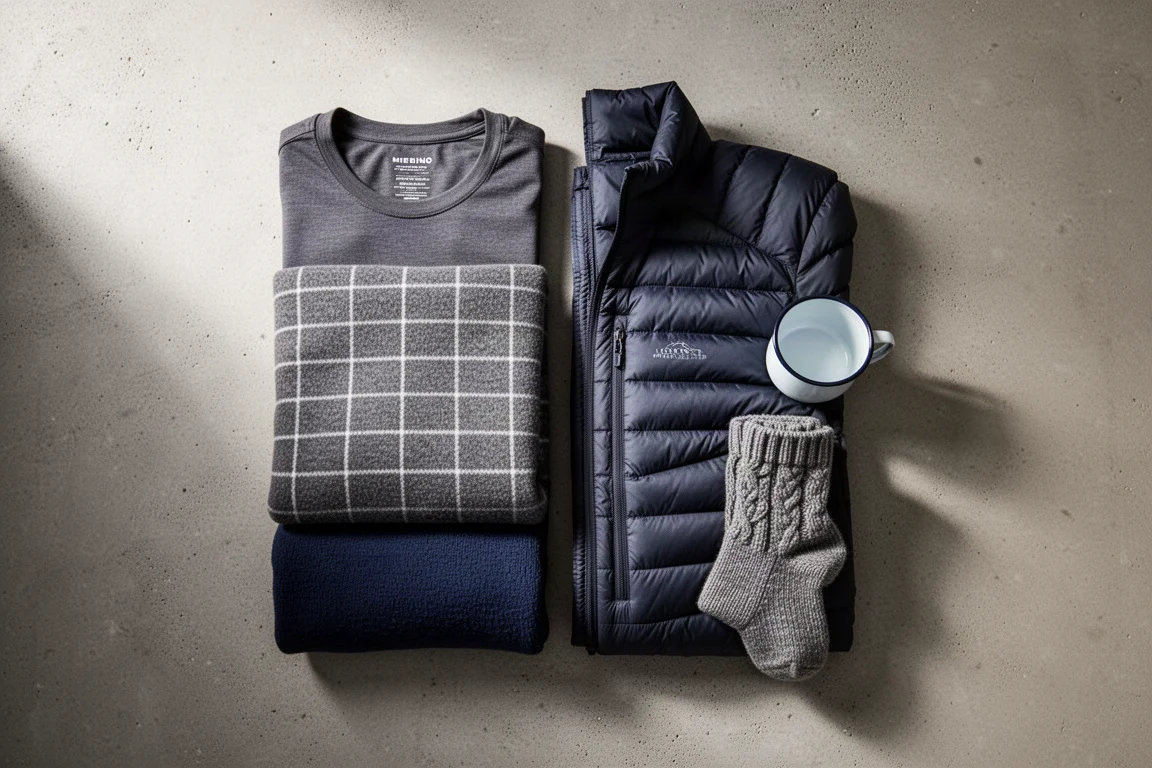
The layers beneath it are worth understanding, because the jacket is only the last step. Next to the skin there is a merino wool base layer shirt, which may be a t-shirt or a long sleeve depending on how cold the trip will be. Above that comes a full zip fleece mid layer. Grid fleece is a good choice while hiking, while piled fleece tends to be warmer around camp when you are static. In very cold conditions a second fleece sweater worn underneath the first is a reasonable addition, depending on how cold a person you are. The mid layer is where you adjust, and the down jacket is where you stop adjusting.
The North Face Summit L3 Down Pants
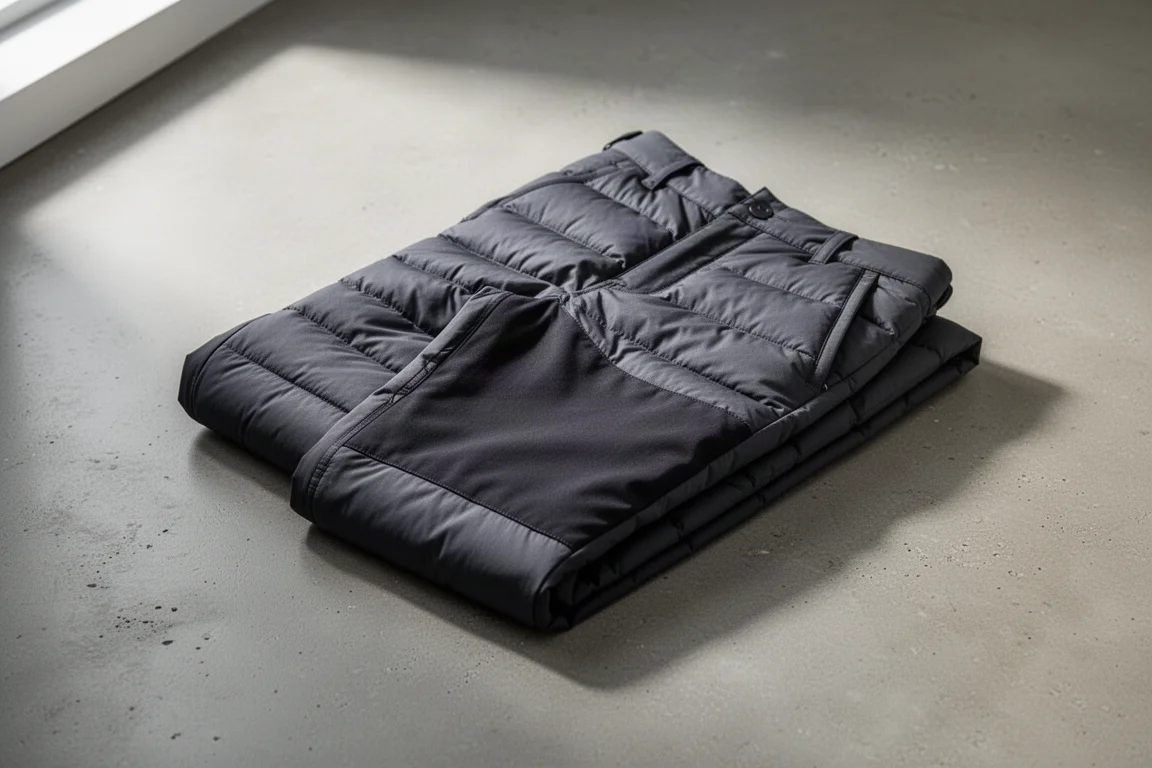
The leg system mirrors the upper body. Merino wool long johns sit against the skin, fleece pants go over the top, and down insulation goes over that. The fleece pants are remarkably warm, and the only real complaint is that they lack a fly, which is a genuinely useful detail in the backcountry. Current down pants are a cheaper pair that get the job done without being the warmest option available.
The North Face Summit L3 Down Pants are the wish list upgrade. They are notably warmer, and they add waterproof panels across the seat and knees. Around camp, where you spend a lot of time sitting on snow, kneeling to sort gear or crouching by a stove, those reinforced areas address exactly the places that get wet first.
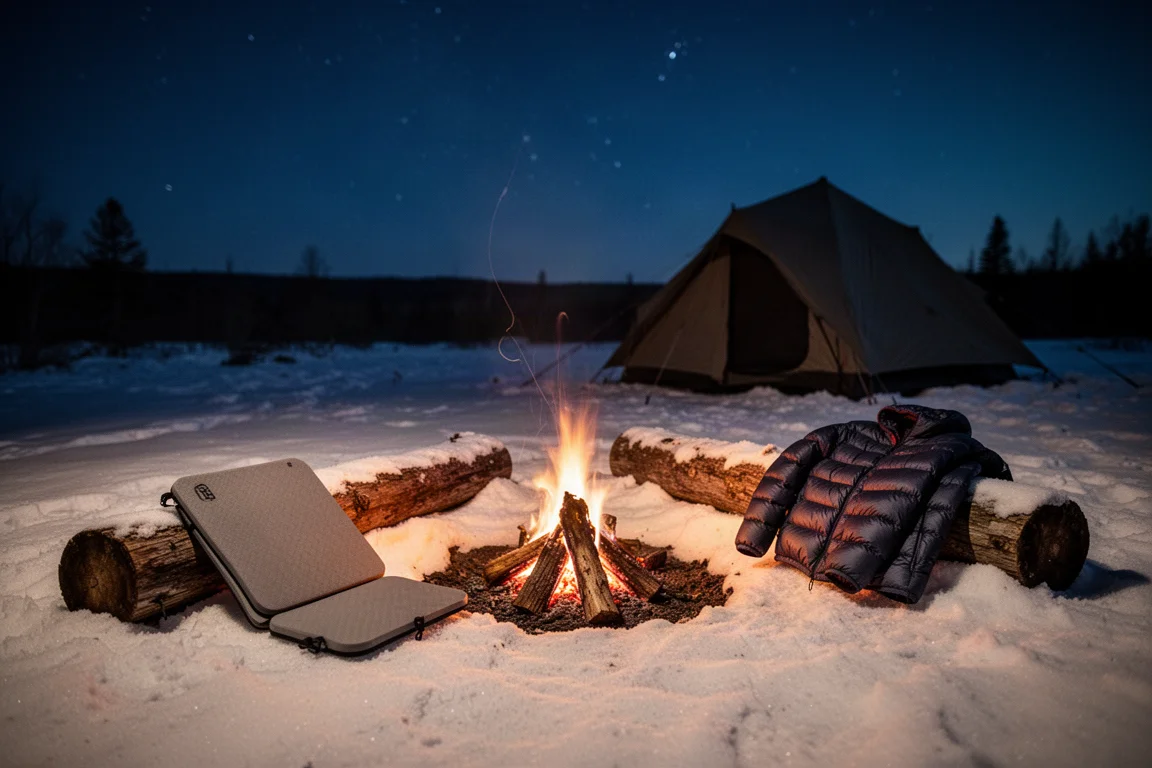
Because this is a wish list piece rather than a long term companion, the appeal sits in the feature set and the extra warmth rather than in years of hard use. The same moisture caution applies to any down pant: in rain or wet snow, wear a waterproof shell over them.
Mountain Equipment Co-op Expedition Booties
Feet are the simplest part of the system if your feet run warm, which they do for some people. In that case one thick pair of wool socks is enough, and it keeps feet toasty inside a sleeping bag. If your feet run cold, add a liner sock underneath, or consider a pair of down booties worn over the socks while sleeping.
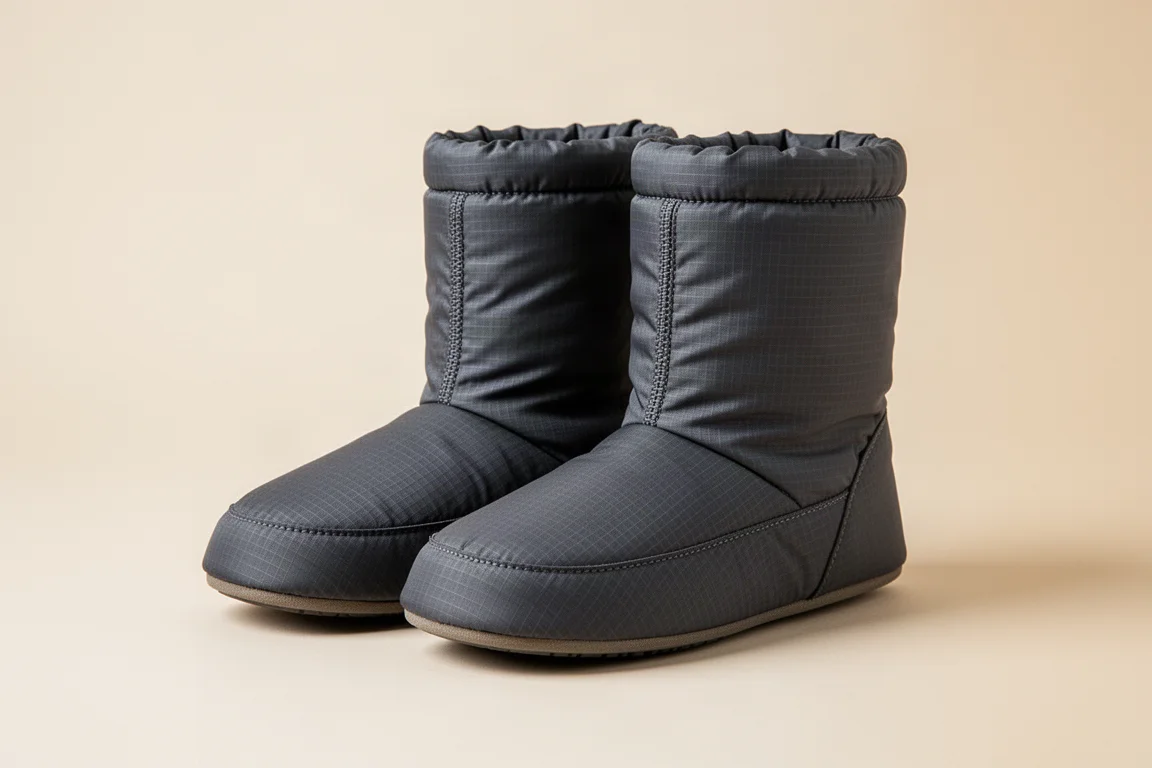
The Expedition Booties from Mountain Equipment Co-op are the piece that stands out most in this kit. They use synthetic insulation and a water resistant shell, and they have a proper sole for walking around camp rather than just shuffling between the tent and the sleeping bag. The detail that sets them apart is the gaiter cuff. It pulls up over the pants to keep snow off the fabric and then cinches at the top so snow does not work its way down into the bootie. That is not a feature you see on mainstream camp booties, and it matters in deep snow.
The trade-off is price. This is a more expensive product than a basic down bootie, but it is warm, comfortable and genuinely well suited to standing around a winter camp in the snow.
Buying Advice: Building a Winter Camp Clothing System
Build the system by function rather than by brand. Keep a dedicated set of camp clothes that never gets worn while you are moving and sweating, and treat the material list as the first filter: merino wool, polyester and nylon for base and mid layers, down for static insulation, and a waterproof shell for the wet days.
If you are adding pieces one at a time, the hand layers are the easiest place to start, since a liner glove plus an insulated outer glove covers most camp tasks without much cost. The down jacket is the next priority and offers strong value for the warmth it delivers. The booties are the piece to buy last, and mainly if you camp where the snow is deep enough for the gaiter cuff to earn its keep.
Conclusion
A winter camp clothing system does not need to be large. It needs a base layer that stays comfortable against the skin, mid layers you can adjust as you cool down, down insulation for the hours you spend standing still, and hand and foot protection that lets you keep working once the temperature drops.
Get the moisture management right by changing into camp clothes only after the chores are done, protect the down layers when the weather turns wet, and the same five pieces will keep you warm through an evening at roughly minus 20 degrees Celsius instead of sending you into the sleeping bag at five in the afternoon.
Further reading
Related Reviews
Winter Camping Gear
Affordable Winter Camping Gear: Six Budget Pieces Tested Below Freezing
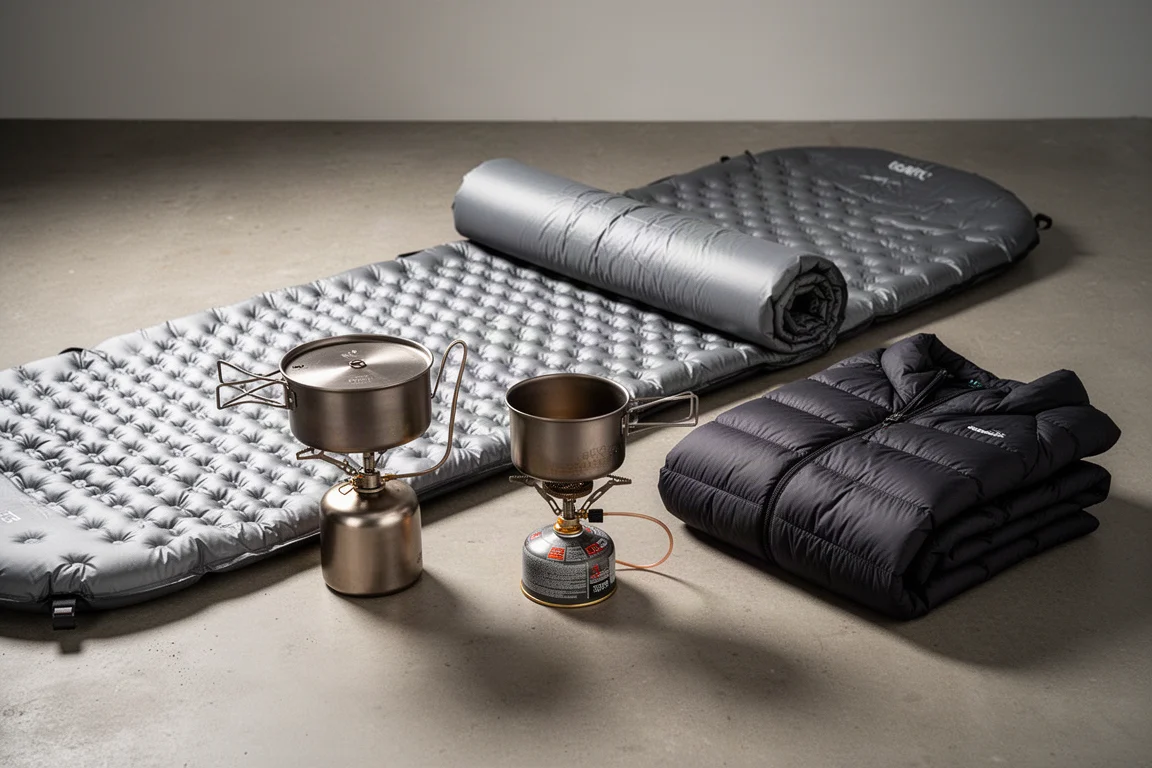
Three reflective sleeping pads, an updated down jacket, a titanium pot and a $25 winter stove, assessed on frozen ground at around minus 12 degrees Celsius.
Winter Camping Gear
Best Winter Camping Gear 2026: Seven Pieces Worth Packing
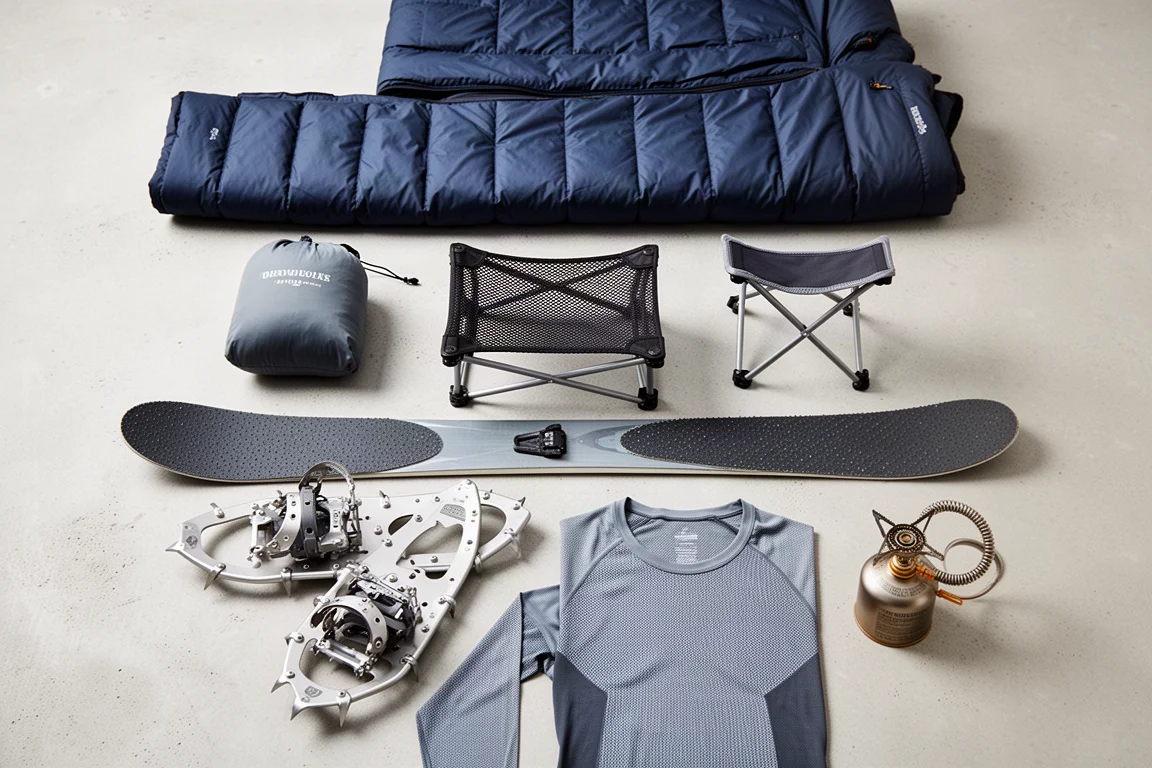
A practical look at seven winter camping items, from an insulated parka rated to minus 20 degrees Celsius to a titanium stove built for cold canisters.
Winter Camping Gear
Ultimate Winter Camping Gear List: Proven Essentials for Cold-Weather Adventures
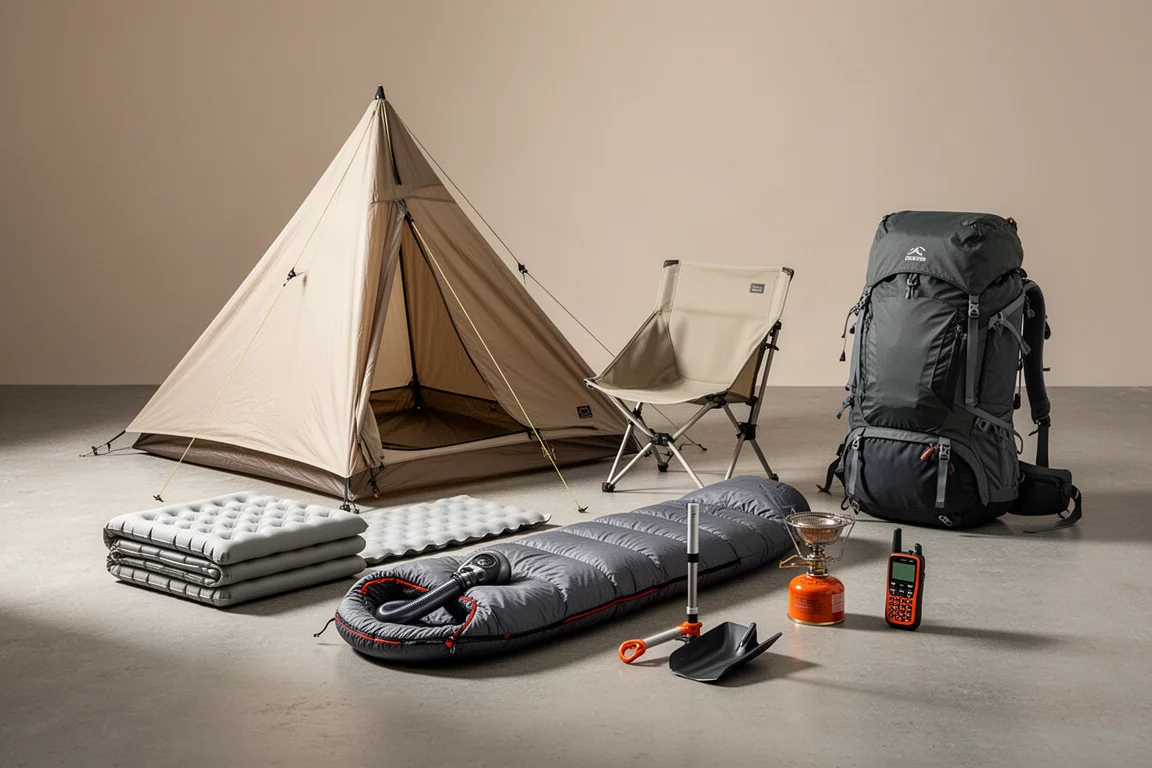
A curated list of winter camping gear that has proven itself in freezing temperatures, from shelter and sleep systems to cooking and safety essentials.