Road Bikes
Winspace M6 Review: A Built-to-Order Aero Road Bike Worth Considering
A close look at the Winspace M6, a carbon aero road bike with confident handling, a competitive price, and a few details worth checking before you order.
Introduction
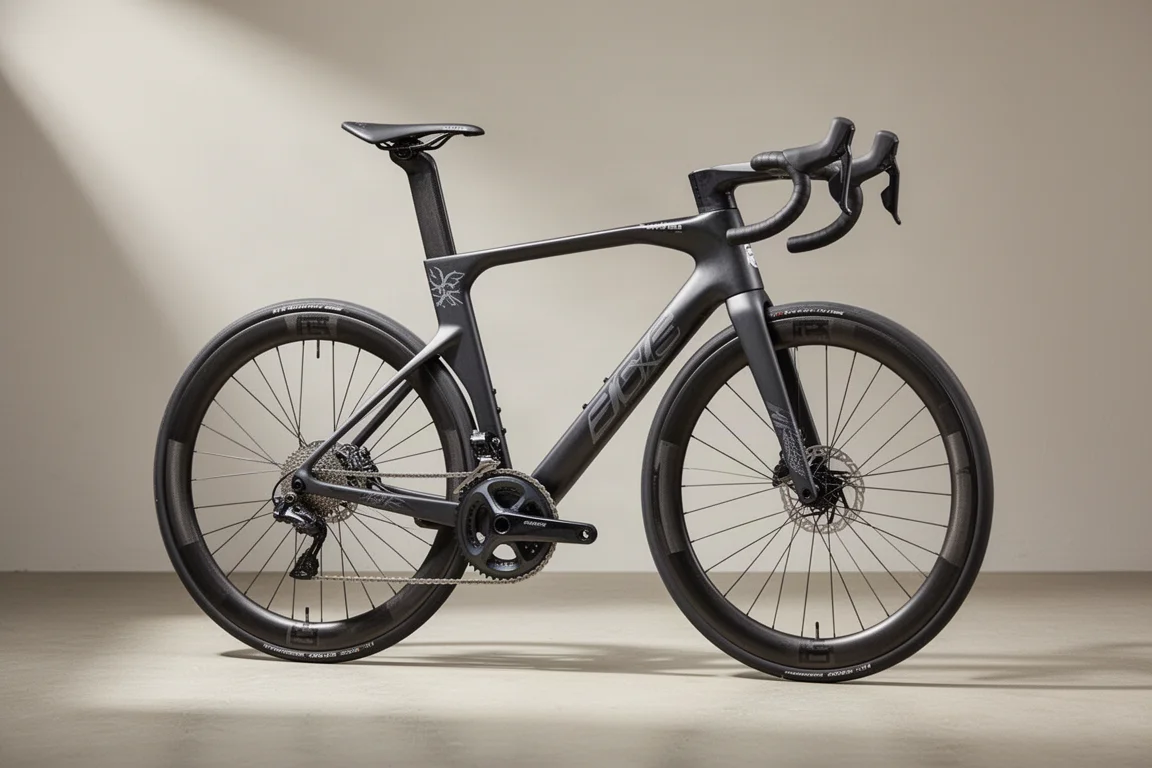
Chinese road bike brands have become a serious presence in the performance market, and the Winspace M6 is one of the clearest examples of why that shift deserves attention. It is a carbon aero road bike, built to order, and the build tested here sits at roughly £3,500 or $4,000. That places it directly against established aero road bikes at a similar price, and in several areas the M6 arrives with the stronger specification.
The M6 does not lean on a single unusual design feature to make its case. It uses a familiar combination of truncated airfoil tube shapes, a deep-section fork and dropped seat stays, and it wins on balance rather than novelty. Winspace also offers a more visually distinctive model with D-shaped seat tube cutouts for riders who want something more unusual, but for most buyers this straightforward approach is likely to be the more appealing one.
Who the Winspace M6 Is For
The M6 suits riders who put performance and value ahead of badge prestige, and who already know the fit numbers they want. Because every bike is built to order, bar width, stem length, crank length and gearing can be specified up front, which removes much of the usual guesswork.
It is also a natural choice for riders who spend most of their time at speed on open roads, where the M6’s stability is a genuine asset rather than a compromise.
It is a less obvious pick for riders chasing the lightest possible climbing bike, for anyone who needs clearance beyond 32 mm tires, and for UK buyers who live a long way from South Wales, where the bike has to be collected from the workshop.
Main Strengths: Speed, Comfort and Confident Handling
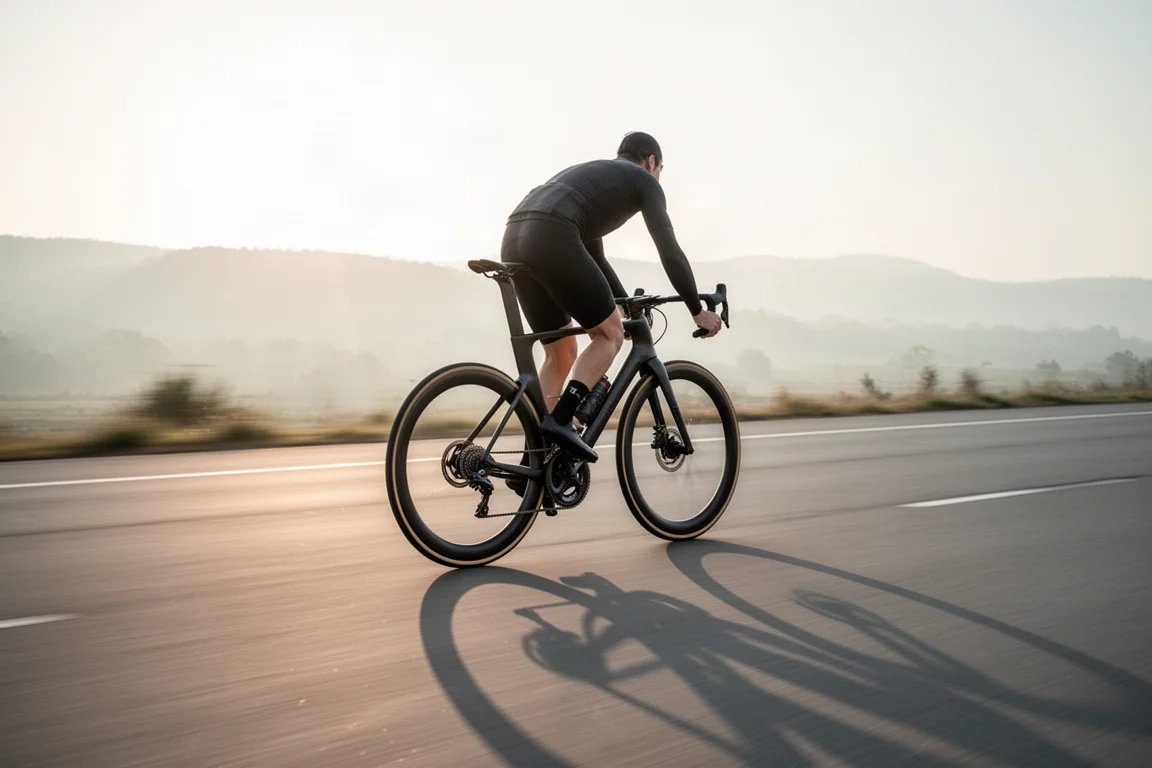
The M6’s strongest quality is how well it balances speed with composure. It feels quick and comfortable at the same time, and the handling is confident enough to make long, fast rides feel relaxed rather than demanding.
Weight is reasonable rather than exceptional. The build tested came in at around 8 kg without pedals, bottle cages or accessory mounts, and just over 8.3 kg ready to ride in a size Large, which is roughly equivalent to a 56. For the money, that is a solid result.
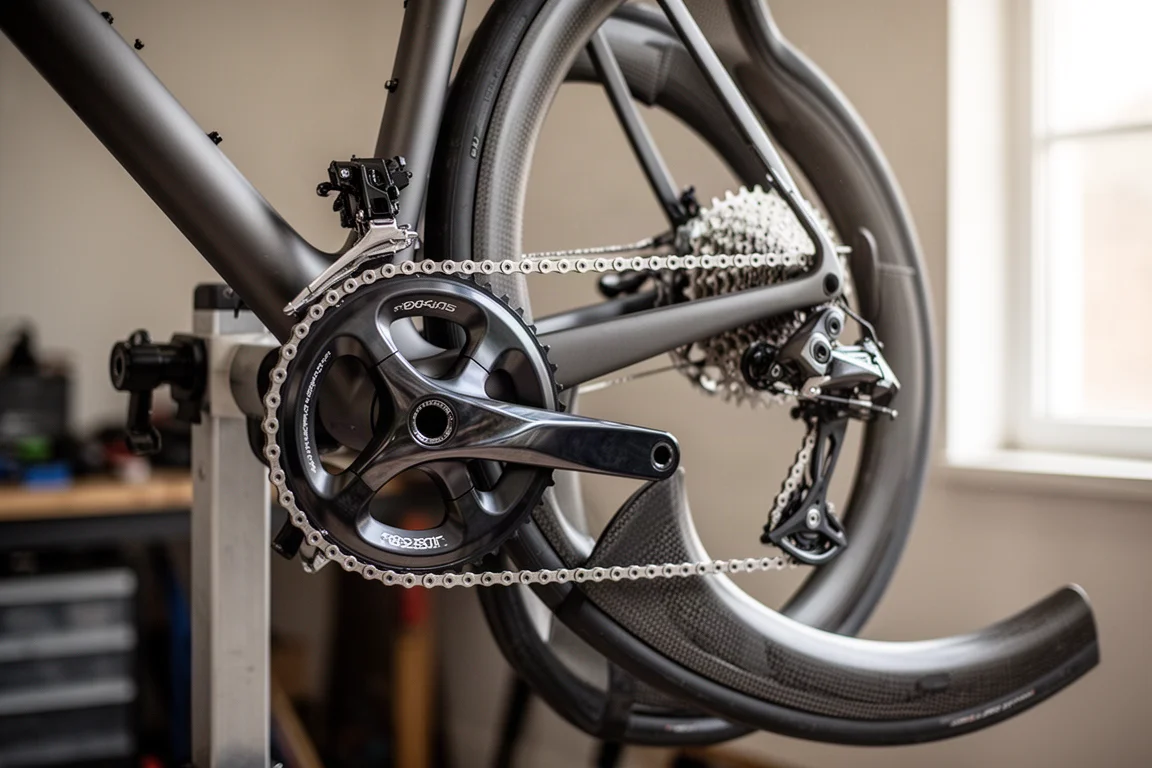
The specification supports the ride rather than undermining it. Shimano 105 Di2 is not the lightest or the most glamorous groupset on the market, but it shifts flawlessly and gets very close to the feel of more expensive options. The 50 mm deep carbon wheels are relatively heavy on paper at around 1,600 g a set, yet that weight is not something you notice out on the road. The Continental Grand Prix tires feel fast, supple and quick.
Geometry and Handling Trade-Offs
Geometry is where the M6 diverges from most race bikes, and it is worth understanding before buying. Stack height is aggressive, around 15 mm lower at the front than comparable race bikes, but the head tube angle is slack at roughly 72.3 degrees. The result is more trail, around 4 to 8 mm more than usual, which slows the steering slightly.
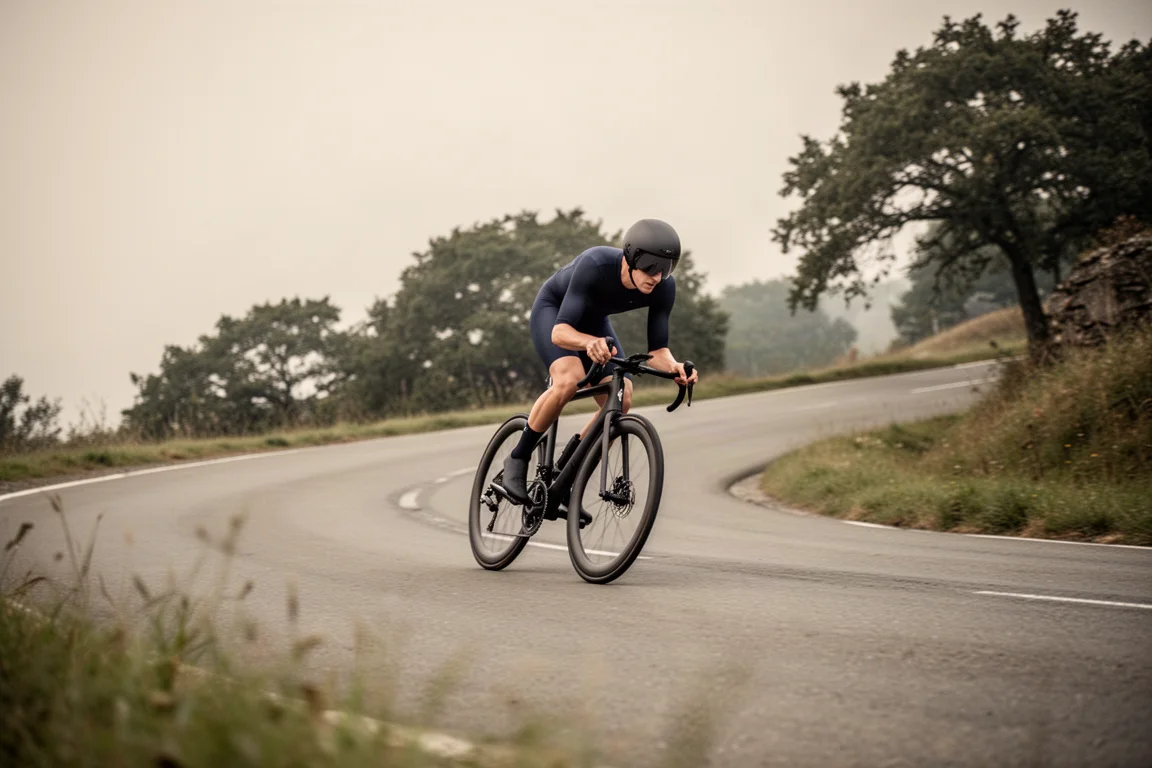
At speed that translates into excellent stability and a lot of confidence, particularly on descents and long open roads. At low speed the same geometry can feel a little ponderous, and the bike is less reactive during hard climbing efforts when the bars are worked side to side.
There is also some toe overlap, even with the stock 28 mm tires, and it becomes more noticeable if you run wider tires or set your cleats a long way back. In practice this only matters at low speed, but it is worth factoring in if your position depends on a rearward cleat setup.
Customization and Build Options
Customization is one of the M6’s biggest advantages. Wheels, handlebar, handlebar width, stem length, chainring sizes, cassettes and crank lengths can all be chosen when ordering, because each bike is built to order. Lead times stretch slightly as a result, but the bike arrives set up the way you want it rather than needing changes afterwards.
That matters more than it might sound. Many race bikes at this price arrive with a two-piece alloy bar and stem, including the Giant Propel and the Tarmac SL8, and riders often end up spending more to fit the right size cockpit and better wheels. The M6 ships with a full carbon integrated cockpit and 50 mm carbon wheels as part of the build, so it is close to ready to race out of the box. Integrated cockpits are not always easy to live with, but being able to specify stem length and bar width at the point of order removes the usual headache.
The cockpit shape itself is not perfect. The underside of the bar tops has sharp edges that make it less comfortable to hold while climbing. It is a minor complaint about an otherwise impressive inclusion at this price.
Things to Consider Before Buying
Several small details are worth knowing before ordering.
The brake rotors are Shimano SM-RT64 rather than the 105 series CL-RT700, and the difference is noticeable. Stopping power is slightly lower, and they can squeal once they get hot, even after a short descent.
The chain is a Sumc unit. It shifted and ran without issue during testing, but cheaper chains tend to wear faster than those with low friction coatings, so it is worth checking chain wear regularly and keeping the drivetrain clean.
The tires are Continental Grand Prix clinchers rather than tubeless-ready versions. They are genuinely good tires, fast and supple, but they arrived with butyl inner tubes, and swapping those for latex tubes made a significant difference to how alive the bike felt. Tubeless-ready tires would also add puncture protection. One puncture occurred during testing, and while that is not unusual, a roadside tube change is a hassle that tubeless setups largely avoid. Upgrading later is inexpensive, but it would have been better as stock.
Tire clearance is 32 mm, which is plenty for most aero road riders today, though 35 mm would have been more future-proof as road tires and wheels continue to trend wider.
The stock saddle is a basic Selle Italia model that may not suit everyone.
UK buyers should also note that, because each bike is custom built, it has to be collected from the workshop in Bridgend, South Wales. That is a non-issue for local riders but a real consideration for anyone further away. It does not apply to buyers in the United States.
Buying Advice
At around £3,500 or $4,000, the M6 is extremely competitive against established aero road bikes, and in many cases it delivers a stronger build for the same money. If you know your fit numbers and want a race-ready bike without an immediate upgrade budget, the complete build is the sensible choice, since the cockpit and wheels are already specified to your preferences.
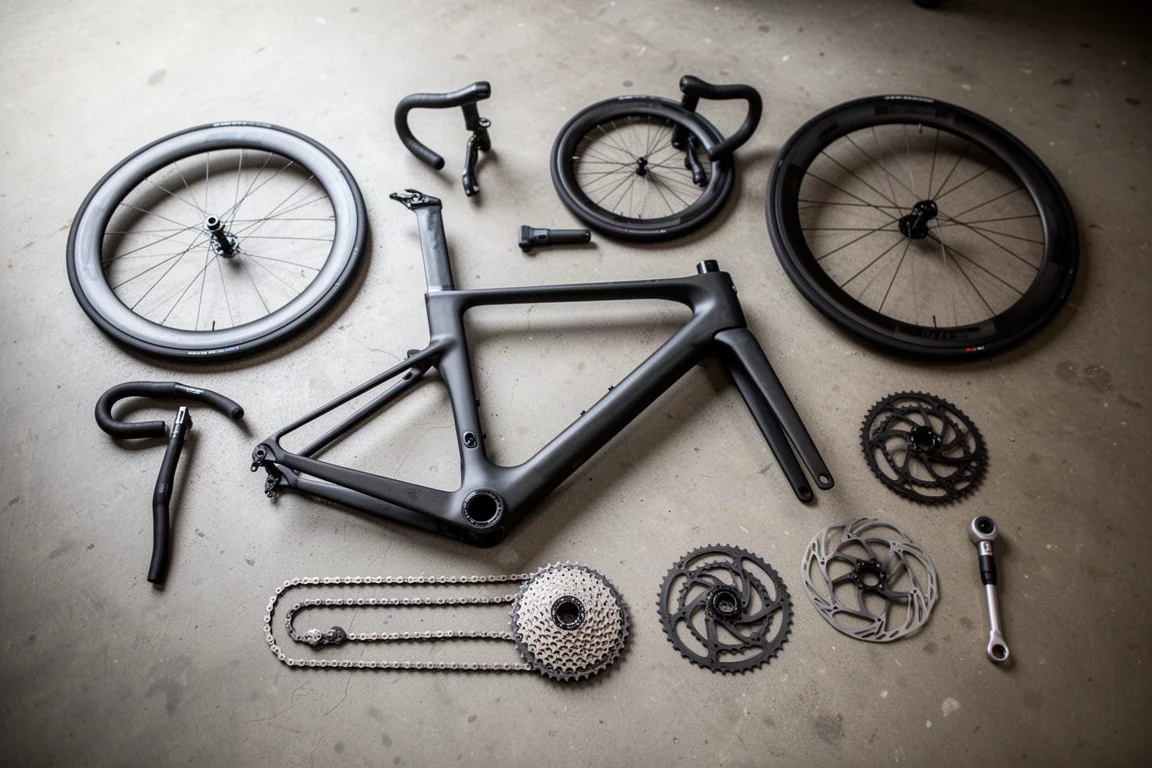
If you already own the wheels, cockpit and groupset you want, the frameset is the better value route. At around £1,300, or roughly $1,600, it allows a build tailored exactly to your own parts. Either way, the case for the M6 rests on the same three things: performance, value, and the ability to have the bike configured precisely as you need it.
Conclusion
The Winspace M6 may not be the most exciting or prestigious road bike on the market, but it is a genuinely strong option for riders whose priorities are performance, value and a bike that fits properly from the first ride. It is fast, stable and comfortable, and the build-to-order process solves a problem that most bikes at this price leave to the buyer.
A handful of details, the rotors, the chain, the clincher tires and the 32 mm clearance limit, are worth weighing up before ordering. None of them are deal-breakers, and all are straightforward to address. If this is the standard the new generation of Chinese road bikes can reach, established brands have real reason to sharpen their pricing.
Product link
View more details for Winspace M6
This product is mentioned in the review. Check the specifications, options, and compatibility before buying.
View more details for Winspace M6Further reading
Related Reviews

Road Bikes
10 New Road Bikes Worth Watching: Aero, Titanium, Steel and Endurance Standouts
A practical roundup of 10 new road bikes, from aero flagships chasing single-watt gains to titanium, steel and endurance platforms built for real roads.
Road Bikes
2026 Tour de France Road Bikes: Six Race Machines Worth a Closer Look
Six race bikes from the 2026 Tour de France grid, reviewed for paint, silhouette, wheels and the specification details that matter to buyers.
Road Bikes
3T Strada Italia Review: A Radical Aero Road Bike That Rides Smooth
A made in Italy carbon aero road bike with a deep head tube, wide tire clearance and a genuinely comfortable ride. Here is what to know before buying.