Audio Streaming
WiiM Mini, Bluesound Node, and Chord Mojo 2: Three Ways to Improve Streaming Sound
A practical look at three affordable streaming upgrades: the $99 WiiM Mini, the feature-packed Bluesound Node (2021 Edition), and the Chord Mojo 2 DAC that lifts the Mini's sound quality.
Introduction
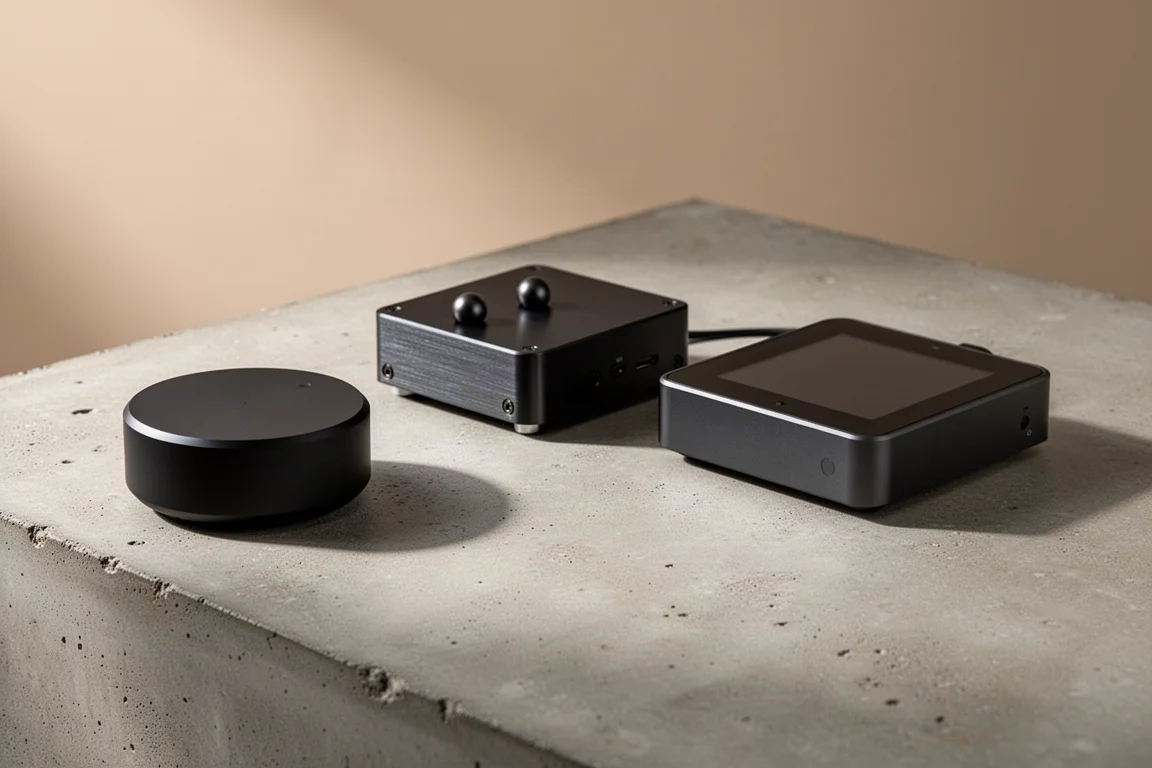
Somewhere between a cheap Bluetooth receiver and a full hi-fi rack sits a small group of devices that quietly change how music reaches your speakers. Three of them anchor this guide: the WiiM Mini, the Bluesound Node (2021 Edition), and the Chord Mojo 2.
The WiiM Mini is a network streamer that sells for around $99, which makes it one of the cheapest credible ways to add streaming to an existing system. The Bluesound Node is a more complete player aimed at whole households. The Chord Mojo 2 is not a streamer at all: it is a compact DAC that works alongside the Mini and pushes its sound quality up a level.
Each one solves a different part of the same problem, and the trade-offs between them are unusually clear once you line them up side by side.
How These Three Devices Fit Together
The WiiM Mini and the Bluesound Node are both network streamers. They pull music from streaming services and hand it to an amplifier, a pair of powered speakers, or an outboard DAC. The Chord Mojo 2 sits in a different category. It converts digital audio to analogue, and in this setup it runs between the WiiM Mini and the rest of the system, fed by the Mini’s optical output.
That distinction shapes what you are actually buying. With the Mini you are buying connectivity at a very low price. With the Node you are buying connectivity plus a long list of conveniences. With the Mojo 2 you are buying a step up in conversion quality for a streamer that already works.
The two streamers also differ in philosophy. The Node tries to cover everything a household could reasonably ask for. The Mini does a smaller number of things cheaply and leaves room for an external DAC to carry the sound-quality side of the job. Knowing which of those two approaches suits your room is most of the decision.
WiiM Mini: A $99 Network Streamer
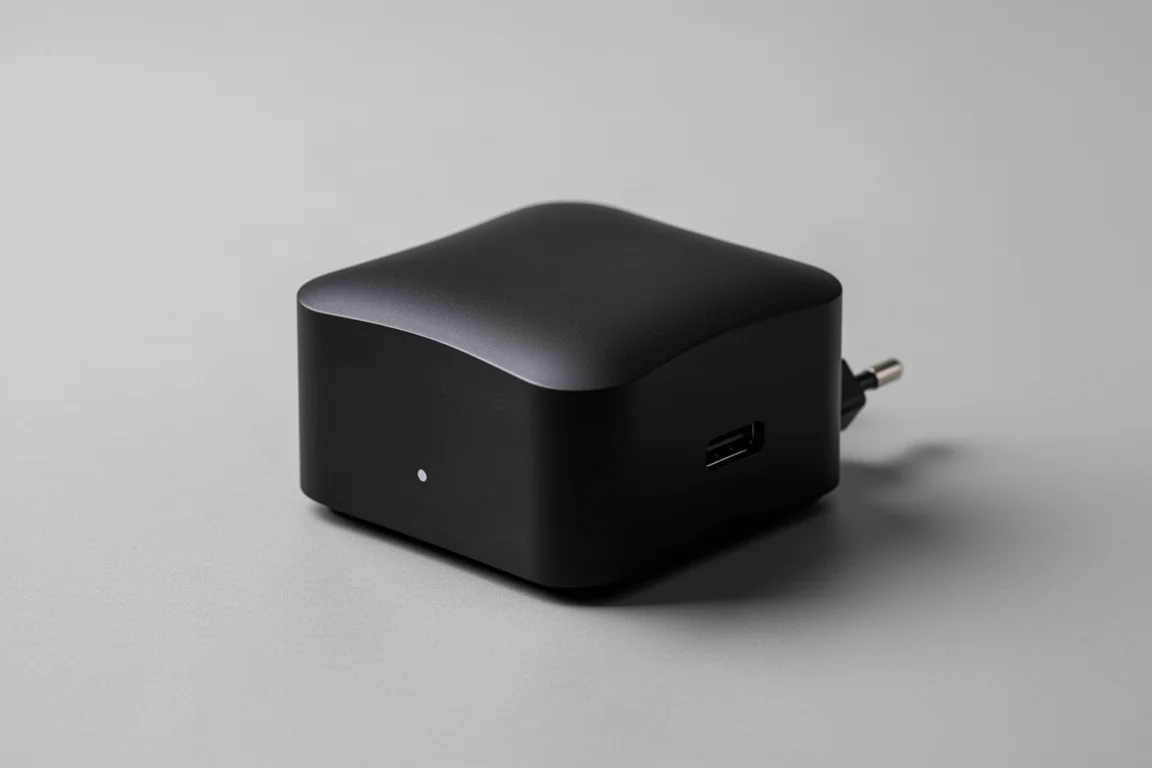
The WiiM Mini is a puck-shaped device, roughly the size of a hockey puck, with a flat top panel that doubles as a touch surface. Volume up, volume down, and play/pause are all handled there, so you can adjust playback without reaching for a phone.
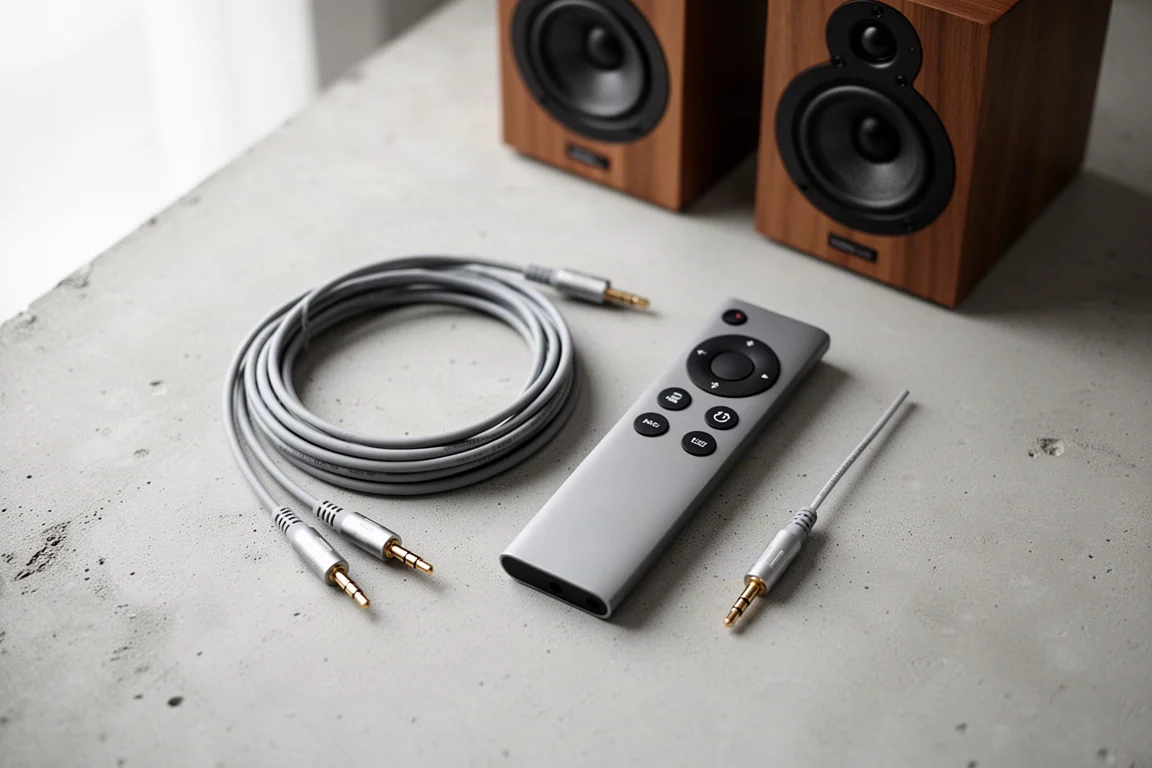
Around the back it offers an optical output, a 3.5mm analogue output, and, less commonly at this price, a 3.5mm analogue input. The analogue output is the weakest part of the package. The internal conversion is functional rather than impressive, and most of the Mini’s value comes from the optical socket feeding a better DAC downstream.
Setup is handled entirely through the WiiM Home app, which is available for both iOS and Android. There is no Ethernet port, so the Mini is Wi-Fi only. That is a compromise worth checking against your router placement before you buy, particularly if your hi-fi sits on the far side of the house.
The app is one of the Mini’s stronger arguments. A presets feature lets you assign albums or playlists from supported streaming services to six slots, so a playlist that evolves over time can live one tap away. Multiroom playback is supported inside the app, though it is not something this guide set out to test.
An over-the-air update added bit-perfect playback to the optical output, where previously everything was resampled to 48 kHz. That is a meaningful improvement for anyone running the Mini into an external DAC, and it suggests the platform is still being actively developed. For listeners who find Raspberry Pi streaming builds fiddly and time-consuming, the Mini is genuinely plug-and-play. It also works neatly as a way to add streaming to active speakers such as the KEF LSX or the KEF LS50 Wireless.
Bluesound Node (2021 Edition): The Feature-Rich All-Rounder
The Bluesound Node takes the opposite approach. It is built to be the only box a household needs. HDMI ARC lets it sit under a television and take over the sound for a film night. A touchscreen on the top panel gives basic control without a phone. Two-way Bluetooth means it can both receive and send audio. Roon Ready support is built in, something the WiiM Mini cannot match without routing a stream in over AirPlay.
It also plays high-resolution audio, and it is gapless everywhere, including inside its own control app. That last point will matter most to anyone with long DJ mixes, live albums, or classical recordings in their library, where a break between tracks is immediately obvious.
Taken together, this is a device aimed at households rather than tinkerers. It is friendly, flexible, and difficult to fault on features. The open question is not whether it can do something, but whether the sound it produces is the best available at its price.
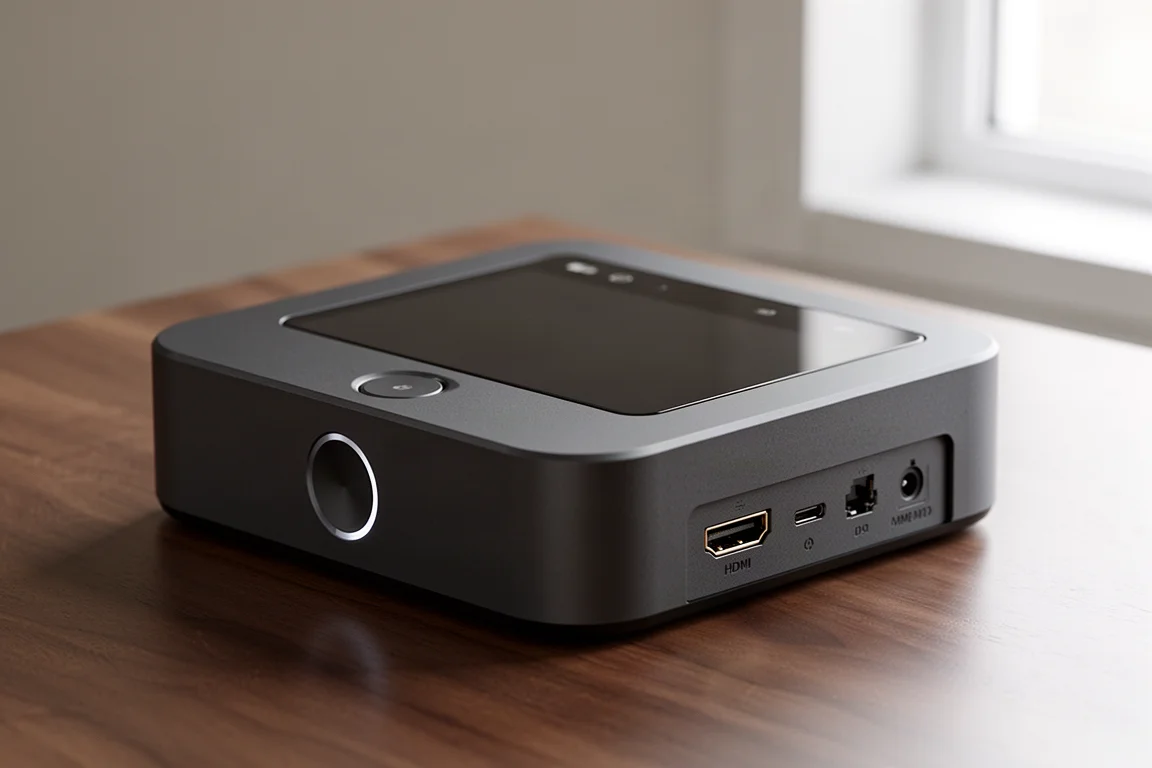
Chord Mojo 2: A Compact DAC That Raises the Ceiling
The Chord Mojo 2 is a compact DAC, and in this context it does one job well: it takes the digital signal from the WiiM Mini’s optical output and converts it with considerably more care than the Mini manages on its own.
Paired that way, the combination changes the character of the system rather than the feature list. Detail retrieval improves, and the presentation gains punch. It is the sort of difference that shows up on well-recorded material and rewards a decent pair of speakers or headphones.
It is worth being clear about what the Mojo 2 does not do. It is not a streamer, it has no network connection of its own, and it will not fix the WiiM Mini’s software limitations. What it does is raise the ceiling on sound quality for a streamer that costs very little to begin with.
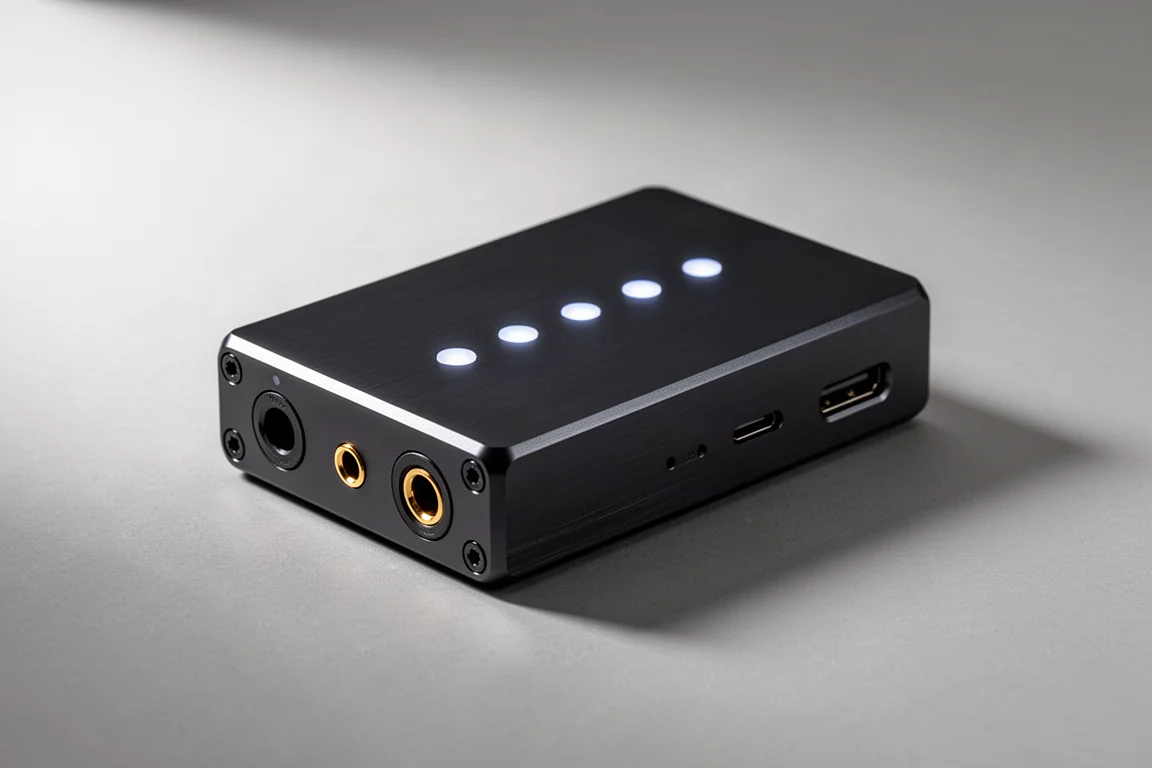
Sound Quality: WiiM Mini With Mojo 2 Against the Node
Comparing the WiiM Mini with the Chord Mojo 2 against the Bluesound Node produces a result worth stating plainly: the WiiM Mini and Mojo 2 combination retrieves more detail and hits harder. On sound quality alone, that pairing comes out ahead of the Node.
That outcome is surprising given how much more the Node does elsewhere, and it points to where each product spends its money. The Node invests in features and convenience. The Mini invests in nothing but connectivity, which leaves budget for a DAC that does the heavy lifting. If you are chasing the best possible sound for the money rather than the longest feature list, that is the calculation that matters.
Streaming Support and Playback Details
The WiiM Mini covers Bluetooth, Spotify Connect, Tidal Connect, and AirPlay 2. Inside the WiiM Home app it also supports Tidal, Qobuz, Deezer, and Amazon Music.
There are limits to be aware of. The Mini is not a high-resolution streamer in the strict sense. A Tidal Masters track played through Tidal Connect arrives as CD quality rather than the original master file, and there is no MQA support. Apple Music can only reach the Mini over AirPlay, which is capped at 48 kHz. Playback of Amazon Music and Deezer was not verified here. Chromecast is absent entirely, which matters if your household already runs on it.
Gapless playback is the other area to understand. Spotify Connect, Tidal Connect, and AirPlay all play gaplessly, because that behaviour is built into those protocols. Inside the WiiM Home app, however, a very small slice of silence still appears between tracks when using the services baked into the app. It is a minor artefact, but it is audible on continuous mixes and it slightly interrupts the listening experience.
The Bluesound Node has none of these caveats. It is gapless across the board and it plays high-resolution audio.
Buying Advice: Which Setup Suits You
If sound quality is the priority, the WiiM Mini paired with the Chord Mojo 2 is the combination to choose. You accept a narrower feature set, you give up Chromecast and built-in Roon support, and you live with slightly gapped playback inside the WiiM Home app. In exchange you get the most detailed and punchy presentation of the three.
If you would rather have one box that handles everything, the Bluesound Node is the more sensible purchase. HDMI ARC, a top-panel touchscreen, two-way Bluetooth, high-resolution support, and gapless playback everywhere make it the easiest device to live with, and it is the better fit for a shared living room.
The WiiM Mini on its own remains a strong entry point at $99. Fed into a good external DAC, it is also the cheapest way to find out whether network streaming deserves a place in your system. Budget for the DAC as part of the plan, and check your Wi-Fi coverage before you commit.
Conclusion
Three devices, three different jobs. The WiiM Mini buys you connectivity for very little. The Chord Mojo 2 buys you better conversion. The Bluesound Node buys you convenience, and a great deal of it. Decide which of those three you genuinely need, and the choice becomes straightforward.
Further reading
Related Reviews
Audio Streaming
Eversolo DMP-A10 Review: A Flagship Streamer, DAC and Preamp
The Eversolo DMP-A10 moves the company upmarket with a 6.5-inch touchscreen, dual linear power supplies, an ESS ES9039 Pro converter, dual subwoofer outputs and built-in room correction.
Audio Streaming
WiiM Mini Review: A Puck-Sized Network Streamer With Serious Value
The WiiM Mini packs AirPlay 2, Bluetooth, TIDAL Connect, Spotify Connect and a full-size optical output into a streamer that costs around $100.
Audio Streaming
WiiM Mini vs WiiM Pro: Which Affordable Network Streamer Is Right for You?
A practical comparison of the WiiM Mini and WiiM Pro, covering streaming protocols, connectivity, sound quality and where each one makes the most sense.