Audio Streaming
Eversolo DMP-A10 Review: A Flagship Streamer, DAC and Preamp
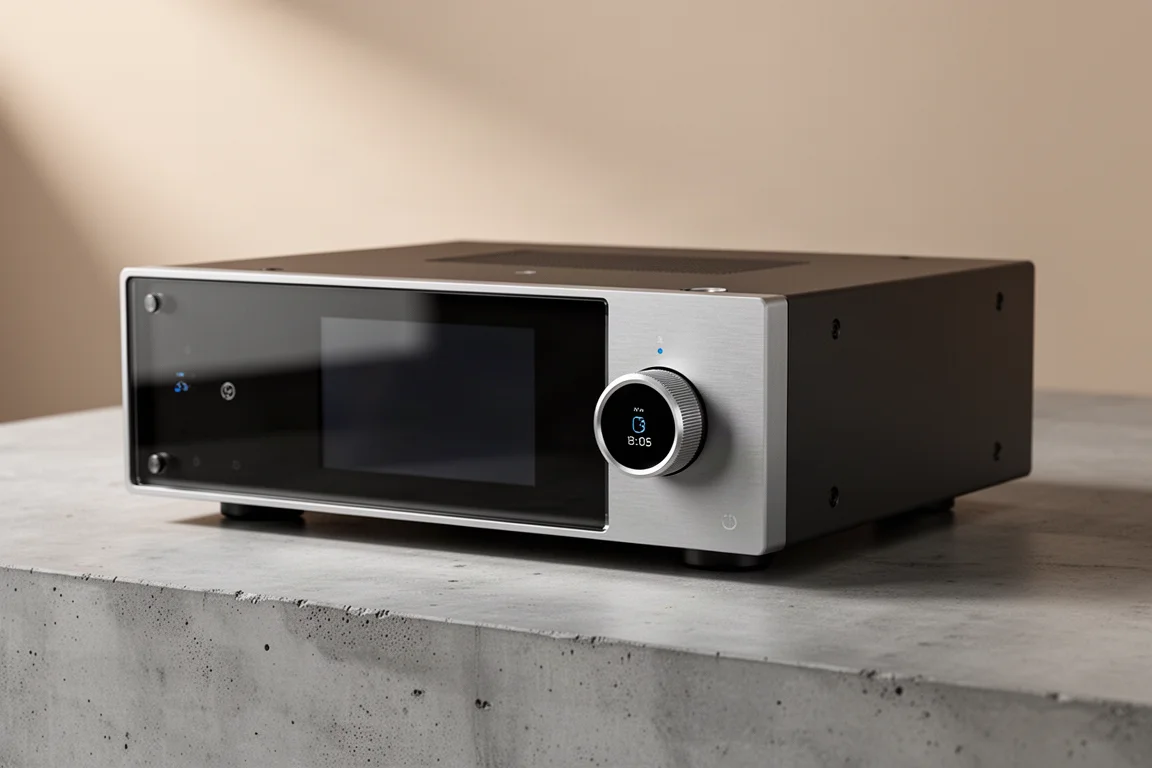
The Eversolo DMP-A10 moves the company upmarket with a 6.5-inch touchscreen, dual linear power supplies, an ESS ES9039 Pro converter, dual subwoofer outputs and built-in room correction.
Introduction
Eversolo made its name by packing genuinely high-end streaming features into components that did not demand a high-end budget. The A6, A6 Master Edition and A8 built a following on that formula, pairing large touchscreens and serious internal hardware with prices that stayed within reach. The DMP-A10 is the company’s step in the other direction. It is a flagship streamer, DAC and preamp in one chassis, positioned above the A8 and aimed at listeners who want the entire front end of a system in a single, carefully built box.
That ambition shows up in the details: a larger CNC-machined aluminium case with passive cooling fins, dual independent linear power supplies, a new ESS converter, a temperature-controlled clock, two dedicated subwoofer outputs and built-in room correction. It is a meaningfully different product from the streamers that came before it, and for the right listener it can replace several boxes at once.
Who the Eversolo DMP-A10 Is For
The DMP-A10 makes the most sense for listeners who want a single component to handle streaming, digital-to-analog conversion and analog volume control. Instead of a streamer feeding a separate DAC and preamp, the A10 covers all three, with a fully balanced preamp stage and enough inputs to sit at the centre of a two-channel system.
It also suits anyone running two subwoofers, or dealing with a room that colours the low end. Dedicated subwoofer outputs and automated room correction address both problems directly, and both are features that usually appear further up the market.
Owners of an earlier Eversolo A6, A6 Master Edition or A8 who use those units purely as streamers have a less obvious case for upgrading. The A10’s advantages are concentrated in its DAC, preamp, clock, power supply, subwoofer outputs and room correction, so the value depends on whether you actually use those parts of the chain.
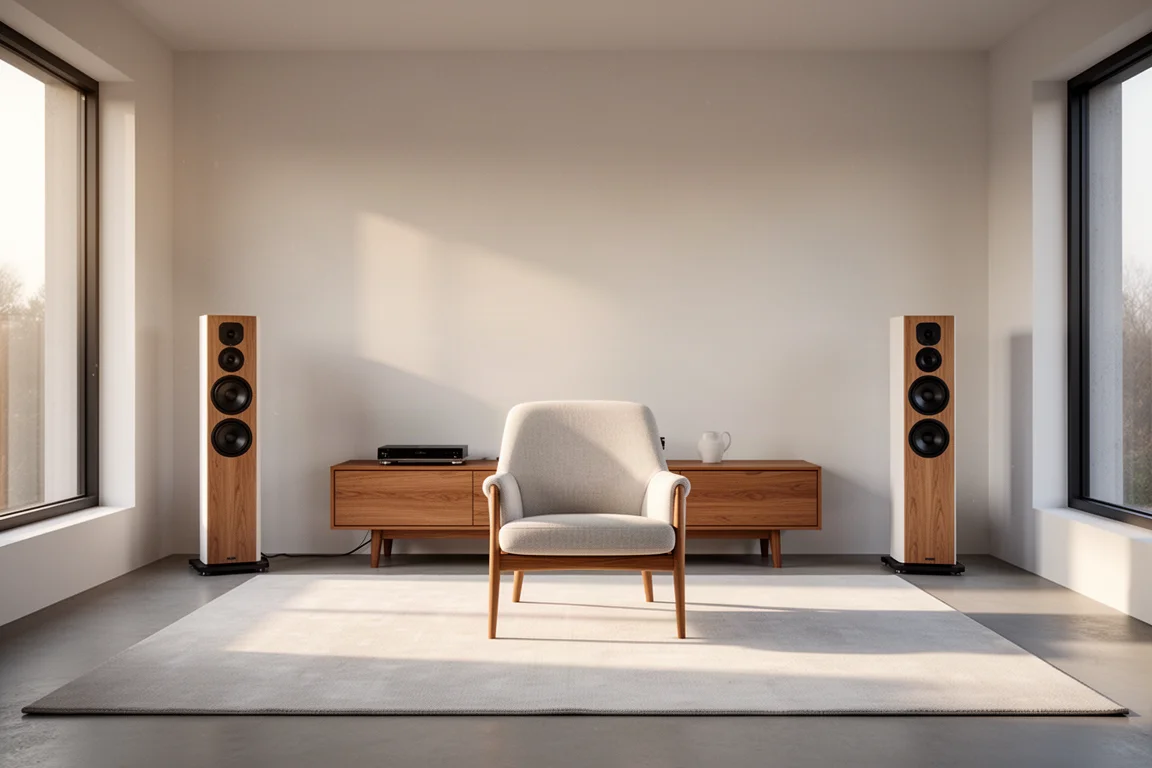
Where the A10 stands apart from the rest of the Eversolo range is the combination of features in one chassis rather than any single specification. Buyers who plan to add better amplifiers and speakers over time will find the most to like here, because the front end will not need replacing as the rest of the system improves.
Main Strengths
The DMP-A10’s strengths fall into a few clear groups: the interface and control options, the connectivity, the bass management and correction tools, and the internal engineering.
A Larger, Brighter Touchscreen and a Smarter Knob
The front panel is where the A10 makes its most visible departure. The centre touchscreen grows by half an inch to 6.5 inches, which makes it easier to read from a listening position, and navigation stays fast and smooth. Streaming services, settings and playback controls are all reachable from the screen itself, or from the companion app, which responds quickly and lets you set favourites, customise the home screen and adjust how album art is displayed.
The volume knob now includes a small circular display that can show the current volume level or album artwork, with a choice of themes. It does not change the sound, but it does make the unit easier to use and gives it a distinctive look. A dedicated power button sits on the left of the front panel, and a refined remote is included for listeners who would rather not reach for a phone.
One genuinely unusual feature is the screencast option, which mirrors the front screen onto a phone and stays fully interactive. Its most practical use is third-party apps that are not available inside the Eversolo phone app: mirror the screen, open the app there, and control playback as normal. The app also includes a universal search that looks across multiple streaming services at once.
Between the larger centre screen and the display in the knob, most of what you need to know about a track is visible at a glance without opening an app.
Connectivity That Covers Modern Systems
Around the back, the A10 offers balanced XLR and RCA inputs, HDMI ARC for a television, two coaxial inputs, one USB-B input, two USB-A ports and two Toslink inputs. Outputs include balanced XLR, RCA, coaxial, Toslink and USB-A, along with trigger in and out connections. An Ethernet port handles wired networking.
The most notable addition is an SFP fibre port, which allows the A10 to connect to a network over fibre when an SFP module is fitted. This removes the electrical connection between the network switch and the streamer, a technique more commonly found in higher-end equipment. An advanced electrical isolation circuit also helps reduce interference and grounding loop issues when an external DAC or USB device is connected.
Dual Subwoofer Outputs and Built-In Room Correction
Two dedicated subwoofer outputs let you connect a pair of subwoofers directly to the A10 and manage them from the interface or the app. Sub level, crossover frequency and polarity are all adjustable, and the settings apply to both outputs. Stereo mode crosses one subwoofer over with the left speaker and the other with the right, which suits listeners who place their subs beside their main speakers. Mixer mode combines left and right into the same feed for both subwoofers, the better choice when a single sub or two corner-placed subs are in use.
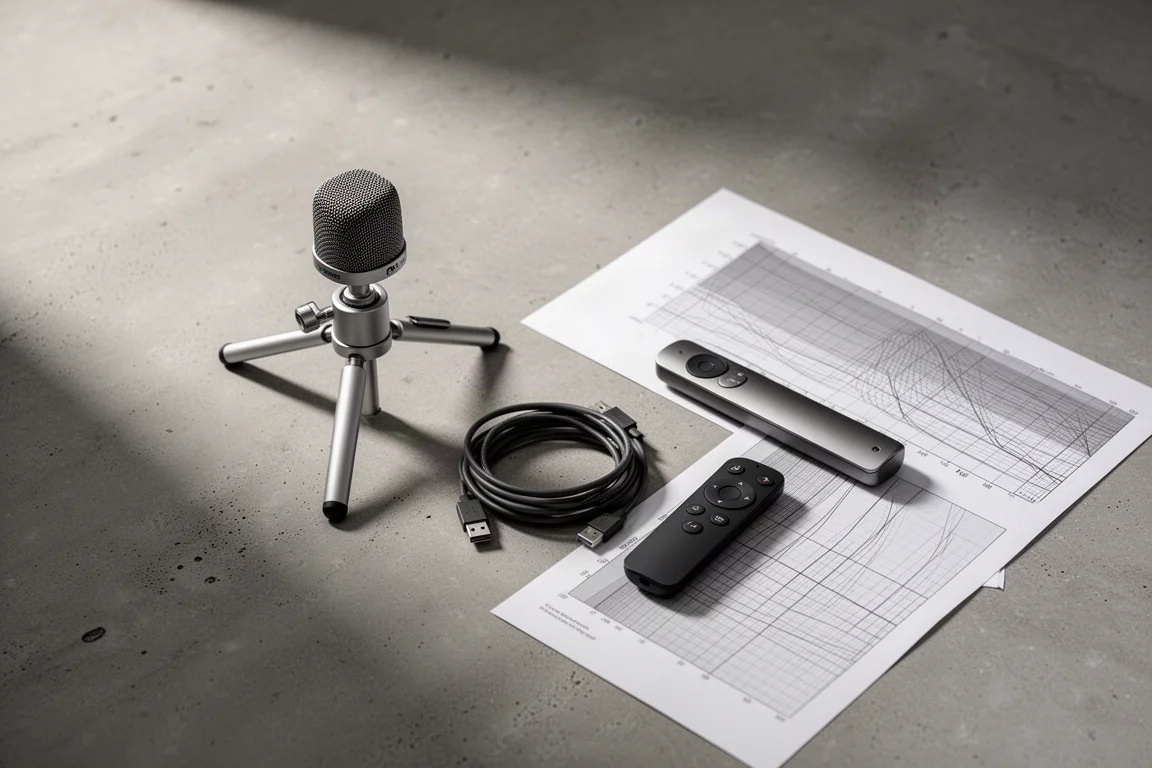
Room correction is the other headline addition. Every room imposes its own peaks and dips on the low end, and automated correction can reduce those problems without guesswork. The A10 can run the process using the included microphone, a microphone of your own, or the microphone on an iPhone. A dedicated microphone delivers noticeably better results than a phone, so that is the route to take if you want the most accurate curve. The correction can be switched on and off, and it is not as advanced as the Dirac Live with Bass Control implementation found on some higher-end streamers, but it does improve the sound in rooms that are less than ideal.
For listeners who prefer to work by hand, a parametric EQ allows precise targeting of frequencies such as 37 Hz or 121 Hz, with control over how steep or wide each adjustment is. FIR filters, high-pass and low-pass filters, bass boost, a compressor and delay control round out the toolkit.
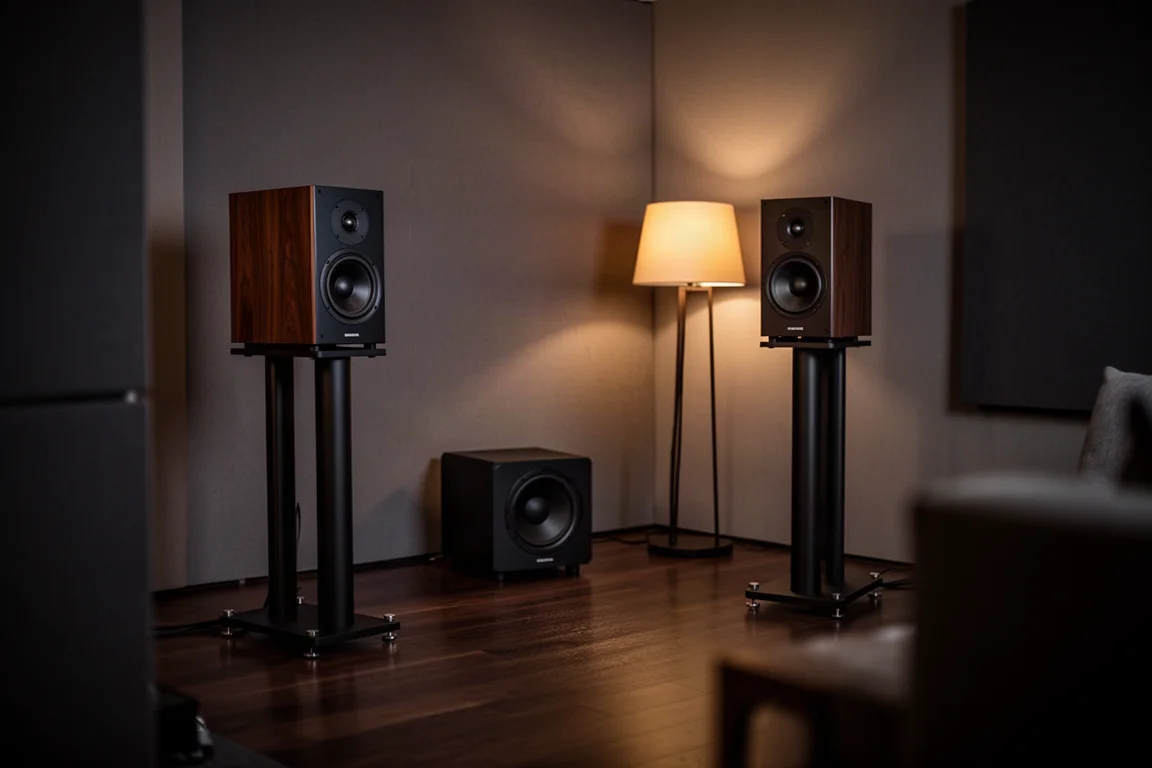
Subwoofer integration is usually the hardest part of a two-channel setup to get right, and having level, crossover and polarity control in the same app as playback makes the process far less tedious.
Power Supply, DAC and Clock Upgrades
Inside, Eversolo has separated the digital and analog sections to keep noise and interference away from the audio signal, with shielding added to the front panel. Two independent linear power supplies, built around a toroidal transformer and a low-noise linear supply, feed the digital system and the analog audio circuits separately.
The DAC is an ESS ES9039 Pro, a change from the two AKM converters used in the A8. The new chip costs roughly twice as much in parts terms, and it gives the A10 a detailed, musical character that holds up over long listening sessions.
The clock is an OCXO design, an oven-controlled crystal oscillator with custom temperature control technology that keeps the crystal at a stable temperature regardless of conditions outside the case. Stable temperature reduces frequency drift, which in turn lowers noise and jitter. Eversolo puts each of these clocks through its own testing process before it goes into a unit, and this represents a step up from the clocks used in the company’s earlier products.
The preamp section is fully balanced and uses precision resistors and relays for volume control, with R2R-based level adjustment. That makes the A10 a credible analog preamp in its own right, capable enough that some listeners will retire a separate preamp and control volume directly from the app.
Streaming, Storage and Everyday Use
The A10 runs Eversolo’s own operating system, which bypasses the sample rate conversion limitations of Android to output the original sample rate from music apps. It supports high-resolution audio up to 32-bit PCM at 768 kHz and DSD512, along with the file formats most listeners are likely to have. Qobuz, Tidal, Amazon Music and Apple Music are all accessible, and Spotify Connect and Tidal Connect are supported as well.
Beyond streaming, there is Bluetooth 5.0, CD ripping and playback through an external CD drive, and playback from a USB drive. The unit ships with 64 GB of internal storage for ripped CDs and files, and SSDs can be installed underneath to bring total storage up to 4 TB. The A10 can also act as a server, making your library available to other devices around the house.
How It Sounds
Testing paired the A10 with Parasound JC1 monoblock amplifiers driving KEF Reference 1 Meta bookshelves and KEF R11 Meta towers, a revealing setup that had previously been fed by a considerably more expensive streamer. After room calibration and some fine-tuning, the A10 held its own across a wide range of material, from large-ensemble jazz to modern pop production. The ESS converter proved musical and easy to live with over long sessions, and nothing about the presentation felt strained or overly analytical.
Equally telling was a second setup built around a much less expensive pair of powered bookshelf speakers, the kind of system someone might assemble before upgrading amplification and speakers later. The A10 brought those speakers to life in a way they had not sounded before, which suggests it can serve as the foundation of a system that grows over time rather than a component that needs replacing as the rest of the chain improves.
Things to Consider Before Buying
The A10 is a flagship product, and a few of its choices will matter more to some buyers than others.
There is no HDMI I2S input and no HDMI DSD audio output port, both of which were present on the A8. Eversolo’s reasoning is that most listeners never used them and they added cost, but if either connection matters to your setup, the A10 does not have it.
Roon Ready support was not yet in place at the time of testing and was expected to arrive later. If Roon is central to how you listen, confirm the current status before ordering.
The room correction is effective but simpler than the Dirac Live with Bass Control implementation found on some higher-end streamers. For the best results, plan on using a dedicated microphone rather than a phone.
The chassis design is also a departure. The side fins and larger proportions give the A10 a more technical look than the plain black box of the A8, and some listeners will prefer the older styling.
Finally, consider how you will actually use it. If the A10 is used only as a streamer with audio routed to an external DAC, much of what makes it expensive goes unused. The dual subwoofer outputs, room correction, balanced preamp and upgraded converter are the reasons to choose it over a simpler model. Initial supply is also expected to be limited, so buyers who want one early may need to plan ahead.
Buying Advice
The DMP-A10 is the right choice for listeners who want one component to handle streaming, conversion and volume control, and who will use the features that separate it from the more affordable Eversolo models. Two subwoofer outputs, room correction, a fully balanced preamp, dual linear power supplies and the upgraded clock are the substance behind the flagship label, and together they can simplify a system while improving how it sounds.
A matching amplifier is planned under the Eversolo name. The Amp F10 is described as a ground-up redesign of the earlier F2, with around 200 watts per channel and up to 650 watts in bridged mode, and it is designed to match the A10 visually. Buyers considering a full Eversolo stack may want to factor that into their plans, though there are plenty of other amplifiers that pair well with the A10 today.
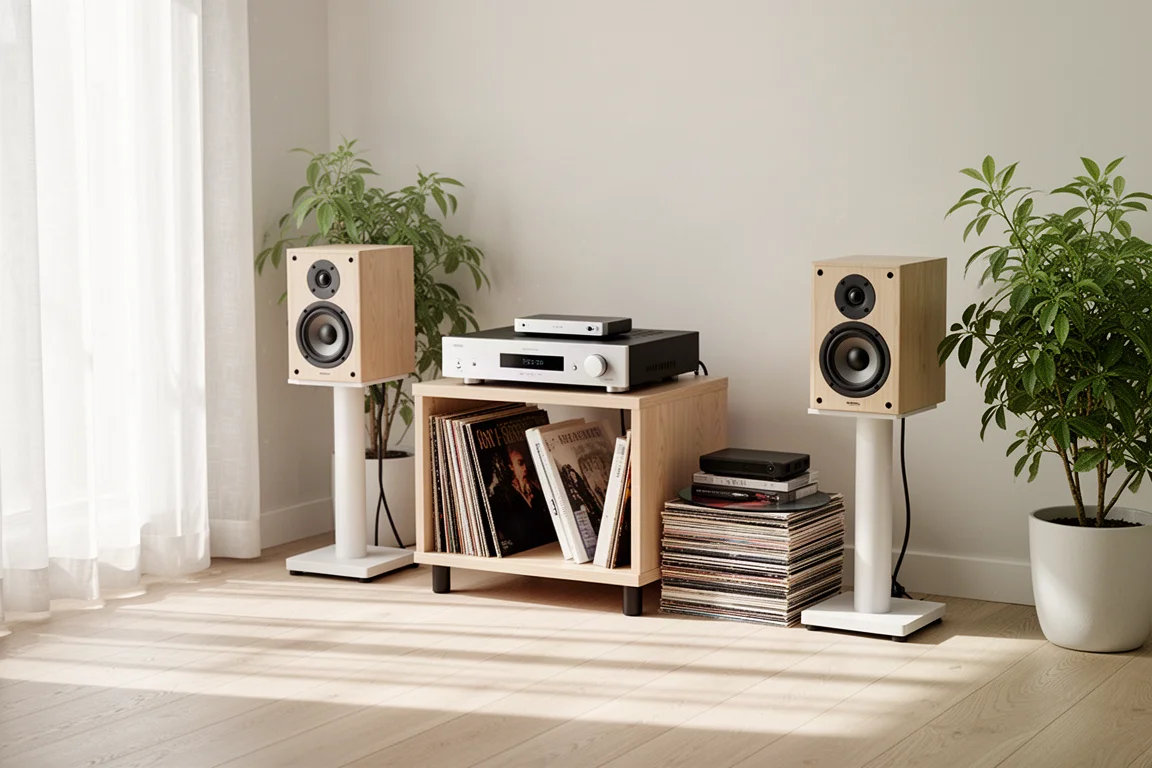
If you already own a capable streamer and do not need the DAC or preamp stages, the upgrade case is weaker. If instead you are building a system and want the front end settled once, with headroom for better amplification and speakers later, the A10 is a strong place to start.
Conclusion
The Eversolo DMP-A10 is a deliberate move upmarket rather than a routine refresh. The larger touchscreen, the display in the volume knob, the fibre network port, dual subwoofer outputs and room correction make it easier to live with day to day, while the ESS converter, dual linear power supplies and temperature-controlled clock give it the engineering foundation of a serious front end. It is not the right purchase for every Eversolo owner, particularly those who use their streamer purely as a transport. For listeners who want streaming, conversion and preamp duties handled by one well-built component, it is a convincing flagship.
Product link
View more details for Eversolo DMP-A10
This product is mentioned in the review. Check the specifications, options, and compatibility before buying.
View more details for Eversolo DMP-A10Further reading
Related Reviews
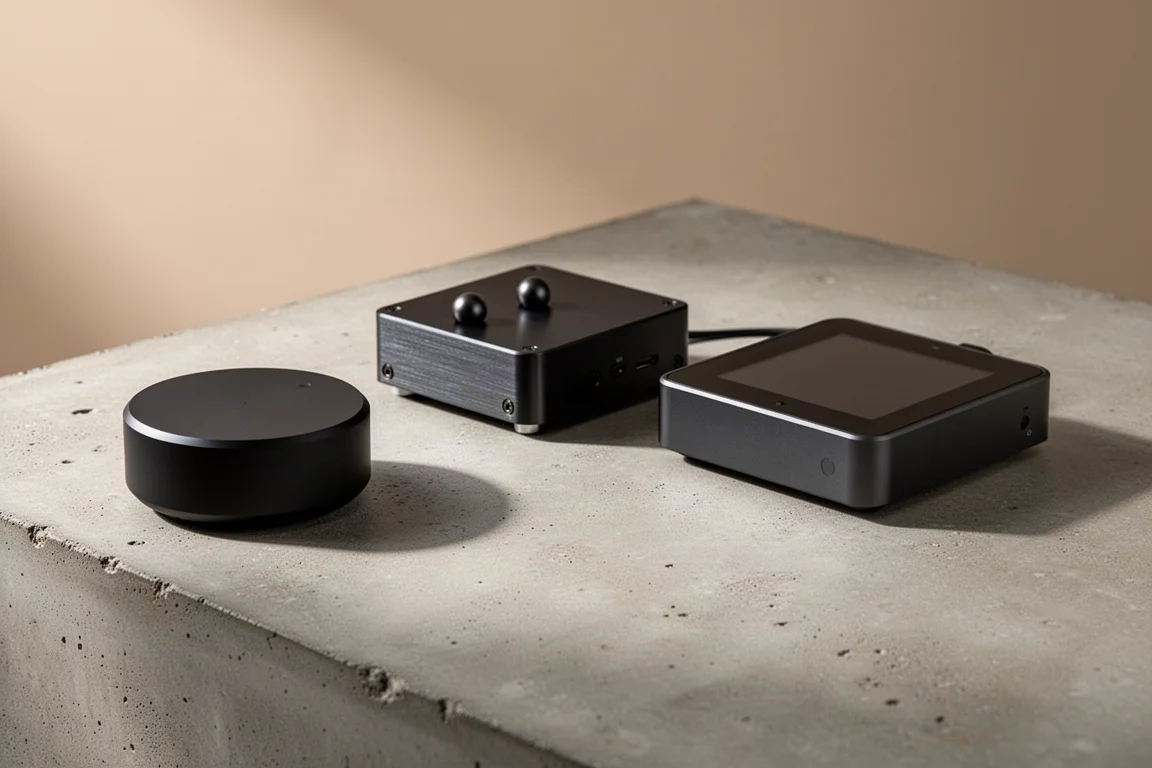
Audio Streaming
WiiM Mini, Bluesound Node, and Chord Mojo 2: Three Ways to Improve Streaming Sound
A practical look at three affordable streaming upgrades: the $99 WiiM Mini, the feature-packed Bluesound Node (2021 Edition), and the Chord Mojo 2 DAC that lifts the Mini's sound quality.
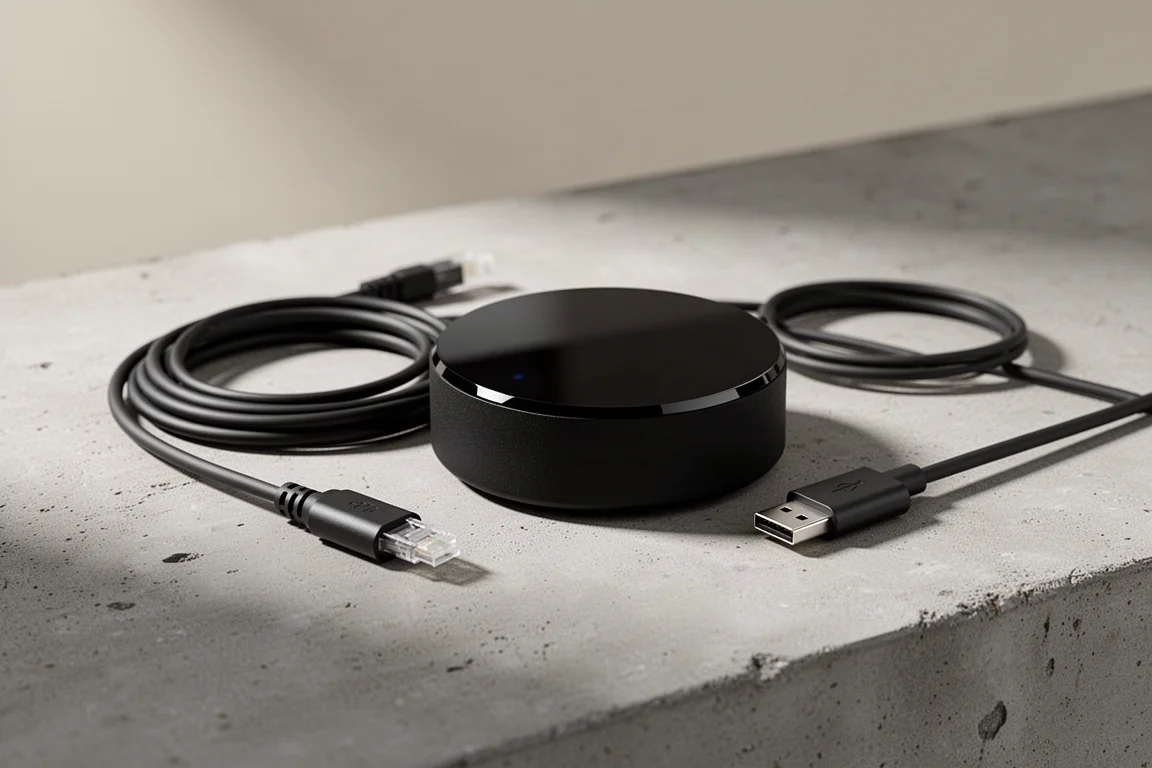
Audio Streaming
WiiM Mini Review: A Puck-Sized Network Streamer With Serious Value
The WiiM Mini packs AirPlay 2, Bluetooth, TIDAL Connect, Spotify Connect and a full-size optical output into a streamer that costs around $100.
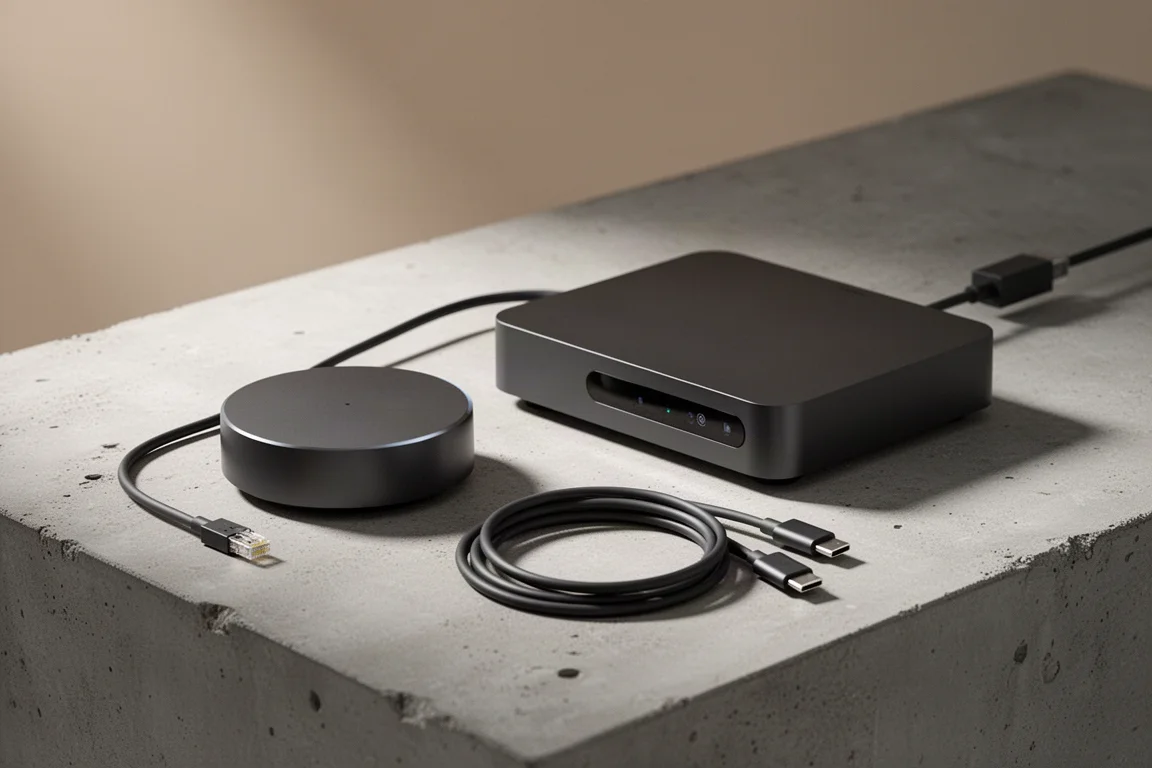
Audio Streaming
WiiM Mini vs WiiM Pro: Which Affordable Network Streamer Is Right for You?
A practical comparison of the WiiM Mini and WiiM Pro, covering streaming protocols, connectivity, sound quality and where each one makes the most sense.