Bikepacking Gear
Why Use a GPS Head Unit for Bikepacking: Navigation, Battery Life, and Durability
Explore the practical advantages of dedicated GPS cycling units over smartphones for bikepacking and off-road adventures, from battery life to durability.
Introduction
When planning a bikepacking adventure, the question of navigation often comes down to a simple choice: smartphone or dedicated GPS head unit. While smartphones have become ubiquitous tools, dedicated cycling GPS units offer distinct advantages that make them the preferred choice for serious bikepacking endeavors. Understanding these benefits helps explain why many experienced riders choose a purpose-built device over the phone in their pocket.
Navigation and Route Following
The primary reason to use a GPS head unit is straightforward: reliable, hands-free navigation designed specifically for cycling. Rather than pulling out a map or fumbling with a smartphone, a mounted head unit displays your route at a glance. This convenience becomes invaluable at junctions where a quick visual reference prevents wrong turns and saves time.
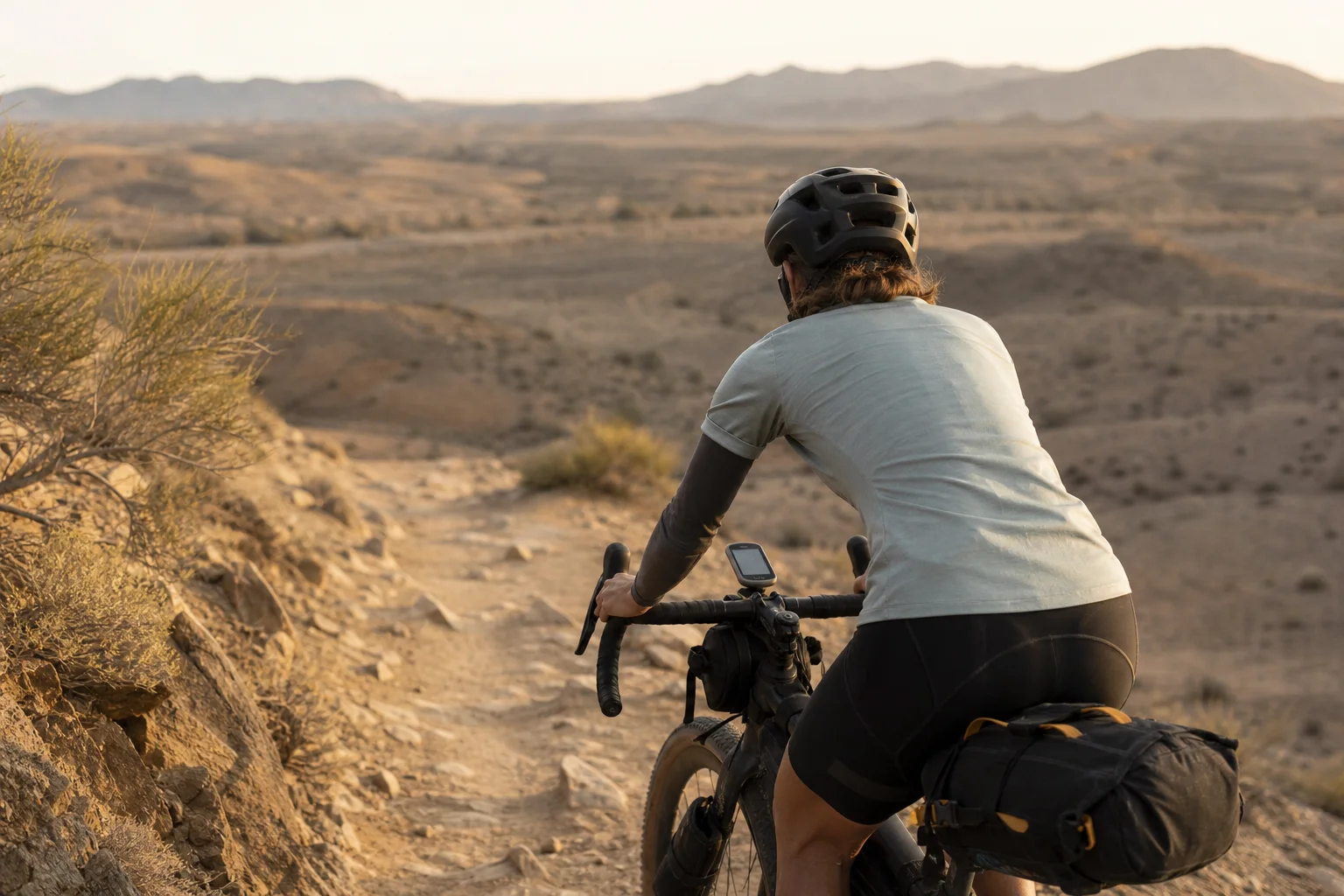
Modern GPS units from Garmin, Wahoo, and Hammerhead all support rapid route uploads. You can download a pre-planned route from a route-sharing platform or build one on your desktop, then transfer it to the device wirelessly or via cable. The device then displays elevation profiles, climbing information, and waypoints marking important locations along your route. This integrated approach to navigation is purpose-built for the demands of multi-day off-road riding.
Durability and Weather Resistance
A smartphone mounted to your handlebars faces constant exposure to the elements. Rain, mud, vibration, and the occasional crash are routine hazards on bikepacking trips. Dedicated GPS head units are engineered to withstand these conditions. They are fully waterproof, designed to get dirty, and built to survive impacts that would damage a smartphone.
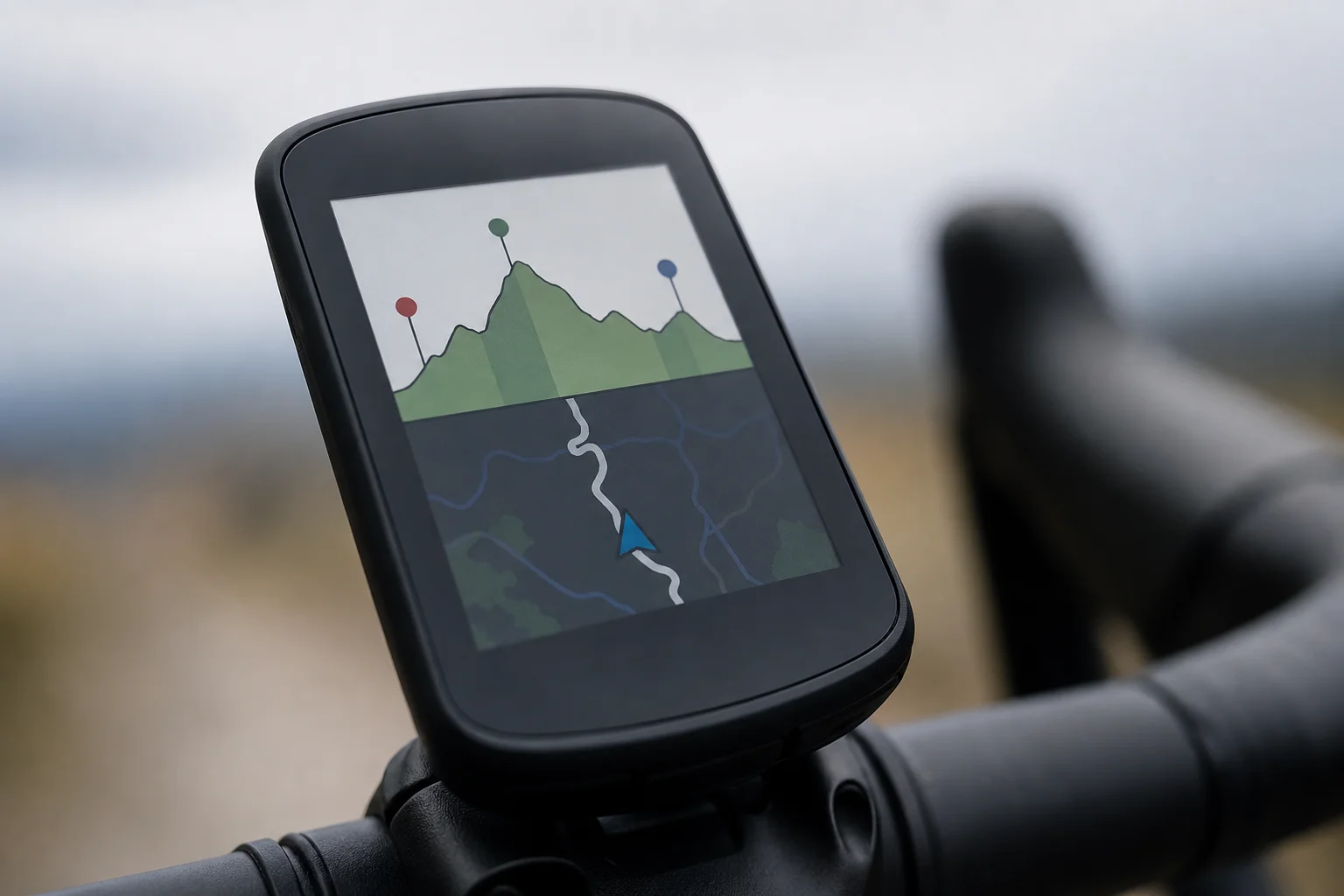
Beyond ruggedness, these units excel in conditions where smartphones struggle. Bright sunlight washes out most phone screens, making navigation difficult in the high-altitude, sunny environments common in bikepacking regions. GPS head units feature displays optimized for outdoor visibility in both bright daylight and darkness. Temperature extremes also pose a challenge for smartphones, which often shut down in subfreezing conditions or overheat when exposed to direct sun. Dedicated cycling units maintain reliable operation across a wider temperature range, a critical advantage on multi-day adventures where conditions vary dramatically.
Battery Life and Power Management
Battery life is perhaps the most compelling reason to choose a dedicated GPS unit. Most modern head units deliver two days of continuous use on a single charge, with some solar-equipped models extending that to five days or more. This extended battery life means you can navigate for multiple days without needing to recharge, a significant advantage on remote routes where power sources are scarce.
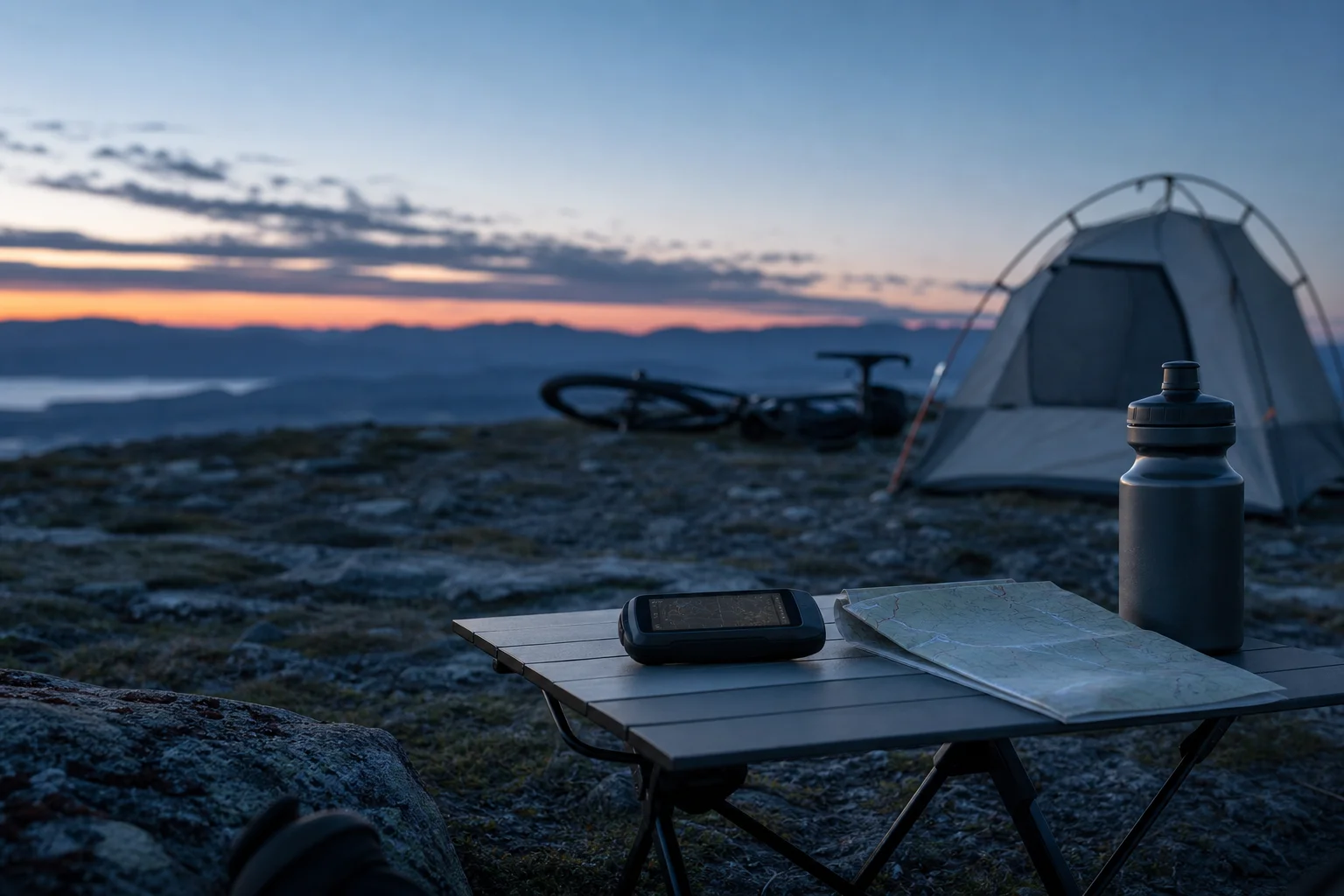
In contrast, using a smartphone for navigation drains its battery significantly each day. If you rely on your phone for communication with family, photography, weather checks, or finding services in towns, adding navigation to that workload accelerates battery depletion and shortens the overall lifespan of the device. A dedicated GPS unit preserves your smartphone’s battery for these essential functions, allowing you to stay connected and informed without sacrificing navigation capability.
Additional Features and Functionality
Beyond core navigation, GPS head units pack features that enhance the bikepacking experience. All units include built-in memory to store tracks and routes, base maps covering most regions, and elevation data. Many offer temperature sensors, sunrise and sunset information, and compass functionality. Advanced models sync with external sensors like inReach devices for emergency communication or electronic shifting systems for performance monitoring.
While smartphones can replicate many of these features through apps, doing so requires downloading offline maps that consume significant internal storage. GPS units handle this seamlessly with dedicated map storage, keeping your phone’s storage available for photos, videos, and other content.
Choosing the Right Unit for Your Needs
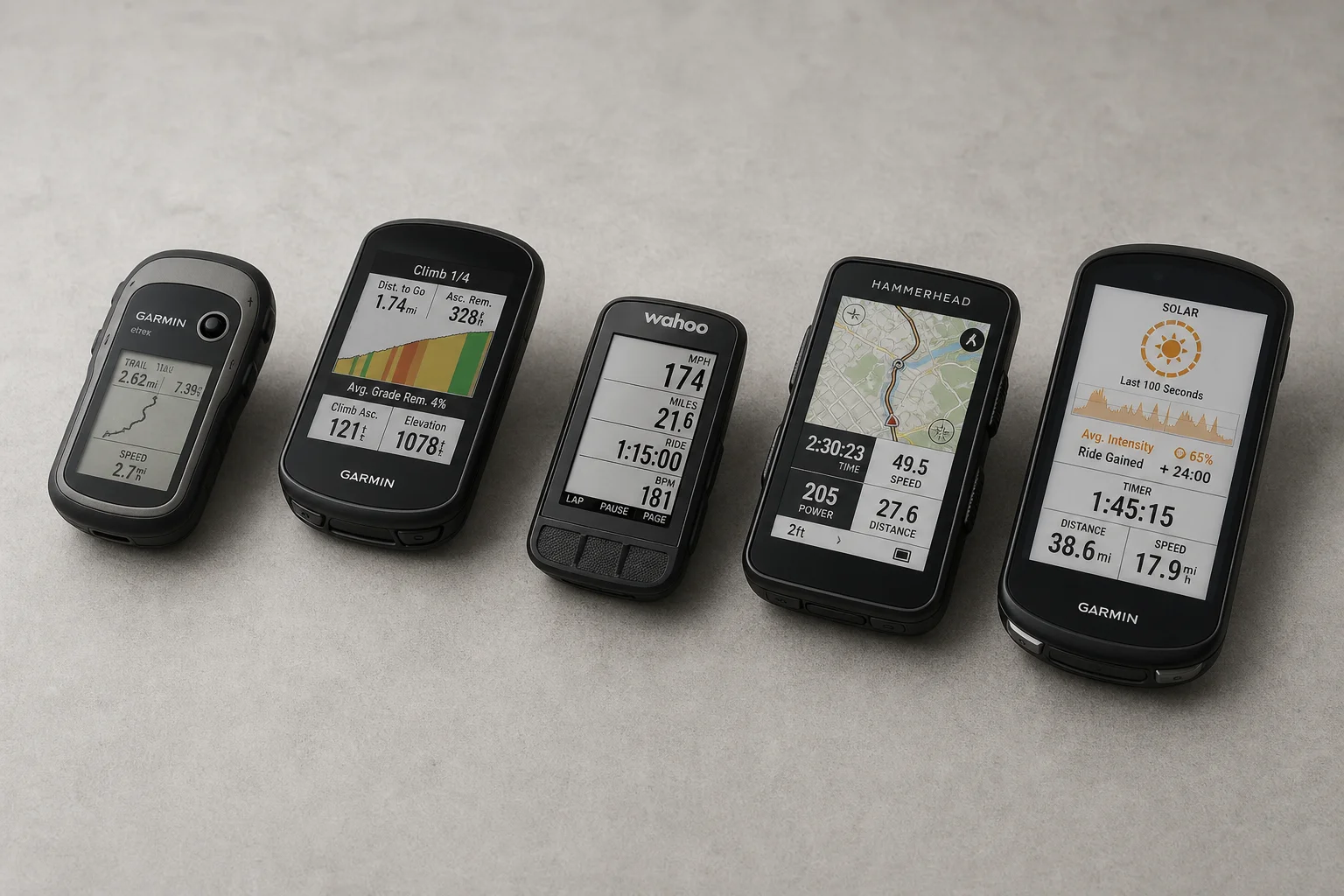
Different riders prioritize different features when selecting a GPS head unit. The Garmin eTrex remains a popular choice for its simplicity and proven reliability in the bikepacking community, originally designed as a hiking unit but adapted for cycling with aftermarket handlebar mounts. The Garmin Edge 830 appeals to riders who prefer a cycling-specific interface with strong user experience. The Wahoo ELEMNT Bolt attracts those who value straightforward, intuitive operation without unnecessary complexity.
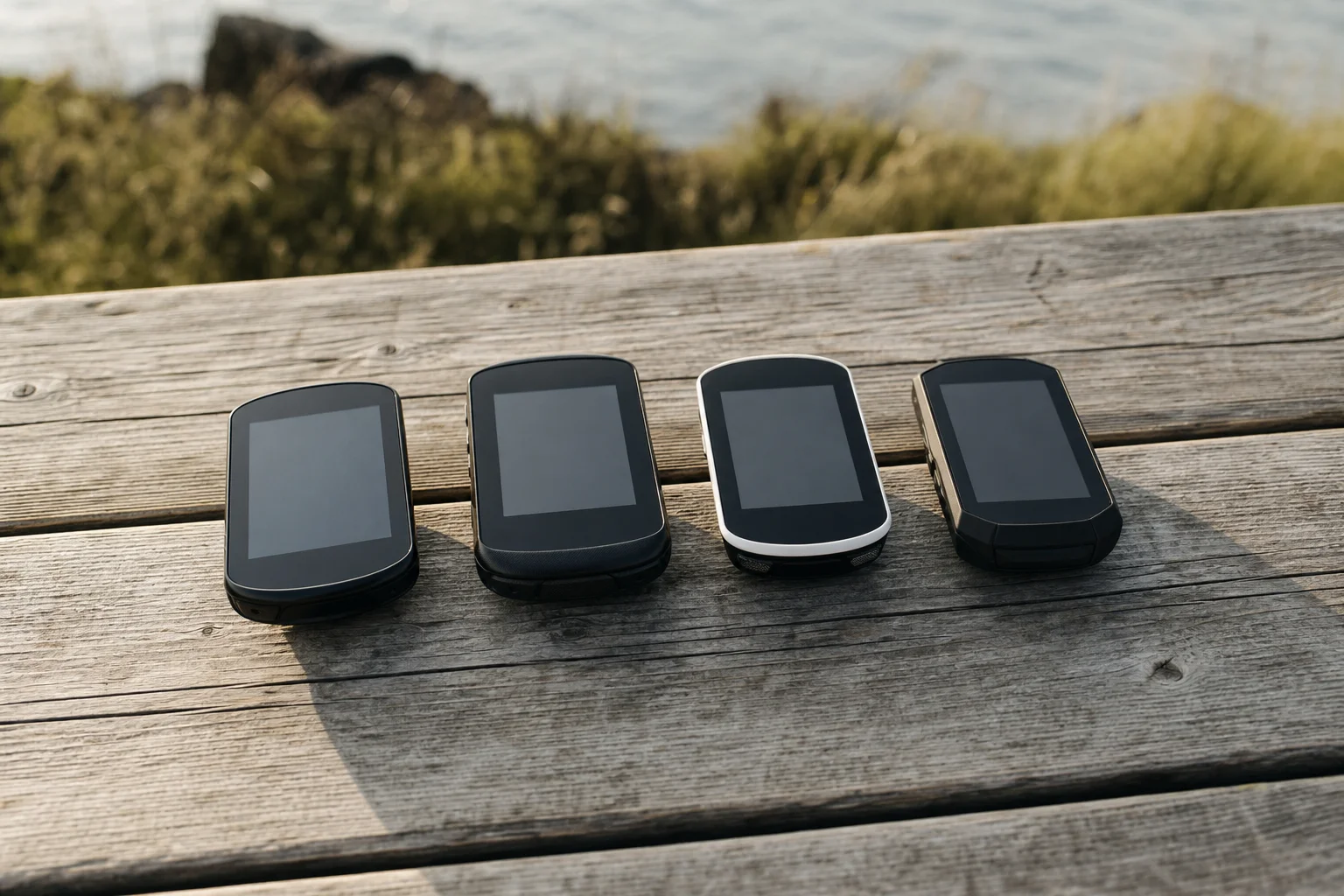
The Hammerhead Karoo 2 offers a larger screen and modern interface for riders who want a more feature-rich experience. For those prioritizing extended battery life, the Garmin Edge 1040 Solar stands out with its solar charging capability, delivering up to five days of navigation between charges. The choice ultimately depends on balancing user interface preferences with practical needs like battery life, screen size, and feature set.
Conclusion
GPS head units have become essential tools for bikepacking because they solve real problems that smartphones cannot address as effectively. Durability, weather resistance, extended battery life, and purpose-built navigation interfaces make them the logical choice for multi-day off-road adventures. While the initial investment is higher than relying solely on a smartphone, the benefits in reliability, functionality, and peace of mind justify the cost for serious bikepacking endeavors.
Product link
View more details for Garmin eTrex
This product is mentioned in the review. Check the specifications, options, and compatibility before buying.
View more details for Garmin eTrexFurther reading
Related Reviews
Bikepacking Gear
Best Rear Racks for Bikepacking: Nine Options from Budget to Premium
A practical guide to rear racks designed for off-road use and big tire clearance, with detailed looks at nine models and key accessories to complete your setup.
Bikepacking Gear
Best Sleeping Pads for Bikepacking: Seven Options Tested in the Field
A practical guide to seven sleeping pads for bikepacking, from ultralight minimalist options to full-length insulated models, with real-world performance notes.
Bikepacking Gear
Essential Bikepacking Gear 2026: Eight Items That Make a Real Difference
Eight practical items that deliver genuine comfort and reliability on bikepacking trips, from lightweight camp seating to satellite communication.