Bikepacking Gear
Best Bikepacking Gear 2026: 11 Essentials Worth Carrying
A practical look at bikepacking kit that earned its place on long rides, from a solar bike computer and basket packing to bar bags, bivvies and gravel shoes.
Introduction
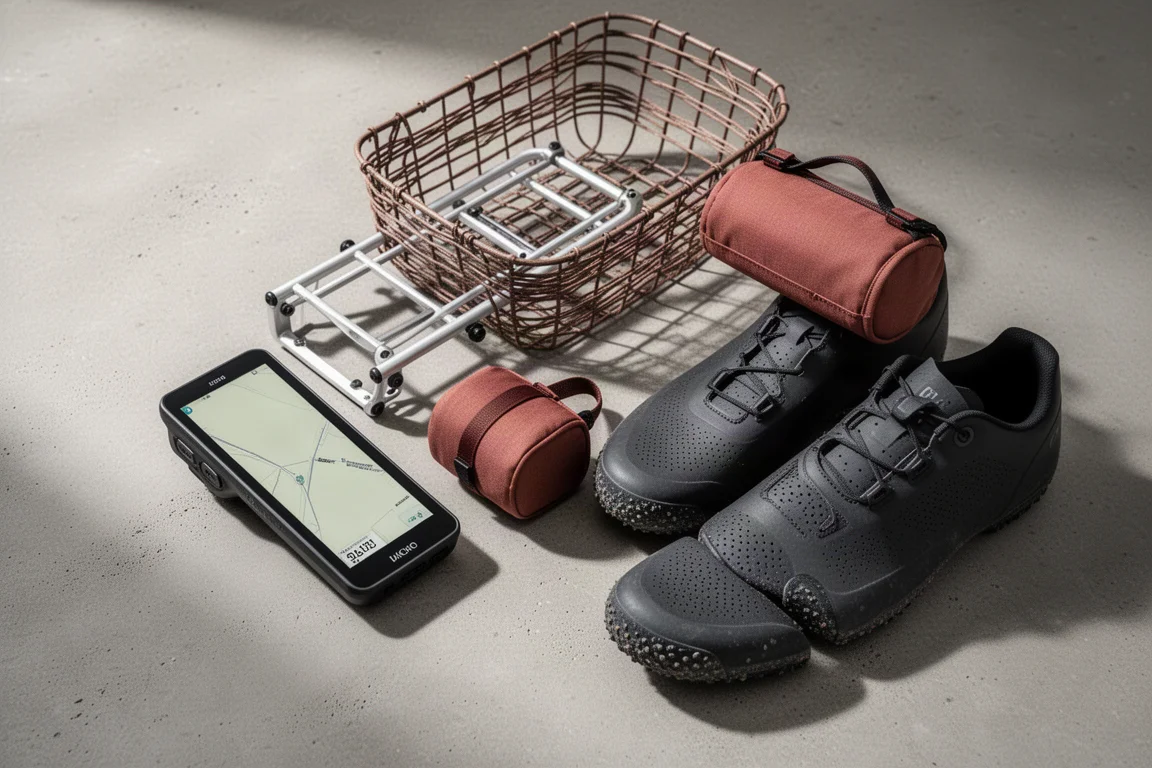
Bikepacking kit has a way of sorting itself out. Anything that rattles, leaks, or needs charging every single night quietly drops off the packing list after a few trips, while the pieces that keep working tend to stay. That is roughly how the selection below came together: a mix of navigation, lighting, luggage, clothing, footwear and sleep systems that has been used on real rides, from overnighters to multi-week routes.
The range here covers a lot of ground. There is a solar-assisted bike computer for riders who go days between power sockets, a front rack and basket combination for simple load carrying, a pair of lights designed around long hours in the saddle, and a sleep setup built for cold and wet nights. Two bags from the same adventure collection, a waterproof cage pack, a gravel shoe and a race bike that has been repurposed for touring round it out.
How These Bikepacking Picks Were Chosen
Four things separate useful bikepacking gear from gear that looks the part online. Durability matters most, because kit gets strapped to frames, dropped on rocks and left out in weather. Weather resistance comes next: waterproof fabrics, sealed seams and light housings that survive a downpour or a puddle crossing. Packed size and weight are close behind, since every extra litre competes with food and water.
Ease of use is the quiet one. If a bag is awkward to open with cold hands, or a computer is fiddly to configure, that friction shows up every day of a trip. Value matters too, but it is measured against how many seasons a piece will realistically last rather than the sticker price alone.
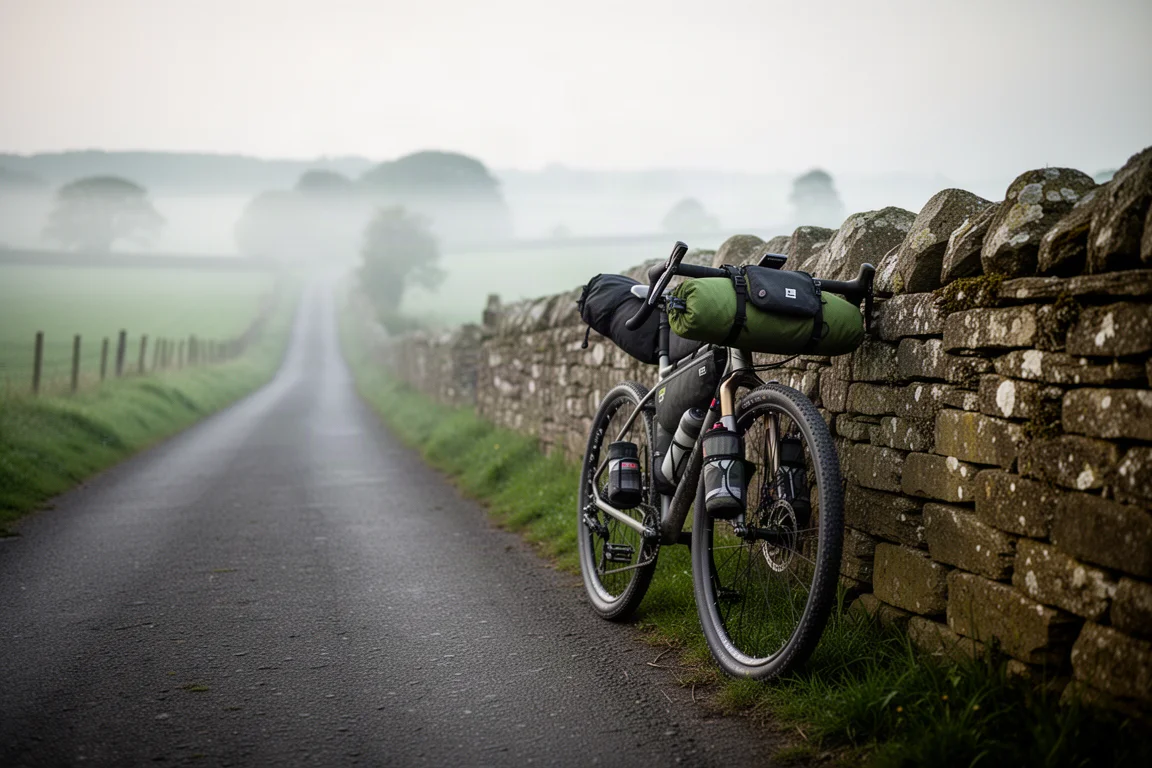
Within those criteria, the items below sit in different price brackets and suit different kinds of trips. Some are cheap and simple by design, others carry a premium for materials or electronics.
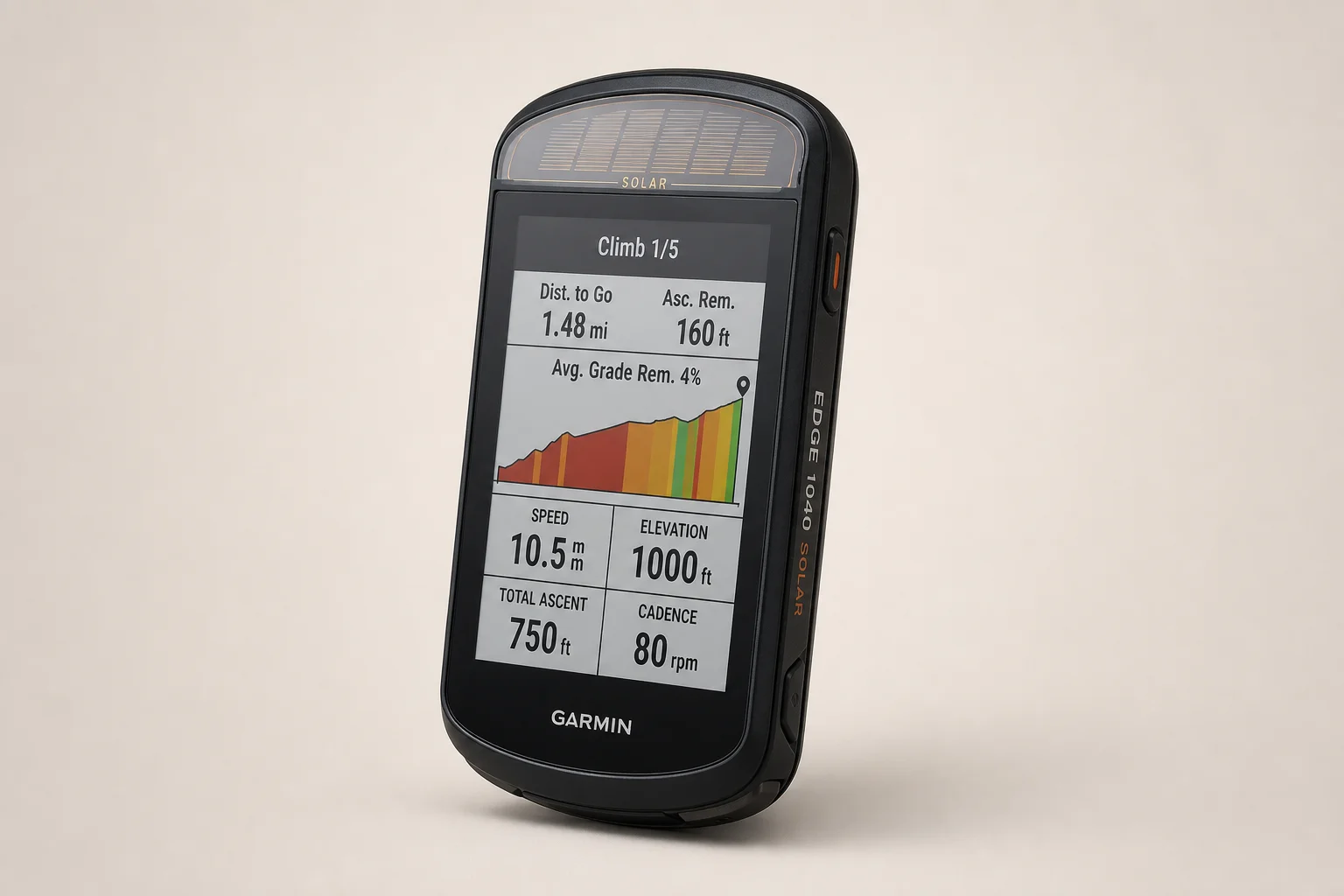
Garmin Edge 1040 Solar: Solar Charging for Long Days
The headline claim on the Edge 1040 Solar is a battery life of up to 100 hours, made possible by a solar charging panel built into the screen. It is the first time this has appeared on one of the brand’s bike computers, and the appeal for bikepackers is obvious: more days between charges when there is no reliable power supply.
Navigation gets a boost from multi-GNSS connectivity, which combines the three main satellite systems for faster position pickup and more consistent tracking in busy urban streets or dense woodland. The unit also adds a cycling ability feature that suggests how to approach a chosen event or ride, and it keeps the 3.5-inch screen and general shape of the outgoing models.
Two practical changes stand out. Settings, the home page and data screens can now be customised through the companion app rather than only on the device, and the micro-USB port has been replaced by USB-C. A version without the solar panel is also offered for riders who do not need the extra charging. Expect around 630 pounds or 750 dollars for the solar model, and 520 pounds or 600 dollars for the standard one.
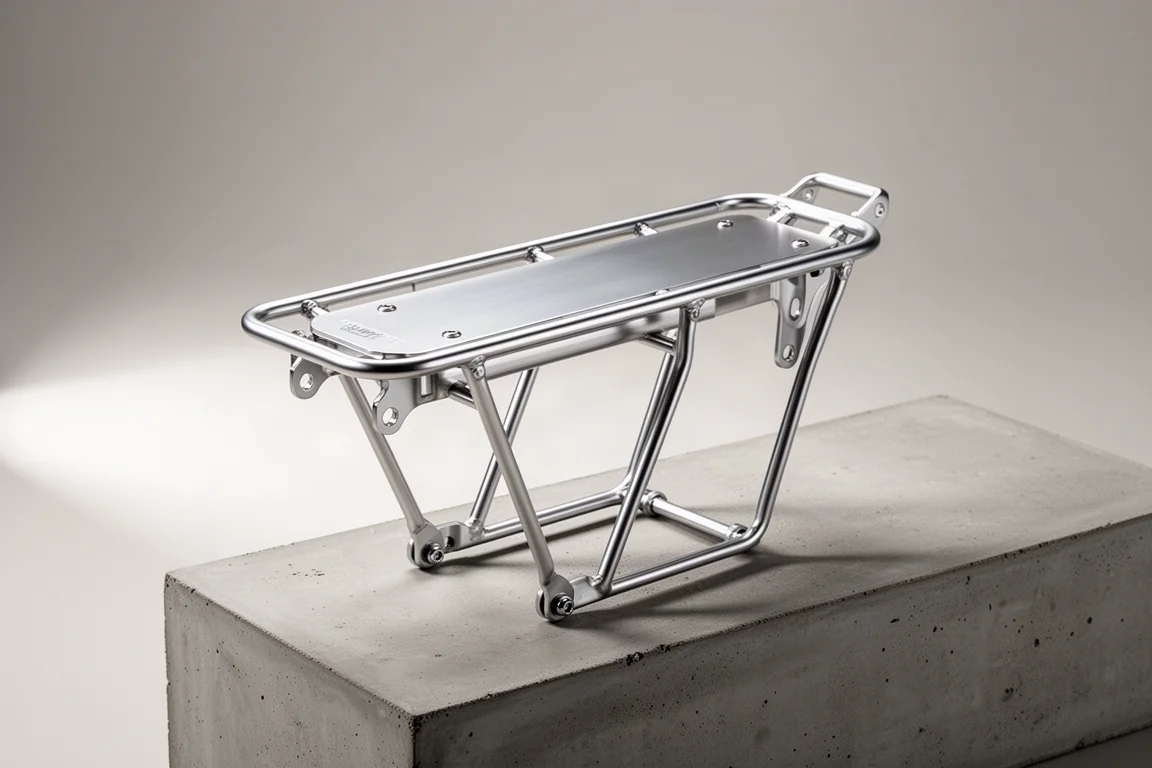
Pelago Front Rack: A Stable Platform for Basket Packing
This aluminium front rack from a Finnish brand is a conventional design done well, with a medium-sized platform that makes it easy to bolt a basket or a bag on top. Build quality is the standout, and each rack ships with a full complement of hardware so it can be fitted to a wide range of bikes, including direct mounting to a 9 mm front axle.
For riders who want to carry weight up front without committing to a dedicated bikepacking rack system, this is a straightforward option. Paired with a sturdy basket and secured properly, it has stayed rattle-free over hundreds of kilometres of mixed surfaces.
Wald 137 Basket: The Cheapest Way to Carry More
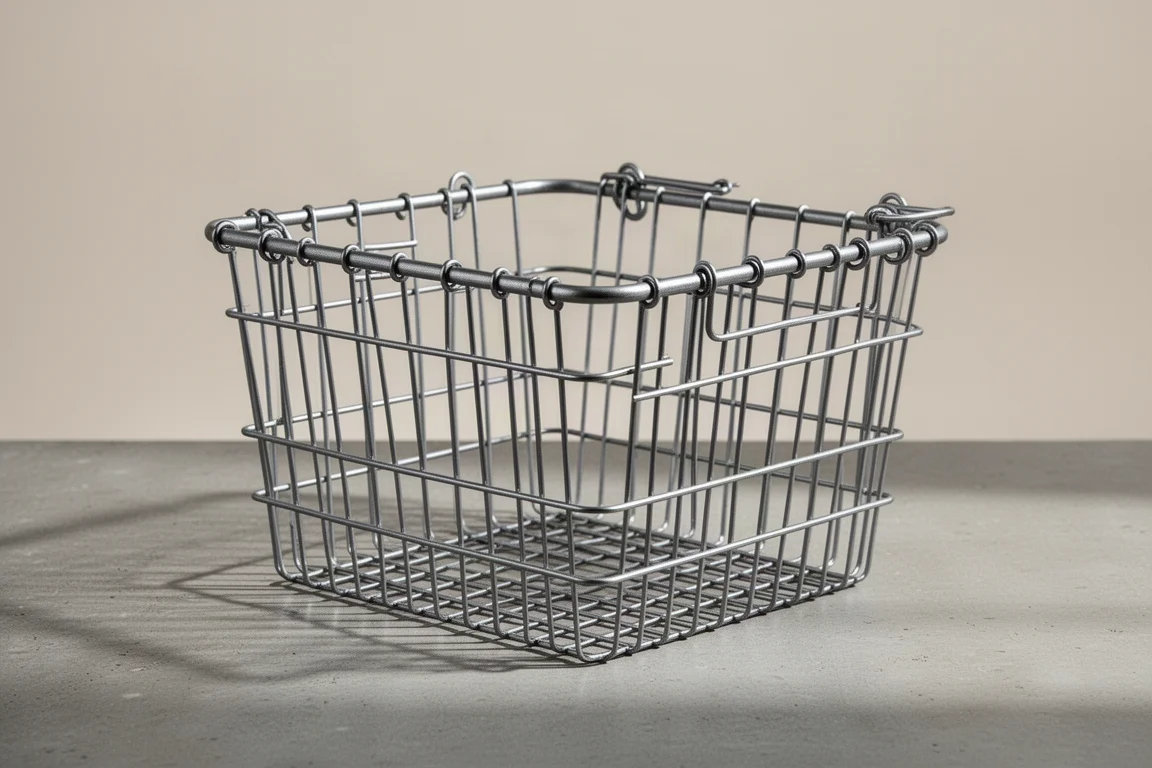
Basket packing is not a compromise, it is a genuinely practical way to get started with carrying luggage on a bike. The classic Wald 137 basket sits neatly on a front rack platform and can be fixed in place with thick zip ties, which has proven solid over long distances with no rattles developing.
The appeal is accessibility. A basket costs very little compared with a full set of bikepacking bags, works on an older mountain bike or a casual touring build, and lets you drop a bag or a jacket in without any straps or buckles. If cost has been the barrier to trying loaded riding, this is the simplest way past it.
Exposure Boost Lights: Built for Long, Dark Rides
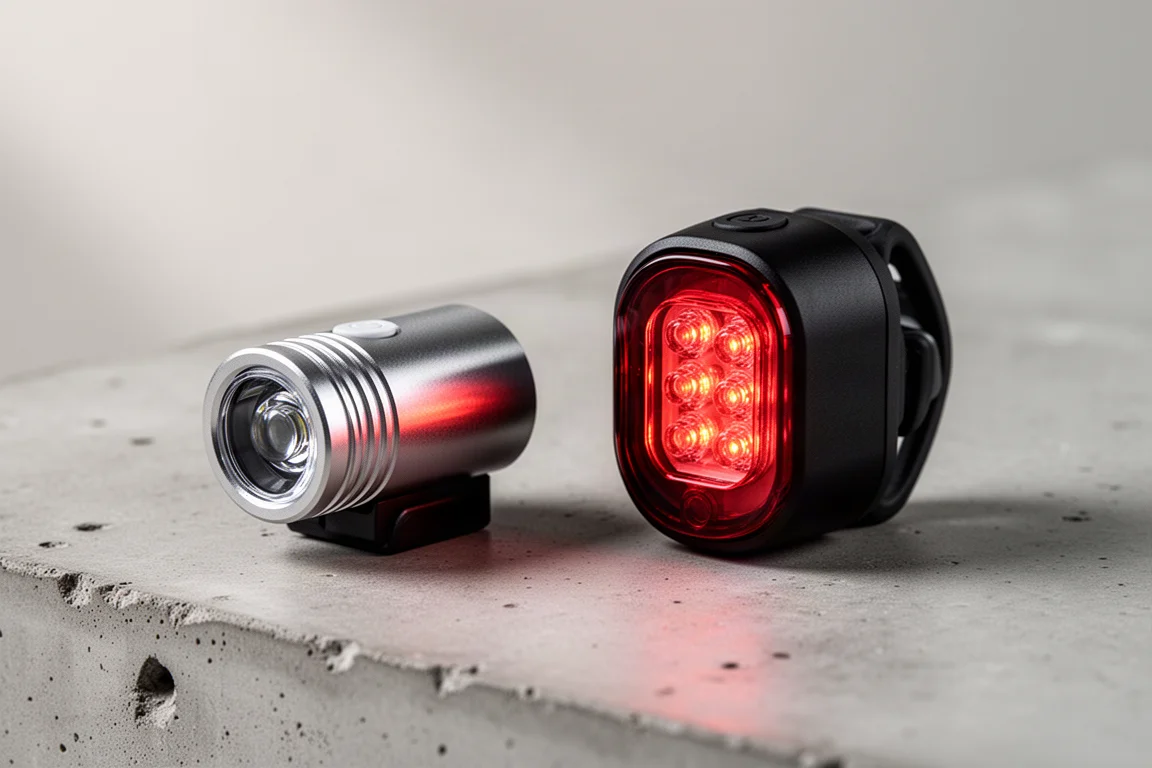
The Boost and Boost R are a new light set built on the much-loved Trace and Trace R models, redesigned for better battery life and higher output. The rear unit delivers up to 48 hours of burn time in its lower power mode, roughly double the Trace, while the front steps up to 325 lumens. That is right at the edge of being able to see by at slower speeds, which makes the front light a useful backup if a ride runs long.
Both lights use a durable aluminium body with an IP6 waterproof rating, so a tumble onto the road or through a puddle should not be the end of them. The front light uses a small rubber cover over the lens to keep the beam from dazzling the rider, and offers up to 24 hours of burn time in its lowest mode, which is plenty for daytime use on a multi-day trip.
The rear light carries the more interesting technology. React mode brightens the light under braking and as you move in and out of shade, while Peloton mode detects a following rider’s front light and dims to avoid dazzling them before flaring back up for visibility. A range of brackets covers aero and D-shaped seatposts, and the front can be mounted on a GoPro-style bracket or TT bar extensions.
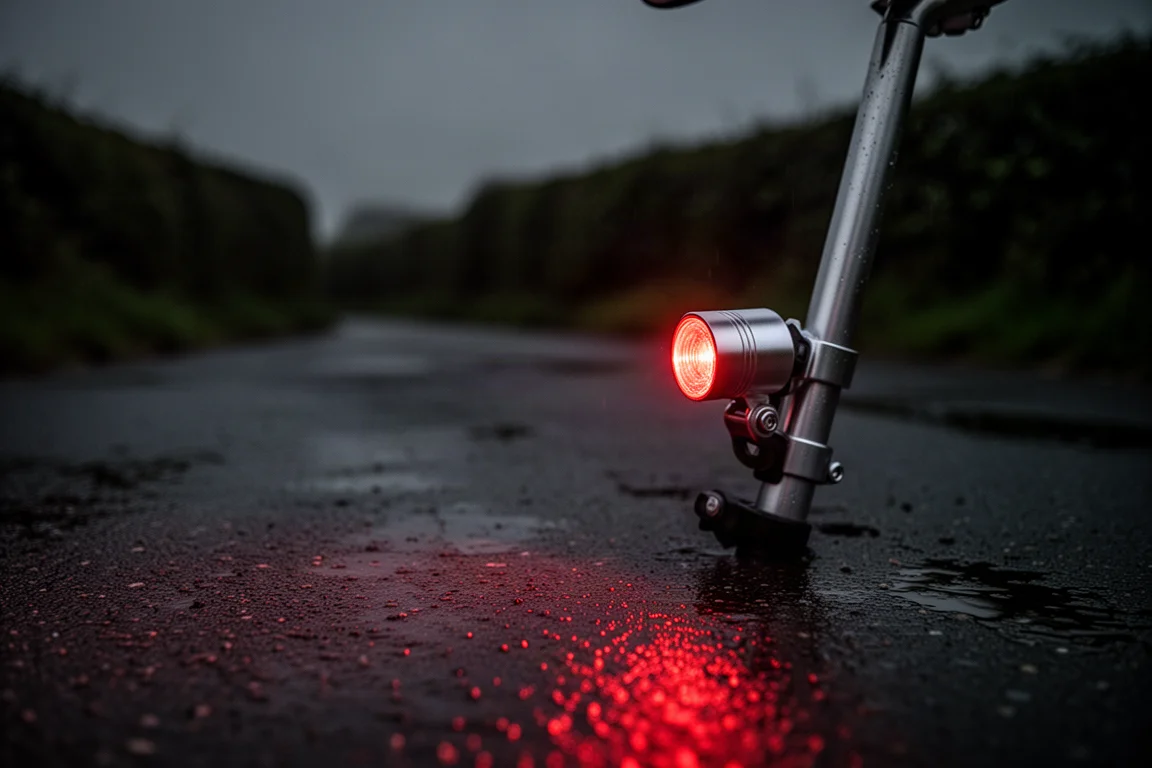
For bikepacking specifically, the combination of long burn times and a rugged housing makes more sense than outright peak brightness, since most of the riding happens at a steady pace rather than in short bursts.
Rapha Explore Lightweight Jacket: Wind Protection That Packs Small
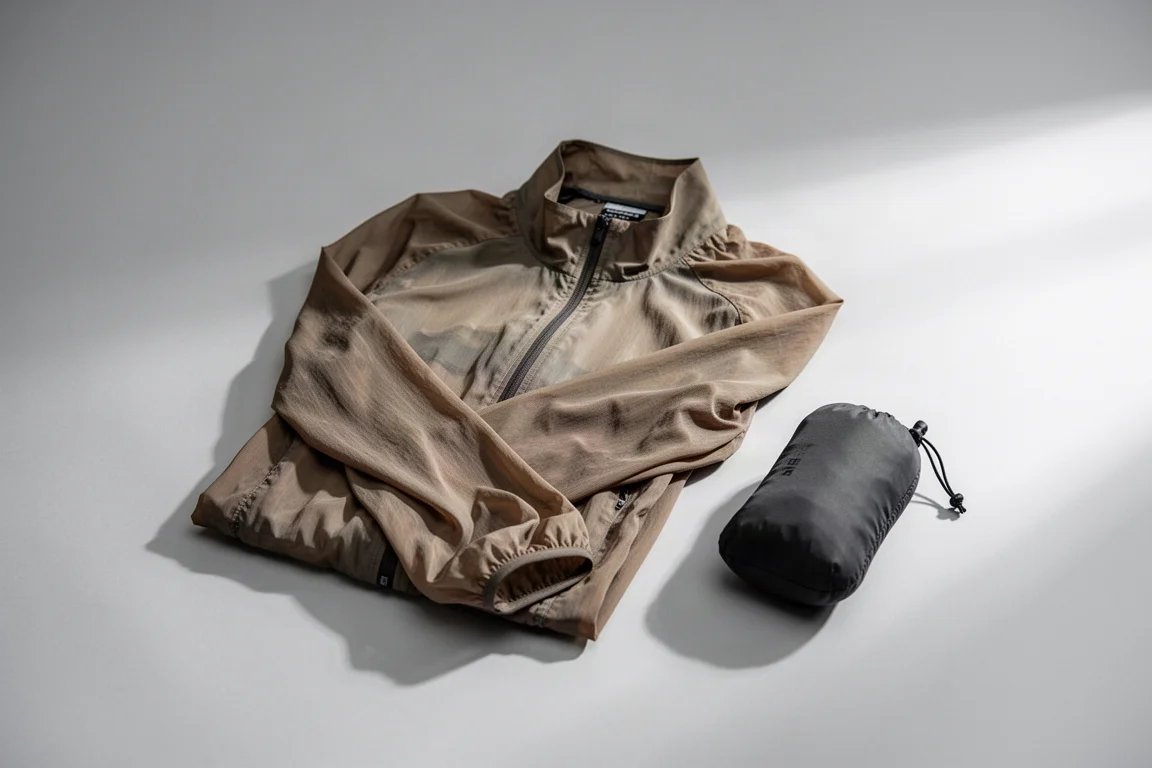
Part of the Explore collection, this jacket uses a very light fabric at just 25 grams per square metre, which is intended to improve breathability and temperature control on changing rides. A durable water repellent finish handles light rain, but the main job is blocking wind chill, which is often what makes a descent or an early start uncomfortable.
It packs into its own small side pocket, so it takes up almost nothing in a bar bag or jersey pocket, and a small loop at the top lets it hang to dry. The details include a high collar, reflective logos and a dropped rear hem for extra coverage. The colourways are drawn from the tones and topography of the Colorado Trail rather than being a plain block pattern.
At 150 dollars or 110 pounds it is not cheap, but for riders who dislike the feel of arm warmers, a jacket that covers the same ground while weighing almost nothing is a reasonable trade.
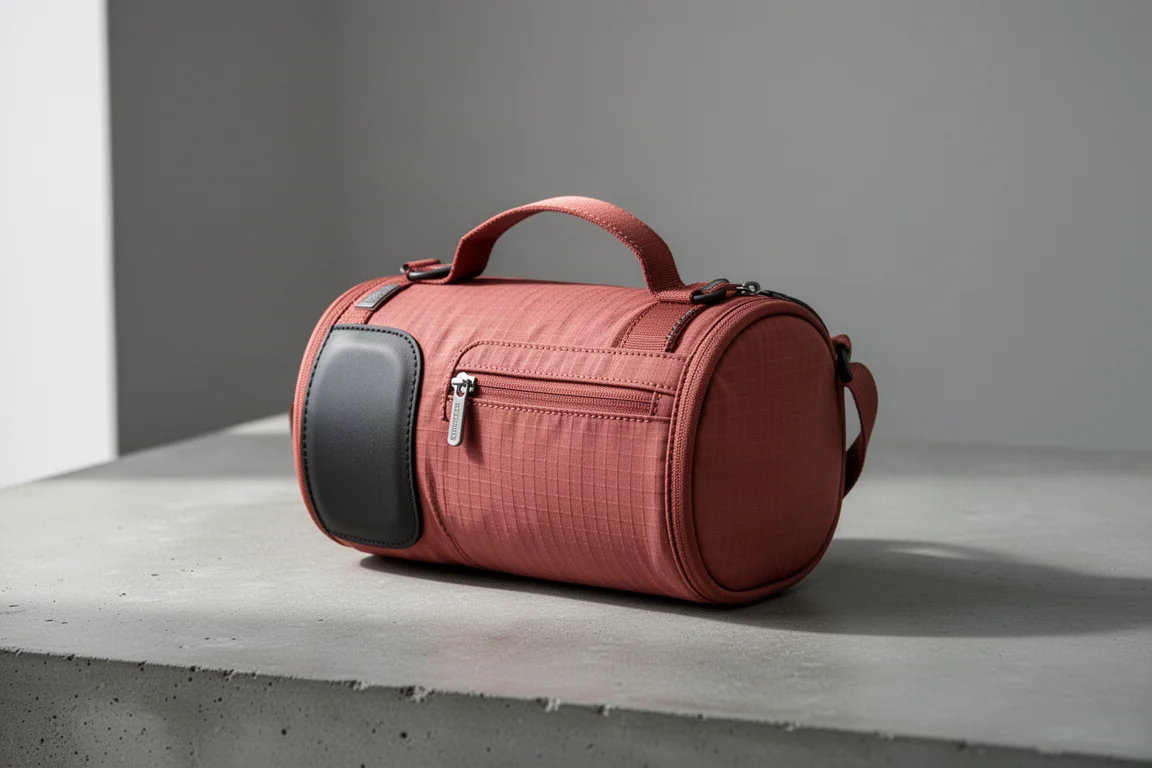
Rapha Explore Bar Bag: Snacks Within Reach
A bar bag is the most convenient piece of luggage on a bikepacking setup, because it holds the things you want mid-ride without stopping. This one offers 2.4 litres of capacity, enough for waterproof snacks, spares and a few tools, and the main body is made from a recycled ripstop base fabric for durability.
Two details stand out. The rear face uses a protective Hypalon panel to keep the head tube and cables from rubbing, and there is an additional front pocket that makes it far easier to reach small items without unpacking the main compartment. A PU coating inside and taped seams suggest it will cope with wet weather, which matters for anything carrying food and electronics.
The built-in strap lets it be worn around the waist or shoulder if you want to carry it off the bike, and it comes in a wide range of colours. It sells for around 80 dollars or 60 pounds.
Tailfin Cage Pack: Waterproof Storage for Anything Cages
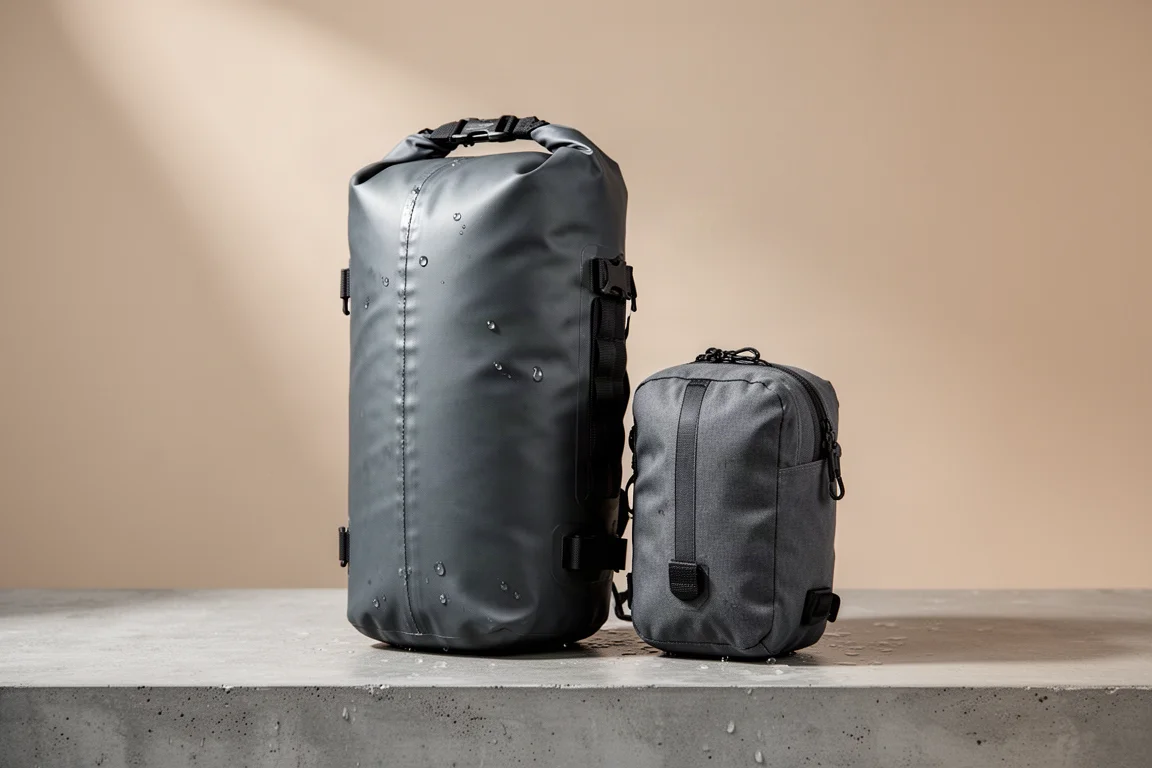
These packs are designed to strap onto anything cages, which makes them a natural fit for fork legs and other mounting points that would otherwise go unused. They come in 1.7, 3 and 5 litre sizes, priced between roughly 30 and 45 pounds, and they are fully waterproof.
Small tabs on the outside let you attach a light or an extra strap, and the mounting system uses clips that the cargo straps loop through and hook under, which stops the pack from sliding down the cage. Weight is low and setup is quick. After heavy use they show some wear, which is fair for a soft bag that lives on the outside of a bike.
Five Ten Trailcross CL: Grip On and Off the Bike
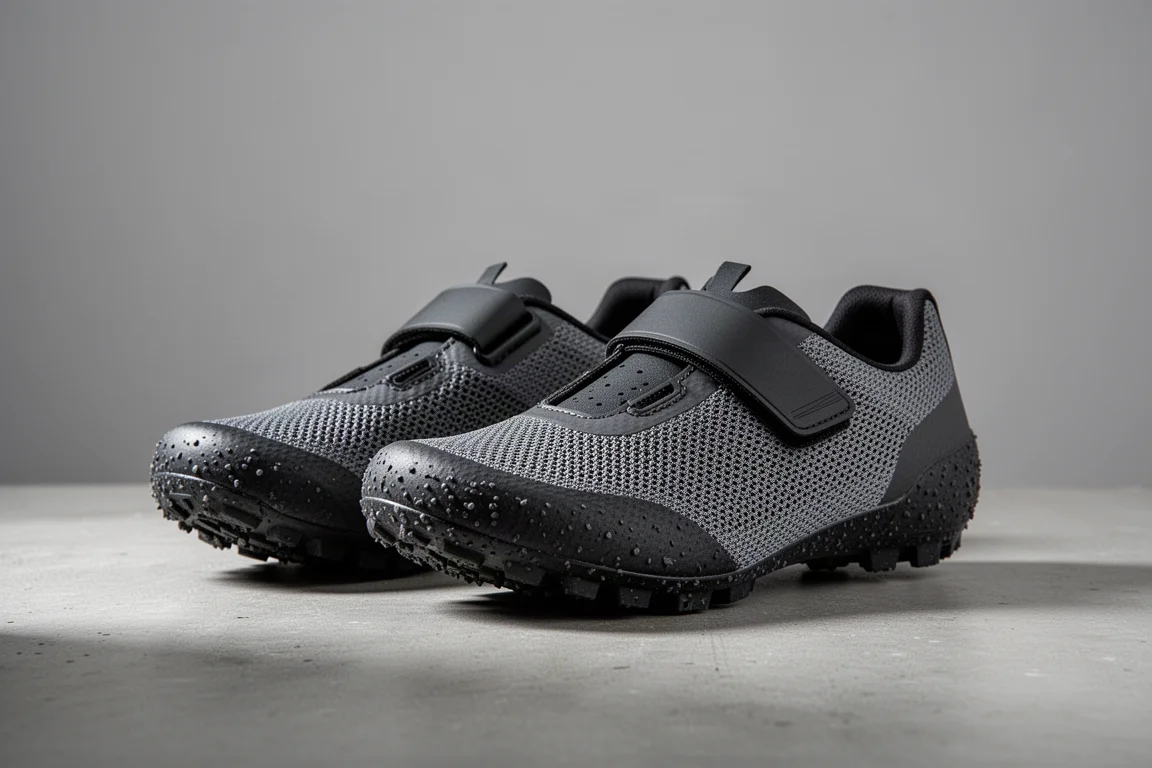
Designed for gravel riding and bikepacking, the Trailcross CL is built around the reality that loaded trips involve a lot of time off the bike, pushing, hiking and scrambling. The upper is very light, lets in plenty of air on hot days and dries quickly once wet.
The closure strap at the top works with the shaped heel cup to hold the foot firmly, so heel lift is minimal whether pedalling or walking. The Stealth rubber sole grips rocks and roots convincingly, and the tread pattern clears well on loose ground. The cleat bed is broad and open, with chamfers front and rear that help guide the foot in when clipping back in after a hike.
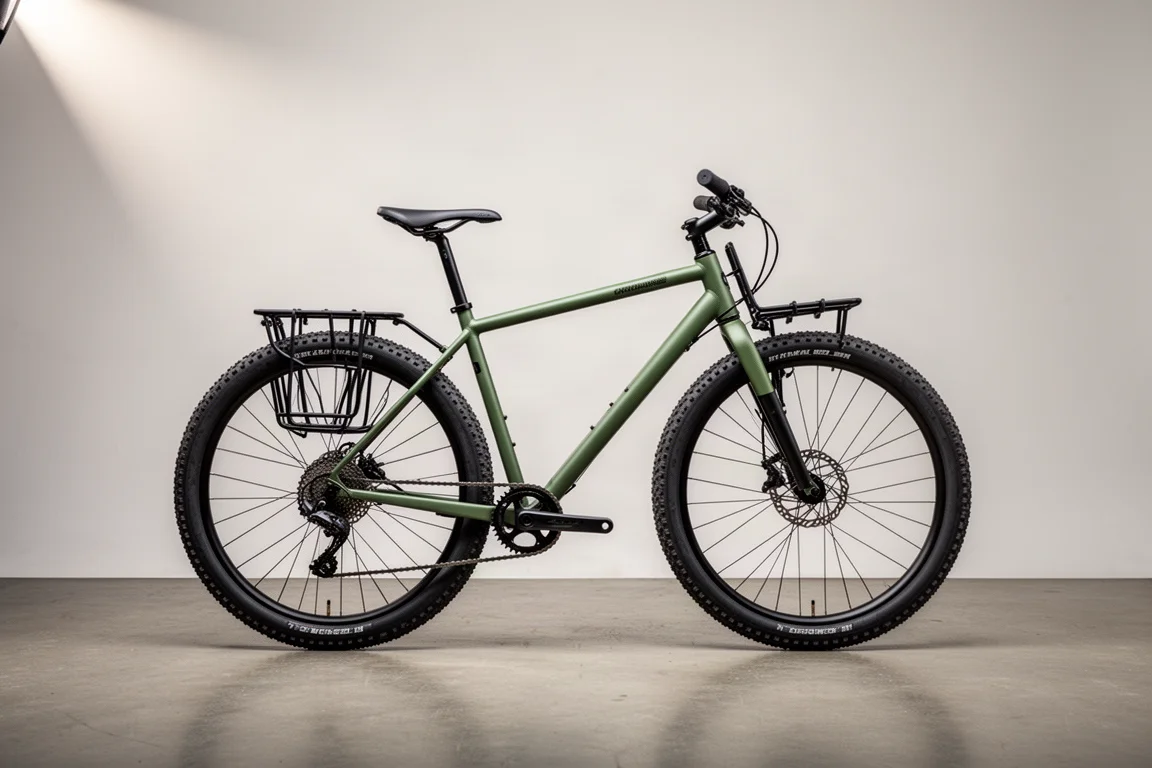
Lauf True Grit: A Gravel Race Bike Turned Tourer
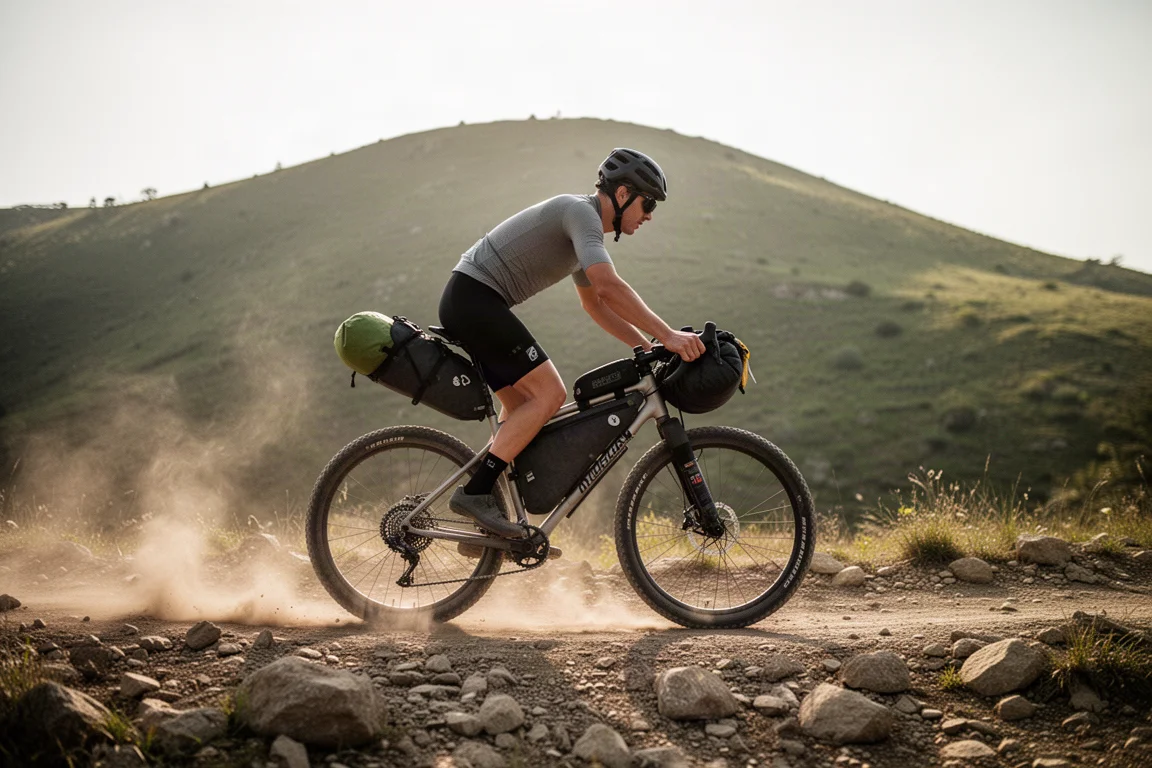
A gravel race bike may not be the obvious starting point for a loaded trip, but with a rigid fork fitted in place of the original suspension fork, the True Grit takes anything cages on the fork legs and becomes a capable touring platform. The setup has covered around 2,500 kilometres and roughly 35,000 metres of climbing on a long European route.
Removing the suspension fork does introduce more trail chatter through the front end, which is why an elastomer suspension stem was added. The elastomers sit inside the stem and let it pivot slightly around its bolt, taking the sting out of rocky, rooty drops and rough surfaces. Travel is only about 20 mm, so there is a little bob when pulling hard on the bars, but very little movement overall and it rarely reaches the end of its travel.
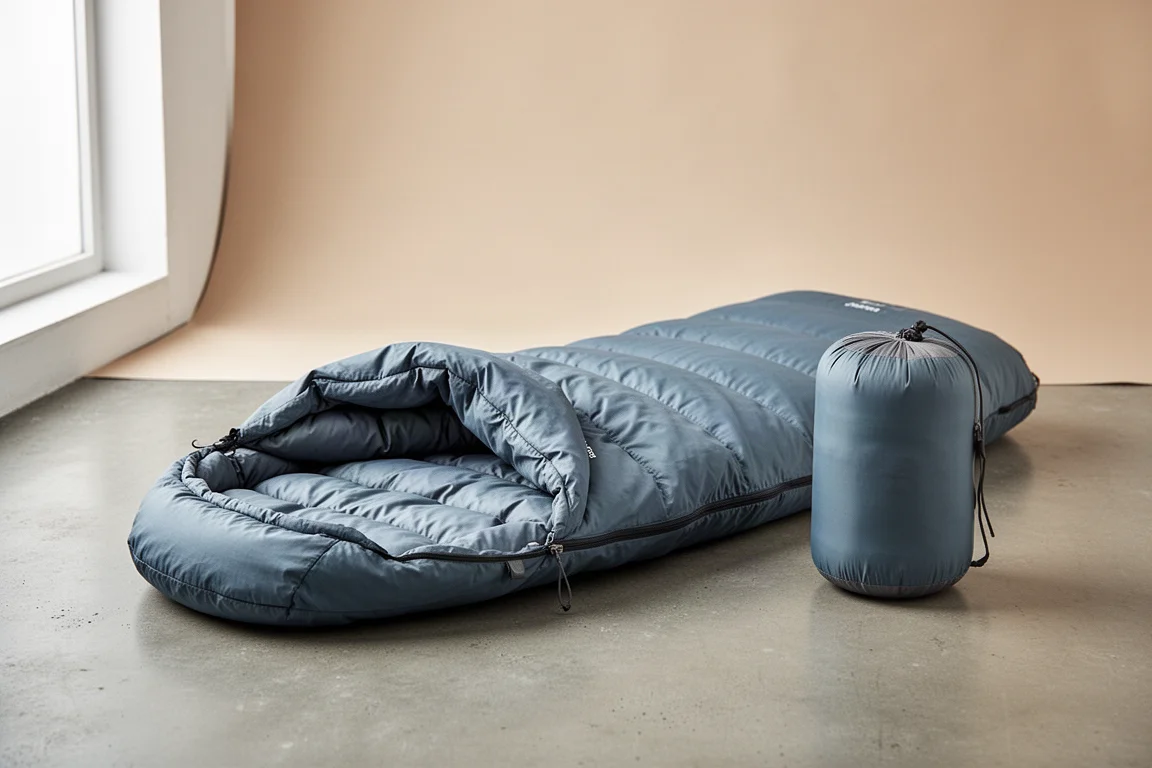
Rab Solar Eco Sleeping Bag: Recycled Warmth for Cold Nights
Weighing 900 grams and packing down to about 35 by 20 centimetres, the Solar Eco is aimed at riders who want warmth without a bulky load. Its comfort range runs from a lower limit of minus 2 degrees Celsius to an upper limit of 15 degrees Celsius, which covers most three-season bikepacking use.
The insulation is a lightweight, fast-drying synthetic called Stratus, and the outer uses a water-resistant, windproof Atmos fabric. Together they suit damp mountain conditions and changeable summer weather. The whole Solar range is made from recycled fabrics as part of the brand’s move towards net zero, which is a meaningful point for anyone trying to reduce the footprint of their kit.
In use it has been notably warm for its weight, including a cold night around 3 degrees Celsius in a hammock, and it should remain a solid choice for cooler trips.
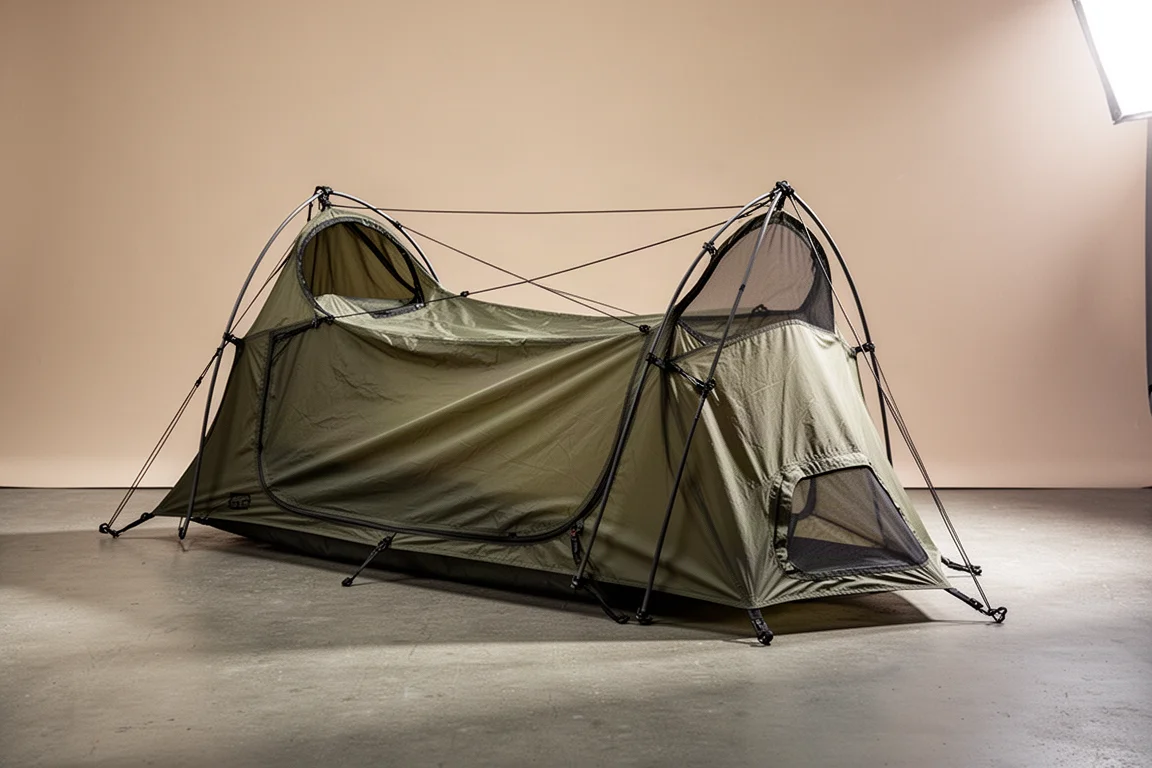
Outkin Elan Bivy: Lightweight Shelter for Multi-Day Trips
For multi-day rides where a full tent is too much to carry, the Elan offers a lightweight, packable waterproof shelter. Unlike a simple bivy, it uses a small hooped section around the head, so you can close yourself in without feeling boxed in and without taking rain, snow or wind directly on the face.
The cross pole design is freestanding, quick to pitch and stable in strong wind or snowfall. A mesh panel at the back provides airflow while keeping midges out, and the nylon is claimed to be as waterproof as a tent fabric. There is enough room inside for a sleeping bag and a mat.
At 900 grams it is roughly 400 grams heavier than a simpler bivy, which is reasonable given the poles and pegs, and it packs to 39 by 11 centimetres, small enough to fit in a handlebar bag. At 110 pounds it is an affordable route into lightweight shelter for something longer than a single night.
Buying Advice: Matching Kit to Your Trip
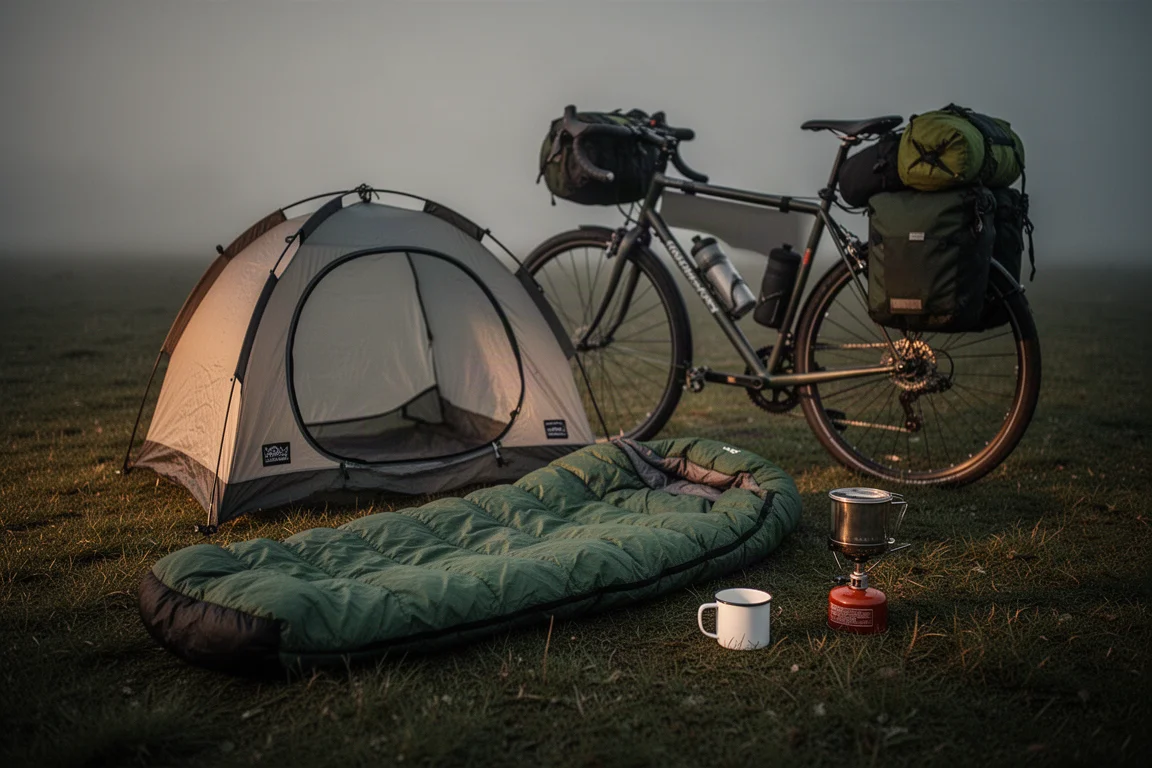
The right setup depends far more on the trip than on the spec sheet. For overnighters and shorter routes, a basket packing setup like the Pelago rack and Wald basket is cheap, simple and easy to live with, while a bar bag covers the items you want within reach. Riders heading out for multiple days should prioritise weather protection and packed size in their luggage choices.
Lighting and navigation deserve the most scrutiny for longer trips, because both are hard to improvise on the road. A computer with multi-GNSS tracking and solar assistance reduces charging anxiety, and lights with long burn times and rugged housings remove another daily worry. For sleep systems, match the temperature rating to the season you actually ride in rather than the one you hope for, and decide early whether you want the space of a hooped bivy or the minimal weight of a plain one.
Footwear and clothing are the easiest places to underestimate a trip. Shoes that grip well off the bike and dry quickly make hike-a-bike sections far more pleasant, and a packable windproof layer earns its place on almost every ride.
Conclusion
None of this kit is essential in isolation, but together it covers the problems that come up most often on loaded rides: carrying gear simply, staying visible and charged, sleeping warm and dry, and staying comfortable when the riding turns into walking. Start with the pieces that match the trips you actually take, and let the rest of the list wait until a ride shows you where the gap is.
Further reading
Related Reviews
Bikepacking Gear
11 Bikepacking Essentials for Long-Distance Cycling
Eleven bikepacking essentials for long-distance cycling, from a steel gravel frame and a two-person tent to helmet lights, packable gloves, and a frame bag that puts weight in the right place.
Bikepacking Gear
Best Bikepacking Gear: 10 Field-Tested Picks for Long-Distance Rides
Ten bikepacking products that earn their place on long rides, from a steel gravel frame to packable gloves, with the strengths and trade-offs worth knowing.
Bikepacking Gear
Best Budget Bikepacking Essentials: Three Cheap Items That Protect Expensive Kit
Three low-cost bikepacking picks, plus the cheap hardware store items that keep a touring kit running without a big spend.