Backpacking Packs
Waymark Lite Review: What a Backpacking Pack Should Be
A roughly 2.5 lb, 50-liter roll-top pack that trades excess pockets for a simple layout, real hip-based weight transfer, and load lifters that earn their keep.
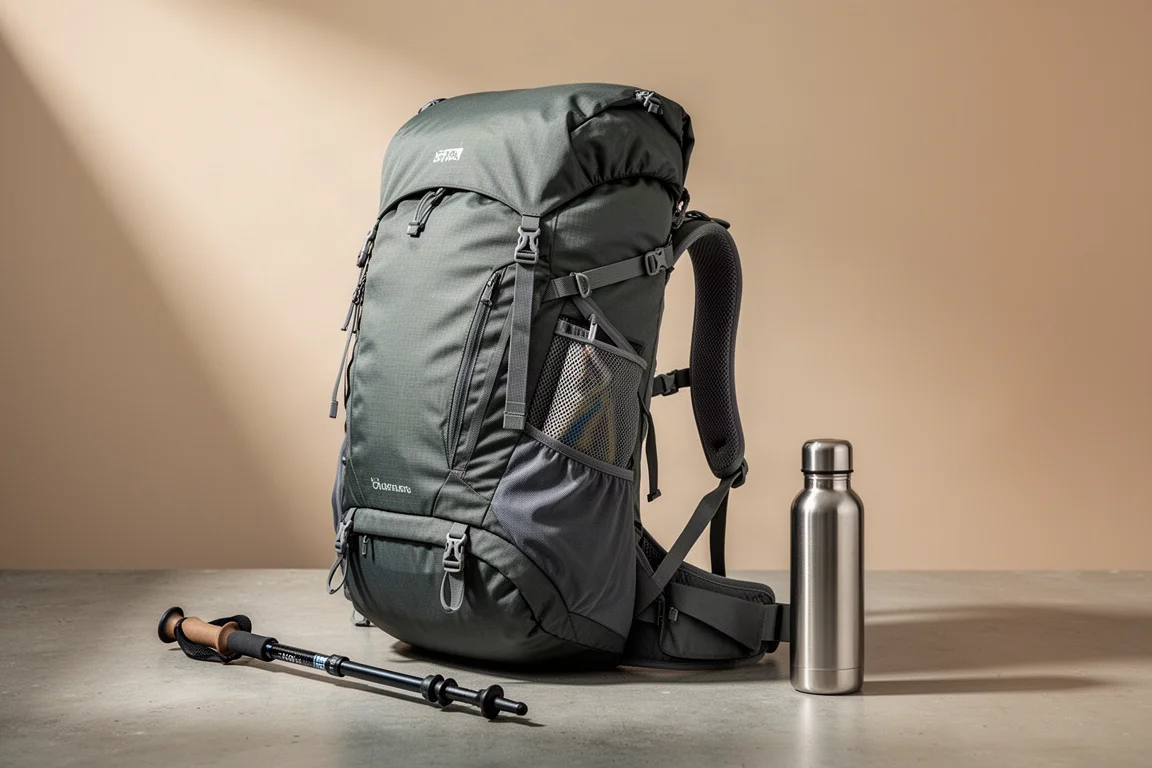
Introduction
They call it backpacking for a reason. Without a pack, you are just camping. And yet the market offers thousands of choices: large, small, traditional, ultralight, fully featured, minimalist. The Waymark Lite sits deliberately in the middle of that spread, and after months of on-and-off use it makes a clear argument for what a backpacking pack should actually be.
There is no shortage of packs covered in small pockets, zippers, and gear loops. There is also no shortage of bare-bones packs. The problem with the fully featured end of the spectrum is simple: you probably will not use most of it. You might use one or two pockets, but the gear loops, clips, and inner compartments add weight that you carry whether you want to or not. You cannot decide to leave an extra pocket at home just because you will not use it.
The Waymark Lite avoids both extremes. It is not so light that it feels flimsy, and it is not so loaded with extras that you pay for them in weight on every climb.
Who This Pack Is For
The Lite suits backpackers who already have their kit dialed in and want a pack that carries it without fuss. At roughly 2.5 lb, it sits just above the unofficial 2 lb threshold that many hikers use to define an ultralight pack. That extra weight is not an oversight. Waymark made specific design decisions knowing they would add grams, and the result is a pack that could have been lighter but was instead built to keep the functionality that matters on trail.
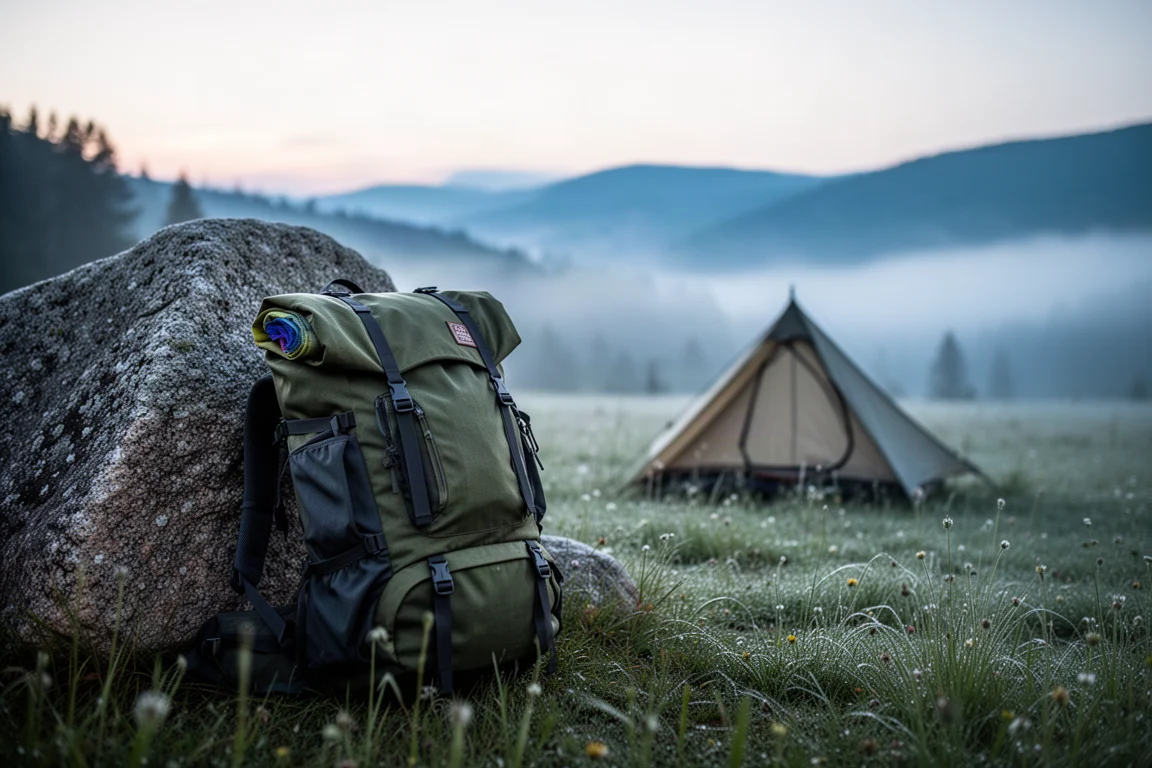
A 50-liter roll-top main compartment is the core of the design. For a lot of hikers that volume is the sweet spot, with enough room for a full three-season kit plus camera gear. If 50 liters is more than you need, Waymark also offers the Through at 40 liters. Hikers who are just starting out often do better with a larger pack, such as a 65-liter model, because beginner gear tends to be bulkier. It is one reason the usual advice is to buy everything else before you buy your pack, so you know it will all fit.
Main Strengths
A Simple Layout That Covers the Essentials
A large main compartment, side pockets for water bottles, and a big mesh stash pocket cover nearly everything a pack genuinely needs.
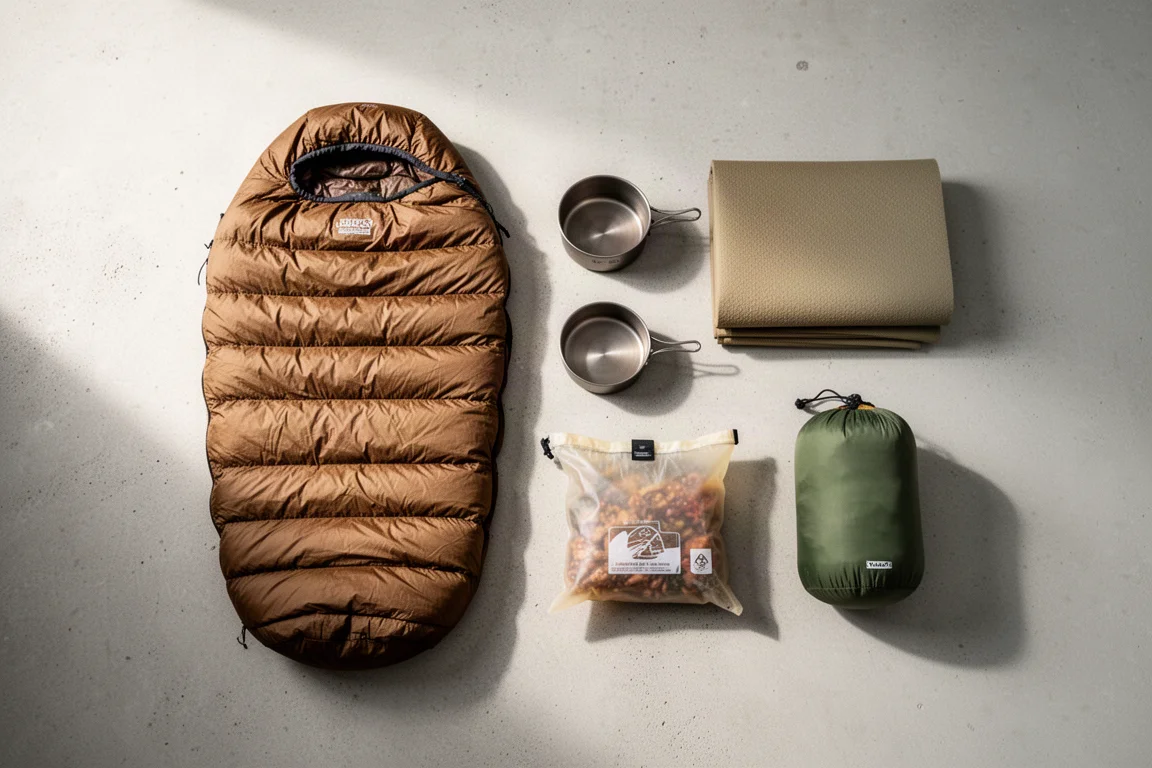
The stash pocket is the feature that earns its place every single day. It swallows rain gear, sandals, a first aid kit, or the extra layer you just took off, all without opening the main compartment. The main compartment itself is a 50-liter roll-top with a compression strap to cinch the load down, and it takes a full kit comfortably: quilt, tent, and sleeping pad at the bottom, cook set and fuel above that, then clothing and food bags on top.
The right side pocket is cut so you can reach a bottle without contorting your arm, which matters more than it sounds on a long day. There are loops for trekking poles or an ice axe, side compression straps, and additional lash points for strapping on whatever else you are carrying. The top compression strap is long enough to accommodate a bear can when regulations require one. Waymark also allows customization with hip belt pockets or a chest water bottle pocket, so if you genuinely want extra zippered storage, you can add it rather than carry it by default.
Weight Transfer and Load Lifters
This is the line that separates a backpacking pack from a school backpack. A proper hip belt carries at least 80 percent of the load, and the Waymark Lite is built so the stays of the internal frame connect directly to both the belt and the load lifters. That lets you shift weight onto your hips and then cinch the pack tight against your back using the upper straps.
Load lifters are sometimes called magic straps because the difference they make is that large. A pack is most comfortable when the weight sits close to your back. Loading technique helps, but any pack will tend to pull away from your back as you move, which is what causes shoulder and lower back pain. Load lifters pull the load back in, stabilize it, and lift a little of it off your shoulders. Plenty of packs leave them out. This one does not.
Small-Batch Manufacturing and Value
Waymark is a small company that makes its gear in Utah. Whether that matters is a personal call, but it is part of the case for this pack, and it comes at a price that is easier to justify than it first appears. At $280, the Lite sounds expensive until you compare it with the wider market, where it is easy to spend well over $350 on a pack and genuinely hard to find a decent one for less than $200. The Lite lands in a practical middle ground.

There is also a quieter value argument. Because the Lite keeps a simple, durable layout rather than chasing the lowest possible weight, it is the kind of pack that stays in service across many seasons instead of being replaced when a lightweight panel wears through.
Things to Consider Before Buying
The Lite was deliberately designed with a weight penalty to preserve function, so it is not the right choice if your only priority is the absolute lightest pack on the market. There are lighter options, and they make their own trade-offs.
Organization is another consideration. If you like built-in pockets separating every category of gear, the Lite expects you to supply that structure yourself with stuff sacks or organization pods. The upside is that you can leave that organization at home when you do not want it, which is exactly the point.
The one upgrade that would make this pack better, in practical terms, is a chest harness option, which is not currently part of the design. And volume is worth a hard look before you commit: 50 liters is generous for a compact kit, so if your gear packs small, the 40-liter Waymark Through may be the better fit.
Buying Advice
Choose the Lite if you want a pack that carries weight on your hips, keeps a clean and uncluttered profile, and does not make you pay in grams for storage you will never use. The combination of an internal frame tied to the hip belt and load lifters is the detail that separates it from cheaper, simpler packs, and it is the reason the Lite stays comfortable deep into a long day.

If you are still assembling your kit, buy the pack last. Load everything else into a borrowed or borrowed-style pack, see how much space it actually takes, and then decide between 40 and 50 liters. If your gear is already dialed in and you know your volume, the Lite is a straightforward choice at a price that undercuts much of the premium field.
Conclusion
The Waymark Lite is not so light that it feels flimsy, and not so overbuilt that you carry features you never touch. It is a pack with a large roll-top main compartment, a genuinely useful mesh stash pocket, reachable side pockets, a frame that pushes weight onto your hips, and load lifters that hold the load against your back. Add small-batch domestic manufacturing and a $280 price that sits below much of the premium market, and it is a convincing answer to the question of what a backpacking pack should be.
Product link
View more details for Waymark Lite
This product is mentioned in the review. Check the specifications, options, and compatibility before buying.
View more details for Waymark LiteFurther reading
Related Reviews
Backpacking Packs
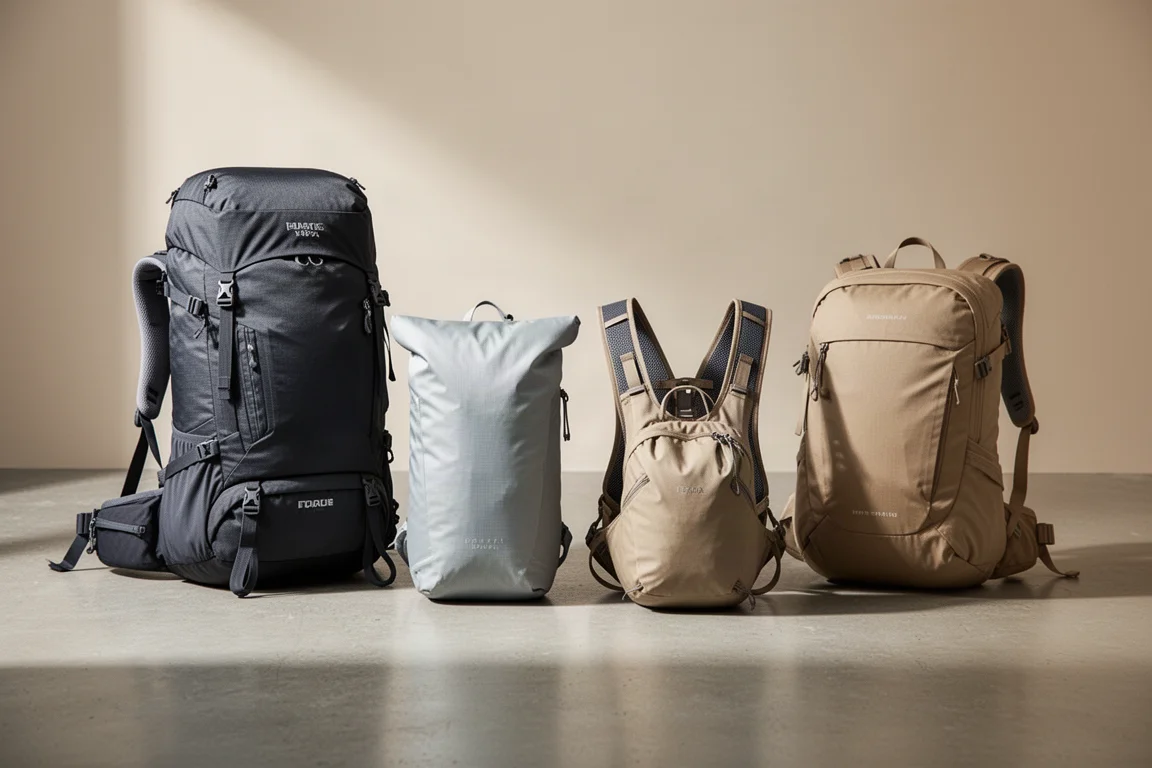
Backpacking Pack Types Compared: Traditional, Ultralight, Frameless, and Hybrid
Four pack categories, four representative packs, and a practical way to decide which kind of backpacking pack matches the weight of your gear.
Backpacking Packs
Best Backpacking Packs 2026: Six Picks for Every Style of Trip
Six backpacking packs that earned their place by weight class and purpose, with the real strengths and trade-offs to weigh before you buy.
Backpacking Packs
Big Agnes Prospector 50 Review: A Hybrid Pack That Sits Between Two Worlds
A 50-liter backpacking pack that mixes ultralight features with traditional padding and panel access. Here is who it suits and where it falls short.