Indoor Cycling
Wahoo KICKR V6 Review: A Modest Upgrade With One Genuinely Important Change
The new KICKR keeps the ride feel you know and adds Wi-Fi, automatic firmware updates, Easy Erg ramps, and a built-in odometer, all at a higher price.
Introduction
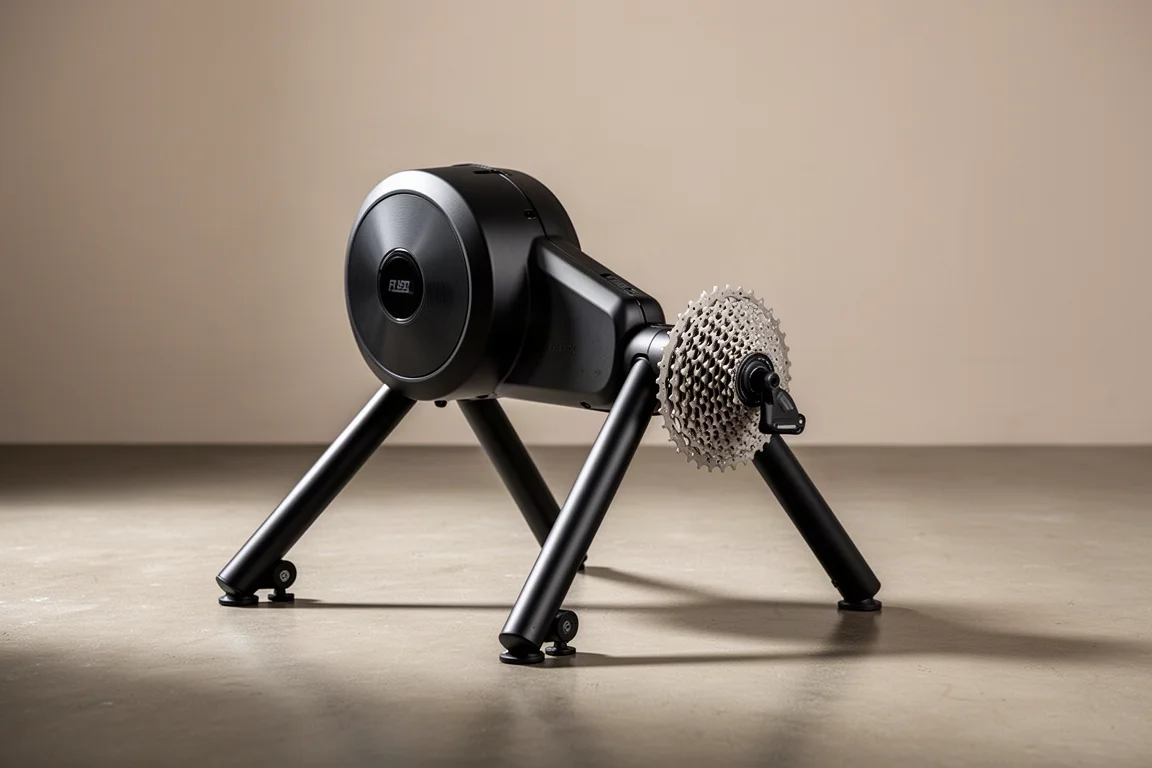
The new Wahoo KICKR V6 lands as a modest, deliberate update rather than a ground-up redesign. If you have followed recent KICKR versions, the pattern will feel familiar: small internal changes that keep the platform just ahead of the competition without changing the fundamentals. That is exactly what happens here, but one of the additions, Wi-Fi, may matter more over the long term than it first appears.
This review walks through what is new, recaps the existing specifications, covers how to configure the trainer, and wraps up with ride feel and accuracy.
What’s New on the KICKR V6
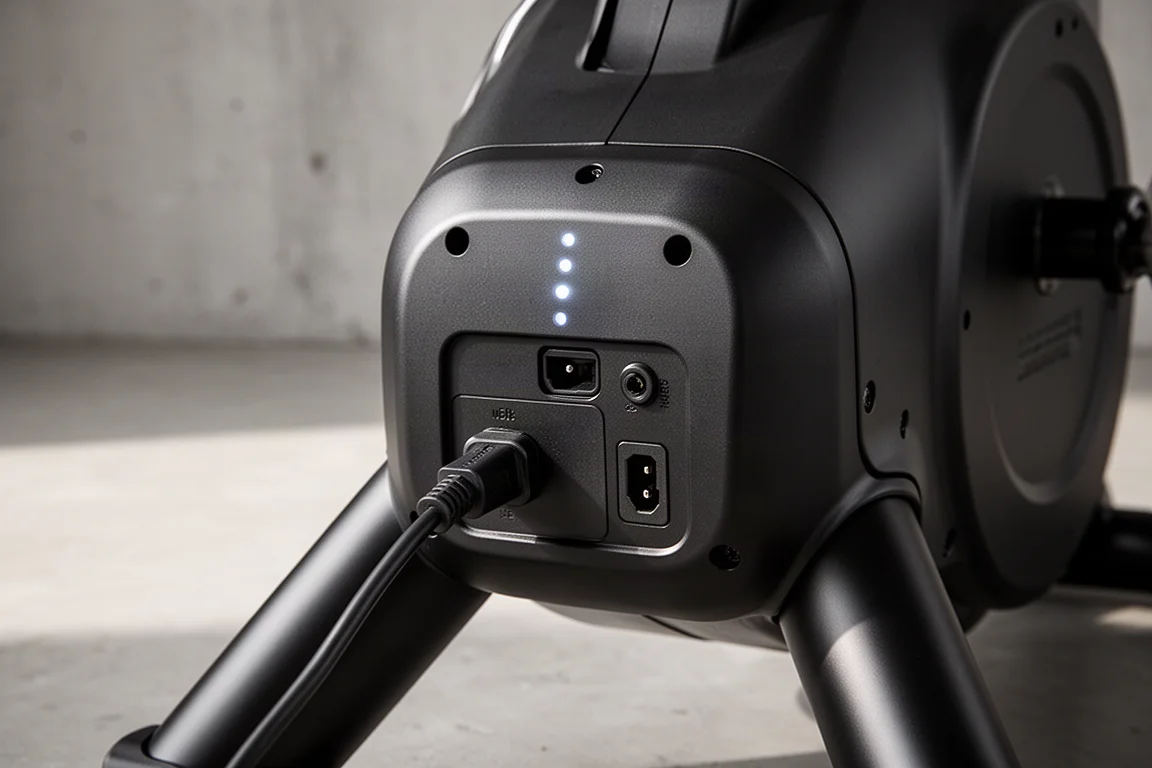
The headline addition is Wi-Fi. A new status light sits beside the existing Bluetooth indicator, and it replaces the ANT+ status light, which made sense mostly because ANT+ is now always on. With Wi-Fi connected, the trainer gains automatic firmware updates: roughly every 11 hours, when it is not being pedaled or actively used, it connects over Wi-Fi, checks the server, and downloads any updates. If you happen to be riding, it simply comes back later. Since it checks at shifting intervals, it should eventually find a time of day when you are not on the trainer. Quiet, hands-off firmware updates are easy to overlook, but they remove one of the more persistent annoyances of smart trainer ownership.
Next is Easy Erg, a feature first introduced by Elite on the Justo trainer. If you stop pedaling mid-erg-workout, say, because the doorbell rings, the trainer gradually ramps the resistance back up over 10 seconds when you resume, instead of slamming you with a near-impossible jump from zero watts to a high target. Crucially, this is all handled inside the KICKR itself, so the training app never knows the interruption happened.
The final new feature is an odometer. Open the Wahoo app and you can see the lifetime kilometers accumulated on the unit, standardized to a 700c tire. That sounds odd until you think about resale: a few years from now, a buyer can ask a seller to show the odometer reading in the app and judge whether the asking price is fair. It is also useful for support purposes.
One change that is not welcome: the price has gone up by $100 in the US, from $1,199 to $1,299, ending the long-standing $1,199 price point. Other currencies saw increases as well.
Existing Specs, Quickly Recapped
Nothing in the core specification has changed. The KICKR Access Feet return, offering a tiny amount of give, though Wahoo itself has acknowledged that on a trainer mat they add essentially nothing; on bare concrete you might get a millimeter or two of movement. The Wahoo Direct Connect port remains on the rear, allowing a $100 adapter to convert it to a wired Ethernet connection, though most Wi-Fi users probably will not bother.
Automatic zero calibration carries over from the KICKR V5, working behind the scenes with no user override, partly so calibration values cannot be faked for esports racing. The power accuracy claim stands at plus or minus one percent. Connectivity includes dual ANT+ and Bluetooth Smart, with up to three concurrent Bluetooth Smart channels and unlimited ANT+ channels.
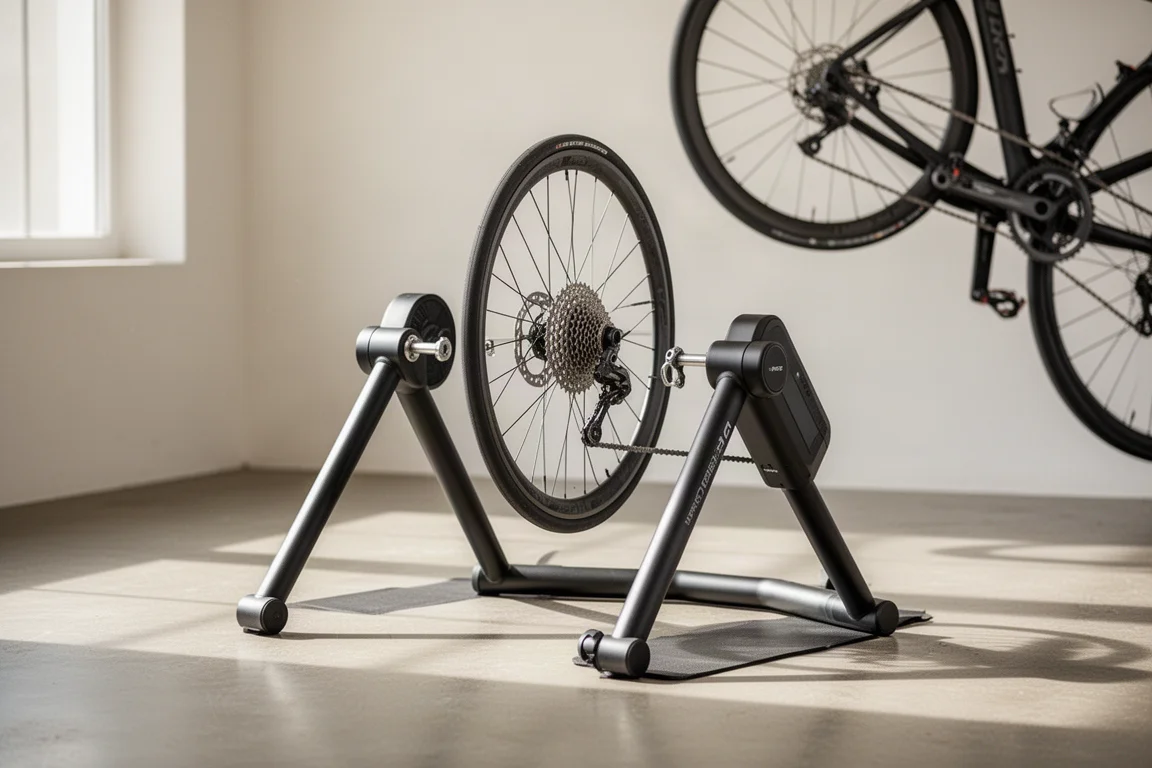
An 11-speed cassette is included, and the trainer is compatible with 8, 9, 10, 11, and 12-speed cassettes; 12-speed requires an XD or XDR adapter. Maximum incline is 20%, maximum resistance is 2,200 watts, and there is a built-in handle, which remains genuinely useful for moving the unit around. Note that the trainer must be plugged in to transmit power.
Configuring Wi-Fi and App Compatibility
Setup follows the usual pattern: splay the legs open with the locking pins, adjust the height if needed, plug it in, and add it as a new sensor in the Wahoo Fitness app. A firmware update takes two to three minutes, and then you can connect to a Wi-Fi network.
One important detail: the trainer supports 2.4GHz Wi-Fi only, not 5GHz, apparently due to chipset availability. Wahoo has tested it with microwaves running directly next to riders without dropouts, and in testing so far that held up. Interestingly, an ANT+ dropout was observed in an environment where the Wi-Fi connection stayed solid, which is a point in Wi-Fi’s favor.
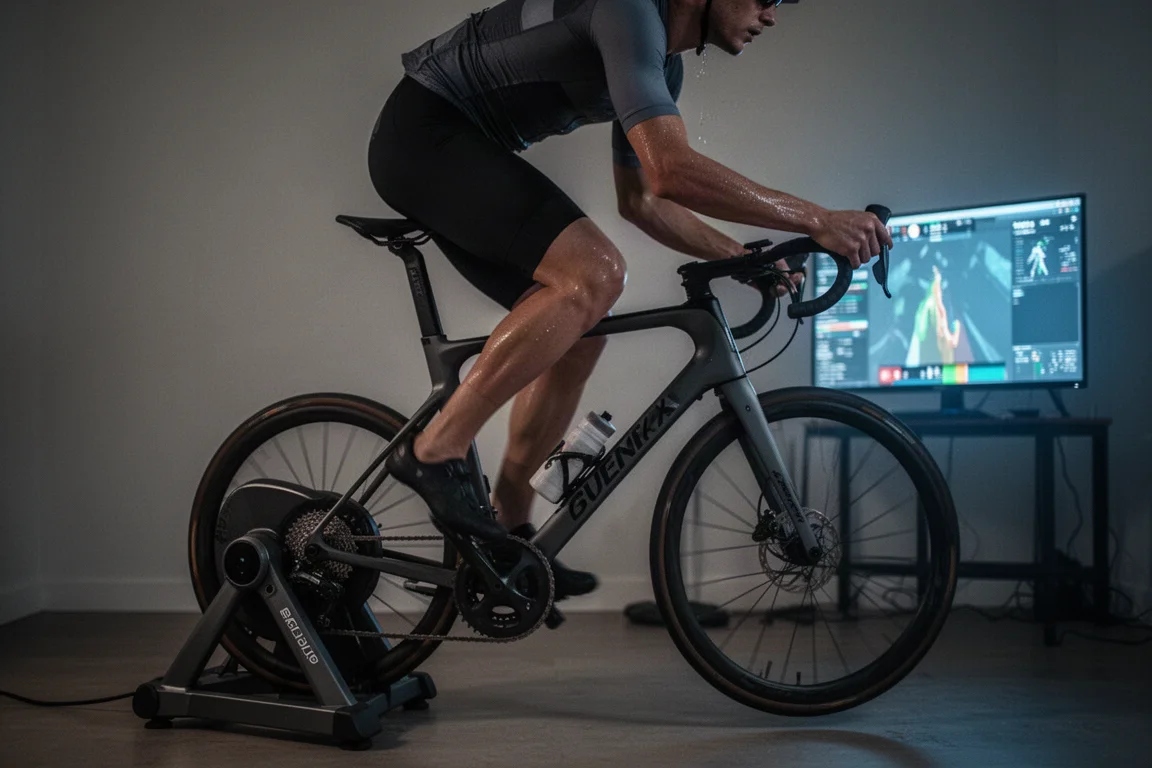
App support is strong because Wi-Fi uses the existing Direct Connect protocol from two years ago, so any app that supported Wahoo Direct Connect automatically works over Wi-Fi. In Zwift, the trainer appeared on the network immediately; in TrainerRoad on iPad, it paired without issues. On Apple TV, this is a meaningful benefit: Apple TV famously limits concurrent Bluetooth Smart connections to two, and Wi-Fi frees those slots up, so you can add steering or a heart rate strap without contention. Wahoo’s own app was the odd one out, pushing the connection back to Bluetooth Smart rather than using Wi-Fi, which is a strange miss for the company’s own trainer.
No heart rate re-broadcasting was added, unfortunately.
Ride Feel: The Same KICKR You Know
In terms of flywheel behavior, road feel, and noise, this is effectively the same trainer as previous versions. Noise is a non-issue: the only sound comes from your own drivetrain. Acceleration and deceleration feel consistent with the past several years of KICKR units, and the overall experience sits in the same league as the Tacx Neo series, the Elite Justo, and other top-tier trainers. For most riders, the choice among that group comes down to preference rather than measurable differences.
Accuracy: Spot On Across Every Scenario
Accuracy testing covered a range of scenarios, and the unit delivered excellent results from the first use, a contrast with the KICKR V5, which had accuracy issues in certain scenarios for roughly its first six months.
In a TrainerRoad 30/30 workout alternating between roughly 160 and 450 watts, the KICKR tracked a Shimano power meter closely. A Zwift structured workout compared against a Quarq power meter and a pair of Favero Assioma pedals showed spot-on agreement across the board, with only a minor ANT+ blip while the Wi-Fi connection to Zwift stayed rock solid.
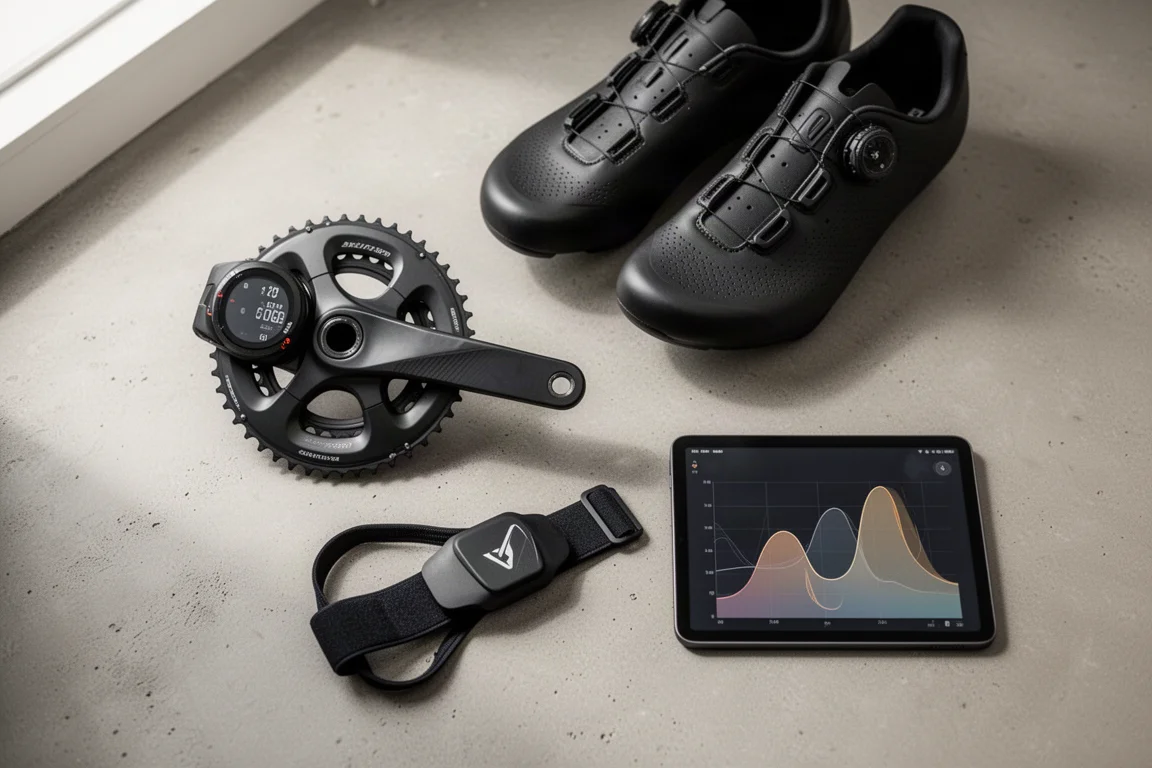
A Wahoo SYSTM workout was slightly wobblier, but that was down to riding in the small front ring; shifting to the big ring is best practice for erg workouts on nearly every trainer and gave the trainer better control. Finally, a regular Zwift ride with a pacer group, spanning varied terrain, gradients, and shifting, kept all power meters tightly together. In short: accurate, consistently, out of the box.
Buying Advice
Viewed in the long-term context of indoor smart trainers, the KICKR V6 is less a modest refresh than a potential turning point, primarily because of Wi-Fi. The ride experience itself has not changed in four to five years, but Wahoo keeps making small internal improvements that keep it at the very top edge of the top tier, alongside the Tacx Neo series and the Elite Justo. The Saris H4 sits toward the lower end of that tier, lacking some features, though it is $300 cheaper, and there are good reasons to choose it too.
If you already own a recent KICKR, nothing here screams upgrade. If you are buying new, the Wi-Fi addition, automatic firmware updates, and Easy Erg make the V6 an easy recommendation, assuming the price increase does not bother you.
Conclusion
The KICKR V6 is a solid, accurate, quiet trainer that keeps its title among the very best smart trainers available. Wi-Fi is the change that matters, even if it looks minor on paper, and the Easy Erg ramps and odometer are sensible extras. The higher price is the main reason to hesitate, but as a complete package, it remains a top-tier choice for serious indoor riding.
Product link
View more details for Wahoo KICKR V6
This product is mentioned in the review. Check the specifications, options, and compatibility before buying.
View more details for Wahoo KICKR V6Further reading
Related Reviews
Indoor Cycling
Best Budget Smart Indoor Trainer Setups: Six Options Worth Considering
Smart indoor trainers keep getting better while prices come down. Six setups and components worth considering, from the cheapest Zwift-ready option upward.
Indoor Cycling
Best Budget Smart Indoor Trainers for Immersive Cycling in 2026
A practical guide to affordable smart indoor trainer setups, including budget and mid-range options with virtual shifting.
Indoor Cycling
Best Indoor Cycling Apps and Smart Trainers: A Winter Buying Guide
A practical look at the indoor training platforms and smart trainers that matter this season, from a new challenger to Zwift to the entry-level trainer that stands out on value.